Categories
Enough said

What Khushwant Singh expected of death

The late author had very stark views about death, and had initially wanted a burial next to a peepul tree.
Humra Quraishiby Humra Quraishi

When my father passed away in the winter of 1995, it took me almost six months to recover from the emotional trauma of it all. Now that my dear friend and mentor Khushwant Singh is dead, I really don’t know how long it will take me to recover.

I keep thinking of his words, his stark views on life and death, and everything in between. His views on death were somewhat disconcerting. He would say, “We do not talk of death in our homes, with our families, our children…it is regarded as tasteless, ill-mannered and depressing. This is the wrong way to look at an essential fact of life, which makes no exceptions. I see death as nothing to be worried or scared about. In fact, I believe in the Jain philosophy that death ought to be celebrated. When the time comes to go, go like a man without any regret or grievance against anyone.”

Allama Iqbal expressed this same sentiment beautifully in a couplet: ‘You ask me about the signs of a man of faith / when death comes to him, he has a smile on his lips.’

Khushwant would readily admit that he thought of death often. “I don’t know the answers,” he would say. “I don’t believe in the Hindu rebirth and reincarnation theories. As far as I’m concerned, I accept the finality of death. We do not know what happens to us when we die. We must bear in mind that death is inevitable, be prepared for it.
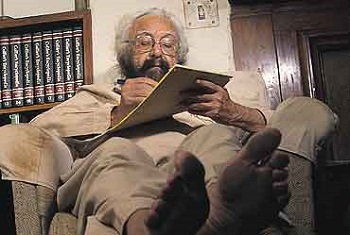
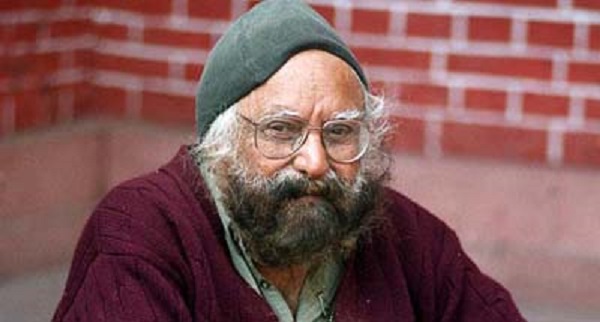
khushwant singh “Often I tell bade miyan (God) the He has to wait for me as I still have work to complete. Yes, I do fear being incapacitated by old age, by high blood pressure, prostrate problems, deafness, loss of vision. What I dread is this thought: what if I go blind or stone deaf or have a stroke? If that happens, I’d rather die…”

Not content to write his own epitaph, Khushwant had also written his own obit in 1943 – this was later published in a collection of short stories titled Posthumous. It read, “I am in bed with a fever. It is not serious. In fact, it is not serious at all, as I have been left alone to look after myself. I wonder what will happen if the temperature suddenly shoots up and I die. That would be really hard on my friend.

“Perhaps, The Tribune would mention it in its front page with a small photograph. The headline would read, ‘Sardar Khushwant Singh dead’. And then in smaller print, ‘We regret to announce the sudden death of Sardar Khushwant Singh at 6 pm last evening. He leaves behind a young widow, two infant children and a large number of friends and admirers to mourn his loss. Amongst those who called at the late sardar’s residence were the PA to his Chief Justice, several ministers and Judges of the High Court…’”

He was also very keen on a burial, wanting to be buried in a corner of a graveyard with a peepul tree next to the grave site. “A burial, because you give back to the Earth what you have taken from it,” he often explained. “Now it will be an electric crematorium. I had requested the management of the Bahai faith if I could be buried. Initially they agreed but then they came up with all sorts of conditions and rules. They had also agreed to my request to be buried in a corner, but later they said my grave would be in the middle of a row and not in a corner. I wasn’t okay with that – though I know once you are dead it makes no difference. They also later said that they would chant some prayers…I couldn’t agree with this because I don’t believe in religion or religious rituals of any kind…”

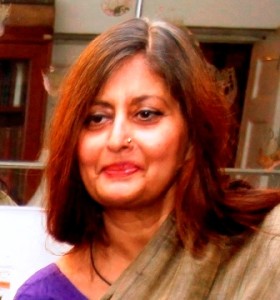
Humra Quraishi is a senior political journalist based in Gurgaon. She is the author of Kashmir: The Untold Story and co-author of Simply Khushwant.

(Pictures courtesy www.christianmessenger.in, www.outlookindia.com)

Categories
Guest writer

How fair are you being?

Come summer, and we are deluged with ads for skin whitening products. When will the ‘Fair is beautiful’ idea die?
by Ritika Bhandari Parekh

There are some speeches that touch a chord and bring a perspective on unsaid things. Oscar winner Lupita Nyong’o gave one such inspirational speech that celebrates her pride in being a ‘coloured’ personality.

Before winning the 2014 Academy Award for the Best Supporting Actress in 12 Years a Slave this year, 31-year old Lupita Nyong’o immortalised her stature by reading a letter written to her by a dark-skinned girl. At the seventh annual Black Women in Hollywood Luncheon hosted by Essence magazine, Nyong’o not only won the Best Breakthrough Performance award but also a lot of hearts for revealing that her skin kept her away from feeling the word called ‘beautiful’.

In her acceptance speech, she read the letter highlighting the insecurities felt by a girl on being a black. The video went viral on social media sites with everyone applauding Nyong’o for raising the topic of commercialisation of fair skin.


So why raise this issue now?

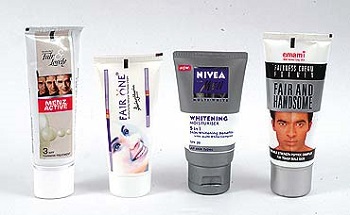
fairness creamsWith the summer descending on us and sunscreen lotions being stocked in practically every home, I was reminded of how as Indians we too, love our fair and lovely beauties on and off-screen. Forget being racist to North-East Indians, the mere hint of a darker shade in skin brings about a different being in us. Talent aside, television advertisements say that a fair-skinned man can crack an interview and stump his bosses in minutes by just being the colour that he is.

Sit for 30 minutes in front of the idiot box and you’ll realise that our love for whitening spreads from the detergent to the deodorant. Fair underarms, fair face, fair hands, legs and much more – it isn’t fair to leave any body part with a hint of dark skin. Now take a look at yourself – how many beauty products do you use on a daily basis, or even occasionally? At least two products, if not more will be a whitening cosmetic product, right? From a daily ‘Light’ moisturising cream to an ‘Extra Whitening’ body lotion, the aura of fair skin engulfs us like nothing else.

A study says that products which claim to lighten, whiten and brighten our skin do nothing more than thinning out the epidermis layer. This thinning of skin is carcinogenic in Nandita Dasnature. But while we’re probably not looking at the medical side-effects of these products, at least a few of us are hitting back at the ‘Fair is beautiful’ line of thought. It is heartening to see that actress Nandita Das has started her ‘Stay Unfair, Stay Beautiful’ and ‘Dark is Beautiful’ campaign against fair skin commercials.

But more than the Youtube likes, it is our perception that needs to change. If we ditch the so-called whitening products, refuse to be seduced by fair skin and bring about a sense of respect and equality despite our skin colour, it will be the making of a happier society. So wear that shade of red lipstick that you always loved, because the ‘right’ colour is in the mind.

As Nyong’o says, “I hope my presence validates your sense of external existence and also get the deeper business of being beautiful inside, because there is no shade in that beauty”. So go ahead and look in the mirror and reaffirm – Life is beautiful and so are you.

(Pictures courtesy defence.pk, www.islandmix.com, economydecoded.com)

Categories
Tech

India gets world’s slimmest smartphone, Elife S5.5

Gionee, a Chinese company, launched the new smartphone yesterday priced at Rs 22,999 and seems bullish on the Indian market.
by Manik Kakra | @Manik_K on Twitter

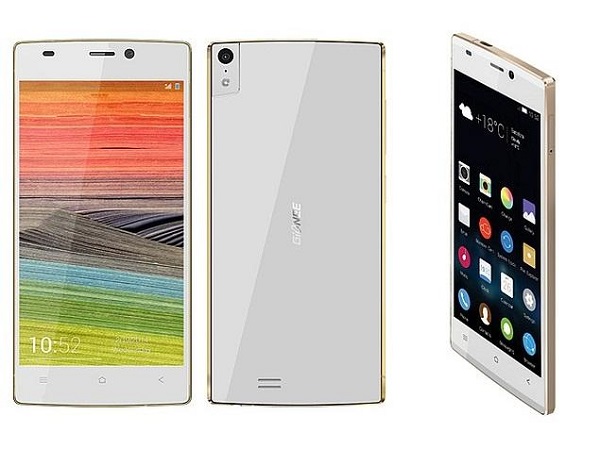
Gionee has unveiled its brand new smartphone in India. The Elife S5.5, as the name suggests, is just 5.5mm thick, making it arguably the world’s slimmest smartphone.

It boasts a 5-inch (1920×1080) Super AMOLED screen, covered in an all-metal plus glass coating material. Under the hood, there is a MediaTek MT6592 SoC (1.7 GHz octa-core processor and Mali 450 GPU), along with 2 GB of RAM. The phone is powered by 2,300 mAh battery, and has 16 GB of internal storage. On the back, there is a 13 MP snapper (along with an LED flash); while the front has a 5 MP camera.

This Android 4.2 device has Gionee’s own Amigo 2.0 UI on top, and there’s no word on when the phone will get updated to 4.3 or 4.4. Connectivity-wise, there is Bluetooth 4.0 (LE), 3G, 3.5 mm headset jack, microUSb 2.0, USB OTG, and WiFi.

Gionee, another recent Chinese player in the Indian market seems to be bullish on the Indian market. It expects to ship around 6 million handsets in India, and has got a long-term target of 10 per cent market share. The company is planning to invest a lot in service centres in the country and has said to open 750 of them by the end of this year.

The phone will be available for sale starting from April 27, at a price of Rs 22,999. It comes in pink, purple, blue, white and black colour options.

Categories
Kharcha paani

Mall tenants shifting from Mumbai to smaller cities

More mall tenants are moving to smaller cities, which promise better returns. Mumbai and other metros are seeing this trend.
by The Editors | editor@themetrognome.in

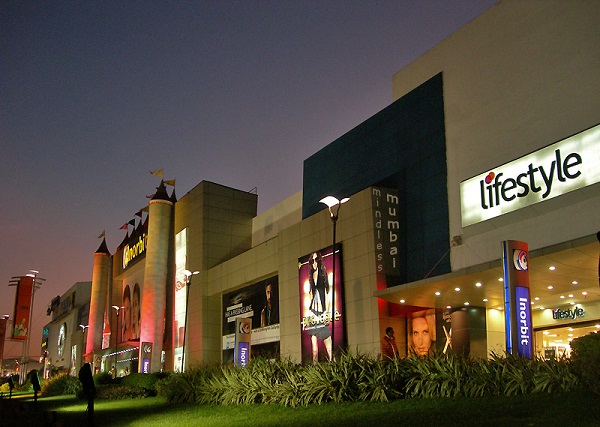
Mumbai’s spiralling real estate costs and high inflation are jointly pummelling shopping mall tenants – they are now shifting out of pricey Mumbai and other metros’ malls for locations in Tier II and III cities, finds a recent survey by ASSOCHAM (Associated Chambers of Commerce and Industry in India).

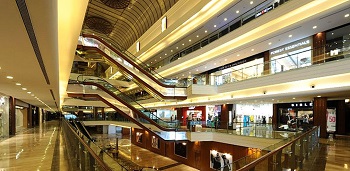
“Under pressure of high rentals and low footfalls, one-third of retail tenants at the shopping malls in the large cities like Mumbai, Delhi, Chennai, Bangalore, Kolkata are shifting in tier-II and III cities like Nagpur, Jaipur, Pune, Indore, Lucknow, Ludhiana and Chandigarh among other such cities,”, the survey reveals. Titled ‘Shopping malls increasingly losing shine in big cities’, the trend survey adds that as per estimates, roughly 300 to 350 malls came up in the country over the last two years but 75 to 80 per cent of the spaces in these malls lie vacant. Around the same time, as many as 95 malls have shut shop, according to the survey.

shopping in Mumbai“The major three core benefits for the retailer-tenants to move to smaller cities are lower operational costs and comparatively lesser competition and the novelty value still left in these areas where even the nearby rural population is thronging the air-conditioned halls and getting the taste of comfortable shopping,” says Rana Kapoor, President, ASSOCHAM.

Other such cities where mall-based retailers are moving include Goa, Kochi, Vijayawada, Visakhapatnam, Mysore, Coimbatore, Trivandrum, Guwahati, Ahmedabad and Surat and they still hold more potential for growth. “High cost of operation, economic slowdown and wearing down of the novelty [associated with malls] have all combined to reduce the number of foot falls in the malls in big cities. One of the main reasons for the high rentals in the big city malls is the exorbitant land prices and high development costs. Thus, in the foreseeable future, making such malls profitable ventures will remain a challenge,” said Kapoor.

In Tier II and tier III cities, there is greater scope for growth.  Also, larger chunks of land are available in these cities compared with metros, and at lower cost. The shopping trends in metro cities have influenced the consumer behaviour in Tier II and III cities that are now witnessing a major shift from conventional trader-run standalone shops to larger format retail malls.

The trend can be attributed to factors like the dynamic change in the shopping trend, average spending power of the socio-economic classes in the Tier II to VI cities, demand of various products under one roof, increase in brand consciousness are a few factors that multi-brand discount franchising stores drives on, adds the ASSOCHAM survey.

(Pictures courtesy gyaandarpan.com, www.hg2mumbai.com. Images are used for representational purpose only)

Categories
Trends

Mumbai school students are heading overseas

Exchange programmes are slowly becoming popular with school students and parents alike, widening their horizons and enhancing their cultural experience.
by The Editors | editor@themetrognome.in

Students these days have several things going for them – unconventional work options while they study, a multitude of courses to choose from, and most importantly, the opportunity to travel to foreign countries on short stints as exchange students.

Shubhra BharadwajIt is this last that is slowly picking up pace in our country – and Mumbai is particularly responsive to the trend of students travelling to distant shores to gain life experience and a chance to study other cultures up close. The Metrognome spoke to Ferriswheel’s founder Shubhra Bharadwaj (in pic on left) to gain more insights into the trend.

Excerpts from the interview:

What is the response from Mumbai students like, to the CEPs (Cultural Exchange Programmes)that you plan?

The response is phenomenal. We have used word of mouth as our marketing tool and it has offered extremely satisfying success on all fronts. Schools have supported us whole-heartedly and even the feedback from the people has been great.

Currently, students in Mumbai or any other part of India are not completely aware of such student exchange programes except the ones who have already gone on such programmes. We hope to create more awareness among kids, schools and parents about the benefits of our CEPs for children.

Can you describe the first CEP you planned? Which was the country the students visited?

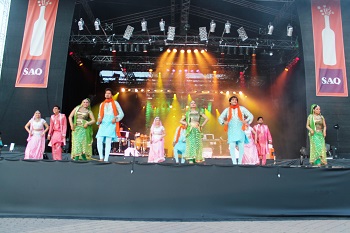
This first International Children’s Festival was organised in 1996 where the children’s group was taken to Turkey to celebrate the National Children’s Day on April 23. It is the Ferriswheel Youth Ensemble presents- Ticket To Bollywood (5)world’s largest children’s festival that has seen participation from over 30,000 children from 116 different countries since its inception by Kamal Ataturk. Each year close to 50 countries participate in this festival. The gala performance is and was telecast live on all Turkish channels.

The prestigious event bestowed the honour and privilege on individually selected Indian children representing the team, to meet the Prime Minister and President of Turkey, the Honourable Mayor and Governor of Gaziantep, as well the Head of Turkish Parliament, a moment of pride for India.

So children also get to meet heads of State in the countries they visit?

Every time we travel under our CEPs, the children are taken to meet various dignitaries like the Governor and the Mayor of the host city and other heads of States. Every year one child from each participating country is chosen to meet the Prime Minister and President of the host state and is flown in a chartered aircraft. The event gets covered by the local press and media followed by a special dinner for the children.

A few of the heads that we have met earlier through our CEPs are the Prime Minister of Turkey, Recep Tayyip Erdoðan, the President of Turkey, Abdullah Gül, the Mayor of Izmir city, Aziz Kocaoðlu and Governor of Izmir city, M Cahit KIRAÇ.

What do students and their parents look for in a programme of this sort?

They are looking for education through travel, friends, carnivals, different cultures, sports, fun and international exposure. These exchange programmes are short dream lives that children and youth experience towards a future that is wholesome, open-minded and confident. Children get the unique experience of living with the host families and experience their culture on a first-hand basis. More importantly, they get an opportunity to exhibit their culture and represent their country on an extremely prestigious platform.

The objective of every parent and every school is to provide a child with the experiences and tools to develop holistically and learn to be a ‘global citizen’. While parents look for learning and their child becoming more responsible, students look for it as an opportunity to meet children of different countries, broaden their horizons, learn to adapt to new cultures and having fun.

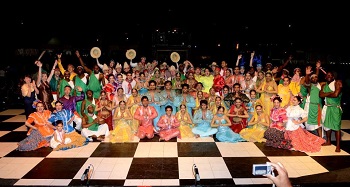
Ferriswheel Youth Ensemble presents- Ticket To Bollywood (2)Thus, such programmes help children develop holistically and learn to be ‘global citizens’. The child learns to be independent and confident, becomes responsible, overcomes prejudices and pre-conceived notions about people of different cultures, gets to intermingle and make friends with children from all across the world. Also, the cultural exchange programme certificate is a great addition to their resume as it helps them in admissions abroad.

Of all the States and cities in India, from where do you see maximum participation? 

We have a strong base in Gujarat and Mumbai for years and now we will be looking at operations pan India. We have a tie up with Italy, Turkey, USA, Canada, UK, Switzerland, Spain, Portugal, Czech Republic and France for the programme.

How are foreign students able to adjust to life in India?

We only take a group of children from India to International festivals across the globe. We do not invite their children over to our country. The reason why this programme is called Exchange Programme is that the children live with the host families and interact with many children from other countries.

Please describe an interesting incident from the CEPs, which has remained with you till date.

Ferriswheel Youth Ensemble was awarded the best performing group trophy at a prestigious International Youth Festival in Canada through public voting. Our Executive Producer, CEP, Sabeena Kapur fondly remembers her CEP trip to Taiwan. During that trip, the children were sharing their memorable moments with us and one of them went up to her with a handmade card that said, “I don’t miss home because of you and whenever I will celebrate Mother’s Day, I shall think of you.” We were truly touched.

Categories
Tech

Samsung launches Galaxy S5 in India at Rs 52,500

The company also introduced new Gear products for the Indian market. The new S5 comes with several improved software features.
by Manik Kakra | @Manik_K on Twitter

Samsung’s much-awaited Galaxy S5 has officially been launched in India. The new S5 comes with a host of improved software features as well as latest internal hardware Samsung has in store.

Samsung India yesterday launched the Exynos model of the Galaxy S5. This device is powered by octa-core (1.3 GHz quad-core + 1.9 GHz quad-core processor), along with 2 GB of RAM. Packing in 2,800 mAh battery, the phone sports a 5.1-inch (1920×1080) Super AMOLED touchscreen with Gorilla Glass 3 on top, with physical keys placed below the screen. On the back, there is a new 16 MP (fast AF) camera (with an LED flash) that can shoot full HD videos at 60 FPS and also features face detection; while the front has a 2 MP camera with shooting full HD at 30 FPS capabilities.

Gear FirRunning on Android 4.4.2 (KitKat), the new Galaxy flagship also brings in a new tweaked version of the TouchWiz UI. Connectivity-wise, this Samsung device is equipped with microUSB 3.0 (supports 2.0 as well), USB OTG, Bluetooth 4.0 (A2DP), an infrared port, WiFi a/b/g/n/ac, WiFi Direct, and DLNA.

Two additions that Samsung has been touted regarding the S5 since its showcasing at this year’s MWC has been the fingerprint scanner and the heart rate monitor. The S5 has a fingerprint scanner on its Home button, which can be used not just for security purposes but also inside various apps. The phone’s heart monitor works through a new sensor deployed alongside the main camera that tries to capture your pulse rate.

The phone can be pre-ordered starting tomorrow for Rs 1,500 and will go on sale on April 11. The Indian market is getting the 16 GB variant and not the 32 GB (expandable via microSD card). It will be available in charcoal black, shimmery white, electric blue and copper gold, and has been launched at a price of Rs 52,500.

Samsung has also launched its new Gear range of products in India. The Tizen-powered Gear 2 and Gear Neo 2, which sport 1.6-inch AMOLED screens and weigh 68 and 55 grams, respectively, have been priced at Rs 21,900 and Rs 15,900. The Gear Fit, which is equipped with a 1.84-inch curved AMOLED screen and weighs 27 g, has been priced at Rs 15,900. All these Samsung products are IP67 water-resistant and dust proof.

Exit mobile version