Categories
Wellness

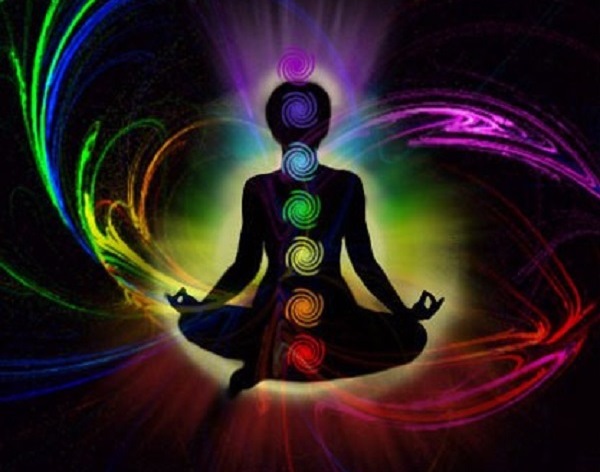
The benefits of balancing your chakras

Did you know that balancing your chakras could relieve you of daily aches and pains? Read on to know more.

Ancient yogic texts are steeped in the study of chakras. Despite the immense benefits that the chakra technique offers, their uses and knowledge is not widely known. The study and execution of chakra balancing acts can have many potential benefits like increasing  mental and physical harmony. Did you know that chakra balancing helps to keep common ailments at bay when practised regularly?

Disorientation, physically and psychologically, is becoming a daily occurrence due to increased amounts of stress and other negative energies. Chakra balancing techniques are the perfect antidote to combat the daily fatigue arising through usual routines. In order to get an overview, read on to find four major benefits of chakra balancing.

balancing your chakrasReduces aches and pains: You encounter pain in different parts of the body daily. While the cause may range from injury to over exertion, a majority of these pains are caused by misalignment of your various chakras, like sahasrara, ajna, etc. With proper chakra balancing techniques, you can get rid of common pains like muscle pain, back pain etc. With regular practice, you can help reduce instances of migraines and headaches that are often associated with stress and anxiety.

Improves emotional stability: Chakras deal primarily with emotions. Their study revolves around finding ways to improve emotional stability. You can achieve emotional stability with the help of the chakra balancing tools that help you to use the sensory organs in your body and make you more aware of your emotions. You will learn to look within yourself for strength to face your challenges. You can greatly improve your decision making ability and get back in touch with reality. Get rid of addictions with the help of chakra balancing tools.

Promotes greater healing ability: Practicing chakra balancing regularly will give you greater healing ability from common ailments. You don’t need to rush to the nearest chemists for over the counter medications. You will find the required healing quality within yourself to combat common ailments. This particular ability to heal also deals with your emotional and psychological problems. With this new found healing ability, you can get rid of persistent depression and anxiety problems as well. You will become stronger both internally and externally.

Increases passion: With the help of chakra balancing tools, you will experience increased passion towards your loved ones and life in general. They will give you added vitality to take on your routine tasks with gusto. Chakra balancing helps you get rid of the negativity within you and helps you to unlock the positive thinking and positive way of living.

Learn the power of living in the present with the help of chakra balancing tools. You can find a few retail stores online that specializes in supplying chakra tools straight to your doorstep.

Categories
Deal with it

Know the causes of brain diseases

We often ignore the signs and symptoms of brain disorders, to disastrous consequences. Ignore these brain diseases at your peril.

Brain diseases are one of the most complex ailments known to medical science. Be it Alzheimer’s or Parkinson’s or even a haemorrhage, their results are often debilitating and the consequences can be fatal. With heart ailments and diabetes cornering the world’s attention, brain diseases are often relegated to the sidelines.

Often, with our fast-paced lives in the city, we don’t take corrective measures until it is too late. Brain disorders do not discriminate on the basis of age and sex. By being aware of the causes of brain diseases, you can take actions to safeguard yourself.

Known causes of brain disorders:

Blunt trauma. Though powerful, the brain is actually a delicate organ. Blunt force attacks against the brain are one of the leading causes of brain damage. A forceful injury can damage the brain and its tissues. The nerve cells responsible for transmitting the information from the brain to the whole body are also affected. Significant damage can alter the ways the brain functions and communicate with other body parts.

Degenerative conditions. Many brain disorders attack as you age and hinder your cognitive abilities. Examples include Parkinson’s and Alzheimer’s. While there is no definitive cure for them, maintaining a healthy lifestyle may prolong their onset. Some of them are even hereditary and can affect small children as well. Examples of such diseases include Tay-Sachs disease. A child’s mental and physical capabilities are affected by such ailments.

Infections. There are infections that originate from one part of the body and spread to the brain. Such infections are the number one cause of human mortality rates amongst brain disorder ailments. Once the infection reaches the brain, the case is usually referred to an expert brain specialist or neuro surgeons. Some examples of brain infection include meningitis and encephalitis.

Seizures. There are many factors that contribute to seizures. It can be in the form of infecting bacteria like tapeworm, high blood pressure, strokes and even lack of blood circulation in the brain. Seizures are often debilitating and can lead to fatal consequences if medication is not taken immediately. The incidences of seizures are higher in developing countries than in developed ones. Seizures create a sudden interruption of the blood supply to the brain and increase the pressure on certain areas.

Drug overdose. Overdosing on drugs can create brain disorder symptoms. Even withdrawal symptoms are seen to have a negative effect on the brain. For example, antidepressants addict report the highest number of seizures and the resultant brain damages. If you are consuming drugs like cocaine, now would be the best time to quit using them.

The above five causes show how brain diseases develop. Let this knowledge be a guiding light for you to stay healthy, mentally and physically.

(Picture courtesy news.emory.edu)

Categories
Become

With pluck and a wide smile

Shreya Naik was just 20 when she signed her first artist. Today, she works with prestigious venues all over India.
by The Editors | editor@themetrognome.in

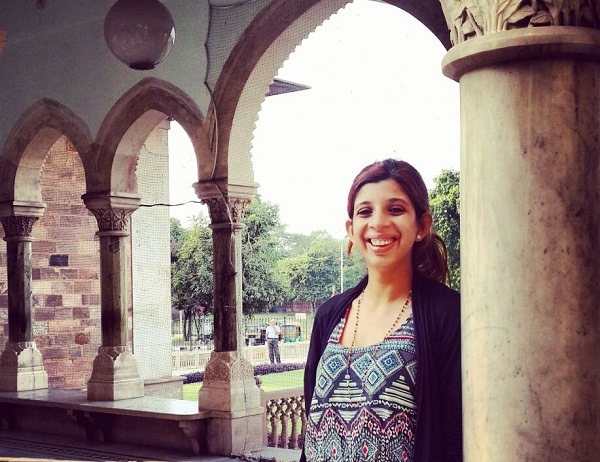
She was all of 20 when she started her own business – she had no money, no experience, and no team. “But I had a lot of confidence,” Shreya Naik (25) grins. “When I told my parents I wanted to start my own business as an artist manager, they were stunned. They provided me all the emotional support I needed before I took the first step – and that was the most crucial thing at the time. I started my business on Facebook.”

That kind of seemingly insane confidence, stemming from her stint in advertising and her “keeda for scouting and helping untapped talent” bode well for Shreya, who started Dream Makers Entertainment in 2011 and who did most of her initial work with The Blue Frog, Mumbai, for whom she handles live music programming today. “I can’t really say why I got into artist management exactly. Probably my background in promotion and marketing helped,” she says.

The start

It could all have gone downhill for Shreya – she had no background in artist management, she had no inkling of latest music trends, she didn’t have a portfolio to boast of. “I had no idea of international music. As a child, I watched cartoons in Hindi,” she grins. “So I would be totally lost when musicians would discuss music. I couldn’t even tell the names of all the Pink Floyd band members.”

But, she reasoned, she could learn on the job. “The first artist I signed up was Nigel Rajaratnam. He was also very new. And the first place I sold my pitch to was The Blue Frog. They were really nice to me and quite receptive. My first gig happened with them and funnily enough, most of my work has revolved around them and continues to do so. Now, we work with all small and big music venues across the country,” she explains. She has managed artists like Vasudha Sharma (of Asma fame), apart from about 25 others.

Today, Dreammakers has a team of four handling different aspects of artist management, and puts up gigs all over the country. The company holds the reputation of being one of the best artist management firms in the country today.

On the job

Shreya brought her own creativity and empathy to the job – not having done any of it before probably helped. “I figured that you With Vasudha Sharmadidn’t really need to be married to feel like a wife, you don’t need to have children to feel like a mother. I get really involved with my artists and I love to see them succeed. That’s how I work, at whatever I do – I just go out there and give it my all. And it works well for me,” she says.

Her inexperience could have tripped her up at some point, but she says she has lucky to “never have been caught.” She explains, “Of course, my unprofessionalism also showed up sometimes. I learnt to follow up a phone confirmation with an email. Then there were times when some of my artists suddenly left me for other managers. I’ve shed a lot of tears but I’ve also learnt so much.”

Why do it at all

Apart from the creative perks of the job, the monetary compensation is good as well. “Typically, an artist manager makes anywhere between 10 to 20 per cent of whatever the artist makes. But if the artist’s fee is huge, the manager must be open to taking a lower earning since the overall amount is larger,” Shreya says. “Also, you have to decide after a while how you want to do things – do you have a real find on your hands who can be the sole client you represent? Or do you need to have a variety of artists on your list? This is a decision you will need to make at some point,” she adds.

A person preparing for this profession must also do his or her research well. “An artist manager has to develop sound knowledge about the artist’s work, its strengths, the venues he or she will perform at, the best venues for that artist, the audience, the kind of music the venue is best suited to. The manager has to be on the ball constantly to produce the best results,” she explains.

She adds that a parallel profession for artist managers is music curation or programming. “Most artist managers are curators and programmers as well, it comes with the job. It is another avenue to make good money,” Shreya says.

What’s next

Shreya is currently focussing on her new passion – decoupage, (an Italian art form that involves collaging on any surface), and she has started a new firm, Artsy Fartsy, for the same. “I’m surrounded by music all the time, so this is a good break for me,” she says, adding that she is currently scouting for graphic artists and doodlers. “It helps me unwind and explore my creativity. I’ve been backstage all this time, now it’s my time to be the artist,” she quips.

Shreya can be reached at shreyarnaik@gmail.com.

(Pictures courtesy Shreya Naik)

Categories
Read

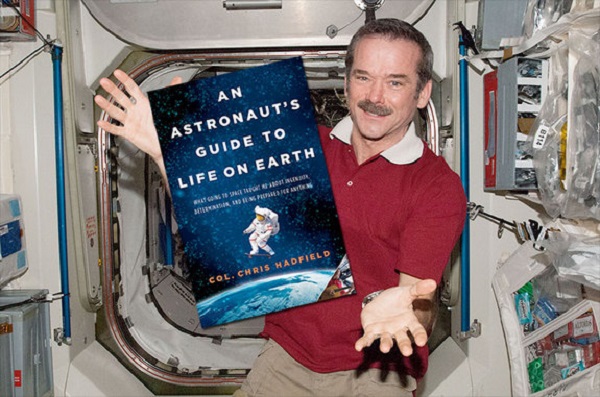
Review: ‘An astronaut’s guide to life on Earth’

Chris Hadfield’s account of his astronaut life is a must-read for those looking to be (literally) transported to another world.
by The Editors | editor@themetrognome.in

Growing up, a lot of us dream of being astronauts, just like we also dream of being actors, entertainers, doctors and truckers. Growing up, any job that lets us play with toys and props is cool.

Famous astronaut Chris Hadfield, however, held on to his childhood dream of being an astronaut close to his heart. In his book, An Astronaut’s Guide To Life On Earth, the former astronaut and one of the world’s most accomplished persons in his field, describes how he first dreamed of becoming an astronaut at age 9 while living in his native home town in Ontario, Canada. But like most other children who grow up and relinquish their childhood dreams for more realistic pursuits, Hadfield saw his dream through to a hugely successful, trail-blazing glory.

Chris HadfieldHadfield describes in humorous, engaging detail how he first dreamed the astronaut dream, after watching the telecast of Neil Armstrong descending on the Moon: ‘Slowly, methodically, a man descended the leg of a spaceship and carefully stepped onto the surface of the Moon. The image was grainy, but I knew exactly what we were seeing: the impossible, made possible. The room erupted in amazement…Somehow, we felt as if we were up there with Neil Armstrong, changing the world.

‘Later, walking back to our cottage, I looked up at the Moon. It was no longer a distant, unknowable orb but a place where people walked, talked, worked and even slept. At that moment, I knew what I wanted to do with my life. I was going to follow in the footsteps so boldly imprinted just moments before. Roaring around in a rocket, exploring space, pushing the boundaries of knowledge and human capability – I knew, with absolute clarity, that I wanted to be an astronaut.’

It is with the same clarity that Hadfield outlines the agonies and the ecstasies of his journey as a Canadian boy hoping to catch a break into NASA space programme, enrolling in military service to ensure a route to NASA, getting his glider license at age 15, turning down an opportunity to become a commercial airline pilot to focus on being an astronaut instead, getting through to the Canadian Space Agency, and finally, getting the break into NASA. He outlines his journey with insights into daily gruelling schedules, maintaining optimum fitness levels at all times (the slightest disorder or illness can get you off the programme), the relentless training and repeat training of a series of tasks as part of simulator exercises, and working with a team as an equal player who does not seek individual recognition but team success.

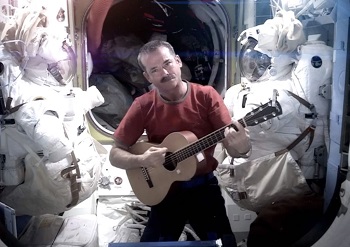
His stint as Commander of the International Space Station, however, made Hadfield famous all over the globe – not least because of the live streaming of pictures and videos that he engineered for transmission from the shuttle and the live tweets of important events aboard the spaceship, but for his performance (on guitar and without his spacesuit) of David Bowie’s ‘Space Oddity’, which became an instant hit online.

His book is an insightful look into the travails and joys of being an astronaut – he describes in vivid detail, for instance, about how zero gravity makes everyday, mundane tasks on space oddityEarth, like washing one’s hair or moving from spot to spot, a complete challenge to master. But his story is not just a superstar’s account of life aboard a spaceship and watching over Earth from a thousand miles away; Hadfield details in pitiless detail the amount of repetitive hard work in the course of training, the compulsive drive an astronaut must possess to be a team player, to practice every single task and routine over and over again and to leave nothing to chance when fighting a crisis. As a reader, you can’t help but be inspired, as he explains the mantra of his success, a philosophy he learnt at NASA: ‘Prepare for the worst – and enjoy every moment of it.’
Hadfield writes simply and with humour, bringing to life the incidents where he disposed of a live snake while piloting a plane, or breaking into the Space Station with a Swiss army knife, or even washing his hair with no-rinse shampoo aboard the spaceship. Readers will understand why being an astronaut is one of the toughest jobs in the world – and why all the hard work is worth it with just one glance at beautiful Earth from outer Space.

Rating for ‘An Astronaut’s Guide To Life On Earth’: 4/5. Buy the book at a discount on Flipkart.

Excerpt from the book:

‘Weightlessness doesn’t feel the same on a huge spaceship where you can move around freely as it does on a tiny rocket ship where there’s nowhere to go. Imagine floating in a pool without water, if you can, then endow yourself with a few superpowers: you can move huge objects with the flick of a wrist, hang upside down from the ceiling like a bat, tumble through the air like an Olympic gymnast. You can fly. And all of it is effortless.

But effortlessness takes some getting used to. My body and brain were so accustomed to resisting gravity that when there was no longer anything to resist, I clumsily, sometimes comically, overdid things. Two weeks in, I finally had moments approaching grace, where I made my way through the Station feeling like an ape swinging from vine to vine. But invariably, just as I was marvelling at my own agility, I’d miss a handrail and crash into a wall. It took six weeks until I felt like a true spaceling and movement became almost unconscious; deep in conversation with a crewmate, I’d suddenly realise that we’d drifted clear across a module, much as you might gently bob around in a pool without really noticing.

The absence of gravity alters the texture of daily life because it affects almost everything we do. Toothbrushing, for instance: you need to swallow the toothpaste – spitting is a very bad idea without the force of gravity or any running water to help stuff go down the drain and stay there. Hand washing requires a bag of water that has already been mixed with a bit of no-rinse soap; squirt a bubble of the stuff through a straw, catch it and rub it all over your hands – carefully, so it clings to your fingers like gel instead of breaking into tiny droplets that fly all over the place – then towel dry.’

(Pictures courtesy www.canada.com, www.nbcnews.com, blogs.windsorstar.com)

Categories
Big story

Mumbai #1 destination for sex trafficking: Report

High migration rates and high demand for affordable sex services make Mumbai a lucrative city for child and women trafficking.
by The Editors | editor@themetrognome.in

It is a grim reality that, curiously enough, is still not receiving the kind of immediate attention it deserves. The plague of child and women trafficking continues unabated – every day, more women and young girls are being trafficked and forced into the flesh trade. Most of these victims land up in Mumbai.

As per a report released recently by Dasra, in association with The Hummingbird Trust, Omnidyar Network and Kamonohashi Project, and titled ‘Zero Traffick: Eliminating sex trafficking in India’, “According to Government data, 74 per cent of Indian States have a high concentration of women engaged in the sex trade…The geographical position of West Bengal, coupled with having some of the poorest districts in India, has made it a prime source area for CSE (Commercial Sexual Exploitation) victims. According to experts, Mumbai in Maharashtra is the most likely destination.”

What the report says

trafficking of womenThe findings for Maharashtra and Mumbai are grim, to say the least. The reasons for the most numbers of trafficked girls and women to reach Mumbai are many, of which two are the most common – some are sent by families with ‘trusted’ friends and associates to look for jobs in the cities, while others are knowingly sold off. Dire financial straits and high unemployment are often contributing factors.

The Report cites a primary reason – the high concentration of migrants in Mumbai. “Rampant growth in megacities such as Mumbai has seen an influx of migrant workers who have left their homes and families to find work in the cities. This has resulted in a rapid escalation in the demand for cheap sex. Loneliness, coupled with the anonymity of the city, has made paying for sex an attractive option; a majority of migrant workers report that they have indulged.

“Traffickers have met this demand through a massive increase in the number of girls trafficked. This has resulted in a drop in the real wages of sex workers by over 50 per cent – in turn, making sex readily affordable to even the most poorly paid day labourer.

“…Increase in migration, as a consequence of globalisation, coupled with Kamathipura’s (Mumbai’s prime red light area) history since the British Era has contributed to Mumbai being a destination for trafficking. As per a study, Mumbai, along with Goa, is a favoured destination also for paedophile tourists from Europe and USA,” the Report mentions.

It goes on to add that while Kamathipura and Falkland Road are the city’s oldest and largest red light areas, escalating real estate prices in South Mumbai have resulted in newer red light districts being formed in the Northern areas of the city, such as Vashi, Bhiwandi, Jamuna Mansion and Bhandup. Additionally, smaller towns such as Thane, Pune and Sangli in Maharashtra are emerging as satellite districts.”

However, Mumbai also seemingly shows progress when it convictions in trafficking. “Mumbai reported the highest numbers of cases registered under the ITPA (Immoral Trafficking of Persons Act) and out of a survey of 88 cities, accounts for 15 per cent of cases registered under the ITPA. Also, the Ingrated Anti Human Trafficking Units set up in Maharashtra have conducted 478 rescue operations and have so far rescued 2,683 victims and arrested 1,558 traffickers,” the Report says.

Read the entire report here.

 (Pictures courtesy ahmedbashu3.blogspot.com, www.instablogs.com. Images used for representational purpose only)

Categories
Tech

Karbonn launches three new phones

Launched last week, the company’s three brand new phones will be available for sale in India come late April 2014.
by Manik Kakra | @Manik_K on Twitter

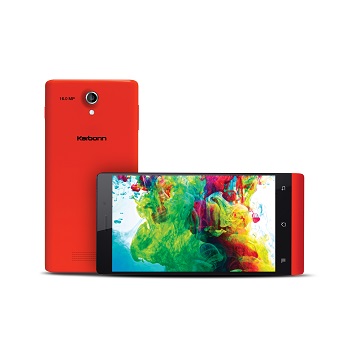
Karbonn has come out all guns blazing in partnership with MediaTek, showcasing as many as three Android 4.4 (KitKat) dual-SIM handsets. The three phones launched are the Karbonn Titanium Octane Plus, Karbonn Titanium Octane and Karbonn Titanium Hexa.

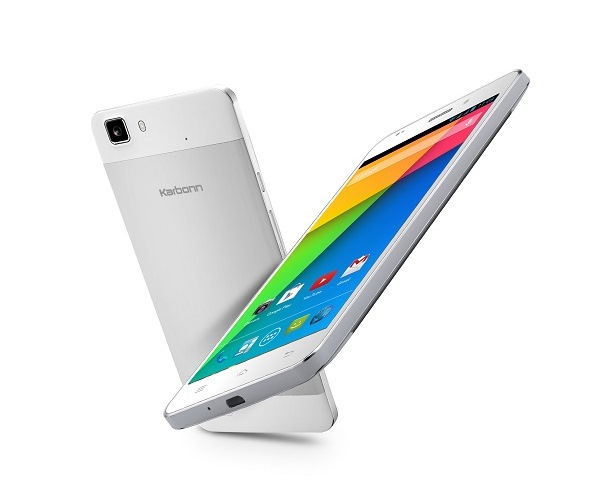
First, the Karbonn Titanium Hexa (in pic above) is the biggest announcement from the company. This is a 1.5 GHz hexa-core phone – MediaTek’s 6591 chipset, along with 2 GB of RAM. Sporting a 5.5-inch full HD display, the phone has a fairly new display quality used called LTPS. It boasts a 13 MP rear camera; and a 5 MP front-facing one. The Titanium Hexa packs in 2,050 mAh battery, and has 16 GB of internal storage, which is expandable via microSD card.

Coming to the other two phones – the Karbonn Titanium Octane Plus and Karbonn Titanium Octane – both are pretty similar in hardware specifications, except the Plus model is a bit on the beefier side. Karbonn’s Titanium Octane Plus features a 5-inch full HD screen. RAM. Under the hood, there’s a MediaTek 6592 chipset (1.7 GHz octa-core processor), and 2 GB of RAM.

The Karbonn Titanium Octane has the same 5-inch screen as the Plus. It has a 13 MP snapper on the back; and a 5 Mp front-facing camera. Packing in 2,000 mAh battery and 16 GB of internal storage, expandable up to 32 GB via microSD card.

Shashin Devsare, Executive Director, Karbonn says, “With this partnership we seek to raise the bar of smartphone experience in the country. Our new portfolio of smartphones is designed in collaboration with MediaTek to provide a powerful mobile experience.” How good the experience will be, is going to an interesting thing to watch from here.

While the Titanium Hexa has WiFi a/b/g/n, the other two support WiFi b/g/n. All three have got Bluetooth 4.0, 3G connectivity, microUSB 2.0 port, and 3.5mm headset jack. All these phones are going hit the market in late April. As far as pricing is concerned, Karbonn Titanium Hexa, available in white and black colour options, will be on sale for around Rs 16,990; Karbonn Titanium Octane Plus for Rs 17,990 and the Karbonn Titanium Octane around Rs 14,490. 

Exit mobile version