Categories
Enough said

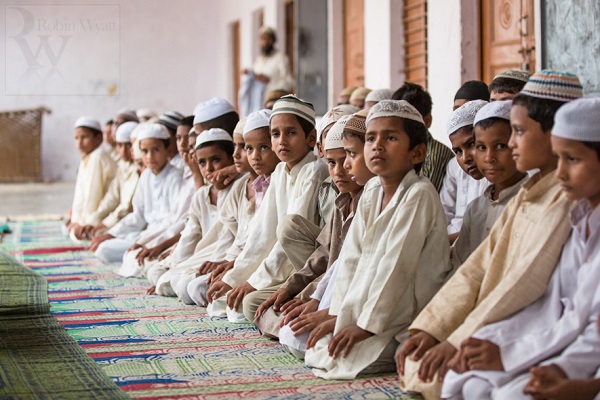
What really happens inside a madrassa?

We speak to Dr Shabistan Gaffar, Chairperson on Girls’ Education, National Commission for Minority Educational Institutions, on education for Muslims.
by Humra Quraishi

shabistan-gaffarMost people wonder what really goes on inside a madrassa – what is taught there? Are these places really recruiting grounds for impressionable young minds to take to terror? I decided to put the question to Dr Shabistan Gaffar (in pic on left), Chairperson, Committee on Girls Education (National Commission for Minority Educational Institutions, Ministry of Human Resource Development, Government of India.

Are there madrassas for girls, too? How are you upgrading them towards mainstream education? Are you also trying to introduce vocational training schemes to benefit many more from the economically challenged backgrounds?

Yes, there are madrassas for girls, too. There are two specific schemes for the development of all madrassas, whether for boys or for girls: the Scheme for Promotion of Quality Education in Madrassas (SPQEM) and Institutions for Development of Madrassas and Minority Institutions (IDMI). Here it is important to add that there are only a few institutions for girls imparting them madrassa-based education beyond the Maktab Level. Some of these institutions also provide education in modern subjects and girls can switch over to modern education after elementary education.

Vocational skill is what the educationally backward minorities need the most for retention. It is important for girls of educationally backward minorities to acquire some skill simultaneously, or on cessation of their education, to learn something which could help them in adding to the family income.

Comment on the slants by vested political interests on the very concept of madrassa education, linking it to fundamentalism and terrorism.

Those comments are political in nature and also arise because of communication gaps. All that I can say is that those who comment along these lines are either ill-informed or are not interested in knowing the reality. The reality is that the madrassas have always, and even today, play a very significant in educating hundreds of our children. They impart education that is both traditional and modern.

There is this grim reality, too: there are several within the Muslim community who are challenging Muslim women’s rights, such as the move to ban women worshippers from the sanctums of Sufi shrines, etc.

Our Commission is trying to reach out in trying to bring about awareness, and we are trying to do so through the teachings of the Prophet and the Quran where great emphasis is laid on girls’ education and on the fact that there should be no discrimination between girls’ education. They ought to be encouraged to take up different, challenging vocations. Let me also point out that already there is a change in the existing attitude, and this holds especially true in the South of the country, where these prejudices and narrow outlook do not exist.

The Justice Sachchar Committee had painted a rather dismal picture of the Muslim community lagging behind in education. What steps is the NCMEI taking to get more Muslims in education?

The National Commission for Minority Education institution (NCMEI) has been set up under an act of Parliament to safeguard the educational rights of the minority enshrined an article 30(1) of the Constitution, instilling confidence in minorities in general and Muslims in particular. The Commission has generated awareness among the Muslim community about the importance of quality education, as a result of which 1,04,75,000 children of the Muslim community were enrolled in primary school in 2009-2010. Out of this, 49 per cent were girl children.

One of the major breakthroughs came with the Commission persuading the Muslim community of Murshidabad (West Bengal) for establishment of schools. 621 primary schools were established in that region alone. To achieve the objective of women empowerment through women’s education, the NCMEI constituted a committee for girls’ education in 2007.

It is said that the Muslim community’s educational backwardness in the country is linked to vote bank politics and lack of political will. Your comment? 

Yes, till date, suitable educational institutions are not available to all sections of the Muslim community to participate in higher education. There are less numbers and a lower percentage of Muslims going in for higher education and, perhaps, that could be one reason that are not able to participate in the political sphere.

(Pictures courtesy www.signindia.org, www.robinwyatt.org)

Categories
Watch

In pictures: St Peter’s Church

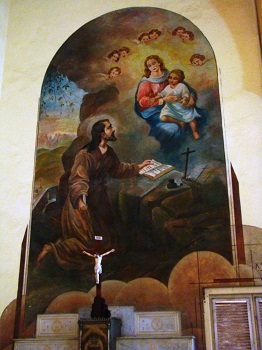
This stunning church based in Bandra houses the most astonishing stained glass windows made in China. Here’s a closer look.
by The Editors | editor@themetrognome.in

It is a prominent church in Mumbai, and like most churches, it is serene and quiet, inviting one to sit and pray a while before moving on to other mundane chores. But what takes the breath away at St Peter’s Church is its array of exquisite stained glass windows – which were crafted by a Spanish Jesuit priest Bro Antonio Navascues in China and brought by ship to Bombay in the 1930s, when the Church was rebuilt.

The earlier St Peter’s Church was built in 1851 as a simple place of prayer, but the structure began to show signs of wear and tear in the next century. The building was then demolished and a newer, bigger structure was built in its place, the foundation stone for which was laid in 1938.

We are grateful to parish priest Fr Errol Fernandes for allowing us an unrestricted access to the Church’s upper floor to photograph the stained glass windows.

See our pictures of St Peter’s Church below:


(Pictures courtesy Vrushali Lad) 

Categories
Guest writer

Come on, it’s free

What is it that lures us towards stuff labelled ‘FREE’? When will we ever learn the price of these freebies?
by Dr Pooja Birwatkar

One lazy day, my cell phone rang with a call from an unknown number. Two minutes into the call and I realised I was ‘Lucky’. The caller said my mobile number had been selected from amongst thousands and that I was entitled for a free gift. I guess all of us have got such random calls. Lured by the trap, you go to the place they call you to claim your free gift, and what awaits you is a grand welcome, nice refreshments and lot of attention.

Then the real purpose of your presence there is revealed. They begin by offering you something you never wanted. An insurance policy, a holiday package, some medical benefit…and while they talk, you’re either trying to make sense of it all, or you’re trying to stay awake, wondering when you can get your gift and go home.

freebiesSoon, you either find yourself falling in their trap and buying something you don’t want, or thinking up ways to just take your gift and scoot without having to pay anything.

I wonder: what prompts us to fall for this racket in the first place? The answer is: greed. We all want to own something we haven’t paid for or rightfully earned. Our automatic indulgence for anything FREE shuts down our mechanism for rationalisation.

So there we are, almost leaping and bouncing off the walls, grabbing anything that has a ‘free’ tag attached to it. But wait a moment and think. Why would anyone give us anything for free unless they are out of their minds, or unless they purposively want to ruin their business?

The ‘free’ tag haunts you at all places. Few days ago, as I was getting petrol filled, the man at the petrol pump gave me a magazine while returning my change. I shook my head. He said, “Le lo, ekdum free hai.” I promptly grabbed it and marvelled at the cover page and its thickness. Later, when I read it I realised it was full of advertisements and there were only two articles – and even those were not worth giving a second glance.

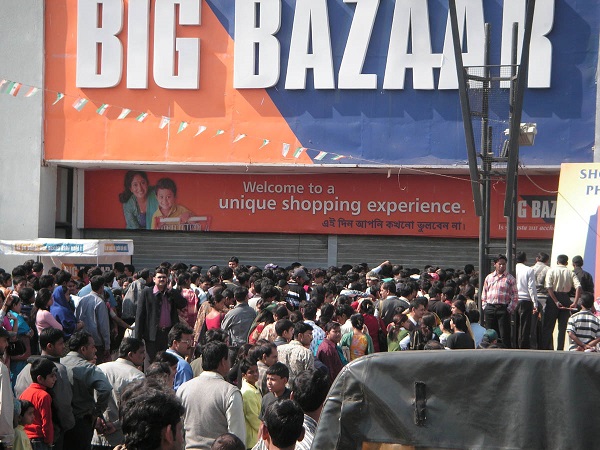
Malls entice us with free stuff the most. Visit any super store and it looks as if they love the customer. After all, who offers anything for free? But look carefully. Mostly the junk food items laden with trans fats and health damaging ingredients are given for free. These are in the form of biscuits, chocolates, savouries, aerated drinks etc. Also check the expiry date. Items given under ‘One on one free’ are usually on the brink of expiry.

So intense is the lure of the word FREE that my five-year-old son, who has just started to read and understands the meaning of the word, also has a take on it. He thinks whatever has ‘free’ written on it is actually for free and puts it in the shopping trolley. When I question him, he smartly tell me it’s free and he can take it as I won’t have to pay for it.

I recall an incident in the gaming zone of a mall where one machine said, ‘Swipe once and free gifts follow’. Mesmerised by the sight of the chocolates and other freebies, we swiped the card. Only one chocolate came out of the slot. We lamented our lack of experience and followed up our first attempt with many others. With each successive attempt, each fringed with frustration, greed and hope that this time we would hit the jackpot, we finally exhausted the card and were left with a handful of chocolates worth not more than Rs 5 – and we had spent around Rs 200 in our attempts. For Rs 200, we could have got a stock of chocolates for the entire month. But because of the promise of ‘free’ gifts, we had to do it. I learnt the price one has to pay to expect free stuff, that day.

Apart from goodies and things that money can buy, there are a lot of other things that come for free. Free advice is one such thing. And so high is our fascination for the word ‘free’ one plus one freethat we have even named the roads where we don’t pay toll as freeways. Nothing enchants us as much as taking the advantage of free services. Even if our cars are shining to the skies, we still wait in queue to get two minutes of car cleaning done for free at petrol pumps.

I remember when it was the last day for the Bandra Worli Sea Link to be toll free. Thousands went to use the free status and there were huge traffic jams for hours. Nobody realised how much more money they spent on wasted petrol – much more than the toll money. But our minds ignore the practical aspects of things when faced with making a choice over something that is free.

They say there are no free lunches in the world, and you pay the price for something free sooner or later. And yet, there are so many things that are still free but which we don’t know how to appreciate. The swaying of the trees on a dull afternoon, the slight breeze as you walk, the sound of leaves rustling in the breeze, the rainbow brightening the sky, the chirps of birds, the beauty of butterflies, the shade of trees, the fragrance of flowers, the warmth of the soil, the calming effect of the waves…all of these are free. There are no price tags attached, no hue and cry that nature makes and hence we lose the importance of what is actually free and not enjoy it. Wake up and look around. Acknowledge these real free gifts before they cease to be free any more.

(Pictures courtesy  www.thesocialmediabloke.com, shopping.indiatimes.com, www.whiteindianhousewife.com. Images are used for representational purpose only)

Categories
Read

Review: Advantage Love

Madhuri Banerjee’s newest book has an interesting plotline and two likeable characters, but is marred by some cliched, preachy storytelling.
by Sharad Panjwani

I’m not a huge fan of romance novels, but I don’t turn up my nose on them either. If written cleverly and with the right mix of empathy and humour, there really isn’t a genre that is more entertaining. You’ll notice this about romantic comedies, as well.

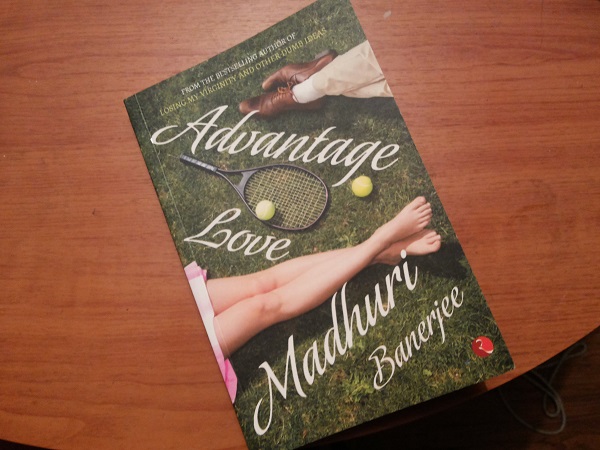
Madhuri Banerjee’s Advantage Love is her newest book after Losing My Virginity And Other Dumb Ideas and Mistakes Like Love And Sex. Personally, I found Advantage Love flagging in spots and a bit too preachy for my liking – despite an interesting premise.

Trisha Mathur, the novel’s heroine, is an independent-minded woman who believes in making her place in the world on her own talent and merit. The story begins with a debate that Trisha is participating at her college, JNU, against Vedant Kirloskar, the dashing, handsome son of a prominent politician. A meeting later, sparks fly between the two and they start a steady relationship. Though in love with Trisha and extremely dependent on her to make his fledgling political career take wings, Vedant is resistant to the idea of making a deeper commitment and refuses to discuss marriage and a future. The relationship ends on a sour note, with Vedant moving to Mumbai to focus on his political career.

Heartbroken, Trisha immerses herself in her job at the UNICEF and a few months later, happens to meet tennis star Abhimanyu Laxman, who is immediately attracted to her. She doesn’t immediately look to enter into a relationship with him, not wishing to get hurt again. But she rediscovers love with Abhimanyu, and just when her heart is healing, Vedant meets her again.

It’s not a bad plot by any means, but I had a problem with how predictably things happen in the book. You just know Vedant is going to break Trisha’s heart and there are umpteen hints of his imminent return, and the character Vedant is curiously one-dimensional. Besides, he has an annoying tendency to spout poetry when wooing Trisha – if that is what girls really like, then well… *starts learning poetry to use, just in case*. I liked Abhimanyu Laxman loads better, though – he is decent, more open to commitment and wears his stardom with ease and just the right amount of arrogance.

Madhuri displays a tendency to ‘tell, not show’ in her writing; instead of letting the reader understand plot development through dialogue and situation, she writes entire paragraphs blandly describing what the characters are feeling and why they do what they do. What’s more, there is too much sermonising about love and relationships, most of it through Trisha’s friend and mother advising her, and the conversations seem stilted. Personally, I wouldn’t want even my best friend talking to me thus: ‘I don’t want to procreate. And I don’t want to have any regrets. I don’t know if we’ll grow in the same direction over the course of years. No one does. Hell, even railway tracks that are laid parallel straight have to change course or be replaced. We are all continuously changing. But as long as we know that this is the path we want to be on and this is the person we want to share today and the now with, tomorrow and the future will sort itself out. When you say “I love you”, it’s meant as forever. There is no time limit that comes with love.’

And so on.

Maybe fans of romance novels will love this book, and I’m not suggesting they shouldn’t. Maybe others will enjoy this love triangle more than I did. For me, though, a little less predictability and a lot more twists and turns would have done the trick. I would have liked the girl to love and lose…but then I like an unresolved love story.

I’m going with 2.5/5 for Advantage Love.

‘Advantage Love’ is available for sale on Flipkart.

Categories
Tech

Motorola’s Moto X launches in India

The device has a starting price of Rs 23,999, has new features like Active Display, and comes in five colours.
by Manik Kakra | @Manik_K on Twitter

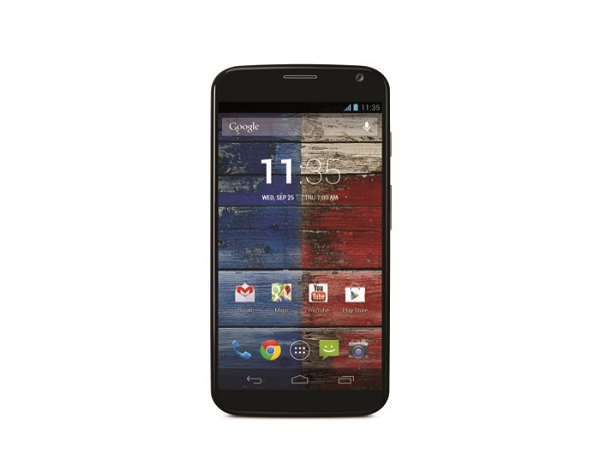
Motorola launched its Moto X smartphone in India today. The launch has been done through the same way it was with the Moto X – available from Flipkart. The Moto X was among the first crop of phones released by Motorola after being acquired by Google.

The phone has a dual-core Snapdragon S4 Pro SoC (1.7 GHz dual-core processor and quad-core Adreno 320 GPU) coupled with Motorola’s own two separate processing for always-on processing, along with 2 GB of RAM. This flagship device boasts a 4.7-inch 720p AMOLED, which means a slightly larger screen that its budget avatar – Moto G. On the back, there is a 10 MP camera (with flash); while the front has got a 2 MP one.

Moto X_woodenApart from the always-on voice feature, the Moto X also comes with something called Active Display, which is similar to Nokia’s Glance Screen, showing you notifications even when the display has been turned off. Other features include the usual ones for an Android 4.4.2 smartphone – WiFia/b/g/n/ac, Bluetooth 4.0, microUSB 2.0, and NFC. Users will also get, just like with the Moto G, 50 GB of free storage on Google Drive for two years.

Flipkart has said that it will only be selling the 16 GB model at launch, and there are five colours available. The eCommerce portal is providing EMI payment schemes for buyers as well as official Moto X cases on discounted prices. While there’s no Moto Maker available for the Indian buyers, Flipkart confirmed that it is selling both the plastic as well as wood (teak and walnut finish) variants of the device. The 16 GB model (plastic) has been priced at Rs 23,999, and the wood finish variant has been launched at Rs 25,999.

Categories
Trends

Mumbai gets laparoscopy-only surgical facility

The newly opened Khar-based centre will offer surgeries across many diverse specialities under one roof, and will use 3D technology.
by The Editors | editor@themetrognome.in

Laparoscopy is fast becoming the preferred option for surgery for several people; be in cancer or a simple cosmetic procedure, surgeons too, are looking for ways to use laparoscopy in their surgeries.

Mumbai recently got its own all-laparoscopy surgical facility at Khar. The Beams Hospital claims to be a pioneer in laparoscopic gyneac surgery, and was inaugurated by Niraj Manglam, CEO Beams Hospital  and founder of UK-based Nu Cosmetic Clinic, apart from Dr Mahesh Patwardhan, chief laparoscopic gyneac surgeon from London.

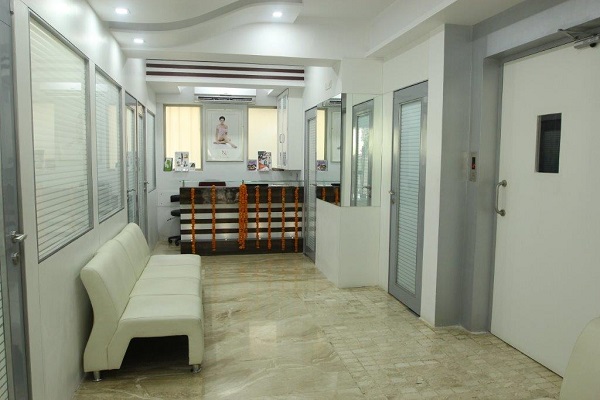
The center will deliver the entire gamut of services spanning across different specialties, including bariatric surgery, laparoscopic surgery, maternity, general surgery, gynecology, and cosmetic surgery. The facility has 18 boutique beds and is spanned over four floors, and includes three HDU/ICU beds.

The surgeries at the facility will be carried out using the 3D technology.

Exit mobile version