Categories
Whatay!

What we learnt from ‘Koffee With Karan’

Some major learnings, none of them pleasant. Here’s a list of 5 top reasons we’re ditching this show’s next season.
by The Editors | editor@themetrognome.in

We all love a good dose of gossip, especially about celebrities. And what could be better than celebrities bitching about other celebrities? On the face of it, Karan Johar has a good formula on his hands – he invites the biggest names from the Hindi film industry to the show, he sometimes asks them about their love lives point blank, he laughs at himself and is generally a friendly presence.

And yet…Koffee With Karan Season 4 was an extremely shallow, bordering-on-pathetic attempt to make our desi stars appear more glamorous and more intelligent than they already are (not). If Karan was hoping to make a better impression this time around and lay the groundwork for the show’s next instalment, we are sorry to say that this season has been terrible, and during the father and daughter Kapoor’s last episode, we nearly stabbed ourselves in the eyes with a blunt pencil.

If this show comes up with Season 5, and it will, we are going on vacation and coming back only when the show’s over. Here’s why:

1. Karan Johar is homophobic.

We don’t know about you, but Karan gave us a headache in every single episode with his ‘At gunpoint, if you had to have a gay encounter…’ question. At gun point? What’s so gun point about having a gay encounter? Then he thought it was very funny that Aditya Roy Kapur ‘admitted’ to a gay relationship with Ranbir Kapoor. What’s more, the question and the resulting giggles indicated that Karan, and his guests, wanted us to think that everybody in the room was straight.

Next time, Karan, if you must start a question with ‘At gun point…’, consider these endings:

– Which of my films would you watch on loop for a week?

– Tell me, what do you really think of the coffee hamper?

– Tell me, why does nobody remember the name of the dog in Hum Aapke Hain Koun?

2. The dumbest guests always make it to the show.

Sonam KapoorA case in point is Sonam Kapoor, who took top spot this season from such worthies as Alia Bhatt (“My GK is bad!”) and Anushka Sharma, whose only response to any question about Virat Kohli was a giggly “Shut up, Karan!” Not only were Sonam’s views on ‘art films’ and ‘not good-looking people are not necessarily good actors’ astonishing beyond anything else we’ve heard this year, she kept peppering each sentence with the word ‘like’. Like, every four words, she would say ‘like’.

And then, like, she said, “Robert deNiro!” to the question, ‘Who said, ‘An eye for an eye makes the world blind?’ Like, really, Sonam. Did you leave your brains in your other fashionista suit?

3. Karan invites very boring guests with nothing to say.Salman Khan

For all its so-called ‘fun and candid’ quotient, our celebrities are remarkably boring on the show. Most of the guests this season made us yawn with their responses to questions – we’re not saying the likes of Aamir Khan and Madhuri Dixit are boring people, they probably get like that for Karan. The only exception to this parade of yawn-worthy guests was Salman Khan, who was merely an ass. What’s more, the show does not invite anyone outside of Mr Johar’s immediate clique – why not invite Kangana Ranaut, Richa Chadha, Huma Quraishi, Randeep Hooda, to name a few? Maybe they’re too intelligent for this show.

4. The coffee hamper is getting increasingly tacky.

What was that thing, really? We swear that picnic basket thingy is so tacky, if it met Sonam Kapoor in a dark alley, she would first have hysterics and then comment on how ‘not good looking hampers are not necessarily good hampers’.

And why do Karan’s guests pretend to fall all over themselves for the chance to win it? More to the point, what is in it? Why are the contents so secret? We’re dying to get our hands on the hamper, so that we can set fire to it.


5. This show is a cesspool of lies.

So. Many. Lies. On. One. Show. Either these people really believe their own deluded statements or they think viewers are nuts. The following is just a small list:

What they said What they meant
“I never read gossip magazines or papers.” I gloat over gossip written about others.
“We’ve never been friends, but we’ve always been cordial to each other when we meet.” Except for the times when I look through her/him, which is always.
“I don’t have any enemies in the industry.” Only frenemies, because I’m a bitch that way.
“I’m not insecure. There’s place for everyone.” I will do whatever it takes to sabotage my rivals’ projects.
“He’s never given me a reason to not trust him. We love each other too much to cheat.” So what if I caught him 12768 times? At the end of the day, he always comes back to me, like a homing pigeon.
“Finally winning this hamper is a monkey off my back.” Only a monkey on crack would actually want to win that thing.
“I didn’t marry a hero because I was not interested.” Also because the hero I was seeing then suddenly got himself arrested. What a bummer.


(Pictures courtesy www.india-forums.com, www.in.com, www.indiatimes.com, idiva.com) 

What did you think of Koffee With Karan, Season 4? Tell us in the comments section below.
Categories
Hum log

Mumbai photographer wins Wisden MCC Cricket Photograph of the Year 2013 award

Atul Kamble, noted photojournalist with Mid Day, was adjudged the winner for his stunning picture of Sachin Tendulkar’s last match at Wankhede.
by The Editors | editor@themetrognome.in

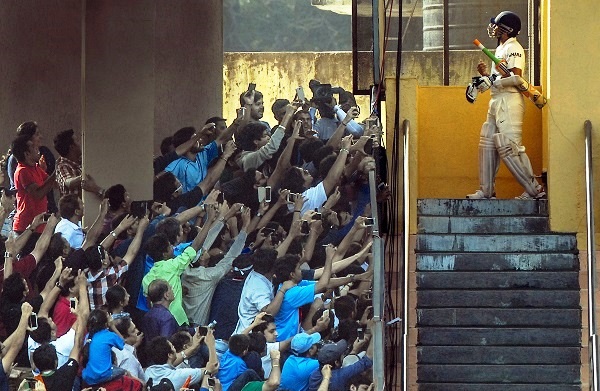
Atul KambleMumbai-based photographer Atul Kamble, a noted name in news journalism, was declared the winner of the Wisden MCC Cricket Photograph of the Year 2013 Award yesterday. Atul’s picture of legendary batsman Sachin Tendulkar emerging from the dressing room to take the pitch for his last match, beat out stiff competition in 500 overall entries from around the world to be declared the winner.

With the win, Atul also pocketed a cool £1,000 cash prize. Other winners included Shaun Roy, professional photographer from South Africa, and Khalid Rayhan Shawon, an amateur photographer from Bangladesh. The judging panel comprised Chris Smith, Patrick Eagar, Nigel Davies, Eileen Langsley and Hugh Routledge.

Atul’s picture was shortlisted with 10 others, and ultimately chosen for its “sheer sense of occasion”, as Chris Smith put it.

We spoke to Atul after his big win. Excerpts from the interview:

How did you choose this spot for the picture?

I was positioned at the boundary line on the opposite side of the players dressing room. Thanks to my tele-photo lens (zoom lens), I managed to shoot this picture from the opposite side of the ground.

When you took the shot, what was running through your mind?

I was excited. I knew I had a good off-beat (off-action) picture. But I was a little emotional myself too, because I knew that this would be Sachin Tendulkar’s last innings and as a Mumbai player, I had followed his career throughout.

Would you say this is your best picture? What are some of the other great shots you have taken?

I think I’d say that this is one of my best pictures till date. I have a few favourites, both in sport as well as in general photography, and this will surely be among the best I have shot.

How long have you been a photojournalist? Can you describe a memorable incident in your photography career?

I’ve been a photograhper for almost two decades now, 18 years to be precise. One of the biggest and most emotionally stirring moments for me as a photographer was during the Azad Maidan riots in Mumbai on August 11, 2012. Some miscreants took down the Amar Jawan Memorial outside CST Station and I shot that image. The images incensed many and created a furore, both on the virtual and social media, as well as in the real world. Some political parties even termed these miscreants to be traitors.

So what does this recognition from Wisden mean to you? 

Being a sports photographer primarily, there can be no bigger award than one that comes from the Mecca of Cricket — Lord’s. MCC’s recognition has to be my biggest award as a sports photographer.

(Pictures courtesy Atul Kamble)

Categories
Beauty

Summer-proof your skin

Skin care for the summer is really about revisting the basics to achieve great skin – cleansing, exfoliating and moisturising.
by Glen Lewis

Spring cleaning doesn’t just have to be for your home or office – you can also do it for your skin! And the summer season always brings new battles for your skin care.

With summer upon us, it’s good to get into a healthy skin regimen so that you can stay beautiful no matter what the weather is outside.

Winter can be a horrible time to dry out your skin in all that cold weather and leave you with rough or even scaly feeling patches that you want to get rid of (especially when you can finally lose the coat). The most important thing you can do in this season is try out different products and see which ones are right for you, so that by the time the temperatures really kick in, you know exactly what your skin needs so you can protect it from the heat and the sun’s rays.

Exfoliate

The first step in any healthy skin regimen is to exfoliate. If your skin is feeling a little dry and irritated from the cold winter, you want to make sure you still use an exfoliant, but don’t overdo it, because it could do more harm than good. Finding a gentle cleanser that will clear away any impurities from your skin while not drying out your skin too much will be the perfect balance your skin needs in order to bring back its healthy glow. In order to get that glow you want, you have to clear away the dead skin cells and repair the damaged areas.

Hydration

After exfoliating, it is essential to hydrate your skin. The best thing to do is to find a moisturiser that is hydrating and not oily. You want to repair and prevent, not overcompensate with a product that has too much of a lotion base.

Clearing the dead skin away and then helping your skin retain moisture will give you the fresh face you want for spring and put you in a great routine for when summer rolls around. It would be best to find a moisturiser that has SPF to use in the morning so that it can protect your skin during the day when you’re exposed to the sun. It also has beneficial vitamins that will make your skin brighter and smoother.

Focus on your whole body

Your skin care shouldn’t focus only on your face – your entire body could benefit from some exfoliation and hydration. With a body wash containing exfoliating beads, you take care of the rest of your body, too. And finding a body lotion that repairs all that dryness can be the perfect combination to leave you looking and feeling fresh during these warm days.

By repairing the damage caused by winter and revealing that smooth, bright, healthy skin underneath, you will be in the perfect position to prevent any damage that will come in the summer. Equipping yourself with products that react well with your own skin tone will be beneficial not only to get you through the season, but through the rest of the year as well.

Gwen Lewis is a journalist who has a passion for beauty and makeup, and hopes that these tips and tricks help you have glowing summer skin.

(Picture courtesy www.burkewilliamsspa.com, toptenpk.com, greenbeautyteam.com)

Categories
Learn

Mumbai children are nutritionally at risk

Survey finds that seven out of 10 children aged 2 to 10 years in four metros had below-median growth parameters.
by The Editors | editor@themetrognome.in

Children today are exposed to a variety of junk food, and are getting very little exercise. Now a new study reveals that while most children are not eating right at home, they are also at risk of not growing properly.

A study commissioned by Abbott and carried out by market research agency TNS finds that of 1,181 children surveyed in the country’s four metros, as many as 45 per cent are nutritionally at risk. The survey was conducted on the premise that many mothers in metro India are concerned that their child is a fussy eater; this prompted dieticians to study the growth parameters of these children, i.e. their height and weight as per their age and eating behaviour.

The findings

children refuse to eatMumbai was found to lag the most in children’s nutritional intake: most number of respondents were below-median (78 per cent failing on either height or weight or both), below 15th percentile children (45 per cent nutritionally at-risk). However, Mumbai had the lowest percentage of fussy eaters (36 per cent) but the proportion of fussy eaters falling below the 15th percentile on weight was the highest (45 per cent).

Additionally, 455 of the below-median children failed on both height and weight parameters, and four of 10 children in the metros are nutritionally at risk.

Interestingly, vegetarian or non-vegetarian food preferences were not observed to have much impact on height or weight as the eating behaviour. The top three fussy eating behaviours observed in the survey were strong food likes/dislikes, consuming a limited number of food items, and refusal to eat vegetables and/or foods from other food groups.

Fussy eating was observed more in the affluent socio-economic classes as compared to lower SEC C and D households.

“Fussy eating is often brushed aside as a growing-up phenomenon by elders in the family. But, over a long period of time, it can impact growth”, says Dr PS Moralwar, senior paediatrician from Navi Mumbai. “It begins as early as infancy and has an impact that is evident in later years of life.”

“The study findings confirm the concerns of Indian mothers in metros,” says Amal Kelshikar, Country Head and General Manager, Abbott Nutrition International, India. “Growth in children can be impacted by different factors, nutrition being one of them. Nutrition is important and is linked to eating behaviour. Awareness of fussy eating behaviour needs enhancement.”  

(Pictures courtesy www.nestle.in, blog.babyoye.com. Images are used for representational purpose only) 


Categories
Wellness

Beware of melanoma

This skin cancer is less common but extremely deadly. If diagnosed early and before it spreads, melanoma may be cured.

Melanoma is a less common type of cancer, yet it is considered extremely serious when compared to the other types of skin cancer. Melanomas are usually brown or black in color, nonetheless can appear pink, tan or even white for that matter. Here is an article that will deepen your understanding of this particular type of skin cancer.

What is melanoma?

Melanoma skin cancer is a cancer that begins in the melanocytes. Most of these skin cells still produce melanin, and hence melanoma tumors are often brown or black in appearance. Nevertheless, there are numerous melanomas that could appear pink, tan or even white.

This condition usually occurs on the chest and back in men and on the legs in women, however, it could start at other places too. Another fact is that having dark skin reduces one’s chances of getting melanoma, yet people with dark skin could also develop this type of cancer.

Since, this is a rare skin condition, cancer specialists consider it extremely dangerous, and, nonetheless, if diagnosed in the early stages, it can be cured. Also, if not caught early could spread to other parts of the body as well.

wear sunscreenWhat are the risk factors for melanoma skin cancer?

Ask any oncology specialist and he/she will tell you how there is no exact cause to this rare skin cancer. However, there are certain risk factors that are linked to this disease such as too much exposure to UV light, numerous moles on the body, light coloured skin and hair, a family history of melanoma, a weak immune system, etc.

How can you prevent getting melanoma?

– Some prevention techniques include limiting your exposure to strong sunlight and other sources emitting UV rays.

–  Stay in the shade, especially in the middle of the day, between 10 am and 4 pm, as the sun’s rays are the strongest then.

– Covering your head with a hat works perfectly well, as a hat helps protect the neck, ears, the area around your eyes, forehead, and nose.

– Protect your skin with a sunscreen. Coat your lips with a protective lip balm.

– Use a pair of sunglasses as and when you know you’re going to stay out in the sun.

How can melanoma be treated?

On being diagnosed with this type of cancer, your oncologist and his/her team will discuss all the possible treatment options with you. This discussion is solely going to be based on your individual case. Some of the options may include:

1. Surgery

2. Immunotherapy

3. Targeted therapy

4. Chemotherapy

5. Radiation therapy

Who are the experts specialists that could be involved in treating melanoma skin cancer?

Some of the experts include dermatologists, surgical oncologists, medical oncologists, radiation oncologists, dieticians, nurses, etc.

Understand the fact that melanoma can be treated with surgery alone, if detected in its early stage; nonetheless, there are times when more than one type of treatment could be used as well.

Concluding, if you are someone who is diagnosed with this type of skin cancer, try and get a second opinion. It is important to consult the right doctor and start your treatment plan as early.

 (Pictures courtesy skincancerawarenessproject.com, www.dailymail.co.uk)

Categories
Trends

Mumbai losing call centre business to Philippines?

Mumbai and other Tier I cities are fast losing the voice and call centre business to Philippines, finds a study.
by The Editors | editor@themetrognome.in

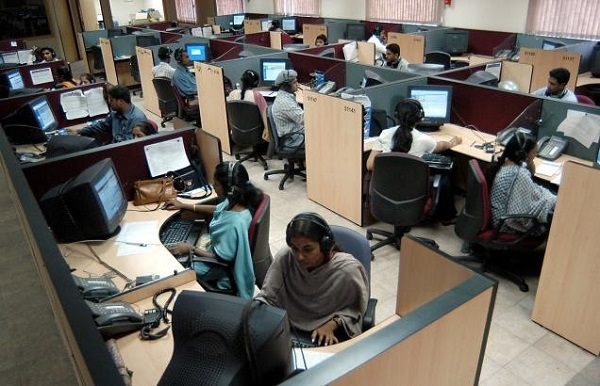
Mumbai has a sizeable number of call centre businesses – or so we think. If a recent study is to be believed, Mumbai, Delhi, Kolkata and Chennai may be losing its BPOs and call centres to Philippines.

“India is currently losing about 70 per cent of all incremental voice and call centre business to competitors like Philippines and Eastern Europe, and unless the domestic BPO (Business Process Outsourcing) industry diversifies the delivery footprint to take advantage of low-cost centers, our competitors will further consolidate their position,” says the study conducted by KPMG and ASSOCHAM. 

“It is estimated that in the ongoing decade, India might lose about $30 billion in terms of foreign exchange earnings to Philippines which has become the top destination for Indian investors, thus the need to reduce costs and make operations leaner is increasingly becoming significant across the BPO industry,” said DS Rawat, Secretary General of ASSOCHAM while releasing the findings of the study.

Reportedly, even a number of Indian firms have also set up substantial operations in Philippines which has a large pool of well-educated, English-speaking, talented and employable graduates (about 30 per cent graduates in Philippines are employable unlike 10 per cent in India where the training consumes considerable amount of time).

“Employees in Philippine’s call centers speak English fluently with a neutral accent, which is what customers look for and that is something missing in Indian accents and that is a prime reason why BPO business is thriving in that country,” said Rawat. “Cultural proximity to the US together with availability of talented manpower are key reasons why BPO companies prefer expanding their operations in Philippines.”

Expansion of non-English BPOs in Tier-2 and Tier-3 centers, which can provide services to the telecom and aviation sectors at low costs, will increasingly play significant role in growth of domestic outsourcing industry, further noted the study.

“Lower attrition rate in smaller towns is a big positive owing to lower recruiting and training costs, while there is comparatively high attrition rate of 30-35 per cent in tier I cities,” said Rawat, quoting from the study. “Besides, even transportation costs for BPO employees and real estate prices in smaller cities are lower as compared to the metros.”

Cities like Ahmedabad, Chandigarh, Coimbatore, Dehradun, Jaipur, Kozhikode, Nagpur, Nashik, Palakkad and others can help meet 50-60 per cent of projected talent requirement of BPO industry over the next five years, the study added. In order to provide the content in local language there is need to address challenges of fonts, poor bandwidth and the sector specific need based services should be offered.

Besides, projects like the National e-governance Plan (NeGP), the Unique Identification Authority of India (UIDAI)  and other government projects are likely to give a fillip to the domestic BPO sector in smaller cities and towns if the industry is able to tap the talent successfully.

The decision to set up BPO centers in Tier 2 and 3 cities requires striking the right balance between all elements and a patient, long-term approach is the key, added the ASSOCHAM-KPMG study.

 (Picture courtesy thehindu.com)

Exit mobile version