Categories
Places

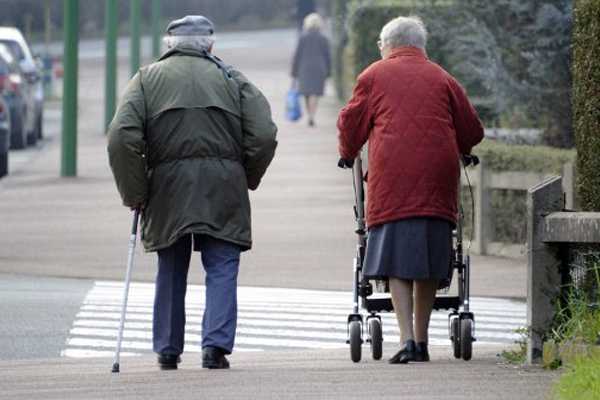
Senior citizens get 20% concession at MTDC resorts

For senior citizens planning a holiday: MTDC is offering 20 per cent off on accomodation at 19 destinations in Maharashtra.

It’s a great time to be a senior citizen in Maharashtra – if for no other reason, then to enjoy a holiday at a great spot in the State at a concessional rate. As per a Government Resolution (GR) issued by the Maharashtra Tourism Development Corporation (MTDC) last month, senior citizens over 65 years of age can avail of a 20 per cent discount on accomodation at MTDC resorts at 19 destinations.

The concession extends to all kinds of rooms. Seniors have to book in advance to avail of the offer, but only if they book rooms for Monday to Thursday, and provided they furnish proof of age.

The concession is valid for senior citizens at MTDC resorts located at Ganapatipule, Mahabaleshwar, Matheran, Harihareshwar, Tarkarli, Tarkarli Houseboat, Tadoba, Velneshwar, Ajintha T-junction, Fardapur, Bhandardara, Malshej Ghat, Chikhaldara, Panshet, Hotel Pilgrims Inn (Shirdi), Karla, Tourist Welcome Centre (Nagpur), Titwala and Tuljapur.

(Picture courtesy hindustantimes.com) 

Categories
Trends

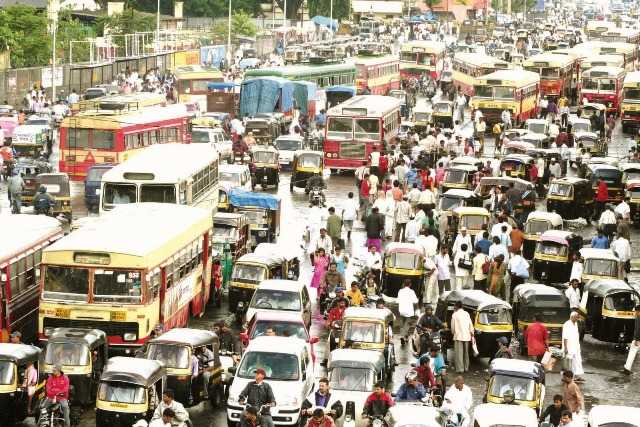
The city of carcentricity – Part I

The first of a two-part series on why public transport, and not cars, is the ideal solution for Mumbai’s roads.

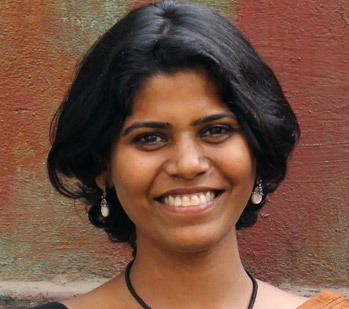
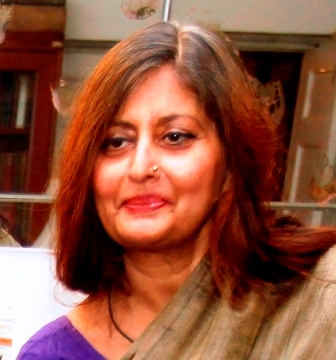
Trupti Amritwar Vaitla (see pic on left), Chief of Operations at Mumbai Environment and Social Network (MESN), and also the head of Rachana Sansad’s Urban Design Cell, throws light on the state of public transport in Mumbai and the loopholes therein – the biggest one being the shift of focus from public transport to a private, car-centric model one that the city has resorted to.

Excerpts from an email interview that Nidhi Qazi conducted with her:

Nidhi: What is the increase in the number of cars seen on the roads in the past decade? How has that impacted the public transport system of Mumbai?

Trupti: As reported by MMRDA in its latest compilation of Basic Transport Statistics in Mumbai, the growth for the last 20 years is 214 per cent of four-wheelers (4W) and 432 per cent of two-wheelers (2W). If we consider also the growth together with Thane city, it is 2875 per cent of 4W and 1500 per cent for 2W.

This drastic growth, particularly in Thane district, is very striking and the reason is that many vehicles whose owners are residents of Mumbai get their vehicles registered in Thane to avoid paying octroi duty.

The huge growth in two wheelers indicates that bus users are shifting to this mode of private vehicles, which is affordable, faster and convenient till the last mile. On the other hand, the BEST bus trips have remained constant for the last 10 years on account of being stuck in traffic congestion (thus reducing its speed and reliability  thus becoming further unpopular and losing usership).

According to a National Urban Transport Policy (NUTP) report, “Millions of man hours (and fuel) are lost with people ‘stuck in traffic’. The primary reason for this has been the explosive growth in the number of motor vehicles, coupled with limitations on the road space that can be provided as it is a very expensive infrastructure.”

Today in Mumbai, this congestion has impacted the efficiency of buses, and intermediate public transport like taxies and autos, (and even cars) as they are unable to complete the required number of trips  to carry more passengers with better frequency (although the number of buses has increased by 50 per cent during the last 10 years).

N: The reason for such an increase in the number of cars?

T: On the one hand, the deteriorating quality of public transport and on the other hand private transport is getting more attractive, cheaper and easily available.

Potential car buyers are increasing with increasing income levels between the 25 to 30 age group. Car prices have gone down, and now provide better quality, reliability and fuel efficiency and are available with easy car loans with reduced interest rates, and with no waiting period.

Most importantly, billions of rupees are spent on car advertisements to sell dreams to young potential buyers, increasing their aspirations. And if this is not enough, all our mega road projects are adding further fuel to this fire by providing dreams of more road widening, highways and freeways. And easy loans on attractive terms are available for asking – a thing unheard of until recently!

N: What does ‘equitable road space’ mean? Where does the city stand on that front?

T: I would like to refer to the NUTP report, which says “At present, road space gets allocated to whichever vehicle occupies it first. The focus is, therefore, the vehicle and not people. The result is that a bus carrying 40 people is allocated only two and a half times the road space that is allocated to a car carrying only one or two persons. In this process, the lower income groups have, effectively, ended up paying, in terms of higher travel time and higher travel costs, for the disproportionate space allocated to personal vehicles. If the focus of the principles of road space allocation were to be the people, then much more space would need to be allocated to public transport systems than is allocated at present.”

In Mumbai, road space allocation for buses is less than 10 per cent, taxi, autos is about 20 per cent and private transport is about 60 per cent, while commercial vehicles is about 10 per cent. Exactly reverse is the ratio of  passengers carried by each mode, where buses carry more than 65 per cent passengers, taxi auto about 20 per cent and private vehicles 15 per cent.

A study done by transport policy institute shows comparative per person travel space needs. A bus commuter requires 75 sq ft space travelling in a bus at 50km/hr, whereas a person travelling in the car occupies 250 sq ft while standing and about 1,500 sq ft moving at a speed of 50km/hr. Each car requires at least three car parking spaces in the city, one at home, other at office and third at shopping and other activities. Each parking space demands not less than 400 sq ft which is more than an affordable dwelling unit for four persons. This clearly indicates how space intensive the cars are and the tremendous pressure on the road infrastructure.

In the last 10 years, many highways, flyovers and the Sea Link have got built in the name of solving congestion in our city. When MESN did the traffic count, we realised that on an average 2 per cent buses, 23 per cent taxi/auto and 75 per cent cars ply on flyovers; on the Sea Link, less than 1 per cent buses, less than 10 per cent taxi and above 90 per cent cars.

The buses do not take the flyovers and also the fast links like Sea Link and the new Eastern freeway have very few entry or exit points, which again discourage bus usage, as they need more stops with easy accessibility. This clearly indicates that these big infrastructure projects are not pro-public transport and are in effect, getting subsidised by non-users’ tax money.

Road transport projects require large investment and cannot be self-sustaining through users’ fee alone; they need some viability gap funds. Giving such funding to public transport is acceptable all over the world as it is in the interest of many. However, in the case of Mumbai, unfortunately all the road transport projects are in effect, car-centric.

Part II, tomorrow: How non-car users are paying for the upkeep of cars and infrastructure that supports them.

(Featured image courtesy akshardhool.com. Trupti’s pic courtesy bmwguggenheimlab.org)

Categories
Learn

The heat is on

Temperatures to touch almost 40 Degrees Celsius today. Seesaw weather pattern continues, with 20 Degrees deflection in minimum, maximum temperatures.

You are right in thinking that the current weather has breached all levels of crazy. It’s very hot in the day and unexpectedly cool in the night. Today is just the fourth day of March 2013, and in these four days, the city’s experienced some terrific highs and lows in temperature.

Just yesterday, the maximum temperature touched the 39 Degrees Celsius mark – making it the third consecutive hottest March day for Mumbai ever – and dipped to 16.2 Degrees Celsius in the night. Today, too, the same pattern is expected to continue. In fact, the Indian Meteorological Centre (IMD) Mumbai anticipates that the maximum temperature may touch 40 Degrees while the minimum may dip to 14 Degrees, both large departures from the normal March temperatures of 33 Degrees Celsius (maximum) and 20 Degrees Celsius (minimum).

According to VK Rajeev, Director, IMD (Western region), the temperatures have risen because of an ‘anti-cyclone’ formation over the North-East Arabian Sea. For the uninitiated, an anti-cyclone is an area where high pressure winds flow in clockwise direction in the Northern hemisphere and in the anti-clockwise direction in the Southern hemisphere, thus causing temperatures to rise. Humidity levels are also affected.

(Picture courtesy green-4-u.com)

Categories
Enough said

Why the Railway Budget makes no sense

Humra Quraishi describes her adventures with the Indian Railways and wonders if travel basics would ever be taken care of.

Whilst reading my daily Thought For The Day a few days ago – Blaise Pascal’s ‘ Small minds are concerned with the extraordinary, great minds with the ordinary’, I muttered aloud that this thought seems to fit rather well with Railways Minister Pawan Kumar Bansal’s rail budget.

Typically, the Rail Budget comprised big announcements of bigger trains, especially from his home town Chandigarh, complete with hackneyed tricks of modern-day technology (he was trying to sound technology savvy, I think) without paying attention to the grim fact that e-bookings and reservations are beyond the reach of most of his countrymen. But the Honourable Minister doesn’t seem bothered to look into ground realities. Nor does he seem particularly concerned about the dangers lurking for rail passengers – no, not in the form of terrorists, but rats and cockroaches and stray dogs in and around train compartments.

Mind you, I am not talking of slow passenger trains but those special ones – the Rajdhanis and Shatabdis. I really want to see what the Minister’s new wonder – Anubhuti – will be like.

I’m not much of a traveller; the last time I took the train was the Lucknow-Delhi Shatabdi and the Delhi-Ajmer Shatabdi. There were rats in the coach and the railway staff’s only solution seemed to be to play hide-and-seek with them. We tried putting our feet in a high-alert (and higher-than-ground-level) posture, but you know how it is. After a point, you forget to remain so tense, only to be reminded by another darting rodent. We remained restless for long hours. As if that wasn’t enough, several well-fed cockroaches arrived on the scene, sniffing around the food trays that nobody would bother to take away hours after we’d eaten.

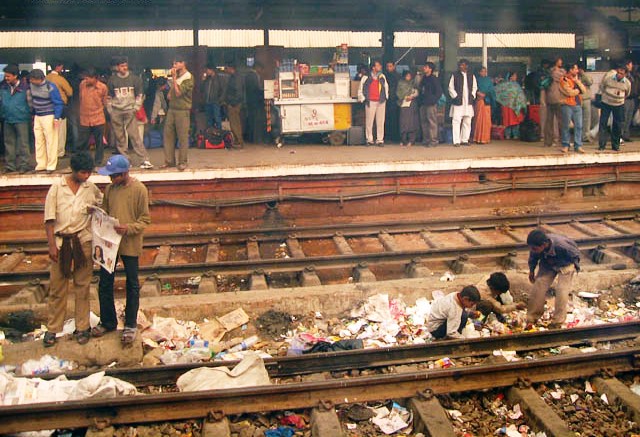
Then there were dogs on the platforms. Not one or two, but several loitering around as though it was their home territory (which it probably was). I was dismayed to see how the railway platform of the capital city was stinking with the filth and the animals around.

The Honorable Railway Minister should undertake a train journey one of these days, one of those unannounced and ‘spontaneous’ ones that his ilk is so fond of taking in the presence of press photographers and news channels, so that he can see the mess in the Indian Railways for himself. It will be even better if he carries a bag or two, preferably containing valuables, and experience for himself the many thefts taking place on station platforms. During one of our journeys, one of our handbags was cut into and left bereft of the last rupee tucked within its interiors; we rushed to the police station situated at the end of New Delhi Railway station, only to hear the paunchy policewallahs tell us that it was next to impossible to retrieve the stolen stuff. Very philosophically they added, “Madam, what is gone is gone.”

Mr Bansal, it is spring…that time of the year when there’s supposed bahaar in and around your bungalow, but do try and move out from your gardens and take a stroll on the railway platforms. Just like in your Budget speech, I am certain that you will utter some more of those moving couplets you regaled us with a few days ago, but this time, you may genuinely feel what you say. If you do take such a trip, be sure to watch out, apart from the filth and the mess, for the little children, some of them battered beyond recognition and several others made to beg. Look out also for the many unscrupulous activities that take place in the Railways’ premises. But no, don’t go as a minister with those sepahis and chamchas hovering around you, but as an average Indian who travels without security convoys.

Humra Quraishi is a senior political journalist based in Gurgaon. She is the author of Kashmir: The Untold Story and co-author of Simply Khushwant. 

(Picture courtesy bryansander.com)

Categories
Do

Online photo contest: ‘Ordinary women, extraordinary work’

US Consulate brings an online photo competition on the occasion of Women’s Day. You can submit entries till March 31.

In honour of International Women’s Day and Women’s History Month in March, the US Consulate General Mumbai is hosting its third annual online photo contest on the theme ‘Ordinary Women, Extraordinary Work.’

The contest will run from March 1 to March 31, 2013 and is open to Indian nationals residing in Maharashtra, Gujarat, Madhya Pradesh, Chhattisgarh, and Goa. The photographs you submit must belong to you and must not be sourced from anywhere. If you win, your entry will be posted on the Consulate’s website and social media sites. “This is our third year of the contest celebrating women and their valuable place in Indian society. This time we are highlighting ordinary women who overcome the odds to do incredible and inspirational work,” Cultural Affairs Officer Angela L Gemza said.

Photos should be emailed to MumbaiPublicAffairs@state.gov. Additionally, this year the Consulate has introduced a Twitpic category in which contestants can post their pictures on Twitter to @USAndMumbai using the hashtag #OWEWphoto.

All photos will be judged by noted digital artist Rahul Gajjar, press photographer Mukesh Parpiani and a panel of American officers from the US Consulate General, Mumbai. For complete contest rules visit: http://tinyurl.com/OWEWphoto

The prizes include a two-night stay in Goa, plus gift vouchers and other goodies like gym memberships and fitness DVDs.

(Picture courtesy telegraph.co.uk)

Categories
Learn

International Committee of Red Cross turns 150

Humra Quraishi tracks the journey of the ICRC, whose first mission to India had landed in Bombay 96 years ago.

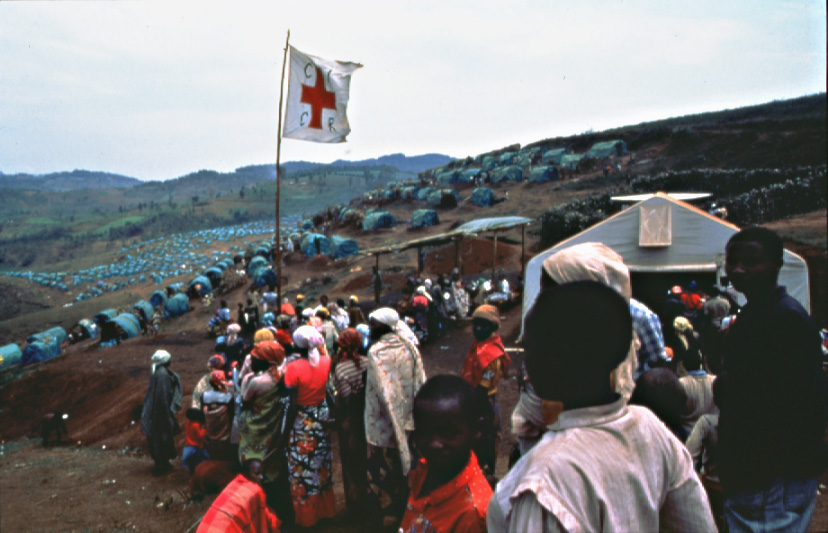
The International Committee of the Red Cross (ICRC) turned 150 years old on February 17, 2013. It is now more than 30 years old in India. In fact, ICRC’s first mission to India was on February 12, 1917, some 95 years ago, to restore contact between people separated by war.

To give you a background on this:  The International Prisoners-of-War Agency was formed on August 21, 1914. And from December 1914, ICRC delegates began obtaining permission from the different states to visit POW camps not just to check on conditions of detention but also to let the prisoners know that they had not been forgotten by the outside world or reconnect them with their loved ones. On January 25, 1917 in Cairo, the delegates of the International Committee of the Red Cross (ICRC) had just finished a camp visit of Ottoman Prisoner of War (POWs), that they received a cable from their headquarters in Geneva.

The cable directed them to inspect camps of POWs and civilian internees in Asian countries of India and Burma. The delegates got on to a ship and sailed through the Suez Canal to reach Bombay on February 12, 1917. The arrival of delegates that day
marked the beginning of ICRC’s journey on Indian soil. The mission in India began with the delegates meeting Viscount Chelmsford, Viceroy of India (the head of the British administration in India) in Delhi. In the province of Rajputana, the ICRC delegates visited the first camp in Sumerpur on March 3 to 4, 1917.

Explaining the concrete work of the delegates during such camp visits, Mary Werntz, currently the head of the regional delegation of the ICRC in Delhi, said, “The delegates would dive deep to see if the detainees were treated with dignity. From checking the barrack premises, sleeping, clothing and sanitation facilities, access to exercise and fresh air, medical services,
quantity of food received per person, to mapping the application of order and discipline on inmates by the detaining authority, every small details were observed and noted.

Efforts would also be made to ensure that the detainees had the right to practise their religion, had access to letters and parcels, and could avail the financial support from their own Government.”

Reading these details of ICRC’s work, one thought struck me: there are no formal and full-fledged wars being fought these days, so can’t the ICRC men and women look into the current state of our lockups and prisons, and what the current state of those languishing there is. In the times we are living in, there must be watchdog organisations to monitor and bring about interventions.

(Picture courtesy itu.int)

Exit mobile version