Categories
Diaries

Teachers, anyone?

The Akanksha Foundation’s Chitra Pandit explains why free education in BMC and PMC schools doesn’t always attract quality teaching staff.
by Vrushali Lad | vrushali@themetrognome.in

Part II of the ‘Little People’ series

A willing NGO and more than willing students need good teachers. Even a relatively well-known NGO like the Akanksha Foundation finds it difficult to get good teaching staff.

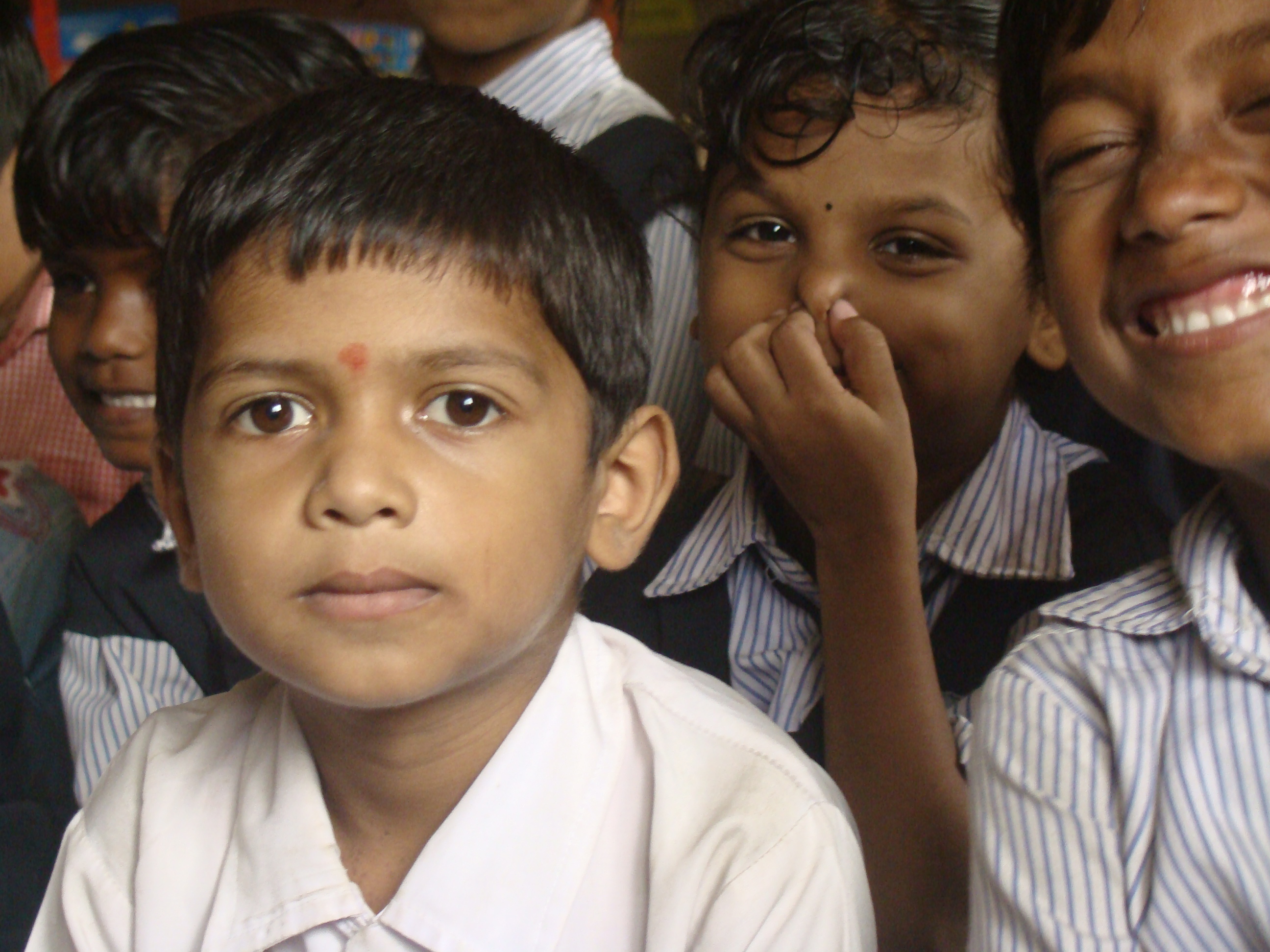
“Our biggest challenge lies in getting good teachers for our schools,” says Chitra Pandit, Director Marketing at the Akanksha Foundation, a non-profit organisation that works in the field of education for children from low-income families. “We have 13 municipal schools between Mumbai and Pune. The model is this: the BMC (or PMC) provides the school building, the students’ uniforms, textbooks and school bags. We provide the rest.” The schools follow the SSC curriculum and have 30 students per class. The teaching is free.

She rues the fact that despite scores of willing parents – there have been instances where more than the stipulated number of 30 students to a class had to be crossed due to overwhelming demand – who want to send their children to their schools, quality teaching personnel are hard to find. “It is a fact that we don’t get the cream of the teaching talent available. The BMC insists that all teachers must have a B.Ed degree, at the very least. But then, those with B.Ed degrees want to teach in reputed private schools. So we have gone into non-B.Ed colleges to scout for potential teachers, assuring the BMC that we would get them to complete their B.Ed at a later stage.

We’ve advertised in mainline dailies, we’ve made our website stronger, we also send out mailers to our contacts and friends, asking them to recommend teachers or spread the word. We’ve actually started recruiting people who are graduates.”

Since no fees are charged but operational costs per school are quite high, the Foundation depends heavily on donors and sponsors. “However, we have not been able to get any new donors on board recently,” Chitra admits.

With the teachers that they do have, however, there are certain parameters that must be met. More parents from the poorer sections of society are insisting on sending their children to English-medium schools today. “Due to the lack of adequate teaching support at home, we have to make doubly sure that they study well in the classroom. They cannot afford private tuitions after school hours, so the teaching in school has to be perfect,” Chitra explains.

Chitra explains that apart from the challenge of dealing with children from underprivileged backgrounds – most of them are first generation learners with no exposure to the English language –the teachers also have to work harder at giving the proper amount of attention to each child, to address their concerns in a caring manner, and to be really patient with the students. The students’ parents belong to the service class – common occupations are domestic help, security guard, driver and vendor – and their incomes, like their own education levels, are generally low. “An inherent quality of patience is a must for the teacher, especially owing to the students’ backgrounds,” Chitra says, adding that the 200 teachers in their Mumbai and Pune centres and schools are tested extensively during their interview rounds.

“Most teachers are aware of the students’ backgrounds, but we also try to gauge their interest in teaching and handling a class right from the interview stage. We ask them to prepare a subject and do a quick demo in a class – this helps us understand their aptitude and preparedness,” she says. Selected candidates are trained in a two-week residential programme, where the Foundation works with them on various fronts. “The focus is on classroom management and academics, but the basic passion for teaching and the skill must be there,” Chitra says.

Diaries is a weekly series of stories on one issue. ‘Little People’ is a series of three stories on the education of underprivileged children in Mumbai. Look out for Part III tomorrow.


 

Categories
Watch

Gana wala song

The hilarious spoof of ‘Ishqwala Love’ from SOTY has got over 3,300 likes already. Check it out.
by The Diarist | thediarist@themetrognome.in

We are frankly amazed by how many filmgoers actually dislike Karan Johar and his films. This is evidenced yet again by this spoof of Ishqwala Love, the sweet and slow number from the filmmaker’s latest offering, Student Of The Year, in which the creators of the video, The Viral Fever Videos, have gone to the extent of singing the track again, fitting in their own lyrics as per the situations in the song. The video is very popular on Youtube and has been liked over 3,000 times in just four days of going online.

The spoof is titled Gana wala song: the Q-tiyatic version, and has some hilarious rewritten lyrics. Check out the video here 

Sample some of the new lyrics:

Gana wala song

Shahrukh wala, foreign wala, budget wala song,

In phoolon se bhi halke, lyrics wala song,

Gana wala song…

A rather dismal-sounding male voice croons the song, and we suspect, the same voice has sung the female lines as well. The overall effect is extremely entertaining, to say the least.

Two thumbs up for creativity and coming out with a remixed version that looks and sounds really funny in the new context.

 (Picture courtesy: www.santabanta.com)


Categories
Big story

My friend in Pakistan

Second leg of Indo-Pakistan school-level project kicks off in both countries today, two Mumbai schools participate in the year-long initiative.
by The Editors | editor@themetrognome.in

Nobody has pen friends any more. A pity, considering that the value of a word written on a sheet of paper, and read in another country, is much, much higher than a tweet or a post on your friend’s Facebook wall. And if your friend is in Pakistan, and is a person you have never seen before – you may not even know his name – receiving a letter from across the border, and sending your own, in turn, must make the effort extra special.

Children in five Delhi and Mumbai schools experienced this thrill last year, when they wrote to (and received) letters from unknown friends from Pakistan. Letters soon gave way to scrapbooks, scrapbooks made way for video recordings of elders who remembered pre-partition India and Pakistan and spoke lovingly of old friends and relatives now lost to geographical and political boundaries. All of these activities were undertaken by two NGOs – Routes-to-Roots from Delhi and Citizens Archive of Pakistan (CAP) – which coordinated the children’s efforts and ensured that material reached both countries seamlessly.

Mumbai kicks off the second leg of the programme, titled ‘Exchange for Change’ today at Malabar Hill, where actor Juhi Chawla formally inaugurates the programme. This time, the programme is designed around four projects – ‘Letters to the past’, under which children from both countries will speak to their grandparents to understand what life was like before 1947, a ‘Photography series’, under which students will exchange postcards depicting what their lives are like in their countries, ‘Oral history’, under which students share DVDs and create scrapbooks of their perception of life across the border, and finally, ‘Videos’, which will be shot before and after the project to record the students’ expectations of the project; select videos will also be combined and shared across the border.

The participating schools from Mumbai are Adarsha Vidyalaya from Chembur, and Amulak Amichand Bhimji Vividhlakshi Vidyalaya from Matunga. This time around, teachers will also participate in the activity, especially in ‘Letters to the past’, where they will write to Pakistani teachers.

Said Routes-to-Roots founder Tina Vachani, “With a positive response to our first programme (last year), we look forward to Exchange For Change 2012-2013 which will connect many more children, schools and cities this time. We endeavour to spread peace and friendship between the two nations through this project where 3,500 school children with their families and friends shall be involved. We are also creating alumni for the participatory schools from last project, so that students and teachers are still part of it.”

Exchange for Change is a 12-month information exchange programme between Karachi-Mumbai, Lahore-Delhi and Chandigarh-Rawalpindi that involves secondary school children who study in two low-income schools and two medium-income schools. Students in Delhi, Chandigarh and Mumbai who rarely have a connection with those in Pakistan will be encouraged to develop a relationship with their counterparts in Lahore, Rawalpindi and Karachi through sustained exchanges, while building an alternate sense of identity and awareness, as well as have a better understanding of their shared history and culture.

The programme aims for children from both countries to interact with each other through sustained dialogue and frequent exchange of informative material. Tina adds, “The next generation of Indians and Pakistanis increasingly view each other enemies. With barely any citizen-to-citizen contact it is easy to fall prey to the propaganda that is preached on either side. This project is designed to make students understand that there is little or no difference between their lives and the lives of those across the border. We hope that by the end of the project, there will be a marked difference in the way students approach India-Pakistan ties.”

(Picture courtesy: www.timesofummah.com)

Categories
M

The marriage curse

The most successful Bolly actresses have lost their equity and brand value post-marriage. Will just-married Kareena Kapoor break this stereotype?
by M | M@themetrognome.in

Like in the rest of India, Tuesday afternoon’s lunch conversation revolved around Saif Ali Khan and Kareena Kapoor’s much-hyped marriage. I think by now, everyone is abreast of the most trivial details of this two-day event. A casual comment from a colleague triggered a thought; his comment was: “How can Kareena get married now? She is currently at the top, but now her market will go down.”

Apart from fuming at the word ‘market’, I was intrigued by the fact that despite living in a world where a 94-year-old man can become a father without being frowned upon, a 32-year-old woman cannot get married and still have a career. The age-old perception that married actresses don’t work at the box-office is still rock-solid in the Indian mindset. And even in Bollywood.

Great actresses from the past have been treated like sore corns post their marriage, and stereotyped in roles fit for elderly women. Usually, the public assumes the actress will completely quit or take a sabbatical from showbiz. Some of them do return to the big screen, but instead of talking about their performance or their talent, the marketing is focused on positioning it as a post-marriage comeback.

This really makes me think: are women, especially in India, truly free? Our patriarchal society cannot help but enforce its rigid belief system on Bollywood as well. The next few lines of this column might sound crude, but what is being practiced around us is even worse. For years now, our society has propagated the importance of marring a virgin, who is clean of committing moral sins. This is exactly the reason why married actresses are not accepted in Bollywood.

The men in society cannot fantasise about a woman who is not a virgin. The lusty siren on the big screen that makes them drool, once married, will belong only to her husband. It’s not that men don’t lech at or have sexual fantasies about married woman, of course they do; but they can’t openly accept this in society. Therefore, the actress will still be imagined seducing them when required; but once married, she will not be a good actress any more. In a lighter vein, they must think that the actress loses her talent along with her virginity.

Unfortunately, it’s not just the audience that holds on to these views, there are men within the industry who share the same hatred for married actresses.  Most producers will not risk their high budget projects, and so you will hardly ever see a married actress in a big banner production. Yes, there are exceptions like Kajol, who has managed a successful comeback, but sustaining it will be a challenge. A respected producer in the industry once expressed his thoughts on the same subject. He said, “Married women remind us of our mothers and we cannot expect the audience to like their mothers romancing the hero in the film.”

I feel sorry for actresses who utterly and completely devote their lives to cinema and who live under constant fear of being forced to retire once they settle down and have a family. Ironically, having a family at a decent age is again enforced by the society, and women who don’t abide by this rule are termed rebels or are assumed unfit to find a suitor.

This could explain why a Madhuri Dixit or a Juhi Chawla are left to do television shows, while the Katrina Kaifs of this world rule the roost in Bollywood. This also explains why our actresses can’t have a family along with a healthy career even at the age of 40, but our heroes, who are wrecks at 50 years of age can romance nubile 20-year-olds.

Nobody raised a brow when Aamir Khan or SRK made their debut in Bollywood after their marriage. But has there been a single instance where the actress made a debut post her marriage, and went on to have a successful innings? Not in Bollywood. This could be a distant dream, but for now can we just accept our actresses to be married and still bedazzle us with their performances?

I say, let’s give Kareena a chance. I hope her marriage and subsequent career would be the much-needed breakthrough for other women in the industry.

(Picture courtesy: www.movies.ndtv.com) 


Categories
Diaries

Where playing indoors is fun

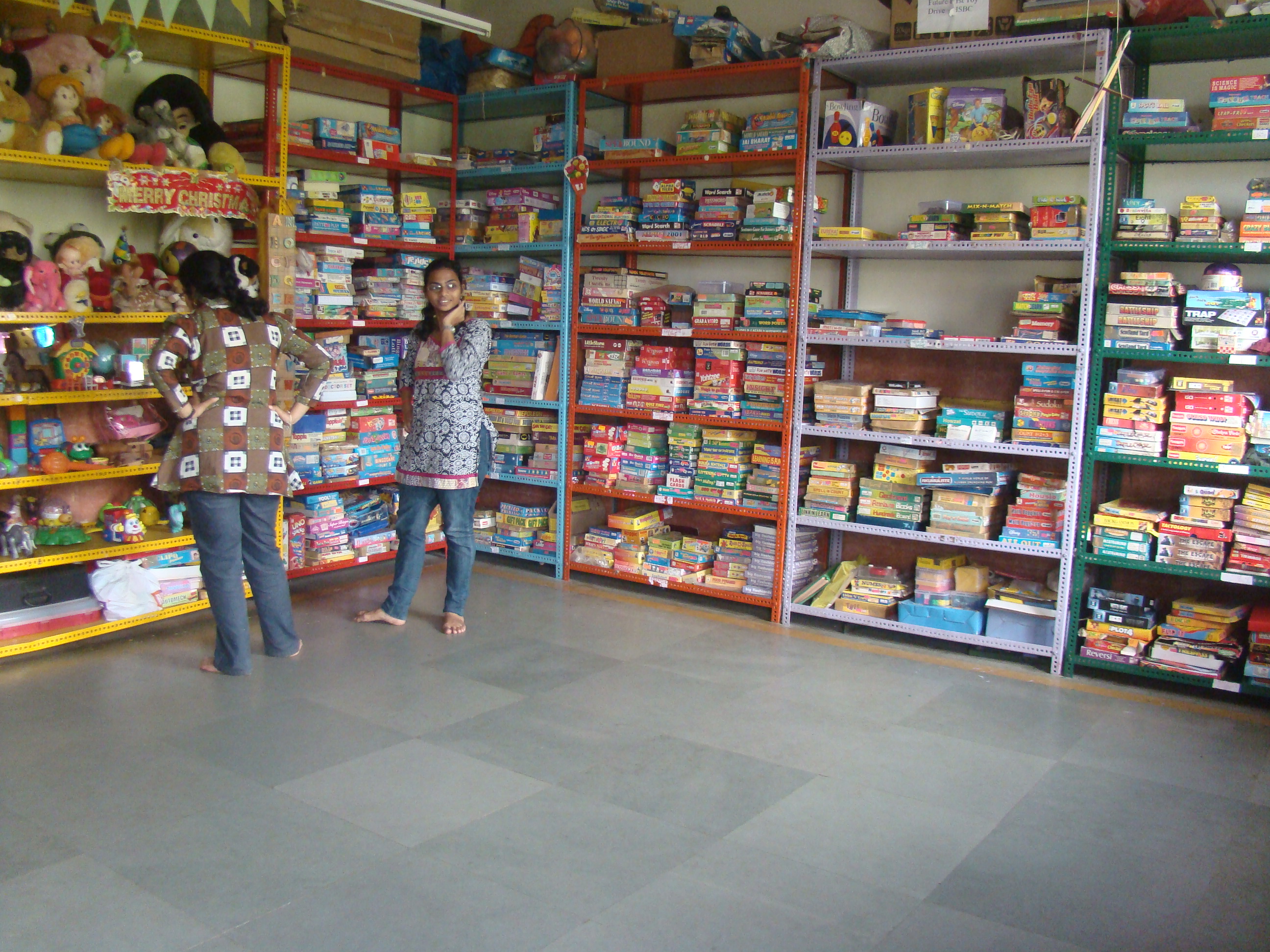
The Children Toy Foundation houses over 700 games in a Matunga school. Students love their play time and their teachers.
by Vrushali Lad | vrushali@themetrognome.in

Part I of the ‘Little People’ series

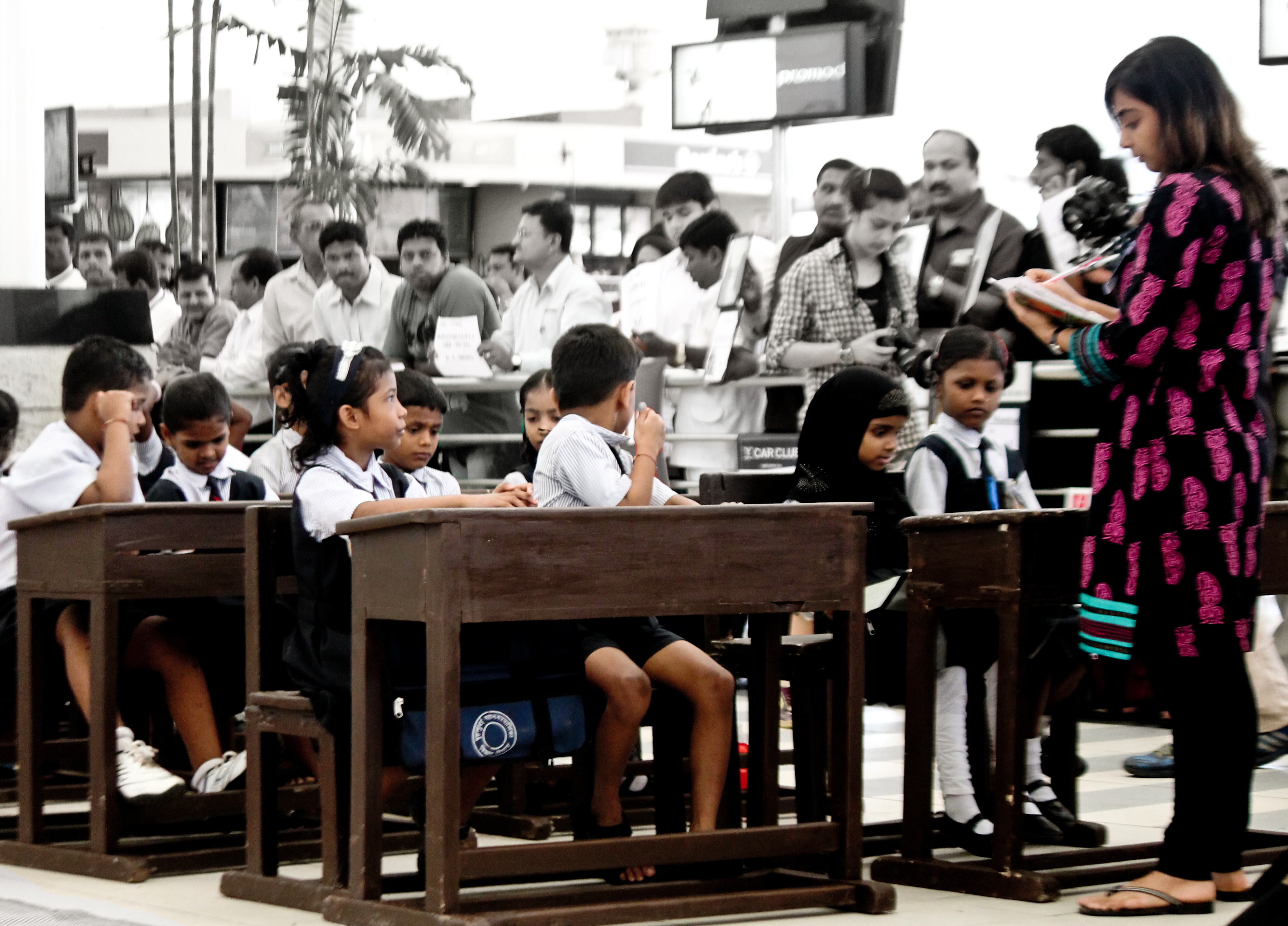
“I practice boxing because it helps me hit hard during fights,” a sturdy little boy answers when I ask him what he plays outside school. The class explodes with laughter. The children, a mix of class four boys and girls, have just settled down after a hectic round of impromptu dancing in their play hour. Vandana Sonawane, presiding with other teachers (all of them associated with the Children Toy Foundation) over the class at the City of Los Angeles School, Matunga Road, claps a hand to her forehead. “See how they talk. But we are glad when we see their confidence, because they speak like this only when they’re happy and relaxed.”

The class says they like playing in the play room and not on the ground outside. “If my clothes get dirty, my mother shouts at me,” another boy says with a twinkle, and there is much nodding of heads at this statement. “Another reason why they love playing here is that they get access to the kind of games they’ve never seen before, and cannot find outside the school. Most of the games we have, especially the strategy games for older age groups, are priced upwards of Rs 1,000. But let me tell you, not a single child, in the 10 years that we’ve operated in this school, has broken a single toy or stolen anything.”

She smiles, then yells out a long, “AYYYYEEEEEEE!” that shakes the ceiling. The fidgety class stills at once, though several faces are working furiously, trying not to laugh. “These children come from poor families, and because their parents insist on enrolling their children in the English medium of the school, the class is a mix of communities. There are Muslims, Tamilians, Maharashtrians, Gujaratis. But we speak to mixed classes in Hindi,” Vandana says.

Vandana is the overall coordinator of the Foundation’s work in this centre and another municipal school in the city, apart from supervising other works like their mobile toy van that goes to slum areas and the Sunday visits to hospitals in the city. Started in 1982 in Mumbai, the CTF is the only NGO of its kind to help set up 279 toy and games libraries in India till date.

But it clearly doesn’t matter what language the children are spoken to, because play hour is the best hour of the day for them, and the CTF’s toys and games class in this school is a source of much enjoyment and learning. Teachers, one to a group of six or seven children, hand each group a board game and play begins in earnest. “The CTF first trains the teachers, then the teachers teach the children in class. Once they understand the rules, they are very quick in mastering the game,” Vandana beams.

She shows me a curious little strategy game, where two players’ green and orange blocks must cut each other’s retreat around the board using short and long bridges in the respective colours. “It requires a lot of thinking and strategising. But class five students have already defeated me,” she laughs.

The next play hour belongs to the tiniest assortment of class one students I have ever seen. They trail in, some of the little girls’ pinafores hanging off their frail shoulders, but their eyes are already scanning the room for potential planned activity. But today, the teachers engage them in a group singing, after which they answer my questions and recite poetry in cute, high-pitched voices.

“The girls are normally a bit shy. When they’re at home, some of them do household chores and look after their siblings, so they grow up pretty quickly. But because we are kind to them, and because our common interests are games and toys, they bond with us very quickly. Many of the older girls have already told us about the problems between their parents and other such issues. The boys are very bindaas, but they don’t discuss their home situations too much,” Vandana says.

Diaries is a weekly series of stories on one issue. ‘Little People’ is a series of three stories on the education of underprivileged children in Mumbai. Look out for Part II tomorrow.


Categories
Do

Your mattress could be killing your back

Bad mattress giving you a painful and sore back? We list 10 tips to help you buy the perfect mattress.
By The Diarist | thediarist@themetrognome.in

Sulakshmi Reddy (22) moved to Mumbai from her parents’ home in Satara a year ago. Within weeks of arriving in the city, she developed a niggling back ache. “I thought it was because I was travelling by crowded trains and running about all day. Doctors just prescribed pain medication. I even took up yoga classes to get rid of the pain altogether,” she says. However, the pain showed no signs of abating – in fact, she would often wake up with a stiff back. “It would just get worse as the day progressed,” Sulakshmi says.

Then a physiotherapist zeroed in on her problem. “At my uncle’s place, where I was staying in Mumbai, I used to sleep on a cot with a very thin mattress. I could almost feel the iron body of the cot under the mattress. On the physiotherapist’s advice, I changed my sleeping place for a week, living with a friend who had a good, thick mattress on her bed. The back pain was noticeably reduced,” Sulakshmi remembers.

Poorly-designed mattresses account for back pain in several people. “People just don’t realise the importance of a good mattress. The mattress one uses should be firm, designed to align gently (not squishily) with the spine when one sleeps, and should be sturdy enough to not sag too soon,” says Dr Jayesh Garodia, orthopaedic surgeon. “However, it should not be so firm and sturdy that the person feels like he is sleeping on a flat board.”

Luckily enough, mattresses that are specially designed to combat stresses and pressures have also recently hit Indian markets. Says S K Malhotra, director, sales and marketing for Spring Fit, that has come out with the orthopedically-designed Ortholife mattress, “The high pressure of creating a work-life balance and long hours spent commuting often lead to muscular discomfort and chronic back ache. Using a moderately firm mattress adapts better to the concavities and convexities of the spine leading to better pressure distribution.”

But if you’re just looking for a simple spring mattress, you’ll have to know what goes into making it. Says G Shankar Ram, Joint Managing Director, Peps Industries Pvt Ltd., spring mattresses should have a high carbon spring steel base, cotton felt, foam and a quilted cover. “The base can be varied to make the mattress soft or firm. Cotton felt is put in to absorb excess loads and distribute them evenly. Foam contours itself to different body pressure points, and relaxes the body, while the quilted cover must look and feel attractive and comfortable,” he says.

Get the right mattress today:

G Shankar Ram’s 10 tips to remember when buying a mattress:

1. Purchase a good quality mattress. Research the brand you select – there should be no complaints of sagging or lumping.

2. Select a store that displays mattresses and lets you touch and feel the products.

3. Take your partner along for the purchase. Both of you should be comfortable with the same mattress.

4. Have a look at all the mattresses on display and educate yourself on the various types.

5. Do not feel shy or embarrassed about testing the mattress. Lie down on it and listen to the signals your body and mind give you about the different types of mattresses. Let your partner also lie down and give feedback.

6. Thickness is important. Measure the height of your bed from the floor. This will decide the thickness of mattress that you should buy. Remember that the mattress should be such that your feet touch the floor when you get off the bed.

7. A recommended height for your bed is a maximum of 14 inches from the ground.

8. Today, Indian mattress thicknesses range from four inches to six inches. Internationally, mattresses are about eight inches thick, and these contour with the body much better.

9. A normal mattress must be flipped from head to toe and reversed often. This extends the life of the mattress, ensures the manufacturer’s warranty and prevents early sagging. A luxurious mattress is one on which you sleep on only the top side. These must be rotated from head to toe every three months so that load points are changed and the foam can regain its dexterity.

10. Understand the dealer’s warranty before taking a call on your final purchase – take into account the type of use the mattress will be subjected to, the materials contained therein and what you expect from its use.


Exit mobile version