Categories
Become

‘Because I lack the discipline serial killing requires’

…is why Ashish Shakya does stand up comedy, and also because his comedy has gone ‘from sh*t to less sh*t’.
by The Editors | editor@themetrognome.in

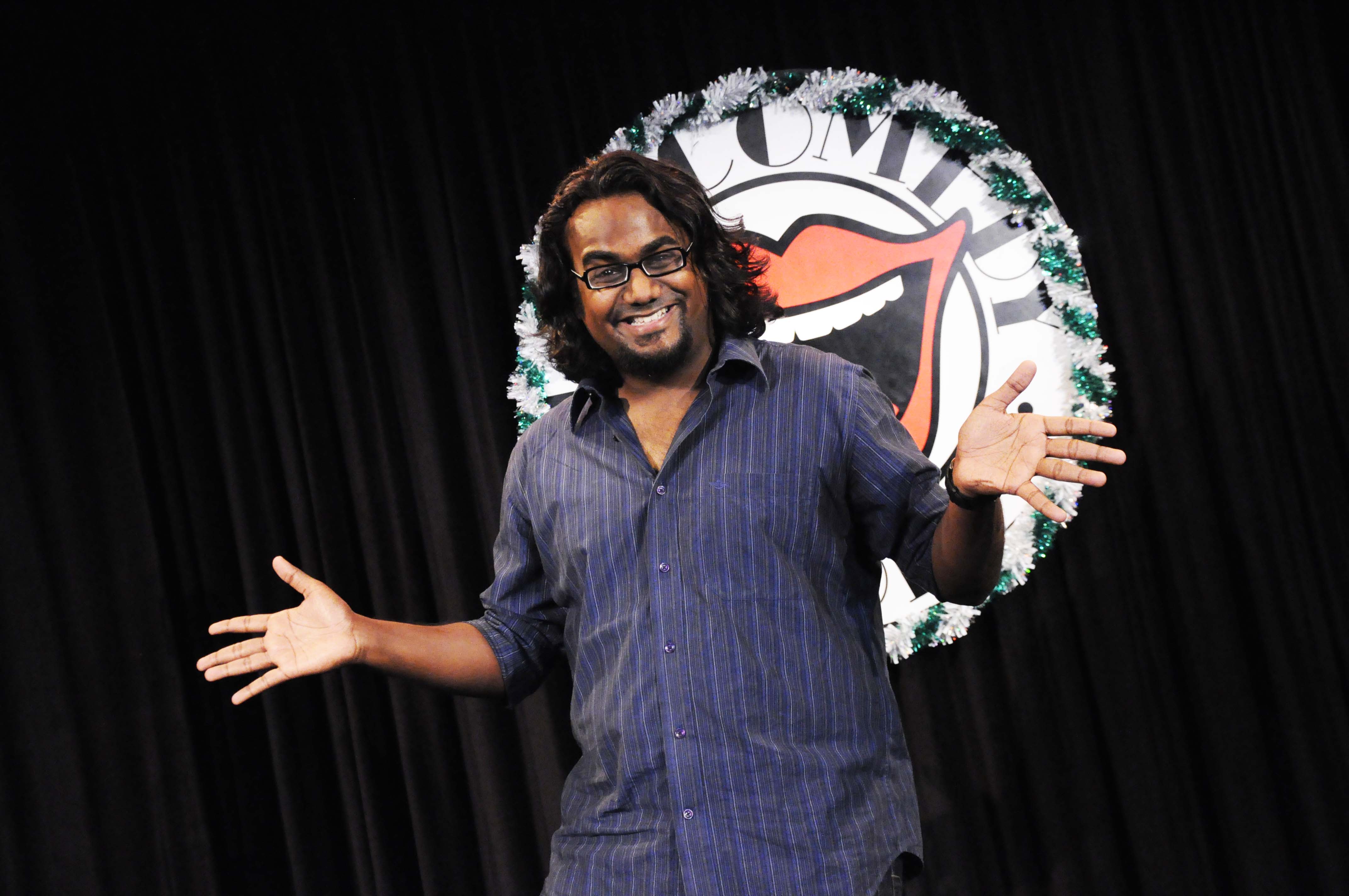
Ashish Shakya is 28, and funny as hell.

He ‘mooned the college after he finished engineering studies.’ His first stand-up act ‘was the opposite of funny and smart’. He kept going at stand-up comedy till he ‘went from shit to less shit’. And, he says, ‘as a comic, all you can do is put in every bit of energy and talent that you have, take your money and go home feeling a little bit like a whore.’

In a hilarious interview, the Bandra resident tells The Metrognome about his chosen profession, performing to stony silences, writing funny stuff every week for television and what aspiring stand-up comics and humour writers need to consider before taking the plunge into the business of comedy.

When did you first realise you were funny, that you had the ability to get a laugh? Was there a moment of epiphany?

There is no real single instance that served as an epiphany. At some point, you just develop some sort of a personality, and mine turned out to be the guy that was probably dropped on his head as a kid, making sure he’d never have anything close to a normal thought process. As such, the choice is between comedy and serial killing. I do the former because I lack the discipline that serial-killing requires.

And yes, I imagine that my parents were my first audience, although kids say stupid things that parents laugh at because they have to. If I was in their place, I would ask for a refund.

You studied engineering. What did you do after you finished college?

Mooned the college and thanked the universe that it was over. Drank a lot. Also, started working with a youth magazine called JAM about a week after my final exams, because, well, I needed to make up for lost time.

How has your educational background as an engineer helped your sense of humour? And why are there so many engineers in the media?
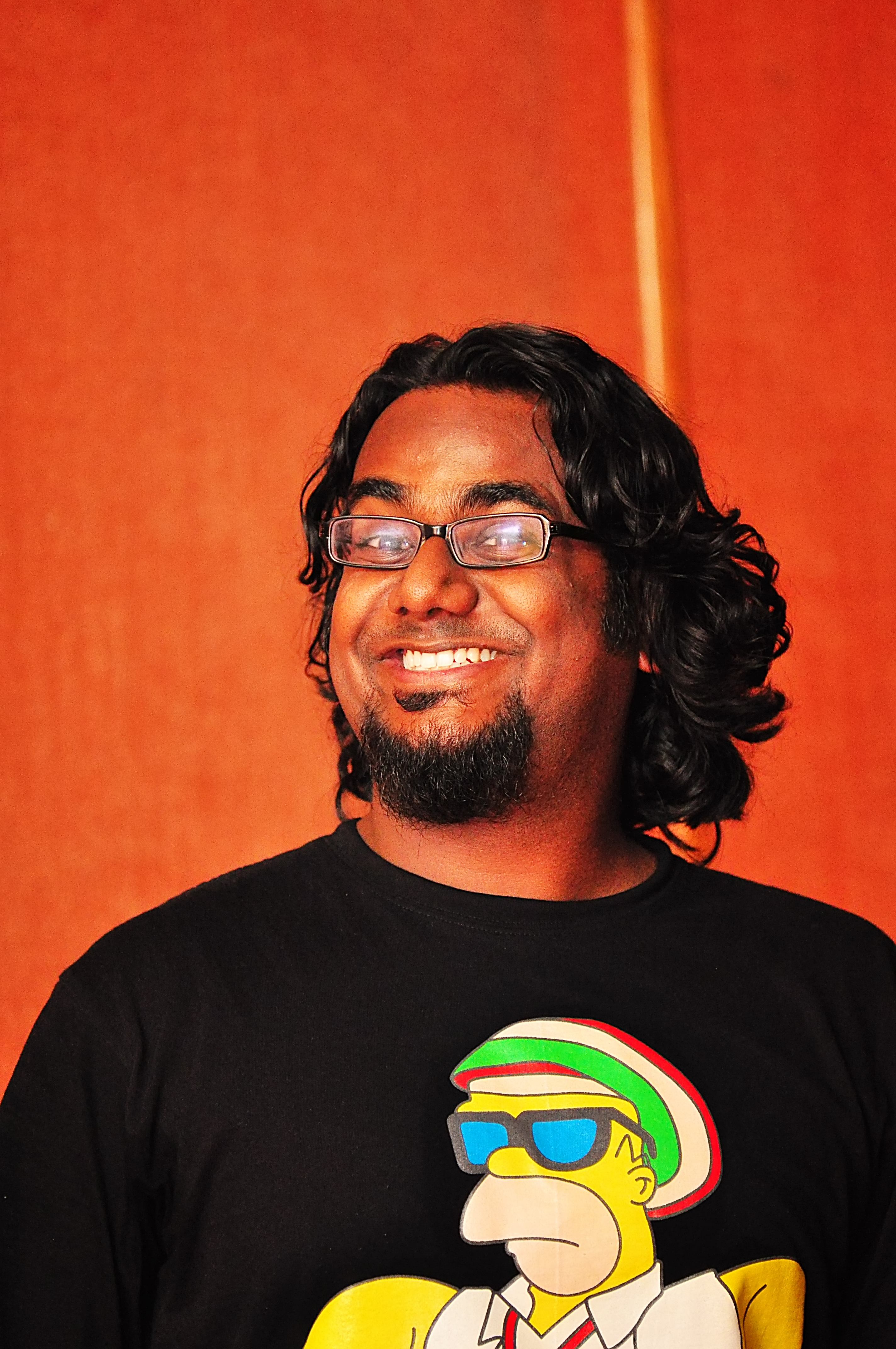
I had lots of free time in engineering college, since I didn’t really bother with all that pesky studying nonsense. That free time may have helped warp my mind a fair bit, and that’s always a good thing for comedy. As far as the glut of engineers in the media (or even other non-tech fields) is concerned, it’s probably because engineering is the default option for most kids in India. It’s also easy to get into. But the blinkers come off once you’re in college and by then it’s too late, so you just sit around, biding your time until one day, you’re free AND CAN DO WHATEVER THE F**K YOU WANT BECAUSE YOU’RE YOUNG AND FOOLISH WOOHOO!

 When did you first start writing? What was it about?

I started really late in life. 17 or so, I would think, and it was during the first semester of engineering college. In a blinding flash of originality, I wrote bullshit poetry about life or some such nonsense. Teenagers are stupid, no?

Your writing has a very obvious Dave Barry-ish turn of phrase. Apart from him, which humour writers have influenced your writing?

Barry’s the writer who taught me all about form, structure and all the other boring nuances that go into great humour writing. Apart from him, I think Charlie Brooker and P J O’Rourke are great fun.

What was your first stand-up comic gig like?

The first time was three years ago, at the open mic organised by Vir Das and company at Blue Frog, called Weirdass Hamateur Night. There were 15 contestants, who got two minutes each. I wrote about being a North Indian or something, and it was the exact opposite of funny and smart. I ran it past a few people before the show, and it still wasn’t funny. I rewrote it the night before and  took copious amounts of drugs before going on stage. People laughed, which was nice of them and ensured that they didn’t get to see a grown man cry on stage. I took part in the next open mic as well, which I won, which bought me more time on stage. It turned out that I liked the spotlight and the instant gratification, so I kept doing it until I went from shit to less shit. At some point, money came in and that wasn’t too bad either. The Comedy Store came here in 2010, and that helped a lot in terms of stage time.

Have you ever had a ‘bad act’, for example where the audience was a bunch of tough customers that didn’t crack a smile all the time you were on stage?

Oh, lots. I’ve walked on to boos, I’ve performed to stony silences, where the only sound you can hear is the sound of your self-esteem being run over by a truck. Corporates usually tend to be tough, because hey, if you’re at a swanky office party, where the booze is free and frankly, above your pay grade, you’re not going to give a sh*t about some ugly dude talking on stage. You have other concerns, such as killing your liver or hitting on that hot chick from HR. As a comic, all you can do is put in every bit of energy and talent that you have, take your money and go home feeling a little bit like a whore. My worst gig was when I was accosted by members of a right-wing fanatic party because they didn’t like a certain joke I had made. I can’t really tell you the joke now, because if they read it, they will set fire to the Internet. It would suffice to say that I was threatened with grievous bodily harm, unless I apologised on stage, so I did, because I like having my limbs attached to my body at all times.

What do you do when you sense your act is not going well?

I wish that I had listened to my mother and worked hard to become one of those corporate types sitting in the audience, not laughing, as opposed to the idiot on stage.

All you can do is to switch your material around in your head, and do stuff that you think might get them laughing. Sometimes heavy or smart stuff is met with a silence, so you try and switch to easier jokes. If all that fails, go home and have a crisis or two.

You write ‘The Week That Wasn’t’. How did you land this assignment? What is it like working with Cyrus and Vijay?

I called Kunal and told him I wanted to write. I set up a meeting, delivered a sample script and a few sexual favours later, I got the job. I have written more than 200 episodes (that’s four-odd years on a weekly) so I know their styles and can write accordingly. That bit is fine – the difficulty lies in being funny and smart every week, about topics that often stay the same. I mean there are only so many Manmohan Singh jokes you can do before you wish that he does acid in Parliament or something, so that you have something new to talk about.

There are very few humour columnists in the city today. How did you break into humour writing for newspapers?

I went to a dance bar. No, seriously. I went to a dance bar because I was fascinated by the whole subculture and wanted to write about it. That experience turned into a 3,000-word piece which sat around gathering dust on my blog, until I felt I wasn’t doing enough in life, so I shot off emails to a bunch of papers. HT was revamping at the time, and they liked the piece. A couple of sample columns later, I was in.

Have you ever received irate letters from readers about any of the columns you’ve written?

Very few irate letters actually. Most people are nice and understanding. That’s probably because a lot of stupid people aren’t reading my column yet. I wonder what will happen when they do. I have gotten some hate on my work about religion and politics, but weirdly enough, the most vitriol I have ever received was after I wrote about how sport fans are stupid and annoying. People take that shit really seriously. It’s hilarious.

When you’re working on material for a stand-up act, what are some of the things you have to keep in mind?

If it’s for a corporate, then you may need to write clean stuff. But that aside, we get to say pretty much what we want. Consistency is difficult, and you always want to write better and funnier than you were writing the day before. A lot of first thoughts need to be thrown out. Apart from that, you just need to have fun writing.

Who, in your opinion, are some of the best stand-up comics in India today? Around the world?

Vir Das. Also, Anuvab Pal is great. As are Rohan Joshi, Tanmay Bhat and Gursimran Khamba. These are guys who set the bar pretty high.

Among the international comics, Louis CK, Chris Rock, Ricky Gervais and Bill Maher are just a few of the guys I look up to.

What advice would you give aspiring stand up comics and humour writers?

Write, write, write, perform, perform, perform, edit, re-write, rehearse, rehearse, rehearse, write, write and write some more. And when you’re not doing that, watch stand-up, listen to stand-up, read, consume and devour as much and as varied content as you can. Do different things, feed your brain, avoid clichés and monotony and be honest. It shows when you are, and more importantly, it shows when you aren’t.

(Pictures courtesy The Comedy Store and Ashish Shakya) 

Categories
Read

‘Some authors want everything right away’

Popular Prakashan’s Vinitha Ramchandani describes the author habits that drive her crazy. Plus, tips on pitching your book to publishers.
by The Editors | editor@themetrognome.in

Popular Prakashan is 85 years old, and though better-known for its non-fiction offerings, the publishing house also delves into fiction and children’s books. We got its editor Vinitha Ramchandani to tell us several things – like the stories she is most likely to pick up, what she thinks about Chetan Bhagat’s style of writing, and what authors should and should not do.

Is there a thumb rule for selecting a manuscript for publishing?

At Popular Prakashan we do both non-fiction as well as fiction, and we get all kinds of manuscripts. For non-fiction, we look for depth in research, strong language and what the MS (manuscript) is trying to convey. When it comes to fiction, it is how well the story catches one’s attention. Anything that is absorbing, basically. Fact is, when a manuscript comes in to a publisher, anything that has bad language is a no-no, a total put off.

In recent times, especially after Chetan Bhagat came out with books that were completely Indian in sensibility, a lot of people have started writing books. What is your take on this trend, where every person with a story to tell is writing a book?

Chetan Bhagat made big money by selling large numbers. However we’ve had Indian authors who wrote with Indian sensibilities for ages now! Rabindranath Tagore, RK Narayan, Mukul Raj Anand, Khushwant Singh and Satyajit Ray are icons who wrote in English and for and about ordinary Indians. Contemporary greats like Salman Rushdie, Amitav Ghosh, Arundhati Roy, Kiran Nagarkar…the list is endless. It is a pity if all we can remember is Chetan Bhagat, who simply has mastered the technique of selling mediocre work.

Yes, everyone does have a story to tell, however not all tales get told. When you get into the world of book publishing, you will realise that the competition to get printed is tough. However blogging, self-publishing and e-books are becoming big and yes, if you are certain that this is what you want [to do], then there are more and more options that are opening up.

What are some common author habits that drive editors up the wall?

Authors who have one book that they do a year or two (of course, there are some who write more than three to four books a year) forget that publishers do more than one book, and that we have many authors who we deal with at the same time. The other thing that can be exasperating, is when an author travels to, say Hubli, to a tiny store there and calls us up demanding why they didn’t find their book there. The third is when authors constantly expect publishers to do PR work for their book through the year, year after year.

In your experience, has there been an author(s) who has been really difficult to work with? Why?

Oh yes! I’ve had a couple of authors who want everything they demand overnight or—better still—right away. These are the ones who are brand names. Then there was one who wrote a mail to me and copied the management on it, and something like that can really ruin an author-publisher relationship. Mostly though, I’ve worked with authors who are understanding and have been patient. Some of the brilliant social sciences authors are simple, look completely unassuming in their chappals and kurtas, carrying their MS in a cloth bag…one can’t help but feel humble in front of their work.

What should first-time authors bear in mind when sending manuscripts for evaluation?

One, send your manuscript with a good cover letter, which talks a bit about the work being sent and about the process of writing as well as the author. In today’s day and time, when there is so much advice that you can access online, it continues to amaze me that there are people who send manuscripts with one-line cover letters. Trust me, who you are, how old you are, and how you can sell yourself, all help to create a base before I even open and read the MS. Of course, a good MS is unbeatable, and no matter how curt you cover letter is, if you have a good MS then there is nothing to worry.

Two, research publishing houses. Find out what kinds of books each publishing house is inclined to do. Sending your adult fiction to a publishing house that prefers to do children’s fiction is self-defeating. Or, if it is short stories that you are writing, then look up and see which publishing house prefers to publish short stories.

Three, and I never did this but if I ever write again this is what I will do: (a) Send your MS to as many publishing houses as possible. (b) Make an excel sheet and jot down the place (publisher) you send your MS to, the person who you addressed it to, the date you sent it and if possible, the date in which you received an acknowledgment of their receipt of it. (c) Wait patiently for a month and then start sending reminders – polite ones.

Of the many famous writers based in Mumbai and writing on it, or taking inspiration from the city, who are your favourites?

Kiran Nagarkar is my favourite Mumbai-based writer. There are others too, like Suketu Mehta, Vikram Chandra, Salman Rushdie, Kiran Desai, Anil Dharkar, Upamanyu Chatterjee. All of them have powerful ways of telling a story.

In your opinion, who are the writers to watch out for in Mumbai?

Why stick to Mumbai? Writing should not have geographical boundaries. I think Siddharth Dhanvant Sanghvi is a novelist to watch out for. But I usually read children’s fiction and I love the work that a handful of Indian writers are coming out with, pan India.

(Featured picture courtesy www.selfpublishingreview.com)


Categories
Trends

Corporate Mumbai is sick of its bosses

A majority of employees are quitting their jobs because of bad bosses; workers from 18 sectors participate in national survey.
by The Diarist | thediarist@themetrognome.in

You’re not overreacting if you’re thinking of doing your boss a grievous injury. Or at the very least, thinking of quitting your current job for another, where the boss won’t be an ogre. You can take heart in knowing that many in the country agree with you on this.

In a nationwide survey conducted by the Associated Chambers of Commerce (ASSOCHAM) in the Indian metros of Mumbai, Delhi, Kolkata and Chennai, and other major cities like Ahmedabad, Hyderabad, Pune, Chandigarh and Dehradun, and with over 200 employees from the corporate sector interviewed from each survey centre, it emerged that “69 per cent of corporate employees who quit their jobs complained about the indifferent attitude of their bosses or immediate supervisor while the remaining moved to a new position in the same company.” The survey was released to coincide with Boss Day on October 12.

As per a release from ASSOCHAM, the survey targeted corporate employees from 18 broad sectors, with the maximum share contributed by employees from the IT/ITes sector (17 per cent).

Employees working in engineering and telecom sector contributed 9 per cent and 8 per cent respectively in the questionnaire. Nearly 6 per cent of the employees belonged from market research/KPO and media background each.

Around 42 per cent of the employees surveyed claimed to have been a victim of workplace bullying, and almost 56 per cent said that they were currently being bullied by their bosses. The survey also found public sector workers were most likely to experience workplace bullying (48 per cent), followed by PSU (37 per cent) and others (15 per cent). Around 62 per cent of the respondents said that they have an abusive boss, who indulges in such behaviours as humiliating and insulting employees or isolating them from co-workers.

The survey also revealed that bad bosses also led to employees’ health problems. Most of the respondents said they were moving jobs because of management, supervisors or the general work environment of the company (56 per cent), career advancement or promotional opportunities (24 per cent), while 12 per cent said that they “felt like a misfit” in their current organisation. Much smaller percentages of respondents claimed to have quit because of flexibility or scheduling (6 per cent) or job security (2 per cent).

(Picture courtesy www.mensfitness.com)

Categories
Hum log

The man who loves to play

Devendra Desai is a 66-year-old, toy-crazy man! No child can be left without a game or toy if he’s around.
by Vrushali Lad | vrushali@themetrognome.in

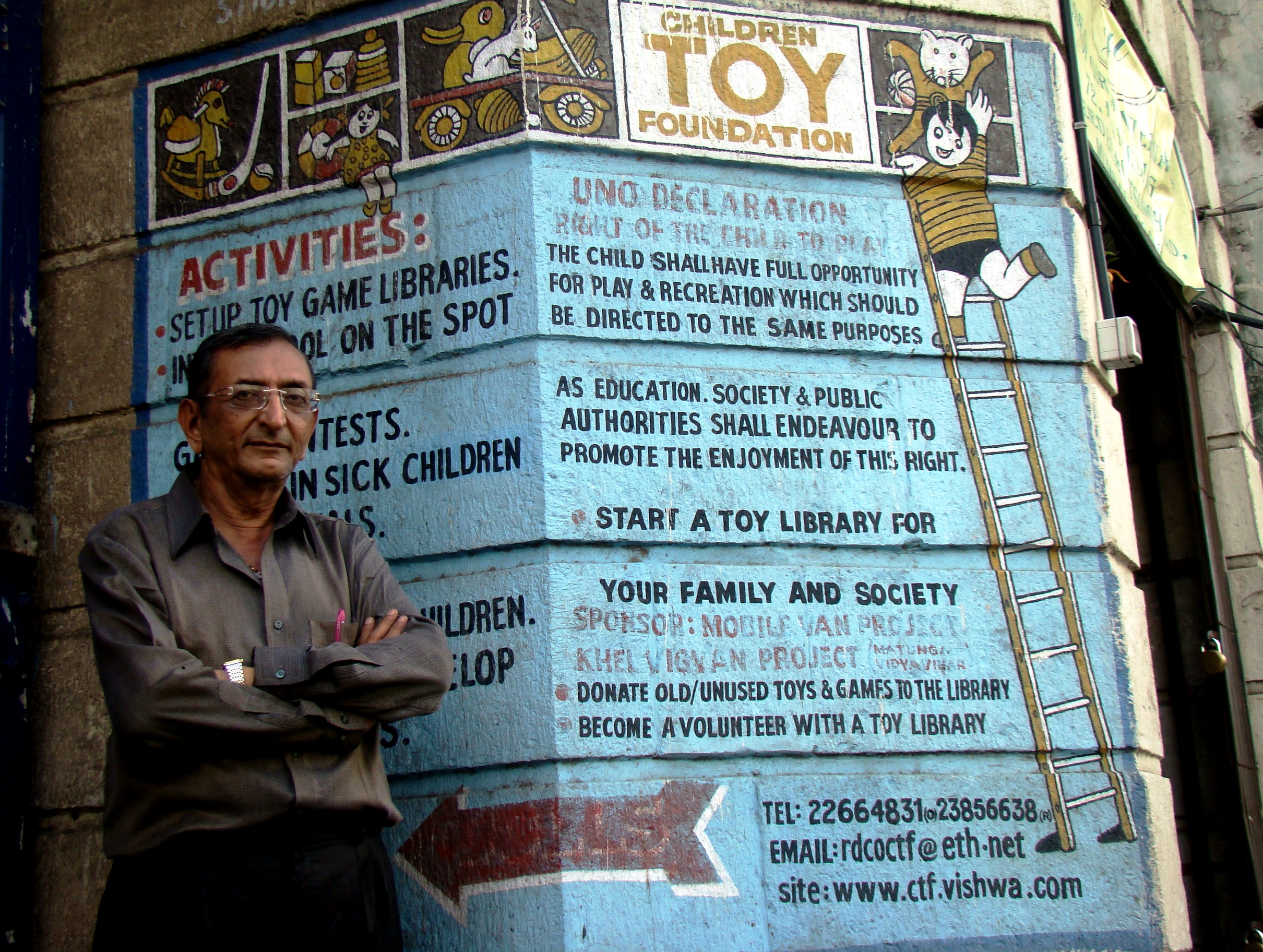
Devendra Desai runs a decrepit paper firm, and you wouldn’t even notice the little place if you were to walk past it. But several people stop and read what he’s painted on the wall leading to his office at Fort – Children Toy Foundation – with a list of what the place does. Intrigued by the words, several people walk in and ask what it’s all about.

“That board has been really lucky for us,” chuckles Devendra (66), who has been running the Foundation since 1982. “So many people have come in and asked for details, so many more have donated toys. I even got my first overseas donor through this board.”

But what really goes on inside? What appears to be just a hole in the wall at first, houses some of the most astonishing games and puzzles. Every available surface is stacked high with board games, most of them with names most people haven’t even heard of, while he’s put up paper charts of mathematical puzzles on one of the overhead cabinets. During the course of our conversation, it becomes clear just how priceless some of the games in his collection are, especially ‘Chess 64’ (pictured), a customised game (that he created with a friend, Arun Mehta) which has an astounding 64 games rolled inside one pack of playing cards. “We tried to market this game, but it didn’t take off because you needed a lot of time to explain it. But I am thinking of bringing it out again,” he muses.

“Even as a child, I had decided that I wouldn’t do the usual ‘study-get a job-get married’ routine,” Devendra remembers. “I bet my older sister, when I was 16 years old, that I would never marry. I had been an avid chess player, and I loved puzzles and mathematical problems. I started solving chess problems regularly – in those days, there used to be a space titled ‘Ramji’s Crossword Corner’ in The Times of India, which featured chess problems, and I loved to crack those.”

But it was a chance meeting with Manilal Dund, who was running the Chacha Nehru Toy Library in Bandra in the 1970s that set the course for Devendra’s life. “I had been helping in the family paper business, but I was more interested in social work. I had put in time at Vinoba Bhave’s ashram, I had even been part of the Cow Slaughter Satyagraha in 1981. But this fellow came to see me about an order for paper. While talking, he told me about this toy library that he was running, and I told him that I was interested in working with him,” Devendra says. The obsession with games had already gripped him, however – he even used to play on the local train. “I used to play Naughty Packs (a variation on Brainvita) on the train. When others would peep into my game and suggest ways to crack it, I would ask them to participate. Sometimes, I even sold packs on the train.”

In 1982, Devendra had found others who shared his passion for games and his vision for a toy library for children, and he started the Children Toy Foundation (CTF) that year. Manilal Dund was also a part of this team. “The idea was to make toys accessible to children who did not have access to them. Every child has the right to play, and the CTF was founded on this belief,” he says. “I would go to schools, asking them for a room to spare for toys. But several schools did not have enough space for their own classrooms, so that idea fizzled out.”

Meanwhile, Devendra would find new games and test them, coming up with variations of one game to maximise its utility. “There was a boy, a street dweller, who used to peep in and watch me while I played games at my office. His presence disturbed me, so I told him to come to play any time between four and six pm. Later, he started bringing his friends as well. At one time, there would be about 30 children inside the office, and about 20 more on the pavement outside, all of them playing games!” he laughs.

Devendra started his first toy library at Prarthana Samaj, near his place of residence, in 1984. “It was featured on TV, and the next day, there was a line of parents wanting to take toys home for their children.” The model was simple – children could borrow toys for a certain time, then return it and play with something else. “But I wanted to reach more children, and for this, I needed a van to take the toys to areas where children could play with our toys. Luckily for me, a journalist from the Economic Times came to interview me, and I said to him, ‘You journalists are useless. I need a van, but you have no idea how to help me.’ He put in the details of the CTF and our requirement in the ‘Good Samaritan’ section of the paper, and very soon, a kind donor responded to the write up and helped us with a van in 1998.”

The media and donors alike have been very kind to the FoundationCTF, Devendra says, helping him in direct and indirect ways to get funding and whatever else he needed to keep the Foundation growing. “Till date, we have helped set up over 292 toy libraries all over India. So many more have started using our model. We started the Khelvigyan centre (that combines entertainment and education via games) in City of Los Angeles municipal school in 2001 where we have a permanent room of over 700 toys and games that pre-primary and primary children can play with twice a week free of cost, during school hours.”

It is to the CTF’s eternal credit that they have a permanent centre inside Arthur Road Jail, for the children of female inmates. Yerawada Jail wanted the same model, so CTF helped set up a centre there as well. Besides municipal schools all over the country, the CTF has also reached 12 remote villages in Allahabad, there about 7,000 children avail of the toys and games.

“It has been scientifically proved that play is integral to children’s overall development. We only hope that more schools will include a play hour with puzzles, toys and games in their curriculum, all over the country,” Devendra says. “Why only children, even adults should play. We have forgotten to play and hence, we have forgotten how well we can socialise with others over a game. There are so many games freely available in the market, but we must make the effort to go out and look for them. Slowly, people are realising the importance of toys in children’s development.”

As if on cue, Samita Shah, who lives in the area, stops by to drop off a brand new scooter. “It just needs to be assembled. My son had two scooters, so I decided to drop one off. All my friends also regularly donate toys to Mr Desai. I think his work is brilliant,” she smiles.

Devendra simply looks back at me and grins.

The Children Toy Foundation is at 76, Ali Building, Shahid Bhagat Singh road, Fort, Mumbai. 


Categories
Diaries

Of 10 million invisible children

Unknown to mainstream society, an entire generation of construction workers’ children is growing up without an education or familial support.
by The Editors | editor@themetrognome.in

Part III of the ‘Little People’ series

‘By 2025, more than half of India will be urbanised. Our fast growing cities are built by millions of poor migrant labourers who live on construction sites with their families and enjoy hardly any of the benefits of India’s growth. Since both parents work, very young children are placed in the care of older siblings, or left to fend for themselves in the midst of the hazards of building sites. More than 10 million children live this way.’

– from a booklet by Mumbai Mobile Creches

We know there are children in slums. We know that our domestic help has enrolled her children in a municipal school. We see the little servant kid in the next building every morning as she walks a grumpy child, not much younger than her, walk her ward to the bus stop. There are others who loll about outside shops, drinking in the sights and smells of the city and scarpering off when asked a lot of questions.

Some children are truly invisible. Like the ones that are born on construction sites. They get left behind in a quickly-built shanty a mere walk away from cement mixers that do their thing, and these little ones’ parents put in a day’s work loading and unloading trucks, or carrying bricks up several flights of just-hewn stairs. What do these children do? Do they go to school? Have they ever been inside one? Is there life an endless blur of play?

Far from the eyes of the city, in the several hundred construction sites dotting Mumbai, the children of construction workers grow up in shanties, grappling daily with abject poverty and the many illnesses that come with dire living conditions. Rootless, shifting from place to place with their parents as one site closes and another one starts, these children receive no formal education and often start working at a very young age.

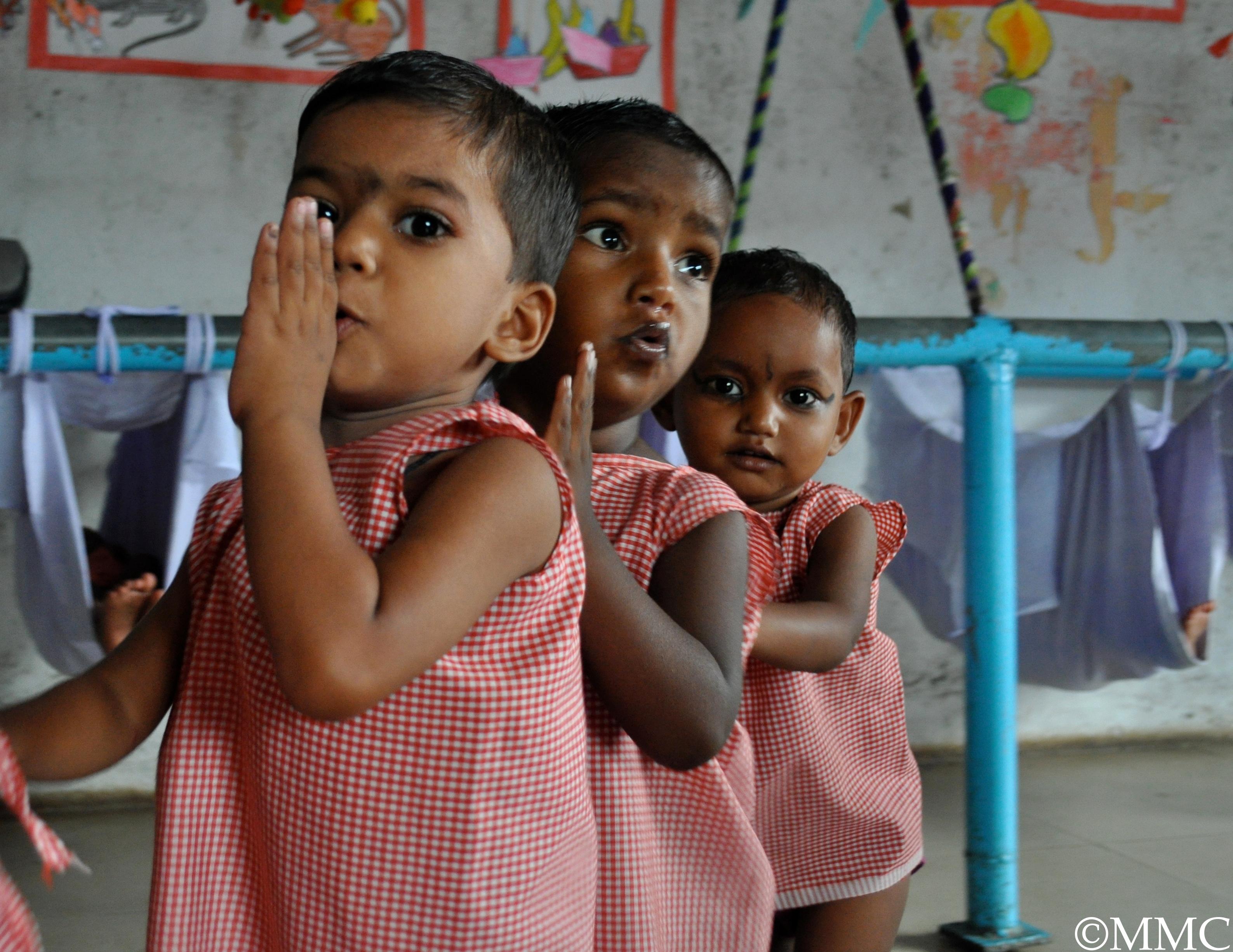
Colaba-based NGO Mumbai Mobile Creches (MMC) is probably the only organisation currently working for this invisible class of children, giving them an education and the upbringing that can help absorb them in mainstream society. The NGO runs day-care centres on sites that have at least 25 children on the site, and these conduct training programmes for early childhood development. “At any point of time, we have 25 centres operational. Last year, we reached 4,000 children,” says Anita Veermani, Manager, Grants and Communications, MMC.

At each centre, children are provided with basic lessons and three meals a day, six days a week. “Our nutrition programme is comprehensive – we provide medicines, multivitamins, calcium supplements and we have regular doctors visits also,” Anita says, adding that unhygienic living conditions and no access to proper medical care results in the children having skin and eye infections, and a lot of them have lice. “The children are often malnourished, they have worms, they have cough and fever and also a host of injuries,” Anita says.

A staggering fact is that construction workers come to Mumbai from 17 Indian states and two other countries, and most of them stay on for a period of about five years. “We try our best to reach as many children as we can,” Anita says. “But it is more important to get the mothers involved, and a bigger challenge is getting teachers. About 40 per cent of our teachers are women from construction sites who signed up to teach the children,” she adds.

“It is not always possible for each child to enrol in a BMC school, though we have had success on that front as well. Some of our children have grown up and come back to associate with us. Others have taken up site-related skills, like painting.

These children are not exposed to mainstream society, so they remain excluded from the benefits that other children receive. These families keep moving about so much, that even after we have trained the child and brought him up to a certain grade, he may not be able to join a full time school. Our endeavour is to see that they move up the chain, that there is some stability in their lives,” Anita says.

What MMC has done so far:

4,785 children reached

92 PAN cards obtained for the community

6 bank accounts opened for the community

6,233 incidences of illness identified

5,871 vaccinations facilitated

Diaries is a weekly series of stories on one issue. ‘Little People’ is a series of three stories on the education of underprivileged children in Mumbai. 


Categories
Big story

A piece of Mumbai at the UN

Sailesh Mishra talks about representing India at the UN, and refusing to do Satyameva Jayate’s senior citizens episode in its original format.
by Vrushali Lad | vrushali@themetrognome.in

A slight and unassuming man, Sailesh Mishra (45) comes across as soft-spoken and pliable. But then he begins to describe how he got associated with the senior citizens episode on Aamir Khan’s TV show Satyameva Jayate. “I got a call from Aamir Khan Productions in September 2011. A woman called saying that she wanted to meet me for an episode they were shooting on senior citizens for the show. Since we get many such requests (at his Mira Road-based NGO Silver Innings), I asked them to send me a letter and then we’d see.

The letter was brought the very next day, while the director of the show explained the concept of the episode in detail. But I soon realised that they were planning an episode to show elderly people as sad, abused, dependent human beings. I immediately told the lady, ‘Please tell Mr Khan that if this is what you want to portray on the show, I don’t want to be a part of it.”

Sailesh has always been a champion of the “happier side of old age”, which was why he started his NGO, Silver Innings, in 2008, as a means to help create a “sustainable gerontology”. He explains, “We often berate those who we feel are not taking care of the elders in the family. But you must understand, most children are not bad, they don’t wilfully neglect their parents. It is just that there are not enough options created by the government and society when it comes to elder care. Unlike in the West, we don’t have such services as assisted help for the elderly, or a service to provide groceries, or cooked food, or do other chores. We don’t even have enough NGOs that work for the causes of the elderly.”

Sailesh’s NGO was registered with the United Nations’ Open Ended Working Group (OEWG) on Ageing convention held annually in New York, last year, owing to the efforts of Susan Somers of the International Network for the Prevention of Elder Abuse (INPEA). “I got the opportunity of participating in the 3rd such OEWG held this year. On the opening day, the Indian ambassador gave a rosy picture of the current scenario of health care for the elderly in India. He even had the nerve to say, ‘Why do the elderly need rights? Their development is the responsibility of the society and their families. What can the government do?’”

To Sailesh’s huge amazement, he got the chance to make a statement on the floor of the House. “Only six people got a chance to speak that day, and I was the first,” he beams. “I gently but firmly refuted what the Indian ambassador had said, and I stressed the need for the government to be more proactive in implementing several schemes for the elderly in India. I didn’t see him for three days after that!” (Read Sailesh’s statement made on the floor of the House here.)

Of the member states, Costa Rica and Argentina were the most passionate about promoting the cause of gerontology, he says. “These two would even hold a briefing for NGOs every morning. But the EU and the US were extremely against the state having a stake in elders’ care, because they do not want to spend on it.”

An interesting dimension to this issue, he says, is that the Western countries, while reducing budgets assigned to social welfare, are aggressively studying the family concepts prevalent in south Asian countries, where parents and their children live together all their lives. “But by contrast, we in India are going towards the Western concept of nuclear families and even smaller units. Where does that leave our elders?”

But what he took away from his UN outing was the “inspiration” he felt after meeting people who had been working for the cause of elder care for decades. “Meeting such dedicated people tells you that you are on the right track, and that you still have so much to learn,” Sailesh says.

His own brush with the elderly

In 2004, Sailesh was working with the Dignity Foundation, a time that he says was when he “accidentally came into this field.” He says, “Through the Foundation, I was sent to Neral to help in the building of the elders’ township. I found that getting the architecture changed to be senior citizen-friendly was an uphill task. The architect just couldn’t understand why I wanted land gradients to be gentle, why appliances and cabinets needed to be at eye level, why the fittings and fixtures had to easy to use,” he remembers.

He stayed on as a resident at the township, monitoring its daily working and putting in work at the 24-hour dementia centre there. “I had varied experiences while dealing with sufferers of dementia. Many times, we didn’t know how to deal with them. That set me thinking. Nobody discussed this issue, and there was nothing written about it.” He started writing articles about his experiences, posting them on the Internet. “I think I would have found this cause at some point in my life,” he muses. “I come from a family of 100 people, and we all stayed at a waada at Palghar. But when I was very young, my mother told me, ‘Don’t join in the family business. Do something different with your life. Everybody works for themselves, you should work for others.’”

He finally started Silver Innings and found the inner peace he had been looking for. “I give talks at several places, hold a lot of workshops, travel all over the country. But I never talk about the NGO. That was not why I started it. The focus has to be on the issue, and it is my job to plant the idea in as many people’s minds as I can.”

Engaging the young to help the old

Sailesh is a passionate user of social networking to further his cause, the rationale of which has been questioned by many. “People ask, ‘How many senior citizens use social networking? How will you reach them on the Internet?’ But I am actually targeting the youth and the middle-aged persons in industry. If I can convert them, they will go home and talk to their parents, or devise ways to reach out to the elderly,” he says.

A major problem facing India’s elderly is that their numbers are only set to rise in the coming years. “How are we, as a country, going to accommodate these huge numbers of people? It is time, and it has to be done right away, that the government actively think up ways to utilise this mass of people’s life experience, their working knowledge and their skills. What is the sense in forcing a person to retire at 60 years of age, if he or she is able to work? Also, there is an urgent need for industry to provide services to this huge untapped population. You can have small businesses that deliver cooked meals to elders living alone, or get elders in an area registered with a trusted firm that supplies domestic helps, repair mechanics and others. There is also a need to modify our architecture and infrastructure to become more elder-friendly. Most importantly, we need more old age homes (there are just six in Mumbai) and all of them should be inside the city, not banished to the outskirts.”

Sailesh Mishra can be contacted on silverinnings@gmail.com/sailesh@silverinnings.com. His NGO also runs an ageing centre, organises memory camps and runs an elder helpline, among other things.


Exit mobile version