Categories
Big story

More breast cancer cases in Mumbai

…as compared to the rest of Maharashtra, say city-based doctors. But awareness of the disease has also gone up significantly.
by The Diarist | thediarist@themetrognome.in

A survey commissioned by a private firm in Mumbai to understand breast cancer symptoms and treatment awareness among women has revealed some interesting results – and put Mumbai in a spot. For, while just a small sample size of women was tested in Powai, doctors reflecting on the survey findings reveal that Mumbai women are increasingly under risk of developing breast cancers, sometimes in both breasts.

Said Dr Dinesh Pendharkar, consultant medical oncologist, SL Raheja Hospital, Mahim, “In Indian metros, breast cancer has already tops the list of women cancers. Breast cancer is three times higher in urban areas compared to rural. If the age-adjusted rates of breast cancer incidence in Mumbai are estimated to be around 29.3 per 1,00,000 population, then in rural Barshi district of Maharashtra, the same figure stands at a low value of 9.4 per 1,00,000. This clearly tells about the impact of life style change on the incidence of cancer.”

The survey methodology was simple: 375 women in the Hiranandani Gardens area of Powai, Mumbai, participated in the survey conducted by International Oncology Services Pvt. Ltd from January to February this year. The participating women had to fill out a questionnaire and give written consent of their participation. Questions ranged from ‘Have you ever visited a breast specialist?’, to ‘Have you got your mammography done within a year?’, and from ‘Do you know at what age breast cancer is more common?’ to ‘Do you think you are at risk?’ There was also a risk factor analysis done for each of the participants.

The results were startling, to say the least: about 79 per cent of women surveyed had never visited a breast specialist. Nearly 33 per cent had not undergone a mammography in a year, but a big 51 per cent were aware that having breast cancer did not always necessitate removal of the breast(s). Meanwhile, 71 respondents qualified for a consultation with a breast doctor on the basis of their risk factor analyses, and six of these women turned out to be candidates for surgery.

Said Dr Neeraj Mehta, business head, International Oncology Services Pvt. Ltd, “One of the major problems is the delay in diagnosing breast cancer. Only if you take regular breast cancer examination will you be able to get it rectified quickly.” He added that breast cancer has been rapidly increasing in urban women, compared to women in rural areas. “Late marriages, stress, irregular lifestyle, diet and pollution can lead to breast cancer, and all of these abound in the urban areas,” he said.

Dr Sanjay Sharma, President of the Breast Cancer Foundation of India, and Surgical Oncology at Bombay and Lilavati Hospitals, said, “The incidence of breast cancer is rising in every country of the world, but especially in developing countries such as India. The incidence of breast cancer varies between urban and rural women; in Mumbai it is about 27 new cases per 1,00,000 women per year, while in rural Maharashtra it is only eight per 1,00,000. Also, the age-group of cancer affected patients is shifting from the late 40s to early 30s.” He added that about five per cent of breast cancers were hereditary; typically, these families had many members fall victim to the disease, which tends to occur at a relatively young age and often affects both breasts.

Doctors advise that apart from regular check-ups with a doctor, women can self-examine their breasts for lumps or any hardness, or an unusual discharge.


Categories
Read

Two Pants on fire

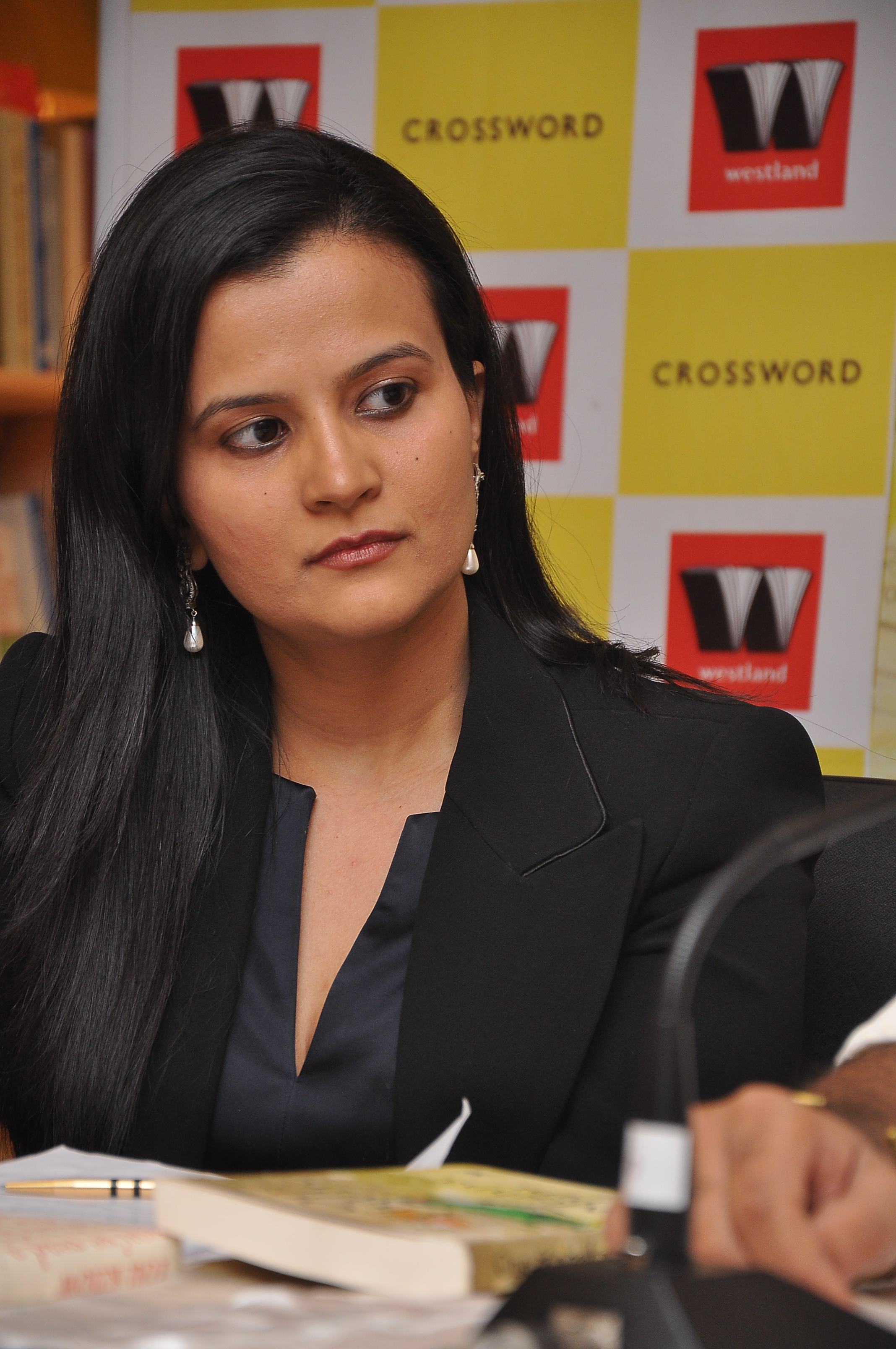
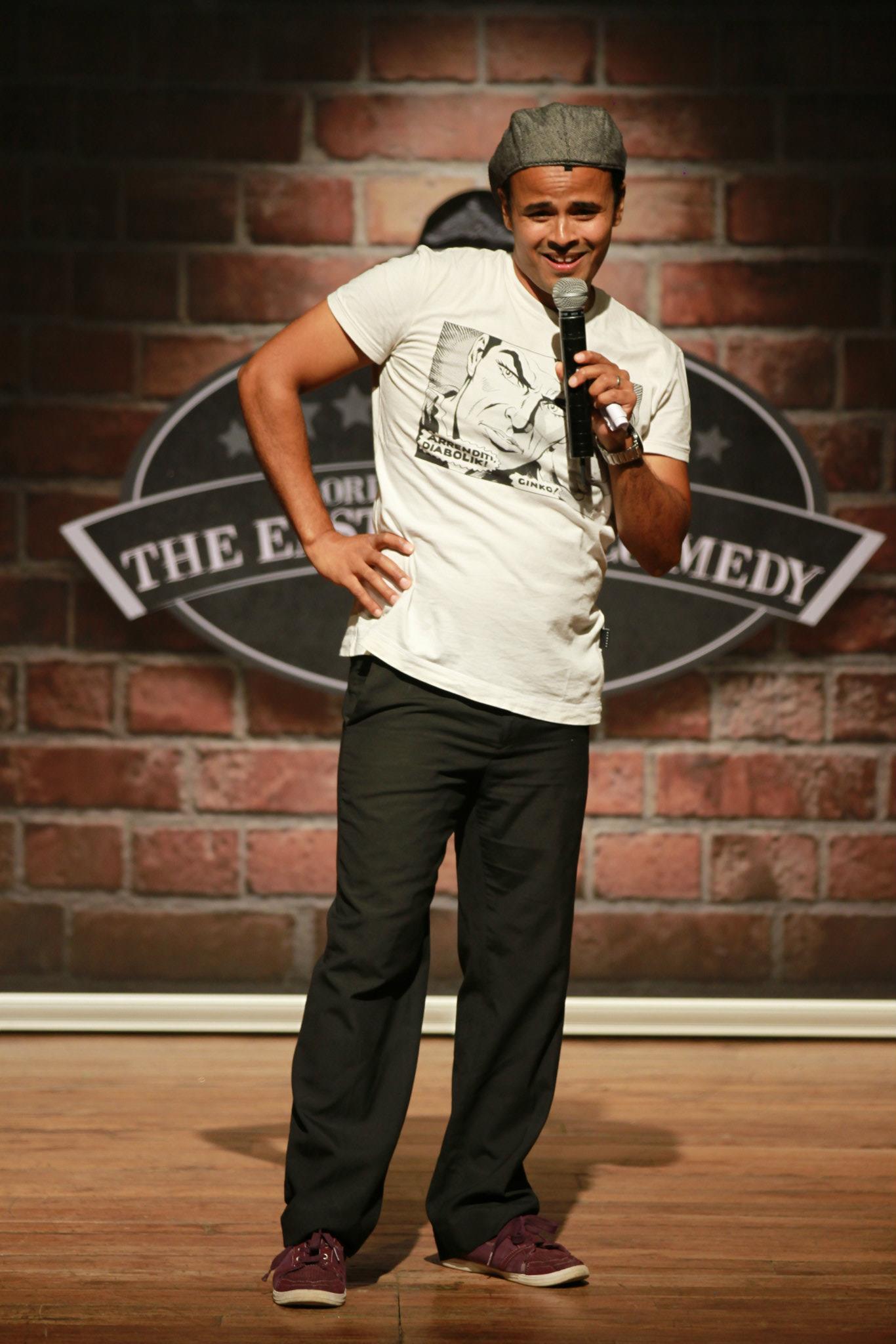
Business journalist Meghna and stand-up comic and humour writer Sorabh Pant are siblings and first-time authors. Any similarities end there.
by The Editors | editor@themetrognome.in

Meghna and Sorabh Pant have been writing since childhood, and it was a happy coincidence that their debut novels were snapped up by the same publisher. Sorabh’s book was published first, and Meghna’s followed a few months later. The siblings were born just a year apart, and though they share so much in common, their approaches to writing and even answering interview questions were very different. In an e-mail interaction with The Metrognome, the duo traced their writing journeys and the creative processes backing their first books.

What inspired you to write your first book? Why this story? Is there an inspiration from real life?
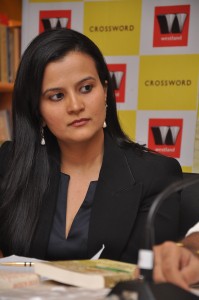
Meghna: The longest I’ve ever lived away from India was from 2008 to 2010, and when I returned home to Mumbai it didn’t feel like home anymore. I almost felt betrayed because I’d been carrying this image of old India in my head as the ultimate truth, while the place had changed to an extent where my truth had become deviant. That was also a time when reverse immigration peaked and divorce became commonplace. There was a tectonic shift of the golden age from the US to India, and a raging debate about modernity versus traditionalism. I combined these triggers as the narrative for Amara Malhotra’s story in One & A Half Wife.

Sorabh: A combination of depression and curiousity, induced by working in TV for too long. Fortunately, I switched to stand-up and being an author, which has quelled all such tendencies. Also, it was a challenge to write a funny book about the world of death – I mean, who does that? Aside from every major religion.

What was the first story you ever wrote? How old were you and what was the story about?

Meghna: I wrote a short story called Aberration which explored love of an unusual kind and this was actually published by a website called freshlimesoda. I was only 19 at that time and absolutely thrilled.

I started writing seriously around five years back, though at that time it was only short stories. To improve my art, I took several writing courses in New York, and after a fair share of rejections, my short stories slowly began to be published in reputed US literary magazines. The idea for a full-length novel, One & A Half Wife, came only in 2009.

Sorabh: I started writing when I was about 11. I was a fat, nerdy kid and the only person who would talk to me would be a pen, so I wrote all sorts of nonsense – it was complete gibberish about owls and pigeons and dreams. I think I may have been a girl.

How did Meghna’s background (as a journalist) and Sorabh’s (as a stand-up comic) help in the writing of your first books?

Meghna: Fiction is a subjective field, all about emotions and experiences, while finance and journalism are objective fields, based on data and facts. Yet, journalism techniques have come in handy for me while creating stories. It has taught me to write economically, within the bounds of reason, while keeping in mind what is interesting to a reader, and to pay careful attention to what’s going on in the world around me. It’s easy as a writer to shut myself from the world, so being a journalist forces me to keep seeing what’s out there.

Sorabh: It’s shaped it considerably. It made it easier to find the funny in some pretty strange situations. I mean, making fun of Pythagoras and flying Elephants was a whole lot easier with the background. Though, after a point I had to pull it back a bit because instincts told me to almost shove in a joke every three seconds. Fortunately, a lot of them weren’t funny, so people thought I was being serious.

How long did you take to write your book?

Meghna: It took a year. I think seeing him (Sorabh) getting published gave me the impetus to also begin work on a full-length novel. I finished the novel a year later, in October 2010. Westland signed me on in January 2011.

Sorabh: Mine took eons. Close to five years. Mainly because it involved a hell of a lot of mental and physical research about what different mythologies and religions thought about death AND also because, I refused to cut down a lot of my content, little knowing it was coming in the way of the plot. The upside is the book is nice and erudite right now. The downside is that my climax is not exactly what I would have wished it to be.

If I hadn’t ended (writing before Meghna) first, it would have been a Chernobyl-like disaster. And, more embarrassing. Thoda reputation I had to hold up. I finished The Wednesday Soul about seven-eight months before her. And, just when I thought she would be off my back, the exact same publishers (Westland) accepted her book. These sisters are very persistent. Taking rakhi ka bandhan a bit far.

It’s interesting that both of you got published within months of each other, and both your manuscripts were snapped up by the same publisher. Can you explain how this happened?

Meghna: It was sheer coincidence. I sent my novel submission to a few publishers, including Westland. Prita Maitra from Westland was the first among all the publishers to respond to my submission, and since she was passionate about my novel, I went ahead with her.

Sorabh was signed by Westland before I even started writing One & A Half Wife. In fact, Westland did not know that we were brother and sister till much after they’d signed me on.

Sorabh: I got picked up by them first. Then they offered a buy one get one sister book free offer. Simple.

Coincidence. And, also they’re good publishers, and both books are good!

How did the two of you help each other during the writing process and after it?

Meghna: Since we write different genres and have different writing styles, there wasn’t much we could discuss in terms of plot, character building or the narrative. What we were able to share were technicals, such as sentence structure, pace and grammar usage. But it was on a personal level that we were really able to support one another. Writing is a solitary process and we gave each other the space and solitude to write.

Our novels came out within months of each other, and we have so much to talk about! Sorabh has been through the rigmaroles (before me) so I seek his advice on every little matter, and he’s very patient and supportive.

Sorabh: She helped me with a lot of editing, I helped her with a lot of backslapping and, “You go, girl” kind of nonsense. Also, since I experienced book launches and readings way before her, I could share my wisdom (read: mistakes) with her. It worked out well – her book is outselling mine. In retrospect, I wish she had been published first. HAHAHAHHA.

What is your parents’ feedback on your books?

Meghna: They loved it, but were very amazed that their children – born just a year apart –write so differently from one another.

Sorabh: My parents are both equally awesome. My mom has read both our books twice each and marked mistakes in plot and grammar with a pencil. My dad has read every newspaper since 1963, so he has little interest in novels but, he read both of ours. They said supportive things about both the novels, they’ve always been supportive. I think their feedback is similar to most readers – my book is more off kilter and insane, so it takes a little bit of concentration to read it, but, if you do – the pay-off is terrific. Mum said it was surprising that I had thought of this at the tender age of 27. But, she’s my mum – she’s legally obligated to think I’m a genius. Meghna’s book is easier to read and slicker. Our folks are awesome, we raised them well.

What are you working on currently?

Meghna: My collection of short stories is ready for publication. I am also in the early stages of writing my second full-length novel based in – and between – India and China. It’s a dark comedy that portrays a family’s greed, lust and power, in the wake of geopolitical tension.

Sorabh: I’m going nuts with stand-up. Currently travelling abroad and trying to get foreigners to notice my comedy, which is weird since few Indians in India noticed it! And, working on the second book – it’s going to be utterly kickass. Whatever I learned writing the first – positives and negatives –with a whole lot of madness. I think it may surprise a few people AND appeal to a hell of a lot more people.




Categories
Hum log

Dance that reconnects

Komal Lalpuria teaches folk dance to girls rescued from human trafficking. Dance helps them reconnect to the society they’ve forgotten.
by Beena Parmar | beena@themetrognome.in

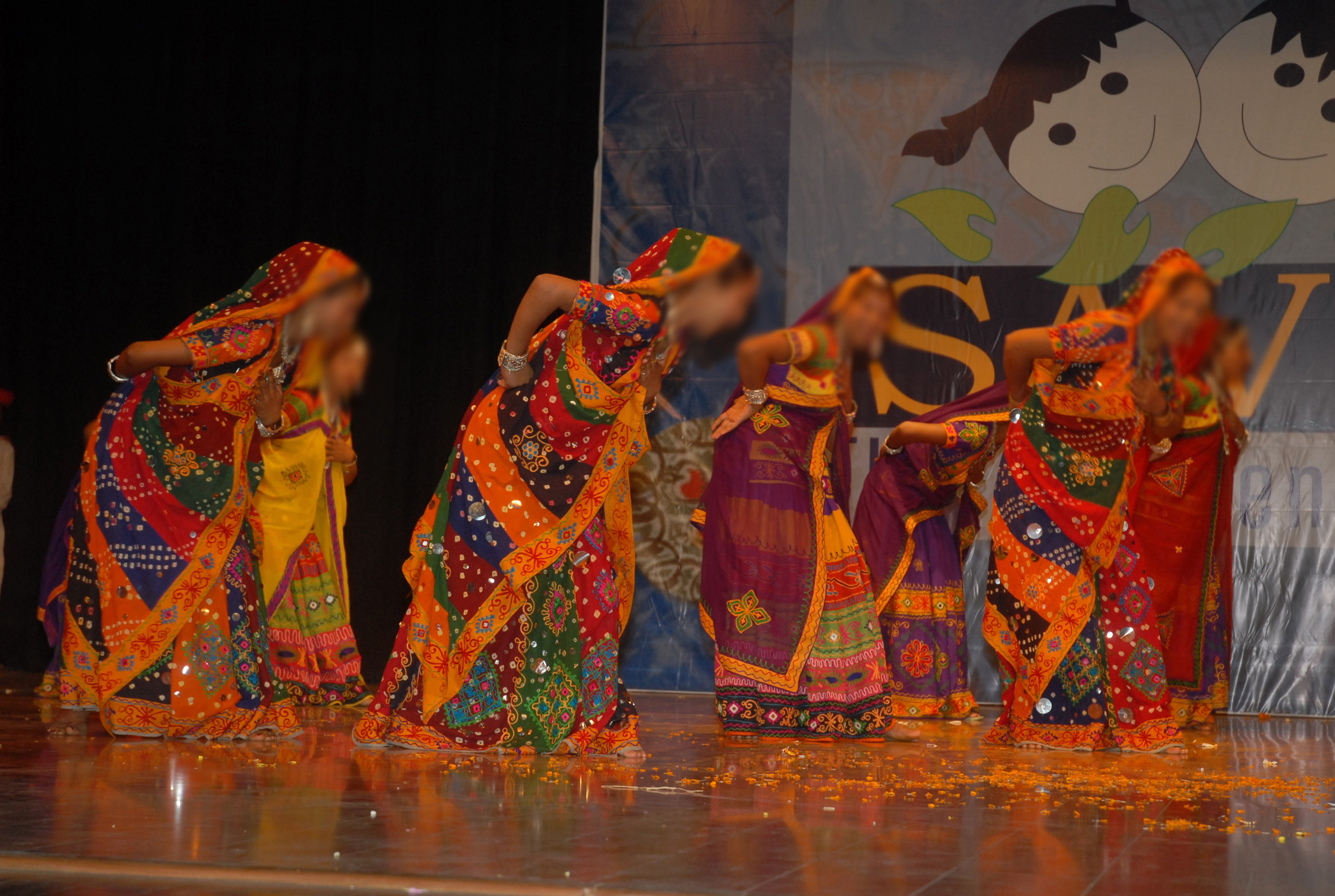
Dance, when performed for oneself, is the most sublime of performing arts. But when wilfully used to create happiness for those less fortunate than one, it acquires a profounder dimension because it enriches the lives of both the learner and the teacher. This is brought home while watching students of Komal Lalpuria perform on stage.

“My entire body was shivering before I came on the stage. Then I saw Komal didi sitting in the front row, and my fear vanished. While I was dancing, I felt the stage and the world is mine”, said Rakhi (name changed), a beaming 13-year-old.

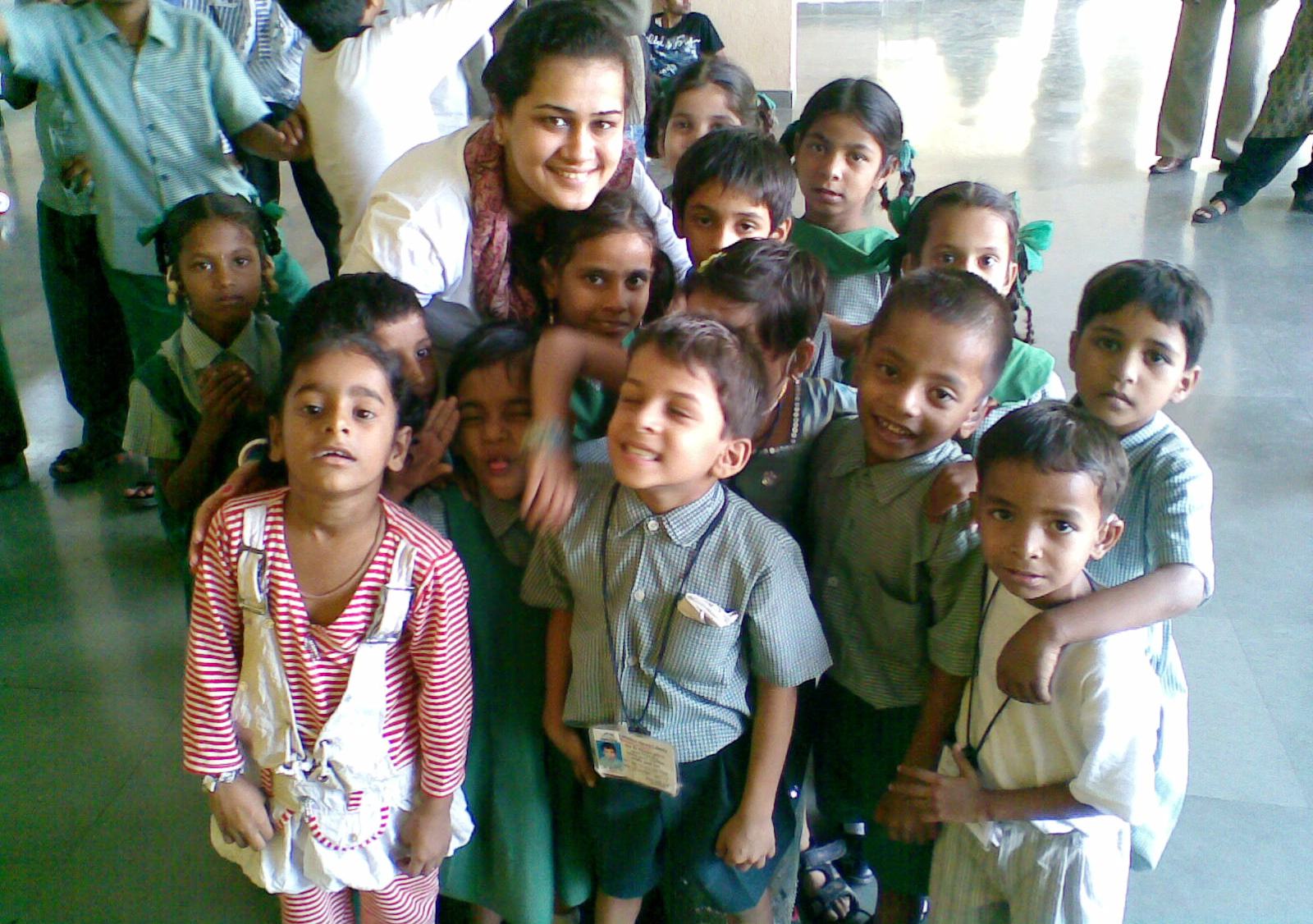
Rakhi’s smile is broader, her sense of achievement higher, because her back story is one of violence and severe trauma. One among several young girls, whose unfavourable social environment compels them to leave their homes in search of a better life for themselves and their families, Rakhi found herself, like so many before her and so many since, in the clutches of traffickers. If not for her subsequent rescue and time spent in rebuilding her life with Save The Children India’s Sahas Kendra, Rakhi’s story may well have been just a meaningless statistic.

But several young girls have been fortunate to not just get livelihood training by the Kendra, they are lucky to be given the chance to regain a semblance of faith and trust in relationships and society. And Komal has had a big role to play in this process. As a trained kathak dancer who went on to hone her skills by training under Shiamak Davar, Komal would have continued choreographing dances for private groups until the opportunity to do an even bigger good came knocking.

Dance with me!   

Komal was 14 when she completed her visharad from Kalangana University at Allahabad. Five years later, in 2007, having learned the basic level of dance from Shamak Davar’s Academy, she began to  choreograph dances for private groups comprising women and children.

A commerce student from NMIMS, Komal was “totally unaware” of the potentiality of her talent to transform her into a different level of consciousness, that of social commitment. “It all began when I attended a seminar for social responsibility at my college,” she remembers. “Archana Rao, coordinator of Save The Children India, presented various activities of the NGO where students could contribute to society. But despite  eagerness to participate in these activities, there was nothing connected to dance. I was dismayed.”

A few days later, Archana called Komal to enquire if she would train the girls at their shelter home. “They needed to perform for the annual day function. I agreed at once,” Komal says. However, training the girls was one thing, and getting them stage-ready in just three sessions, was another matter.  “It was a big challenge, and I was sceptical. But once I met the girls, the bonding was instant.  We decided to do a Rajasthani folk dance.”

But the task was not easy. “These girls were to perform on stage for the first time. From building their confidence, to taking care of their costumes and make-up was my job,” she says. The days flew by, and on March 20, 2008, the day of the function, the auditorium at NCPA was packed to capacity. It was a testing time for both Komal and the girls – for the girls, it would help them reconnect with the world. It had to go well.

“But once the girls began to perform, it was magic. They may have missed a step or two, but they kept the sprit of the dance intact. My tension gave way to tears of joy. Their performance got a standing ovation,” Komal smiles.

Buoyed by their success, Komal and Archana decided to continue the dance lessons. Till recently, Komal has been visiting the Kendra once a week and has trained at least 30 girls. “I teach them folk dances only, not Bollywood,” she emphasises. “I’ve designed the dance sessions to expand the girls’ cultural knowledge, and to help them develop self-confidence along with self-acceptance.” Archana adds to this: “Learning dance has brought a distinct change in their lives. I have noticed this change in their day-to-day activities. Dance helps them tap into emotions that are required to feel free of all restrictions and emote seamlessly.”

From 2009 to 2010, Komal also trained about 90 special needs students with the same NGO. The highlight of the project was that the students and their teachers performed a dance drama at The American School to a standing ovation.

A different bond

“I began with Gujarati folk dance and showed them where Gujarat is on the map ofIndia. I also informed them about the dress, food, lifestyles of its people and the festival of Navratri,” Komal explains, adding that the girls are often enthusiastic about learning different Indian customs. “Since the girls come from different states, it also becomes an interactive session for them to discuss and understand each other’s rituals.  This leads to further bonding,” she says.

But the girls are a little shy, and it takes a while for them to shed their inhibitions. “Each session begins with a little discussion and inputs from the students, and ends with one of the students summarising the on- hour lesson,” Komal says. But the girls enjoy the grooving sessions the most. “I begin by standing in the centre with about 20 students surrounding me. Then I do two or three steps, and call one of them to the centre to lead. This lets the girl understand how many steps she has picked up and builds each girl’s confidence since each of them has to come to the centre and perform.”

One of her students was so reluctant to dance, she would not even move her hands. “One day, after a month of learning, she surprised everyone – she came to the centre, started dancing and refused to stop. She had discovered the joys of dancing, and the joy of just being. It was a breakthrough.”

Once this connection happens, it is easy for the girls to realise their self-worth, take pride in being a woman, and also respect other women. “I am blessed with the talent with which I am helping them, though in a small way, to break the mental and physical bondages and step into a real life. Honestly, it is a stress busting session for me too,” Komal says.

She says that the experience has made her grateful for what life has given her. “If one wishes to contribute to a social cause, one does not need to possess a particular talent. Just give your time. Even a little talk is important to help someone restore their faith in life,” she says.

Categories
Soft Coroner

A little more. And a little more.

Our national penchant for something ‘extra’ will have us become shameless and expect freebies in every situation.
by Prashant Shankarnarayan | prashant@themetrognome.in

The situation – A matrimonial ad seeking an extra-brilliant groom

The observation  There were the usual clichés – the girl’s father needed a groom from a good family. Expecting a brilliant son-in-law seems perfectly rational. Who wouldn’t want to flaunt an IIM son-in-law or an IIT son-in-law or an Ivy League son-in-law? But what caught my eye at first seemed like an error. This family wanted an ‘extra’ brilliant groom!

What on Earth does that mean? Is it a level between brilliant and genius? Was Einstein brilliant or extra brilliant?

To be honest, we do understand that the girl’s father wanted a smart and educated groom, but what it signified is just an Indian trait to expect something extra out of every situation. This demand for ‘extra’ brilliance is just a reflection of our culture where an extra could mean different things at different times. Yes, I know the first thing that comes to mind is the extra something that we pay under the table, but that is just one of the things ingrained in the Indian psyche. Don’t believe me? Read on.

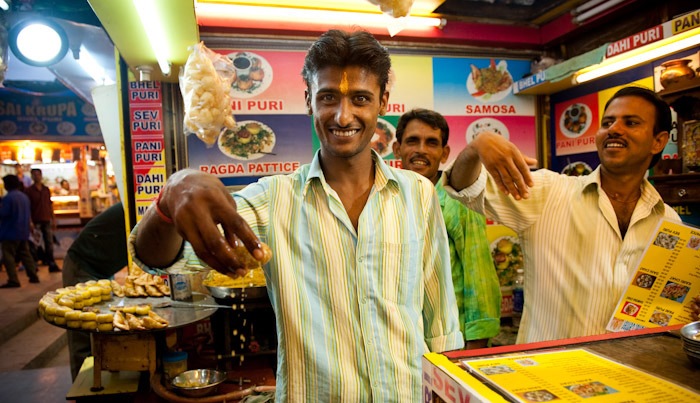
Habit: The hand drops the last pani puri in the mouth and the throat gulps it, the lips sip off the leftover pani off the plate and even before the tangy concoction reaches the tummy, the hand shoots out at the vendor to rightfully demand…an extra puri! Or an extra peppered alu with sandwich. Sometimes, it’s extra sheng chana with paanch rupay ka bhel. Even I remember coolly picking up a few extra sheng chanas and walking off nonchalantly, even as the chanawala gave me a nasty ‘bloody shameless freeloader’ look. It’s in our blood to demand extra.

Class: The idea of demanding extra also reeks of class consciousness. The same person (me) who would demand an extra puri at a chaat stall will abstain from doing so in a restaurant. No one does it. It looks cheap. Instead, I will tip the waiter lest he thinks I am a cheapskate. In fact, the tip is directly proportional to the status of the restaurant and/or the amount in the bill. On one hand, I tip the waiter and on the other hand, I take an extra puri from the street vendor irrespective of the possibility that both might be from the same economic strata.

And not to forget the local trains in Mumbai. It’s perfectly fine to rest one bum and then slowly push and prod to create a fourth seat in a second class compartment. The ‘extra’ seat is a part of the system. But try doing the same in a first class compartment and…well actually you just can’t do it there! It’s an unwritten rule – no fourth seat here because we pay more. And as a true blue Mumbaikar, even I completely agree and follow this maxim. First class commuters might be unaccommodating, but then what is the point of paying more than three times the second class fare if we have to travel cattle class.

Peer pressure: What started as an innocuous filler to pep up boring CVs has become a scary proposition; it goes by the name of extra curricular activities. Agreed that all work and no play makes Jack a dull boy, but all work and all play makes Jack’s father pay through his nose even though Jack will still grow up and most probably slog like his predecessors. Extra curricular activities are a must and should be encouraged. I have carved my career in a discipline which was not a part of my school or college curriculum. But when my 12-year-old neighbour goes to the USA as part of her ‘school trip’, I do shudder. We used to go to Chhota Kashmir at Aarey Milk Colony in Goregaon for a picnic. While it is heartening to know that schools have taken on the mantle to create super students, I don’t know how many of these kids will grow up to be rocket scientists-cum-horse riders-cum classical violinists who represent their country in Judo or Karate even as they win dancing and singing talent shows on television – when they’re not busy with Vedic maths, that is.

Our generation turned out okay. I hope future generations turn out better. Desperately piling extra curricular activities on the kid doesn’t seem the apt way to go about it. Still, if the parents believe that it works for their kids, then I wish them ‘extra’ luck.

Tradition: This is bit light-hearted. It’s the act of adding 1 to every transaction. 11 coconuts to bribe the gods. Rs 11 in an envelope as shagun from relatives. Rs 111 in an envelope to make a relative more endearing. Festival celebrations in the colony means it’s time to shell out Rs 501. This harmless extra numeral stems from the belief that 0 puts a full stop to a transaction, whereas 1 adds perpetuity to auspiciousness. Weird logic, but works for me.

Oppression: This I mention on behalf of all those struggling writers, including yours truly. It is one of the main reasons why many professionals prefer a full time job that assures a stipulated salary, as compared to having one’s own set-up. Dear clients: when you say ‘pilot’, we hear ‘free’. It’s like the housewife telling the vegetable vendor to thrown in extra kotmir with the lot. Freelancing professionals hate this extra work that is thrown in by clients even as they dangle the usual carrot – we’ll rope you in next time for sure. The more desperate you are, the more ‘extra’ work you do even as an ‘extra’ carrot keeps getting added to the dangling list. And I’m sure this gets replicated in every industry. What matches this ‘extra’ oppression in its ruthlessness is our next aspect – double standards.

Double standards: We’ve heard it before. How one needs to report on time; something which I sincerely follow. How one needs to be presentable at work. How employees in developed countries are thorough professionals and we need to match up with them. Our bosses want us to be like them, but in our own way, which boils down to extra working hours without extra pay. Our stickiness to copy ‘foreign ishtyle‘ corporate culture ends there, simply because there are 20,000 people in line waiting to grab your job.

Sporting conscience: No surprise that the sport that Indians follow passionately is often defined by its extras.  Think it doesn’t matter much? Cut to the match when Sri Lankan spinner Suraj Randiv bowled that no ball, leaving Sehwag stranded on an unbeaten 99. More than India’s victory, the columns were filled with lectures on the spirit of the game and a denied century. True to our style, we even prefer sports with freebies.

p.s.: Although I have just touched the tip of the iceberg as far as our natural penchant for an extra something is concerned, I will vouch that no extra is more beautiful, deserving, fulfilling and quintessentially desi than that ‘extra’ half mark doled out by a generous soul that helps you touch the most important barrier in life –35 out of 100.

Prashant is a mediaperson who is constantly on the lookout for content and auto rickshaws in Mumbai. The Soft Coroner attempts to dissect situations that look innocuous at the surface but reveal uncomfortable complexities after a thorough post mortem.

Categories
Big story

Missing in Mumbai

1,470 children went missing in Mumbai between 2005 and 2011. Where did they go and why aren’t they found yet?
by The Editors | editor@themetrognome.in

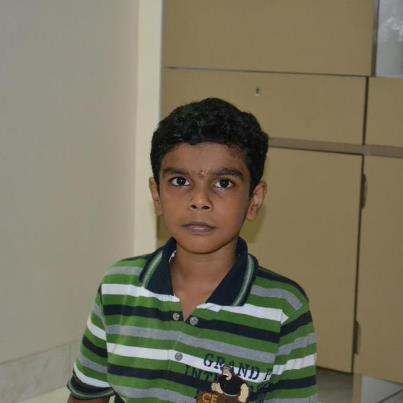
Aditya Sathiyaraj (9, see pic) ran away from home on October 6 because he feared a scolding from his father. The Sion resident had reportedly left his tuition class early that day to go out and play, and when his father told him to wait outside the flat while he called up the tuition teacher, the child ran away and has been missing ever since.

Aditya is now part of a grim statistic for Mumbai city – as per crime records available with the Mumbai police on their website www.mumbaipolice.org, a total of 3,958 persons were missing in Mumbai from the years 2005 to 2011. Of these, 1,470 are in the age group zero to 19 years – about 37 per cent. Again, a majority of these are below 15 years of age.

An interesting fact to emerge from the records, is that several children (all of them boys) ran away from city-based remand homes in Mankhurd and Kurla, in 2009, 2010 and 2010. No trace of them has been found ever since. Said DCP Nisar Tamboli, who is also the Mumbai police spokesperson, “The records are updated. The moment there is progress on any missing persons case, we immediately take off the person’s details from the site.” However, he declined to comment when asked why so many persons, and so many of them so young, had still not been found, saying that he couldn’t give information because “he did not know” this correspondent.

However, the Missing Persons bureau of the Mumbai Police was more forthcoming with information. Said an official who spoke to The Metrognome, “The investigations for all the missing persons are always on, no matter the year the person went missing. At the Missing Persons bureau, we collate all the information given to us by police stations across the city, and we answer queries by people wanting to know more about people they have lost, and we update the lists available with us also. The moment there is a breakthrough in any case, the relevant person’s details are taken off the stie. However, we do not carry out investigations ourselves – that is done by the concerned police stations.”

Adding that there have been cases in the past when people who have gone missing in the city have surfaced years later, the official said, “It does become difficult to find a person after a certain time has elapsed, but till a person is found, the case is technically open. However, I can’t say why such a high number of missing children has still not been found by the police. Though the police take the same effort to find all missing persons, special attention is given to cases involving women and children.”

Why do young people go missing?

An official says that the reasons for young persons to go missing are several – right from being victims of crimes such as kidnappings and murders, to personal issues that prompt them to run away from home or school. “Children react adversely to situations of stress, in which they may face abuse at home or school, or be threatened by somebody, or even be insecure about something. When the problem is not addressed, they may want to take themselves out of the threatening environment, so they may run away.”

An interesting factor across all missing lists from 2005 to 2011 is that each list comprises at least one woman who has gone missing with her child/children – these are generally grouped under cases arising from marital discord. Apart from this, police records say that a large number of teenagers run away to find work in other places, or become victims of trafficking, or may simply not want to live in their own homes.

Categories
Film

Has-beens and their brats

Bollywood continues to open its floodgates to a new generation of star kids. But are they really worth a watch?
by M | M@themetrognome.in

I feel sad. Sad to know that we have finally seen the last of those days when actors were discovered in the dingily-lit rehearsal halls of a drama school. Where genuine emotions of pain and hunger on the actors’ faces were a reflection of their several days and years of hardship and struggle.

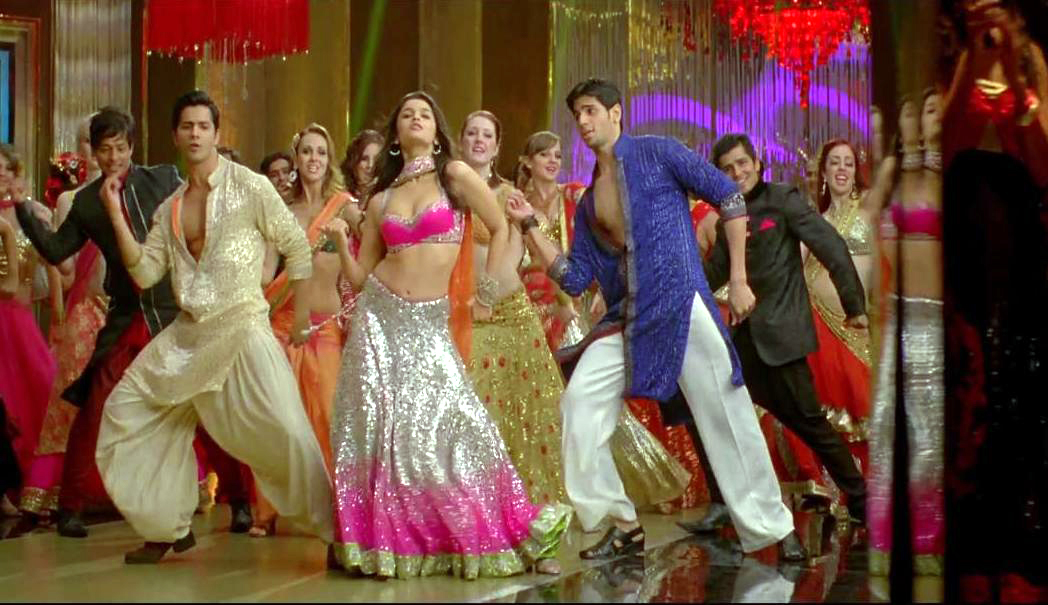
I feel particularly sad, then exhausted, when I watch the offspring of yesteryear stars prancing around in frocks purchased in their (the offsprings’) infancy, draped as fashionable eye candy on the arms of metrosexual men. Yes, I am talking about the cast of Student of The Year, so bite me. This film doesn’t make sense to me at all. Its songs don’t make sense to me. Its cast is a big puzzle. The girl, Alia Bhatt, has just one expression on her face – a persistent cringe – and the guys, Siddharth Malhotra and Varun Dhawan, only seem to be dancing around her. Methinks, it take a little more than that to be the student of the year, even at a dance school, and it will take much, much more to please the audience. Better luck next time, Karan.

Coming back to a bigger worry, where are the real men and women? Look at the casting of Student of the Year. Alia is Mahesh Bhatt and Soni Razdan’s daughter, Varun is David Dhawan’s son, his brother is Rohit Dhawan (of Desi Boyz fame) and Siddharth Malhotra is reportedly related to Karan’s close friend Manish Malhotra. The rumour mills have been buzzing with stories of Karan and Siddharth’s ‘close friendship’, where they have been spotted at various pools and restaurants at five- star hotels across the city, even hinting at the-couch-that-must-not-be-named. Sure, the cast boasts a high pedigree, but where’s the talent, folks? From what we’ve seen so far, their biggest talent is that they resemble their parents.

Not so long ago, there was Always Kabhi Kabhi; this was a film made to please the Morani brothers by casting Zoya Morani in the film. It was produced by Red Chillies Entertainment, and Cineyug was a silent partner in the company. A marketing brouhaha was created around the film, and SRK himself shot a music video to promote it. Needless to say, the film bombed at the box office and Zoya Morani was sent packing home.

Backtrack a little more and meet that other star kid disaster, Jackky Bhagnani. His dad, Vashu, will force him down upon us once again in a movie called Ajab Gazabb Love, slated to release next week. I had to pay for therapy after watching just the promos. Jackky’s performance in his debut film Kal Kissne Dekha, for which he won an IIFA award (Star Debutant) was as good as the title of his next release – FALTU.

Not long ago, a rich father was even willing to pay huge sums of money to get a theatrical release for a film directed by his son. Still, the distribution house that usually pays to procure the rights of a film, refused this lucrative offer for fear of losing face, and also because good sense sometimes does prevail in Bollywood.

There are many other star kids, who (to put it bluntly) came and went, without leaving any impression on the audience. Not that they were worse than the ones that get a bigger release – like Jackky and gang,  but this game is all about the parents. The chances of star kids getting a decent break are directly proportionate to their parents’ social equation in the industry. Even the filmmakers know that looking for talent in these kids is futile.

In the near future, I can see the Dharmas and the YRFs of the world setting up a school for these kids, where the dumb are separated from the dumber. The weekly PTA meeting over cocktails will have a one-point agenda – which parents do we like the most, and whose kid should be cast in the next flop?

The film industry has always inspired many to pursue their passion for acting and in return, the stars  narrate this great story of their struggles to the world, thus inspiring others, and so, the circle of life in cinema continues. But it seems that this circle is moving towards recycling has-beens through their children; children, who are not even passionate about this fascinating art, but still enter the profession with good baggage and some meagre acting skills.

I really wonder what these kids will say if they ever reach the pinnacle of stardom (chances of which are as high as a cow winning India’s Got Talent), but it sure will go something like this: “Oh, I was watching reruns of Jersey Shore, when Karan uncle called me to say that he spoke to Daddy and told him I would be acting in his next film. I was like, OK, since I am doing nothing right now and I am not good at anything else either…so I gave it a shot.”

Guess it’s a long wait for the next Amitabh Bachchan and Ranjikanth of this generation.

Till then, I’m going to blindfold myself and listen to soothing music, hoping that this Friday passes me by quickly.

(Student of The Year releases Friday, October 19, 2012. Picture courtesy: www.apnatimepass.com)

Exit mobile version