Categories
Event

Maharashtra NCC cadets win PM’s banner for 16th time

They won for the fourth consecutive year at the Republic Day camp in Delhi recently; State Governor feted the cadets.

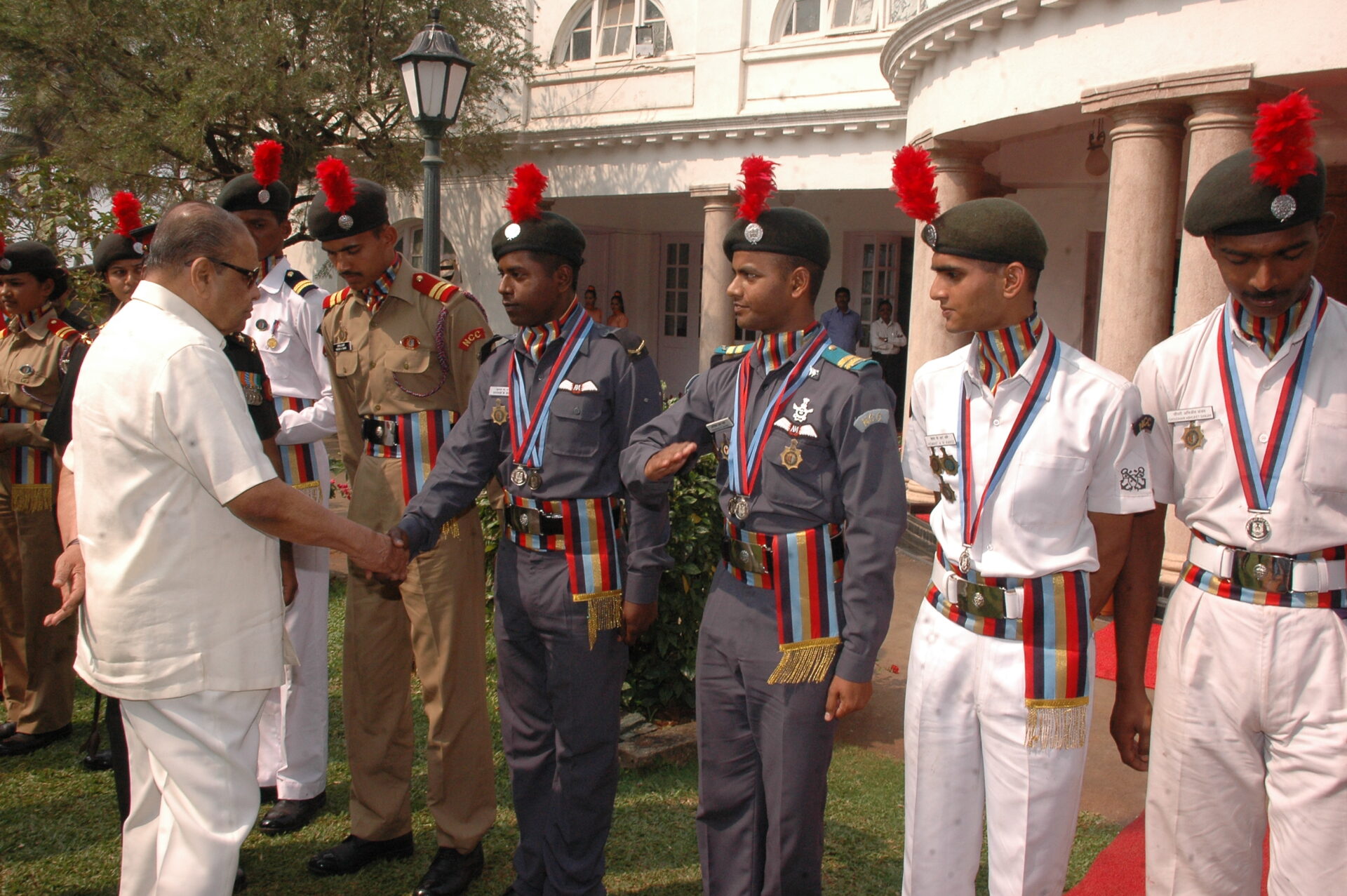
The Maharashtra Contingent of the National Cadet Corps (NCC) won the prestigious Prime Minister’s Banner for the fourth consecutive year at the Republic Day camp held in New Delhi recently. This win is the 16th for the Maharashtra NCC, a record on its own.

On Saturday, State Governor K Sankaranarayanan feted the victorious Corps at his official residence in Mumbai, the Raj Bhavan. Speaking on the occasion, the Governor congratulated the National Cadet Corps for shaping the character of the youth by inculcating in them discipline, patriotism and an urge for social service. He expressed the hope that the NCC would mould the character of several more youth in the country.

Maj General S Sengupta, Additional Director General of Maharashtra NCC, informed the gathering that the strength of the Maharashtra NCC is being increased from 1 lakh to 1.20 lakh cadets this year onwards. He also added that Maharashtra NCC has bagged the Champion Directorate Trophy for the 16th time during the last 22 years.

 (Picture courtesy Raj Bhavan, Mumbai)

Categories
Enough said

Why Gandhi is relevant in today’s times

Humra Quraishi reviews a valuable new book released on Gandhi’s martyrdom day, which is relevant especially in today’s turbulent times.

I sit writing this piece clutching a book that was released on January 30. I’m not able to let go of it, and I’m feeling a bit possessive about it. Why? Because it’s an important volume in the turbulent times we are living in.

The book is titled Faith And Freedom: Gandhi in History (Niyogi Books) by well-known historian Professor Mushirul Hasan focusses on those aspects of Mahatma Gandhi’s life, those aspects that are crucial to us Indians. How did he move millions with such seemingly little effort? Why did he succeed in most cases, but not when it came to engaging with Muslim nationalism? Is it not ironic that the messenger of non violence lived through Partition, one of the subcontinent’s most violent events?

Apart from these vital questions, Professor Hasan has also focussed on Gandhi’s reading and interpretation of Islam, his relationship with the Muslim community and his strategy of dealing with them. I’m just going to quote a few observations from the 550-page volume: ‘Gandhi considered all religions equally good, for they teach the very same truth, and point to the very same goal and spiritual regeneration of man. The method of worship was important to him, but the spiritual force of a religion counted more and its power to uplift the soul and to transform man. “Our temple is in our ashram,” Gandhi quoted Kabir, “nay, it is in our hearts…” Also, “It was a denial of God to revile one religion, to break the heads of innocent men, and to desecrate temples or mosques…”

Also these lines, ‘Gandhi portrayed Islam as a religion of peace in the same sense as Christianity, Buddhism and Hinduism…whenever he came across coarse intolerance or religious bigotry, he reacted sharply rather than remaining a detached onlooker.’

Hasan relays the bond between Gandhi and Ghaffar Khan: ‘On 4 December, Ghaffar Khan returned to Wardha with his twelve-year-old son and fourteen-year-old daughter. Often, he read the Quran in the evening prayer and joined in reading Tulsidas’ Ramayana. He loved the tune and listened intently. “The music of the bhajan fills up the soul,” he once proclaimed. He served the sick, and, what is more, helped Gandhi wash his feet. Once Badshah Khan came along with his two sons. At the midday meal , one of them asked, “Isn’t it your birthday today?”

“Yes, it is. Why?”

“Well, you see, I thought…there might be something special to eat – cake and chicken pilau perhaps. But there is simply plain boiled pumpkin, just as usual!” Gandhi chuckled and made the children laugh. Afterwards he took Frontier Gandhi aside and suggested that, “We ought to get something they would really enjoy, some meat or something.”

“No, no, they were only joking; we always eat gladly whatever our host provides.” The children agreed. This was an affectionate parental-like tie; a young boy or girl turning to him for advice and Bapu, in turn, showering his affection and blessing!”

After I finished reading this book, I have been thinking: Why are such books not introduced at the school or college levels? I sure that such readings will help people bond. Credit must go to the author for putting together a gamut of voices, opinions and  facts, and quoting extensively from Indian and non-Indian academics, scholars and poets, combined with his own historical inputs. What I found extremely refreshing is that he has relied very little on today’s politicians for inputs to this volume, instead focussing only on the absolutely serious and authentic.

To you readers, I can only suggest that you should start this new year reading books of this kind so that the coming months could usher in some cheer and the hope that you and I are no longer used by today’s politicians to further the divides between us. Gandhi would agree.

Humra Quraishi is a senior political journalist. She is the author of Kashmir: The Untold Story and co-author of Simply Khushwant

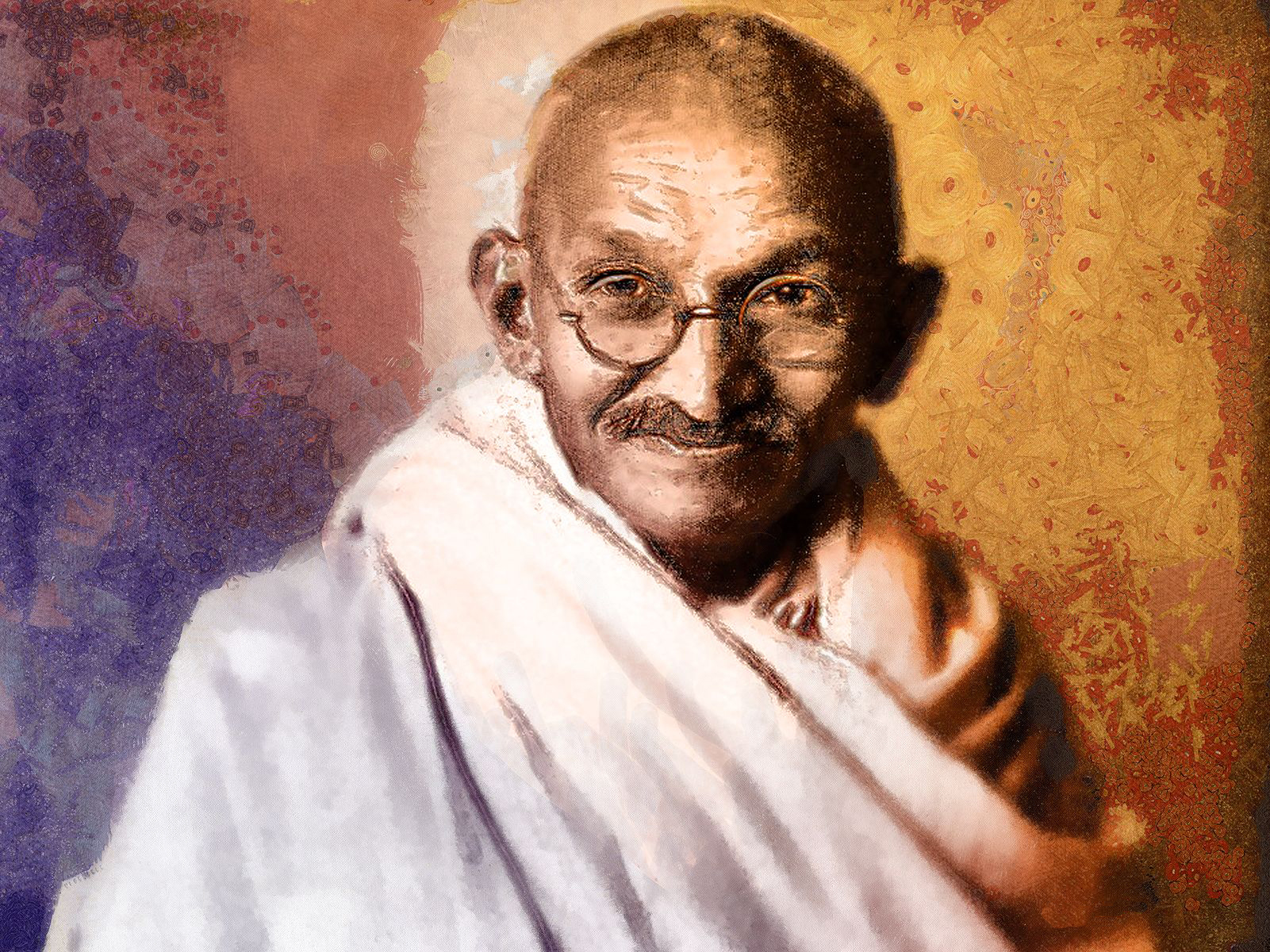
(Picture courtesy finewallpaperss.com)

Categories
Places

Heritage walks to start at Bombay High Court

You can soon take a walking tour of the HC on weekends. However, visitors must maintain discipline inside the premises.
by The Editors | editor@themetrognome.in

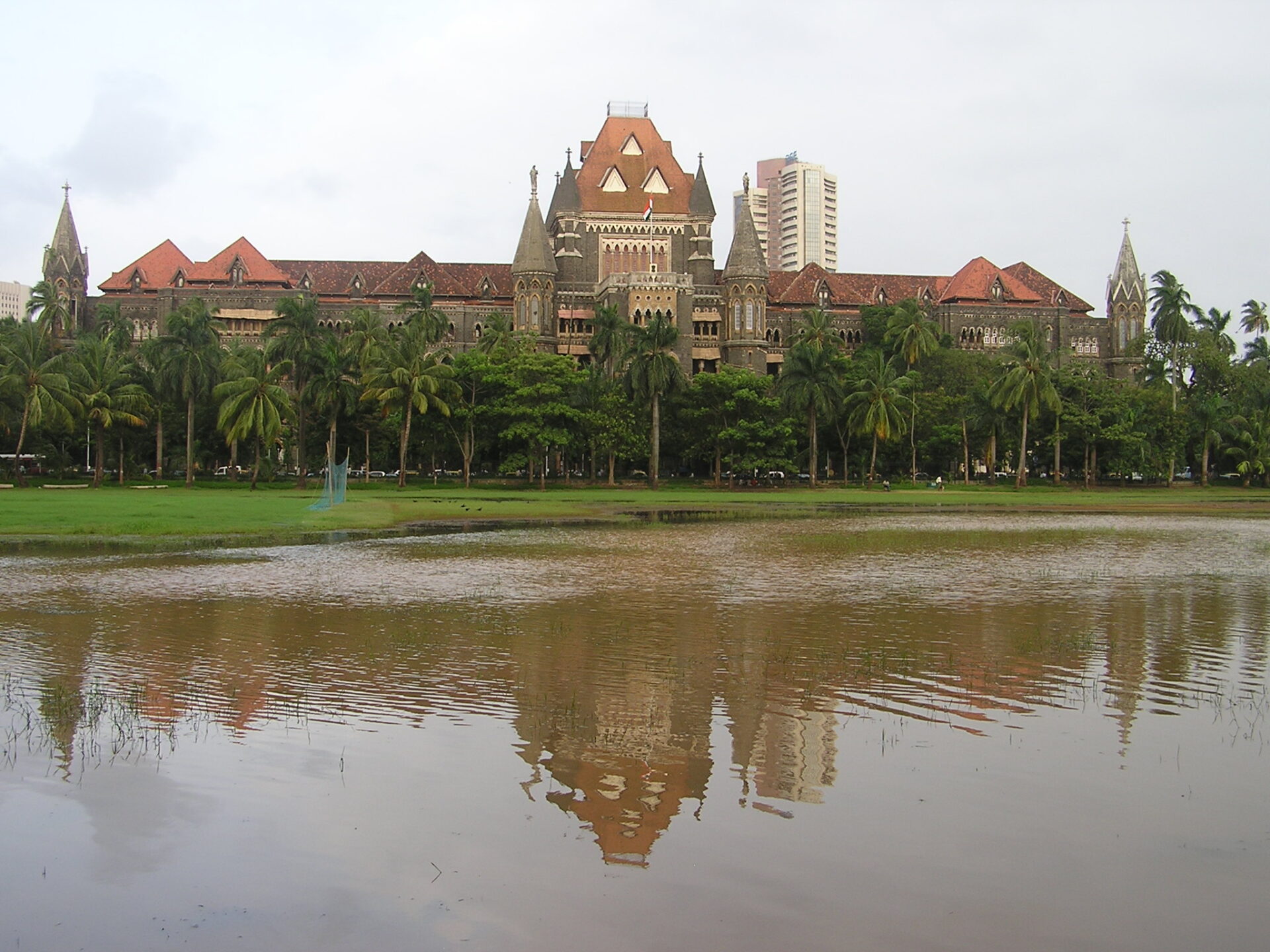
Have you ever wondered what the Bombay High court (HC) looks like on the inside? It sure is an imposing and photograph-worthy structure, but what is it like to be inside the building that delivers judgments and is the ultimate symbol for law in the city?

You’ll soon have a chance to find out.

After the Chhatrapati Shivaji Terminus (CST), it is the turn of the Bombay HC to be opened to the general public for general viewing via a heritage walk. After efforts on the part of the Maharashtra Tourism Development Corporation (MTDC), the Bombay HC will be open to heritage walks on weekends, barring working Saturdays for the court.

Says Dr Jagdish Patil, Managing Director, MTDC, “It is our great privilege to have the opportunity of organising the heritage walk at the High Court. The beautiful building premises are indeed a rare sight for visitors and not many get the opportunity to visit it. The HC is a monument of great significance, history and heritage. We are thankful to the Honourable Chief Justice Mohit Shah for granting us permission to arrange heritage walks at the High Court.”

Entry to the building is otherwise restricted, understandably, but it will soon be thrown open for viewing on the weekends. The guidelines for the walking tours, as well as ticket pricing and group timings, are still being worked out. “The walk will be faciliated by the ToGA (Tour Guides Association) on days when the HC is not working,” Dr Patil says. The walk is to be conducted in the presence of police personnel and the Court Keeper between 8 am to 10.30 am on Saturdays and Sundays every month.

“However, the visitors will have to be disciplined and adhere by the High Court’s guidelines,” Dr Patil says. “They will have to move around in small batches (15 to 20 members at a time). Photography of the interiors of the court rooms or High Court building will be prohibited, and visitors will have to be cautious about not disturbing anybody in the court rooms and other departments of the HC,” Dr Patil says.

(Picture courtesy wikipedia.org)

Categories
Learn

Rs 5 crore to replace court officials’ laptops

Existing laptops are five years ‘old’, will be replaced by Rs 37,800 Acer Travel Mate laptops with Ubuntu Operating Systems.
by The Editors | editor@themetrognome.in

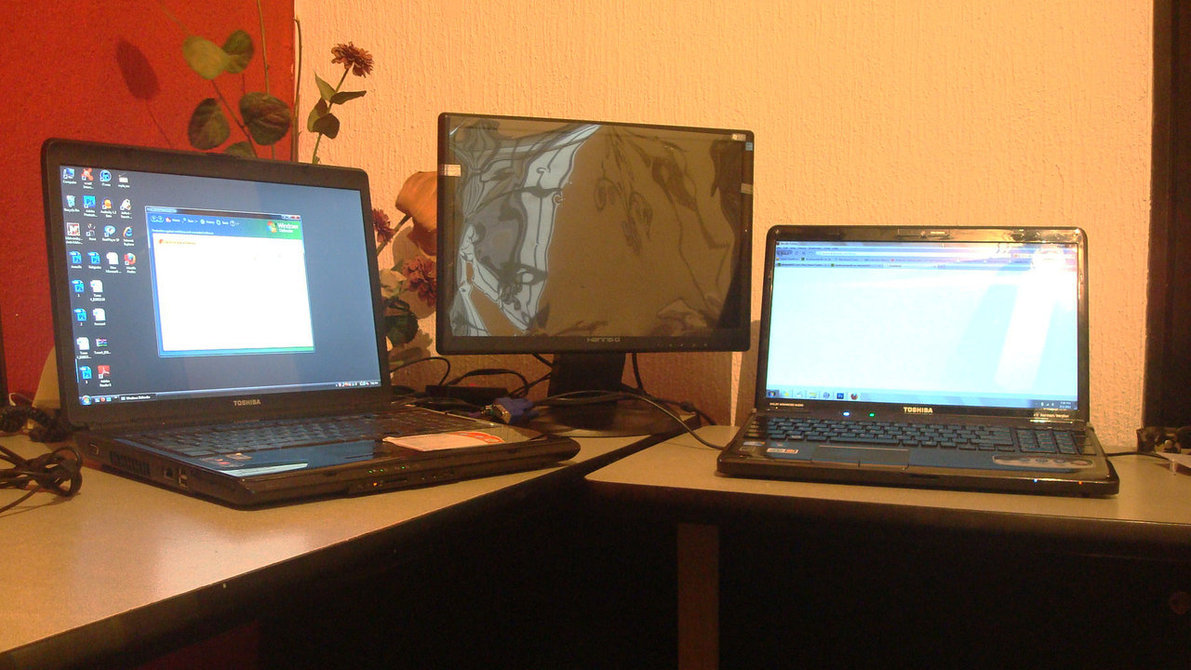
A total of 1,581 court officials in the State of Maharashtra will receive new Acer Travel Mate laptops from the Government, to replace their old laptops that are not working well – their laptops are five years old.

Court officials had been provided laptops by the State in 2007, under the National e-Governance Project (NeGP) – the project aims to digitise courts in Maharashtra – and a corpus of Rs 43.99 crore has been set aside for it this year. However, the State finds that the working life of these laptops has now ended, and each unit is to be replaced by a new Acer Travel Mate laptop costing Rs 37,800 each. The new laptops are going to cost the State Rs 5,62,46,400.

A Government Resolution (GR) to this effect was passed on Wednesday, January 30. The laptops will be purchased from a Mumbai-based dealer.

(Picture courtesy deviantart.net)


Categories
Film

Banning films is our new pastime

If we’re banning films anyway, can the State ban films that hurt our intelligence, several of which release this year?
by M@themetrognome.in

This has been some week for the film fraternity. SRK’s ‘victimised’ (or not) statement created quite a stir and a ban on Kamal Haasan’s Vishwaroopam proved how flat the fraternity falls in a face-off with the State. But Vishwaroopam is not the first film to go perilously close to getting the axe. Many films in the past have been ‘modified’ to suit the sensibilities of a few people who find some material in it ‘objectionable’. Some films like Anurag Kashyap’s Paanch are still in the cans due to this.

Even Hollywood is not spared. Remember how David Fincher gave the Indian Censor Board the finger when he was asked to remove three scenes from The Girl with the Dragon Tattoo, that were apparently gore and sexual in nature? People who managed to get a bootlegged copy of the film and have seen it, will tell you how important the ‘unsuitable’ scenes are to the plot of the film. Similarly, The Da Vinci Code was banned in States like Goa, Andhra Pradesh and Nagaland because of its controversial plot revolving around the manifestos for Christianity.

In Malaysia, Mel Gibson’s The Passion of the Christ was banned only for Muslims, while the film was deemed suitable for Christian and Buddhist audiences. The film had the potential to create unrest amongst Muslims, thus the unusual ban. In retrospect, it seemed like a wise decision – it makes sense to not watch it if you don’t like it. But now, the Malaysian Government has failed to do the same for Vishwaroopam; the film was removed from theatres just a day after its release.

If banning films in the name of religion irks you, then this would definitely make you furious. In 1917, Birth Control, a film on family planning was banned in the United States of America in the interest of ‘morality, decency, public safety and welfare.’ The only reason one can let this pass is the year of the ban, when a not-so-modern America upheld a stereotypical image of the real woman and her moral values. Maybe a hundred years from now, even we will stop banning films for unjustifiable reasons.

But, can a ban really make the filmmaker bankrupt? The answer is ‘yes’ and ‘no’. Hollywood film that don’t get a release in a few foreign countries are seldom affected. They recover their costs on the home turf. But Indian movies banned in Indian states take a severe hit at the box office. Indian films are specifically made keeping the Indian (sometimes regional) audiences in mind. While some movies do extremely well with the Indian diaspora overseas, most of the moolah is generated at home. The ban on Vishwaroopam can cost Mr Haasan a whopping Rs 95 crore, by trade estimates.

Instead, there should be a ban on Non-Entertaining Films. These are movies that serve no purpose whatsoever, and require the viewer to keep his brains in the freezer before watching them. Like the No.1 series of Govinda – Aunty No.1, Anari No.1, Beti No.1 etc. These movies impair one’s judgement to the extent that one spends his hard-earned money to watch a grown-up man behave like a monkey. Maybe in the future, the Censor Board or the State can do the people a huge service by banning films that should have never be released.

Just to make the task easy for the Censor Board, here are a few upcoming films in 2013 that are very suitable for imposing a ban on:

Rangrezz. It stars Jackky Bhagnani. Censor Board, there’s your reason.

Zanjeer remake – The Classics should be sacrosanct and not allowed to be re-made, especially if Apoorva Lakhia is directing them.

Mere Dad Ki Maruti – Really? There is a big brand in the title. YRF has already recovered its production costs, so this one doesn’t need any box office collections.

Raanjhnaa – Sonam Kapoor cannot act. Period. Remember Mausam, with its riots, wars and 9/11? Sonam was worse than all these disasters combined.

These films (and more are coming up this year) are a bigger threat to the nation and hurt sentiments across religion. They should be banned purely on the grounds of offending the religion of Sanity. If the Censor Board fails to be the do-gooder, then maybe it’s time we take the matter in our own hands. Let’s impose our own ban on crappy films, by not watching them on the big screen and forcing distributors to take them down. It’s a thought fit for a utopian world, but hopefully we’ll get there soon.

M is a media professional with an eye on entertainment.

(Picture courtesy ndtv.com)

Categories
Big story

Free of all charges

Shaheen Dhada and Reenu Shrinivasan have been absolved of all charges in the Facebook arrests case. Court admits closure report.
by The Editors | editor@themetrognome.in

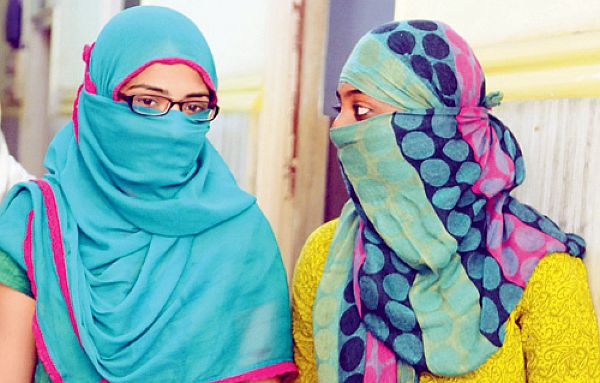
It was a case that was no case, to begin with. Stating the obvious proved costly for Palghar resident Shaheen Dhada, and agreeing with her, for her friend Reenu Shrinivasan – Shaheen had questioned the total lockdown of Mumbai and surrounding areas on Facebook after the death of Shiv Sena chief Bal Thackeray on November 17, 2012. The two girls were arrested and subsequently let out on bail, following a complaint by local Shiv Sena shakha pramukh Bhushan Sankhe.

Today, the girls have been cleared from all charges pertaining to the case. The court admitted the closure report filed by the cops and thus, the two have been cleared from the case.

A round of protests all over the country put the spotlight on the Palghar cops and the Maharashtra Government’s subsequent handling of events. An inquiry into the matter was immediately ordered, and the complaint was found to have no grounds for arrest – it was alleged that the FB post had offended religious sentiments. The investigation officers were suspended and the magistrate who had ordered the arrest was transferred.

In November last year, the Home Department of the Government had asked the police to file a closure report in the case. Palghar police had been asked to initiate the legal process that would result in the case being closed; the report was to be filed in the court. Such a report is filed when investigators conclude that no case can be made against the accused.

(Picture courtesy indiavision.com)

Exit mobile version