Categories
Places

The mother of all bicycle rides

Gurpreet Bilkhu cycled from Manali to Khardung La, and learnt that in the mountains, it’s a ride, not a race.

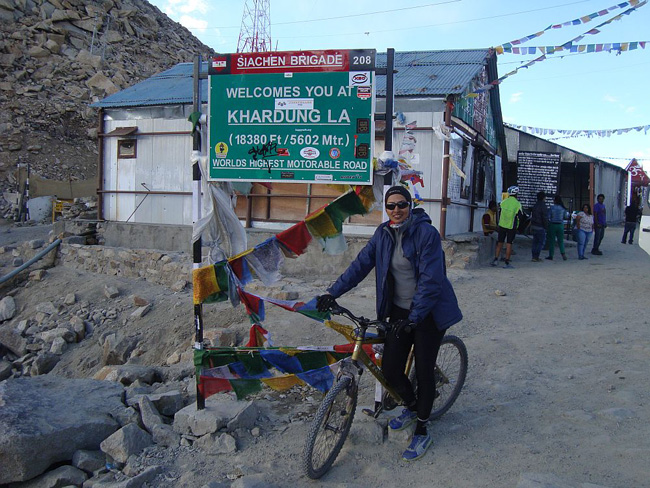
It was mid-July when my friends and I were planning a cycling expedition somewhere outside Mumbai. As a member of several cycling groups on Facebook, spotting one was not difficult. A friend commented on an upcoming tour from Manali to Khardung La – the world’s highest motorable pass. After going through the tour details, as I flipped my table calendar to look at the dates, the picture for the month of August was that of Pangong Lake. For me this was a sign and I knew then that I was hooked!
From the many who started planning, only four of us tentatively confirmed, of which two were most certain to undertake it. I started my preparations with a friend. I must admit that I am just a leisurely rider. I’ve done long weekend trips of over 150 km but these are more like picnics where we ride at a normal pace. Now, planning a 570-odd km ride over 11 days appeared next to impossible (i.e. about 50-60 km of riding daily on an average). We had only about three to four weeks to work on our fitness and endurance levels, fix our bikes, prepare for the trip in terms of getting the right clothes, gear, equipment, etc. and this was along with working full time!

The biggest challenge was riding at such a high altitude because the environment could not be replicated in a city. We had no clue on how our bodies would react to the daily strenuous uphill climbs that too in a rarefied atmosphere where oxygen was a luxury. Preparing ourselves mentally was the most essential preparation because we would have to face not only the inconceivable but also the inevitable.

As the days drew nearer things got tougher. I met with an accident on one of my practice rides. My friend also met with an accident and was advised three months of rest and two others also dropped out eventually. I undertook the trip anyway. I took a train to Delhi and then a bus to Manali. The bike was packed in a box in a semi-dismantled condition.

The ride:

Day 0 – A ride around Manali upto Solang; about 35 km.

Day 1 – Manali to Marhi; 35-odd km, elevation gain 1,250 m

Day 2 – Marhi to Sissu via Rohtang Pass; 55-60 km; elevation gain 1,600 m

Day 3- Sissu to Jispa; 65-70 km; elevation gain 600 m

Day 4 – Jispa to Patseo; 35 km; elevation gain 500 m

Day 5 – Patseo to Sarchu via Zing Zing Bar and Baralacha La; 60-70 km; elevation gain 1,400 m

Day 6 – Sarchu to Pang via Gata Loops, Nakee La and Lachalung La; 90-95 km; elevation gain 1,200 kms (the toughest and longest)

Day 7 – Pang to Tso Kar via Morey Plains; 60-65 km; elevation gain 400 m

Day 8 – Tso Kar to Rumptse via Taglang La, the world’s second highest motorable pass; 80-85 km; elevation gain 900 m

Day 9 – Rumptse to Leh; 90-95 km; elevation gain 450 m

Day 10 – The big climb to Khardung La; 80-85 kms; elevation gain 2,100 m
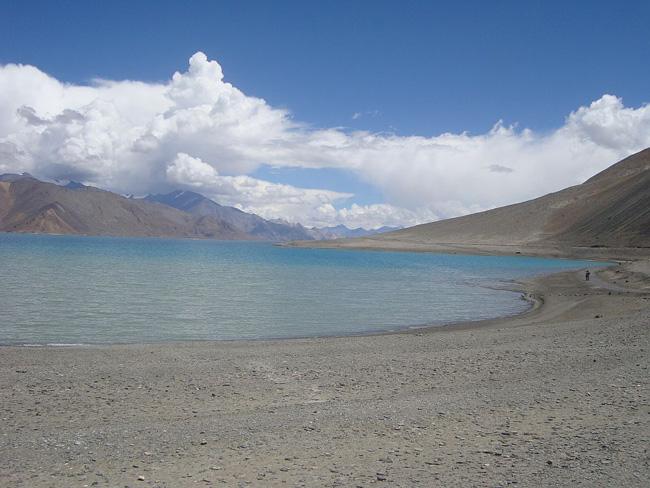
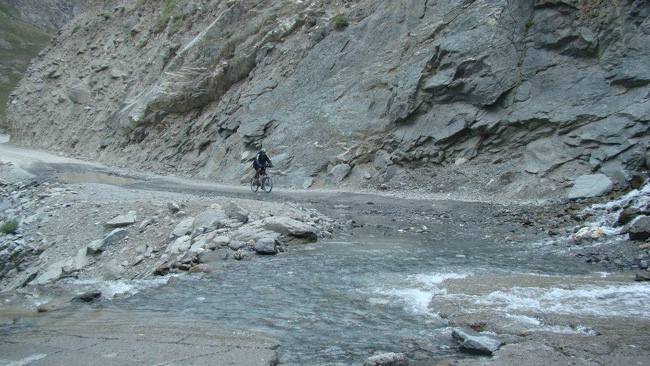
We encountered mixed terrain all along. We found ourselves riding through flower-filled valleys, cedar and fir forests, passing through numerous villages at Manali and then moving to road jams with traffic at Rohtang Pass due to the slush. We experienced off-road terrains on our way to Baralach La. The toughest were the 21 hair pin bends called Gata Loops. Morey Plains is the waterless, high altitude desert of the Tibetan Plateau, and riding through it, after all those climbs, felt like an aircraft taking off on a runway! The most scenic route was between Rumptse and Leh. We passed the picturesque Miru village and mountains that were maroon in colour!

Do remember this is a ride and therefore never try to race. Go at a pace you can sustain for long, even if you are the last one riding. Never get carried away by adventure, the mountains can be unpredictable. If you push yourself too far too soon, you may probably impair your ability to ride the next day. Try and start as early as possible in the mornings so that you can finish your rides by 3.30-4 pm every day. This will give your body the time to relax and recuperate for the next day’s ride.

Never camp next to river sides! The temperatures tend to dip to sub-zero levels during the night. Though most tour operators would carry tents and sleeping bags, prefer to sleep in places that are constructed by the locals. These are warmer and far more comfortable than your sleeping bags. Since you ascend gradually, you acclimatise automatically. You may or may not experience mountain sickness. Never ever think how much is left to complete, only look at how much you have covered already. This will motivate you to go on. There will be times when you will feel like giving up (unless you are at a discomfort), don’t give in to the temptation. Take a break instead.
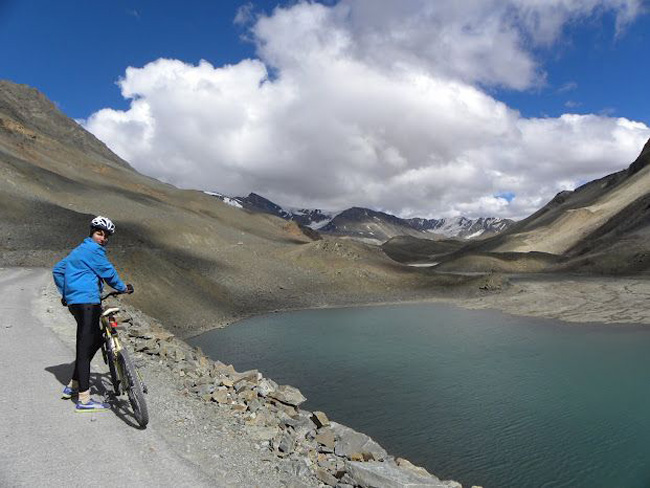
The ride to Khardung La has been one of the most enriching experiences of my life, which I will never forget. The tan, the pain, the bruises are all temporary and will fade away in sometime. What’s permanent is the achievement that will last forever. In Economics, my professors taught me that money was the only exception to the law of Diminishing Marginal Utility but I just discovered one more – adventure. The more you have it, the more you want to have it more!

Gurpreet Bilkhu is a Worli resident and bicycle ride enthusiast. She spoke to Salil Jayakar.

(Pictures courtesy Gurpreet Bilkhu)

Categories
Big story

Man makes hoax call to stop friend from leaving city

Friend owed Kabir Hussain money but did not pay up; Hussain hoped to detain him if all flights were cancelled.
by The Editors | editor@themetrognome.in

It doesn’t pay to lie, quite literally. A Bhendi Bazaar resident, Kabir Hussain (38) found this out yesterday after he made a hoax call to the airport to stop his friend from flying to Guwahati – the friend owed Hussain Rs 3,00,000 and was to meet him at the airport to pay him, but when he didn’t show up, Hussain decided to make the hoax call and get all outbound flights grounded.

Unluckily for him, he was nabbed just a day after he made the call on Monday. Hussain is a travel agent with an office based in Mumbra; he made the call from the airport’s vicinity.

On Monday, Hussain made the call a little after 7 pm, telling the help desk at Terminal 1B that, “Airport ka aaj raat ko 7 aur 10 ke beech mein naksha badalnewala hai. Airport mein bomb rakha hai (The airport is going to be destroyed between 7 pm to 10 pm. There is a bomb at the airport.” However, security agencies didn’t find anything amiss after an extensive search. A complaint was registered by the airport police station and the Mumbai Crime Branch also began probing the incident.

Based on a tip-off, Crime Branch Unit 8’s Deepak Patangre laid a trap and apprehended Hussain from Vile Parle yesterday. The Samsung Duos phone that he used to make the call was also seized. Hussain is in the business of arranging jobs for youth abroad.  He has been booked under the IT Act and the Suppression of Unlawful Act Against Safety of Civil Aviation.

(Picture courtesy elenajames34.blogspot.com)


Categories
Film

‘Bollywood has not called yet’

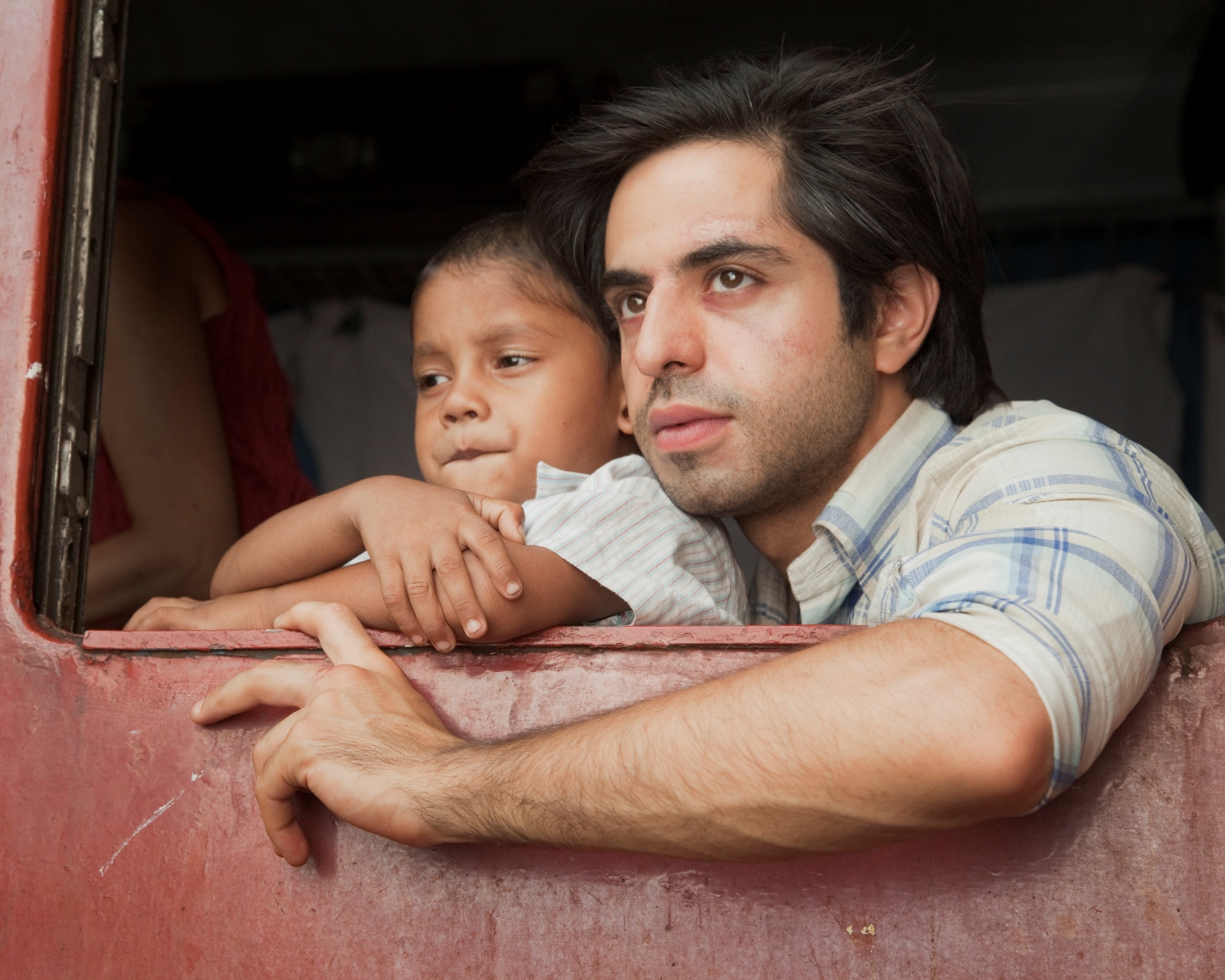
His national identity fades in the face of the character he plays. Satya Bhabha portrays Saleem Sinai in ‘Midnight’s Children’.

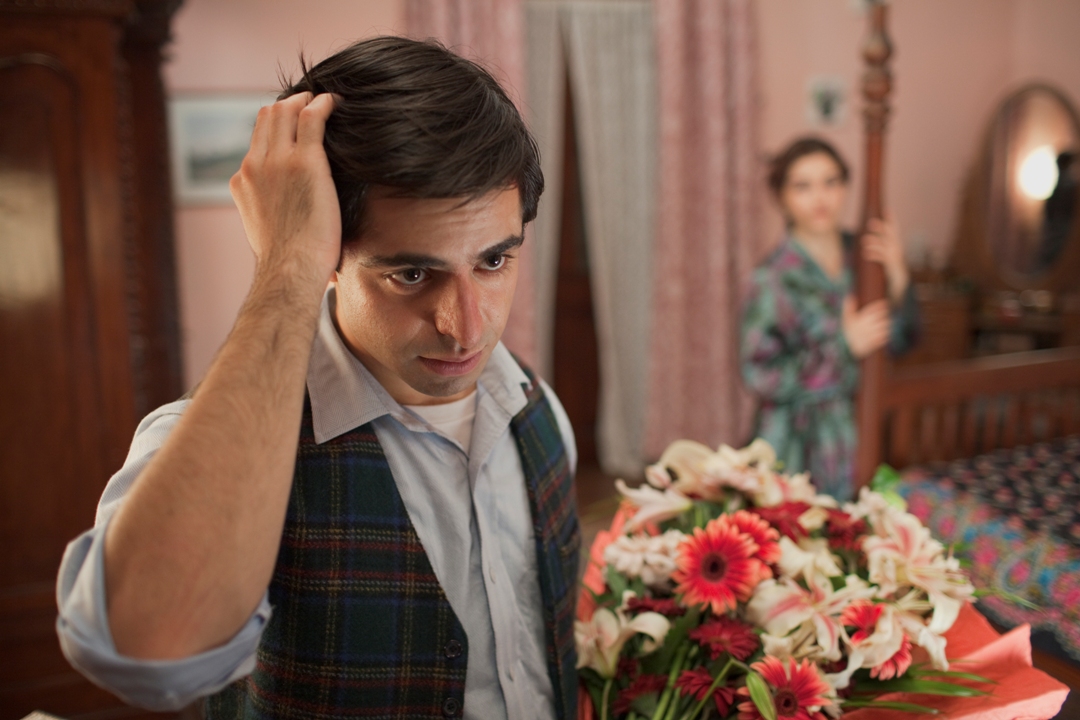
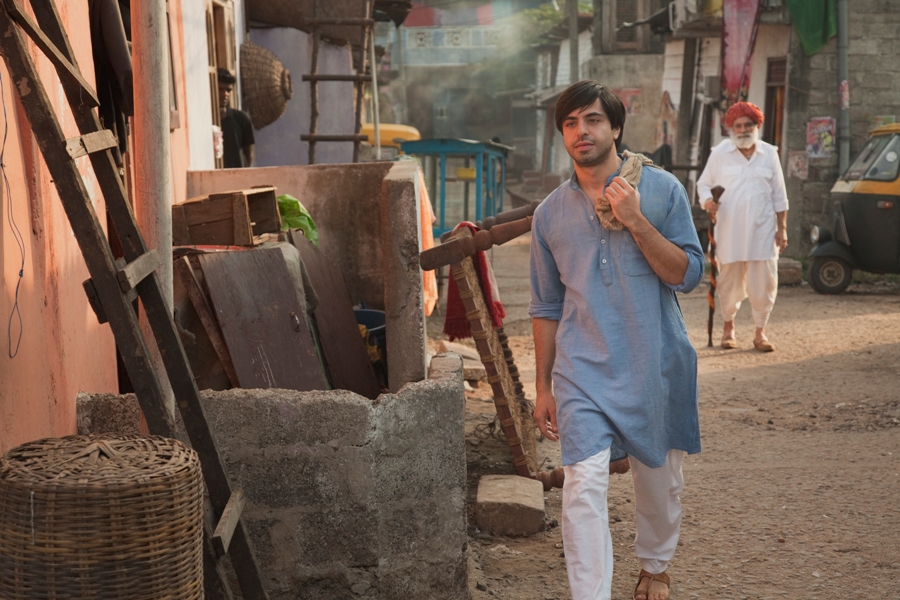
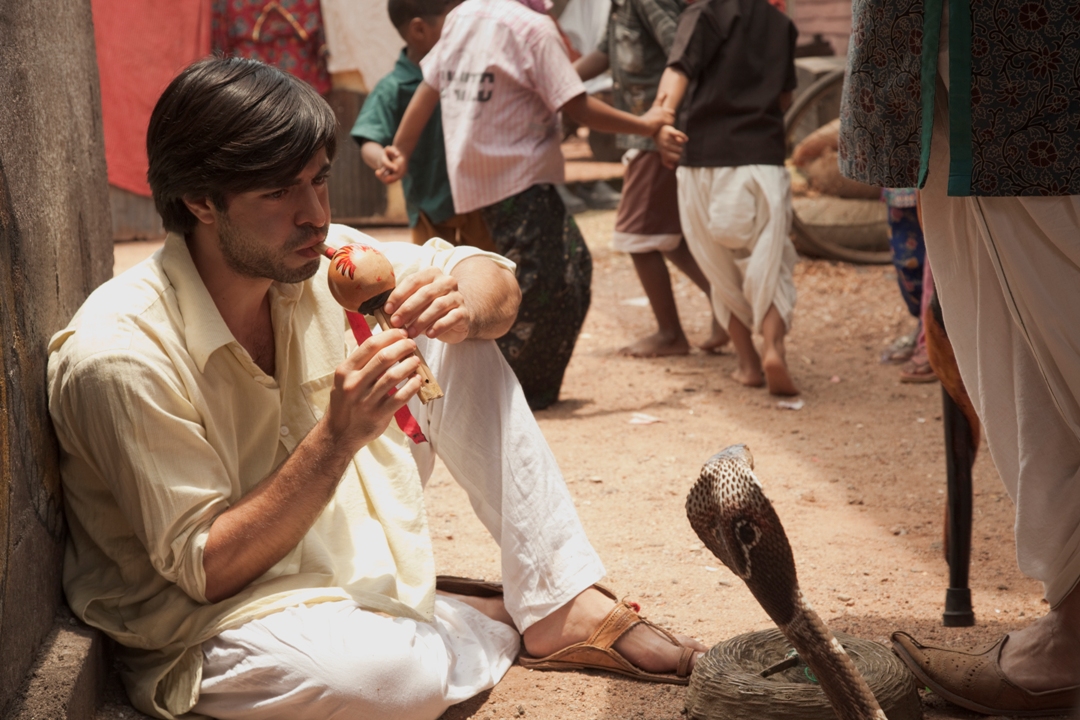
British-born actor Satya Bhabha will be seen this Friday in the Deepa Mehta-directed Midnight’s Children, based on Salman Rushdie’s novel of the same name. Satya, of mixed Parsi-Jewish roots, grew up in London, graduated from Yale and is based in Los Angeles.

In an e-mail interview with Salil Jayakar, Satya talks about his ‘identity’ as an actor, the challenge of playing Saleem Sinai and working with Deepa Mehta…

Salil J: You were in Mumbai recently for a wedding. Were you recognised as the lead actor of Midnight’s Children?

Satya Bhabha: Ha ha… no. At that point nobody had even seen the film!

SJ: Do you identify yourself as British, British Indian or Indian? As an actor does it matter, both at a personal level and a professional one?

SB: I consider myself British and American, due to the fact that those are the countries I was born and have lived in for my entire life. However, my ‘ethnic’ or ‘genetic’ identity is a more complex one which involves both my father’s Parsi family and my mother’s Jewish roots. As an actor, my national identity fades easily in the face of the character. In the face of the industry, however, it can be more of a challenge…

SJ: You’ve worked with an ensemble cast with some of India’s finest actors. What was the experience like? 

SB: It was a total honour and dream to have had the opportunity to work with such an exemplary ensemble. Each actor brought such depth and detail to their role, and I learned an invaluable amount from watching and acting with them.

SJ: Given that you had little or no Indian experiences before you shot for the film, how easy or difficult was it to play Saleem? Had you read the novel before being offered the film? 

SB: I have had a long relationship with the book, Midnight’s Children, and also with India as an ancestral home, which I visited over the holidays. However, in order to fill my mind and memory with images from Saleem’s story, I travelled extensively in India and actively sought out many defining experiences. It was challenging, certainly, even after all the preparation, but luckily most of the time the work supported me and I was able to play freely with my co-stars without consciously thinking about performing the nationality of my character.

SJ: Some actors often claim to ‘live the life’ of the character they portray to bring an authenticity to their work. Was that an option you considered?    

SB: There certainly was an element of that, spending months living in my grandmother’s home in Bombay (which is not entirely dissimilar to Saleem’s home), and then travelling alone through India by buses and night-trains, landing in unfamiliar cities and having to find friends, food, and shelter… It certainly echoed Saleem’s path to an extent.

SJ: Working with Deepa Mehta… what was that like?

SB: Fantastic! Deepa is a strong and trusting guide who steers you in the right direction and holds your performance up to a very high emotional standard. She is fascinated by truthful human responses and goes to any lengths in order to get them. It was a real honour to work with her.

SJ: Does it bother you that Hollywood does not have starring roles for actors from the subcontinent? That you and most others with an Indian connection are mostly considered for an ethnic role?    

SB: It is challenging at times, but I do hope that there is a sea change in this regard and I very much hope that once films like Midnight’s Children and others spread to wider audiences, the universality of our stories will inspire less mono-cultural story telling…especially when it comes to casting.

SJ: Do you watch Indian/Hindi films? Has Bollywood called yet?

SB: I love Hindi cinema but, no, Bollywood has not called yet.

SJ: To audiences everywhere, what would you tell them to expect when they go to watch Midnight’s Children?

SB: I would tell them to allow the story to wash over them and that they may see far more similarities with their own lives in the film than they may have imagined.

Categories
Hum log

Sunny days

He nursed his girlfriend for four years before she died. Sunny Pawar is now rebuilding his life through social service.
by Mamta D

Seven years ago, Sunny Pawar was like any other man in his 20s – he was deeply in love, he had a good job, and his future promised to be an exciting one. But as it generally happens when life is going swimmingly well, fate turned around and threw everything out of order.

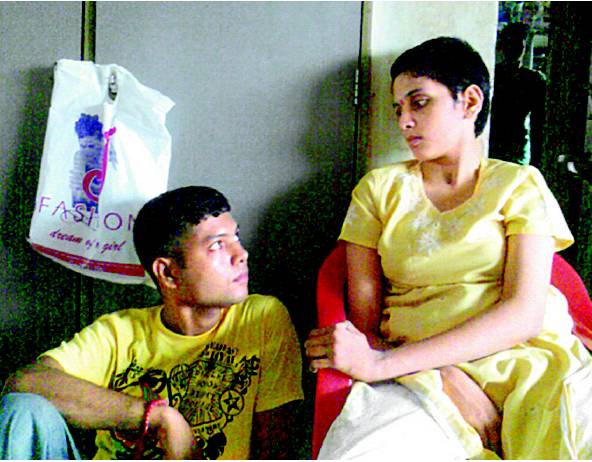
In 2006, Sunny’s girlfriend Aarti and a few friends were riding near Gorai beach when their car had a nasty accident and turned turtle. The others got away with minor injuries, but Aarti was the worst hit. With serious head injuries, she slipped into a coma and was subsequently in an NICU (Neurological Intensive Care Unit) for the next four months. During these four months and in the next four years, Sunny did what few people would probably do – he never left Aarti’s side once during the entire time she was in the ICU, and even when she was subsequently moved to a ward.

His constant presence at her bedside made headlines in major newspapers and his story was covered by a few news channels, too. Sunny and Aarti became symbols for the ultimate love story in a cynical city that often has no time for love. Readers’ aid poured in, which helped Aarti’s family bear a part of her enormous medical expenses.

Things appeared to look up for the couple: in 2007, Aarti made a miraculous recovery from the coma and was sent home, though she couldn’t recognise anyone; not Sunny, not even her mother. Undeterred by her condition, Sunny fed her and continued to take care of her basic nursing needs along with her mother, Bharti Makwana. Aarti was still bed-ridden, with the right half of her body paralysed, but she showed a lot of improvement.

During this tumultuous time, Sunny had quit his Chartered Financial Analyst course halfway to tend to Aarti, but he gradually resumed his education in 2009. However, instead of the CFA course, he chose to enroll for a Masters in Social Work from Nirmala Niketan, College of Social work. “Instead of being frustrated with my situation, I decided to focus on doing social work,” he says.

“Each day, I hoped for her recovery and that she would be completely normal some day,” he adds.

But fate was still not finished with Sunny. In 2010, Aarti breathed her last after a sudden attack of pneumonia.

At this point, Sunny could easily have succumbed to depression or resorted to unnatural ways to vent his grief. “I had many negative thoughts during those tough times,” he says. “Like any other person affected by trauma, I struggled for more than five years and felt a huge void after Aarti’s death. Then I stumbled on the philosophy of helping strangers without expecting anything in return. I call this A.R.T after Aarti, an Act of Random Kindness,” he explains.

These days, Sunny is busy with his NGO work – he is Project Manager at the Shree Ramanugrah Trust, and often initiates many new welfare and empowerment projects on their behalf. Besides this, he has spoken at several motivational seminars, and enrolled in a part time MBA in Social Entrepreneurship at NMIMS. Most recently, he has taken upon a personal initiative, wherein he will distribute donated new or used footwear to female ragpickers he has met during the course of his field work.

Sunny recalls how his story encouraged another young man to follow his heart. “A couple of months ago, my story so far was published in a Kannada publication named Kannadaprabha. The next day, I received a call from a person named Sunil, who told me that he was in love with a girl from his own locality for four years, but due to his parents’ opposition, he had not been able to marry her till date. His parents had been opposing the marriage because the girl suffered from epilepsy.

But Sunil promised me that after reading about me and Aarti, he had made up his mind to marry the girl very soon, regardless of whether his parents gave their consent or not. The moment the call was over, I thanked God and Aarti.”

Ask him about his will to go on, and he says, “Whatever I am today is because of Aarti, my family, her mother and all those people who helped me during this acid test of my life. My parents, though shocked at first, eventually accepted and came to terms with what I was doing. They let me be, without becoming judgmental or stopping me from what I set out to do. They are my pillars of strength and support, without whom I would have totally collapsed. Aarti provided me an opportunity to get in touch with my inner self. Today I have found my calling because of her; she is physically no longer with me, but she is still with me through our shared memories and precious experiences together. Had she been alive today, this is what she would have done; she is alive through me and my work.”

He adds, “Opportunities to serve others sometimes come in the form of our own tragedies. Unpacking something with an ugly packaging requires a lot of audacity and struggle, but what seems unbearable is definitely not impossible.”

If you wish to donate new or old footwear for women ragpickers, you can contact Sunny Pawar on +91 9892856554. He is also available for group motivational talks and will answer donation queries, too.  

Mamta D works in the IT industry. Beyond her job, she writes, travels, paints and experiments with various side projects, among other things. She is also keen on making a difference to society in whatever way possible.

(Featured image courtesy timesofindia.com)

Categories
Listen

‘I wish all films wouldn’t need item songs to sell’

Shalmali Kholgade discusses winning the Filmfare Award for her song ‘Pareshaan’, and what annoys her about Bollywood, among other things.
by Vrushali Lad | vrushali@themetrognome.in

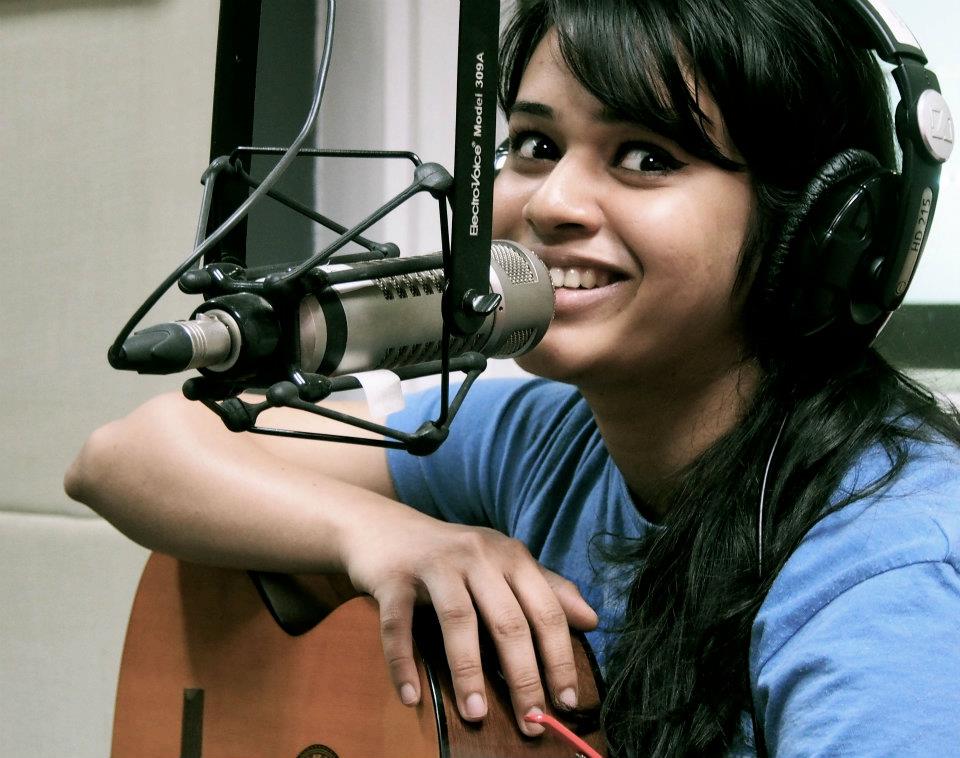
Shalmali Kholgade sang the wonderful ‘Pareshaan’ from Ishaqzaade last year. Her heady voice, combined with the song’s beautiful lyrics, took the composition straight to the nominations lists of several film awards this year, and culminated in a Filmfare trophy for the 23-year-old. And ‘Pareshaan’ was her debut song in Bollywood!

In an interview with The Metrognome, Shalmali speaks about her win, what her pet peeve about the Hindi film industry is, why she doesn’t drink milk a day before a song recording, how she began singing, and why she looks for that ‘one’ moment of total harmony when she sings.

First of all, congratulations on winning the Filmfare award for ‘Pareshaan’. What was it like to hear your name announced as the winner?

When my category was announced, my heart was racing. But I have this cool ability to mask everything happening inside. But when my name was announced, my heart stopped beating for a second – or so I thought. I remember trying to look calm and composed, but I can’t say if I did that well enough. I walked up to the stage, and everything after that goes blank in my head. All I can say right now is that it must’ve been too intensely powerful a feeling to account for in retrospect.

You looked gorgeous on awards night. What did it feel like, getting all dressed up for the awards?

Thank you very much. All credit goes to the immensely creative, innovative and gorgeous Sonaakshi Raaj who was my stylist and designer for the Filmfare Awards. Feel free to add all the superlatives you can think of to Sonaakshi Raaj – she is extremely deserving of them all. The white jumpsuit that she designed for me hit that balance between red carpet ‘elegant’ and a musician ‘casual’ perfectly. Getting dressed up for the awards was like a scene from Cinderella! I enjoyed it thoroughly.

Can you describe the creative process that went into creating ‘Pareshaan’?

The selection process for ‘Pareshaan’ included me singing the chorus of the song twice and then Amit Trivedi (Ishaqzaade’s music director) saying, “Are you free tomorrow to record the song?” And just like that I was recording ‘Pareshaan’ the next day. We recorded over two days, as there were lyrical changes. Habib Faisal and Kausar Munir spent a lot of time explaining every word and every line of the song to me. All three of them – Amit Trivedi, Kausar Munir and Habib Faisal – were extremely supportive of me and showed a lot of belief in me. That was a huge plus. The pronunciation of the words was the other thing that needed attention on my part. I wasn’t used to singing Urdu words. But Habib sir and Kausar ma’am got it out of me.

Who are your favourite music composers? And who is a bygone era composer you would have loved to work with?

My favorite music composers are Nitin Sawhney, AR Rehman, Amit Trivedi and Vishal Bharadwaj. I would’ve loved to work with OP Nayyar.

If you hadn’t sung ‘Pareshaan’, which singer would have done as much justice to the song as you did?

It would have to be Sunidhi Chauhan.

Tell us about your childhood. How did you take up music?

My mother (singer Uma Kholgade) taught Indian classical music at home. She is the reason I sing at all. Till my mother was eight months pregnant with me, she went for music lessons at her teacher, Shruti Sadolikar’s. She believes that it affected my musical leaning in some way. My mother made it compulsory for me to sit for music class twice a week for an hour each, and though I reluctantly sat for it, I owe so much to those classes.

My brother, on the other hand, who is eight years older than me, listened mostly to English rock and pop bands like Queen, Aerosmith, Michael Jackson, Phil Collins and Dave Matthews Band. His music, for some reason, was more inviting for me. I listened as he played his guitar and sang sometimes. I picked up the guitar watching him play. He has been my encyclopedia for English music.

How has the support from home impacted your career?

My father is a pharmaceutical consultant by profession, but is a lover of the Arts. He writes plays, short stories and poetry in Marathi and English in his free time. My mother, brother and I are always the proud first listeners of his writings. He also sings with the kind of confidence I have never seen, even though he isn’t trained in singing. My mother has taught Indian classical music at home till I was 16 years old. She is a fantastic teacher, who never taught music for the sake of making money. Her students love her and beg her to start taking classes again even today. I am so grateful to have parents who are so incredibly talented, supportive and encouraging. There’s no way I would’ve been here today if it weren’t for my parents.

Overall, what has been your musical journey been like? Have you sung for regional cinema as well?

My journey has been an utter joyride, with some incredibly diverse experiences of being able to listen to and sing with musicians from all over the world. (She is a vocalist with Mikey Mcleary’s popular act The Bar Tender and has performed as a soloist with a Latvian troupe in a cabaret named ‘Bombaloo’ which toured Moscow, Russia and Yerevan, Armenia).

I have had the chance to sing in regional cinema and that is something I thoroughly enjoy doing. I have a strong affinity for languages, diction and the tonal quality of every language. My first Tamil song ‘Raja Raja’ with music director GV Prakash released a month ago. My first Marathi song ‘Jag Saare Badale’ also released this month. I have recorded a Bengali track with the great Indradip Dasgupta, and also a Telegu song with Sachin Jigar. Both these songs release by the middle of this year.

What has been the most special moment in your musical journey so far?

When I was in college, I had a life-changing experience that convinced me that music was what I wanted to pursue. It was the final round of Western solo singing at St Xavier’s Malhar. As I sang ‘Desperado’ by the Eagles, with just a guitar accompaniment, I held the last note of the song till I ran out of breath. I felt like I wanted to hold on to that moment for as long as I could, because I knew it wouldn’t come again for a long time. That is the reason I am pursuing music today. I want to find that moment of complete harmony of voice, accompaniment and calm. It is indescribable.

What is the one thing you don’t like about the Hindi film industry? A lot of artistes complain about the lack of respect for time, for instance. What is your pet peeve?

Time would be number one on my list, too. But when it comes to music, there’s too much run-of-the-mill stuff, with little experimentation. I wish that would change. I wish all films wouldn’t need item songs to sell. I wish women in films would have better roles than just ordinary lovers to play. I agree that it is changing with films like Kahaani and Heroine. But my issue is with a majority of films having female actors that are used as marketing tools.

There are so many young singers today, each with their own USP. How is it possible to survive in this competition and bring your best to a performance every time?

I personally don’t think of anyone as competition. This does not mean I am unaware of all the talent around me. But I see it as people to learn from and skills to add to my kitty. It is all inspirational in one way or the other.

How do you train your voice on a daily basis?

I start my day with just humming any tunes. Slowly as my voice warms up, I do scales on lip rolls, humming, and plenty of other warm up exercises. I sing along with songs that play on my computer all day. I never count the number of hours I sing. I sing for as long as I feel tired singing. If I have a recording or a show on a particular day, I stop drinking milk a day before. That’s the only precaution I take. I am of the opinion that a positive mind always helps deliver well. When I think I am not singing to my full potential, I just sit over it and polish the song, a melody, a run up till it comes out effortlessly. This takes days, sometimes months.

Which projects are you working on currently?

I am doing a lot of shows, especially so in colleges all over India and that is something I am enjoying a lot. The youth is so full of life and love that it is always a pleasure singing to them. One of my songs from the film Mere Dad Ki Maruti will release this week. A handful more releases are due in the next couple of months and I look forward to them.

How has life changed for you post the Filmfare Award?

Winning the Filmfare award and the shower of wishes and expectations that followed have changed quite a lot in my life suddenly. From wanting to pursue music, to singing ‘Pareshaan’, to becoming a playback singer, to winning a Filmfare Award, all of it has in quick succession. I feel more responsible and I want to live up to the expectations of people, and more, over the expectations I have from myself.

What is a tip you would give aspiring playback singers?

Everyone is unique, with a different voice quality, a different range and a different personality. Use it to your advantage. Compete only with yourself. If you stop looking inwards and start indulging too much in the lives and feats of your contemporaries, you’ll lose yourself.

That is all that’s important. All the technicalities of singing in a studio and live can be learnt only through experience. I am also learning. I just keep looking forward!

(Pictures courtesy Shalmali Kholgade and karamnook.com) 


Categories
Overdose

The most unwanted job in the country

Jatin Sharma wonders: if all of us really want change, why can’t we just join politics and be the change?

Ever wondered what kind of job you always wanted? Ever wondered about the things that made you decide whether you wanted to join a field or not? Ever wondered about the things that would drive you to make that one job your whole life, your identity, your source of earning and your passion?

I have always decided my career based on two things: My interest, and earning from it, plus the respect associated with it.

So let’s talk about the most neglected job in the world. No one in my country wants it or wants to be a part of it. It’s one of the jobs that has a lot of respect attached to it, but it’s not a respectable job any more. The earning is good and sometimes, the best. But it suffers from nobody being interested in it.

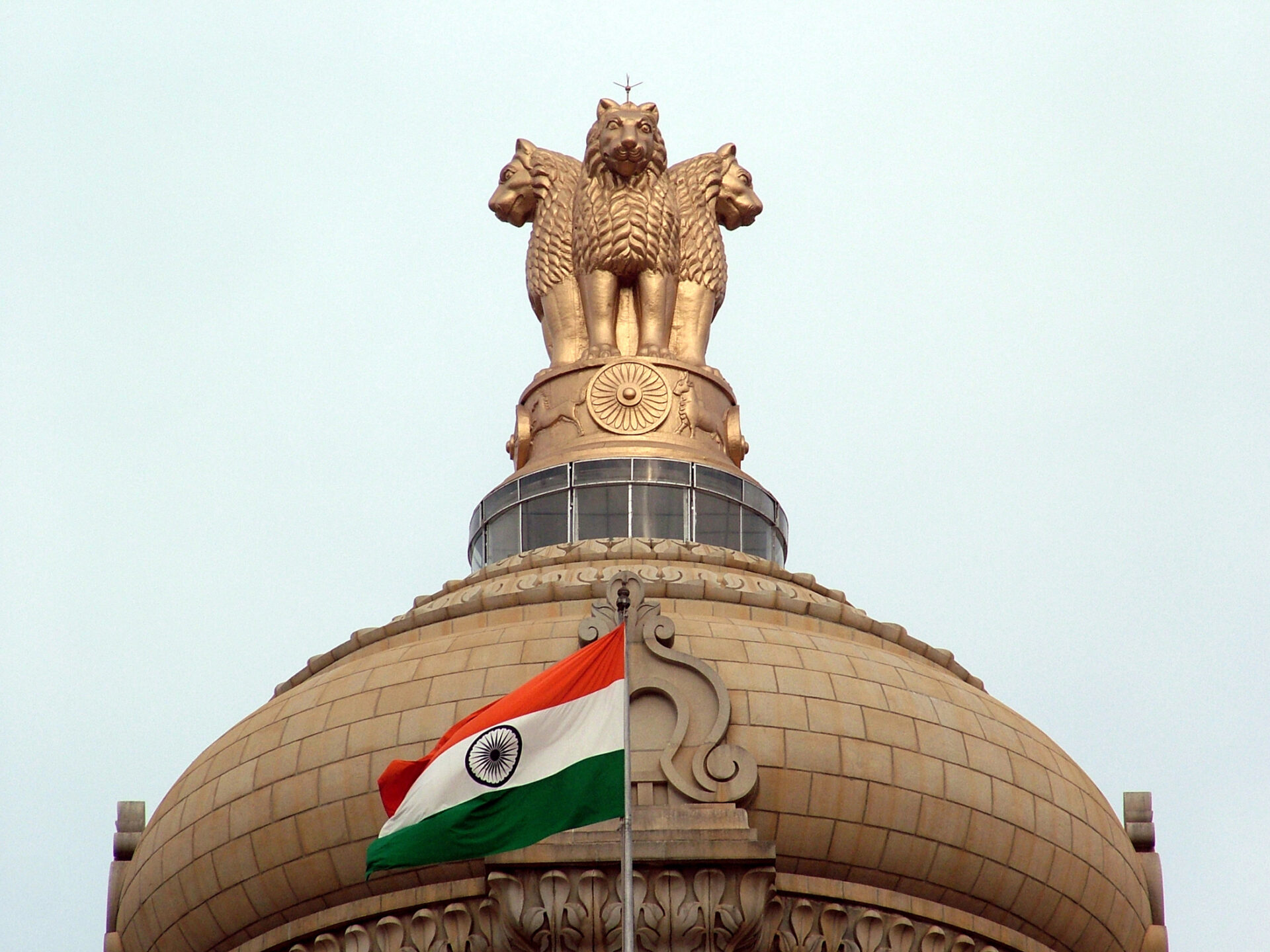
The job I’m talking about is: the job of running our country.

Ask yourself: how did you get interested in a particular field? Was it because someone in your family was a part of it, or because you had an awesome professor from the same field who taught you about it very well? The exposure towards a particular field always decided your inclination towards it.

So the whole point I’m trying to make is that although becoming a politician is considered to be the worst job, it is not. We hate our politicians, but we are not ready to replace them. If we want to change the world, we just become journalists who think that by writing about it, change will knock on our doors. Why are we not teaching our kids about politicians being good, too? Why are people not telling stories about how politics and politicians are meant to be? Why are we perpetuating the myth that politicians are people who only participate in scams?

Human beings fight for power and money and respect. A politician has the power to change the world, he can earn good money, and the respect for the people who bring a change in their area is incredible. So why is it that everyone compromises with a less powerful job, like becoming a doctor, journalist or an engineer? Why is no one taking up one of the most lucrative jobs in the country?

It could be because ignorance is the devil that kills you before you take your first step. People in my country are ignorant about how to run their country. We don’t know how to bring about a change. We are so ignorant about the systems in our country that we just try to ignore them by saying, “Let it be, nothing is going to change.” But really, do you believe that nothing will change if you want to change it?

I think the first step that should be taken is by asking all our politicians to come and speak to students about their experiences of running the country. Rahul Gandhi, Sonia Gandhi, Atal Bihari Vajpayee, Shashi Tharoor, Laloo Prasad Yadav, everyone should be given a mandatory notice to teach Politics and the problems they face as case studies in different schools. They should talk about how they get respect and how they are hated and how it is difficult to be practical while running a country.

Civics and Political Science should not be taught as laws, but in a way that seems more practical. It should be glamourised a bit more. All the major politicians of the world should come here and talk about politics in their country. It should not be just another photo opportunity for them, but a serious teaching assignment. They should speak about the problems they faced. Political Science should be taught as Political History; imagine having the chance to hear Barack Obama talk about what he went through when he ordered the killing of Osama, or how he faced the recession in his country and how he handled it. More to the point, politicians should talk about how they said ‘no’ to corruption.

In fact, the Government should have a degree for politicians – a Bachelors of Leaders in India or Diploma in Netagiri or Masters in Running India. The kind of respect and the power that this job holds should make people see that it is equivalent to being a CEO of a company. Students should be given assignments where they must come up with Bills and do a market research on why they are proposing a certain Bill.

Let the discussions happen and make them more about the future. Talk about the scams in textbooks and embarrass the hell out of the politicians who have been involved in them. Talk about the success stories of public figures and leaders who have brought a positive change in the society and for the country.

It doesn’t have to be boring. Why does politics have to be a name that brings out only negative emotions? Why does a Legislative Assembly or a Rajya Sabha or a Lok Sabha carry out its work in a manner and language nobody understands? They could be fun. Have workshops where people are trained for discussion and everyone works like in Parliament. Have books that speak about the blunders of politicians.

Make it more interesting. Make it glamourous. Make it contemporary.

If you want to serve the community, this is the best opportunity. Take this job. It’s now or never.

Jatin Sharma is a media professional who doesn’t want to grow up, because if he grows up, he will be like everybody else. 

(Featured image courtesy thekissof.wordpress.com)

Exit mobile version