Categories
Watch

Screening: Ekti Nadir Naam

The Root Reel is screening a film on the life and work of Ritwik Ghatak at Alliance Française Auditorium today.

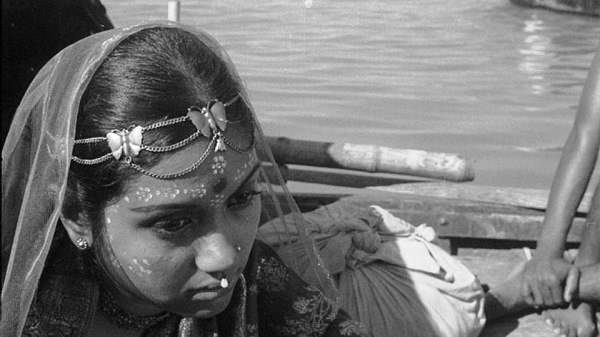
In continuation with their feature presentation of some of the treasured cinema from our country, The Root Reel is organising a screening of Anup Singh’s essay, exploring the life and work of Ritwik Ghatak. The film is titled Ekti Nadir Naam/Name of a River.

Anup Singh’s debut feature, The Name of a River, is an ambitious, evocative docu-fictional essay exploring the life and work of the great Indian filmmaker, Ritwik Ghatak (1925-1976). Ghatak’s reputation as India’s most important filmmaker has been steadily growing since the first major retrospective of his films was organised internationally in the 1980s. Satyajit Ray described him as “one of the few truly original talents in the cinema this country has produced”. Although largely ignored in his lifetime and usually overshadowed by the illustrious Ray, Ghatak was a legend to a whole generation of Indian arthouse directors and was seen by many as the father of the Indian New Wave.

Born in 1925 in what is today known as Bangladesh, he was 18 in 1943 when the Great Bengal famine drove him and his family from Dhaka to Calcutta as refugees. India’s simultaneous independence and partition into India and Pakistan in 1947, and a further partition later into India, Pakistan and Bangladesh, made it impossible for him to return to his homeland. The Partition of India and Ghatak’s separation from his homeland act as the driving force in his life and work.

In The Name of a River Anup Singh uses a love story between a man and a woman crossing the river between Bangladesh and India – playing the roles of refugees, divine beings and literary and cinematic characters – to understand the mysteries of the events that led to the massacre of half a million people and forced ten million people to migrate across the newly established borders. Covering a huge area of visual, aural and intellectual ground within its 90 minutes, this exquisite film presents its audience with a dreamlike odyssey through a history, a life and a work that we, the viewers, encounter in the shape of stunning landscapes and music, lovers and gods, myths and memories, literature and cinema.

The Name of a River has been screened at numerous international film festivals, winning the Aravindan Award, India, for best debut filmmaker in 2001, and the Silver Dhow Award for best feature at the Zanzibar International Film Festival in 2002.

Head to Alliance Française Auditorium, Theosophy Hall, near Nirmala Niketan, New Marine Lines, at 6.30 pm. Entry is free.

(Compiled by Medha Kulkarni. Picture courtesy worldcinemafoundation.org)
Categories
Do

Have a story to perform? Head to Prithvi

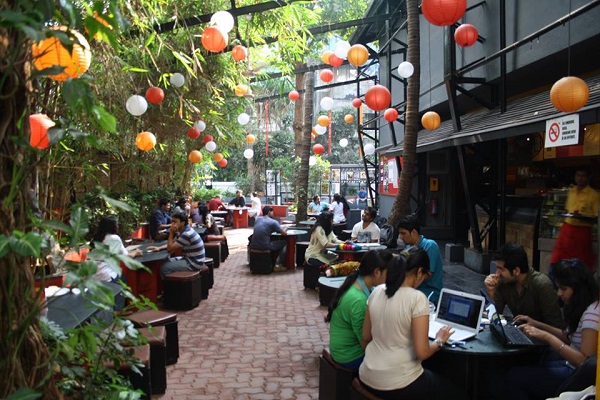
Caferati at Prithvi Theatre, a forum for writers, gives participants a two-minute chance to perform their written work this evening.

A lot of stand-up-and-perform acts for writers and storytellers are mushrooming all over Mumbai. Joining the bandwagon is Caferati, a performing event to be held at Prithvi Theatre tomorrow, January 28.

Caferati is a forum for writers in English. Most of their membership is Indian or has an India connection, because that’s where the group originated. However membership is open to adults anywhere in the world. Some of the members are published or earn a living from writing in some way, but that is not a condition for membership.

If this sounds like your cup of tea, head to Prithvi Theatre today for an exciting event. The event is essentially this: You + your writing + two minutes at the microphone.

However, there are some rules to follow. While the works can be in English, Marathi, Hindi or Urdu, the writing must be yours and you can perform for a maximum of two minutes only. No group performances are allowed. Participants are allowed to shot, declaim, sing; they can sit, stand or lie down; they can dance, do a cartwheel, play a musical instrument – anything goes, as long as you perform your words.

There is no restriction on genres – you can perform poetry, prose, scripts, songs, etc. but nudity, explicit language, slander or anything that flouts Indian laws is prohibited.

Sounds like your thing? Head to Prithvi Theatre today, at least half an hour before 7 pm to make yourself eligible to enter. Submit your script for approval and perform. Good luck!

(Compiled by Medha Kulkarni. Picture courtesy Prithvi Theatre)

Categories
Overdose

Please drink and drive?

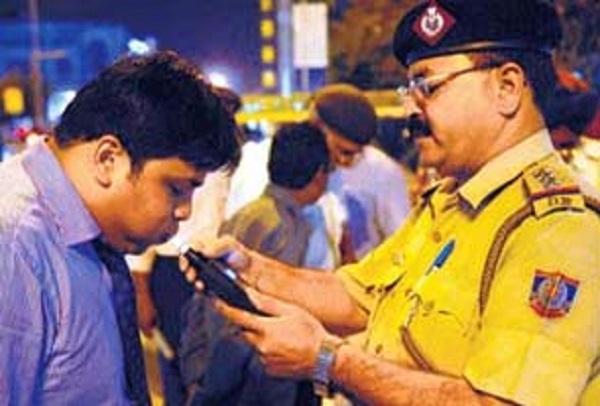
What kind of breath analysers are Mumbai’s traffic cops using, where the slightest amount of alcohol gets one into trouble?
Jatin Sharmaby Jatin Sharma

Don’t be misled by the heading of this column – I am not initiating a drive to turn you into a bevda who breaks a million records (and skulls).

This is not even a population control drive where I want people to dig their own graves by drinking and driving recklessly. But I hope to bring your attention to the faulty breath analysers our traffic policemen use.

We are almost a month into the year 2014, but old problems persist. Mumbai as a city has seen a rise in drivers specialising in dropping drunk people home after a party, thanks largely to the efforts of Mumbai traffic cops, who have done a commendable job of instilling fear in people who drink and drive. But then there are the sniffing traffic constables who make it difficult for the aam aadmi. And they carry breath analysers that don’t work well, or not at all. These breath analysers are programmed to show the negative sign the moment you blow in to them.

For the uninitiated, the permissible limit is 30 mg of alcohol per 100 ml of blood. That DOESN’T mean that the moment you have a drop of alcohol in you, you become eligible for a fine. Again, I remind you that I do not support drinking and driving in any manner – it is both stupid and irresponsible to take the wheel after you’re drunk. But know this: downing a single peg doesn’t automatically mean that you should go through a harrowing breath analyser test.

Most drunk drivers are actually scared the moment they see a traffic cop approach. Add to that fear is the fact that the breath analysers will show negative results, whatever the amount of alcohol in one’s blood stream. The Government has started a fabulous initiative against drunk driving, but it should exert the same zeal with regards to the equipment that traffic cops use – a basic need is to ensure that the equipment is hygienic for use.

Most traffic policemen work really hard to serve people. But due to the faulty meters and insufficient hygiene, they have to bear the brunt of people’s annoyance. The Government is definitely serious about the issue of drinking and driving, but when will it be equally serious about seeing that the innocent are not victimised? It’s not against law to have a single peg (although while driving none is the best), and hence, people should not be victimised.

So what is to be done? Do we insist on drinking and driving till the Government takes the issue of faulty analysers seriously? Tell me your views.

Jatin Sharma is a media professional who doesn’t want to grow up, because if he grows up, he will be like everyone else. ‘Overdose’ is his weekly take on Mumbai’s quirks and quibbles.

(Picture courtesy www.ndtv.com)

Categories
Enough said

Africans today, who else tomorrow?

Somnath Bharti’s antics against the Ugandan women spell doom – will this happen with communities in the country as well?
Humra Quraishiby Humra Quraishi

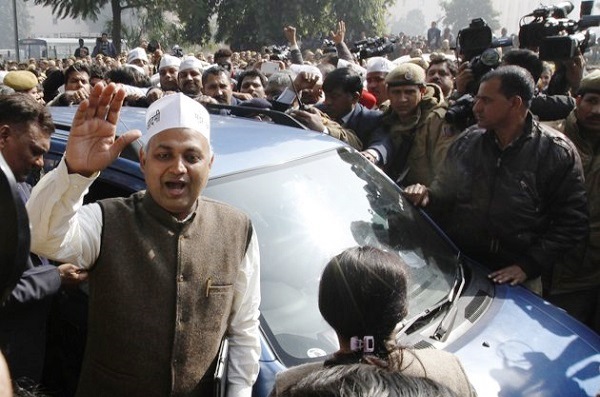
We’ve all heard of the dreaded midnight knocks on doors and raids happening in the Kashmir Valley and in the North East, but to have a similar thing happen in Delhi is unthinkable. Delhi’s Law Minister Somnath Bharti and his men barged into a home of a small group of Ugandan women, and not just abused them but accused them of running prostitution and drug rackets!

Call this intrusion by any term of your choice, barbarism or anarchy or dictatorship, but this act reeks of double standards and racism. Could Bharti and his men have barged into a fellow minister’s home or into a tycoon’s farmhouse or even in the hotel room of a European in this fashion? No, because he would have been thrashed and thrown out!

But his terrorising antics against these Ugandan women have a lot to do with our misconceptions against dark-skinned people and our prejudices against Africans. Bharti merely played on our biases, throwing serious accusations at these hapless women. His language, his thoughts, his tactics – all of these were utterly third class and unworthy of a law minister.

And if this kind of behaviour is not halted in time, it would spell disaster for all of us. For today, this is happening with Africans. Tomorrow, what stops this behaviour from turning inward, towards particular communities or castes or minorities? That’s how ghettos are made – and that’s how so many exist in the country already.

Why speak of ghettos alone? Something like this has already been in operation for so long, in our major cities. Well-to-do Muslims have voluntarily moved to the outskirts of Ahmedabad. Muslims are outright refused houses in upscale localities in Mumbai, and there exist Muslim localities where not a single Hindu family will be found. This has not just broadened the gap between two communities, but has also paved the way for misconceptions about the ‘other’ – and who can blame them? After all, how can children from both communities learn about each other if they are not allowed to mingle with each other, if they are forced to live miles apart?

Coming back to the recent developments in Delhi, I must confess to a definite feeling of dismay. Though I have been writing in support of the AAP all along, I do feel concerned for the future. With little hope in the Congress, one looked at AAP as some sort of a saviour political outfit. But this one incident and its aftermath has paved the way for a re-think.

Humra Quraishi is a senior political journalist based in Gurgaon. She is the author of Kashmir: The Untold Story and co-author of Simply Khushwant.

(Picture courtesy in.news.yahoo.com)

Categories
Event

Stories with children

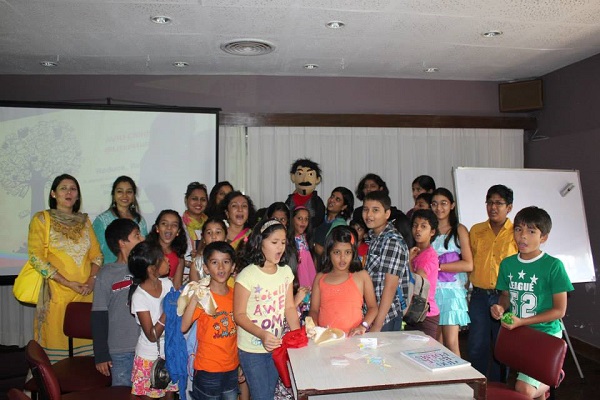
Chhatrapati Shivaji Maharaj Vastu Sangrahalay is hosting a day-long storytelling carnival tomorrow for children aged between 2 and 12 years.

“Stories are like spiders, with all the long legs, and stories are like spider webs, which man gets himself all tangled up in but which look so pretty when you see them under a leaf in the morning dew, and in the elegant way that they connect to one another, each to each.” – Neil Gaiman

A dilemma that most parents of children today face is instilling a sense of wonder and curiosity in children. Why? Because today’s children learn to use tablets and smart phones even before they learn to read or write! With information available at one’s fingertips, it’s that much harder to inculcate and encourage a keen imagination and creativity.

If you are a parent and are reading this and agree, then you now have a reason to rejoice. Tomorrow, the Chhatrapati Shivaji Maharaj Vastu Sangrahalay (CSMVS, formerly known as the Prince of Wales Museum) is organising a day-long story carnival for children.

The Museum’s Kahani Karnival is specifically aimed at children in the age group of 2 to 12 years. With storytelling sessions, workshops and museum walk-throughs, the event should be an exciting one!

The event starts at 10:15 am and registration is compulsory. Email kahanikarnival@gmail.com or call +91 87670 94063 to register.

(Compiled by Medha Kulkarni. Picture courtesy Kahani Karnival)

Categories
Event

Student? Interested in a media career? Check this out.

Sophia Institute of Social Communications is organising ‘Media Mirror’, a day-long event featuring prominent media personalities. Starts 9 am onwards.

This is a chance for students looking to make the switch to a media career after consultation with the experts – under one roof will be present filmmaker Raju Hirani, RJ Malishka, journalist Ayaz Memon, author Jerry Pinto, filmmaker Abhishek Kapoor and many more eminent personalities.

Sophia Institute for Social Communications Media (SCMSophia) will host ‘Media Mirror’ today. The event is aimed at undergraduates from colleges across Mumbai, especially those looking for unique learning experiences and not-to-be-missed opportunities to interact with industry leaders. Media heavyweights across feature films, sports journalism, radio jockeying, documentary film making, digital media and more will speak and conduct master classes at the eventSays Dr Sunitha Chitrapu, Head of Department, “’Media Mirror’ is our attempt to encourage young people to go beyond being passive consumers and to really pay attention to the media and the role it plays in all our lives. Increased media literacy is the goal of the event”.

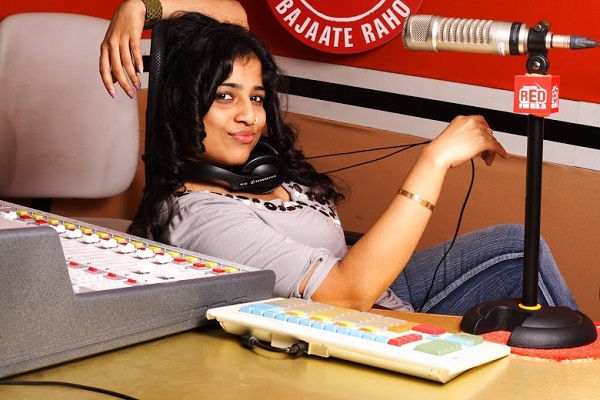
What attendees can look forward to are these: Filmmaker Raju Hirani will be in conversation with Meera Sanyal about media and social change; RJ Malishka will conduct a masterclass on radio, Ayaz Memon will speak on media and social change and director Abhishek Kapoor will address the issue of media and gender. Says Malishka, “Media is a double-edged sword. Used responsibly, it is a tool for wonderful social change and of course, entertainment. More and more young people are attracted to media as a career option. To me personally, radio has been a very satisfying medium and a very creative one. My journey with radio has been an adventure and I’m very excited to share it at the masterclass, and chat with the ones who will be next in line to take this medium further.”

For further details, call 022 2352 1104/98190 32120 or email scmsophia@gmail.com for full event schedule. Head to Sophia Institute of Social Communications Media, Sophia Polytechnic, Bhulabhai Desai Road for the event.

Exit mobile version