Categories
Enough said

Still waiting for ‘achche din’

It is now 39 years since the 1975 Emergency, but how different is life today than in those strife-ridden times?
Humra Quraishiby Humra Quraishi

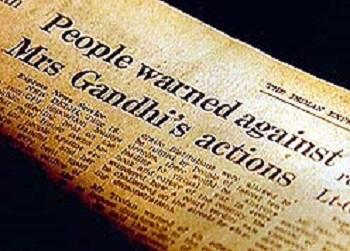
39 whole years have passed by since India declared an Emergency. But till date, June 25-26 stand out as the darkest day in our country’s democracy, in our recent history.

Just like every year, several groups such as the PUCL, CFD, Janhastakshep, the AMIYA and BG Rao Foundation, are observing the Anti Emergency Day in the country. They do this to “remember those dark days when internal Emergency was imposed in the country on the midnight of 25th/25th June 1975, which continued for 19 months. Fundamental rights were suspended, the Press was gagged, voices of dissent were throttled and more than one lakh opposition leaders and critics were detained without trial.”

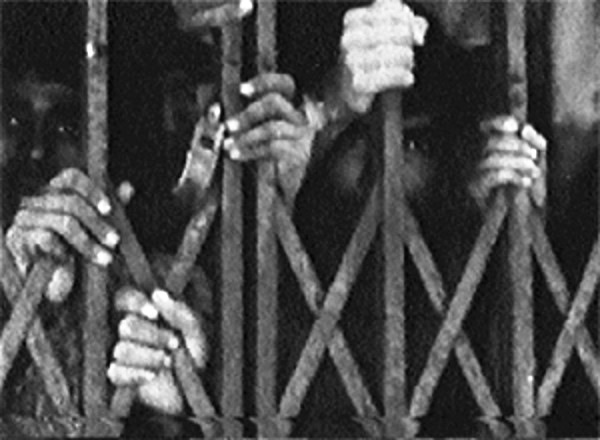
Today, several activists comment that though the present day situation is not Emergency-like, the ground realities in the country are Sanctions on the Pressstill horrifying, with signs of dictatorship very much alive. Midnight knocks on the door and encounter killings are still a big reality. Innocents are thrown into jail. Non-violent protests are crushed. People’s anger over Government apathy is throttled. Watchdog groups and NGOs are slowly coming under State scrutiny. There seems to be a definite trend to crush critics and their criticism, to silence any rebellious voice.

With these human rights violations are other confusing matters. Currently, Delhi University cannot decide on whether there should be a three or four year course. How can it, when there seems to be little coordinator between the HRD Ministry and the UGC?

This confusion also seems to stretch into foreign policy decisions. Though Right Wing politicians have always been against Bangladeshi refugees in the country, Sushma Swaraj is now taking her first trip to Bangladesh, as Minister for External Affairs. We’re waiting to see what she will have to say in Dhaka vis-à-vis Bangla refugees.

But before this trip, shouldn’t she have flown East, towards Iraq, and seen what is really happening there? After all, hundreds of Indians are stranded in and around Iraq and they need immediate help. Are press briefings on this state of affairs enough? Will they substitute for firm ministerial-level intervention?

Perhaps the only area where there is absolutely no confusion is the area of price rise. Apart from the prices of everyday food items zooming upwards almost daily, there is now a price rise expected in gas, oil and electricity. In the coming months, it is going to difficult to sleep and commute.

Happy days or the supposed ‘achche din’ seem like a distant dream at this point. Frankly, how can we expect achche din when high costs of living come in the way of everyday survival?

Humra Quraishi is a senior political journalist based in Gurgaon. She is the author of Kashmir: The Untold Story and co-author of Simply Khushwant.

(Pictures courtesy theviewspaper.net, www.mtholyoke.edu)

Categories
Learn

The perils of water mismanagement

A TERI analysis on the state of the world’s current water mismanagement paints a scary picture for the world’s future.
by Girija K Bharat | TERI Feature Service

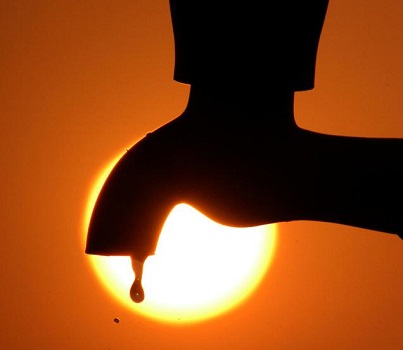
By 2030, about 47 per cent of the world’s population will live in highly water-stressed areas. The only way to reverse this trend is to invest in environmental infrastructure and effective management of water to bring relief to millions afflicted by poverty, hunger and disease.

More than 700 million people in 43 countries across the world live in water-stressed conditions with the Middle East being the world’s most water-stressed region, having an average annual availability of only 1200 m3 per person. By 2030, about 47 per cent of the world’s population is expected to dwell in areas that will be highly water-stressed (per capita water availability less than 1700 m3). Around 60-90 million hectares in Africa will be under arid and semi-arid climatic regime and this will have serious implications on food and water security in the region.

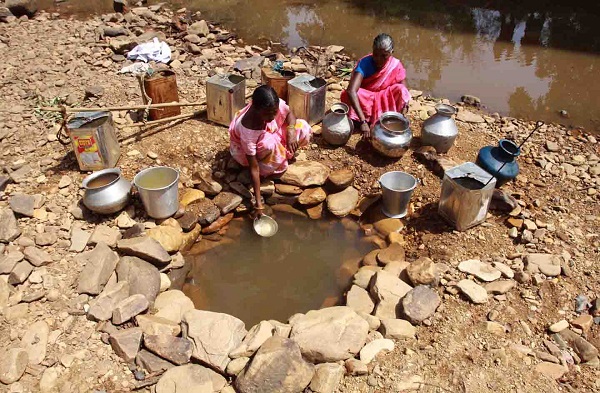
Water mismanagementThe water resource endowment and distribution across the world vary spatially and temporally. The problem of inequitable resource endowment has implications for water security. The variations in intra and inter-regional vulnerabilities are by virtue of their geographical locations, whereby runoff is projected to increase in high latitudes and wet tropics (like in China, Finland, high latitudes and large parts of USA) and decrease in the mid-latitudes and some parts of the dry tropics (parts of West Africa, Middle East, Southern Europe and Southern South America and Central America). Ironically, nearly two-thirds of the world’s population resides in areas receiving only one-quarter of the world’s total annual rainfall. In these circumstances, sustainability of water resources is of paramount importance.

Water scarcity impacting poverty

Water scarcity, unclean water and lack of sanitation affect the poor people all over the world. One in five people in the developing world lack access to clean drinking water (a suggested minimum of 20 liters per day), while average water use in Europe and the US ranges between 200 and 600 litres/day. A number of studies including the report by the United Nations Development Programme have revealed that people living in slums in developing countries pay between 5 to 10 times more per unit of water than do people with access to piped water (UNDP, 2006). Over 1 billion people suffer from diseases due to lack of safe water, and are consequently less productive than they would be. The poor spend a huge amount of time fetching water, the opportunity cost of which they hardly realize. The desperate situation of the poor, therefore, exacts a toll on the economy as well as on their environment and its ecosystem.

For poor people, water scarcity is not only about droughts or rivers running dry, it is about guaranteeing the safe access they need to sustain their lives and secure livelihoods. For the poor, scarcity is about how institutions function and how transparency and equity are guaranteed in decisions affecting their lives. It is about choices on infrastructure development and the way they are managed. In many places throughout the world, organizations struggle to distribute resources equitably.

While access to safe water and sanitation have been recognized as priority targets through the Millennium Development Goals (MDGs) and the Johannesburg plan of action of the World Summit on Sustainable Development (WSSD), there is increasing recognition that this is not enough. Millions of people rely on water for their daily income or food production. Farmers, small rural enterprises, herders and fishing communities – all need water to secure their livelihoods. However, as resources become scarce, an increasing number of them see their sources of income disappearing. Silently and progressively, the number of water losers is increasing – at the tail end of the irrigation canal, downstream of a new dam, or as a result of excessive groundwater drawdown.

Along with the UN’s MDGs for ending poverty, eradicating hunger, achieving universal primary education, improving health, and restoring a healthy environment, the Millennium Ecosystem Assessment examines the consequences of ecosystem change for human well-being, and analyses options for conserving ecosystems while enhancing their contributions to human society. Environmental degradation is a major barrier to sustainable development and to the achievement of the MDGs. More than 70 per cent of the 1.1 billion poor people surviving on less than US $1 per day live in rural areas, where they are directly dependent on ecosystem services.’ Investing in environmental assets and the management of those assets can help achieve national goals, bringing relief to millions of people from poverty, hunger and disease.

In large parts of the developing world, irrigation remains the backbone of rural economies. However, smallholder farmers make up the majority of the world’s rural poor, and they often occupy marginal land and depend mainly on rainfall for production. They are highly sensitive to many changes – such as droughts, floods – and also on shifts in market prices. Investment in water infrastructure, in both its physical and natural assets, can be a driver of growth and the key to poverty reduction.

The waters ahead!

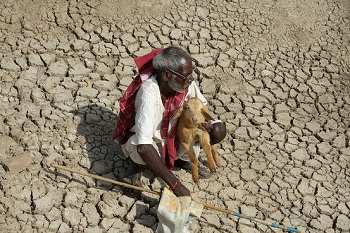
Poverty reduction and economic growth can be sustained only if natural resources are managed on a sustainable basis. Greening rural development can stimulate rural economies, Water shortagecreate jobs and help maintain critical ecosystem services and strengthen climate resilience of the rural poor. Conversely, environmental challenges can limit the attainment of development goals. As the economy grows rapidly, it will meet the constraint of natural resources and will have to exploit them in a sustainable manner for growth to persist.

The governments in many of the developing countries are developing schemes to deliver green results and contribute to the goal of ‘faster, sustainable and more inclusive growth. As the UN Secretary General’s High Level Panel on Sustainability notes, there exists tremendous opportunity for a dramatic improvement in the lives of the rural poor, even while they move towards more sustainable production models. Resource users will need access to assets, technology and markets. Success will depend on initiatives with capacity to effectively coordinate efforts and cooperation in water resource use. This will not only help overcome the constraints posed by environmental degradation, but utilise environmental resources as an opportunity to spur growth and poverty reduction.

(Pictures courtesy blogs.wsj.com, balaramranasingh.blogspot.com, www.indiawaterportal.org)

Categories
Bombay, bas

I, me, myself and my smartphone

Clearly, there’s nothing we need in Mumbai, including friends and family, if we have a m0bile phone in our hands.
Pooja Birwatkarby Dr Pooja Birwatkar

New to travelling in the local trains of Mumbai, I was slowly beginning to learn the basics of acceptable train behaviour. I started out with buying a first class pass, but I would travel by second class because many people scared me about how unsafe travelling alone in the ladies first class compartment was (even though most of these ‘advisors’ seldom travelled by train).

But my time with the second class convinced me to take the first class coach even if I was alone in it, which was seldom, because the city’s population won’t allow for empty coaches.

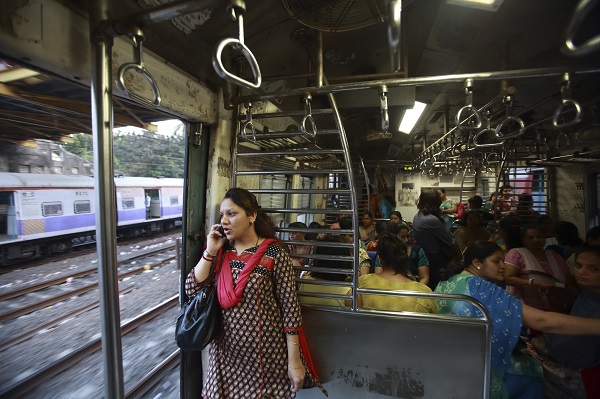
In the first few days, I found myself looking at the women travelling with me. And very soon, I found the fashionably-dressed women giving me strange looks. I realised what the problem was – I was probably the only person travelling sans ear plugs connected to a music player or a fancy phone, and not staring at my mobile phone.

Having been a psychology student, it had become a habit for me to observe people and study their mannerisms. But I had to train myself to not stare, so, I learnt to observe them slyly. And almost always, this is what I found: 90 per cent commuters are hooked to their phones, while the rest sleep or chat with their friends.

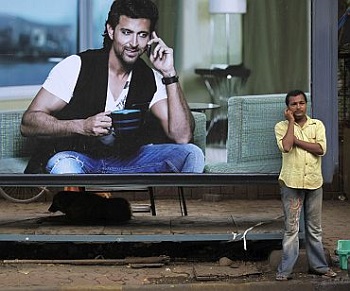
Isn’t it awesome, this technology that allows us to chat with our friends and associates at all times of the day? You are no longer alone if you have a phone in your hands – not even talking on phonewhen you’re physically alone in a coffee shop. A few years ago, one would feel uncomfortable waiting alone at a bus stop or a train platform, or even in a restaurant. But our phones, in front of our eyes at all times, divert us so well, we don’t even feel alone despite being alone. Our phones help us escape feelings of awkwardness in public spaces, and keep us so occupied, we hardly know who is sitting next to us.

But you know what? I miss the times when journeys were times when we smiled at our fellow passengers, had a few casual talks, and sometimes made great friendships with the mothers of cute babies travelling with us. I can only vaguely remember the simpler times when social networking did not dictate our first actions for the day and the last things we did at night. I sometimes brush my teeth in the morning with my eyes glued to my cell phone.

People have also found ways to scare us into forwarding certain messages to a fixed number of people or incur the wrath of some God (who, I suppose, has cracked a way to keep a tab on the forwarded messages and do calculations of who followed instructions and who didn’t).

Unlike a lot of people who constantly berate technology for reducing human interaction, I am not going to say that social networking is totally unnecessary – after all, it does help unite us with people we knew ages ago, and it helps us keep in touch with everything in a rapidly shrinking world. It gives us a daily insight into how others we know are living their lives – and sometimes makes us believe they’re having more fun than we are.

I admit I love secretly peeping into other people’s lives. If we had this level of communication growing up, we wouldn’t have to contend with coy glances at our crushes in our teenage years. We would wait for the other person to make a move (which never happened), and all we would be left with would be fond memories. Imagine now, if you had a crush on somebody, all you had to do was write a smartly-worded message and send it to the person, thereby saving yourself from potentially embarrassing moments.

And yet, a part of me wants to take the time out to actually talk to others, rather than type to them. It is indeed sad that we are forgetting to even make small talk when we do happen to meet people. The other day, a friend of mine said that when she meets her parents on her visits to India, she struggles to find topics of conversation. It is also distressing to observe grandparents or parents in parks blissfully unaware of what their little wards are up to, because they are so busy tapping away at their phones.

With every revolution comes a change in our social patterns, and it takes a while to accept these changes. Funnily enough, I am writing this article on my cell phone in a local train. Who would have thought this was possible a few years ago? Once I am done writing, I am going to plug in my earphones and browse through my phone, not looking left or right. And it gives me a little thrill to know that I have been writing about my co-passengers and the local train, and they have no idea.

Dr Pooja Birwatkar is currently pursuing post doctoral research and working in the area of science education. She has been associated with the field of education in the past as a teacher educator, and her area of interest is research in education. 


Categories
Tech

BlackBerry launches Z3 in India at Rs 15,990

The largest and cheapest BlackBerry in the market launched yesterday amid much fanfare. We take a look at the specs.
by Manik Kakra | @Manik_K on Twitter

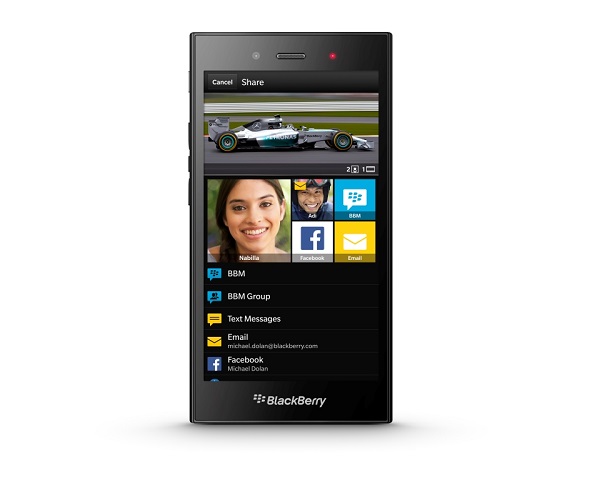
Sunil Lalvani, MD, BlackBerry India, Michael Adnani, VP-Retail & Head of...Yesterday, BlackBerry launched its new mid-range BB 10 device, Z3, in India. The phone boasts a 5-inch (540×960) screen, making it the largest and cheapest BB 10 device in the market.

Under the hood, there is a Snapdragon 400 chipset (1.2 GHz dual-core with Adreno 305 GPU), coupled with 1.5 GB of RAM. It packs in 2,500 mAh battery, and the company promises 15.5 hours of talktime on it. Further, the phone has 8 GB of on-board storage, which is expandable via microSD card.

Running on BB 10.2.1 OS, it introduces BlackBerry Maps especially for Indian users, with updated data points and destinations. On the back, there is a 5 MP camera; while the front carries a 1.1 MP camera. This is BlackBerry’s first phone to be manufactured by Foxconn after their recent agreement; the phone has a textured soft material on the back for better grip and does not compromise on the premium feel.

The phone can be pre-ordered on Flipkart or The Mobile Store, with both online portals giving buyers vouchers worth Rs 1,000. The device is available in black, and goes on sale starting July 2, 2014 across the country.

Categories
Tech

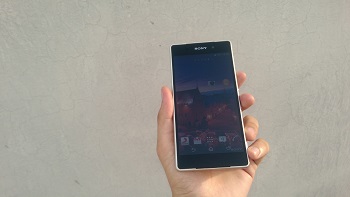
Review: Sony Xperia Z2

We take a look at the design and performance of Sony’s newest phone, the Xperia Z2, and come away impressed.
by Manik Kakra | @Manik_K on Twitter

Sony has been one of the promising Android OEMs in the last two years or so. It has come out with phones like the Xperia Z and Z1, which have looked promising on paper during their launches, but have rather failed to achieve what they had promised or beat their competitors. Now, the company attempts to change that with a device to actually get the masses excited – providing a smooth and satisfying experience. So, let’s get started with our review of the Xperia Z2.

Hardware and design
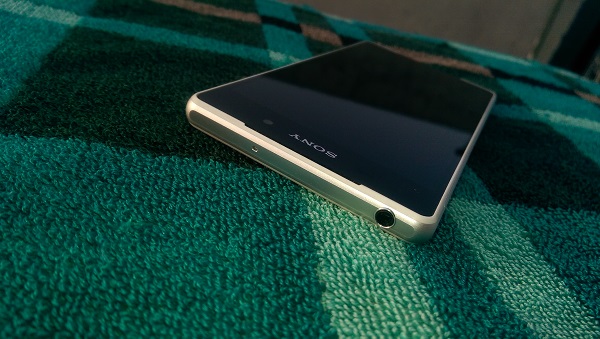
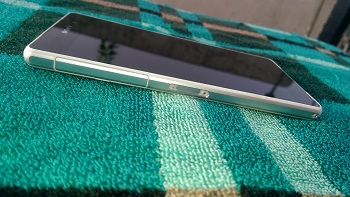
Sony’s Xperia Z2 (D6502) follows a similar form factor like the Xperia Z1. With glass on back and front, it is hard to tell the two devices apart when placed next to each other. There is an aluminum band across the sides – flaps to cover the microUSB port and SIM slot on the left, a flap to cover the microSD card slot on the other side and a dedicated camera shutter key. The front, dominated by the 5.2-inch full HD panel, has the Sony logo at the top with stereo speakers on top and bottom of the screen, LED notification light placed inside the top speaker alongside several sensors.

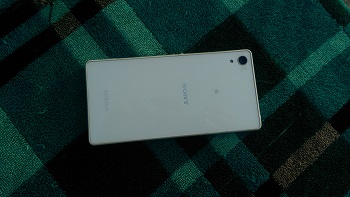
On the back, you have the NFC logo under glass, Sony’s logo bang in the middle, and of course, the 20.7 MP camera on the top left with the LED flash beneath to it. Oh, and if you’re not impressed with those plastic flaps, the reason might make them worthwhile for you. The phone is IP58 certified, making it water-resistant and dust-proof, and those flaps, could be irritating to deal with in your daily usage, protect the ports and body from water. It is good to see companies move to more and more water-resistant phones, and which can be used without much worrying about the phone going kaput immediately after coming in contact with water.

Camera

The phone boasts a 20.7 MP (EXMOR RS) sensor, the same we saw on the Xperia Z1. Most images seem to have rich colours and are detailed, and it’s clear Sony has done some work on the software side. Most of the times, the results are sharp, and even when used under low-light conditions, images turn out to be quite satisfying. While the superior mode tends to over-sharpen pictures many a times, the manual mode is suggested to be used more often than other modes.

Sony has also added 4k video options, and you can also shoot 720p  videos at 20 FPS. The camera key works in the double-click mechanism, make a small click to focus and then click full on to capture a photo it can open camera directly whether the screen is locked or unlocked. To sum up the camera performance, you could say it’s the best part about this device. Not only does it deliver on your expectations but more often than not, its camera UI is a breeze to  flow through and get used to.

Sound 

Moving on to the sound quality, the Xperia Z2 carries stereo speakers on the front, a trend started by the HTC One. The speakers are actually quite clear and decent, but no match if you’re expecting them to perform as well as the original HTC One. More so, the bundled headphones, if I remember correctly, are no match in quality to what you get with the Xperia Z1, which are a much better pair of earphones. As you would expect from Sony, there are a lot of options – ClearAudio, Sound Enahncer, Dynamic normaliser – to choose from in order to make sound as per your need and the type you prefer for a movie or track, and they do come in handy at times.

Call quality

The phone doesn’t disappoint with respect to voice and network reception, whether making or receiving calls, and holds well in large public areas as far as network reception is IMAG0044concerned.
Battery

The phone packs in a 3,200 mAh battery unit, which lasted for almost a day with the STAMINA mode on in our case. What this mode does is, it makes apps clear from the memory and allows very little data in background, giving you extra juice. Switching it off gave about 19 hours of battery life. Sony has also added Low Power mode that switches the phone to, as the name suggests, a very low battery-eating mode and allows to get a lot more of standby time.

Software and performance

The Xperia Z2 runs on Android 4.4.2 with Sony’s own Xperia UI on top. The phone has Qualcomm’s Snapdraon 801 SoC (2.3 GHz quad-core processor, Adreno 330 GPU), along with 3 GB of RAM.

As far as the smartphone’s performance is concerned, I didn’t have any real issues. The phone does most tasks just as well as you would like and doesn’t drop frames or stutter, as we had seen some of Sony’s previous generation phones. The on-screen keys – Back, Home, and Multi-app view – take about half an inch’s space. The Xperia UI hasn’t much evolved from what we saw on the Xperia Z1. It is still fits in very deep in the OS. So much so that you now get “What’s New” when swiping up from one of the on-screen keys, giving you options to open Google Now or What’s New.

Apart from a few useless additions like Sony Select and Game Store, you get several useful services like Privilege Movies, Sony Jive, Xperia Lounge, etc. apart from a bundle of premium services a user gets with the device. If you’ve used the Xperia Z1, you will realise the software on the Xperia Z2 is hardly different. One major improvement, though, is the keyboard, which is much improved and even supports ‘swipe to type’ now. Sony’s skin is not very heavy and does provide with nifty little options beyond stock Android. I don’t really mind the extra ‘skin’ as long as the performance and design aren’t cut short.
There are plenty of personalisation options, including Xperia themes from the Play Store, some of which are very nice and seem to be made for the Xperia Z2 from the ground up. The connectivity options work okay, and if you’ve one, you can use the device with your DUALSHOCK Wireless controller, and of course, mirror your phone’s content on another supported device. Sony has also added ‘double tap to wake’ to unlock your screen, which works well most of the time, but the same can’t be done on any Home screen in order to lock the screen.

Our verdict

All in all, Sony has produced its best Android smartphone with Xperia Z2. We have been seeing phones from the company that seem promising, but this one is surely the device that performs and performs well in pretty much all areas. You get a good full HD screen, a very good camera with a lot of useful editing options and shooting modes, decent design and build quality, average audio quality, and a water-resistant and dust proof device. Buyers also get a SmartBand, which I  haven’t used so far, plus a few premium services to make the package more attractive. The Xperia Z2 is definitely a phone you should try if you’re in the market for a high-end smartphone.

Categories
Achieve

Mumbai artist appointed Ethics Advisor by international artists initiative

Mumbai artist Prakash Bal Joshi will officiate as an Ethics Advisor and Ambassador for World Citizen Artists, an artists’s initiative.
by The Editors | editor@themetrognome.in

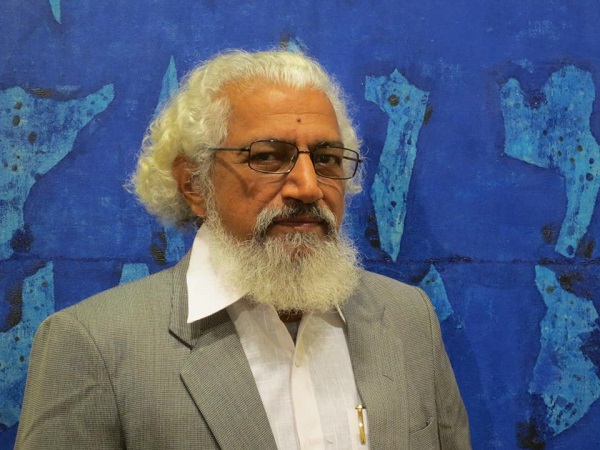
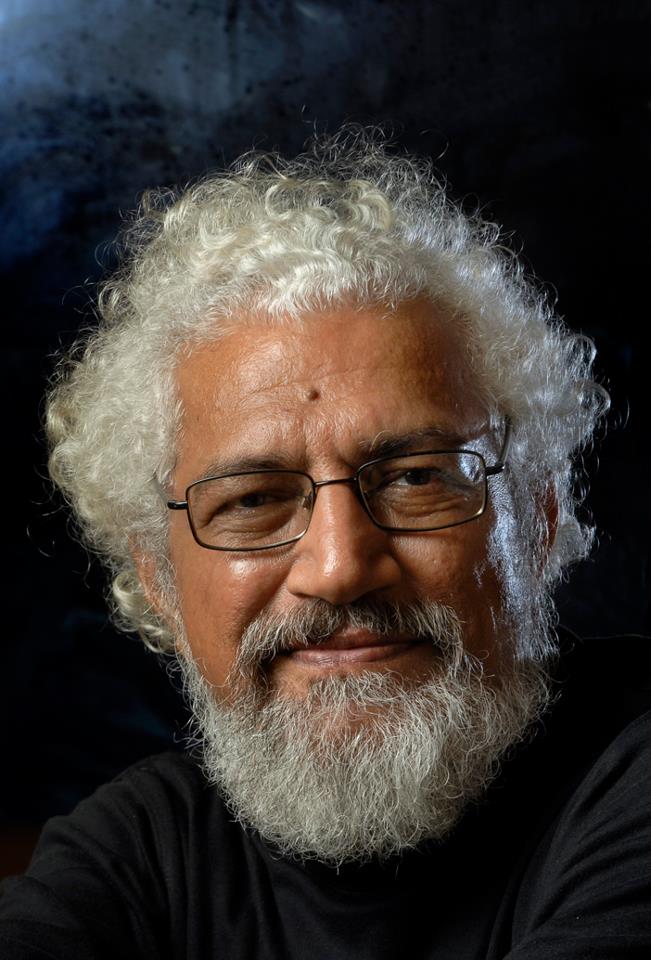
Prakash Bal JoshiMumbai based artist Prakash Bal Joshi has been assigned responsibility as an Ethics Advisor and Ambassador by the World Citizen Artists – an artists’ initiative by a Paris-based artist community to raise awareness about global issues through art.

The global community of artists was launched in Paris by highlighting the plight of refugees around the world coinciding on June 20, World Refugee Day. Joshi who has exhibited his art in Europe, USA, Turkey, Bhutan and other international art hubs, says, “The launch of the WCA is a call for creative artists to join and support the aim of raising global awareness about contemporary issues through art.”

Joshi’s work as Ethics Advisor and Ambassador will be to keep the focus of the WCA in mind and ensure that that focus is not compromised on. He says, “The WCA have artists from all over the world. I will be interacting with the core committee and discuss and decide the issues to be undertaken by the organisation and how artists’s works are used to make people aware of issues. I will also consider and decide on issues of disputes or any complaints against any member of the organisation and advise the WCA about how to deal with it, as also consider any complaint against any art visual displayed by the organisation.”

In addition to highlighting global issues, WCA intends to democratise art through social media by providing a platform for emerging artists to get their message across to art lovers, alongside established artists who wish to use their reputation to bring about positive change in the world.

Paris based artist Valerie Won Lee is the founder member of the group along with other artists Lesa Weller, USA, Pablo Solari, Argentina, Ger Costelo, Ireland.

(Picture courtesy worldcitizenartists.org)

Exit mobile version