Categories
Eat

10 chutneys you can find in Mumbai

Mumbai is home to some awesome cuisines and the secret ingredient that rocks even the dullest fare – the humble chutney.
by Mamta D | @silverlightgal on Twitter

In 1990, when an NRI woman entrepreneur, Namita Panjabi, opened her first Indian restaurant in Chelsea, London, she named it Chutney Mary to commemorate the humble Indian condiment that is today making waves all across the globe. Originally called chatni, this ubiquitous condiment has its roots in Eastern India as early as the 16th century.
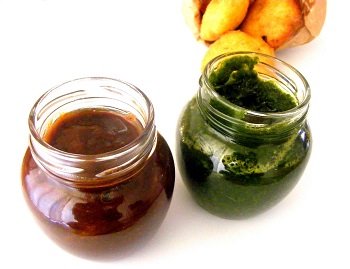
Basic chutneysAs you move from one region to another in India, you will come across a variety of ways in which chutney is prepared.

Chutney may be raw or cooked; the former is a concoction of vegetables and the latter a mixture of chopped fruit, vegetables, vinegar and spices.

An Indian housewife can transform an otherwise drab meal into an interesting fare simply by using her imagination and producing innovative varieties of chutneys. Raw radishes, tomatoes, onions even boiled gourd peels and dried orange peels have their own special chutneys.

Chutneys have exceptional medicinal benefits too. Chutney prepared from fresh green curry leaves is said to be an excellent source of iron and protein. Though they were never allowed to go outside frequently in the early days, Indian women nevertheless had extreme ingenuity and skill and demonstrated this in churning out one variety of chutneys after another.

When it was found that these raw chutneys could not last more than a day, the ladies applied further ingenuity and came up with yet another trump card – chutney powder. Spices were roasted and ground with bits and pieces of dried vegetables, peels or leaves. For instance, curry leaves were dried in the sun and finely powdered with roasted spices. The end result – a long lasting, tasty, tangy chutney powder.

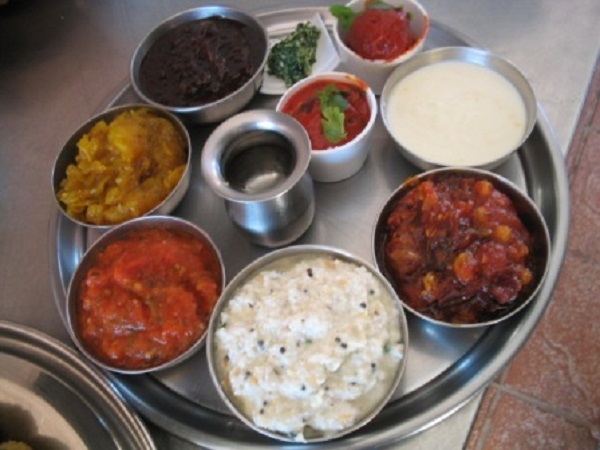
Here in Mumbai, we can come across these 10 types of chutneys:

The fiery red lasoon or garlic chutney

The ‘lasoon chutney’, a concoction of garlic and red-hot chillies, garnishes meals to add a fiery dash or to just the local dialect, ‘mirchify’ the meal, be it a dal rice or a simple fare of bhakar. The lasoon chutney is also popular with vada pav makers, who liberally spread it on the pav before dumping the potato vada on it.

The green pudina/dhania chutney

The green chutney typically made of fresh coriander leaves (dhania) or mint leaves (pudina), ginger, garlic, salt and chillies is often used in preparing sandwiches. It can also make a drab chapati tastier when spread over it.

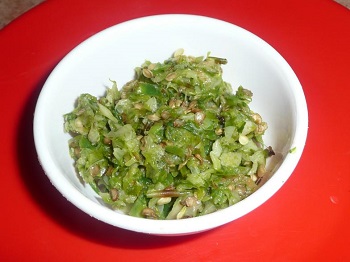
The mirchi thecha

A coarsely ground mixture of raw green chillies, roasted peanuts, salt and garlic and optionally, a few drops of lime juice, this is a quickie, in the sense that it can be made within Mirchi thechaminutes, with the slightest of efforts (in pic on right).
The coconut chutney

This goes well with sabudana wadas, steamed idlis, dosas, and the like. It’s often made of freshly grated coconut, salt, green chillies, and a little bit of tamarind, with a slight variation here and there.

The sweet-sour chaat chutney

Every streetside chaat vendor swears by this. From the bhel puri to the sev puri to the paani puri, this chutney is a given in every chaat dish. In swanky restaurants, there is a more elegant version on offer, but when it comes to lip smacking, finger licking taste, the street side version wins hands down.
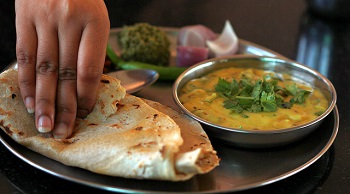
pithlaPithle (also called Bombay chutney)

A typical Maharashtrian favourite, this one is made of besan or gram flour paste, and is served as an accompaniment to poori, chapatis, and so on (in pic on left). Though, unlike the other chutneys, this one is not entirely made of raw stuff but requires some amount of cooking on the stove; it can be made in a jiffy and requires very few ingredients.

Raw mango or kairi chutney

This is a seasonal chutney and is made only in the summer. The spicy tangy combination of raw green mangoes (kairis) with red chillies, topped with a seasoning of mustard seeds, is set to be a mouthwatering winner when served in any menu. People eat it with dosas, pooris, chapatis, and even mix it with plain steamed rice.

Tomato chutney

Though originally a South Indian delicacy, today it has been well adopted into the Maharastrian palate. Made from ripe red tomatoes, cooked for long hours on a slow flame with lots of oil and spices, this one can last a whole year and is often stashed away in bottles for a rainy day.

Radish or mooli chutney

Again, this is an import from other States, which has slowly made its way into Maharastrian homes. Ideal for the chill winter months, this heat-inducing radish chutney is made of raw radish, garlic, salt, jaggery, and either red or green chillies.

Pineapple chutneypineapple chutney
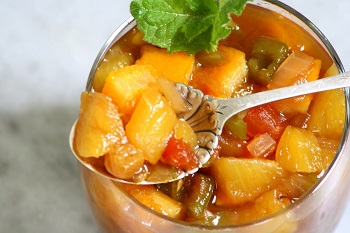
Yet another outlander to the traditional Marathi cuisine, this one has probably been smuggled into the State by the Maharashtra-Karnataka (food) border outlaws. It is sweet, spicy, and tangy in parts, because of the pineapple chunks, the red chillies and the tamarind that goes into its making.

Did we miss any chutneys that are commonly available in Mumbai? Tell us about them in the comments section below.

(Pictures courtesy www.iskcon.net.au, vegetarianzest.blogspot.com, www.madhurasrecipe.com, www.saffronsunshine.com, whatscookinginyourworld.blogspot.com)
Categories
Event

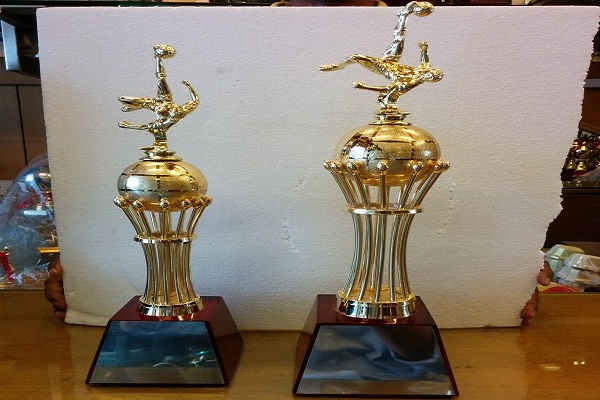
Umbro Cup comes to Mumbai

Tournament moves from Mumbai to Kolkata, Bengaluru from July 4 to 13; this is the 5-a-side Cup’s debut in India.
by The Editors | editor@themetrognome.in

As part of its global commitment towards development of football and its focus on popularising grassroots football in India, UK-based soccer brand Umbro is hosting the ‘Umbro Cup’.  A 5-a-side football tournament is to be held in Mumbai, Bengaluru and Kolkata.

Adding to the excitement of the ongoing FIFA World Cup, Umbro wants Indians to join in the celebration and be a part of the `Umbro Cup’. The tournament will take place in Mumbai from July 4 to 6, July, and in Kolkata and Bengaluru on July 12 and 13, 2014, simultaneously. The tournament will be held at the Cooperage in Mumbai, Gitanjali Stadium in Kolkata and XLR8 India Indoor Sports Arena in Bengaluru.

Says Ajay Chablani, Business Head, Planet Sports, which has brought Umbro to India, “We hope the ‘Umbro Cup’ serves as a platform for talented football players in India to showcase their skills and talent and encourage more and more people to play football.”

About the tournament

About 2,000 players will compete in the tournament across five categories i.e. Under-12, Under-14, Under -16, Open and Corporates. Over 80 teams are expected to participate across the categories in each of the three cities.The ‘Umbro Cup’ will include participants across categories  and would have school children from prominent and well known schools like Don Bosco, Hume High School, and St Theresa, to name a few.

Besides school children, college students and students from other faculties can also participate in the Open category.  In the Corporate Category, there would be participants from blue chip companies like Intel, JP Morgan, Standard Chartered and many others.

This is a knockout tournament and is divided in to four rounds. Round One is a round of 16 teams, Round Two is the quarter finals, Round Three is the semifinals and final round is Round Four. SportzConsult, a leading sports management company based out of Mumbai will be managing the tournament.

Categories
Tech

Samsung launches Galaxy Tab S 8.4 and 10.5

The devices are priced at Rs 37,800 and 44,800, and will go on sale in the country next week onward.
by Manik Kakra | @Manik_K

Samsung yesterday launched its brand new tablet series in India, Galaxy Tab S, with the showcase of the Galaxy Tab S 8.4 and 10.5. Both are touted to be entertainment devices, and are being differentiated from the company’s Galaxy Note series, which, Samsung says, is made with productivity in mind.

Galaxy Tab S 8.4Weighing about 298 and 467 grams respectively, the Galaxy Tab S 8.4 and 10.5 sport (2560 x 1600) Super AMOLED panels and have been launched in WiFi + 3G models, while the 4G LTE variant will be launched quite soon. On the back, there’s an 8 MP camera (with an LED flash) while the front carries a 2.1 MP camera.

Under the hood, there is an Exynos 5 chipset (octa-core processor), coupled with 3 GB of RAM, and 16 GB of internal storage space, which is expandable up to 128GB via microSD card. Connectivity-wise, there is microUSB 2.0, Bluetooth 4.0, WiFi a/b/g/n/ac, 3G (voice and video calling available), Fingerprint scanner, Infrared, 3.5mm headset jack, and GPS. While the 8.4 model packs a 4,900 mAh battery unit, the 10.5 model has a 7,900 mAh battery unit.

Just like the Galaxy S5, these Android 4.4.2 tablets come with premium services for users, including Kindle, Magzter, MyPlex, Marvel Comics etc.You can pre-book these Samsung devices till July 11, 2014, and the tablets hit the market in the second week of the month. Available in titanium bronze and dazzling white, the tablets have been priced at Rs 37,800 for the 8.4-inch model, and Rs 44,800 for the bigger 10.5-inch model.

Categories
Uncategorized

Clutch that

With the sale of e-books spiraling upwards, two Mumbaikars have found a unique way to give hardbound classics a makeover.
by Ritika Bhandari Parekh

There is hardly any sitcom fan who is not charmed by the geeky ways of the TV character Sheldon Cooper of The Big Bang Theory. They will most certainly agree that, geeks will rule the world or have already started their reign.

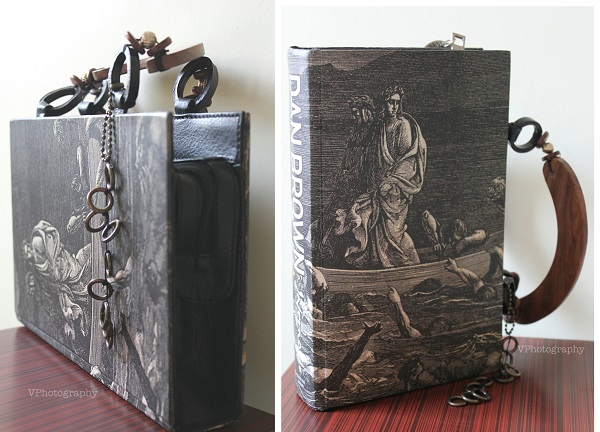
MihirVandana Merging the geeky ways of avid readers with the fashionable trend of clutches is Mumbai duo Vandana Panjabi and Mihir Desai. Their fledgling venture ‘Carpe Diem’ is all about book clutches for passionate readers. One can take their pick from their curated collection orcustomise a special book into a clutch.

‘Carpe Diem’, which translates into ‘Seize the day’ in Latin, inspired 28-year old Juhu resident, marketing graduate and shipbroker Mihir to experiment with his novel idea. He says, “I think fashion these days can be classified into people who follow it, and people who flaunt intellect through it. We noticed this gap in the market and with Carpe Diem, fashion merges with intellect. You are flaunting your intellectual, spiritual and emotional connect with the titles you read, believe and connect with.”

Vandana, a 26-year old PR consultant from Yari Road confesses, “It was Mihir who suggested that we should do something different and when he said it involved books, I was all ears! We began our journey in August 2013 and I can say that we have seized the day by working on a concept we were so enthusiastic and passionate about.” She admits her love for reading makes her lose herself for hours in a book store. While ‘Money Man’ Mihir, as Vandana calls him, started to read at the age of 23 and has devoured best sellers from Indian and international authors alike.

What’s it like?

The process of making of a book clutch starts with the hunting of second-hand books in a good condition. The clutches with suitable handles are then made in anything between a week to 10 days. Vandana points out, “The most important step we take while making these clutches or desk boxes, is to understand the market and their preferences, and accordingly select the titles, because that is how our product connects with our audience and their thought process. Everything else is very technical.”

If the customer has a specific book in mind, he can also provide them with a copy or they will scout for it accordingly. As for the pages, does it become a part of their raddi? Cal - chromo 2“Definitely not! We keep the pages and restore them with paper covers. After all, as readers we can make use of the book and also pass it on to our family and friends,” Vandana says.

They believe that a book clutch is an apt fashion accessory for enthusiastic readers who wish to flaunt their opinion in a subtle way, and yet make a statement with it. While the girls can opt for the book clutch, the guys can reveal their nerdy side via tablet sleeves and desk boxes. Mihir says, “Avid readers have a changing emotional quotient with the varied subjects they read. The book clutch can highlight their current emotional state.”

Vandana is hopeful that with the reading culture shifting from books to e-books, the book clutch will revive interest in printed books and the joy they bring.

So if you have it, ‘it’ being a memorable hard-bound book cover, then simply flaunt it!

Contact Carpe Diem via their Facebook page at http://www.facebook.com/CarpeDiemMumbai and take a pick from their existing collection or simply demand a customised title.

(Pictures courtesy Vandana Panjabi and Mihir Desai)

Categories
Trends

Elder abuse on the rise in Mumbai

Most Mumbai senior citizens complain of verbal, physical abuse and neglect from sons and daughters-in-law, as also from their daughters.
by The Editors | editor@themetrognome.in

It is a trend that is showing disheartening upward signs – each year, the extent and intensity of abuse against the city’s and country’s elderly population is on the rise. Even worse, most of the abuse is meted out by immediate or close family members.

Elder abuseAs per a three-year survey and study carried out by HelpAge India and titled ‘Elder Abuse in India (2014)’, Mumbai is showing a rising propensity towards verbal and physical abuse, as also neglect, of its elders. As per the survey, which was conducted in 12 cities and which included Mumbai and Nagpur in its study area for Maharashtra, several traditional myths that Indian society holds about its elderly have been shattered over the years. “All general assumptions on elder abuse i.e. it does not exist in India and is a Western phenomenon and that it is a metro-centric phenomenon which does not exist in small towns, and does not occur in the educated middle-class strata, have been proven wrong. The most common assumption that in old age the son would be the main caregiver has been completely shattered. The son, along with the daughter-in-law, is increasingly turning abuser. Surprisingly, there is an emerging trend of the daughter also turning abuser,” the preface to the report reads.

As per the figures compiled for the report, “There has been a marked increase in the percentage of elders who reported experiencing abuse from 23 per cent in the previous year to 50 per cent now. Verbal abuse, disrespect and neglect continue to be the three major types of abuse. Economic and emotional dependence of the victim on the abuser have been cited as the major reasons for abuse. Strangely, economic dependence of the abuser on the victim is also cited as a major reason,” the report reads.

While abuse has gone up, unfortunately still 41 per cent of those abused, did not report the matter to anyone. ‘Maintaining confidentiality of the family matter’ was cited to be the major reason behind not reporting abuse (59 per cent). However, “more numbers of people are reporting abuse, (59 per cent) in 2014 as against 30 per cent the previous year,” the report says.

Findings for Mumbai

– Mumbai has the highest proportion of the elderly with self-owned homes (92 per cent), along with Guwahati (88 per cent) and Mangalore (84 per cent). The rate of abuse in these cities is also high.

– While the national average on ‘Perceptions on extent of elder abuse’ is high at 34 per cent in India, Mumbai rates it at 65 per cent.

– In Kanpur, Mumbai, Vishakhapatnam, Chennai and Madurai, higher percentage of elderly reported beating and slapping as a prevalent form of abuse. Economic exploitation was also reported in cities like Mumbai.

– ‘Economic dependence of the abuser’ is seen as an important reason for elder abuse in society. Mumbai ranks first in this, with Kanpur and Guwahati.

– Awareness of police helplines is high, but exceptionally high in Delhi and Mumbai.

– In Tier I cities, Mumbai ranks highest in rating the daughter-in-law as the main perpetrator of abuse (92 per cent) while sons are rated lowest (21 per cent).

– Mumbai’s abused elderly did not report abuse because, a) They lacked the confidence in ability of any person or agency to help; b) They did not know how to deal with the problem; and c) They wanted to maintain confidentiality about what they felt was essentially a family matter.

(Pictures courtesy archives.deccanchronicle.com, www.siliconindia.com. Images used for representational purpose only)

Categories
Tech

Flipkart launches its first tablet, Digiflip Pro XT712

The company launched its first tablet at Rs 9,999 in a ceremony last week. The device is already on sale.
by Manik Kakra | @Manik_K on Twitter

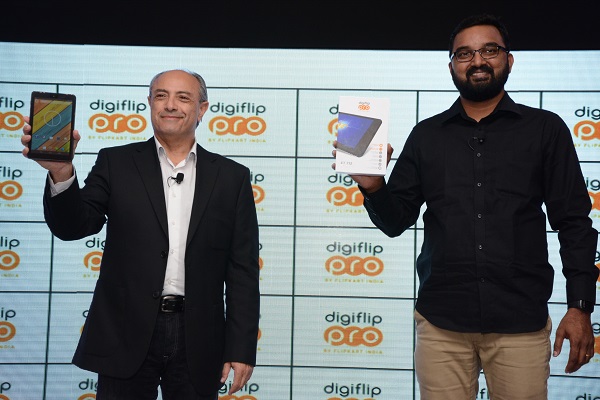
After several leaks and rumours, Flipkart last week officially launched its first tablet, made by one of the product manufacturers on their online portal, Digiflip, named Digiflip Pro XT712.

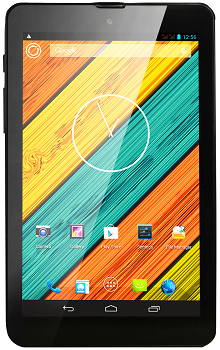
Digiflip Pro XT712 - BlackThe tablet boasts a 7-inch (1280×800) IPS display, and has on-screen navigation keys. Running on Android 4.2.2, with a couple of Flipkart apps pre-loaded, the company said it may upgrade the device (over-the-air) later this year, but there’s no confirmation on that.

Under the hood, there is a MediaTek 8582 chipset (1.3 GHz A7 quad-core processor) along with 1 GB of RAM. Loaded with 16 GB of internal storage, which is expandable up to 32 GB via microSD card, the tablet packs a 3,000 mAh battery unit.

This 3G dual-SIM capable tablet has WiFi, GPS and Bluetooth 4.0 under the connectivity options. On the back there is a 5 MP (AF) camera with an LED flash; while the front has got a 2 MP camera. The Digiflip Pro XT712 comes in black colour for now, while the white variant will be available in a while, and has been priced at Rs 9,999.

The tablet is already on sale, and is only available on Flipkart.

Exit mobile version