Categories
Wellness

5 ways to protect your child this monsoon

There are many ways you can keep your child safe and protected this monsoon season. We’re listing five easy tips.

The rainy season heralds the arrival of freshness and along with it a number of common infections. It is a season when children love to spend most of their time outside playing in the rain. However, don’t forget the rains also create a conducive habitat for infectious bacteria and germs. This is the reason why visits to the pediatrician goes up during the rainy season. By taking simple preventive measures, you can safeguard your child’s health and save time, efforts and money.

Five tips for your child’s healthy monsoon:

1. Rain gear

Rain gear for childBuy a proper rain coat and boots for your kids to wear during the rainy season. Make sure your kids carry the rain gear whenever stepping out of the house. The rain boots will do a better job of protecting children’s feet from bacteria.

2. No water containers

The cases of malaria rise during the rainy season. The reason for this is that water containers make perfect breeding ground for mosquitoes. Hence, if you have empty buckets or tires lying around, get rid of them as soon as possible. If you are into rain water harvesting, you should make sure that the water holders are regularly cleaned and not stale. You can ward off dengue and malaria by taking these simple yet effective precautions.

3. Sleep well

During the rains, some children will find it difficult to sleep due to the constant thunder. Help them relax with some organic diffuser oils that help them ease into a comfortable sleep. You can take the help of relaxing eye pillows to cover their eyes from lightning. There are many retailers who specialise in quality materials at reasonable prices.

4. Clean water

The chances of water pollution increase tremendously during the rainy season. Hence, you should undertake measures that ensure that the water consumed for drinking is pure at all times. Methods like boiling, chlorine treatment and filtration are all effective ways to treat water. Ensure that your child does not consume water through external sources. By taking simple steps, you can prevent diarrhea, dysentery and other water borne diseases.

5. Proper washing

Proper and thorough body wash is necessary during the rainy season. Use a scrubber to clean your child’s body and remove all the mud, dirt and grime. You can also use an organic foot scrubber to clean their feet and prevent spread of bacteria, germs and dirt.

The listed tips can help keep the rain borne diseases at bay and protect your child’s health.

(Pictures courtesy engage.babyoye.com, www.babycenter.in)

Categories
Trends

Mumbai population expected to hit 1.48 crore by 2021?

A recently released white paper by the Praja Foundation also predicts that Mumbai’s population will touch 1.55 crore by year 2041.
by The Editors | editor@themetrognome.in

It’s a city that continues to grow at a staggering pace, and it also continues to draw people from all over the country. However, how long can Mumbai sustain this pace of population growth?

A recent white paper on the state of Mumbai’s population growth released by Praja Foundation pegs the city’s projected growth at a staggering 1.48 crore in year 2021 and 1.55 crore by year 2021. Going by this rate of population growth, the paper estimates that Mumbai “requires at least 11.1 lakh affordable housing units to be constructed.” The Report recommends that to meet this growth, Mumbai must increase affordable housing, regulate standards for SRA (Slum Rehabilitation Authority), prioritise and actively promote public transport over private transport, and increase pedestrian-friendly zones, among other measures.

Already densely populated city

Overpopulation in MumbaiPraja Foundation and UDRI (Urban Design Research Institute) have also come out with a handbook – ‘Planning for Mumbai – The Development Plan (DP) for Greater Mumbai 2013-2034’. The handbook mentions the population densities of major metropolitan cities in the world thus: Singapore: 83 persons/ha; New York city: 106 persons/ha; Hong Kong: 64 persons/ha and Mumbai: 270 persons/ha.

When it comes to the availability of open space per person, Mumbai currently affords less than 1.24 square metres per person.

What needs to be done

The report suggests a few ways and means to combat the burgeoning population growth by offsetting it with the availability of open spaces, opportunities to use available open space, preserving the fast-depleting natural resources, etc. It states, “Public spaces such as notified open spaces, water edges, paths, urban squares and plazas shall be sacrosanct and not built upon. Mangroves must be retained in their natural habitats. [There is a need to] protect and enhance all reserved spaces, as well as completely freeze all reservations in the current DP.”

(Pictures courtesy knowledge.allianz.com, jackcollier7.com)

Categories
Enough said

Time to pack a Punch?

Is it time to go back to the Avadh Punch days, when natives used ‘safe’ ways to lampoon British rulers?
Humra Quraishiby Humra Quraishi

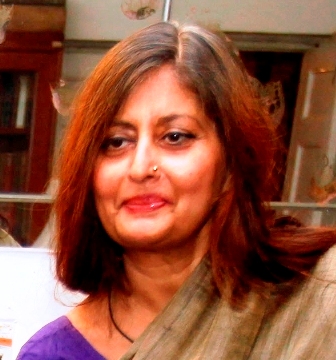
Today, June 21, is World Humanist Day, and I am tempted to deliberate on the recent trend of arresting young students and others for their comments or posts on prominent personalities in India.

Lawyer and activist ND Pancholi says that according to the International Humanist and Ethical Union (IHEU), World Humanist Day is a day of spreading awareness of Humanism as a philosophical life stance and means to effect change in the world. It is also seen as a time for Humanists to gather socially and promote the positive values of Humanism.”

So back to where I started this column from – should our young college students be arrested for their posts or comments or other writings?

A simple way out could be to rebuke or counsel these youngsters if they post or write something crude or obscene about somebody. But arresting them? Isn’t that taking things a bit too far?

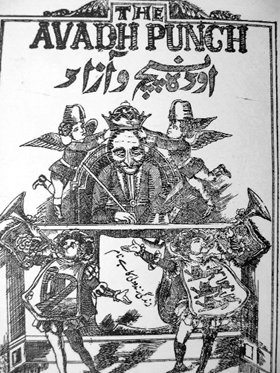
Even as I write this column, I am reminded of Professor Mushirul Hasan’s volume, The Avadh Punch: Wit and Humour In Colonial Avadh PunchIndia, where he writes of the days of the Raj and how we hapless Indians could criticise the British only through the most discreet ways – mostly through cartoons and verse. The idea was to lampoon the British through safe ways.

The idea of the Avadh Punch caught on fairly quickly – in a short span, over 70 such Punches were established in several cities of the country.

It might seem a bit far-fetched to believe that in this day and age, our youngsters might have to resort to following the Avadh Punch days. There could be a Kerala Punch, a Bangalore Punch, a Maharashtra Punch and certainly a Delhi Punch!

That is not to say that angry or upset citizens must use third class language or obscenity in illustrations to voice their disgust or anger. Free speech does not entail vulgarity. Anger should always be vented in a civilized manner. And if anybody is angry enough to resort to obscenity or inflammatory language, he or she should be counseled and talked to. A healthy discussion would contain the anger and maybe even help to dissipate it.

Needless to say, arresting such persons only helps to compound their anger and disgust. Arrests are to be reserved as the last resort of punishment, not the first. In many cases, arresting before doing anything else to prevent the crime from recurring will only ensure that the crime occurs again, and in a more severe format.

Humra Quraishi is a senior journalist based in Gurgaon. She is the author of Kasmir: The Untold Story and co-author of Simply Khushwant.

(Pictures courtesy www.tribuneindia.com, wodumedia.com)

Categories
Event

Attend: Thumris with Dhanashree Pandit Rai

The Hindustani classical vocalist will render raga Malhar, which is said to invoke the rains, this evening at the NCPA.
by The Editors | editor@themetrognome.in

The advent of the rains is richly celebrated in Hindustani classical music with the grand Malhar raga that is said to have the power to invoke the rains. What is often ignored is the semi-classical counterpart of our music, thumri, which romances the rains with several folk varieties such as kajri, sawan, jhoola and hindola that express the pain of separation and the joy of union with the beloved in the months of sawan.

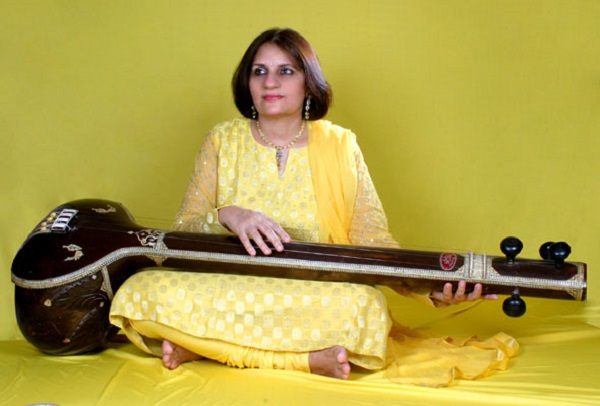
Classical vocalist Dhanashree Pandit Rai will perform ‘Chha Rahi Kali Ghata: Thumris of the Rain’ this evening at the NCPA, in keeping with the advent of the monsoon in the city. She has trained in khayal under Firoz Dastur, the stalwart of the Kirana gharana, and further specialised in thumri under the guidance of Shobha Gurtu. Besides several thumri albums to her credit, Pandit Rai teaches Indian vocal techniques to jazz musicians and has recorded fusion albums with many of them.

Accompanying Dhanashree during the performance will be Kalinath Mishra on the tabla, Niranjan Lele on the harmonium and Sangeet Mishra on the sarangi.

The recital starts at 6.30 pm at NCPA, Mumbai. Look up ncpamumbai.com for details and booking.

(Picture courtesy dhanashreepandit.com, Mumbai)

Categories
Deal with it

This artist is taking art to the public

Artist and painter Manoj Maurya recently introduced visually challenged students to art and taught them to create their own paintings.
by The Editors | editor@themetrognome.in

This is the sort of sunshine initiative each of us must undertake in our own small way: imagine introducing a visually challenged person to paint and canvas.

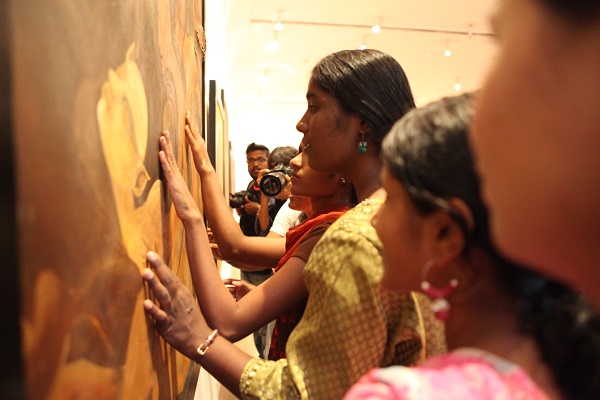
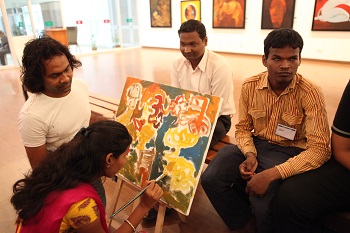
In a first of its kind initiative towards making art accessible for masses, artist and painter Manoj Maurya recently invited visually challenged students from the city’s blind schools and made them ‘see’ paintings. Manoj described and discussed paintings with the students and also took an interactive workshop where he taught them how to create paintings. The initiative to connect art with the masses is titled ‘ReBORN series’.

Manoj_Mauryaa_ReBORN-_Blind_Students-5He even made a painting with the students which he later gifted them with. Manoj explained, “I want to make even the visually challenged capable for expressing their thoughts through the medium of visual arts and paintings. The reactions and questions that these students asked me on my paintings were as insightful as those asked by art connoisseurs. After understanding the ReBORN series, one student asked me what I thought was the colour of the soul. Another asked me the colour of birth and death. They grasped my paintings and the thought behind them.”

The ReBORN Exhibition by Manoj seeks to establish a missing connect between art and the general masses. Manoj says, “Paintings as a form of art should increase their reach and be more relevant and productive for the society. In my own way, I am trying to achieve this [objective], so I have already invited underprivileged children and taught them the finer nuances of paintings. Before this, I have also  invited autorickshaw drivers to explore and understand the importance of art. While helping them acknowledge their creative potential, I think that educating autorickshaw drivers about art would go a long way in keeping our clean and beautiful.”

The ReBORN exhibition concluded recently at the Nehru Centre Art Gallery.

Categories
Learn

Read: Maha CM’s letter appealing against Bhabha house auction

The letter was sent by Maharashtra CM Prithviraj Chavan to PM Narendra Modi a few days before the auction took place.
by The Editors | editor@themetrognome.in

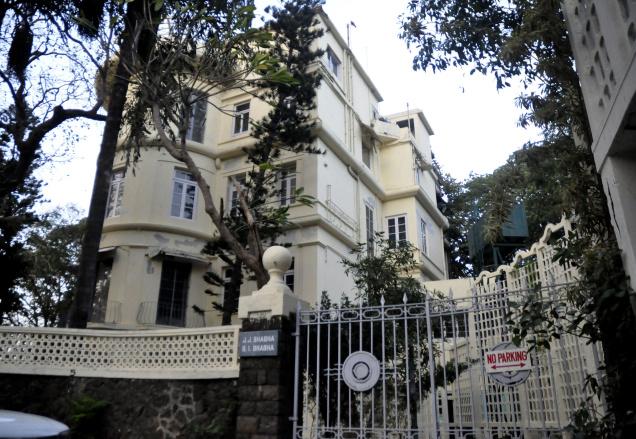
On Wednesday, June 18, 2014, the iconic bungalow belonging to scientist Homi Bhabha was sold for Rs 372 crore by the NCPA, which is a trustee of the property. Even as the auction was announced a few days ago, scientists had been opposing the auction and asking for the bungalow to be preserved as a museum.

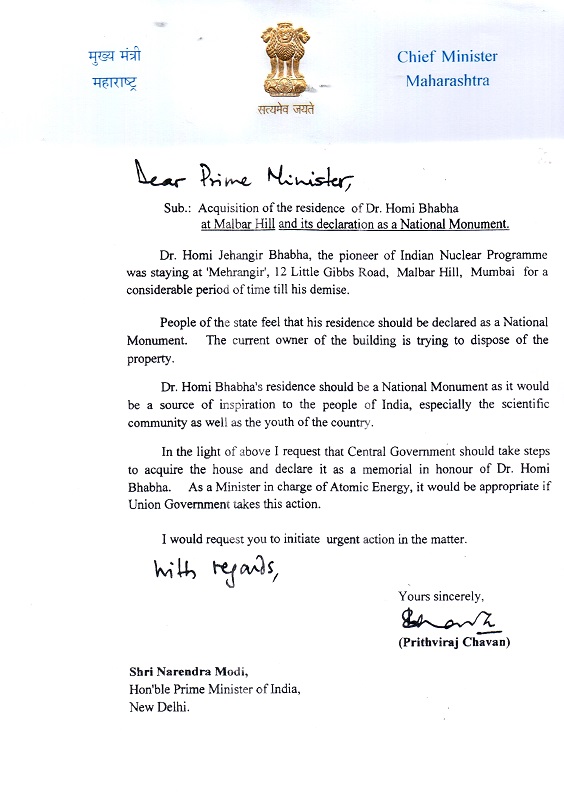
CM's Letter to PMThe Chief Minister of Maharashtra, Prithviraj Chavan, had also written to Prime Minister Narendra Modi, appealing for the Centre to step into the matter and stop the auction, instead declaring the house as a national monument. In this letter, (see it on the left), CM Chavan writes, “Homi Bhabha’s residence should be a national monument as it would be a source of inspiration for the people of India, and especially to the scientific community and the youth of this country.”

The bungalow, Mehrangir, is on Little Gibbs Road and Homi Bhabha was a part owner of it. After his death, the bungalow was in the care of his brother, Jamshed, who in his will, bequeathed it to the National Centre for Performing Arts (NCPA). The proceeds from the auction will go towards modernisation of theatres and upgradation of equipment.

(Prithviraj Chavan’s letter sourced from CMO, Maharashtra. Featured image courtesy thehindu.com)

Exit mobile version