Categories
Beauty

Band, Baaja, Bride!

D-day is nearing and you want to look your best. Try these tips to look great on your big day.
by Deepa Mistry

Most girls dream of growing up and having a fairytale wedding or a filmi wedding and to top it all, no one does it like we Indians do! Weddings in India are always an affair to remember, especially with all the band-baaja, dancing and a wide spread of cuisines from around the world!

Anyone in the midst of their own wedding fever will know the number of arrangements and tiny details that need seeing to in that last fortnight before the wedding. Till the last moment it can be utterly overwhelming for the bride. A bride needs to look her best all the time and the most basic and simplest trick is to stay relaxed. We know you’ve heard this a million times, while thousands of thoughts circle round your head, but remember it’s your big day and all you need to focus is on yourself.

10 tips to look stunning on your D-Day:

Face: Make sure you invest in a great skin treatment weeks before the date. A day or two before your wedding, fix an appointment and spend a good amount of time getting a facial, a haircut (nothing drastic), and a body massage, and you will shine for the next few days. Moisturise your skin well even the night before the wedding day and avoid too much sunlight exposure. Use a cleansing lotion to clean the skin pores, and an eye cream would be great for your dark circles. Keep your body and skin hydrated.
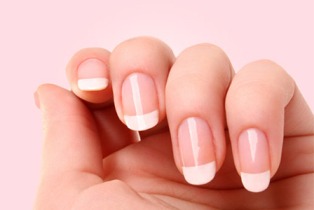
hands and nailsHands and nails: Not only will everyone want to look at your wedding rings or henna, but your hands will be photographed as well. You’ll definitely want your nails to look your best! While getting your wedding manicure, be sure to take someone with you. Your friend can assist with the little things that can possibly ruin finger nails, such as taking money out of your wallet and opening doors or driving. Give your fingernails at least 30 minutes to dry completely before you try to do anything else.

Hair: Get your hair trials done well in advance. If you plan to get a haircut, try to avoid something new. When you have your hair styled for your wedding, don’t let your stylist pull it back so tightly that it hurts. You may think you’ll get used to the tugging feeling on your scalp, but more likely you’ll end up with a headache. Start prepping months before the day, and then have final colour done a few days before. Never make a drastic change for your wedding day, and remember that your colour should enhance the way you look, creating a soft halo of beauty. It should not be the standout feature. Get deep-conditioning treatments leading up to the wedding day, and ask your hairdresser to use a shine-enhancing gloss on your final colour treatment.

Skin: Most of your blouses are going to be backless or the wedding gown will be a deep or backless one. Make sure you get a good treatment if you suffer from back acne. Back or body polishing would be ideal for your wedding day.

Eyes and lips: You can take a few extra steps to make regular lipstick more long-wearing. Before applying lip colour, smooth a bit of foundation over your lips – this will make your lipstick go on more evenly as well as help it stay on longer. Outline your lips with a lip liner, then fill in lips with the liner as well. Using a lip brush, apply one coat of lip colour.  Don’t go overly dramatic with the eyes by mixing colours. Ask your make-up artist for options before finalising the eye makeup. It’s your wedding day and you’re going to cry. Wear waterproof eye-makeup, and in particular, waterproof mascara.

Dress: The most important thing is dress fittings. Even if it’s last minute, check all your outfit fittings, and pick the correct dress fittingslingerie – you don’t want to be uncomfortable on your wedding day.

Shoes: Buy two pairs of shoes. Try them out at home because you are going to be on your feet for the entire day and you don’t want to be tired because of painful shoes. If you aren’t used to wearing very high heels, don’t buy them. Keep an extra pair handy in case you have trouble with the former one.

Personal care: Avoid any kind of waxing just before your wedding. Plan it days in advance so you don’t have last minute breakouts. If your skin is sensitive, don’t go for facials with heavy products, use milder or natural ones. Brighten your smile; visit your dentist for the best treatments for pearly white teeth.

Emergency kit: You never know what will actually happen at the wedding so it is advisable to be prepared with a touch up kit. Pack lots of tissues and wet wipes, an eye liner, a lip liner, a lip gloss and a compact powder, lipstick, blush and eye colours in a convenient case so someone around you can keep it handy always.

Smell good: You don’t want to wear just any old scent on your wedding day. Pick the best because the one you pick is always going to remind you of your special day. Take a girlfriend to a fragrance shop with you – but only try three at any given time.

So get ready to put your best foot forward and dazzle everyone with that gorgeous smile and stunning looks!

(Pictures courtesy www.sayshaadi.com, www.sheknows.ca, giigoo.org)

Categories
Deal with it

How I was sexually harassed at the school where I worked

A Goregaon resident and teacher describes her ordeal when a male colleague started harassing her after she turned him down.
by Bhakti Sankhe-Varde

I think I first realised that something called ‘sexual harassment’ exists when I was in school. We had a Sports teacher, a Mr Joseph, who I had heard often made girls uncomfortable. I had always found him to be an affable, nice man, and a very good singer with a great sense of humour.

We were in Class 8 when I first realised that beneath that genial exterior lurked a dirty old man. He must have been over 50 years old then. Slowly, we began to put his antics in perspective. He would insist on the girls not letting their braids fall over their shoulders and over their chests. “Pin up your hair!” he would order, and stare at the students’s breasts as they tightly rolled up their braids. Even the songs he would sing were often of a vulgar nature, and he would stare at some girl in the class as he sang. He would often place his hands on the girls’s shoulders when he spoke to them, tell the girls not to let down the hem of their sports shorts to make them longer.

The worst was when he once called a girl to the staff room after recess to discuss her participation in an upcoming sports meet. She said later that when she got there, he was seated alone with his pants undone. When he saw her approach, he casually smiled and redid his zipper. In tears, she later told the class teacher and her parents.

When he was sacked from work a month later, several students came forward with similar stories. We found it all a little shocking and confusing.

I am a teacher, too. I take tuitions at home and volunteer to teach underprivileged children in a local slum. Five years ago, I taught Math at a boys’ primary school in Mumbai, and I found that most of my colleagues were men. Which was quite okay – I have two brothers and a lot of male friends, so being around men was never a problem for me.

I loved the school and my colleagues were fun to be with. We would often hang out together and there were some movie and dinner plans made as well. However, I soon realised that one of my male colleagues had totally misunderstood my friendly banter for flirting. It seems he had gone around telling people that I had proposed to him. Infuriated, I confronted him, but he just denied it all. Another teacher said that that colleague was actually interested in me, and was probably spreading the rumours to boost his ego. To prove that I was totally disinterested, I once made it a point to get my fiancé to school. This man’s face fell when he saw my fiancé and I thought that he would back off.

The situation worsened

I suppose it was inevitable that he would find out that I was engaged to be married. At first, he was friendly, even congratulating me on my engagement and saying he must throw a party for me. Then a week later, somebody called my fiancé at his workplace and said that I was cheating on him – that I was having several affairs at school. Luckily, my fiancé and I were childhood friends so he trusted me. Imagine if he had gotten angry and broken off the engagement!

I also realised that something had changed at school. Some of the older boys had started giving me funny looks, whispering to each other as I walked the corridors to classes. Then one day, a male colleague took me aside and said that the school principal had taken down a disturbing photograph of me in one of the students’ toilets – it seems my head had been pasted onto a naked woman’s body.

Mortified, I wondered what to do. For the time being, I decided, I would do nothing, the prank would soon be forgotten.

Then one morning, I was horrified to find a pair of men’s underpants nside my locker. When I yelled in shock and disgust, the staff room only laughed. Everyone told me to ignore the mischief. There was nothing I could do, so fuming, I remained silent and decided to lock my cupboard from that moment.

Other disturbing things happened. Somebody spread a rumour that I was actually a eunuch. Once I came to the staff room for lunch and discovered that somebody had placed a packet of condoms in my handbag. The school’s vice principal once summoned me to her office and told me off for having an affair with a colleague. She refused to say which colleague and who had made the complaint. I began to realise that my name was being vilified – I was being branded as a ‘loose’ woman who had multiple partners, a woman who was more interested in flirting than teaching.

As my confidence dipped, I began to notice that I was being shadowed after I left for home. I would often walk home, but I always had the feeling that I was watched. One day, I suddenly turned around and saw, at a distance, that same colleague who had been telling people that I was interested in him. I was sure that all of these things happening to him could be traced back to him, but there was no way to prove it. The only thing that kept me going was my fiance’s steady support. I got married to him a few days later.

And then…

One morning, that colleague didn’t report to work. He wasn’t there the next day as well, but by noon, I was summoned to the principal’s office. When I got there, I was stunned to see the principal and a policeman. The policeman was very polite, he said that my colleague had tried to commit suicide and named me in his ‘complaint’. Shocked, I asked him how I could possibly be responsible when I didn’t even know him that well.

Luckily for me, the principal supported me and had already explained that I was a married woman and that I had never been seen in the company of that colleague. It turned out that in his suicide note, the man had written that I had led him on for a year, promising to marry him, but that I had recently married someone else. I didn’t know what to do.

My husband and his family stood by me in the situation. I had to do the rounds of the police station, give my statement and there was a time when I thought I would be jailed. But the police were sympathetic towards me and had understood that I was probably at the receiving end of a false case. Even more fortunately, the colleague had survived his suicide attempt and later confessed in hospital that the story had been cooked up. However, he never owned up to the things that had been done to me, to the rumours that had been circulating.

I finished that term and resigned my position. I had suffered enough and whatever I did, I knew people would still look at me in a certain way.

Today, I wish I had lodged an official complaint while the harassment was going on and insisted on an inquiry. My inaction probably spurred the harasser into doing more things to embarrass me. I wish I had not been so defensive from the start – as women, we are conditioned to feel shame when men humiliate us. I hope women who are harassed don’t take it silently. They must fight back and be alert at all times.

As told to Vrushali Lad.

(Picture courtesy www.indiafirstedition.com. Image is used for representational purpose only)

Categories
Deal with it

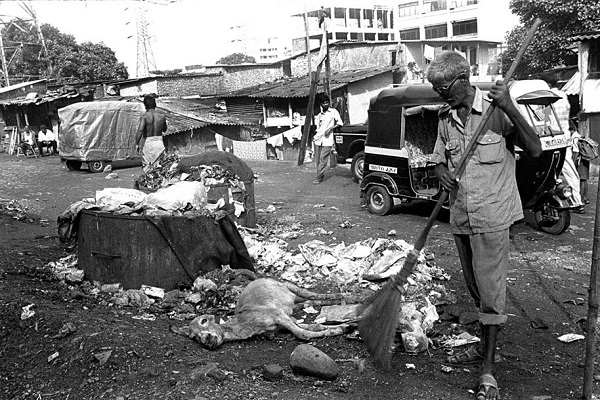
City’s conservancy workers will get their own flats

BMC moves proposal to construct flats on ownership basis for its almost 35,000 conservancy workers using an FSI of 4.
by The Editors | editor@themetrognome.in

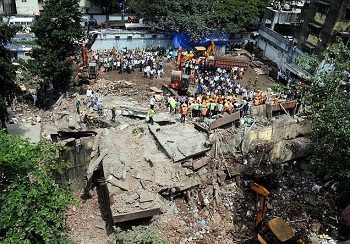
Dockyard road collapseA horrendous building crash at Dockyard Road in September last year killed 61 people. The spotlight fell on the state of the building – it was 33 years old – and the fact that it was owned by the Brihanmumbai Municipal Corporation (BMC). The building housed employees of the BMC’s Markets Department.

After the uproar over the crash, the BMC swung into action and fast-tracked a proposal seeking to build flats for the Corporation’s 35,000-odd conservancy workers under the ‘Ashray Scheme’. As per the scheme, conservancy workers in the city would get permanent homes that the BMC would build and hand over to the workers along with ownership rights. The Improvements Committee of the BMC first approved the proposal to use 4 FSI in the construction; the Standing Committee soon followed suit and approved the proposal as well. It has now been sent to the State Government for approval.

As per the scheme, redevelopment or reconstruction of old buildings will be done to provide homes for the BMC’s about 35,000 employees working in solid waste management. “The huge numbers of conservancy staff have always carried out their duties of keeping the city clean,” says Rahul Shewale, Standing Committee Chairman, BMC. “However, so far their own living quarters were not adequate. The city’s health is affected if their financial and social lives are unhealthy. We feel that a large part of their issues will be solved if they have their own houses.” He added that the BMC could not build these houses because of existing FSI rules and unavailability of plots. But if an FSI of 4 was granted, the project could get underway and the surplus units could be developed for Project Affected Persons (PAPs). The overall project cost is pegged at about 1,800 crore.

Currently, the BMC’s conservancy workers stay in 39 staff quarters located all over Mumbai. Most of these dwelling units are in a bad condition.

(Pictures courtesy Sudharak Olwe [part of his award-winning ‘In search of dignity and justice’ series], www.thehindu.com)

Categories
Wellness

‘Indians don’t see a dentist unless they suffer a toothache’

The Indian Dental Association (IDA) cautions on the problems arising from lack of oral hygiene among adults and young children.
by The Editors | editor@themetrognome.in

Do you brush your teeth at night, despite coming home very late from work or a party? Do you undergo regular dental check-ups to maintain the health of your teeth?

Or do you think of going for a check-up only when there’s a severe ache in your tooth?

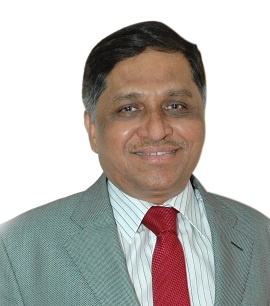
Dr.AshokDhobleIf you fall in this latter category, you are not alone. The Indian Dental Association (IDA) contends that a low number of Indians visit a dentist despite suffering cavities and tooth decay, and that both adults and children in the country are prone to gum disease and bad dental health. We spoke to IDA’s Secretary General Dr Ashok Dhoble on the subject.

Excerpts from the interview:

What is the biggest challenge that doctors face in creating oral health awareness?

Although the Oral Care market in India is continuously evolving, it yet remains one with great potential for growth. India offers a big opportunity as it is still an under-penetrated market. Indians tend to follow a remedial path where they seek professional dental care only at the time of severe toothaches. There is little awareness of the benefit of an early, preventive care approach to oral health.

Only a few people realise that oral problems can be prevented by adopting a few simple, stress-free hygiene practices. Starting early will make oral care a habit and not a practice. Children, from an early age of three should be made aware of the basics like the importance of brushing teeth twice a day, cleaning teeth and gums properly and other oral care information. While brushing your teeth is essential in the morning, brushing at night is as significant to reduce bacteria activity in your mouth.

The availability of toothpastes which are focussed at providing relief for specific ailments are helping to address oral care needs. However, the need to spread oral care awareness in the country is important. A Consumer Usage and Attitudes Survey recently conducted by IMRB (2009) International for Colgate-Palmolive (India) Limited revealed that out of 70 per cent who suffer from cavities or decay, only 58 per cent visit the dentist.

There are steps being taken by the dental profession to ensure maximum awareness in this regard. The Indian Dental Association, each year partners with Colgate-Palmolive (India) Limited to organise the Oral Health Month spanning two months. This platform offers our affiliated dentists to provide free dental check-ups to consumers across the country. This year, 30,000 IDA dentists have come forward to spread Oral Care awareness supporting the Oral Health Month in October and November 2013.

Which are the age groups and people most vulnerable to oral health disorders?

Oral diseases are not restricted to just adults or children. Any person who doesn’t pay heed to his/her oral hygiene is prone to oral care disorders.

Introducing your child to good oral care and hygiene practices from an early age is recommended. As mentioned earlier, children should be taken for regular oral health checkups from the age of 3 years. Children are vulnerable to dental problems because of their affinity towards sweets, chocolates, sugary drinks and sticky fast food options; they are more likely to show early signs of caries that may lead to problems like cavities. This can lead to other complications such as toothache and may affect the child’s overall health in the long term.

Even teenagers, for that matter, are so engrossed in studies, sports and other social activities, that oral care often takes a back seat. In such a situation, parents should encourage brushing, flossing and regular dental checkups for them. If need be, parents should become role models and set high standards of oral hygiene for their children to follow.

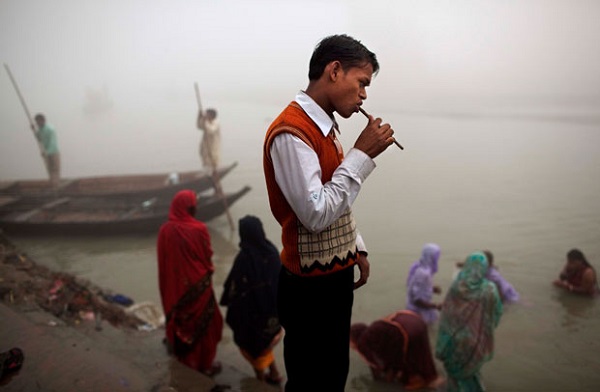
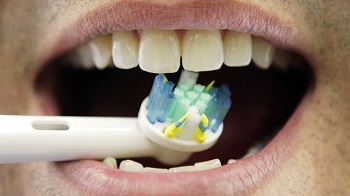
What is your expectation from corporates in the realm of oral health care? How, in your opinion, should corporates help in generating awareness?brushing teeth

There are many companies that undertake numerous socially relevant initiatives towards this cause throughout the year and across the country.

How should the Government respond to the need to create awareness?

Provision of healthcare is the responsibility of the Government.  Other agencies like IDA are meant to supplement the governmental efforts. Public expenditure on health in general is very poor and there is no separate allocation in the budget for oral healthcare, in particular, which is a must.  A separate oral health policy as a part of the national health policy could improve matters in this regard. 

Changes in the nation’s demographic profile, new technologies, evolving disease patterns, growing Government and media influences, market place changes, globalisation of healthcare–all these and other factors affect dentistry just as they influence other parts of society.

A well-structured, continuous training programme to keep pace with changing disease patterns can contribute to better oral health.  The Government should take a lead in this regard and must use the arm of Dental Council of India for this purpose. There is no separate department to exclusively deal with oral healthcare services. Oral health problems being directly linked to our own lifestyles, and lifestyle changes being rampant, setting up of a separate Oral Healthcare Services Department in the Ministry of Health brooks no delay.

Looking at the limitations of the public sector, the private sector equally has a major role to play in the development of the nation’s health. Public Private Partnership should be encouraged on an increasing scale to improve healthcare, including oral health.

An aggressive approach to oral health promotion, disease prevention and access to dental healthcare needs to be adopted to improve oral health and quality of life, since oral health is often neglected by most people. Towards this end, a closer collaboration among all healthcare providers should contribute to achieving dentistry’s primary goal of improving the health of the people.

Have you come across a recent study/survey in India that threw light on the issue of lack of oral health awareness?

Various studies, over a span of time, have thrown light on oral problems in India. For instance, a survey by Nielsen (2011), commissioned by Colgate-Palmolive (India) Limited, reveals the seriousness of the condition of tooth sensitivity in India; and the dismal state of awareness about this oral health problem. According to the survey, over 40 per cent of the respondents claimed to suffer from tooth sensitivity.

The objective is to spread the overall oral care awareness and make consumers aware of the importance of oral hygiene as part of their overall health.

Do you find a disparity in awareness of oral health care between India’s cities and rural areas?

Some rural areas in the country have limited dental facilities as compared to the metros. Consequently, the level of oral care awareness in these areas is also low. However, there are several initiatives undertaken by institutions such as the IDA which aim to educate the rural population.

(Pictures courtesy www.telegraph.co.uk, www.foxnews.com)

Categories
Achieve

Mumbai hospital wins top honours at India Healthcare Awards 2013

The PD Hinduja National Hospital was awarded top prize for being India’s best multispeciality hospital, in the national capital yesterday.

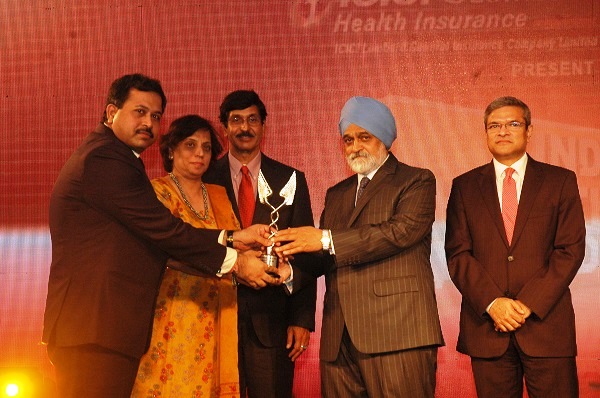
India Healthcare Awards by ICICI Lombard & CNBC TV18 recognised PD Hinduja National Hospital and Medical Research Centre in Mumbai as the Best Multispecialty Hospital – Megapolis for this year. The India Healthcare Awards hosted every year is an initiative to honour and award centers of excellence and quality driven healthcare delivery institutions. In year 2011, PD Hinduja National Hospital was selected as the best amongst a few hundred hospitals, but this time, it beat 3,000 healthcare providers for the top spot.

The award ceremony was presided over by Deputy Chairman of the Planning Commission, Montek Singh Ahluwalia, who presented the award to the hospital.

Not many people know that PD Hinduja National Hospital started off as a refugee camp clinic in 1951, and is today ranked as one of the leading multispecialty tertiary care hospitals of the country.

On the occasion, Joy Chakraborty, Senior Director, Operations said, “We are thankful to the organisers and jury members for recognising our leadership role in healthcare delivery. This award once again makes us feel proud. Our patient-centric care and value-added healthcare delivery will inspire us to further dedicate ourselves towards the trust, confidence and support shown by our patients and healthcare fraternity.”

(Picture courtesy PD Hinduja Hospital)

Categories
Wellness

Why you should drink water in winter

Winters don’t make us thirsty, but our body indicates that it needs water. Here’s why you need to tank up.
by The Editors | editor@themetrognome.in

Water is our saviour in the summer months, but we tend to turn our backs on this wonder fluid when the weather turns cold. Sure, we feel less thirsty in the cold weather, and drinking too much water makes some of us go to the restroom more often, but that is no reason to drink less water in the winter.

The weather is slowly turning cold in Mumbai, and with our skin moisturising products and our jackets and sweaters, we should also stock up on water. Here’s why:

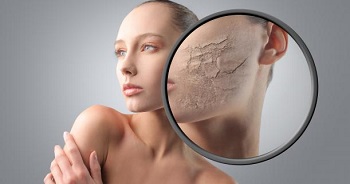
dry skin in winterDry skin, hair, body: The onset of winter is marked with dry skin, chapped lips, scaly skin on arms and legs, and less-oily-than-usual hair. However, we wrongly attribute these phenomena only to the dip in temperature – all of these are, in fact, the body’s way of telling us that it needs more hydration.

While external application of moisturisers and balms may help, nothing hydrates the body like drinking enough water. If cold water makes your teeth chatter, try warm water with a bit of lemon juice to hydrate and cleanse the system. Drinking enough water will also prevent skin from flaking and developing a chalky, dry texture.

Warm drinks are great, but…: It’s true that a hot cup of tea or a glass of juice are sources of water, but they are not very good sources. The tannin in tea and caffeine in coffee dry out the body and have a diuretic effect, respectively. Which means that with every cup of tea or coffee, we must drink two glasses of water to replenish water levels in our body.

Also, we tend to sweeten our juices with white sugar, thereby ruining the juice’s overall nutritive value. If you don’t want to consume plain water, use it to make a fresh fruit or vegetable juice. Use honey to sweeten and rock salt to taste.

Prevent lethargy: Studies show that water keeps the brain functioning well, apart from lubricating the joints. So the next time you’re tired of staring at the computer, take a walk and sip on a glass of water. We also tend to eat more sweet food and drink hot chocolate in the cold weather. Regular sips of water will dilute the high sugar content and help to process and digest the food better, thus preventing post-lunch lethargy.

Healthy urine and stools: Drinking less water will increase the concentration of salt in urine and cause hardening of stools. In the winter, our metabolism slows down and water retention increases. Drinking enough water ensures that the kidneys and intestines don’t have to work extra hard to digest food and form urine and stools.

Gymming in the winter: Gyms provide an airconditioned environment in which to exercise, but the AC can wreak havoc with your system in the winter. Doctors advise that drinking water in wintergymmers must drink more water while exercising in the winter, so as to maintain the body’s water levels. Gymmers consuming less water will notice more cramping and muscle spasms – a sure sign that the body needs more water. When on a walk, carry a bottle of water and don’t forget to sip on it often.

More headaches, migraines: The cold weather brings biting winds that are cruel on aching joints and those prone to migraines. The change in weather is normally a trigger for headaches. But instead of popping painkillers, drink a cup of ginger tea thrice in the day. The concoction will alleviate your headache. Alternately, practice deep breathing for five minutes when you feel a headache approach, and follow this up with a cup of herbal tea.

 (Pictures courtesy www.restek.com, www.wellandgoodnyc.com, makeupandbeauty.com)

Exit mobile version