Categories
Beauty

The bride diaries – getting fit

Brush all that wedding stress aside: follow these simple, last-minute guidelines to look and feel amazing on your special day.
by Deepa Mistry

Every girl has that perfect plan of what her wedding day would be like. The endless shopping trips, appropriate nutritionally-sound diet, regular physical activity and adequate rest are the most important for a bride-to-be. But don’t forget to keep the stress at bay. Here are a few do’s and don’ts that brides-to-be can follow a few weeks before the big day.

Exercise:

jogging–  You might be working out regularly already; continue with the plan but schedule your exercise in the mornings since they require just a few hours of commitment and then you are free to shop, work and relax during the day.

– Do light exercises to keep muscles toned. Stretching and yoga will help keep aches and pain at bay and won’t make you feel tired all the time. (Remember, you’ll be on your feet for hours.)

– 20 to 40 minutes of walking, cycling or jogging will give you the required cardio and this will help release endorphins (feel good hormones) and keep your skin glowing.

– Try to take the stairs or walk to the coffee machine while at work. This this will help you shed some calories.

– Never overdo any of your exercises. Over-exercising will leave you tired and not energised. Moderation is the key.

– Avoid quick-fix workouts that promise miracles like instant weight loss. You will end up with water and muscle loss, not fat loss. Don’t be fooled by creams or fitness centre ads.

Diet:

– Make breakfast your best friend. A balanced breakfast with sufficient proteins, carbohydrates, fibre and good fat is a must. Yes, not all fat is bad.salads

– Pay maximum attention to your fluid intake and by that, we mean say a strict ‘no’ to caffeine, alcohol etc. Drink plenty of water, juices, buttermilk, and coconut water and don’t over indulge in tea or coffee.

– Watch your portion size, especially when indulging in sweets. If you’re at a party or dinner, opt for healthy food like salads or grilled foods and avoid deep-fried or spicy food. Too much of oily and spicy food can cause acne breakouts.

– Dieting doesn’t mean starving yourself, it literally means ‘cut the crap and eat healthy’. Don’t starve yourself under the assumption that you will lose weight; your body will go into ‘save calories mode’ and start accumulating more fat.

– Don’t fall for fad diets that make you eliminate healthy foods under the guise of promising instant results.

Self-care:

sleep well–  Get enough rest. It isn’t called ‘beauty sleep’ for nothing. Target a good six to eight hours of sleep, including power naps and quick forty winks while at work also.

– Your lengthy shopping trips can exhaust you. When you return, simply dip your feet in a tub of warm water and unwind.

– Pre-wedding stress can wreak havoc on your skin and health so make sure you take some time off in the day and relax your body. If reading a book, watching a movie or listening to music makes you feel relaxed, do that and stay calm.

– A bride has a zillion things on her mind and if you’re feeling overwhelmed, just cry it out. Don’t cry because you are worried, a good cry will help you relax your mind as well.

Do what you love and love whatever you do, listen to music, take a walk at the beach alone or with your partner, spend time with your dog, do anything that makes you happy because you are about to embark the most beautiful journey of your life.

Categories
Deal with it

‘Police harassment has already started since the verdict’

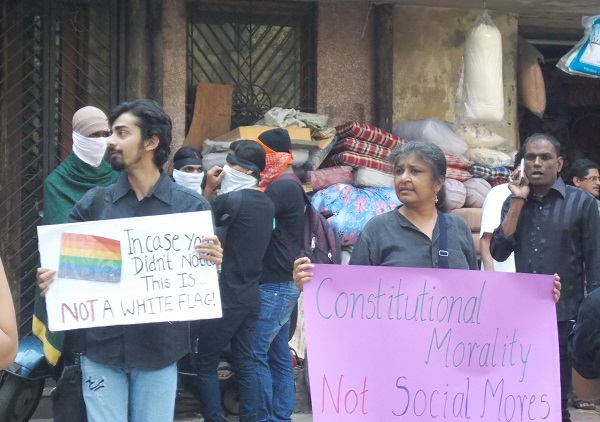
Three gay activists tell us what the recent SC verdict criminalising gay sex really means for them and the community.
by Nidhi Qazi

The Supreme Court judgement on Wednesday, December 11, 2013 prohibiting “carnal intercourse against the order of nature” came as a shock to everyone. This came four years after the Delhi HC’s 2009 judgment that decriminalised homosexual intercourse as provided in section 377 of the Indian Penal Code (IPC), and ruled that such sex between two consenting adults in private would not be an offence.

In the wake of this, there has been an outcry in the media, academicians and the community of the LGBTI (lesbian, gay, bisexual, transgender, inter-sex). To closely understand the issue from the community’s perspective, The Metrognome spoke to Ankur Srivastava, researcher with The Humsafar Trust (HST); Priya, Co-editor of queer blog, The Gaysi Family and Ankit Bhuptani, Founder, Gay and Lesbian Vaishnav Association, Mumbai.

Q: What does the verdict mean to you?

Ankur: Well, I would like to answer this on two levels. The first is me, as a professional and a student who has been engaged on sexuality studies and aligned with the movement. In this space I feel that we all have been pushed many years back in the struggle; and the now need of the hour is to re-strategise and ensure all subgroups of the LGBTI community fight this together. I also feel disappointed with the judiciary, where I had my hopes and faith on. Secondly, at a personal level though I see my friends standing by in support; I also feel more conscious of the fact that how the continuous telecast of this news is impacting the ways in which my family who is aware of my sexuality is interpreting it. I do not feel scared or threatened by it rather my commitment towards working on the issue is strengthened.
Priya: This verdict only means more work because there is no going back. When one has seen the blue blue sky, one cannot go back to the dark tower. SC made two points that impacted me the most. A) Only 200 cases of discrimination and harassment of LGBT people by the law have been recorded in the last 150 years. B) LGBT only forms a miniscule part of the population and hence, should just be ignored.

This verdict also means the law of this land – India, has no standing or bearing or representation of its people for it has chosen to ignore and subjugate one minority in the name of another.

Ankit: A ‘LOT’. It was a key for me to getting acceptance from each individual who believed in the Indian Constitution.

What are the implications of the verdict?

Ankur: The verdict has created more spaces of vulnerabilities for the LGBTI community. The journey for many which began with Delhi High Court judgment may find it astray now. Young people who in the spirit of confidence and pride came out at their workplace or other spaces few might start feeling more vulnerable. Similarly a lot of men who aren’t confident about their sexuality or are in closet would resist taking health services for fear of stigma or discrimination. This verdict will impede in the work towards HIV prevention, impact psychological health, and may also result in an increase in the cases of abuse, violence and harassment; or even misuse of this Section.

Priya: It has given a lot of impetus to people to raise their voices even louder. The protests across 20 plus cities in India is just a small sign of what the people are feeling on being denied their fundamental human rights.

On the negative side, it opens up the path for millions of queer Indians to be oppressed in the name of sexuality and does away with years of progress towards opening up spaces, mindsets and opinions.
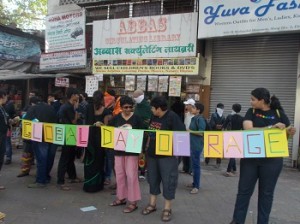
Ankit: It will be very negative. It will be used by the Police against homosexuals in a very wrong way. It will bring depression on Indian youth, especially in small cities.

What is the next step for organisations like yours?

Ankur: I don’t think it is any more of an individual organisation’s response that matters or rather is of any consequence in relation to national response to the judgment.

At The Humsafar Trust, currently we run six targeted interventions for prevention of HIV with men who have sex with men and transgender persons in Mumbai, supported under Maharashtra District AIDS Control Society (MDACS). One of the key tasks is of distribution of condoms and lubricants to the population and talk for safer sex practices. Since the verdict, a few of our outreach workers have already reported cases of police harassment.

What really seems like a response to me, is what we intend to do by being part of Queer Azadi Mumbai (QAM) collective. The call for a meeting on December 15 to protest against the verdict was to discuss the next steps in the presence of the larger community. This meeting is the first step that converges into a national meeting with LGBTI persons in Delhi next week to finalise the plan of action. A collective national response and strategy is what we are looking forward to.
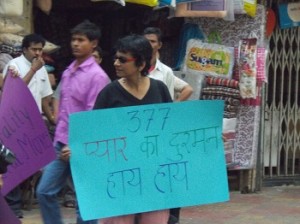
Priya: The idea is to gather, inform and campaign more and more and more until somebody responds! This verdict has brought people far closer than even the glorious High Court verdict in 2009! We plan to engage and encourage people for continuous on-the-ground public action.

We are also at heart a media platform – we will continue to share voices, thoughts, opinions on the issue and also curate all possible news and information so we stay ahead of the way the Indian and global community has reacted and continues to react to this development.

Ankit: We are going to fight for our rights. And apart from our judicial fight we will also do more of social awareness programmes. It’s about time that the society understands that Gay rights are all about basic human rights.

Why do you think the 2009 HC decision was quashed?

Ankur: Well, I would refrain from answering this question. We all know the judgment by Delhi High Court in 2009 was a historic judgment not because it favoured LGBTI rights, but more because the judgement called upon ‘constitutional morality’ above everything, and an essence Indian constitution. It stated that Judiciary in a democracy has to ensure equal rights and justice to all the citizens of this country and in particular to safeguard the rights and interests of marginalised and vulnerable populations. Supreme Court’s verdict has weakened trust and hope of a lot of citizens like me, who always thought Judiciary as a key to realize rights and justice.

Priya: We seriously do not know. Common sense fails us here. The current judgment lacks clarity in the arguments on which the conclusions are based. It seems to have completely ignored the fundamental constitutional promise of equality and dignity to every citizen of the world’s largest democracy. It is just the extreme opposite of the HC judgment. There are multiple speculations – owing to the shaky and political nature of India’s decision-making but otherwise we have no reasons as to why this may have happened. Prior to the decision, we were highly optimistic.

Ankit: Because SC mostly speaks about the technicality of law, about how the court cannot do much about it and we need to approach the Parliament for the same. This judgment is without heart. I personally think that the SC should also consider human feelings as they are dealing with human rights.

Irrespective of the verdict, do you think that the society is prepared to respect the choices and decisions of the LGBT community?

Ankur: Though it saddens me to look at the verdict, I am happy to see the massive support that is coming from the general population. I like the fact that many straight friends, allies
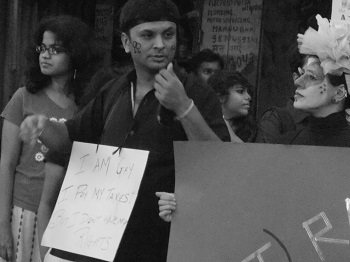
and supporters are coming in front to condemn the judgment. This is a result of the efforts that have been put in all these years to mainstream and create awareness on this issue.

I thought that irrespective of social acceptance, I want my rights to be in place. I believed that my legal rights will help me fight more rigorously and more importantly to fight back any abuse, violence or harassment from homophobic persons or institution. But now, I sincerely hope that we consider this unfortunate event as an opportunity to talk and discuss more about the issue with people, and gain from their support. There will always be homophobes like there are racist, sexist people, but what I look forward to is a space where I have a right to protest and ask for a justice when I am being denied; and I am many more allies and supporters to outnumber the homophobes.

Priya: We think so. The last four odd years have seen many individuals stepping out and expressing their identity, gender and sexual diversity. Many public spaces have been created to promote a dialogue between the LGBT community and the mainstream. Enough literature has been produced that reflects the queerness in the lives of straight people and the stories of LGBT resonating well with the majority. We think the society is making an attempt to understand the LGBT community, and is supporting us through all this in spirit, in heart and in kindness.

Ankit: Well, I personally feel that society is ready to accept anything which you can make them understand. So, the question is not whether the society is prepared to respect the choices and decisions of the LGBT community. But is the LGBT community ready to make people understand why they need to accept and respect themselves? And the answer is, the LGBT community has somewhere failed to prove it. The reasons for this can be many. But indeed there is a lack of effort from community work for their social acceptance.

Has the media played a supportive role in advancing the rights of the community or has the gesture been purely symbolic?
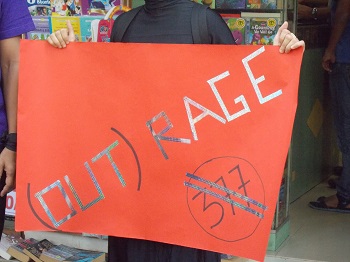
Ankur: I think it has been really supportive, in fact better than ever before. Look at any of the news channels and you would see journalists stating their clear position on the judgment and also advocating the rights of the LGBTI community. I also would like to believe that these people who have a large viewership in the country would impact and also create a positive change in the viewer’s perspective. Similarly for two days in a row, many of print media (English and vernacular) have covered extensively the news on the judgment and have dealt with the subject with sensitivity and in solidarity.

Priya: The media has been really supportive in advancing the rights of the community. Every newspaper, magazine, online platforms and television have done their part in promoting, sharing, and informing the mainstream about LGBT and other minorities. The onus of causing a shift in the social acceptance, mobilisation and sensitisation also lie heavily with the media. It is through them that people have heard of the lesbian couple who committed suicide in Nandigram, Bengal or the famous wedding of another lesbian couple in San Fransciso.

We like the fact that the media creates a lot of noise, picks up on nuances, details, small issues and plays to social causes these days. We’ve seen it for other issues in the country before and now there is no better time to play to the cause of the Gay rights issue.

Ankit: Yes, the media has been very supportive about this. I observed very effective support of media in last few days, English as well as regional. Lastly, I would just like to say that it’s not an end, we have very long way to go and we are going to walk ahead and make this country and world a better place to live.

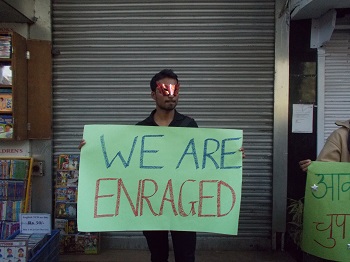
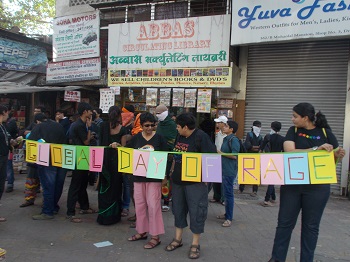
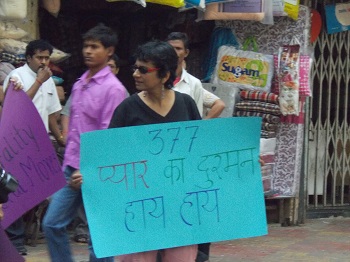
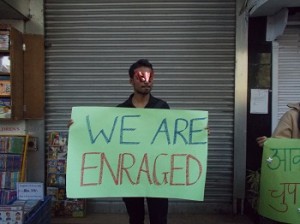
(Pictures courtesy Nidhi Qazi. All images captured on Sunday, December 15, during the Global Day of Rage)


Categories
Beauty

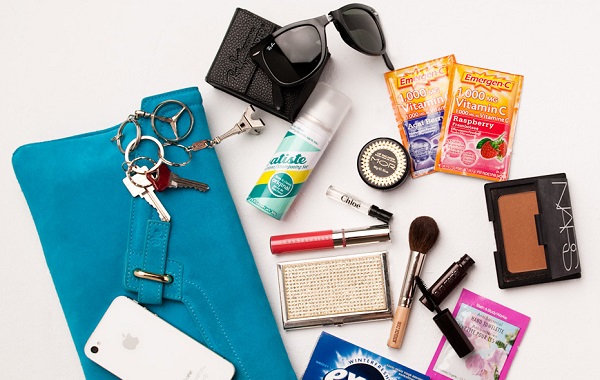
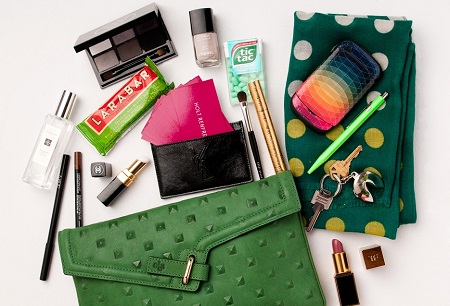
10 must-haves for your clutch

A handy list of 10 beauty essentials and practical items that your clutch must have, especially in the party season.
by Ankita Pathak

This is the season for holidays and parties. But hours of eating, drinking, and making merry can have an ugly side—smeared mascara, smudged lipstick, unflattering shine on the face. So how do you repair the damage quickly?

We’ve found a pretty solution: ten beauty essentials tiny enough to tuck into your clutch, perfect for retouches, refreshes, and any fashion or beauty emergency.

Concealer: If your concealer fades before you do, stash this easy-to-use stick in your purse. It camouflages dark circles, redness, and zits in just one swipe.

Perfume:  After a night of dancing, it’s perfectly natural to want to reapply your perfume. And we love anything that comes in a small package or is a solid perfume!

Band-Aid: Are those high heels of yours giving you a blister? You don’t need to sacrifice style if you have the right first aid materials.

Compact: Want to check your eye make-up in a pinch? Make sure you have a compact handy. There’s nothing worse than oily skin, but luckily, compacts will take care of it with one quick swipe. Just make sure you don’t cake it up!

Lipstick:  When you’re busy having fun, you don’t have to worry about your lip colour rubbing off. Carry the lip colour you’re wearing that night for an instant dash of fresh colour.

Bobby pins: Flyaways, sticking-out strands and out-of-place bangs can ruin your look, and your evening. To keep this from happening to you, toss a few bobby pins into your purse – they’re easy to carry and extremely useful in a hurry.

Comb: A mini pocket hairbrush is just as effective as its full-size counterpart. The boar and nylon bristles     tame static and smooth snarled strands. You can opt for a foldable one to make extra room!

Gum: Because it tastes good and smell good, too. A little spearmint is a nice way to offset the smell of your martini-soaked tongue, or the garlic stink after a Chinese takeaway.

Quick snack: It could be a chocolate or some salty biscuits; they are perfect to carry around in case of a hunger emergency. It’s instant energy and a yummy fix for all hunger games!

Emergency cash, ID proof and business card: Carry some extra cash in case you need to take a cab home. It’s worth having back-up cash in case you can’t find an ATM. An ID proof is a must-carry. At the very least, so that whoever finds your clutch that you left at a party can track you down and return it the next day. Carry your business card with you because you never know who you might just bump into!

Categories
Achieve

How the Mumbai Rail Map was conceived

Their IIT-B class project has thrilled commuting Mumbaikars, but Snehal and Jaikishan’s Rail Map is still a work in progress.
by The Editors | editor@themetrognome.in

It is easier for a newcomer in Mumbai to lose his way than find it, says Jaikishan Patel (26), a first year student of Visual Communication at Industrial Design Centre, IIT-B, Powai. Says the Chhatisgarh native, “I first came to Mumbai in 2010, and I was thoroughly confused by the three suburban rail routes – Western, Central and Harbour. Now I have been here since last year, and I still find them confusing! Nothing has changed at all.”

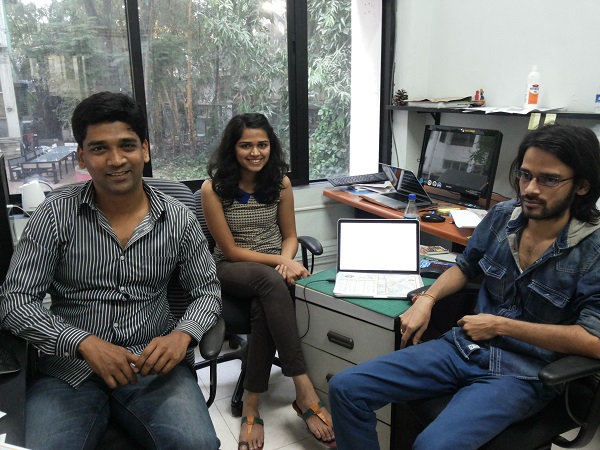
This thought was uppermost in his mind when he and a fellow student of their 12-student class, Snehal Patil (24), opted to map Mumbai’s local train network. Jaikishan (extreme right in pic above) says, “It is easy for people to lose their way on railway stations, particularly on the Harbour Line. There are no signages, activity and movement patterns are not planned. People get from one spot to another by asking others for directions. Even the indicators on Western line are different from the Central line. This is not ideal for a rail network that is probably busier than the Indian Railway network.”

Adds Snehal, “Though I stay at Thane, and I know all the lines and stations, I still get confused. The existing rail maps are very badly designed. That’s why both Jaiki and I opted to design an easy rail map for Mumbai residents.” The duo started working on their project five weeks ago, and started by studying the main junction stations such as Kurla and Dadar. “We found that the only maps that do exist are to be found next to ticket windows, and even these are ticket fare guidelines. Other than these, we went on the Internet to look up the existing routes and for exact names and chronology of stations.”

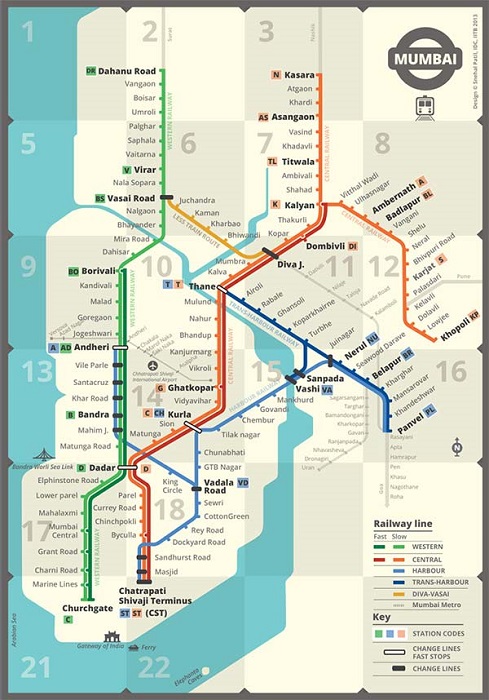
rail mapThe map is now ready and very easy to navigate – three steps help you locate the station you want. 1) Select the desired station from an alphabetical list with a corresponding box number. The map is divided into a grid of 22 squares, and each square carries a box number. 2) See the box number (of the selected station) on the list and locate that number on the grid. 3) Your station can be located in the square marked with that particular box number on the grid.

The box number is also tagged with a line and station code for easier route navigation and understanding. Besides this, there is a simple legend that explains the colours and the icons used.

This is not the first time that IIT-B students have toyed with redesign for the Railways – last year, student Deepali Karanjavkar came up with a standardised design for railway indicators, using the Devnagari font. Deepali also developed the font for the easy-to-read LED indicator after testing it for sizes and spacing. Sadly, the proposal never took off.

How the map took shape

After a fair amount of legwork and Googling existing rail routes, the rail map began to emerge. “The most challenging aspect was putting the grid together. I started with a linear diagram at first, while Jaikishan worked on another map,” Snehal says, adding that the maps were later merged to form a single map.

Three weeks later, the first draft of the map was ready. “We decided to put the map out for people to study and give feedback on,” says Mandar Rane (extreme left in pic above), the duo’s professor who is helping shape their project. “After the initial mapping, tracks were added. Colour demarcations were made for fast and slow trains. Some people wrote to us pointing out locations where the tracks merged with Indian Railways. The idea was to simplify the map, but not to the extent that details would be lost,” Mandar says.

Work in progress

At first, there was a barrage of feedback on the map, with several people suggesting corrections. “Now, we receive about 12 emails a day. We need a reliable source to authenticate the feedback,” Mandar says. He remarks that the map should ideally be viewed by the Railway authorities before it is finalised. “The Central Railway has shown an interest in looking at it, but we are yet to hear from Western Railway,” he reveals.

Crowdsourcing helped in correcting the design. “We have made about 30 revisions to the map already,” Snehal says. “After launching the map, too, there have been about 10 revisions.”

The trio will freeze the design at some point, but “if there is a mistake, we have to correct it,” Mandar says. “We want this map to reach the users of Mumbai railway, so that their commute becomes easier. If you understand the network, your travel turns out better,” Jaikishan says.

The point of the whole exercise, Mandar says, is to make the travel model clearer. “After seeing the map, one man wrote to me saying, ‘Now I know how my daughter travels to Vashi!’ We want the map to reach people, ideally as a permanent display at stations. If not, it should be available in a portable form so that it can be folded and put away in a wallet or purse,” he explains, adding that they are toying with the idea of creating an app that will cover the gamut of rail travel in Mumbai.

The map, at this stage, only needs endorsement and support from the Railways. “It is ready, it needs to be reviewed, and then it needs to be installed. It is a very clear model, actually – any corporate would be happy to sponsor it. It’s a win-win for all concerned,” Mandar signs off.

 If you have suggestions to make about the map, write to idcrailmapfeedback@gmail.com. View the map on mrane.com/railmap.php

(Map courtesy Snehal Patil, Jaikishan Patel and Mandar Rane)

Categories
Beauty

Bad hair days, begone!

A bad hair day is a girl’s worst nightmare, but before you hit the panic button, try out these solutions.
by Deepa Mistry

A bad hair day rarely happens when we decide to stay home, but will mostly occur on that ‘very important’ day, like the first interview or a first date or a special day in college when you want to look your best but your hair decided not to. Bad hair days are like bad moods, they come and they go. Even men do have bad hair days, but luckily enough for them, their short hair saves them from the distress that women face.

But don’t let your traunting hair get you down. Try these tips:

Oily hair: The worst of all problems. You were supposed to wake up early and wash your hair and style it, but the alarm didn’t go off, leaving you with barely a few minutes to get your mane ready. Don’t worry, get a tin of baby powder.

Back flip your hair and just dust it lightly with some powder. The powder absorbs the oil and makes your hair look fresh. If you don’t have powder, you’ll be glad to know that oily, crimped ponytailunwashed hair makes a perfect base for one of the most popular runway looks – crimped ponytail (see pic on right). The style is most suitable if you have long and thick hair. Though crimping is little time-consuming, if you can spare a few minutes it is worth the try.

Hair colour gone wrong: Raise your hand if you think you spent a bomb on your hair colour this month at a salon or decided to go low-budget and ended up with a terrible hair colour. There’s a solution for this, too: wrap and fold a scarf on the top part of your head and let the bottom section show just like JLo did in one of her music videos. Another option would be braid your hair or use a simple black hair band or clips.

Split ends: Some girls have trouble saying goodbye to those long locks and so they avoid even trimming them off, leaving them with split ends. Unfortunately, by the time you realise the damage is severe, it’s quite late and you’re headed to an event, split ends in place. The answer is pretty simple – opt for a chic, perfectly polished bun, a hairstyle that looks best with the ends tucked in! But since the trouble continues and split ends make hair weaker, an advisable move is to trim hair every six months.

shampooFlat and lifeless hair: If you have flat and lifeless hair, the only solution is to change your shampoo. A lot of times we opt for certain brands because they’re the most popular, or are suggested by a friend or the advertisement for the product has a favourite actor. Don’t fall prey to such branding. Choose a shampoo that suits your hair best, and which is light and can be used on regular basis. Humid weather makes hair sweaty and frizzy all the time. Shampoo your hair on alternate days and try to mix one drop of tea tree oil and wash your hair with this mix. Tea tree oil will help absorb excess oil, sweat and dust and thus, make your hair look healthier.

Tangled troubles: If your hair tangles more than normal try this: after washing your hair, apply a hair mask or conditioner and instead of five minutes, let it sit on your hair for 15 to 30 minutes, then rinse. You will notice a tremendous difference in the way your hair looks and shines. Of course, you will experience less tangles, too.

Dry and rough hair: Due to cold conditions, hair tends to lose moisture making it look dry and lifeless. Don’t let the season ruin youroil massage hair. Styling products also leave your hair looking frizzy and dry.  Warm a little coconut oil and gently massage from the roots of your hair and leave it on for just one hour and wash with a gentle shampoo. Many people believe you should oil hair before going to bed and wash them the next morning, but the truth is, an hour is just enough for oil to work on your hair. You could use any other oil also as per your choice.

Shapeless and breaking easily: You’ve perfectly set and styled your hair, but by the time you reach your workplace, it’s gone haywire. Don’t panic; take a pea-sized drop of hair serum and rub it over your hair. With a thick padded brush, just brush them through and you’re set for the day. Blow drying on high heat for too long causes breakage. When hair is sopping wet, don’t blow dry it – wait for a while, lightly pat dry with a towel and then blow dry without keeping the dryer too long on one section.

Unruly curls: If you’ve gone to bed with a gorgeous hairstyle, it doesn’t mean you are going to wake up with the same the next morning. Yes that’s right, curls invite frizz and tangles and a whole world of other hair troubles. Comb the frizzy, poorly-defined parts to remove tangles, then run wet hands through them a few times to get them to be damp but not dripping wet. Apply a curl enhancing serum or leave-in conditioner for around 15 to 20 minutes and let your curls dry while you dress up and you’re ready to go!

Hope you find these tips useful and with that, give the bad hair days an off!

 (Pictures courtesy sheknows.com, inhabitat.com, makeup.com, www.stylecraze.com)

Categories
Beauty

Say hello to soft lips

As the winter approaches, everyone gets vexed about chapped lips. Here’s a simple tutorial to get soft lips this season.
by Deepa Mistry

As much as we love winter, chapped lips can be a miserable offshoot of the cold weather. Lips are the most sensitive part of the body and the cold winters, along with indoor heat, can dry skin very easily. We tend to take utmost care of our skin from head to toe by wearing warm cardigans, jackets, gloves, socks and caps but rarely pay attention to our lips, since the problem usually arises only during winters.

Healthy and soft lips are more attractive, so keep them moisturised and nourished with simple and healthy methods. Lips tend to lose more moisture due to dry and cold conditions during winters than usual, as skin on our lips is 10 times thinner than the skin on our face.

Here are some tips to follow:


lip balmUse lip balms
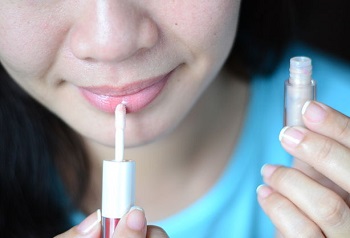
: Lips balms or chap sticks are a life saver for us women, but we end up eating it as we tend to lick or bite our lips. Even though we survive on lip balms, not all are created equally.

Does your lip balm dry off immediately after applying? It’s time to change your balm. Opt for well-known brands and lip balms of good quality. Look for cream, petroleum-based lip balms with essential oils like almond oil, cocoa butter and shea butter and an added bonus is if it has an SPF built-in for extra protection.

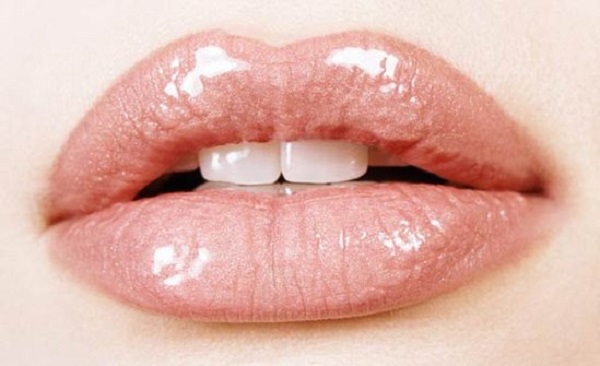
Did you know that women who are habitual lip chewers eat four to nine pounds of lipstick during their life? Dump the lip gloss during winters. Try flavoured balms or tinted lip balms as they have the same amount of shine as lip glosses do. Petroleum jelly or Vaseline is best aid to avoid cracks; you could also massage using petroleum jelly on your hands and legs.

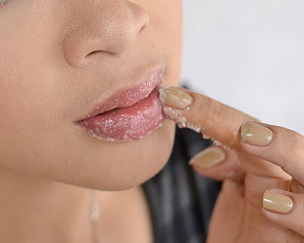
Exfoliate your lips: Yes, you heard that right. Lip scrubs (in pic below) help exfoliate your lips to get rid of the dead skin, leaving them soft and fresh. Rub sugar granules every day on your lips or exfoliate your lipssimply apply ghee or honey before you sleep every night.

Hydrate: Drink lots of water. Water helps regain moisture and during winters you must keep body hydrated all the time for a healthier skin.

Don’t lick your lips: We all have this bad habit of licking our lips when they are dry. It is a vicious circle, you lick, it dries up and you lick again. Biting doesn’t help either, as lips dry and sometimes bleed too. Avoid it and use the best remedies for your lips.

Stay indoors: Exposing your lips to the harsh winter weather may cause chapping. Pollution can also harm the lips so wear a scarf when out of doors.

If the condition gets worse, visit a doctor. But for now, just follow these simple beauty tips for well moisturised and beautiful lips.

(Pictures courtesy naturallyb.onsugar.com, www.wikihow.com)

Exit mobile version