Categories
Learn

International Committee of Red Cross turns 150

Humra Quraishi tracks the journey of the ICRC, whose first mission to India had landed in Bombay 96 years ago.

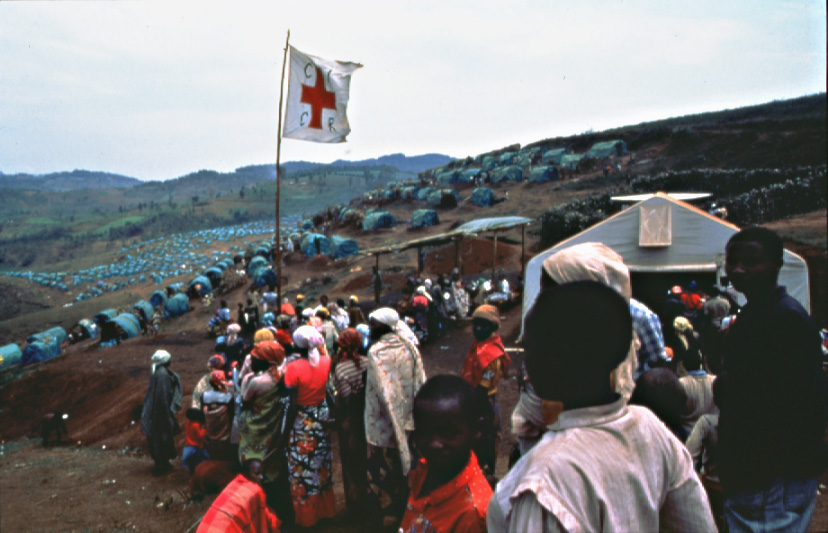
The International Committee of the Red Cross (ICRC) turned 150 years old on February 17, 2013. It is now more than 30 years old in India. In fact, ICRC’s first mission to India was on February 12, 1917, some 95 years ago, to restore contact between people separated by war.

To give you a background on this:  The International Prisoners-of-War Agency was formed on August 21, 1914. And from December 1914, ICRC delegates began obtaining permission from the different states to visit POW camps not just to check on conditions of detention but also to let the prisoners know that they had not been forgotten by the outside world or reconnect them with their loved ones. On January 25, 1917 in Cairo, the delegates of the International Committee of the Red Cross (ICRC) had just finished a camp visit of Ottoman Prisoner of War (POWs), that they received a cable from their headquarters in Geneva.

The cable directed them to inspect camps of POWs and civilian internees in Asian countries of India and Burma. The delegates got on to a ship and sailed through the Suez Canal to reach Bombay on February 12, 1917. The arrival of delegates that day
marked the beginning of ICRC’s journey on Indian soil. The mission in India began with the delegates meeting Viscount Chelmsford, Viceroy of India (the head of the British administration in India) in Delhi. In the province of Rajputana, the ICRC delegates visited the first camp in Sumerpur on March 3 to 4, 1917.

Explaining the concrete work of the delegates during such camp visits, Mary Werntz, currently the head of the regional delegation of the ICRC in Delhi, said, “The delegates would dive deep to see if the detainees were treated with dignity. From checking the barrack premises, sleeping, clothing and sanitation facilities, access to exercise and fresh air, medical services,
quantity of food received per person, to mapping the application of order and discipline on inmates by the detaining authority, every small details were observed and noted.

Efforts would also be made to ensure that the detainees had the right to practise their religion, had access to letters and parcels, and could avail the financial support from their own Government.”

Reading these details of ICRC’s work, one thought struck me: there are no formal and full-fledged wars being fought these days, so can’t the ICRC men and women look into the current state of our lockups and prisons, and what the current state of those languishing there is. In the times we are living in, there must be watchdog organisations to monitor and bring about interventions.

(Picture courtesy itu.int)
Categories
Kharcha paani Learn

Iran wants to do business with India

Speaker of the Iranian Parliament, Ali Ardashir Lajirani, wants India to throw its doors open for Iranian students and businesses.

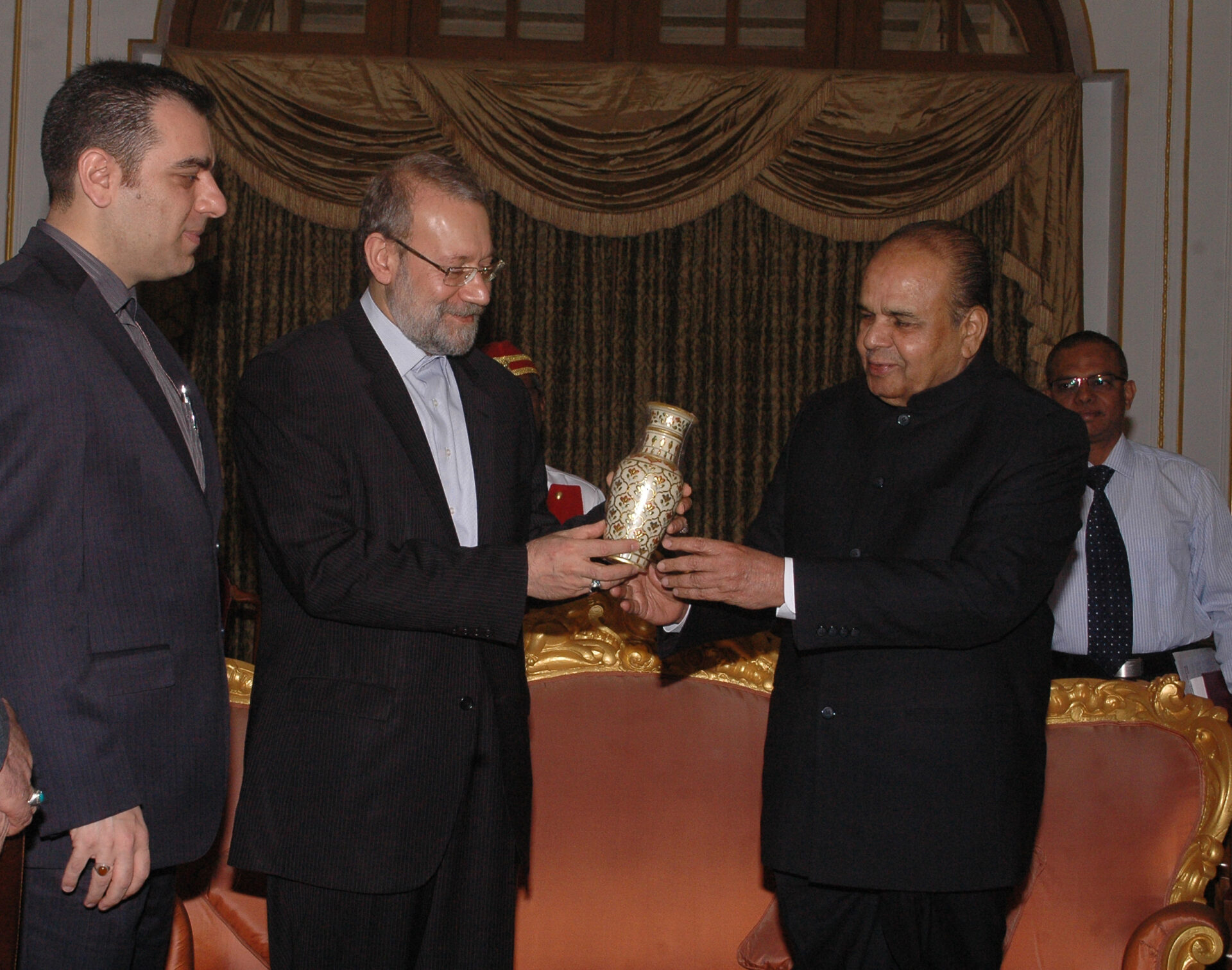
The Speaker of the Iranian Parliament, Ali Ardashir Larijani visited the Governor of Maharashtra K Sankarnarayanan at Raj Bhavan, Mumbai, today. During the visit, he said that business leaders from Iran were keen to further develop business and trade contacts with India, and expressed the hope that India would provide opportunities for Iranian business leaders to explore its business potential.

Stressing the need for greater academic collaboration between the two countries, he said that addressing small issues like expediting issuance of student visas by India would help more students from Iran to study in India.

Complimenting India for achieving significant progress in various areas during the last few years, Larijani said, “The Parliament of Iran is determined to enhance and facilitate relations with India so that the trade between the two nations will further increase from the current $15 billion.” He said that trade can be enhanced by increasing cooperation in areas like energy resources and industries.

The Speaker was accompanied by a large delegation of Parliamentarians and Ministers and is currently on a visit to India.

He added, “Social, cultural, educational and trade relations between Iran and India are deeply rooted in history and both the nations have influenced the cultures of each other during these contacts.” He said that the people of the East such as Iran and India have a lot of commonalities such as morality, ethics and family values.

Categories
Learn

‘Anti-terror laws should be scrapped’: Arun Ferreira

Activist, alleged Naxal Arun Ferreira feels that special laws like POTA and charges like sedition should be done away with.
by Nidhi Qazi

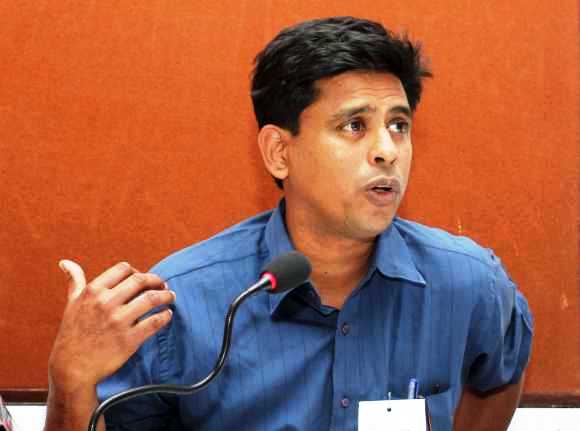
He was jailed for four years on charges of being a Naxal operative, then released after no substantial evidence emerged to give credence to the charges against him. Arun Ferreira, who admitted to having Naxal literature in his possession, speaks freely about his prison experiences, and is forthcoming with his views on the Government’s anti-terror laws and the way it treats its prisoners, among other thing.

“Arrests have become a trend, an unhealthy one for our democracy,” Arun said as a guest speaker for the workshop ‘State, Displacement and Naxalism: Is the Republic under siege?’  organised by St Xavier Institute of Social Research. Speaking on the topic, Arun gave his opinions and narrated his experiences to explain how the development paradigm of India is class-ridden. “Development has diverse interpretations in a society comprising classes with antagonistic class interests,” he said.

He also spoke about the “lop-sided development” that has been taking place since independence. He said, “The State, ruled by the most powerful, economically-dominant class also becomes the politically-dominant class and thus acquires a new means of exploiting the oppressed classes. Thus, development serves its (powerful) class interests.”

More importantly, he pointed out the response of the State in the case of people’s struggle against development that harms the greater majority, through examples he gave on special laws to the state of our prisons, to human rights violation, to the response of the State.

“Special laws like POTA (Prevention of Terrorist Activities) and Unlawful Activities (Prevention) Act [UA(P)A] are unnecessary. They are meant to victimise people and activists and thus suppress voices,” Arun said. Banning organisations, arresting people on charges such as sedition and using special laws show “the State’s intolerance for dissent,” he added.

Prison anecdotes

Arun was released from jail last year, after serving four years. During the talk, he had several experiences – both torture-related and otherwise – to share. Since he has always been an avid cartoonist, he drew a lot of cartoons while being incarcerated, which mirrored the reality around him in prison, while also maintaining a personal diary.

He spoke of punishments inside prison and how prison authorities behaved with inmates. “They used to beat us on the soles of our feet. That is deliberate done, as beating the soles doesn’t leave behind marks. Thus we don’t have any evidence to put in front of the Court,” he said.

He mentioned a few ways in which he was tortured, such as when ice would be put in his underwear, or when he would be given solitary confinement in the anda barrack for a year. “Maharashtra is the only State in the country where undertrials are forced to wear uniforms. In other places, these are meant for the convicted only,” he informed.

He also said that he was kept in company with death-row convicts, as the State saw him as a “security threat”. He said, “One of the pretexts on which I was arrested was the literature on Naxalism in my possession.”

Speaking on what goes on inside prisons, he said, “They are overcrowded, they violate human rights and of late, they are seeing an increase in the number of political prisoners.” He referred to the most recent National Crime Records Bureau (NCRB) report, alleging that it underreported the number of prison deaths. “In reality, inmates are injected on the way to hospital and then they are declared dead-on-arrival (DOA), thus signaling death outside the prison, and thus projecting no prison death,” he said. He also added that high walls of the prison were a strategic move to prevent the noise of jailers’ beatings from going out of the prison.

On Naxalism

On the issue of Naxalism being a security threat, Arun said, “I do not think Naxalism is a threat to the Indian people. In fact, Naxals have stood up to resist mega-projects and potential displacement of tribals. However, it is definitely a challenge to the pro-corporate development accompanied with MoUs for mineral extraction and SEZs. It is the question for the State to decide on whose side they choose to stand. If it is with the corporates, as it seems to be, then they would be viewed as a threat.”

He was also of the view that “laws cannot be seen as the only solution to combat an insurgency. There has to be a drastic change in the development model currently pursued by the State. Only such socio-economic and political solutions can bring about a lasting change to eliminate the need for the people to take up to insurgency.” Further, “as a first step, I feel that the present special anti-terror laws such as UA(P)A or AFSPA (Armed Forces Special Protection Act) should be immediately scrapped,” he said.

(Feature image courtesy rediff.com)

Categories
Trends

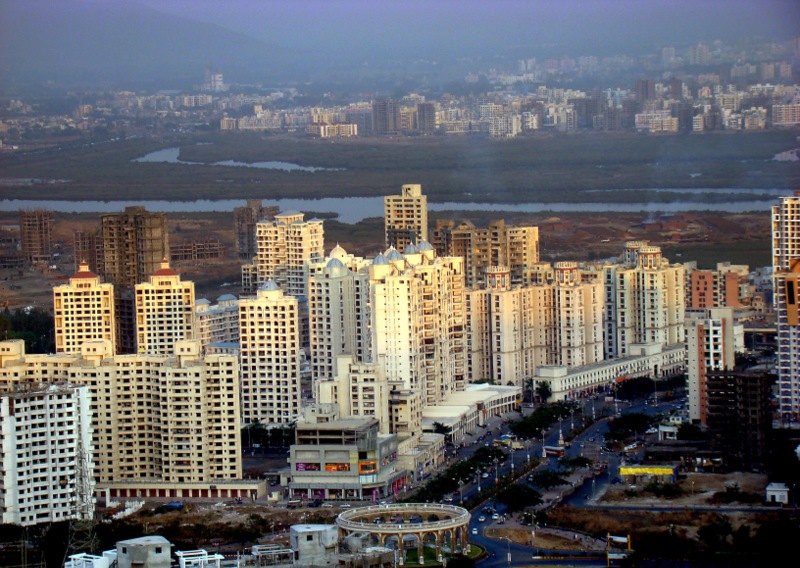
Kharghar is most-searched home destination

Whether buying or renting homes, Mumbaikars are increasingly zoning in on Navi Mumbai’s Kharghar, says a real estate website survey.

Buying a home in Mumbai or even in its surrounding areas is becoming a prize-worthy feat. Impossible real estate prices, home loans that squeeze the life out of one for years, and houses that tick only some of the boxes for buyers looking for ideal homes, all combine to make the home-buying experience a nightmarish one for Mumbaikars.

Naturally, people are seeking newer avenues. As per a survey released three days ago by website 99acres.com, Kharghar (Navi Mumbai) was the most-searched localities in 2012 in both the buying and renting categories. The survey, titled ‘Real Estate Search Trends of 2012, says, “Increased connectivity, new project launches and affordable rentals could be one of reason for the growing popularity of this area.”

The second most-searched locality by users looking for property purchase in Mumbai, as per the survey data, is Mira Road. Panvel, Borivali (west), Malad (west) are other popularly searched localities in the city. “The real estate market of Mumbai has always been an attractive destination for buyers because it provides high return on investments and even if there is slowdown in the market the purchase transactions in the city has actually moved up in the last four to five months,” the report reads.

Traditionally, rental values have been high in Mumbai due to the overall demand and supply imbalance in dwelling units. “Detailed analysis of the search trends for renting property shows that localities of Navi Mumbai and Andheri to Dahisar area have been most searched for by people looking to stay on rent. While Kharghar takes the first rank in the rental space as well,  Andheri (east), Andheri (west) and Powai have also emerged as popular localities for renting purposes,” the survey says.

(Picture courtesy photos.tarunchandel.com)

Categories
Trends

Cool weather expected to hold

It’s going to hover at a pleasing 16 Degrees in the night, even as day temperatures rise to 32 Degrees. But beware of seasonal illnesses.
by The Editors | editor@themetrognome.in

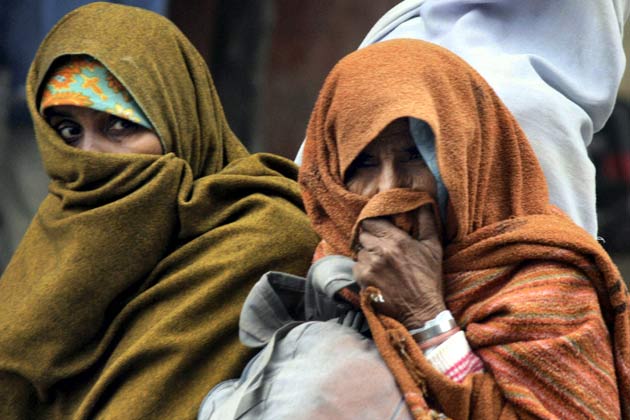
The weather in Mumbai has been confusing this year, to say the least. We’re now nearing the end of February, and the evenings and nights continue to be cool and nippy.

This, after a horrible four days of soaring temperatures last week, when humidity levels also rose, giving a glimpse of the kind of summer this city can expect this year.

However, minimum temperatures of 16 Degrees or lower have rarely been seen in February in Mumbai. Since the beginning of this week, from Sunday evening, to be precise, minimum temperatures dipped to about four Degrees below normal all over Mumbai. As per the bulletin for Friday and Saturday issued by the Indian Meteorology Department (Mumbai), minimum and maximum temperatures for Mumbai expected to be 17 Degree Celsius and 31 Degree Celsius respectively.

“Another western disturbance is active over Afghanistan. It will take another day or two for the system to reach India. If the wind conditions are right, then Mumbai temperatures may dip once again,” said VK Rajeev, speaking to a city newspaper yesterday.

(Picture courtesy ibnlive.com)

Categories
Learn

Bandh? What bandh?

Except for nationalised banks and RTOs, everything was in working order in Mumbai on Day 1 of two-day national strike.
by The Editors | editor@themetrognome.in

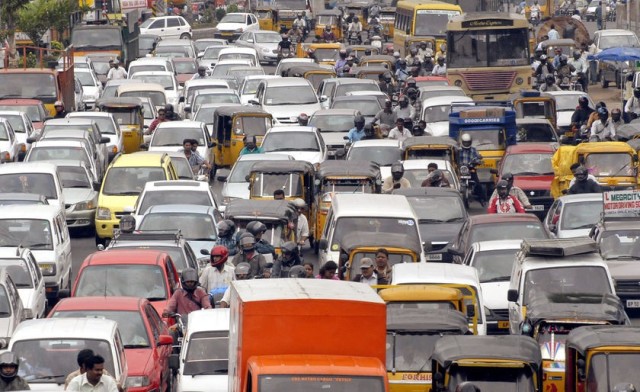
In recent times, and most recently after the death of Shiv Sena chief Bal Thackeray last month, any cry for bandh in the city and with which the Shiv Sena is associated, has always been met with almost unanimous participation. However, in what can only be seen as good news for the country’s financial capital, Day 1 of the two-day national bandh went off without anybody realising that it was a bandh at all.

Except for nationalised banks, which remained closed and will remain closed today as well, and employees not of the rank of officer at the city’s RTOs, every other service was available to the public yesterday. Apart from autorickshaws and taxis plying, BEST buses turned out in full force, registering a 100 per cent attendance among bus conductors and 98 per cent attendance among drivers.

Meanwhile, all essential services were available to the city all day – except, of course, from chemist shops, which resolutely downed shutters at 6 pm yesterday as well.

Day 2 of the bandh is expected to go along the same lines as Day 1 in Mumbai. However, the rest of the country has not been so fortunate, with reports of commuter woes and closed shops and establishments doing the rounds since yesterday.

(Picture courtesy phulme.wordpress.com)

Exit mobile version