Categories
Learn

SMSes to remind Mumbaikars on eco-friendly Ganpati

BMC is, once again, stressing on eco-friendly Ganesh idols and less banners this year. Question is, are the citizens listening?
by The Editors | editor@themetrognome.in

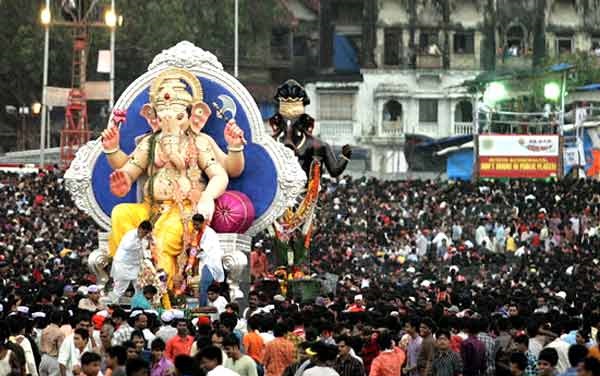
Ganesh Chaturthi is still two months away; September 9, to be exact. But preparations for the Raja of Mumbai are already underway, with idols being prepared and readied for private residences and public pandals all over the city.

And like every year, the Brihanmumbai Municipal Corporation (BMC) is exhorting citizens to opt for eco-friendly idols, not Plaster of Paris (POP) ones.

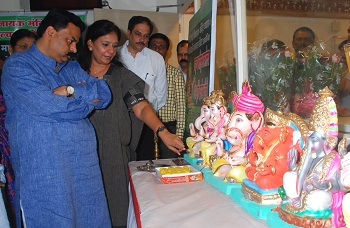
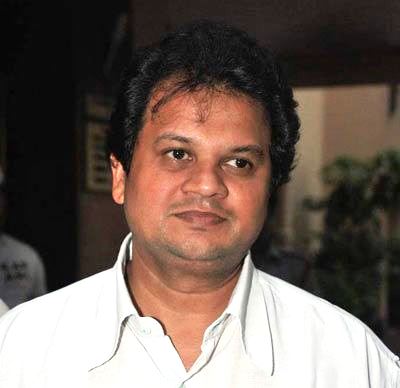
Eco friendly idolsTo this effect, says Mayor Sunil Prabhu (in pic on left, inspecting eco-friendly idols in Vile Parle), the BMC will also send out regular text messages to people in Mumbai to create awareness of the issue – recently, the Chief Minister and Deputy Chief Minister of Maharashtra, Prithviraj Chavan and Ajit Pawar, had taken the phone route to send personalised voice messages asking people to save water during Holi. Prabhu says, “Apart from sending text messages, we are hoping to create awareness about the many benefits of purchasing eco-friendly Ganesh idols.

Not only do these idols dissolve completely during visarjan, thus sparing us the horrifying spectacle of half-dissolved POP idols still left behind in the city’s major water bodies, but these idols afford employment to several women’s groups and marginalised sections in society. We are even charting out a plan to go door-to-door in the city to ask people to buy eco-friendly idols – they are just as beautiful without any of the environmental hazards associated with POP idols.”

Interestingly, despite repeated requests every year, the city’s major Ganpati pandals still boast of POP murtis.

The BMC is also going to insist on only two banners announcing each sarvajanik Ganpati in the area, and will take strict action against those who festoon the streets with lots of banners.

(Pictures courtesy festivals.iloveindia.com, BMC)

Categories
Learn

Who’s going to Mumbai’s municipal schools?

City-based NGO finds that most parents, whatever their economic and social background, are sending their children to English medium schools.
by The Editors | editor@themetrognome.in

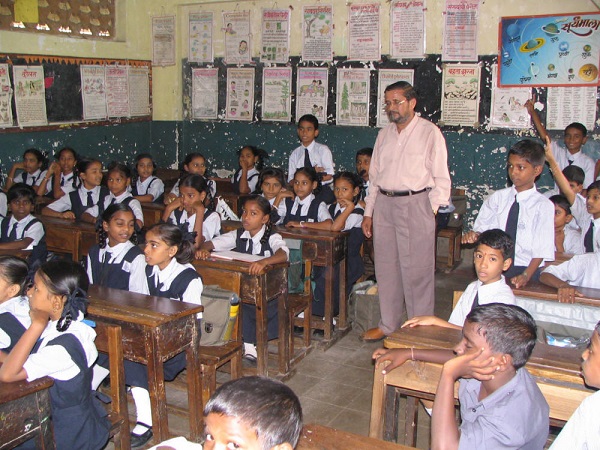
The Brihanmumbai Municipal Corporation (BMC) is the only municipal corporation in the country to run schools in eight languages. The presence of BMC schools in Mumbai is also high, with a school located at or near a major slum pocket. There are over 1,500 primary schools in the city.

But the numbers of children applying for admission to them, and the numbers of students dropping out every year, are at opposite ends of the spectrum.

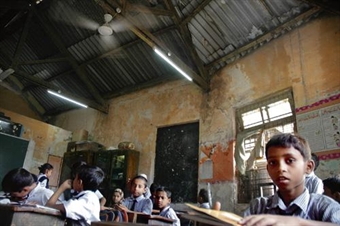
BMC schools According to statistics by Praja, a city-based voluntary organisation, “Less than a decade ago, the municipal education system that used to cater to over 7.5 lakh students now attracts less than 4.5 lakh students. Says Nitai Mehta, Managing Trustee, Praja Foundation, “The number of dropouts (from municipal schools) has increased over the last decade, despite better infrastructure facilities and qualified teachers. A household survey recently showed that 83 per cent parents expressed preference for private schools rather than municipal schools.”

Traditionally and culturally, municipal schools cater to children belonging to economically and socially backward backgrounds, and hence, the medium of instruction is a vernacular language, mostly the mother-tongue. “But an increase in dropouts is an increasingly common trend in private vernacular schools as well. The growing trend is for parents to be more inclined towards English medium schools,” Mehta said.

Dismal findings for BMC schools

Milind Mhaske, Project Director, Praja had some key findings to relate about BMC schools:

– In 2009, the pass percentage of private schools was at least 20 points ahead of BMC schools, a trend which exists till date. Also, out of those students receiving scholarships in Class BMC schools IV, only 9 were from BMC schools while the rest were from private schools.

– A significant portion of Class V students cannot read simple text.

– There is a high dropout rate between Classes V to VIII.

– Parents are normally not part of the teaching process.

– Pre-school is not yet a part of BMC schools.

Possible solutions

A panel appointed by Praja to examine the problem of BMC schools came up with solutions to arrest the dropout rate and improve attendance and learning levels. ‘Undertake development work for schools which have adequate infrastructure on an immediate basis,’ was one solution. Another was, ‘Supportive systems such as sports and health programmes should be implemented in the near future.’

A major solution is to provide inclusive education for all, where ‘schools should serve as hubs for community programmes, study classes, reading rooms for the higher classes, reading melas, etc.’

(Pictures courtesy www.ashanet.org, www.afternoondc.in, www.educationworld.in. Images are used for representational purpose only)

Categories
Trends

Young and the restless investing in realty

Majority of urban young are shying away from investing in gold and stocks, preferring real estate amidst a global slowdown.
by The Editors | editor@themetrognome.in

With the rupee showing further signs of a slide, and stocks and mutual funds becoming a riskier investment proposition, about 85 per cent of the urban working class is preferring to invest in real estate, finds a survey.

The survey, titled ‘Rise in demand for real estate in urban cities’ was conducted by premier industry body ASSOCHAM (Associated Chambers of Commerce) in the metros – Mumbai, Delhi, Chennai, Kolkata – and other cities such as Pune, Hyderabad and Ahmedabad. The survey sample included directors of companies, officers/managers in Central/State bodies, teachers and self-employed professionals like lawyer, CAs, doctors, consultants, druggists and small traders. A unanimous thought to emerge from the survey was that a global slowdown and a weak rupee have started casting a shadow on stocks.
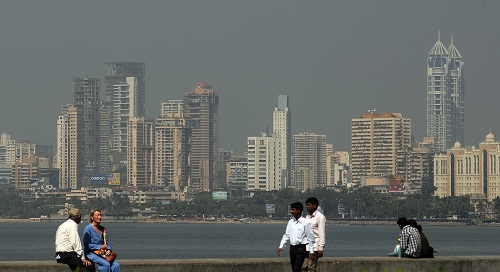
The Mumbai city skyline is seen from a s“Over 1,500 respondents felt that investments in real estate, residential and commercial properties are found to be lucrative and much safer these days as such investments are completely insured as against those in gold, stocks and mutual funds,” the survey found. “As many as 82 per cent said that real estate should be the preferred investment option compared to gold and other traditional investment instruments.

“According to them, investment in yellow metal is not as profitable as that of real estate, as they expect that gold prices to further fall. The recent fall in prices has led many to believe that funds can face increased redemption pressures because of the general change in belief that gold is a safe haven. This trend has slowly changed in the country, especially among the investment-savvy class.”

Releasing the survey on Sunday, June 30, the ASSOCHAM Secretary General, DS Rawat said, “About 78 per cent of the urban working class remain keen to park their surpluses in buying residential properties in view of better connectivity, infrastructure and basic facilities and they attach not much preference towards buying commercial properties as these properties are beyond their means which involve higher volumes of investments. On the other hand, about 22 per cent working class and professionals give preference to the commercial properties especially in tier I and tier II cities as they feel that within one or two years, prices of commercial properties will also jump up substantially to get them an attractive premium.”

The survey also revealed that the  maximum concentration of real estate investments from urban working class and professionals are seen towards residential properties in emerging tier II and III cities which include Jaipur, Bhiwadi, Rishikesh, Haridwar, Nainital, Chandigarh, Dehradun, Sonepat, Panipat, Pune, Nasik, Jaipur etc. Moreover, this is also indicative of the fact that buyers in tier II and III cities are looking for quality development and developers with proven track records are reaping the benefits on those given scale of expectations. Over 62 per cent respondents from the professionals’ lot chose real estate properties in Tier I cities like Mumbai, Delhi, Kolkata, entire NCR, Hyderabad and Bangalore for maximum returns.

Expressing their opinion about the investment in stock markets, a majority of respondents felt that with global slowdown most of the corporations are rationalising the salary structure of their employees with emphasis on cost cuttings, thus dampening the spirit of investment in capital markets.

Nearly 200 respondents, however, still favour stock markets to park their funds and feel that it can give them best returns in a shorter and longer time. They expressed hope that in future, stock markets will bounce back and catch investors’ attention as usual.

As far as urban working class, the investment in gold is concerned, the survey has revealed that the fall in gold and jewellery prices have discouraged the working class to invest in it.

More than half of them said they would prefer to stay in rented apartments and instead, invest in their tier II and tier III city home town for better appreciation potential. About 78 per cent of those working professionals with double income, who bought a house in a metro city, wanted to invest in their home town for a second home.

(Pictures courtesy www.vakilhousing.com, india.nydailynews.com)

Categories
Learn

Studying coins as a job

You can turn your love for old coins into a profession. This knowledge comes in handy for archaeologists and historians.
by The Editors

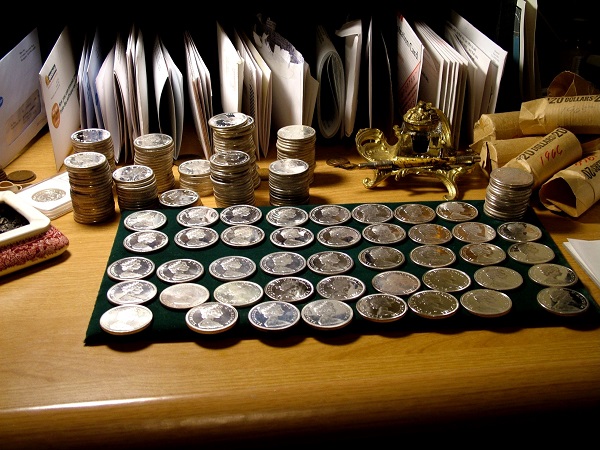
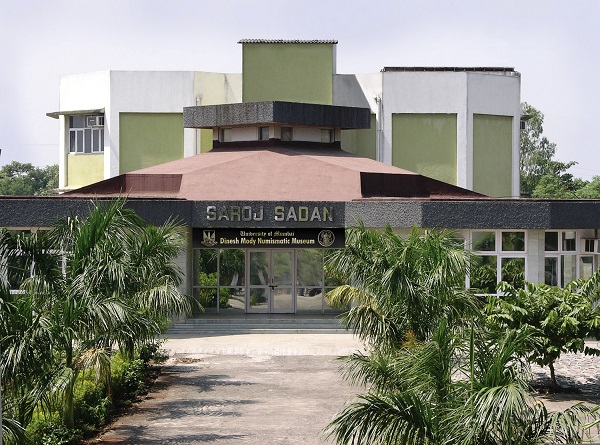
At the heart of the University of Mumbai campus in Kalina, in Saroj Sadan, is located an institute that offers a fascinating glimpse into Indian and world history. The Dinesh Mody Institute for Numismatics and Archaeology (DMINA) houses a veritable treasure trove of ancient coins that give the visitor a history lesson he will never forget.

Museum Building 2Interestingly, the University of Mumbai has been conducting the Masters of Arts in Numismatics and Archaeology course through the DMINA for the last six years, and five batches of numismatists have graduated and are out practising. Says Mahesh Kalra, Assistant Professor and Curator, DMINA, “The Dinesh Mody Numismatic Museum is also located here, and was established by Dinesh Mody, a senior Mumbai-based advocate and an eminent numismatist with large collections of Indian and world coins.”

Why study ancient coins?

Numismatics, though a very important research tool in Social Sciences, has been till recently a neglected field in India as no University offered a structured course imparting the necessary skills for expert numismatists. “The biggest advantage of trained numismatists is in archaeological expeditions, where old coins found in excavations can help us date the other objects or structures found in the excavation. Additionally, Indian coins are collected and traded as highly valued objects of art amongst modern collectors and dealers spread across the country,” Mahesh explains.

There is a huge burgeoning market in trading of Indian coins, both nationally and internationally. “Students can expect to be absorbed by the increasing number of auction houses for coins as resource persons, and by the numerous museums both in India and abroad that require expert numismatists to catalogue their collections of Indian coins,” he adds.

The Museum

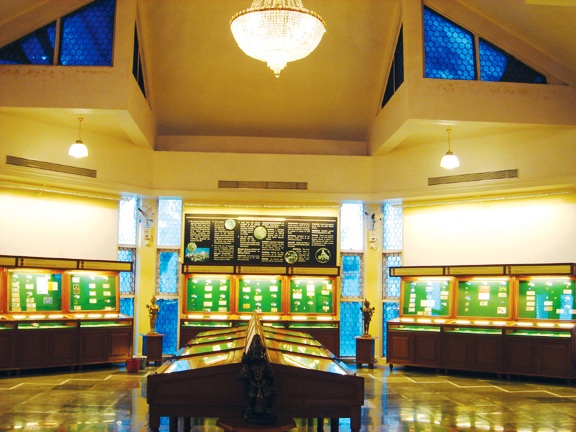
The in-house museum and the institute are spread over a sprawling 15,000 square feet area. The Museum was set up in 2002 and houses two large breathtaking museum galleries that house more than 25,000 coins of gold, silver, copper, bronze, lead and bank notes donated by Mody from his personal collection.

“The collection of Indian coins range from the most ancient (punch-marked coins) to the most modern proof sets of Republic of India, giving the visitor a kaleidoscopic view of the museum interiorentire range of Indian coinage including the coins of Guptas, Kushans, Satavahanas, Cholas, Pandyas, Vijayanagara Empire, Dehli Sultans, Mughals and the colonial coinage series,” Mahesh explains. The collection also includes coins and notes from various foreign countries, though these are not included in the syllabus of the Masters course.

Scope of the course

The institute has a team of full-time and visiting faculty from the fields of Numismatics, Archaeology, Palaeography (study of evolution of scripts), Numismatic trade and Archaeological legislations in an endeavour to make the course comprehensive. The syllabus of the course covers the gamut of Indian coinage, right from the ancient punch-marked coins of the pre-Buddhist era (8th  to 6th century B.C.) to coins of various Indian dynasties like Guptas, Kushans, Satavahanas, Cholas, Pandyas, Vijayanagara empire, the Delhi Sultanate, the Mughals and the British till the latest coins minted by the Republic of India covering the history of a period of 2,500 years.

In addition, students are encouraged to learn numerous scripts ranging from the oldest Indian scripts, Ashokan Brahmi and Kharosthi to Nagari (the precursor of Devanagari) to Greek, Arabic and Persian as Indian coins are inscribed in these indigenous and foreign scripts. Lastly, the students are instructed about the basics of Archaeology, its methodology and various findings to give them an idea of how various coin hoards are discovered during archaeological excavations conducted throughout the country.

The course also opens avenues for a host of foreign scholarships at foreign institutions with collections of Indian coins like the British Museum, Fitzwilliam Museum (Cambridge University), Ashmolean Museum (Oxford University), etc.

(Pictures courtesy gammillnumismatics.com, Dinesh Mody Institute for Numismatics and Archaeology and Dinesh Mody Museum Numismatic Museum)

Categories
Learn

Three suicides happen every day in Mumbai

Statistics for the country’s financial capital are grim, with most suicides found to occur in the 18-45 years age group.
by The Editors | editor@themetrognome.in

Actress Jiah Khan killed herself at her home on Sunday. She was 25.Actress Jiah Khan (see pic on left) committed suicide at her Juhu home late on Sunday evening. The country woke up to the news of her shocking death, even as the inevitable question cropped up yet again – what drives somebody so young to suicide?

There were three suicides in Mumbai in the last two weeks, all of them publicised in the news. However, what is not known widely is that the malaise runs quite deep – as per data sourced from a comprehensive suicide watch study released for India by the World Health Organisation (WHO) for 2006-2007, police statistics said that three lives were lost per day in Mumbai due to suicide. As against this, Navi Mumbai registered two deaths by suicide per week.

All over the country, as per statistics from the National Crime Records Bureau (NCRB), a suicide takes place somewhere in the country every five minutes. “Seven times that number attempt to take their lives and as for those who feel desperate and unable to cope, the number is mind boggling. More suicides occur between (the ages) 18 and 45 – in other words, in the most productive age group of our society,” the report says.

What is it about Mumbai that is claiming more lives by suicide than other factors such as accidents and disease?

The Mumbai conundrum

self mutilationDr Harish Shetty, renowned city-based psychiatrist, said in a newspaper interview recently, “In a city like Mumbai, people suffer from loneliness. We are getting at least eight people with suicidal thoughts. You have to be alert in case somebody you know gets angry on little matters, or uses words like ‘I am not worth it’ or ‘My life is finished’ every time he or she is under stress.”

A major point to ponder for our city is that with our fast-paced lives, there is constant competition to get ahead and stay ahead. “In this city, you are constantly racing against the clock to finish projects, earn more, get a better life. Rising inflation, growing peer competition, not as much opportunity to succeed as one would like…all of these begin to prey on the mind and cause a tremendous amount of stress,” says Dr Varsha Thakker, a private practitioner. “While most people are able to channel their frustrations into positive outlets, there are some who may not be able to cope. This class of people may not even acknowledge that there is a problem, that they may need help.” She adds that often, with an existing burden of problems, it sometimes takes just a little trigger to set a person on the path to suicide. “We hear of children killing themselves after a petty dispute with their parents. It may seem like a small issue to anyone else, but it is possible that that child was carrying a huge amount of stress all along, and one harsh word probably pushed him over the edge,” she says.

Suicides are not rampant only among students and young professionals in the city, but among the city’s police force as well. A recent The Times of India report says that there were 168ask for help  suicides in the Mumbai police force in the years 2002 to 2012. “Let’s face it – this is a tough city to live in, and the pressures of daily life are immense,” says Dr Shetty. “However, people must seek help if they are depressed often or find themselves increasingly thinking of ending it all.”

Some statistics to ponder:

– Every 3 seconds, a person in India attempts to die.
– Suicide is one of the top three causes of death among the young in the age group of 15-35 years.
– About 1 lakh people die by suicide in India every year.
– 3 people in a day in Mumbai commit suicide.
– A study says 72 per cent writers, 42 per cent artists, 41 per cent politicians, 36 per cent intellectuals, 35 per cent musicians and 33 per cent scientists are prone to stress-related disorders.
– Suicide estimates suggest fatalities worldwide could rise to 1.5 million by 2020.

(Statistics courtesy AASRA, the helpline for the distressed. Pictures courtesy www.india-forums.com, suicidal-lovez.blogspot.com, celiacdisease.about.com, www.sailorspouse.com)

Categories
Kharcha paani

Lingerie mannequin issue makes shops see red

The Federation of Retail Traders Welfare Association is asking for zero interference from the BMC in displaying lingerie inside shops.
Viren Shahby Viren Shah, FRTWA President

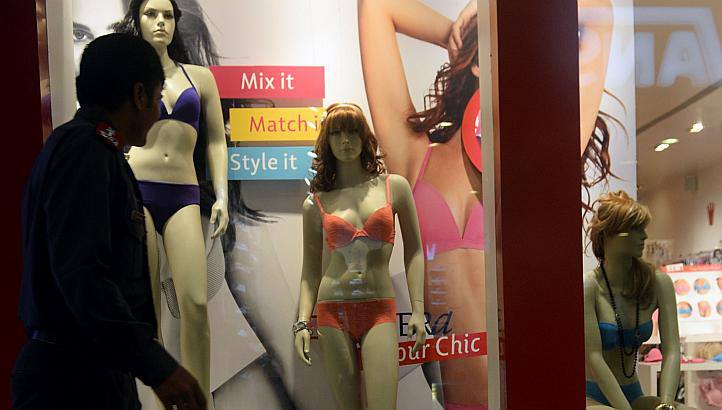
It is quite strange that Ms Ritu Tawde, a BJP Corporator, has proposed the banning of mannequins wearing lingerie or displays of lingerie on the roadside, and not inside the showroom.

We from the FRTWA (Federation of Retail Traders Welfare Association) have always objected to anything being sold on the footpath by hawkers or through any illegal stalls. The BMC has only a few thousand license holders who are supposed to sell in a 1 metre x 1 metre area only, and in that area too, they cannot keep or display mannequins and sell any garments. This means that in any case, it is illegal to sell anything on the footpath, a resolution that is passed by the House, and the BMC does not need any separate resolution for this.

We support their action on roadside mannequins and displays.

Our objection is to the proposed ban on display within our shop premises. This should not be stopped or prevented, as it is our right as shop owners to display and sell the products. If we get any complaint from our customers at large, then we will look into the issue, but we cannot solve any such potential complaint by forcefully being prevented from our right of business and right of freedom to sell the products.

Since the time this issue first came into light, we have written two letters to the BMC Commissioner, the Chief Minister and the Mayor, and requested them to not take any decision in this regard without consulting with us. After all, we are the affected party, and any restriction that affects our business interests must be imposed only after discussing it with us and taking us into confidence.

Regards,

Viren Shah, President,

FRTWA

What do you think of the proposed ban on the lingerie display on mannequins in Mumbai? Tell us in the comments section below.

(Pictures courtesy photogallery.indiatimes.com, deccanchronicle.com)

Exit mobile version