Categories
Trends

Are these Mumbai’s best MLAs?

Praja Foundation rankings for 32 Mumbai MLAs put BJP’s Yogesh Sagar in top spot, followed by the Congress’ Amin Patel.
by The Editors | editor@themetrognome.in

Mumbai is well out of the Lok Sabha election fervour, but in a few days, when the Election Code of Conduct sets in prior to the Assembly Elections later this year, the city will once again reel from election fever.

Before a new Government is elected, however, city-based Praja Foundation deemed it fit to release a ‘scorecard’ for the 32 city-based MLAs. Mumbai elects 36 MLAs in every Assembly, however, since four of the current MLAs are ministers in the current State Government, they were excluded from the ratings.

The findings revealed that 68 per cent people who voted positively for their MLA thought they were less corrupt; while 53 per cent people who voted against their MLA felt they were corrupt.
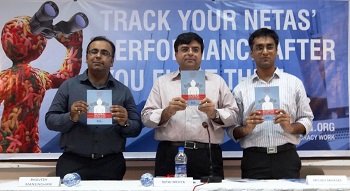
Releasing the Report Card, Nitai Mehta, Founder Trustee, Praja, said, “The current report card is going to be the last for the 12th Assembly and fourth in the series. This report card which we publish every year gives the citizens, elected representatives, political parties and the Government valuable feedback on the functioning of the elected representatives. We hope that it will set standards and benchmarks for the performance of the elected representatives.”

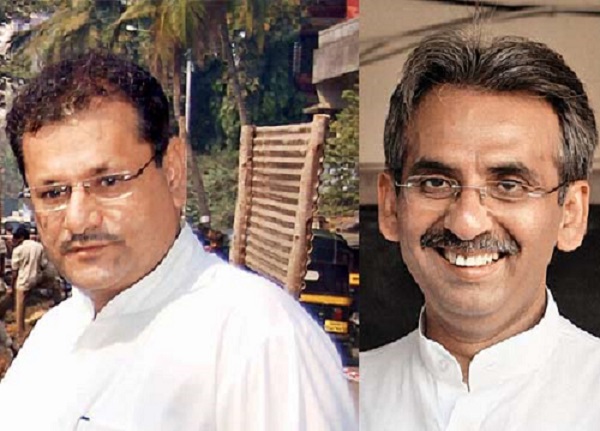
The number one MLA this year, too, has been the previous two years’ topper, Yogesh Sagar of the BJP. Also retaining their ranks from last year are Amin Patel of INC on second position and Madhukar Chavan, again from INC, on third position.

Rating methodology

The MLAs have been rated on four quantitative parameters and three qualitative perception-based parameters: 1) Quality of questions asked in the assembly, 2) Number of questions asked, 3) Attendance, 4) Clean criminal record 5) Perceived least corrupt 6) Perceived accessibility for the public from relevant constituency, and 7) Perceived performer for the constituency.

Said Mehta, “We collected quantifiable data through RTI applications over the year. We also commissioned Hansa Research to do a scientific-statistical survey from among over 22,580 people of Mumbai to gauge the public perception of the MLAs on the above mentioned parameters.”

Milind Mhaske, Project Director, Praja, added, “The appraisal is based on the constitutional role and responsibility of the elected representatives and opinions of their electorate.” The Report Card covers the working and performance of the 32 MLAs during Winter 2012, Budget 2013, Monsoon 2013 and Winter 2013 assembly sessions. It also covers the Local Area Development funds spent by the MLAs for the period between December 2009 and March 2014.

Mehta added, “There is no standard rule for establishing the performance of elected representatives. Voters have voted on traditional factors to expectations or perceptions to ideologies; few have attempted a scientific approach, mainly due to lack of standardised data and the humongous efforts involved. Hence, Praja made its first MLA report card in 2011.”

Changes in rank

Mangesh Sangle, who got the first rank in the 2011 report card dropped to 20th in 2013 because of low attendance and a new charge sheet, then recovered to the 6th position due to improved attendance and consistency in his other parameters. Sardar Tara Singh’s rank has gone down from 3rd in 2011 to 15th in 2012 due to a new charge sheet, then recovered to 10th in 2013 due to increase in overall perception and quality of questions and is now down to 24th due to drop in attendance, questions asked and overall perception.

On the other hand Yogesh Sagar has remained in the top four in all years and number one for the last three years due to his consistent scores in all parameters. Similarly, his party colleague, Prakash Maheta, has remained in the bottom five in all the years. Bala Nandgaonkar who has asked 4933 questions i.e. 12 per cent of all the questions asked by Mumbai MLAs, has had above average ranks but has never been in the top three as asking questions is just one aspect of the gradation system but there are many more parameters on which this system grades performance.

Mhaske shared that 50 per cent MLAs not only have criminal cases registered against them, but some of them are also charge-sheeted and some also have new criminal cases.

In the survey, respondents were asked to comment on whether they will vote for their current MLA and the score was matched with whether they find them to be corrupt. The findings revealed that 68 per cent people who voted positively for their MLA thought they were less corrupt; while 53 per cent people who voted against their MLA felt they were corrupt.

(Featured image courtesy dnaindia.com)
Categories
Trends

Is Mumbai the TB capital of the world?

Curable diseases like TB, malaria, dengue, diarrhoea, cholera and typhoid continue to kill several Mumbaikars. So who’s got the solution?
by The Editors | editor@themetrognome.in

It’s the season for illnesses, most of them waterborne. While Mumbai laments the lack of good roads and a bigger lack of cleanliness every monsoon, here’s a report that quantifies the grim state of affairs in the richest city in India, when it comes to prevention and treatment of curable diseases.

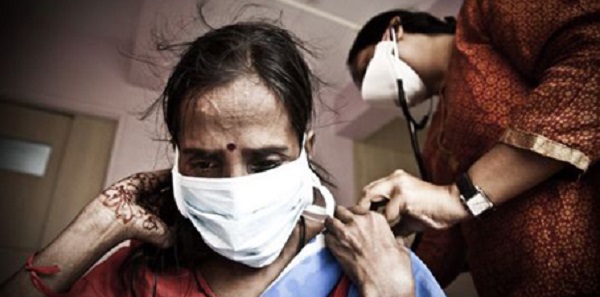
As per a white paper released by Praja Foundation, 7,650 Mumbaikars died in the year 2013-2014 due to diseases like tuberculosis, diarrhoea, cholera, malaria, dengue and typhoid. Additionally, tuberculosis alone has claimed 46,606 lives during the last six years in Mumbai.

This high number accounts for 8.55 per cent of all Mumbaikars’ deaths during these six years.

The report says, “Over the last six years, 7,768 people have died from TB every year on an average. TB, if detected early and if the prescribed treatment is taken, is curable. Such a high mortality rate clearly shows that a lot needs to be done and on a war footing if we want to create a healthy Mumbai, else Mumbai may well become the TB capital of the world.”

The report further states that only 34 per cent Mumbaikars use Government and civic hospitals and dispensaries for treatment of the above diseases, while the remaining 66 per cent use private hospitals and charitable trust-run clinics. On an average, Mumbai households spent about 7.9 per cent of their total income on hospital or medical costs in 2014.

Read the entire report on www.praja.org under the section ‘White Papers’.

(Picture courtesy www.hindujagroup.com. Image used for representational purpose only)

Categories
Trends

Mumbai sees drop in hiring for telecom, marketing, advertising

With markets improving, hiring is on an upswing in other parts of the country but low in Mumbai and Chennai.
by The Editors | editor@themetrognome.in

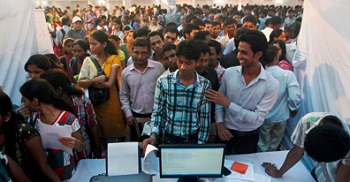
It seems that more jobs are available in the market, or rather, companies are willing to hire more talent, if a recent survey by ASSOCHAM (Associated Chambers of Commerce and Industry in India) is anything to go by. The survey finds that hiring was on an upswing in sectors like telecom, marketing and advertising in the first half of year 2014 across the country, except in Mumbai and Chennai, which registered a drop in hiring.

“Post-Budget 2014, aided by investment friendly measures like Real Estate Investment Trust (REITs) and prospects of easing of interest rates, the construction sector has also slightly improved in terms of hiring plans. The Budget focus on infrastructure has proved to be morale booster for the infrastructure but would still take time for on-the-ground action”, adds the ASSOCHAM survey.

Hiring in IndiaDeciphering the trend, DS Rawat, Secretary General ASSOCHAM said, “While the industrial production growth has pleasantly surprised for May with the manufacturing showing signs of uptick, the employers would like to see a definite trend line before firming up their hiring plans. Somehow, the marketing and advertising remain in relevance even in difficult times with the only difference being that marketing requires hard sell”.

“Marketing and advertising professionals emerged as the next best in terms of demand profile during January to June 2014. On the other hand, manufacturing and automobile sectors reported stable hiring figures due to slowdown in the sales of vehicles and launch of new models,” adds the survey.

The inputs were tracked on a daily basis for vacancies posted by about 2,500 companies via job portals like timesjobs.comnaukari.commonster.com, shine.com and others together with advertisements offering job opportunities published in national and regional newspapers across about 32 prominent cities and 20 sectors.

Who’s hiring the most?

Among the top locations, Delhi-NCR, Bangalore, Pune and Hyderabad reported the most active location during the January–June 2014. Some of the Tier-II and Tier-III locations (Surat, Vadodra, Nashik, Allahabad, Udaipur, Agra, Ajmer, Kota and Meerut) which have emerged as high growth markets, retained their position.

During January to June 2014, the demand for mid-level candidates was upbeat. However, the demand for talent at senior levels with 10-20 years and over 20 years of experience, recorded flat to negative activity across industries. It further shows that organizations are only looking to hire on demand, and hiring is restricted to niche skills. Focus is more on up-skilling available talent rather than sourcing fresh talent, reveals the ASSOCHAM latest estimates.

Telecom

As per the ASSOCHAM findings, Delhi-NCR region have recorded an impressive 54 per cent increase in hiring during January –June 2014 period followed by Bangalore at 38 per cent and Hyderabad, which reported a 32 per cent increase in hiring. On the other hand, Chennai and Mumbai reported a drop in hiring for the same period, recording a 15 per cent and 28 per cent drop, respectively.

BPO/ ITeS
The survey points out, the falling rupee has also helped the overall outlook of the ITeS industry in India, as outsourcing becomes a cheaper. Marketing and advertising profiles reported highest increase (48 per cent) in demand for talent. Customer service/Tele-calling profiles witnessed a drop of 8 per cent in demand during the same period. Hiring was upbeat for junior level candidates as the demand for the senior personnel came under pressure. However, those with skills in cutting edge technology stayed in demand.

Among top locations, Bangalore recorded a maximum growth (43 per cent) in hiring BPO/ ITeS professionals. Chennai reported highest drop (26 per cent) in demand during the period as compared to similar months last year. Candidates with experience of 2-5 and 5-10 years, reported maximum increase (22 per cent) in hiring in the BPO/ITeS industry. Candidates with over 20 years of experience saw highest drop (35 per cent) in demand in the BPO/ ITeS industry.

Consumer Durables/ FMCG
Consumer Durables/FMCG sector are expected to witness more than 10 per cent growth during this fiscal. Delhi-NCR (39 per cent) followed by Bangalore (37 per cent), Ahmedabad (23 per cent) witnessed a whopping 35 per cent increase in demand. Reasons for cities have picked up their hiring activity is because several chains are increasingly working towards expanding their businesses, and therefore talent requirement has gone up. Mumbai and Chennai, on the other hand, witnessed a negative demand for talent, a dip of 15 per cent and 23 per cent, respectively.

Banking, Financial services and Insurance (BFSI)

The Banking, Financial services and Insurance (BFSI) industry reported the highest growth in demand in the month of January 2014. The positive hiring movement in June (12 per cent) is significant, considering a major dip (16 per cent) February 2014, another dip in demand expected around fourth quarter.

Among the key locations, Delhi–NCR, Hyderabad witnessed maximum growth in demand (over 30 per cent) as compared to December 2013. In the insurance domain, demand for future hiring will be for frontline sales personnel with less than two years experience.

(Pictures courtesy indiatoday.intoday.in, zeenews.india.com)

Categories
Become

This 21-year-old has designs on you

Masoom Minawala runs a successful jewellery portal and has a plan for women to sell her fashion products and make money.
by The Editors | editor@themetrognome.in

Her youth and pretty face are a foil for an expert business brain. At a very young 21 years of age, Masoom Minawala runs a successful online jewellery business that has a loyal and steadily growing clientele in Mumbai and other places in the country. And now, she’s got a great little idea for students, housewives, beauty bloggers and writers, among others, to make a little extra cash for recommending her products.

But more on that later.

Speaking to The Metrognome, Masoom says, “I was a fashion blogger for a long time, and I had a dedicated readership for my blog, stylefiestadiaries.com. Meanwhile, I studied business in HR College, before going to London to study fashion for a four-month course.” She realised that she wanted to make a career in fashion and use the digital medium – “I loved the online space” – and by the end of December 2012, she launched stylefiesta.com, that delivered trendy, affordable fashion to women, without expensive price tags.

“I wanted women to be able to buy accessories and jewellery that was in style and affordable, stuff that was more than worth the price,” Masoom explains, adding that she initially converted her blog’s readers into her new venture’s first customers. “We even had a clothing line when we started, but I discontinued it after eight months. Now we focus only on jewellery and fashion accessories,” she says.

Putting it together

She started with rigorous market research, backed by her training in business and an unerring instinct for what worked and what probably wouldn’t. “We got together a network of vendors, manufacturers and others to source the material from. Then we worked out our distribution and shipping channels. When it came to the website, the process involved working closely with developers to ensure that the site was not just attractive, but catered to all the parameters that an e-commerce site demands,” Masoom explains.

The initial funding for her venture came from her family, she says, declining to name the exact amount they helped her with. “Your costs depend entirely on the nature of your start-up and what you’re planning to do with it,” she explains. “It varies from business to business. However, proper research and getting inputs before you begin will save a lot of costs later on,” she advises.

Her Fashion Reseller Programme

She realises that there are several women out there who would want to have their own businesses, but who lack the confidence or capital (or both) to push ahead. “That’s why I recently started the Fashion Reseller Programme, where we encourage the entrepreneurial spirit by offering high commissions to those who affiliate with us and sell our products in their social circles. We’re offering a high 30 per cent commission per sale – all the person has to do is sign up with us and get enrolled on our list.” Masoom hopes that more and more women will take advantage of the programme and learn the basics of selling while earning money. “We activated the programme just a few days ago, and already there are so many queries and registrations,” she says.

If you want to follow in her footsteps…

Love what you do. “There is no way you can succeed if you don’t love and believe in your idea.”

Be committed. “Apart from working very long hours, you have to be in it for the long haul. So many start-ups today function without risk management, and finally shut down. Shutting down is not a solution at all,” she says.

Do your homework well. “Make a detailed business plan, show it to experts, circulate it, get reviews. Plus, you must network and make contacts, and communicate across the industry,” Masoom advises.

Presentation is key. “For a portal of this sort, nothing can be more important than great photographs to showcase your designs well,” Masoom says. “You have to invest in a good photographer and get your products shot in the best way. There is nothing more off-putting than tacky, badly-shot pictures.”

Be creative. “These days, social media is helping several new businesses get customers without much spending,” she says. “You can have a business on Instagram, for instance.” She also feels that customers must constantly be engaged with the business, so that word of mouth spreads.

Deliver, and on time. “Customers are quick to complain if their order doesn’t reach them, and they get fidgety if they’ve already paid for the product. Your delivery logistics must be ironed out to the last detail, and if there is a hitch in the process, straighten it out at once,” she cautions.

‘Become’ profiles entrepreneurs and self-styled success stories off the beaten path. If you know of somebody we could feature in this space, tell us about him or her at editor@themetrognome.in or tweet @MetrognomeIndia. 

(Pictures courtesy Masoom Minawala)

Categories
Kharcha paani Uncategorized

Vegetables prices up by 80% in two months

The retail and wholesale gap has reduced in two months in Mumbai, but is on an upswing in other places.
by The Editors | editor@themetrognome.in

Just how expensive have vegetables become in the last two months? A recent study by ASSOCHAM (Associated Chambers of Commerce and Industry of India) maps out the exact numbers.

The ASSOCHAM study of 33 ‘mandies’ in India has revealed that during April to June 2014, the gap between the wholesale and retail prices of vegetables has increased by 80 per cent whereas retail prices in 10 centres has been to the extent of 30 per cent.

Releasing the study, ASSOCHAM says, it was also observed that on an average, retailers are selling vegetables at more than 48.8 per cent of wholesale prices and even in some centres, selling prices are at more than 51 per cent.

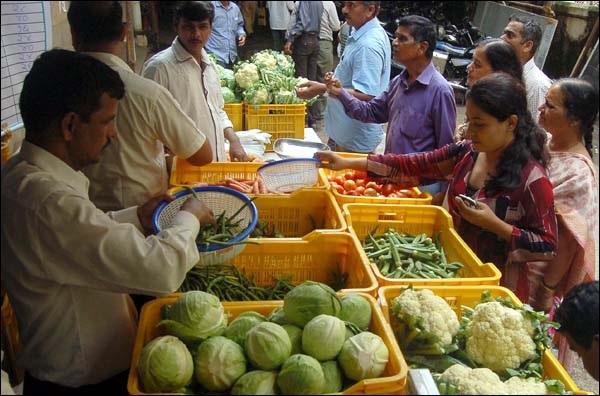
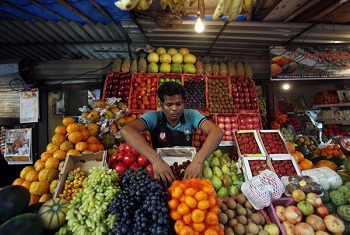
Vegetables in MumbaiThe study found that while cabbage retail and wholesale price gap has increased from 69.4% to 78.1%, brinjal 62.4% to 66.7%, cauliflower 59.0% higher than the wholesale price, chilly 56.2% to 62.6%, tomato 55.1% to 62% percent, garlic 52.4% to 54.2%, tomato hybrid 50% 58.2%, okra 49.5% to 58.7%, bitter gourd 48.6% to 50.7%, brinjal 45.9% to 56.7% peas and ginger 43.6% and 41.3% and onion increased from 35.3% percent to 48.1%.

The ASSOCHAM study further reveals that while Surat retail and wholesale price gap has increased from 49.7% to 50.8%, Lucknow 48.5% to 54.8%, Shimla 37.9% to 47.3%, Jammu 37.5% to 42.4%, Chennai 34.6% to 37.3%, Guwahati 33.7% to 37.3%, Amritsar 120.5% to 121.8%, Abohar 107.4% to 110.3%, Agra 90.2% to 93.6%, Nagpur 82.8% to 88.2%, Ahmedabad 69.4% to 96.1%, Delhi 68.9% to 83.4%, Chandigarh 68.5% to 73.9%, Dehradun 67.4%  to 63.3%, Jaipur 64.6%  to 62.7%, Mumbai 63.5% to 46.8%, Kolkata 60.8% to 69.5% Raipur 58.0% to 62.7%, Patna 57.2% to 65.4%, Ranchi 56.1% to 57.1%, Hyderabad 53.0% to 51.2%, Bangalore 51.8% to 59.2%,Kanpur 50.9% to 57.1%. 

ASSOCHAM Secretary General DS Rawat said, “The analyses are based on the wholesale price of vegetables and retail price of vegetables in the different markets in India. Wholesale price indicates the price at which retailers are buying from different markets and retail price is the price at which consumers are buying from retailers. The essential vegetables incorporated in the study are Bitter gourd, Brinjal long, Brinjal round, Cabbage, Cauliflower, Garlic, Ginger, Chilly, Okra, Onion, Peas, Potato, Tomato hybrid and Tomato local.”

On the other hand, the ASSOCHAM study has considered 33 market centers in India. The centers are Mumbai, Abohar, Agra, Ahmadabad, Amritsar, Bangalore, Baraut, Bhopal, Bhubaneshwar, Chandigarh, Chennai, Dehradun, Delhi, Gangatok, Guwahati, Hyderabad, Jaipur, Jammu, Kanpur, Kolkata, Lucknow, Nagpur, Nasik, Patna, Pimpalgaon, Pune, Raipur, Ranchi, Shimla, Surat and Trivendrum.

The study has observed that most of the vegetables arrival have recorded declining trend except local tomato, potato fresh and onion (noticeably onion price during 2013-14 has recorded a  life time high). 

Onion arrival grew at a rate of 13.0 per cent during 2013-14 followed by tomato local grew at a rate of 7.9 per cent and potato fresh arrival grew at a rate of 6.2 per cent. Okra and Cauliflower arrival have recoded marginal growth rate of 0.4 percent and 1.9 per cent during the same period, mentioned the study.

(Pictures courtesy www.daijiworld.com, www.chinadaily.com.cn)

Categories
Trends

Google compiles 8 magical World Cup moments

From a coach staggering backwards to the fastest goal in under a minute, Google tracks 8 moments fans loved this World Cup.
by The Editors | editor@themetrognome.in

After four weeks of anticipation, excitement, aggressive performances, tears of disappointment and some crazy instances, the FIFA World Cup has finally reached the finale stage. As fans await to see the strongest football teams play in  the ‘Battle de finale’ and lift the FIFA Cup this year, Google Search recaps some of the crazy yet entertaining moments the fans cherished again and again during their journey to the finale.

Kroos#1) Highest score in a World Cup victory. An historical battle by all counts, with an exhilarating performance by the German squad that delivered a shocking record World Cup defeat for Brazil, German midfielder Toni Kroos, who scored two back to back goals in the first half’, epitomised Germany’s improved game.  Germany searches for “highest score in a World Cup victory” spiked by 370x during the match.

#2) Klose to history. German striker Miroslav Klose became the World Cup’s all-time record scorer with his 16th goal during their semifinal against Brazil.

#3) Falling coaches. Another such moment emerged during the recent Argentina- Belgium match where Alejandro Sabella, the Argentina coach, quickly gained Internet fame after he became so engrossed in a chance for his side during their World Cup quarter-final against Belgium that he almost fell over.

#4) Cheers and tears. During the round of 16 battle, Argetinian commentator Pablo Giralt could not hold back his tears as he summed up the feelings of many Argentineans after Angel Di Maria’s Tears118th minute winner goal versus Switzerland, letting his emotions take over him in an epic live on air match commentary. After an enormous “ggggggoooooooooaaaaaaallllllll” came the tears!

#5) Full paisa vasool. Piojo Herrera is by far, the most entertaining coach to watch at the World Cup, managed to grab everyone’s attention with his celebration style. Fans searched for Mexican Coach “Piojo” online after his epic side-line celebrations during Mexico- Croatia match.

Japanese fans#6) Clean and clear. Japanese fans, armed with blue rubbish bags scoured the stadium for any mess and made sure the Football Arena was left in good condition as the Japanese team played their set of matches during FIFA. The positive gesture from Japanese fans was appreciated by Football fans across the globe.

#7) Quicker than Maggi noodles. The fastest of this World Cup and one of the quickest goals in the tournament’s history was up on show for fans as USA captain Clint Dempsey wasted no time against Ghana, scoring the 2014 World Cup tournament’s fastest goal a mere 32 seconds after kick-off.

#8) Torres wardrobe malfunction. And finally, from the fashion ramps to the Football Arena, Fernando Torres wardrobe Wardrobe malfunctionmalfunction during the first half of Spain versus Australia match did bring some unusual cheers among the crowd. Fans continued to search for the player and the incident online after the match.

 (Text and graphics courtesy Google Inc.)

Exit mobile version