Categories
Trends

Mumbai real estate losing out on NRI investments?

If a recent real estate survey is to be believed, Mumbai is not the top investment choice for NRIs any more.
by The Editors | editor@themetrognome.in

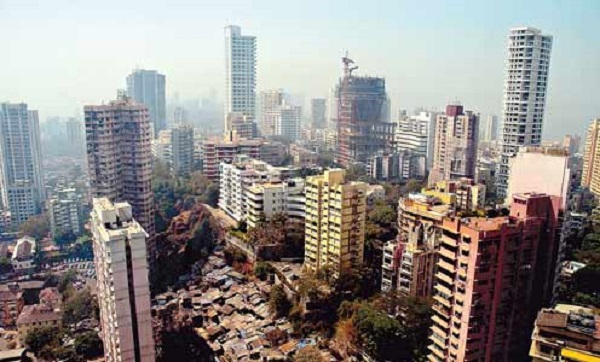
Mumbai has become a real estate nightmare, what with unrealistic, sky-high market rates making it impossible for people to buy their first homes in the city. For long, though, the real estate market in the city has somewhat been buoyed by investments from NRIs.

However, a recent report by ASSOCHAM (Associated Chambers of Commerce and Industry in India) reveals that Mumbai is no longer the first, or even second or third choice for NRI purchasers. As per the report, Bangalore is the most favourite property investment destination for NRIs, followed by Ahmedabad (2nd), Pune (3rd), Chennai (4th), Goa (5th), Delhi (6th) and Dehradun (7th).

“Indian property developers are anticipating a 35 per cent surge in inquiries from NRI-based purchasers as compared to last year about 18 per cent,” reveals the report, which was compiled based on a random survey of nearly 850 real estate developers in Delhi-NCR, Chandigarh, Mumbai, Kolkata, Bangalore, Hyderabad, Ahemdabad, Pune, Dehradun and Chennai. “NRIs feel confident about the new Government and are waiting for an investment-friendly market in various fields,” adds the survey.

The majority of real estate developers said that the NRI traffic is coming primarily from the UAE, US, Singapore, Australia, UK, Canada and South Africa. This year, the demand is more for the high-end property and commercial buildings. Said DS Rawat, Secretary General, ASSOCHAM, “With the revival in global economy, especially in the United States and Europe, people are more optimistic and looking for property to invest in. Both small and big developers are focusing on the NRI base in the US, UK and Asia Pacific Region this year.

“As per the findings, the share of NRI sales are currently at approximately 18 per cent and are likely to increase by 30 to 35 per cent in the coming year,” says the survey.

To tap a large section of the cash-rich NRIs living overseas, developers are not just conducting property shows, exhibitions and opening overseas representative offices, they are also expanding their existing distribution chains and entering into strategic partnerships to encourage investors from this cash-rich segment also.

The findings

– According to the survey, Bangalore tops in terms of investment from NRIs, who are considering settling down in India in the coming years. The major factors that drive NRIs to invest in Bangalore’s property market is the booming IT sector. It has the largest concentration of leading IT and ITeS companies. According to an estimate, there are 2,200 IT companies, over 664 MNCs, 183 biotechnology companies, and 248 BPOs operating in Bangalore.

– Growing number of IT/ITES companies in Bangalore provide lucrative job opportunities to NRIs who are considering settling in India. Moreover, exponential growth in infrastructure and real estate sector also contributes positively towards influencing NRIs to invest in the property market. The demand has also shifted from mid-segment housing to luxury housing in Bangalore.

– Ahmedabad (32 per cent) has continued to be the most stable market in terms of demand and absorption of both residential and commercial spaces.  NRI’s consider Ahmedabad as a safe place to invest in, with lenient government regulations regarding property investments by NRIs.


 

Categories
Trends

Mumbai, Bangalore, blog the most in country

IndiBlogger.in and Businessworld report analyses bloggers’ preferred topics, language of communication, and how many blogs are monetised, among other factors.
by The Editors | editor@themetrognome.in

Some years ago, blogging took India by storm – suddenly, here was a free digital medium on which one could record one’s thoughts without having to worry about word counts or writing style or even presentation. Till date, it seems, India is still blogging seriously, and using the digital space for a variety of activities.

As per a report by Business World and IndiBlogger.in, titled The Indian Blogosphere 2014, it turns out that Mumbai and Bangalore have the highest numbers of bloggers and blogs in the country – both cities account for 12 per cent of all Indian blogs surveyed. Other cities mentioned are Chennai (10 per cent), Delhi-NCR (8 per cent), Hyderabad (6 per cent) and Pune (4 per cent).

The report is based on 36,464 authenticated blogs in the IndiBlogger.in database. 1,059 respondents replied to a questionnaire for the survey.

The findings

Blogging in IndiaBroadly, says the report, “Bloggers are the source of a majority of the content available on the Internet today. High levels of interaction indicate that blogs are topic-specific networks.” The report states that there has been a huge 48 per cent increase in the number of blogs from year 2012 to 2013. “In India, blogs have been the fastest growing medium across the web,” the report says.

A majority of Indian bloggers fall in the 25 to 35 years age bracket, and these account for 54 per cent of all bloggers.

As per the findings, more men than women blog today – 75 per cent men as against 25 per cent women. As many as 88 per cent of the Indian blogs are written in the English language, while the most Indian languages used include Hindi (5 per cent), Tamil (3 per cent), Marathi, Malayalam and Telugu (all 1 per cent).

Twitter is the highest used social media network – accounting for 46 per cent of use – while Facebook is second, at 29 per cent.

Interestingly, a staggering 86 per cent blogs are monetised, with Google Adsense being the most preferred monetisation tool (72 per cent), followed by advertising and affiliate marketing. Of the monetised blogs, 45 per cent blogs are being approached by brands or agencies.

Lastly, 31 per cent of most blogs’ traffic comes from followers. Blogspot.com is the most preferred blogging platform, with 63 per cent blogs present on this platform.

(Pictures courtesy gorgeousingrey.com, www.creativeeducation.co.uk)

Categories
Learn

Who wants to learn Marathi?

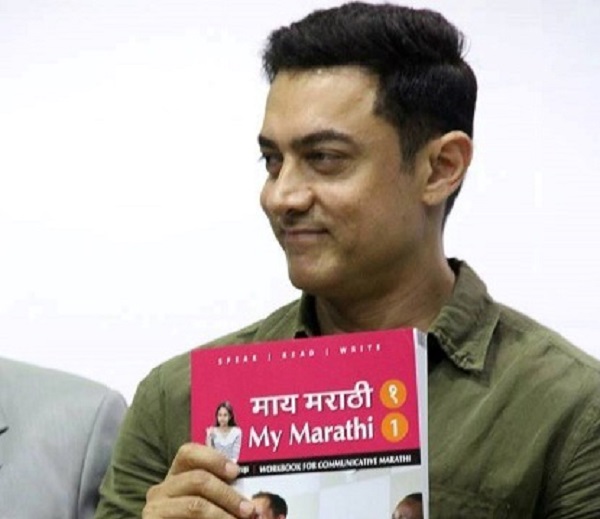
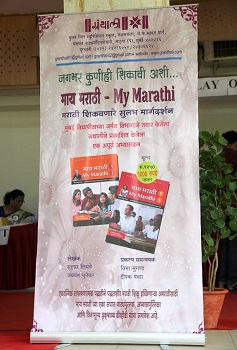
Learning Marathi is now fun and simple with the introduction of ‘My Marathi 1’, an interactive textbook that teaches communicative Marathi.
by Shubha Khandekar

Marathi, a language slated to become the sixth classical language of India shortly, after Tamil, Sanskrit, Telugu, Kannada and Malayalam acquired this status, has the fourth largest number of native speakers in India. It is now possible to learn this language through a tried and tested communicative approach used highly successfully to teach German. My Marathi 1, a textbook for communicative Marathi brought out by reputed publisher Granthali, in collaboration with the Department of German, University of Mumbai, addresses the long-felt need of teaching Indian languages through the use of innovative, integrated, modern multi-media tools and methods.

The book was released at a recent function presided over by Dr Rajan Welukar, Vice Chancellor, University of Mumbai and the guest of honour was Michael Siebert, Consul General of the Federal Republic of Germany. This event was also the celebration of the centenary of the Department of German as the University of Mumbai is the oldest Centre for German Studies in India.

MYMarathiRather than teaching by rote, as has been traditionally done, the book, which comes together with a workbook and a DVD, uses contemporary scenarios to facilitate learning through familiar concepts and imagery.

My Marathi 1 also makes beautiful use of the word ‘My’ which in some Marathi dialects means Mother, and is symbolic of the mother tongue, and strikes a deep chord in the learner right from the first lesson.

A collaborative effort between the Marathi Department of the University of Mumbai, the Marathi Abhyas Kendra of Mumbai and the Marathi Abhyas Parishad of Pune, the work has renowned actor Aamir Khan as its chief patron and financer.

Focused on proficiency in understanding, speaking, reading and writing skills, the book is targeted at a wide range of learners with different difficulty levels, such as teen and adult learners, Indian and foreign individuals and those with or without the knowledge of the Devnagari script. Pattern drills, audio and visual exercises, learning games, songs and poems, cartoons and conversations for oral practice form the backbone of the learning experience. Grammar and vocabulary are introduced in a user-friendly manner and the use of International Phonetic Alphabet (IPA) lends a global perspective of accuracy in pronunciation. Regular tests, answer keys and a comprehensive chapter-wise glossary reinforce learning through all the stages. The work is suitable for both classroom and self-learning.

Editor Vibha Surana, whose brainchild the textbook is, hopes to replicate the experiment for the teaching of Hindi too.

With this, the teaching of Indian languages in multilingual India is set to be revolutionised. This project facilitates learning of Marathi globally, bringing Marathi Language Teaching on par with European languages like German, Spanish, French etc., a consistent team of highly specialised experts from various knowledge domains like Marathi grammar, Marathi creative writers, Marathi linguists, German experts trained in the integrated communicative methods and techniques, graphic designers, photographers for topic specific original photo shoots, digital experts, multimedia experts for audio-visual DVDs etc. shall be required who commit their next five years entirely to this content generation work.

In view of the incursion of English over all regional languages, this is a welcome endeavour for giving a much needed boost to a language rich in literary tradition.

To know more, contact project coordinators Dr Vibha Surana and Dr Deepak Pawar, coordinators of the Innovative Marathi Language Teaching Project at the Department of German, University of Mumbai. Write to them at head@german.mu.ac.in, santhadeep@gmail.com, or call 9820595850 / 9820437665.

Categories
Kharcha paani

Ad spends on a high this festive season

A survey on corporates’ plans to push products this festive season reveals maximum thrust will be on television, social media ads.
by The Editors | editor@themetrognome.in

We have now entered the phase known all over the country as ‘the festive season’. Starting with the Ganpati festival, the season will see Navratri, Diwali, Durga Puja and will culminate in Christmas in December.

As per a survey done by ASSOCHAM (Associated Chambers of Commerce and Industry in India), faced with a hard-sell situation, corporates are gearing up to spend about 25 to 30 per cent more on advertising this festive season as compared to the last year, with consumer durables, electronics and automobile sectors taking the lead. “But the blitzkrieg is expected in the e-commerce space vying for higher sales in mobile telephones, shoes, apparel, gifts and electronic gadgets,” says the survey.

Shopping in festive seasonThe feedback from corporates suggest that the marketing teams of the companies engaged in the Business-to-Consumer (B2C) sector have already lined up plans for their ad campaigns which will begin from Navratras and run through Durga Puja, Diwali and right up to Christmas. The period is also considered busy season for the Indian economy with the policy makers and the RBI expecting pickup in consumer spending  to rev up the overall GDP growth in the current financial year to 5.5 to 6 per cent, ASSOCHAM General Secretary DS Rawat said while releasing the findings.

“Though the corporates are facing higher cost pressure due to high interest rates, rising raw material costs and wages, marketing expenses mainly through advertisements in television, newspapers and the social media have become unavoidable with the companies in the media sector becoming the main beneficiaries,” adds the survey.

By increasing their ad spend by up to 30 per cent this festive season, corporates are hoping for a commensurate rise in their sales hoping that the consumer confidence will return with the new Modi government taking incremental measures to boost the economy, adds the paper. Big and attractive discounts are expected from the main players in the e-commerce space in tie-up with the manufacturers of mobile handsets and other electronic gadgets. In the brick and mortar model, the companies engaged in manufacture of TV sets, washing machines, microwave ovens will do some hard sell.

“They will be required to really go for hard push since the consumer durables and consumer goods sector have not been performing well, as was clear in the June IIP numbers”, said Rawat.

Seeking to build on robust sales in the past few months, supported by lesser excise duty, car manufacturers are expecting a real growth in sales, though they would need to spend more on their advertising and marketing costs, points out the paper. At least 40 per cent of the ad budget of the corporates is typically earmarked for the busy season which coincides with the change of weather and several festivals. The rural market also remains in focus, though the response this year around may not be encouraging because of scanty rainfall.

While TV remains a preferred medium for the FMCG, consumer durables and car and bike ads, the increasing penetration of the social media will also attract the marketing and media planners. The social media is far more focussed when it comes to target audience. Besides, the age profile of those using social media is a big temptation for the media spenders.

Nearly 69 per cent of marketing heads said that companies see in the festive season a perfect time to advertise their products. Even as the media cost has been rising, companies want to work closely through consumer touch points in retail outlets.

“Some of the marketing schemes will come up bundled with financing options like interest free loans, easy EMIs and extended periods of warranties”, highlights the paper.

(Picture courtesy www.dailydealmedia.com, www.topnews.in)

Categories
Learn

It really is getting hotter in here

It’s often said that human activity has caused gradual warming of the atmosphere during the last century. Here’s some proof.
by TERI Features

The Sun influences the Earth’s climate, and during the last century there has been a gradual warming of the atmosphere related to human activity. The present solar models predict that the early Sun was about 30 per cent fainter than it is now. In about three billion years, the outer atmosphere of the Sun will begin to swell so much that our own atmosphere will heat up. Eventually the Sun’s outer layers will envelop Mercury, Venus and probably our planet as well, says Dr Siraj Hasan, Distinguished Professor and Former Director of the Indian Institute of Astrophysics.

In a recent lecture titled, ‘Journey to the Sun: A Gateway to the Stars and the Universe’, the focus was on the importance of the Sun, our main star in the solar system and the source of energy that provides sustenance to the Earth and humanity. Dr Hasan said the Sun is a cosmic powerhouse that has a profound impact on our planet and its future. Its stormy atmosphere displays rich phenomena ranging from sunspots to powerful explosions that strongly influence the Earth and the space environment. The Sun’s activity is fundamentally due to solar magnetism and its emission changes with the sunspot cycle as well as on longer time scales of centuries to millions of years.

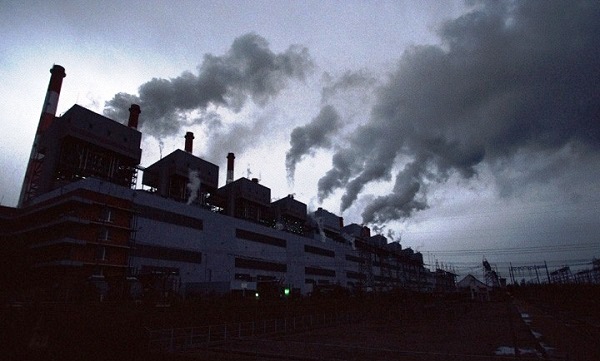
He added, “Major studies by the Intergovernmental Panel on Climate Change have carefully examined over 100 years of measurements and concluded that the average global temperature has risen about 0.8 degree Celsius.  The years 1983– 2012 have likely been the warmest 30 years in the last 1400. The gradual temperature increase is related to the emission of greenhouse gases such as COand most likely human activity.”

Talking about the National Large Solar Telescope (aperture 2 m) that will be installed in Ladakh, he says, “It will be one of the world’s most powerful solar telescopes to address a multitude of crucial, well-posed problems in astrophysics and critical issues in the Sun’s important influences on the Earth (“space weather”), and understanding the release of solar energy into the solar system on a gigantic scale. It is ready to go into construction and become operational within five years.”

(Picture courtesy www.juancole.com)

Categories
Trends

About 35% couples took a trip this weekend

Survey reveals that about 5 lakh travelers from the metros went to nearby tourist spots over the long I-Day weekend.
by The Editors | editor@themetrognome.in

The long weekend, starting from Friday, August 15 (Independence Day), and ending on Monday, August 18 (Pateti, Janmashtami) certainly allowed several people to take short trips to nearby locations. If a quick survey by ASSOCHAM (Associated Chambers of Commerce and Industry in India) is to be believed, about 35 per cent working couples of 500 couples surveyed in the metros of the country took planned an extended weekend trip during this time. 

About 5 lakh travelers made the journey to renowned weekend destinations, as per the survey based on feedback received from various working couples and tour operators in metros. “The weekend, starting this Independence Day on Friday, was extended up to Janmashtami on Monday (August 18) and about 35 per cent of working couples in metros planned to make it an extended holiday and escape to the nearby tourist destinations,” highlighted the survey.

ASSOCHAM representatives interacted with about 500 working couples to gauge their mood and plans for the Independence Day weekend in five cities of Mumbai, Ahmedabad, Bangalore, Delhi-NCR, and Kolkata during the last fortnight.

While about 35 per cent respondents conceded they had planned their itinerary in advance, about 55 per cent said they would relax at home and enjoy some good quality time with their family and the remaining 10 per cent said they have not made any plans so far. “With work schedules getting hectic by the day, working couples in India impatiently await weekends and thus make the most of extended weekends,” said DS Rawat, secretary general of ASSOCHAM.

The survey also took into account inputs from representatives of leading travel portals, travel agencies, and hoteliers who came up with various packages, as they had received a good number of bookings for traditional picturesque destinations located around the metros.
 
Certain respondents even said that their companies enabled the ‘work from home’ facility for their employees so that they could spend the weekend comfortably and complete their tasks as per their convenience.

Ashtvinayak, Goa, Khandala, Lonavla, Mahabaleshwar, and Matheran were the top destinations for about 30 per cent working couples in Mumbai, while almost 40 per cent respondents from Delhi-NCR rated Agra, Dharamshala, Haridwar, Jaipur, Jim Corbett, Khatu Shyam, Landsdowne, Mathura and Vrindavan, Manali, Mussoorrie, Nainital, Rishikesh, Shimla, Vaishno Devi and other spots among their favourite spots. 

Ambaji, Gir, Kutch, Mount Abu, Daman and Diu, Dadra and Nagar Haveli, Udaipur and others were significant getaway destinations for about 45 per cent working couples planning a quick holiday this weekend in Ahmedabad. Meanwhile, Chikmagalur, Coorg, Madhugiri, Mysore, Nandi Hills, Ooty, Ramanagara, Shivanasamudra Waterfalls, Wayanad and others were most sought-after weekend getaway destinations for 35 per cent working couples in Bangalore.

Bakkhali, Darjeeling, Digha, Mandarmoni, Murshidabad, Navadivpa, Raichak Santiniketan, Sunderbans, Tajpur, Tarapith and others were preferred weekend getaways for about 25 per cent respondents in Kolkata.

Also read: ‘Four-day holiday causes six-hour traffic snarl on Mumbai-Pune Expressway‘, TOI

(Picture courtesy www.planmoneytax.com)

Exit mobile version