Categories
Do

Pop-up shop at Andheri this weekend

Fashion website Squarekey brings a two-day pop up shop in Andheri. Featured brands include Nicole Miller, Cynthia Rowley and others.
by The Diarist | thediarist@themetrognome.in

Fashion website www.squarekey.com is bringing an exciting, international pop up shop in Mumbai over the weekend, at The Club, Andheri. Brands on sale include BCGC Max Azria, DL 1961, Nicole Miller, Hanky Panky, James Jeans, Milly Minis, Cynthia Rowley, Little Pim, and many others. You can visit tomorrow and Sunday between noon to 7 pm.


Categories
Read

Bombay wanted to fight China in 1962

…as did all of Maharashtra. Secret report made by then Governor to President S Radhakrishnan reveals anti-China angst and jingoism.
by The Editors | editor@themetrognome.in

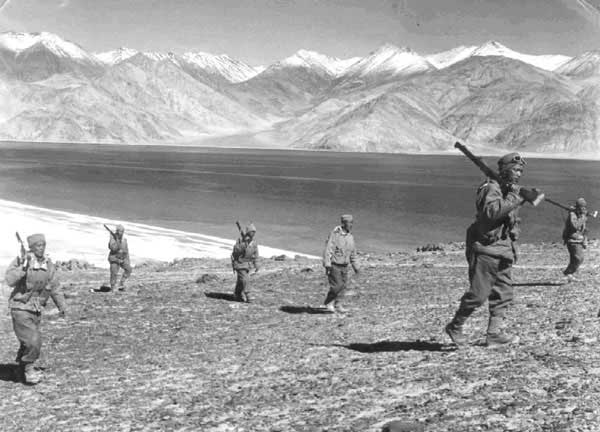
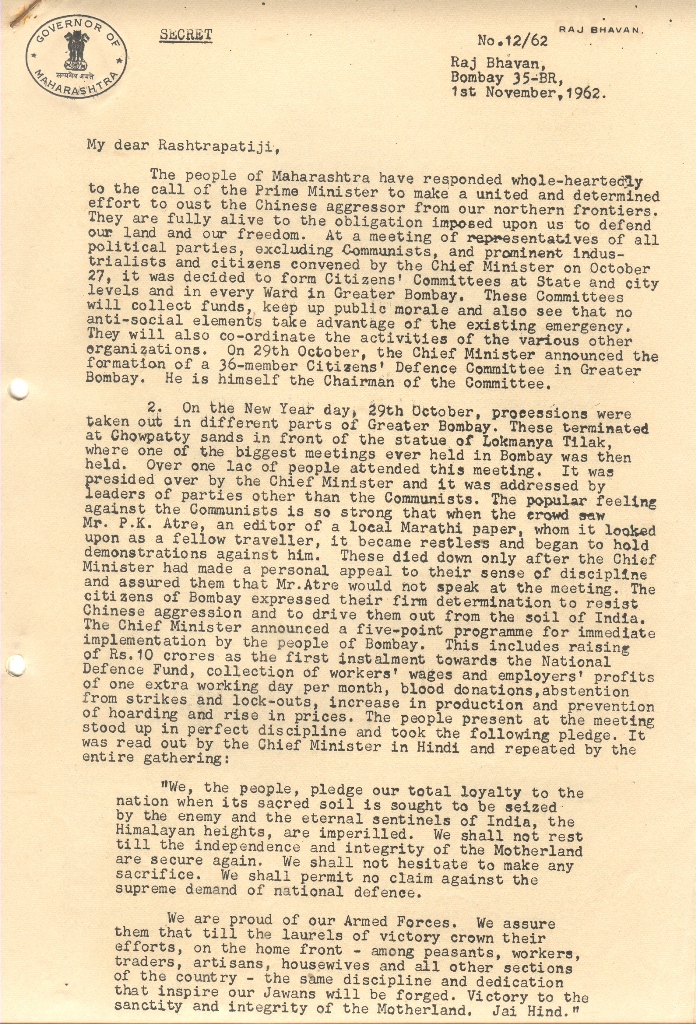
The Governor of Maharashtra has just brought a bit of history to you. Recently, a report filed by the Governor of the State in 1962, Justice HK Chainani, and submitted to the then President Dr S Radhakrishnan immediately after the Chinese aggression on the country’s northern borders, which resulted in the Indo-China war of 1962, was made available to the public archives of the Raj Bhavan. The report gives an insight into the unrest and nationalism brewing in Bombay and Maharashtra at the time.

As per the report, which is dated November 1, 1962, the citizens of the city and the State were fully committed to fight the Chinese in whichever way possible – whether through joining the Army, giving up a day’s wages, holding demonstrations, refusing to strike work, donating blood, signing up to knit jackets for jawans or contributing to realise the target of Rs 10 crore for the National Defence Fund.

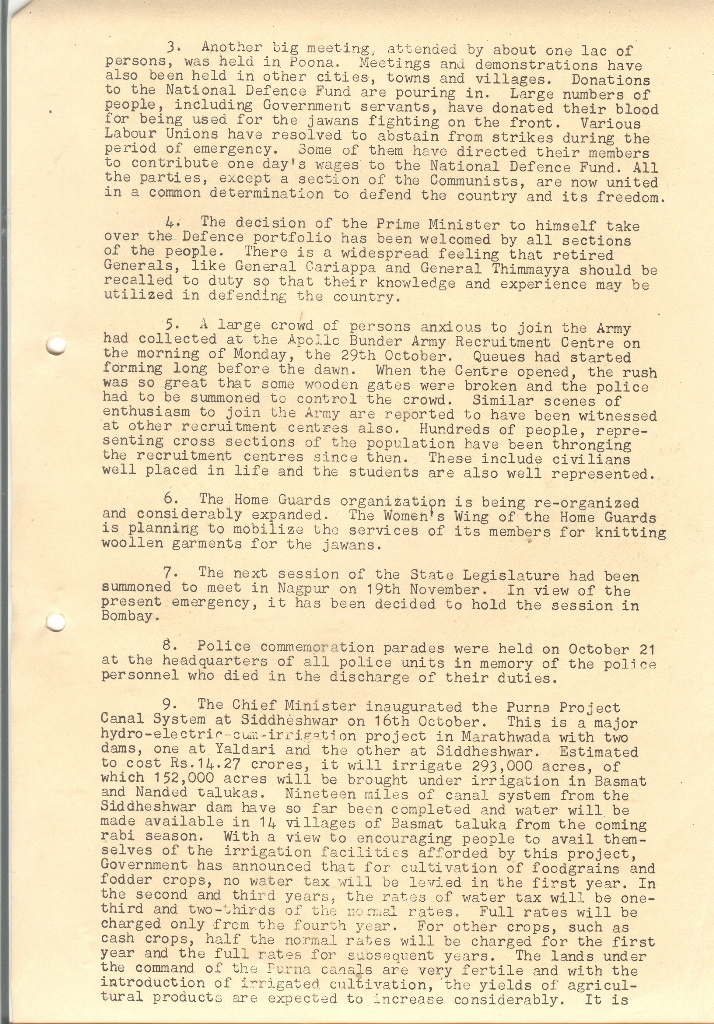
The report writes glowingly of Maharashtra so willing to go to war against China, that thousands of people waited in queues to enlist at the Apollo Bunder Army Recruitment Centre; when the Centre was opened, the oncoming rush broke a few wooden gates and the police had to be summoned to restrain the crowd.

Apart from a strong anti-Communist feeling in Mumbai and the State, the rush to donate blood for soldiers fighting at the borders was also high, as was the desire to donate wages  and abstain from leaves at work. The report says, “Donations to the National Defence Fund are pouring in. Large number of people, including Government servants, have donated their blood for being used for the jawans fighting on the front. Various Labour Unions have resolved to abstain from strikes during the period of emergency. Some of them have directed their members to contribute one day’s wages to the National Defence Fund. All the parties, except a section of the Communists, are now united in a common determination to defend the country and its freedom.”

Further, the report adds, “At a meeting of representatives of all political parties excluding Communists, and prominent industrialists and citizens convened by the Chief Minister on October 27, it was decided to form Citizens’ Committees at the State and city levels and in every ward in Greater Bombay. These Committees will collect funds, keep up public morale and also see that no anti social elements take advantage of the existing emergency. They will also coordinate the activities of the various other organisations.”

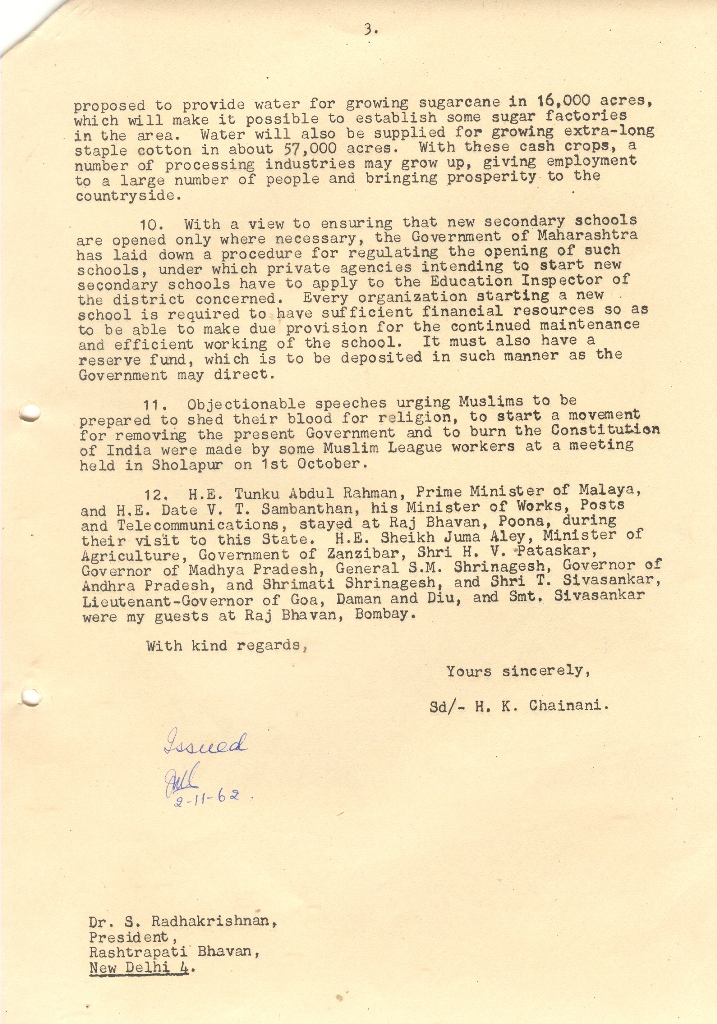
Read the entire report below.

(Featured image courtesy www.indiadefencereview.com)


Categories
Film

The Bollywood Book Club

Bollywood has been a good adapter – so many of our films come from classics by foreign or Indian authors.
by M | M@themetrognome.in

Life of Pi releases later this week, and it looks good. This got me thinking, how many books-to-films success stories does Bollywood have?  There are a few exceptions like Anurag Basu, who take a roundabout turn to inspiration – some portions of Barfi! were copied from the English film The Notebook, that was based on a novel of the same name by Nicholas Sparks.

Bollywood has largely been an early adapter. The first full-length feature film, Raja Harishchandra (1913) was adapted from the folklore and legends of the Ramayana and Mahabharata.  Many have since then followed suit – Dil Diya Dard Liya (starring Dilip Kumar and Waheeda Rehman) was inspired by Emily Brönte’s classic Wuthering Heights. Dev Anand’s Tere Mere Sapne was based on The Citadel, a novel by AJ Cronin. Angoor, starring Sanjeev Kumar and Deven Verma, was based on Shakespeare’s The Comedy Of Errors.

And while there have been several instances where filmmakers have failed to give credit to the author or even announce that their film is based on a book, most recent filmmakers have honestly included the name of the author in the opening or closing credits of their films. They even do some PR around the film’s release. Sanjay Leela Bhansali did this for Saawariya (based on Fyodor Dostoevsky′s White Nights) and Vishal Bharadwaj for Maqbool, Omkara, and The Blue Umbrella; the former two are based on Shakespeare’s Macbeth and Othello respectively, and the latter is a short story by Ruskin Bond.

Many times, you will also feel that the book has been wasted on the film; cases in point are Aisha, a bad adaptation of Emma or The Namesake, a film by Mira Nair and a book by Jhumpa Lahiri. But these have been few and far between.

Here’s our list of the best adaptations of books in Bollywood:

Guide: The RK Narayan classic was adapted with little difference, save for the end theatrics, for the silver screen. Dev Anand and Waheeda Raheman were brilliant in the film.

Black Friday: Undoubtedly Anurag Kashyap’s best work till date. S Hussain Zaidi’s book captures the essential details of the 1993 Bombay bomb blasts, and the actors in the film relive the characters from the book. The soundtrack by Indian Ocean is a hit!

Devdas:  Sarat Chandra Chatterjee’s masterpiece has been adapted to Hindi cinema four times over two centuries. The one to watch is Bimal Roy’s starring Dilip Kumar and Suchitra Sen.

Maqbool: Vishal Bhardwaj’s adaptation of Macbeth is very, very close to the original. The phenomenal cast of Pankaj Kapoor, Naseeruddin Shah, Om Puri and Tabu were all critically acclaimed for their performance.

Shatrang Ke Khiladi:  Adapted from Munshi Premchand′s story of the same name; the list would not be complete without Satyajit Ray’s work of art. This film was a nominee for the Golden Bear for Best Film at the 28th Berlin International Film Festival.

Note to readers: Chetan Bhagat was deliberately not included in this list. Don’t make me say why.

M is a media professional with an eye on entertainment.

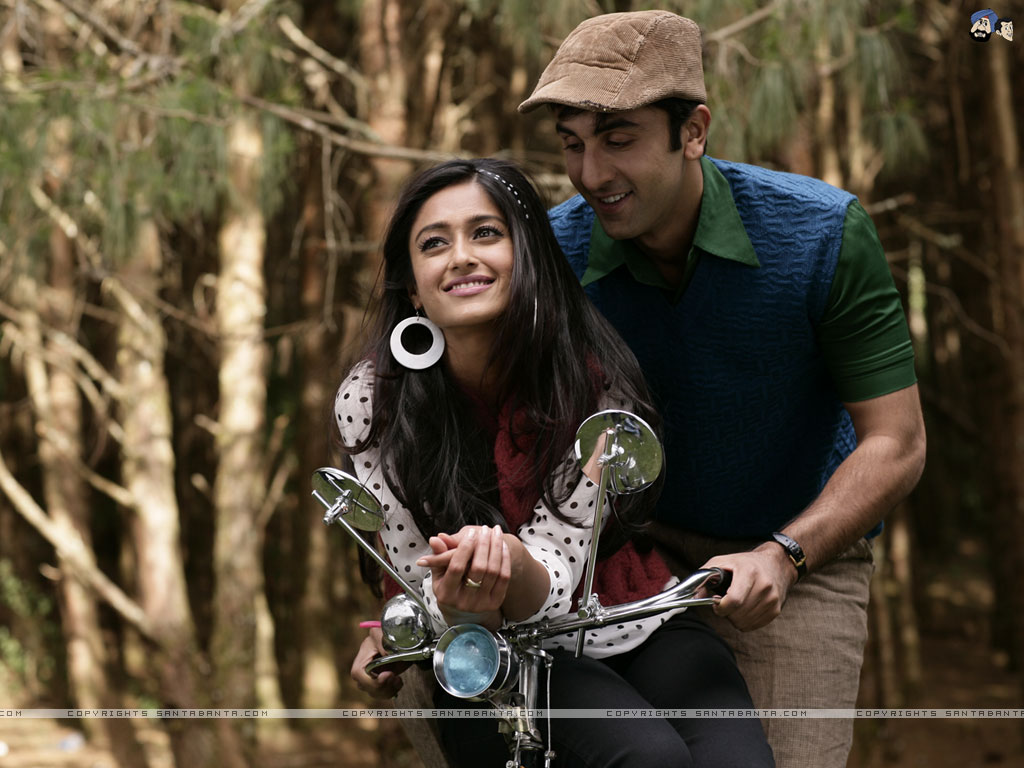
(Picture courtesy www.santabanta.com)

Categories
Event

New Gandhi on the block

Mahatma Gandhi’s grandson Rajmohan Gandhi has recently become a grandfather – the child was born last month in the US.
by Humra Quraishi

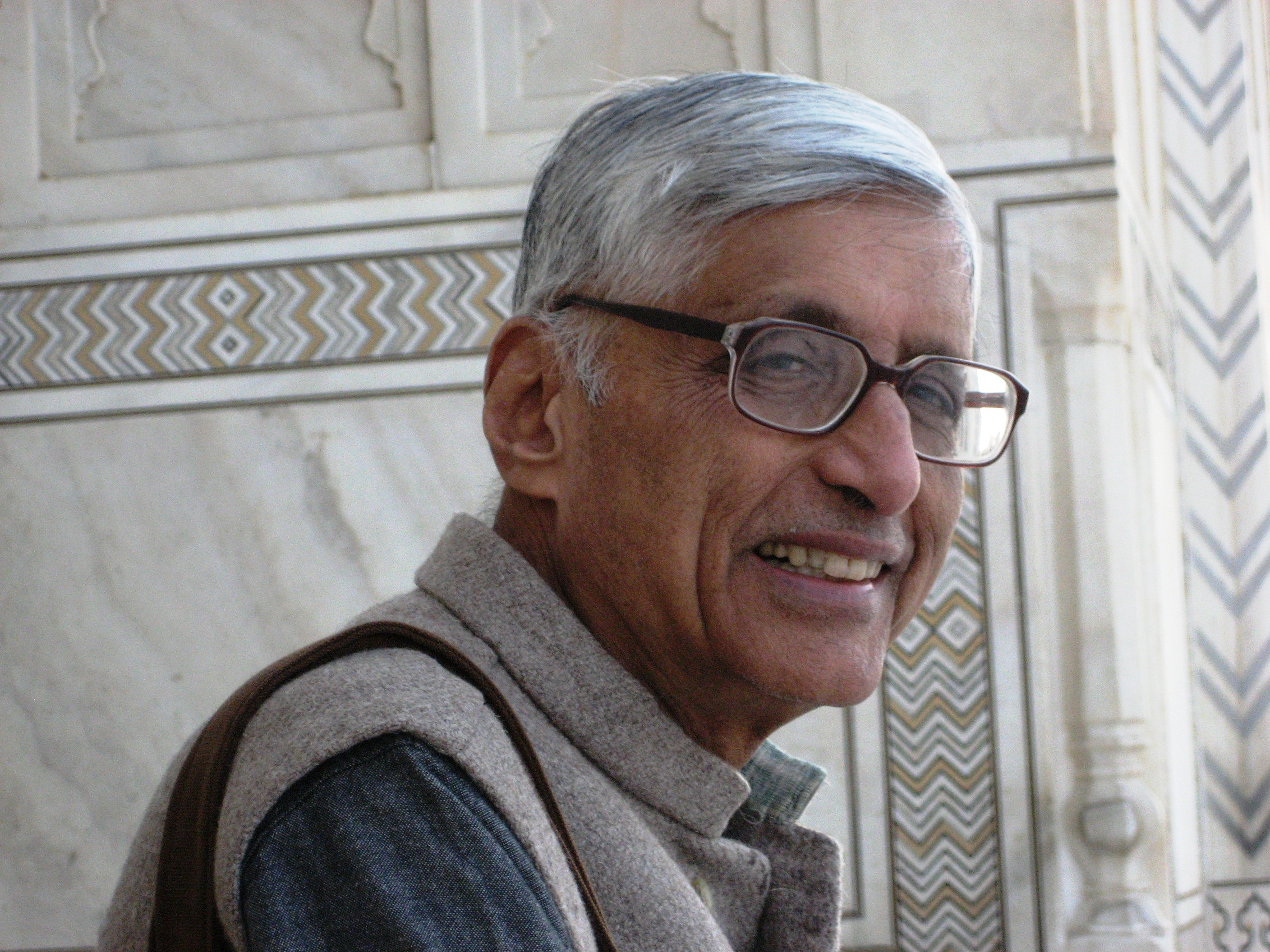
I have often wondered if the Indian political scene would have been any different if Mahatma Gandhi’s children, grandchildren and great grandchildren had stepped in and got into the thick of things. Sure, his grandson Rajmohan Gandhi (son of Devdas Gandhi) had been politically active for a brief while, but then he moved far away from it, taking to academics and writing on a full-time basis. But Rajmohan and Usha have now been blessed with a grandson! A new Gandhi is born.

I have known Rajmohan and his wife Usha for several years now. Their daughter Supriya  and my daughter Sarah studied together  in college and were great friends, and through the girls, we parents got to meet each other. They – Supriya and Sarah – were pursuing Philosophy honours at Delhi’s St. Stephen’s College. We’d resided quite close by on  Lutyen’s Delhi Shahjahan and Pandara Roads, so the interactions grew. And what struck me about the couple was the simplicity at Usha and Rajmohan Gandhi’s home – they believed in simple food, simple clothing, and the very basics required for living.

About 12 years ago, Usha, Rajmohan and their two children, Surpiya and Devadatta, shifted to the United States. Rajmohan is currently a Research Professor at the Center for South Asian and Middle Eastern Studies, University of Illinois at Urbana-Champaign, USA, but the family comes to India almost three or four times a year.

A few years ago, Supriya married an academic, Travis Zadeh. The wedding was a simple affair – just flowers and diyas dotting the lawns and  in the midst of it sat the guests. Perhaps in keeping with Mahatma Gandhi’s stress on simplicity, his great grand-daughter Supriya Gandhi’s marriage was one of the most austere marriage ceremonies anyone’s ever attended. There was no band, dholak, shehnai or music of any strain, no horses or elephants, no dolis or carts, none of the usual tamashas. Friends and close relatives were served vegetarian snacks and fruit juice. The same was offered to the baraatis who had come all the way from the US with the groom, Travis, who is of mixed American-Iranian parentage.

After all these years, it brings me a quiet happiness to know that Supriya, my daughter’s friend, is now the proud mother of a baby boy. The child was born last month in October in the US. They have named the child Anushirvan Gandhi-Zadeh. Anushirvan in Persian means ‘one possessing an immortal soul’.

Humra Quraishi is a senior political journalist and author of Kashmir: The Untold Story, and co-author of Simply Khushwant.


Categories
Event

Bal Thackeray laid to rest

Shiv Sena founder and chief, who passed away yesterday, was laid to rest with full State honours on Sunday evening.

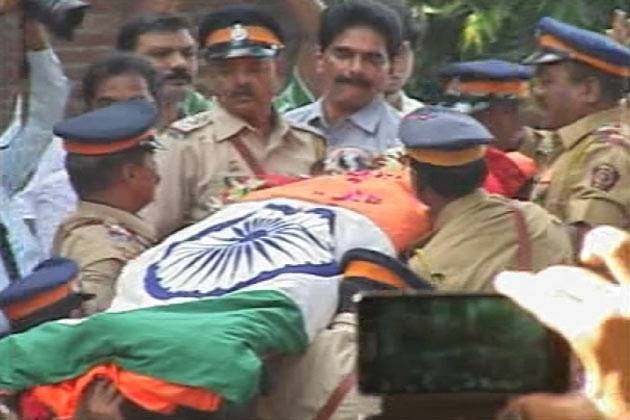
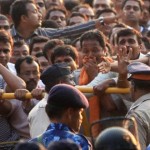
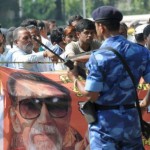
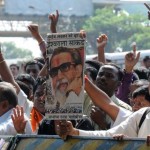
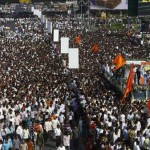
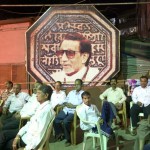
Mumbai city came to a standstill on the day Shiv Sena chief, and the city’s original Tiger, Bal Thackeray, was laid to rest at Dadar’s Shivaji Park. He was 86, and had been ailing for a long while from a pancreatic disorder. Over 20 lakh people thronged the streets of Mumbai, accompanying the funeral procession from Thackeray’s residence Matoshree at Bandra, to Shiv Sena Bhavan and finally to Shivaji Park.

Shivaji Park witnessed a historic turnout that comprised mourners from the city and Maharashtra, State and national politicians, members of the Hindi film industry and of course, Thackeray’s own family. Uddhav, Thackeray’s youngest son and political heir, lit the funeral pyre at about 6.30 pm. Thackeray Sr was given a funeral with full State honours.

(Pictures courtesy ibnlive.com, hindu.com, indianexpress.com, manipalworld.com, intoday.in)


Categories
Listen

A cracker of a song

We wish you a Happy Diwali and present to you 9XM’s firecracker jugalbandi song – and how it was created.
by Prashant Shankarnarayan | prashant@themetrognome.in

Artists have used their voices, daily items and even trash to create music, but have you ever heard of creating music by bursting firecrackers? This Diwali, 9XM came out with an innovative classical jugalbandi – one between Konnakol and firecrackers. The music channel’s in-house team came up with the concept of juxtaposing bursting fireworks with vocal percussions in the Carnatic style, called ‘Konnakol’. The music video’s plot revolves around a strict TamBrahm music teacher forcefully teaching his disinterested students on Diwali, even as people burst firecrackers outside their homes.

Jugalbandi, also referred to as ‘Sawaal-Jawaab’ in Indian classical music, is when two or more musicians challenge each other to a musical duel by singing or playing instruments. While embarking on this project, the team did face three major challenges – to find clean sound samples of fire crackers, to interpret the sounds musically, and lastly shoot it within city limits.


To tackle the first challenge, the team decided to record real firecrackers for the project as clear sound samples  of crackers were not available easily. So, armed with a stash of rassi bombs, lavangis, Red Forts, laars, anars, sparklers, whistling rockets, etc. the team headed for an isolated bungalow in Khandala where they burst crackers till their palms turned silver. Every cracker was recorded in mono, stereo and with a lapel as well as a boom mike.

Then came the next challenge, of musically interpreting these crackers and creating a music piece out of it. A responsibility that was handled with utter ease by a Mumbai-based percussion band named ‘Dipesh Verma’s Indian Beaters’. The artists created rhythmic patters with the firecracker sounds in sync with their Konnakol, and later added percussion instruments to the track. Says Dipesh Verma, whose band composed the track, “Initially when we got the brief from 9XM, we were a bit skeptical. But when we started mixing the firecracker sounds to create music, we realised that we were onto something utterly fresh, wild and fantastic.”

As for the music video, the programming team converted the Saraswati Vidyalaya in Chembur into a housing colony. There were many safety concerns raised as the plot involved children and firecrackers, and was being shot in a residential area. But timely police permissions, crowd control and apt handling of the fireworks saved the day. The team considers itself plain lucky to pack up the shoot without any complaints from nearby residents.

Says Sunder Venketraman, Content Head, 9XM, “Other than interpreting noisy crackers musically for the first time, the music video also highlights the idea of going back to our roots and celebrating festivals with our near and dear ones, something that seems like a lost trait in our times.”  The music video went on air on November 7 and is already being shared as a viral on the Internet.

Prashant Shankarnarayan was a part of the creative team at 9XM that conceptualised and created this music video.

Exit mobile version