Categories
Watch

Watch: Vikalp@Prithvi presents a ‘Green Tiger’

This film captures a valiant effort to stop a Chinese dam project; screening precedes Q&A with Jaitapur activist Girish Raut.
by Medha Kulkarni | @VeryMedha on Twitter

Waking the Green Tiger – The Rise of a Green Movement in China is a powerful film directed by Gary Marcuse, which will be presented by Vikalp@Prithvi this evening, Friday, December 26.

Following the screening, viewers can engage in a Q&A session with Girish Raut, environmental activist and advocate who has played a major role in protests against the Jaitapur Nuclear Power Plant and the Bandra-Worli Sea Link, among other projects.

The film is told through the point of view of activists, farmers, and journalists and follows the incredible campaign to stop a huge dam project on the upper Yangtze river in southwestern China. The film features rare and astonishing footage that has previously never been viewed outside of the country, along with interviews with a Government insider and witnesses. The documentary also analysis Chairman Mao’s campaigns to conquer nature in the name of progress.

The film has received rave reviews and is a must-see for film lovers and environmentalists alike.

“In this lushly filmed documentary, (the producers) beautifully captured the spirit of this grassroots movement in China with stunning images, superb writing and excellent use of strong, compelling personal stories,” says Susanne Reber, Grantham Prize Juror, about the film. Adds Brett Kessler, WABC 7, “Waking the Green Tiger manages the perfect balance between information and entertainment, condensing several decades of history into a rousing portrait of China’s emerging green movement. It’s a portrait of people, from the humblest of farmers to some of China’s biggest government players, coming together to shape a new socially-and eco-conscious paradigm.”

Head to Prithvi House, opposite Prithvi Theatre, Janki Kutir, Juhu Church road. The screening begins at 7 pm. Entry is free but on a first come-first-serve basis.

(Picture courtesy filmbalaya.com)

Categories
Bombay, bas

How a Mumbai housing society became a joint family this Christmas

A busy Mumbaikar describes how a simple act of putting together a Christmas celebration became a unifying labour of love.
Pooja Birwatkarby Dr Pooja Birwatkar

The title of this piece may not make much sense to people who live outside Mumbai, where the concept of housing societies has still not gained much popularity. But for us Mumbaikars, housing societies define our habitats. A few years ago, the building where I live formed a housing society and christened it the Blue Bell Housing Society. The formation of this society naturally brought its residents in close contact with each other, as meetings and agendas required frequent participation. Slowly, it gave way to bonding and many residents became friends.

Most families in Mumbai’s building societies are nuclear ones. It is not possible for people like us who live in nuclear families to always rush back home to near and dear ones in times of crisis and celebrations. Our fast lives leave us with no choice but to spend our free time within the confines of our homes – often leading to feelings of loneliness. The loneliness is pronounced at times of festivities. Fortunately, our building found a solution to this grave problem – by starting a small community Ganapati celebration, which later led us to organise many small scale celebrations like Children’s Day.

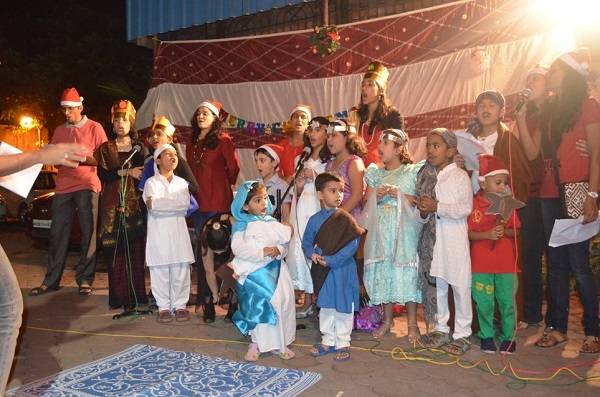
This year, our building decided to celebrate the spirit of Christmas in a big way. A few parents led the idea and religiously trained the building’s children and a few volunteer moms for almost a month in carol singing. Like all big things that start with a small idea, this celebration too started on a lighter note – but soon assumed the guise of a professionally-arranged event.

Celebrating as a joint familyEvery day, children of all ages from 2 to 13 years, regardless of their religion, gathered to learn carols. As they practiced the carols every day, we saw some unique transformations taking place among them. They started to share and support each other, a group feeling and discipline crept in among these children who hadn’t been socialising with each other that much prior to their practice.

As adults, we feel that we are the ones bogged down by daily pressures, but we don’t realise that changing times are also taking a toll on our children, and that they need stress-busters also. But we completely ignore the fact that with changing times even kids have started to experience stresses of all kinds and they need some stress busters too. In this case, music proved therapeutic for our children; it pepped them up and made them happier.

Even more pronounced was the effect that the entire activity was having on the mothers who were organising the event. Most of them were stay-at-home moms who previously had rewarding careers, which they had given up for raising families. These women proved to be storehouses of talent when it came to putting the event together.

On the day of the event, everyone was understandably nervous but excited. We had decided to do the event on a shoestring budget, and the costumes had been put together (creatively) at home. I must add that the children outdid their previous efforts and left all of us awestruck. The audience comprised the building’s residents and their friends and families. All of us had a merry time feasting, enjoying the music and taking part in the fun activities arranged.

But more than the actual event, what all of us enjoyed was the run-up to it – in just a few days, we learnt so much about each other as we worked together for a common goal. Most of us have been living next to each other for years. But it took one event to bring us all closer in the true sense of the word.

I feel all Mumbai housing societies should plan such activities periodically. There can be no better way to become secular than to act and behave like a large joint family. There is so much to learn from each other. Ever religion, every festival, every culture teaches us in its own unique way humanity, love and respect for all, and definitely makes us better individuals. We Mumbaikars are too pressed for time to fully inculcate family, cultural and ethical values in our children, but we can come together as a group and try to jointly teach our children all of that which we alone can’t.

Today, I am happy that my son has a large joint family in his building, and that he will have many wonderful childhood memories. As a parent, what more can I ask for?

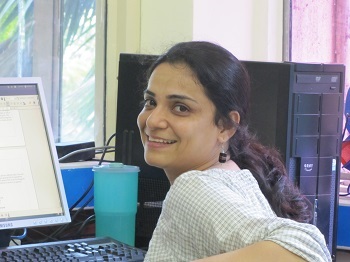
Dr Pooja Birwatkar is currently pursuing post doctoral research and working in the area of science education. She has been associated with the field of education in the past as a teacher educator, and her area of interest is research in education. 

(Pictures courtesy Dr Pooja Birwatkar)

Categories
Eat

American fruit comes to Mumbai markets

For a month, Mumbai and six cities can enjoy fresh fruit from the US, along with sampling and cooking demonstrations.
by The Editors | editor@themetrognome.in

Mumbai, and six Indian cities, are in for an American treat: the California Table Grape Commission, Pear Bureau Northwest, and Washington Apple Commission, in association with the Metro and Foodhall grocery chains, are celebrating a month-long US Fresh Fruit Festival in 16 stores across Mumbai, Delhi, Chennai, Bangalore, Zirakpur, and Pune. The promotion includes a special in-store display of US fresh fruits, sampling, and cooking demonstrations.

As part of the festival, Adam Branson, Senior Agricultural Attaché within the US Consulate General, visited the Palladium Mall Foodhall outlet in Mumbai. Sumit Saran, Head-International Food Business of Future Retail Ltd., and Keith Sunderlal, Managing Director of The SCS Group, were also present at the store for this event. An interactive cooking demonstration and a health talk session were conducted at the event by Naini Setalvad, a well-known nutritionist and lifestyle diseases management consultant.

About the event, US Consul General in Mumbai Tom Vajda said, “This festival is a wonderful opportunity for Indian consumers to taste and experience a wide range of American fresh fruits. India is an important and growing market and we are glad to have a partnership with Foodhall, which makes delicious American fresh fruit available across India throughout the year.”

Saran remarked, “Fruits like grapes from California, American pears, and Washington apples are now part of the regular basket of fruits that Foodhall offers and are available across their seasons in all our outlets.” Sunderlal added, “India is one of the growing potential markets for imported US fruits like grapes, pears, and apples and we are pleased to showcase these products to Indian consumers. We hope to create a market which becomes a repository of culinary knowledge and understanding, right here in India.”

This promotion is taking place at Metro and Foodhall stores until January 5, 2015.

(Picture courtesy www.huffingtonpost.com)

Categories
Tech

Review: Nokia Lumia 830

The last Windows phone with the Nokia branding, the Lumia 830 is a solid buy at a Rs 24,000 price.
by Manik Kakra | @Manik_K on Twitter

The Lumia series has been gradually establishing itself in the low and mid-range segments, maybe a bit too slowly, but it is getting there. With the Lumia 5, 6 and 7 series, Nokia provided decent handsets, and now it has upgraded its old Lumia 820 to take on the likes of the Nexus 5 in the Rs 30k price range. So, let’s see if the Lumia 830 lives up to its name or not.

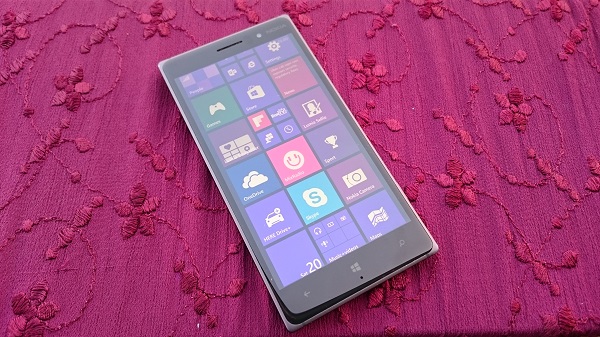
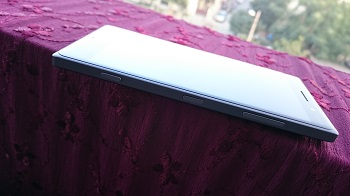
The looks. Nokia’s Lumia 830 follows a slightly different fabula design with a solid feel. The first thing you’ll notice is its metal frame around the body. On the front, apart from the 5-inch HD screen with Gorilla Glass 3 on top, are the capacitive touch keys – Back, Windows (and the primary mic below it), and Search, which don’t glow on being used, front-facing camera, sensors and speaker grill.

The right side panel houses the Power/Lock key as well as volume rockers and dedicated camera key, all three of these physical keys are made out of aluminium but aren’t very dependable for tactile feedback, while the left side panel is plain without any buttons or port. The microUSB port and 3.5 mm headset jack are located at the top and the bottom is plain.

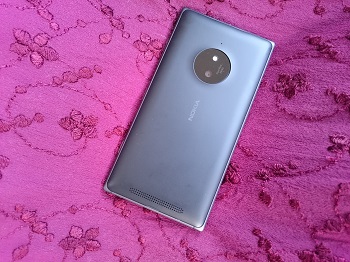
At the back is the familiar polycarbonate cover that has a fairly large 10 MP camera sensor (reminds you of the Lumia 1020), the Nokia logo imprinted in the middle, and the loudspeaker grill near the bottom. You can remove this rear cover from the bottom to reveal the nano SIM card slot, battery unit and microSD card slot. The design and look part of the device scores well for me. Despite having a metallic frame and angular four edges, I liked its grip and didn’t have problems carrying it around.

Screen. The Lumia 830 boasts a 5-inch (1280 x 720) LCD screen powered by Nokia’s popular ClearBlack technology. The screen, as you would expect, has good deep black levels and is not a pain to use under sunlight. It has vibrant colours and videos appear quite sharp on it. The screen isn’t full HD, but it does the job fairly well, especially for how the Windows Phone OS has been designed.

Camera. Nokia has touted the Lumia 830 as a flagship camera device that isn’t priced as a high-end one. The phone boasts a 10 MP PureView camera (Carl Zeiss optics) with an LED flash and also features OIS. Here are a few sample images.

The camera can take a lot of good photos. Most of the time, photos come out sharp and detailed. There are a plenty of options to choose from while taking a photo – ISO, exposure, shutter speed, etc. You could say the low-light performance isn’t the best, but overall this camera is a really good performer. Other than the default camera app, there are three camera apps. The default app seems much quicker to capture shots than what I saw on earlier Lumia devices. Other camera apps include Nokia Camera, Lumia Selife and Lumia Refocus, most of which are mainly useful for post-shot use.

Audio. The device has solid audio quality – whether it is in-ear or through loudspeaker. The loudspeaker, though could have been placed better, is more than capable to produce good audio when playing games or a track. In-ear sound is top-notch, plus, there’s nothing to complain about network reception throughout our usage. Call quality seemed fine with no unusual call drops.

Battery. Equipped with a 2,200 mAh battery unit, the phone gave about a day’s use on a single charge. Even when used with 3G and not much of WiFi (with low screen brightness) for Outlook, Twitter, music and general calls and messages, it lasted about 23 hours. You can switch on the in-built battery saver mode if you need some more juice out of the phone. It charges from zero to full in about two and a half hours. Being able to charge wirelessly with a compatible rear plate is also an option.

Software and performance. Under the hood, this Windows Phone OS 8.1 Update 1 (with Denim Update) has Qualcomm’s Snapdragon 400 SoC (1l2 GHz quad-core processor, Adreno 305 GPU) with 1 GB of RAM. There’s also SensorCore in place, but I had Motion Data off during my usage.

The Lumia 830 performs and feels as smooth and fluid that you generally associate with the WP OS. Glance Screen is something I really like. Many previous Symbian users might remember having time, call and message notifications show right on the screen even when it is off, giving you useful information without taking a toll on battery life. You can double-tap to wake the entire screen and it works well.

The phone handles games and regular OS tasks quite well. Having said that, when it comes to the OS experience, Windows phones still have a lot of work to do besides having a clean and neat look. Every now and then, you still get to see the loading or resuming screen on pressing the back button, or going from one app to another even though you aren’t doing very intensive work on the phone.

There are a few noticeable improvements done by Microsoft (and Nokia). Live Tiles on the main Start screen are actually live – giving you a bit of current information without having to open the relevant app and refresh it. You can now make folders on the Start screen, apply wallpapers that follow your screen and tile patterns and also have the option to have different volume levels selected for your media and calls. The pull-down notification bar also gives you toggle buttons for WiFi, Location, and more, but for some reason, there’s still no data toggle button, which means you have to go into Settings and switch it on or off from there. Apparently, it is coming in the next update.

When it comes to apps and services, Windows Phone isn’t a half-baked OS any more. Most of your popular apps and services run on the OS, while a few of them only have third-party options. With Nokia’s HERE Maps, Outlook, OneDrive, good Twitter and Reddit apps, I didn’t have too many problems in this regard, but there’s surely something missing if you’re dependant on Gmail. The user gets about 14 GB of internal storage space, which can be expanded using a microSD card apart from 15 GB of free storage he/she gets from Microsoft’s OneDrive service. In my opinion, the OS has still a lot to cover and add (including a couple of points mentioned above), but seems to be doing so, but probably at a rate that could hinder its position in the smartphone market.

Concluding our review, the last Windows Phone with the Nokia branding, the Lumia 830, seems like a solid device. It has a great camera, good battery life, decent screen, high quality audio and premium design for this price, and an improved OS. With a price tag of about Rs 24,000, if you’re looking to try your first Windows Phone device, the Lumia 830 feels like a really worthy option for now.


Categories
Event

Enter this talent show for the elderly

Umang fest comes back with a bang, announces a talent contest for senior citizens to be held in January 2015.
by The Editors | editor@themetrognome.in

We are heartened to see several initiatives – however small – being planned for and involving senior citizens in the city. This is one group of people that require recognition and applause in its autumn years, and any initiative that celebrates them should be roundly welcomed.

In this spirit of things, the Rotary Club of Mumbai Nariman Point and Rotaract Club of Rizvi Law College are coming up with ‘UMANG 2014-15 ‘, a talent show for senior citizens, on January 24, 2015. This is an annual talent show conceptualised and executed by Silver Innings Foundation since 2008, for seniors aged 55 years and above. The programme will be part of the Rotary District 3140 Service Week from January 23 to 29, 2015.

“We have been organising this programme since 2008,” says Sailesh Mishra of Silver Innings. “As there are not enough opportunities for the elderly to show their talent, the main purpose of this programme is to provide a platform for the elderly to display their talents. This is not a competition between the elderly, but a forum to encourage them to demonstrate their hidden talent.” The event is supported by Dignity Foundation, FESCOM Mumbai, HelpAge India, Harmony for Silvers Foundation, 1298 Senior Citizens Helpline, and The Metrognome.

Umang invites entries in one-act play, singing, a solo of group musical or dance performance, skit, mimicry, drama, or any other talent which can be presented on a stage. “We are restricting the number of acts to not more than 25,” Sailesh says, adding that the organisers are currently ‘auditioning’ potential participants over the Internet (via YouTube video links of their performance). The talent show will be held at Birla Matoshree Sabhagriha, New Marine Lines, on January 24, 2015 from 10 am to 12.30 pm.

Do you want to participate in the Umang Talent Show for seniors? Call 9987104233 or 9029000091 for registration and details. Send your completed form with DVD or YouTube link of your performance to silverinnings@gmail.com, or to Silver Innings, J-47/48, Shop no.10, opposite Navgraha bldg, Poonam Sagar Complex, Mira Road East, Mumbai 401107.

(Picture courtesy www.sereneretirement.com. Image used for representational purpose only)

Categories
Read

Review: ‘Beyond 2020 – A Vision For Tomorrow’s India’

APJ Abdul Kalam’s newest book raises several questions, but sadly, does not provide any answers, nor touch upon current realities.
by Humra Quraishi

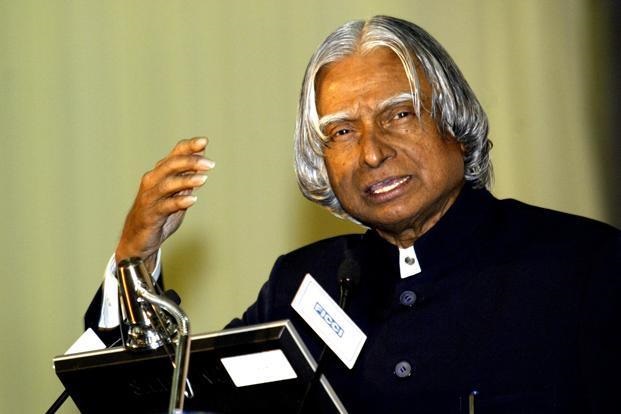
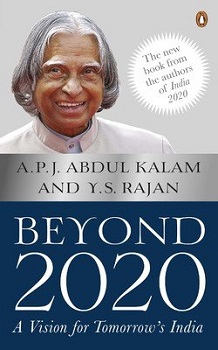
Beyond 2020 – A Vision For Tomorrow’s India is the latest book written by ex-President APJ Abdul Kalam and YS Rajan. It focusses on India’s future progress in the backdrop of the existing facts and figures and the present-day situation in the country.

To quote from Dr Kalam’s introductory chapter, “Our book Beyond 2020 has fifteen chapters with extensive details on how to take the nation from progress to progress by pushing through missions on industries, services and agriculture. I feel the crying need in the country is not a shortage of plans, but arriving at the correct methodologies to implement the plans and figuring out how to reach the benefits to the people for whom the plans are intended. Today, the challenge before India and every nation is reaching the reforms and benefits to the targeted population…”

Beyond 2020He minces no words anywhere in the volume, often coming straight to the core of the issue with refreshing candour: “Based on my work in universities in India and abroad, during my teaching and research association, I have come to the conclusion that it is essential to evolve a sustainable development system framework, in the way the Providing Urban Amenities in Rural Areas (PURA) project has taken root in India. The major research and action needed is on how the benefits of sustainable development can reach the targeted population of our country.

“Hence, we have evolved two unique systems: one is called the ‘User Community Pyramid’ (UCP) and the other the ‘Societal Development Radar’ (SDR). The UCP is an integrated solution based on technologies and applications for sustainable development with possible users at the bottom of the pyramid. You have to ask yourself, what sort of research you can focus on in the areas of water, energy, waste, pollution, mobility and biodiversity, and how it is going to be connected to the user community. The second system, the SDR reviews and monitors how the user community has benefited from the UCP.”

The book ends on two significant notes, in the last chapter titled ‘Can India do it?’ It reads, “This is our four-point action plan for the nation: Making ample water available for both urban areas and the 6,00,000 villages of the country, and for irrigation…creating an earning capacity for every family, particularly the middle class and people who are below the poverty line. This is about 150 million out of the 200 million families in the country. Working toward achieving sustainable economic prosperity of the nation with the generation of employment potential for India’s 600 million youth. Evolving great cities citizens of India.

Sadly, there is no mention of the communal strains that are once again taking root in the country and steadily spreading everywhere. I wish Dr Kalam had addressed this concern, since he speaks so movingly about the betterment of all Indians and their families.

This is a detailed and thick book, and readers would do well to be aware of recent developments in the country before reading this book. As I read it, I confess I was a little befuddled also by the scores of facts, figures and theories (many of them purely scientific in nature) laid out generously all over the book – maybe I am not of a scientific bent of mind, so I found the going a bit tough with these bits.

Also, I confess I was a little disappointed with the way several important questions and issues have been touched upon, even discussed, but not sufficiently addressed. I wonder why the author didn’t attempt to provide any solutions – even opinions – on these matters.

Get a copy of Beyond 2020 – A Vision For Tomorrow’s India here.

(Pictures courtesy www.livemint.com, www.flipkart.com)

Exit mobile version