Categories
Deal with it

A band of men saying ‘No’

The city-based Men Against Violence and Abuse (MAVA) is organising the ‘Say NO, Accept NO’ event for colleges located in Mumbai.
by The Editors | editor@themetrognome.in

A group of men and boys are talking to collegians in Mumbai to spread a simple but potent message: Say NO, Accept NO.

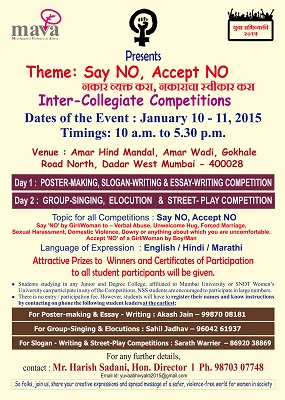
The brainchild of city-based gender rights organisation Men Against Violence & Abuse (MAVA), which has been working among the youth to prevent gender-based violence on women for the past 22 years, is organising ‘Yuva Abhivyakti 2015’, a two-day Inter-Collegiate cultural event between January 10 and 11, 2015.

The event, to be held at Amar Hind Mandal, Dadar West, would comprise poster making, essay writing, slogan writing, elocution, group singing and street play competitions on the theme of ‘Say NO, Accept NO’.

“The competitions aim at stimulating girls to say ‘NO’ to Verbal Abuse, Unwelcome Hug, Forced Marriage, Sexual Harassment, Domestic Violence, Dowry or anything about which they are uncomfortable, and simultaneously tell boys how they should accept the ‘NO’ of a girl,” explains Harish Sadani, Founder-Member, MAVA. He adds, “The competitions are open to all students studying in any college affiliated to Mumbai and SNDT Women’s University.”

For registration, interested students should contact leaders of respective competitions on the phone numbers given on the poster alongside. Alternately, they can send an email at yuvaabhivyakti2015@gmail.com.

“We hope that college students will participate in the event and its competitions in large numbers,” Sadani says.

Categories
Enough said

As the New Year begins…

We bid adieu to a horrifying year of hate and violence, and say a fond farewell to two trailblazing Indians.
Humra Quraishiby Humra Quraishi

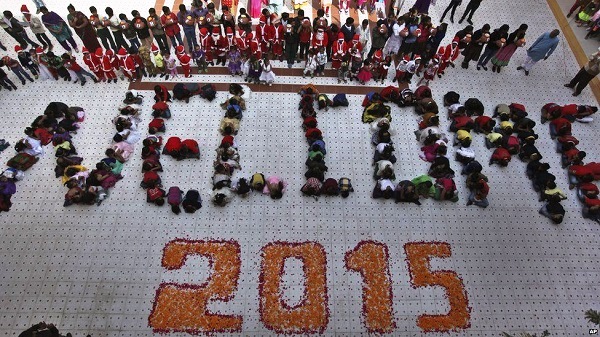
I bid adieu to 2014 with a shudder and a prayer on my lips. The year started well enough, but soon spiralled out of control, with killings and violence in India and all over the world.

I am also saddened by the loss of two prominent personalities in Delhi who recently passed away. One was Saiyad Hamid, a retired civil servant of the UP cadre, and the other was journalist and writer BG Verghese.

Speaking of Saiyad – he was unlike other sarkari Mussalmaans. He will always be remembered for his extensive work and the effort he took for the betterment of minority communities, conducting exhaustive surveys and research on the reasons for the decline of the Muslim community in education and economic spheres.

I had interviewed him on several occasions, and also met him when he wrote a detailed volume on the dismal educational framework in Bihar’s Muslim mohallas. He had detailed a basic observation – in a majority of these mohallas, police thanas and chowkies had be set up in the very plots of land allotted for schools. “So where could the Muslim children study? And why did these mohallas need extra policing?” he had asked.

Another person to remember is BG Verghese, especially for the several important books that he authored. I had attended the launch of his last book, Post Haste: Quintessential India, which was released the last summer and was a truly offbeat book.

In the book, he narrated Indian history in the rather unusual technique of using postage stamps to take the narrative forward. These stamps added essential inputs and acted like ‘fragments of history’ to the book. When asked why he had written the book, Verghese simply said, “Today there is a sort of ‘intellectual illiteracy’ about our country’s history and geography. I worry about the fact that even the political leaders of the day mix up vital historical facts.”

To  the  why   to  this  book  ,  Verghese  had   quite   simply   put  across that today  there  seems to  be  some  sort of  a  “intellectual  illiteracy”     about  our  country’s  geography and   history  ,  and   he  worries  about  this    trend when  even the   political  leaders of   day    mix  up     vital    historical  facts  .

Verghese’s book can do a great service to the young, as it talks about India’s diversity in a very interactive way, and delves into details of the country’s tribes and their traditions. It also addresses little-known figments of history and clears religious misconceptions – books like this one lessen the divide among men and help shrink regional and religious gaps. More importantly, this book reflects the very idea and true spirit of India.

Humra Quraishi is a senior political journalist based in Gurgaon. She is the author of Kashmir: The Untold Story and co-author of Simply Khushwant.

(Featured image courtesy www.bbc.com)

Categories
Watch

Get a ‘Vitamin’ shot at the NCPA

The internationally-acclaimed comedy play featuring solo performer Carlo Jacucci is on at the NCPA tomorrow. Do not miss this one.
by The Editors | editor@themetrognome.in

This is good theatre – and it’s on in Mumbai, at the NCPA, at 7 pm.

Tomorrow, the internationally-acclaimed ‘physical comedy’ Vitamin will play at the NCPA. It combines mime, puppetry, live accordion and surreal storytelling. The show has won great critical praise, five-star reviews and wide audience acclaim.

The British Comedy Guide describes the play thus: ‘Preaching from a book he never read, he (Jacucci) transforms himself into many characters, creatures and things, from a captain to a dancer, a marathon runner, an accordionist, a caterpillar…

Created in cabarets and variety shows across Europe, Vitamin is an internationally acclaimed physical comedy that combines different styles of contemporary comic theatre into a hilarious and moving performance. It plays with our imagination in fun and surprising ways, through mime, storytelling, dance, puppetry, and the unconventional use of live accordion.

In this physical and musical performance, our host Carlo Jaucci takes us to a fantastic world where inanimate objects are injected with vitality and the normal world becomes a lot less normal. Here he shows us completely unrelated but consistently brilliant sketches that range from the bizarre – ‘The Saddest Song in the World’ – to the sublime: the existential caterpillar.

A visually inspiring solo show, Vitamin is created and performed by Philippe Gaulier trained clown Carlo Jacucci, with a free and spectacular imagination and an incisive physical language.

Carlo Jacucci trained at École Philippe Gaulier, where he has taught three months a year since 2011. Founder of Artimmediate (2003), with whom he devised and toured internationally seven solo and collective shows, including Baitman, Beesquit,L’Accordeon-eon-eon, Boxette and Losing Venice, Carlo has been employed as actor and clown by many companies, circuses and theatres, including the Théâtre de l’Opprimé of Paris (2002-05) directed by Rui Frati, with whom he performed all over Europe and in Burundi.

(Picture courtesy ncpamumbai.com)

Categories
Read

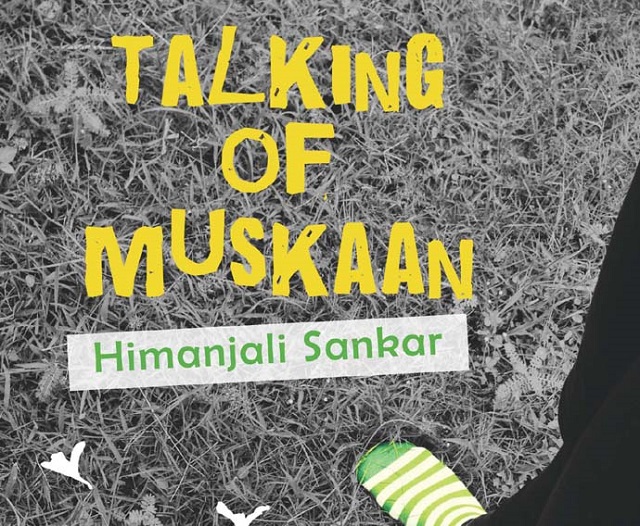
Review: Talking Of Muskaan

The young adult book is a wonderfully-told story of dealing with homosexuality and trying to break free of its shackles.
by Vrushali Lad | editor@themetrognome.in

I recently read Talking Of Muskaan, and I really liked it. It is a story about the terrible teens and dealing with homosexuality at an age where people are just becoming aware of several important things about themselves and the world.

The book is written in three narratives – a close friend, a relatively new friend and an acquaintance – that give three perspectives on the central character, Muskaan, a seemingly strange person who has recently started acting very ‘weird’ around even her close friends. The girl has become very withdrawn as each day passes, finally attempting to end her own life. At the heart of the matter is her supposed homosexuality, which only one person knows anything about. As her class, and more importantly, her circle of friends, begin to come to terms with her suicide bid, several truths tumble out from the not-so-perfect lives of those around Muskaan, friends who could have possibly prevented the tragedy by acting on time.

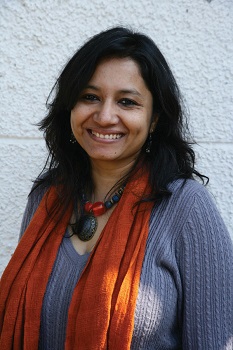
The Metrognome spoke to the book’s author, Himanjali Sankar, on her book’s bold theme, its central character and the creative process that went into the telling of the story.

Excerpts:

What inspired Talking of Muskaan

Himanjali 1I had been mulling over some ideas for many months when in December last year the earlier judgement by the High Court declaring Section 377 unconstitutional was overturned by the Supreme Court – that bothered me and also made me realise what I needed to do with the ideas I had. The book I was going to write was going to use homosexuality to give a twist to the plot but I suddenly felt after 377 that I didn’t want to use it just as a plot enabler but instead wanted to make it central to the plot.

Does Muskaan exist in real life?

I am very sure she does! Maybe not exactly as I have imagined her but there will be teen lives that reflect hers.

What kind of research went into the writing of this book?

No formal research as such. I spoke to the principal of a school to understand the RTE quota and its implementation in schools – and also to understand the softer aspects of how families and children were reacting to it. Other than that, my research entailed listening in on my daughter and her friends’ conversations and trying to figure how the teen mind worked!

Why did you leave out Muskaan from the actual storytelling process? She appears only in the others’ anecdotes.

Muskaan was there in the earlier drafts as one of the narrators but it wasn’t working – it was getting too crowded with four voices and slowing the story down. Then one of my editors suggested we do away with Muskaan altogether, which at first seemed sacrilegious, but as I tried out the idea it seemed the perfect solution. And then it made sense to call the book Talking of Muskaan.

Have any parents of teenagers read the book? What has their feedback been?

A handful of parents of teenagers have read the book and approved of it. Thankfully! I think sensitising teenagers to different ways of being can’t be a bad idea, and that is how they felt too.

___________________________

An excerpt from Talking Of Muskaan:

‘For the next ten minutes we took turns to throw and catch the ball. We did not speak but, oddly enough, it felt nice. I do not have anything against her, personally. I am only concerned about my own academic performance. I think the reason I disliked her was not just because she is the only student who is serious competition for me, academically, but also because she seems to do it without really caring. It’s so important for me and for her, it is nothing.

As we sat there, I felt like saying something to her. ‘Any particular problem?’ I asked.

As soon as I said that, I felt what a stupid question it was, and I did not expect her to reply.

‘It’s just…my friends. They get after me for stupidest reasons,’ Muskaan said. ‘You know Prateek – he wants to go out with me, it seems. And my friends are getting after me to say yes…and something happened a month back…I didn’t give it any importance, I thought it would sort itself out but it hasn’t and Aaliya is still not speaking to me.’

‘Prateek?’ I smiled. He was one of the stupidest boys in the class. ‘Why would your friends want you to go out with him?’

‘They think he’s cool and good-looking and all that.’

‘Really?’ As far as I know, Prateek is very wealthy and I suppose that is what made him cool in their eyes. It made me angry. Not at Muskaan, but at her friends.

‘And what are you running away from?’ Muskaan asked me. She asked as if she really wanted to know, which was nice.

‘Well, I don’t know. It’s just that…I feel like a misfit sometimes…My family is very different. Not, you know, well-to-do, like most of the kids in school.’ I shrugged. ‘It’s just, that it makes me feel…like an…outsider.’

I had never told anyone this before. I had never let anyone know how I felt. I did not know why I was telling Muskaan. Maybe because she seemed really interested. Also just sitting there with her, in my favourite place, it was somehow easy to talk.”

(Featured image courtesy gaysifamily.com)

Categories
Learn

Who will employ the disabled?

Here’s inclusivity: the Community Business Membership Network recently launched a unique research initiative to find avenues for employing disabled persons in India.
by The Editors | editor@themetrognome.in

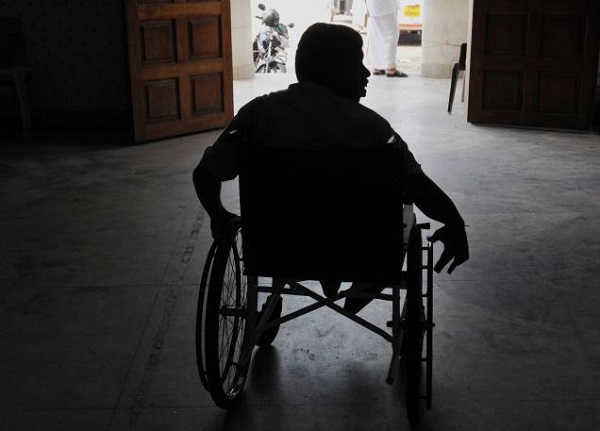
India has a staggering number of physically disabled persons, but the employment opportunities for them are not as many there should be.

Recently, to coincide with the International Day of Persons with Disabilities on December 3, Community Business, a not-for-profit organisation focussing on corporate responsibility and a thought leader on Diversity and Inclusion,launched its latest research ‘Tapping A Pool of Disabled Talent in India: Focus on University Students’. This research is an initiative of Community Business’ unique membership network, the Diversity and Inclusion in Asia Network for India (DIAN India), a group of leading companies committed to progressing Diversity and Inclusion in their organisations in India and driving positive change in the wider community.

According to the United Nations, there is an estimated 70 million people with disabilities in India, of which only an estimated 100,000 are in employment. The new Companies Bill, which includes a mandate that 2 per cent of corporate profits be devoted to Corporate Social Responsibility and proposed changes to the Disabilities Bill, are placing increased focus on people with disabilities.

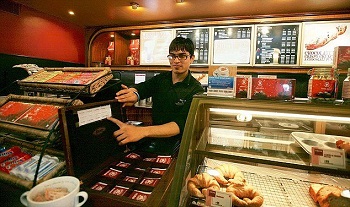
Disabled person at Costa Coffee India“Many companies are looking to fulfill their obligations as a socially responsible employer.” explained Pooja Shahani, Country Manager, India, at Community Business. “However, the more enlightened companies are seeing it as an opportunity to explore how they can embrace those with disabilities, referred to by many in India as the ‘differently-abled’, as part of their overall talent management strategies. These companies recognise the potential of disabled individuals as a largely untapped talent pool and are keen to understand the needs of this target group so they can attract them to their organisations and support them to develop meaningful careers.”

The research is designed to increase understanding on the issues around recruiting people with disabilities in India and focusses particularly on university students with disabilities. In conducting the research, Community Business interviewed eight leading disability experts in India and engaged with over 100 university students with disabilities from 50 different universities in India through an online survey and face-to-face facilitated dialogues. Drawing on the findings and perspectives shared, the report highlights that when it comes to the recruitment of students with disabilities, companies should:

– View students with disabilities as an important talent pool. Recognise that students with disabilities – who have overcome the personal challenges they face and make it through to university – are likely to be well-educated, determined and committed individuals. As the research findings show, the majority have ambitions and aspirations – nearly all (94.9 per cent) expect to work when they graduate and over three quarters (78.3 per cent) are optimistic about their prospects.  They consider opportunities in both the private (60.3 per cent) and public (62.8 per cent) sectors while a role in a multinational company (69.2 per cent) is the most popular choice.

The top three most important factors for selecting a job are long-term career opportunities (75.6 per cent), salary and benefits (71.8 per cent) and nature and scope of work (66.7 per cent). Students with disabilities are no different from other ambitious graduates and their desire for long-term, well-paid and interesting work is the same as their peers.

– Go beyond social obligations and recognise the business case for hiring people with disabilities. Overcome the mindset that bringing candidates with disabilities into a team is something that a company ‘should’ or ‘needs’ to do or is merely part of some CSR initiative. Instead, fully acknowledge that if harnessed correctly, tapping into this pool of talent provides a potential source of competitive advantage.

– Develop a targeted approach. While students with disabilities look to a broad range of sources for information and advice when they think about applying for a job, most of them (60.3 per cent) rely on their personal network (including their friends, classmates and families) and very few (15.4 per cent) participate in mainstream graduate recruitment fairs. Companies relying on traditional, general channels alone may be unintentionally missing out on opportunities of reaching disabled talent.

– Work in partnership with universities and local disability-organisations. In considering how to attract, retain and develop disabled talent, companies are encouraged not to work alone but to work in partnership with both universities and local disability organisations. By working together, each party can leverage their unique strengths and resources to create meaningful and appropriate programmes that increase opportunities and prepare future employees to be effective in the workplace.

– Demonstrate commitment. The research highlights that when it comes to looking for an employer, the students’ biggest concern is the overall culture of the organisation and attitude of colleagues (71.8 per cent).  At the same time, their most important criteria for selecting an employer is whether a company can clearly state its commitment to diversity and inclusion and/or being an equal opportunities employer (82.6 per cent).

The study also showcases eight leading companies in India who are already positioning themselves as employers of choice for disabled talent. These companies include: Accenture, BNY Mellon, Capgemini, EY, Goldman Sachs, Tata Consulting Services, Thomson Reuters and Wipro.

Commenting on the research, Fern Ngai, CEO of Community Business, said:  “We hope that in sharing experiences and perspectives from a significant sample of students with disabilities in India and showcasing good practice by leading companies, this study will not only provide valuable insights to employers looking to market and differentiate their companies as an employer of choice for this talent pool, but also inspire more companies in India to open their doors to disabled talent.”

(Pictures courtesy www.thehindu.com, www.dailymail.co.uk. Images are used for representational purpose only)

Categories
Deal with it

Maha Gov awards electronic limbs to accident victims

Mulund based social organisation Yuvak Pratishthan awards electronic limbs to 13 victims of train and road accidents in Mumbai city.
by The Editors | editor@themetrognome.in

Mumbai and its people are increasingly at threat to life and limb owing to erratic and rash road driving, or worse, falling between the gaps in railway platforms and train coaches. After the Monica More train accident made headlines this year, many city-based organisations and individuals came forward to offer the girl’s family monetary help as well. However, what really helped Monica was receiving electronic prosthetic arms.

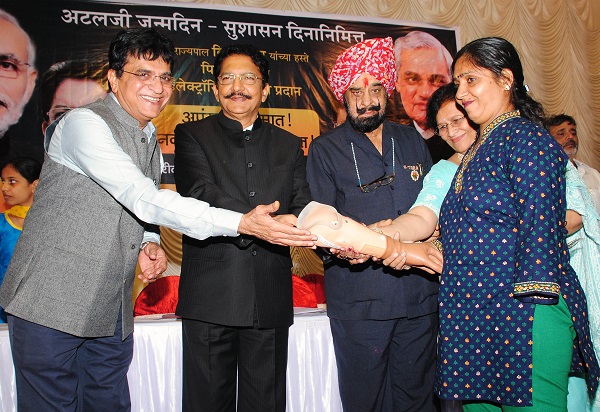
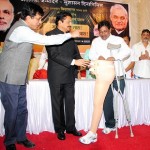
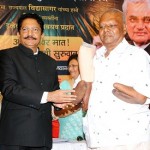
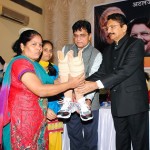
Another initiative in Mumbai recently witnessed the distribution of electronic limbs to 13 accident victims in Mumbai, at the hands of the Maharashtra State Governor Ch Vidyasagar Rao. The recipients were accident victims who had lost their limbs in train accident, road or other accidents. Electronic limbs are typically powered by batteries and they are operated by means of electronic signals sent by the brain to muscles in the area (where the prosthetic is attached) telling it how to move.

The distribution programme was organised by Yuvak Pratishthan, which is founded by Member of Parliament Kirit Somaiya. Interestingly, Monika More was also present on the occasion. 

See some pics of the distribution ceremony below:

Exit mobile version