Categories
Read

Review: ‘A Gathering of Friends’, by Ruskin Bond

Ruskin Bond’s latest collection of short stories is culled from his earlier works of fiction and makes for pleasant reading.
by The Editors | editor@themetrognome.in

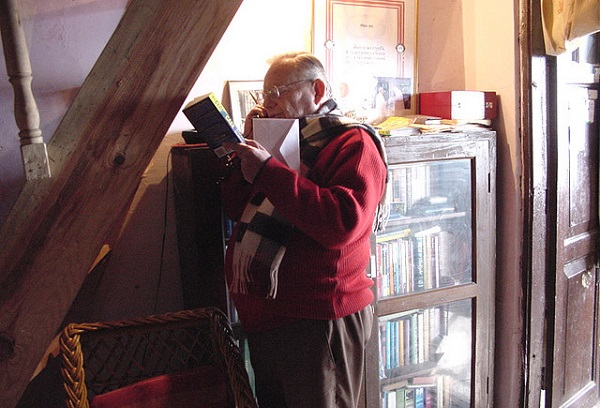
Ruskin Bond exerts a rare fascination for the Indian reader. His British roots, his stories set in the soil of India, his simple plots and the elegance with which he pens his prose, all contribute to the enduring fan following he has in the country. There is hardly any bibliophile in India who does not like Ruskin Bond’s works, and many of his stories continue to ignite the imagination even today.

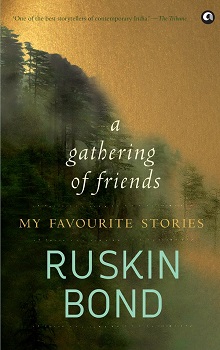
A Gathering of Friends-coverHis latest collection of short stories, A Gathering of Friends – My Favourite Stories is put together by the writer himself, and are his favourite works. This is a special collection, including such wonderful writings as ‘The Blue Umbrella’, ‘Panther’s Moon’, ‘Rusty plays Holi’, ‘Susanna’s Seven Husbands’ and ‘The Eyes Have it’. There are 21 short stories in all.

This book is special not just because its stories are written by a gifted pen, but because they remind us of our childhood and all its sweet joys and sorrows. The stories hark back to a simpler time without the Internet, mobile phones and even colour television, and to today’s readers, they may be somewhat unsettling in their simplicity. For instance, a reader born in the digital age will simply shake his head at the author not keeping in touch with Sushila (‘Love is a sad song’) despite a fateful meeting several years later, or the repeated marrying (and supposed murdering) of seven husbands without being caught (‘Susanna’s Seven Husbands). Nor will he be satisfied with such short works as ‘The Tunnel’ and ‘The Cherry Tree’, which might seem like they lack sensationalist drama.

Nevertheless, the stories shine a light on life in India under the British Raj, or the first years of independence when some British people preferred to stay back in India and die on its soil. Probably because the stories were written at a time when life was relatively uncomplicated do they seem so pure and heartfelt in today’s times.

We recommend this collection for lazy summer afternoons.

Rating: 3.5/5

 (Author picture courtesy blog.ixigo.com)

Categories
Enough said

What makes JNU special?

A new book on the making of JNU details its history, inception and the campus life of a bygone era.
Humra Quraishiby Humra Quraishi

Every time I visit the sprawling campus of Jawaharlal Nehru University, I have wondered why people have ever moved outside it. It is a wonderful place, and is well-connected, too. There is less chaos and more greenery, complete with well-defined roads that lead you to your destination without confusion.

To a casual visitor, the JNU campus is an extension of a dreamy academic getaway, set in calm environs. Sure, the calm is somewhat shattered by stray dogs holding forth at every corner and road crossing, but otherwise, the place is heavenly.

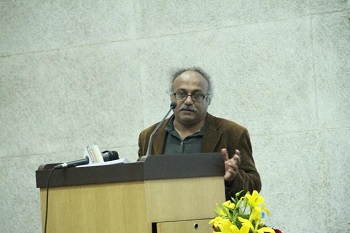
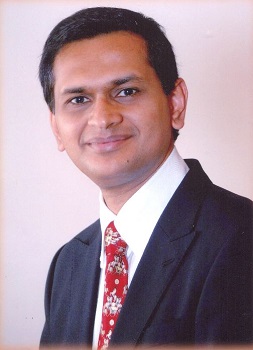
Many like me have often wondered what it is about JNU that makes it stand out from others. If you’ve wondered the same thing, it might be a good time to pick up this new book, JNU: The Making of A University, by JNU academic Dr Dr Rakesh BatabyalRakesh Batabyal (in pic on right). It carries a new insight into the very inception of this university and shines a light on lesser-known truths.

I ask Dr Batabyal why he decided to put together this book. He says, “I do not know at what point of time I began writing this book. It was most probably the words of a dear colleague, Richa Malhotra that motivated me to look deeper into the university whose air I breathed every day.”

He adds that he realised that the university required a “special historiographical treatment” as his research progressed. “A historian’s account, I realised, needed to be approximate to that larger canvas of the institution and at the same time, not allowing little histories to be treated merely as reflections of real big entities.”

Last week, at a discussion on this volume at the India International Centre, many unknown facts about JNU came to the fore. We learnt about the first vice chancellor, to the then political ideologies, the campus life of those times. However, the history of the university is captured only till about 1989. Since that is the year that Dr Batabyal had joined JNU, he probably did not want his personal views to trickle into the text.

(Pictures courtesy admissions.jnu.ac.in, www.thehindu.com. Images are file pictures.)

Categories
Eat

5 must-visit Maharashtrian eateries in Mumbai

Maharashtrian cuisine is beyond awesome but not very well represented. Here’s presenting five eateries serving authentic Maharashtrian fare in Mumbai.
by Ravi Shet

Maharashtrian food is not restricted just to vada pav; there are lots of delicious foods which are gastronomical delights and won’t burn a hole in your pockets, either. Sadly, there are very few restaurants serving authentic Maharashtrian food in our city. Of these, we’ve picked the best ones. Read on…

Aram, Fort
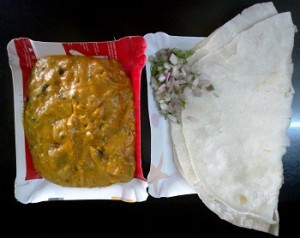
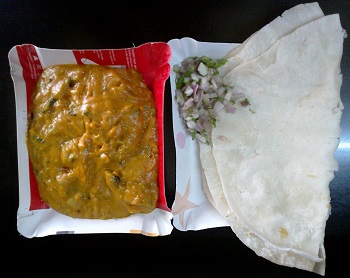
Zunka Bhakari_Aram FortLocated opposite the GPO, this small place is one of the branches of Aram owned by Kaustubh Tambe, where patrons can come and have their food in the standing area. This branch has been open for past six years and it is operational from 9 am to 8 pm, except for Sundays when the outlet is closed.

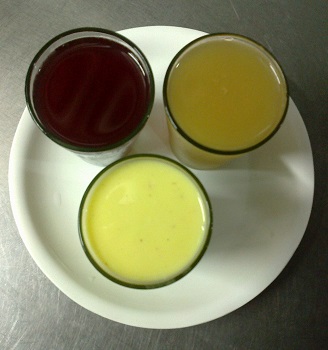
The thalipeeth (Rs 40) and kothimbir vadi (Rs 40) served with green chutney are definitely worth your money. Also, you can go for zunka bhakari (Rs 50) in which bhakari is made from rice flour and zunka is spicy and tasty. Kokam sharbat (Rs 20) and piyush (Rs 35) are equally good. The kothimbir vadi and piyush are hot selling items throughout the day.

Must try: Thalipeeth and piyush.


Girgaon Katta, Borivali West

At walkable distance from Borivali railway station, this place is really a paradise for food lovers who are looking for authentic Maharashtrian dishes. If you Kokam, Panna, Piyush_Girgaon Kattahappen to visit, then do try their kothimbir vadi (Rs 45), zunka bhakari (Rs 85) and thalipeeth (Rs 55) served with green chutney and dollop of butter (prepared at the outlet) on it are really delicious! Do try their aam panha (Rs 25) available during summer season.
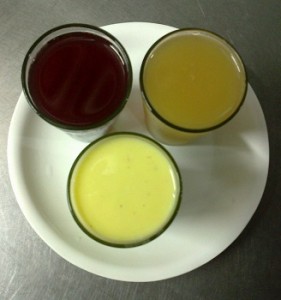
Pradeep Malankar, owner of the eatery, says that Girgaon Katta was established in 2007 and was in the same vicinity; however they had to shift from that location. After a lot of struggle, they set up the new outlet in the current place last year. He adds, “I never gave up because I wanted to serve authentic Maharashtrian food which is not easily available in this part of the city.” He says that once the outlet’s airconditioned section is up and running, he will keep it open every day of the year from 7 am to 11 pm.

Must try: Thalipeeth and zunka bhakar.

Kolhapuri Chivda, Girgaon
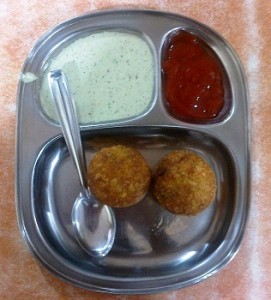
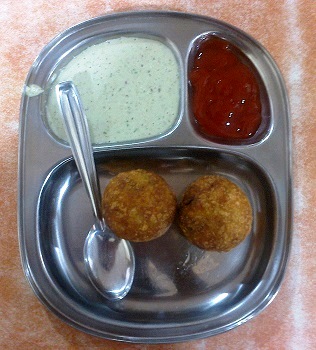
Green Peas Pattice_Kolhapuri ChivdaThis place has been serving authentic Maharashtrian foods for more than nine decades and still continues to do so. It is easily walkable from Charni Road railway station. Kaju usal (Rs 125), made from fresh and wet cashews and green peas patties (Rs 55) served with creamy white coconut chutney along with tomato sauce are my best picks here. Also, you can try thalipeeth (Rs 50) served with yoghurt and creamy white coconut chutney along with piyush (Rs 30) will definitely make your day. Pradeep Velankar, co-owner of the place says, “We have been running this place from 1922 and it is open to customers from 8 am to 10 pm, except for Friday which is a weekly-off. Today’s generation is happy with burgers and pizzas rather than our traditional foods, which affects our business. But our old clients still come to us, even if they’ve shifted far away.”

Must try: Kaju usal and thalipeeth.

Prakash Shakahari Upahaar Kendra, Dadar West

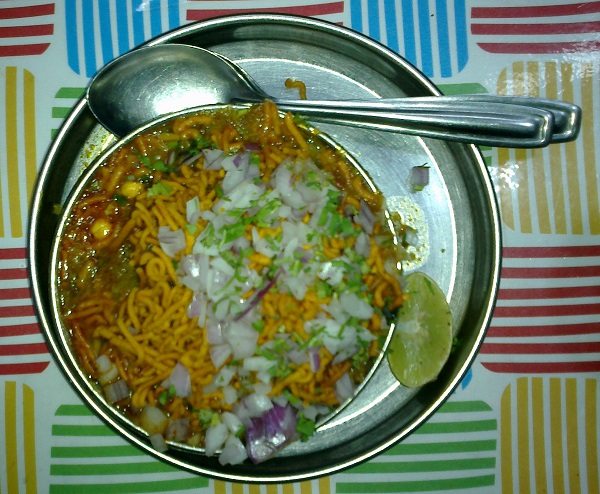
Looking for authentic Maharashtrian food with no frills? This is the place to visit. Situated near Shiv Sena Bhavan, it has been serving people from the year 1971. Their sabudana wada (Rs 50) served here is crispy and yummy along with the delicious chutney made from peanuts and thalipeeth (Rs 45) served with green chutney and yoghurt along with piyush (Rs 38) are really worth the money. Also try their awesome misal (Rs 45) loaded with pulses and chivda (made at the outlet), not like the typical one where there’s a lot of liquid gravy.

Co-owner Ashutosh Joglekar says that he has been managing the show for past 10 years. “You won’t find aerated drinks or ice creams or other food here; we just serve authentic Maharashtrian dishes. My grandfather Shivram Govind Joglekar started the restaurant in 1946 at Girgaon and later we shifted to Dadar in 1971.” Manager Rahul Paranjape says that all their masalas are prepared in-house.

Must try: Sabudana wada and missal.

Tambe Arogya Bhuvan, Dadar West

Opposite Roop Sangam Sari Centre, this place really gives you home-like feel in each and every food you eat here. Established in 1944 by Sadashiv Shankar Piyush_Tambe Arogya BhuvanTambe, it serves yummy kothimbir vadi (Rs 40) which just melts inside your mouth. It is served with a fantastic garlic chutney. Also try their kande pohe (Rs 30) and zunka bhakari (Rs 60) where the bhakari is worth every penny.

Don’t miss the piyush (Rs 36) here; it really soothes you on a hot summer day. Hemamalini V Tambe, manager and daughter-in-law of Sadashiv Shankar Tambe is a graceful Maharashtrian lady who can be seen actively involved in all the work related to this place with a sweet smile on her face. She says, “I have been managing the business for the past 25 years and people call me Tambe Bhabhi.

Must try: Kothimbir vadi and piyush.
Categories
Film

Attend: 20th European Film Festival comes to Mumbai

21 award-winning European films will be showcased at two south Mumbai venues starting today, courtesy the 20th European Film Festival.
by The Editors | editor@themetrognome.in

The 20th European Union Film Festival starts in Mumbai today, and everyone’s invited.

The Age of CannibalsHead to the NCPA and Alliance Francaise Auditorium to watch the films of your choice. As many as 21 award-winning latest European films will showcase different genres of European cinema over 10 days. The event is presented by the Delegation of the European Union to India, embassies of member states of the European Union, presented in Mumbai by the German Consulate, Goethe-Institut/Max Mueller Bhavan Mumbai and Alliance Fracaise.

The festival will open today at the Little Theatre at NCPA, in collaboration with NCPA. Refer to the schedule below for timings and films.

Film schedule: Little Theatre, NCPA (May 8, 2015 to May 12, 2015)

8.5.2015 5.00 pm – 5.45 pm
Reception and Opening
5.45 pm
Germany – The Age of Cannibals (Zeit der Kannibalen) (93 min)
8.00 pm
Latvia-Pizzas(63 m)
9.5.2015 3.30 pm
Greece-A Palace Called Home (108  m)
6.00 pm
Bulgaria-The Foreigner (94 m)
8.00 pm
Cyprus-Committed (85 m)
10.5.2015 3.30 pm
Belgium-Go, Eddy!  (97 m)
6.00 pm
Czech-The Don Juans (102 m)
8.00 pm
Finland-The Boy Upside Down (130 m)
11.5.2015 6.00 pm
Denmark-The Keeper of Lost Causes (100 m)
8.00 pm
Croatia-Vis-A-Vis (77 m)
12.5.2015 6.00 pm
Portugal-A Woman’s revenge (140 m)

Alliance Francaise Auditorium (May 13 to May 17, 2015)

13.5.2015 6.30 pm
France- Jappeloup (130 m)
14.5.2015 6.30 pm
Estonia – Living Images (135 m)
15.5.2015 3.30 pm
Sweden-The Last Sentence (124 m)
6.30 pm
Poland  – Ida – (82 m)
16.5.2015 12.00 pm
Republic of Slovakia:  Candidate (106 m)
3.00 pm
Hungary-The Ambassador To Bern (76 m)
6.00 pm
Spain: Balcanieves(Snowhite)(105 m)
17.5.2015 12.00 pm
Luxembourg-The Symmetry of Butterfly(100 m)
3.00 pm
Slovenia-Shanghai Gypsy (124 m)
6.00 pm
Netherlands-Soof (96 m)

All films are in original language with English subtitles. Entry is free, first-come-first-served.

(Pictures courtesy

Categories
Wellness

Get rid of that stye in your eye

Summer brings with it several eye infections. A stye is one of them, and it is often easy to treat.
Dr Anand Shroffby Dr Anand Shroff | Consultant Ophthalmologist, Shroff Eye Hospital

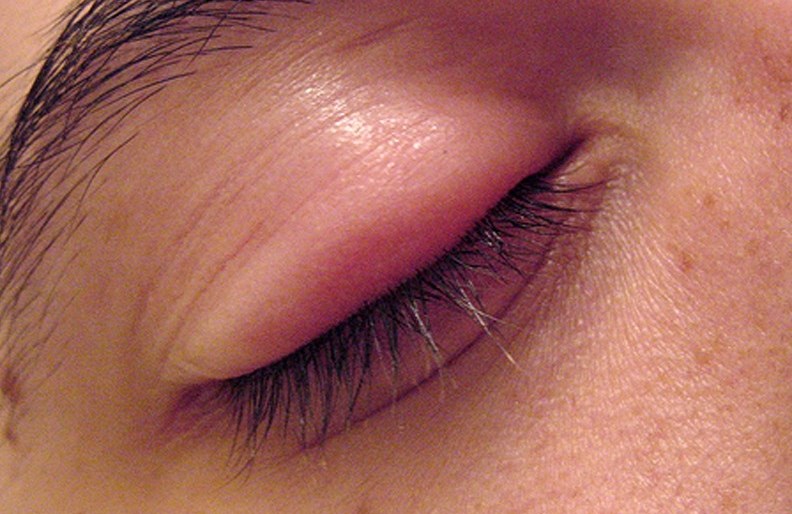
The medical term for a stye is ‘hordeolum’. Styes are very common at this time of the year when the temperatures soar and make the environment susceptible to bacterial growth. A stye occurs when glands at the edge of the eyelids become blocked and subsequently infected, due to bacterial contamination. I have seen many cases of styes and conjunctivitis this month.

According to Indian Ayurveda, certain foods also produce heat in the body. Pitta is associated with heat and its effects are felt during summer. Many patients have a history of styes being formed after they have eaten a lot of mangoes or pickles. Although there are no scientific studies citing this, this is a common finding during summer, at least in India!

My grandmother and mother have followed this tradition of ‘cooling’ mangoes before eating them by soaking them in water. I don’t know how much that helps, but mango lovers who are susceptible to styes in summer should certainly try it. Some people are more susceptible than others, as they have greater amounts of bacteria on their lids or have excessive discharge of the mucous glands and hence are more likely to develop a blockage.

Things we do that encourage bacterial growth:

  1. Not removing makeup before bedtime
  2. Using old, contaminated cosmetics or cheap ones
  3. Rubbing the eyes with unclean fingers
  4. Inserting and removing contact lenses with unclean fingers
  5. Not following proper contact lens hygiene
  6. Swimming without wearing swimming goggles

A chalazion (also known as a meibomian cyst) is different from a stye. Chalazion is a blocked eye lid gland which is long standing, not infected and forms a bump on the eyelid, usually resulting from an untreated stye. A stye is an acute infection of the gland which usually causes redness, swelling, and pain. If you have a swollen lid that seems to be especially tender in one localised area, the chances are high that it is a stye.

Either way, the preventive steps and first line of treatment remain the same and it is best to see an ophthalmologist for accurate diagnosis.

What should you do?

The first line of treatment should always be hot compresses and eyelid hygiene.  When it is painful, it is usually in the acute phase and at this time it responds well to hot compresses.

Because a stye is well sealed from the outside, antibiotic drops do not penetrate very well to the site of infection. However, hot fomentation or applying heat to the inflamed area normally works. The most important aspect of heat application is to do it as frequently as possible especially during the initial phase of the stye. An acutely inflamed stye may begin to drain and at this point topical antibiotic eye drops may help.

Eyelid hygiene: Stop using eye make-up for a while as make-up can be contaminated with bacteria. Apply baby (tear-free) shampoo to a clean, wet wash cloth or ear bud and gently rub along the eyelid margins once a day.  Some prefer using commercially available pre-moistened eyelid wipes. Any mild analgesic and anti-inflammatory tablet may also help reduce painful discomfort.

If the stye hardens and forms a closed cyst, it may need minor surgical removal.

If left untreated…

Some styes remain the same, few get worse and a few get better on their own. If it is on the upper eyelid, it may affect vision, but only due to the drooping of the eyelid, which reduces when the condition improves. On the lower lid it is less likely to interfere with vision. However, it is not possible to know how it will evolve, hence simple home remedies as listed above should be adopted.

(Featured image courtesy medicalpoint.org)

Categories
Do

Engage your child this summer

The NCPA hosts a range of activities for children in Mumbai to spend their vacations learning various arts and crafts.
by The Editors | editor@themetrognome.in

Wondering what to do with your restless, bored child this summer? Channel his or her inner creativity through a series of fun activities at the NCPA.

Since 2010, the NCPA decided to initiate a ‘Summer Fiesta’ as a means to reach out to children and offer them an exciting way to spend their vacations.
Over the years, children have enjoyed a series of plays and films picked for them, as well as a range of engaging and creativity-enhancing workshops in theatre, dance, photography, puppetry, art, craft, creative writing, poetry, animation film-making and many others with masters in their fields.

This year…

The 2015 edition of Summer Fiesta offers children an exciting way to spend their holidays. It is a month long festival that encourages their development through the performing arts. (See the event schedule here).

Children can look forward to workshops on acting, photography and craft, among others, apart from participating in singing, dancing and debate contests.

Look up booking details here. The fiesta has started on May 1, 2015.

(Picture courtesy NCPA, Mumbai. Image used is a file picture)

Exit mobile version