Categories
Tech

The 4 best smartphones under Rs 20,000

We list four smartphones you can get under Rs 20,000, complete with all the features and specs you would need.
by Manik Kakra | @Manik_K on Twitter

Chances are that you are using a smartphone right now, or are looking to buy your first one. If you don’t want to spend a bomb on a new phone and yet can’t afford to miss out on the good chipsets, decent memory, latest features, OS updates and smooth experience, this mid-range handset line-up is for you. We give a list of the best smartphones in the Rs 12,000 to Rs 20,000 price range today.

Lenovo Vibe X2: Lenovo’s past few launches have been really up to the mark. The company has sorted out a lot of its software glitches, has been more prompt with OS updates, and seems to be serious about this price range. And the Vibe X2, priced at Rs 19,990, shows this. With its smooth performance, stylish and unique layered look, this device is surely worth checking out.

Specifications: 5-inch (1920 x 1080) screen, Android 4.4.2 with Vibe UI, MediaTek 6595 chipset, 13 MP and 5 MP camera, 2,300 mAh battery.

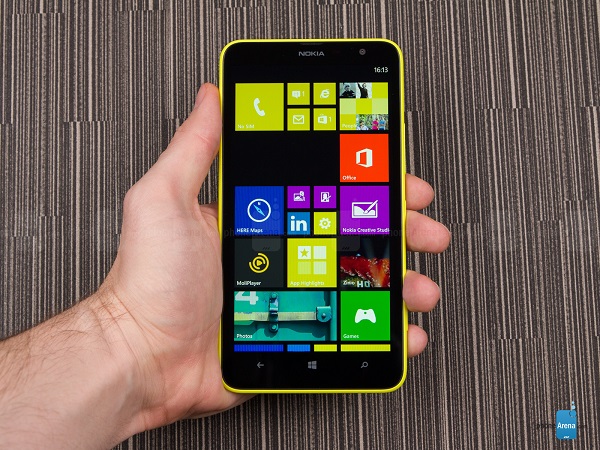
Lumia 1320: If you want a large-screen device and don’t want to sacrifice the performance as well as battery life, the Lumia 1320 could well be for you. Currently available for about Rs 13,500, this ‘phablet’ comes in a range of the usual Lumia colours, and has a lot going for those who don’t mind carrying a big phone, especially considering it’s one of the Lumia phones to get full features of the upcoming Windows 10 for Phones OS.

Specifications: 6-inch (1280 x 720) screen, Windows Phone 8.1, Snapdragon 400 chipset, 5 MP and VGA camera, 3,400 mAh battery unit.

HTC Desire 820Q: Successor to the popular Desire 816 and 820, the Desire 820Q is a great dual-SIM device that doesn’t compromise on performance, and gives big bang for the buck in the camera and audio departments. With a price tag of Rs 19,000, this HTC device is surely worth considering.

Specifications: 5.5-inch (1280 x 720) screen, Android 4.4 with Sense 6 UI, Snapdragon 410 chipset, 13 MP and 8 MP camera, 2,600 mAh battery.

Micromax Canvas Gold: This device has been one of the more popular phones in this price range, and its performance, screen quality and thinner looks addMicromax Canvas Goldto its appeal. The phone comes in gold colour, has a good camera, and doesn’t carry a lot of bloatware, which is a plus.

Specifications: (1920 x 1080) screen, Android 4.4.2, MediaTek 6592 chipset, 16 MP and 5 MP camera, 2,300 mAh battery.

Another phone worth mentioning is Xiaomi’s Mi 4, while I suggest its 64 GB model, which is priced at about Rs 22,000, a little over our budget here, it seems worth spending that extra much, making it among the best phones to buy today.

Have you tried any of these phones? Tell us about your experience in the comments section below.

(Pictures courtesy gsmarena.com, www.phonearena.com. Images are file pictures)
Categories
Places

On the money trail at the RBI Museum

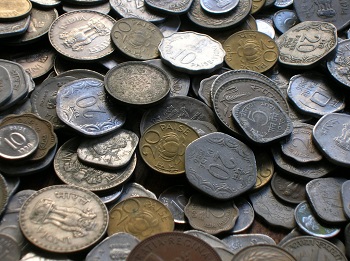
Our coins are made of ferritic stainless steel, and have a mint mark which reveals where the coins were made. Read on for more.
by Ritika Bhandari Parekh

It all started when my cousin asked me to find out places in Italy which she could visit on her own. Her husband, who had work to finish said, “There isn’t much to see, except museums and more museums.” She retorted, “I don’t mind the museums at all.” This got me thinking and looking for ‘her’ kind of places, and I thought about the museums in Mumbai.

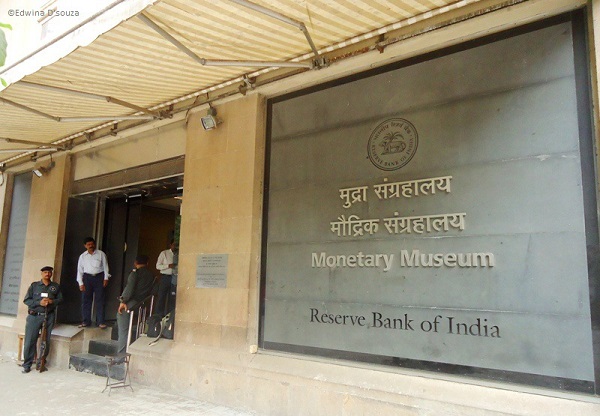
A quick search revealed that I had been to most of them as a schoolchild. But, wait! There was a new addition to the list – The Monetary Museum by Reserve Bank of India (RBI). While most of us in Mumbai are game to visit international museums, how many have actually visit this fascinating one in their own city?

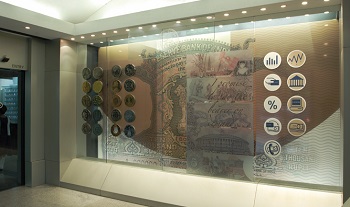
RBI Museum 1This numismatic museum officially opened in 2004 at the hands of the then Indian President Dr APJ Abdul Kalam. Situated in the commercial Fort area of South Mumbai, the museum building is located in the business district on Pherozeshah Mehta Road. If you wander a little ahead, the famous Strand Book shop is right around the corner.

After depositing my bag in a locker and being issued with a strict ‘No Photographs please’ warning, I started my tour alone.

The museum is divided into six sections, with each section enlightening us on different ideas. The first section talks about ‘Concepts, Curiosities and the Idea of Money’. It takes us through the era of the barter system and explains how grains, cattle, implements were used. The evolution to precious metals, coinage and paper money is also explained here. On display are curiosities like the Neolitihic stone axes from 10 millenium B.C, as also cowri shells and beads from the A.D. era.

What caught my fancy was a square-shaped miniscule coin from the 3rd century BC, a silver bar from South East Asia, as also one shaped as a knife served as a token of money. A huge rectangular Indian note of Rs 10,000 (I am not kidding) was also on display.

If observed closely, an early 20th century cheque book of the Bank of India (BOI) Ltd, reveals three languages on it – English, Hindi and Gujarati (an indicationRBI Museum 2 of how the Gujarati business class was always an important part of the city). A counting tray from South India for the many fanams or small circular coins and other interesting articles are displayed in glass boxes.

Section 2 on Indian coinage is vast and comprises every kind of medieval coinage used by the Indian Princely States. It also houses coins from the pre-Colonial era. A quick look reveals that metals such as gold, silver and copper were the favourites among the kings. So Akbar, Tipu Sultan and Shivaji had golden mohurs of different values. It is also interesting to note the inscriptions on these coins.

From deities to names to zodiac signs in which the coins were made, all have made their mark on the money trail. It is said that before the East India Company was taken over by the British Crown in 1858, there were over a 100 princely States that had the right to issue coins. So the museum and its curators have done a splendid job in bringing not only the famous Mughal era coins, but also the coins from the North-Eastern States and the koris and dokdos from the Kutch kingdom.

As we end the section, a display of Indo-European coins and the commemorative coins by the Indian Government greet us. For the uninitiated, 1988 was the year of Aurobindo Ghosh and his saying that ‘All life is yoga.’ And so, we walk through the third section of ‘From coins to bank notes’. My Organization of Commerce (O.C.) lectures started playing in my mind, as I read about promissory notes, bills of exchange and payment hundis.

Section 4 on Indian paper money, reveals the metamorphosis of the Indian currency. Paper money from the British and post-Independence days make their way to the displays. A peculiar and striking feature of most of the notes were the portraits of the British rulers, like King George, on them.

The fifth section talks about ‘Knowing your currency’. It helps us understand the difference between a real and a counterfeit note. I learnt that the motif of the tractor on the five-rupee note was to symbolise the green revolution, and that the two-rupee note had an Aryabhatta satellite. Interestingly, our current 500-rupee note uses raised intaglio printing for the blind community.

The last section is called ‘RBI and You’ and is devoted to the activities of the main central bank of India. There is also a wall of portraits of all the presidents of RBI, since its inception in 1937.

And then, just like that we come to the exit. The Monetary Museum revealed a lot and keeping all that in mind, I am back on the sunny, crowded and chaotic street outside.

(Pictures courtesy www.eumo.in, wannabemaven.com, strayingaround.blogspot.com. Images are file pictures)
Categories
Overdose

We live in Waste Age

What gives us the right to pollute the environment and show scant regard for natural resources? What’s with the disrespect?
Jatin Sharmaby Jatin Sharma | @jatiin_sharma on Twitter

I have had an epiphany. Courtesy of my dad.

We human beings have this tendency to name the era we are living in. And why not, since our history textbooks taught us to follow nomenclatures? We had the Dark Ages, Industrial Age, Jet Age, and several others, and so I would like to add another one to the list with Waste Age.

How did I arrive at this name? This name was not self-realised but rather, it came about because of my father.

My father has always taught us sustainability. His mantra in life has always been to optimise usage of the things that we purchase. Whether it has been the TV , his scooter and even his cupboard. He is the one who also instilled values in us about walking home to save money and getting valuable exercise at the same time.

I am sure that most of us have had such experiences and looked at our parents’ generation through a faintly critical lens. Our generation believes in and appreciates the boon of abundance. Why should we repair a TV when repairing will cost Rs 5,000 and you can buy a brand new TV for Rs 10,000? I should buy a new phone because my phone is outdated – it is two years old!

But now I wonder – do things really become old in two years? When we were children, ‘two years’ was a healthy amount of time for our possessions – they were just about new if they were two years old, and far from old.

With our possessions becoming old in just six months, we are living in the Waste Age. We like to discard more and save less. We make no effort to repair something broken, or tune something that needs a helping hand. Since new replacements are so cheap, we choose to throw away our stuff rather than reinvest in it.

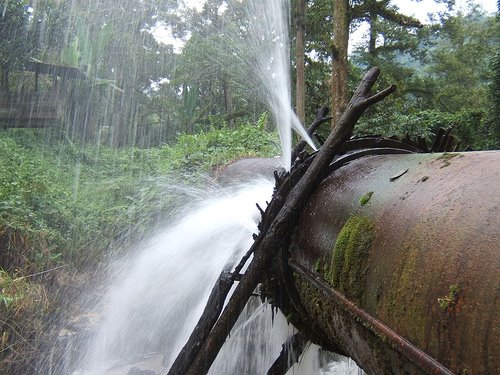
It’s not just about our personal possessions, but about the natural resources we use so carelessly. We might see a million ads that talk about saving water but weWasting water in Mumbai are the first ones to go skipping to a rain dance for a Holi party. Every year, we Mumbaikars are told horror stories of how the lakes have water for just one more month and that there will be water cuts. And even as we read these news reports, we leave the taps running for no reason at all. We think nothing of leaving the lights on in vacant rooms, or our computers running all night. We are quick to preach about cleanliness, safe biodisposal and immediate clearing away of garbage, but how prompt are we to conserve our environment and keep it healthy and usable for ourselves and our children?

We do not believe in repairing things and using them for a little more time because advertising and marketing have made us believe that we should live with the times. Since we can find replacements for all our possessions easily, we have stopped loving the things we own and we are not as attached to them as we should be.

My father still loves the watch that was gifted to him on his wedding day 33 years ago. And how’s this for a fun fact – that watch still works! It’s not just down to the care and affection he has showered on his watch all along, it is also because the watch is made of superior materials. These days, I am hearing stories of how companies are making items with inferior materials so that they conk off sooner, necessitating a new purchase. One of my friends was telling me about how airconditioner companies make cooler condensers using aluminium instead of copper, so that their durability decreases. Companies and marketing gimmicks have contributed a lot to our inherent wasteful tendencies.

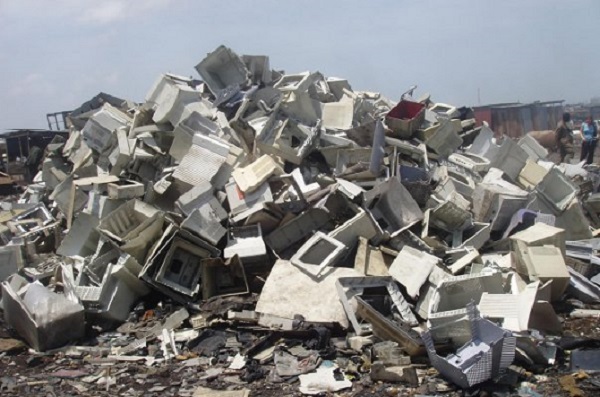
Somehow, we have become more informed but we are less aware. And this is what is worrying. We spare no thought to anything we do these days – the simplest example is discarding your old phone. Either we sell them at cheaper rates or just toss them in the garbage. Did you know that mobile phones are the largest contributors to e-waste? The developing nations are tottering under the weight of locally-generated e-waste and that which is dumped on them by developed nations. And this is hazardous and toxic waste that poisons everything in its immediate environment.

Enjoy the Waste Age, everybody. We’re not going to be alive too long because of it.

Jatin Sharma is a media professional who doesn’t believe in growing up, because if he grows up he will be like everybody else. ‘Overdose’ is his take on Mumbai’s quirks and quibbles.

(Pictures courtesy nswai.com, shybuzz.blogspot.com. Images are used for representational purpose only)

Categories
Film

Review: Mad Max – Fury Road

Unrelenting, furious action runs alongside a feminist statement on slavery, torture and the overthrowing of shackles imposed by a dictator.
by Ravi Shet

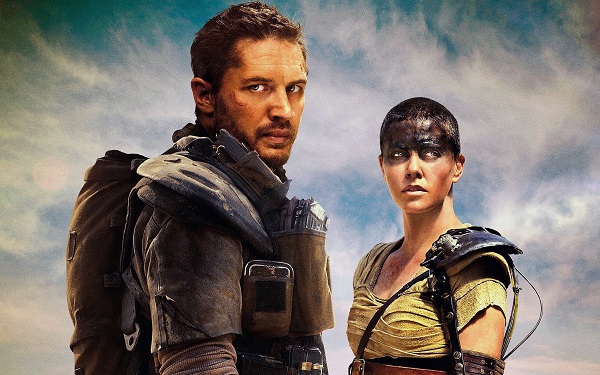
‘My name is Max’. This unrelenting action film starts with these words. Almost three decades after the original installment (starring Mel Gibson as Max), director George Miller comes up with this edition of Mad Max with Tom Hardy playing Max Rockatansky.

The film is set in an unspecified future, in a world grappling with little or no water and gas. Only one person, Immortan Joe (Hugh Keays-Byrne) holds the reserves to these precious resources and he lets the inhabitants have access to them for only a minute every day. Immortan Joe is the ruthless leader of a band of bald, white body paint-covered crazed soldiers referred to as ‘War Boys.’

As luck would have it, Max is captured by Joe’s War Boys and termed as a Universal Donor. He is tied to a speeding car and used as a ‘blood bag’ (and referred to as one) for an ailing War Boy named Nux (Nicholas Hoult), along with other War Boys who are in hot pursuit to capture Furiosa (Charlize Theron), a solider with a mechanical left arm and a former trusted member of Joe’s army. For her part, Furiosa is on a mission to help Joe’s five wives, known as ‘prized breeders’, escape from his world of torment in an armoured tanker truck.


Max and Furiosa’s paths soon cross, but they start off on a bad note. However, as time progresses, they develop an excellent bond with each other, finally joining forces to battle their way in a furious, non-stop chase that will have you riveted and completely unable to tear your eyes away from the screen. Eventually, Nux switches sides and teams up with Max and Furiosa.

This is a relentless, extremely fast-paced and brutal film with a feminist narrative, and is backed by stellar performances. Tom Hardy does full justice to Max, and is superlative in both the fight sequences and the softer moments of the film. Meanwhile, in a deglam avatar and buzz cut, Charlize Theron is absolutely impressive and believable. Furiosa is one of the strongest women in recent Hollywood films, and is a new standard for other superheroines to live up to.

This is a must-watch for action and stunt buffs – with few dialogues, constant action and new heights in cinematography, Mad Max: Fury Road will keep your adrenaline high from start to finish in this mad drive for hope and redemption.

Rating: 3.5 out of 5

 (Picture courtesy www.madmaxmovie.com)

Categories
Film

Review: The SpongeBob Movie: Sponge Out of Water

Watch this film only if you’re a SpongeBob fan who doesn’t mind a slightly weird storyline and tonnes of hamming.
by Ravi Shet

This week sees the release of the SpongeBob cartoon series famous on the Nickelodeon cartoon network turned into a full-fledged movie. At the outset, let me warn you that this film will leave you cold if you’re not a fan of silliness or SpongeBob.

SpongeBob (voiced by Tom Kenny) works as a cook at The Krusty Krab, a burger joint famed for its yummy Krabby Patties owned by Mr. Krabs (voiced by Clancy Brown) in the underwater town of Bikini Bottom. Squidward, Patrick and Sandy are SpongeBob’s buddies. Residents of Bikini Bottom are always in high spirits while gorging on yummy Krabby Patties, except for Plankton (voiced by Doug Lawrence) who tries every trick to steal their secret recipe. During one of his attempts he tries to steal the secret recipe, it vanishes entirely, leaving Plankton and SpongeBob clueless.

Deprived of their yummy Krabby Patties, the residents of Bikini Bottom go crazy and the fun loving place turns into a site of utter chaos. SpongeBob teams up with Plankton to find the secret recipe and get to the bottom of the disaster at Bikini Bottom. Through their team work, they build a photo booth time machine to travel back in time and get hold of the secret recipe.


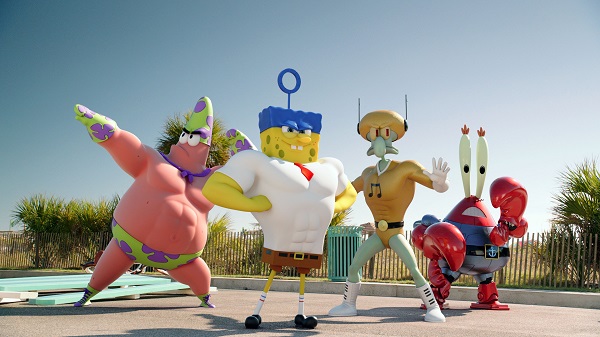
It turns out that bad tempered and crazy pirate Burger Beard (Antonio Banderas) has stolen the secret recipe; he plans to retire from piracy and run a food truck business. The yummy Krabby Patties which were the most-wanted food item underwater at Bikini Bottom, score an instant hit with people above the water. SpongeBob and the gang soon realise that the person having the secret recipe is not only huge in size as compared to their miniscule selves, but he also has a magical book that has the tale of Bikini Bottom written in it – and he can rewrite the ending. Luckily, SpongeBob gets hold of the last page which helps him to rewrite the story – he adds superpowers and a huge size to himself and his gang friends.

These superpowers help SpongeBob blow powerful bubbles, while Sandy becomes a huge sized squirrel. Patrick is able to attract all the ice cream cones – this one makes you laugh out loud. Mr. Krabs’ retractable claws remind you of Marvel’s Iron Man, while Plankton develops a massive green-coloured body (like The Hulk) with a tiny head.

The film is strictly okay, with very few genuinely funny moments. I frankly thought the entire film should have been an animation instead of this weird mish-mash. However, there are a few trademark SpongeBob silly scenes which will crack you up – but only if you’re a kid and a fan of the Nickelodeon series.

Rating: 2.5 out of 5

Categories
Learn

Mumbai gets modernised air rifle shooting range

The State Governor inaugurates a modernised air rifle shooting range at Dadar; it has trained several shooters in nine years.
by The Editors | editor@themetrognome.in

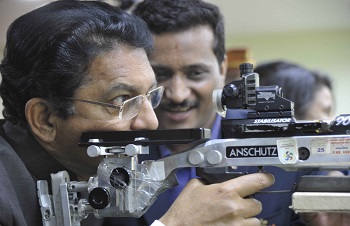
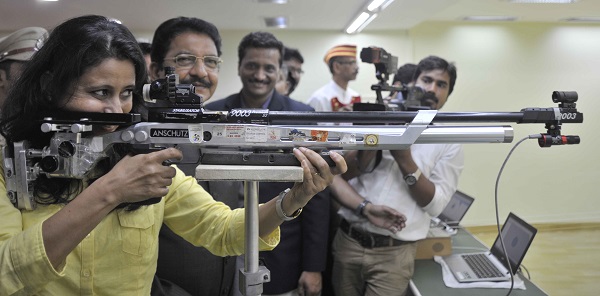
The Governor of Maharashtra Ch Vidyasagar Rao recently inaugurated the modernised Air Rifle Shooting Range at Swatantryaveer Savarkar Rashtriya Smarak, Dadar, Mumbai. Ace shooter Anjali Bhagwat, Chairman of the Swatantryaveer Savarkar Rashtriya Smarak Ranjit Savarkar, former MP Bharat Kumar Raut, Trustee Manjiri Marathe and many national shooting players were present on the occasion.

Governor inaugurates the rifle range

Said Ranjit Savarkar, “The Rifle Shooting Range has produced several national and international shooters. The Range has been modernised by incorporating the latest Hybrid 8 lane Olympic Standard Target System. This is the only non-Government range in India to have modern facilities.”

The 10- meter Rifle Shooting Range was inaugurated by Anjali Bhagwat and Suma Shirur on February 19, 2006.

Vishwajeet Shinde is the Chief Coach at the Range. During the last nine years, more than 3700 students have received basic training at the Range.

Exit mobile version