Categories
Watch

Watch: German film ‘Hotel Lux’

The 2011 film set in Nazi Germany talks about fleeing an autocratic rule into what could be more dangerous territory.
by The Editors | editor@themetrognome.in

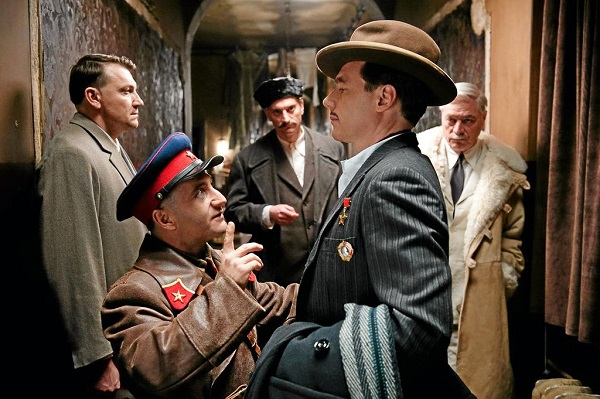
Hotel Lux is a 2011 German period film directed by Leander Haußmann. The tragicomedy begins in Nazi Germany and moves to the Soviet Union. Featuring the main character Hans Zeisig, an apolitical comedian, the picture involves him with numerous historical facts and figures of this era.

The story of the film goes thus: Hans Zeisig and Siggi Meyer are a comedy act. At the Varieté Valetti, they do a brilliant parody of Hitler and Stalin – unperturbed by initial threats and intimidations. But that will not go on for much longer. Meyer goes into hiding in the Resistance, gets caught and is taken to a concentration camp. Zeisig is forced to flee with a false passport and ends up in Moscow, in the notorious immigrants’ hotel Lux. The Soviet secret services mistake him for Hitler’s renegade astrologer; Zeisig interprets the stars for Stalin and gets caught up in the power struggle between Stalin’s schemers. Zeisig loves Frida, an underground resistance fighter from Holland, who protects him until she lands herself in trouble.


Head to Gallerie Max Mueller, Kala Ghoda. Film begins at 6.30 pm. Entry is free.

(Picture courtesy www.ruhrnachrichten.de)

Categories
Read

Review: ‘Something happened on the way to heaven’

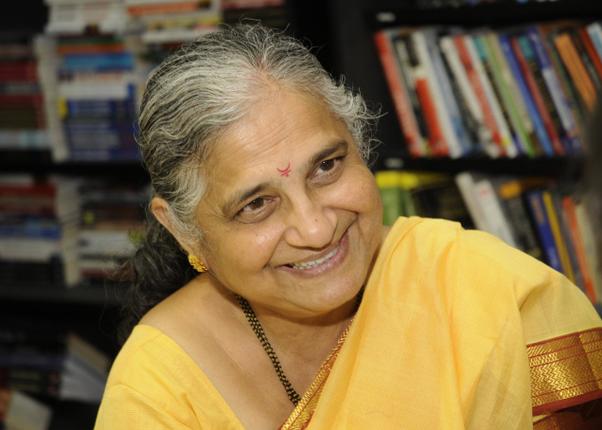
Sudha Murty’s ‘Something Happened On The Way To Heaven’ is a must read if you are looking to reaffirm your faith in human goodness.
by Ritika Bhandari Parekh

When famous comedian Robin Williams died, his fans mourned the tragic news. But the shocking part was that he ended his life after a long history of depression. As a stand-up comedian and an actor, Williams must have been surrounded by his fellow colleagues most of the time. And yet, he chose to give up on life after making the world smile.

It is strange and confusing to understand that despite all the riches in the world, one only needs a fellow being’s hand, for comfort and support to survive. A YouTube video about a girl shaming her molester gets the highest likes because it echoes every youth’s stand against the wrong. So in a world where according to mythology we are living in the Kalyug era, it has increasingly become difficult to affirm and reaffirm our faith in humans and humanity. As consumerism becomes a way of life, finding life’s simpler joys is a treat in itself.

Book coverReading Something Happened On The Way To Heaven, edited by Sudha Murty, brings together the varied facets of the human mind and heart which leave us fascinated. Scanning over 1,000 real-life stories, Murty coherently puts together 20 inspiring tales for the reader to enjoy. She hopes the experiences of the individual writers’ reignites our passion for living the beautiful life we have inherited and are about to make.

The stories weave a tapestry of desi emotions from Kerala to Orissa. Just like the Mumbai local trains, it traverses South Mumbai to suburban Lokhandwala. The themes of the selected submissions ranges from understanding the true quality of unspoken love among elders, to finding the courage to speak the truth as it is. An Alzheimer’s-stricken grandfather, a morally right plastic surgeon, a Dhaka girl from the Partition era…these are some of the interesting people you will read about in this book.

With an easy style, the book is easy to devour in a single sitting. The stories in the book adhere to the saying that ‘Truth is stranger than fiction’. So while the rebellious youth will understand about life from the experiences of their seniors, the elders will take heart from the caring nature of the younger generation which lives in the mobile era but still believes in love and togetherness.

Murty has caringly put the 20 stories together, which to a dancer’s heart resonates the 9 rasas (emotions). From giving a new and subtle meaning to Shringara, the emotion of love to bringing an evolution-like tale from the boroughs of nature and making us feel Adbhuta, the emotion of surprise. My personal favourite is ‘The Dhaka Girl’ story, which has innuendos of our communal history and yet makes the saying ‘ What goes around, comes around’ ring true.

Rating: 4 out of 5. Buy a copy of the book here

(Picture courtesy www.amazon.in, www.thehindu.com)

Categories
Eat

Review: Apple A Day

A perfect day starts with this Khar eatery, where fresh fruit juices will gladden your senses and fill your tummy.
by Ravi Shet

Do you want to start your day with fresh vegetable or fruit juice or a combination of both? Just walk down the road from Amjad Khan chowk and enter Apple A Day, a little joint situated next to Olive Bar & Kitchen, Khar. The place has two red-coloured bar stools and caters to the health- conscious.

Founded by the Sakpal brothers – Kiran and Sanket – this place has completed two years this month and is famous in the area for its fresh juices, shots, smoothies and salads. They also serve customised preparations as per the patrons’ requirements.

Wheatgrass Shot_Apple A DayThrough their open kitchen, I got to witness the preparation of their Wheatgrass Shot (Rs 69, in pic on left) served in a shot glass – this was a good way to start the rest of the tasting. I next tried their Carrot-Beet-Ginger-Mint (Rs 69) and Apple-Pineapple-Spinach (Rs 150), which are excellent. The chopping and blending of fruits and veggies are done once the order is placed by patron. What I really liked is that if you ask for sugar or any sweetening agent, you get an instant ‘No’ in answer.

They offer free home delivery and juices are delivered in thermostat bottles – they ask consumers to return the empty bottles. Monthly plans for Fresh Wheatgrass Juice (Rs 1818) and Fresh Fruit Juices/Blends (Rs 2828) are available for the patrons who wish to start their day with healthy juices on a daily basis. In a span of two years, they have built a base of a good number of regular customers; be it doctors, models and fitness buffs.

I will be heading there again soon, to try out their Orange-Beet-Carrot (Rs 100) and Pomegranate-Watermelon (Rs 150) which are best sellers, from what I hear. Cleanliness, good service and a wide range of juices (without added sugar and preservatives) makes this place rank high on my list.

The Metrognome reviews restaurants anonymously and pays for its meals.

(Pictures courtesy Ravi Shet)

Categories
Guest writer

My body is weighed down…

A Mumbaikar writes about her struggles to lose weight and not finding enough time and motivation to keep at it.
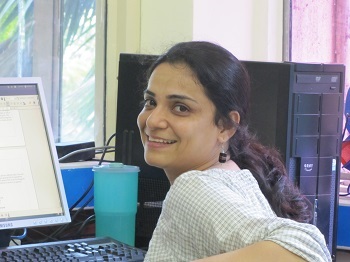
Pooja Birwatkarby Dr Pooja Birwatkar

Amidst all the stresses of our lives, inconsequential and significant, one stress grips most people in the world, especially if one is a female. I don’t mean to sound stereotypical in my supposition, but I have observed that women all over the world fuss, fret, frown and lose sleep over the idea of weight loss.

Any woman, from an anorexic model to actors, entrepreneurs, housewives, working women, or any women you see on the street, worries about her weight. We all have the common nagging feeling that we are lost in the fight against the bulge. Nobody is content with their weight we all wish for magic wands to make those oodles of extra weight evaporate into thin air, even as we gobble everything in sight and don’t exercise.

Slowly entering middle age, and trying hard to hold on to my youth, I have tried practically every trick to keep myself fit and fine. Gone are the days when uncomplicated weighing machines would just point to your weight. Now, those same machines heartlessly tell you your weight but also announce that you are obese. Not believing one such machine recently, my worst fears were confirmed when a medical checkup concluded high cholesterol levels and pounds of extra flesh I was carrying.

There began a vicious cycle of thinking positive thoughts alternated with losing my mind over how to reduce my burden on the Earth.

And yet, I am reasonably active (Mumbai people can’t afford to be stationery). My daily dose of exercise is supplemented by going up and down several flights of stairs at the local train station. I run, hop, walk fast to reach office on time. So why do I still have extra weight? Is this much exercise not enough? Sadly, it isn’t. Most medical practitioners will tell you that your mind has to be stress free when exercising. So all of our daily jogs to work and back don’t actually help as they cause more stress and strain.

I am in awe of those super women with not an ounce of extra fat on their bodies guzzling junk food and it doesn’t show on their bodies at all. Meanwhile, I wear what I eat. I see lots of women who eat healthily, but blame it on Mumbai’s commute, which makes you hungry after a long day at work. As one steps out of the trains to run home, the aroma of wada pav being freshly prepared at a stall outside the station makes you salivate. The hungry stomach growls. At that time, Every Mumbaikar's guilty pleasuremy normally sane brain completely reverses sides and tempts me to go for it. “Eat one today, nothing happens, don’t eat it again. It’s okay once in a while. Diet from tomorrow.” I listen to my brain and polish off the fresh snack. And as I am eating the last bite, my brain retracts its own words fast enough to put a politician to shame, and now reprimands me for succumbing. “Don’t you have any self-control? So many extra calories, indulging in junk food!” I curse myself for eating, but a few days later, the same thing happens.

Now that we are not conscious enough.  Mass media and our social networks go out of their way to put the fear of the word ‘calorie’ in our minds, so much so that we count calories more than our bank balances. Our health feeds are full of scary accounts of diabetes, heart rate, obesity, what you should eat, how much exercise you need, what’s bad and what’s worse. There are various accounts of how eating healthy salads, brown rice, quinoa and wholesome soups is good for you, but who is going to make them? After a tiring day at work, all I want to do is ransack the fridge.

People with perfect figures claim that the days they eat a bit extra, they burn it out in the gym. Some say eat and lose it, others say don’t eat and lose it, others advocate choice eating…I ultimately eat and pile it on.

How can one make time for healthy eating and exercise in Mumbai? Tell us in the comments section below.

Dr Pooja Birwatkar is currently pursuing post doctoral research and working in the area of science education. She has been associated with the field of education in the past as a teacher educator, and her area of interest is research in education. 

(Pictures courtesy www.fertilityclinicmumbai.com, gluebomb.com. Images are used for representational purpose only)

Categories
Become

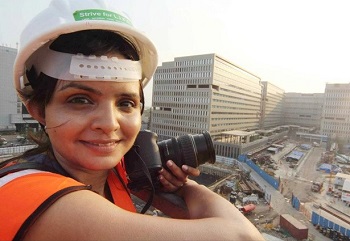
Meet the country’s first female commercial photographer

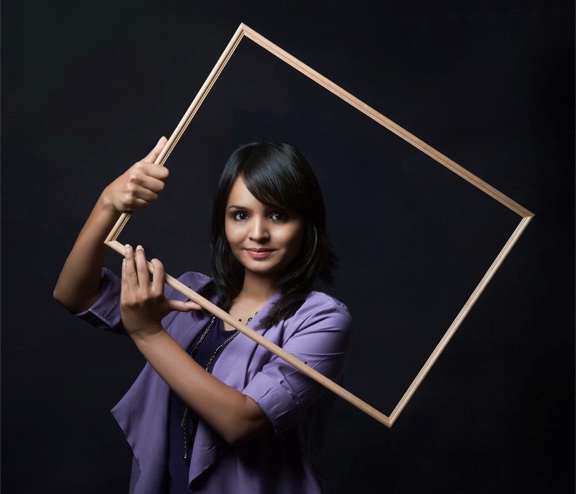
Mumbai photographer Shraddha Kadakia has worked with India’s biggest brands and gone all over the world on a road less travelled.
by The Editors | editor@themetrognome.in

There’s nothing quite like a photograph to tell a story. Pictures can transport you to a distant past, make you see what the future will look like, even reinterpret the present. But for Mumbai photographer Shraddha Kadakia (31), the journey towards an extremely fulfilling career came via an epiphany while she was still in college. “Photography is taught in some good schools, but there is a dreamy quality that one expects from the final product. We’re constantly seeing pictures of landscapes, people in different countries, all of it set to postcard perfection. But does anybody teach one to photograph a car tyre? Or a plastic bottle of water?”

We’re sitting in Shraddha’s Vile Parle office, which she set up 10 years ago when she started her company, Just Click. “I studied photography in Ooty for two years and I was very clear that I wanted to pursue the profession. However, I came into it quite by chance – I always thought I would do something with art and painting. It so happened that during my college days in Sophia, I had drawn paintings for an in-house exhibition. A woman who visited sought me out and asked if I would do Ganesh paintings for a magazine she was associated with,” Shraddha says. That woman turned out to be the creative force behind a yearly Ganesh magazine brought out by a prominent media group. “She wasn’t very impressed with my sketches, so she asked me to take photos of Ganesh murtis at Lalbaug, with the idea that I could sketch from the photos. I didn’t know a thing about taking pictures. All I knew was an Ansel Adams quote that said, ‘Everything you see in your viewfinder should look like a painting.”

She took several pictures and gave them to the woman for developing. A few days later, she got a call from their office asking her to meet them. “I was stunned to discover that the magazine was shutting down its Ganesh painting series and starting a photography one instead. They used many of my pictures in that issue,” Shraddha beams.

From Ganpati to cars

Shraddha shoots for a car brandShraddha’s first commercial contract came via an ad agency that was looking for a photographer to do an end-to-end campaign for Skoda. “My quote was the lowest (Rs 21 lakh) and I shot the very first pictures in my building compound to save costs. To further save on the budget, I travelled to Skoda’s factory in Aurangabad. I realised early on that photo shoots costs tremendous amounts of money because nobody economises. There is a huge amount of wastage, of both time and resources, when with some clever planning, you can save a lot of the client’s money,” she explains.

Soon, she realised that she wanted to work directly with clients, instead of being hired by agencies. “I was 21 and fearless. My sole aim was to get work and offer the best possible results to the client. So I shot off emails to the owners and heads of all the prominent business houses in India. After Skoda, I worked on Bajaj. After that, work started rolling in.” Today, she says she has “100 national and international clients” on her roster, and she travels extensively all over India and abroad for shoots.

Cutting down costs

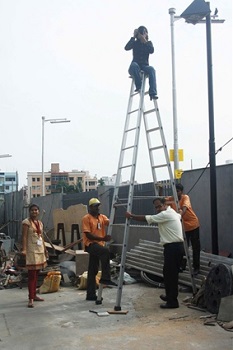
Shraddha believes in cutting down expenditure wherever possible. “I normally don’t shoot inside studios, so that saves cost. Plus, if there is an aerial shot required, I just climb on the highest structure at site – water tanks, rooftops, even trees – instead of hiring expensive helicopters and cranes. Besides this, my office handles all the post-production in-house and I work with freelancers to save cost and time,” she explains.

Coming from a Gujarati business family – “which still has no clue what my work actually is!” – Shraddha was blessed with an inherent seller’s instinct. “Photography schools teach you how to take pictures, but not how to sell them. It’s all interconnected. You have to get work to sell work, and vice versa. Thankfully, I knew exactly how to approach clients, and with time, I learnt how to price my projects to suit both myself and them,” she says.

In her 10 years of work, which started even before the Skoda shoot with a campaign for Jet Airways and on the sets of the film Saawariya (where she was hired to shoot publicity stills), Shraddha has amassed a huge amount of work and goodwill in the industry. “It’s an extremely tough business. I teach photography as well, and I always tell my students to choose another career if they’re looking to become photographers for the ‘glamour’ of it. It’s a hard grind, and nothing prepares you for it. You’re on the road for several days, you might shoot in places that have no restaurants, you will have to work in all conditions, and there’s no excuse for shoddy or late delivery of photos. Most people, inspired by what they see in films, think it’s a glamourous profession where one travels for free, stays in swanky hotels, shoots a few pictures and gets paid handsomely. There is a tremendous amount of effort you have to invest at every step, especially to come up with creative solutions that the client will like,” she says.

Dealing with a man’s world
Shraddha is emphatic about wanting more women to join in the ranks. “Every good photographer out there is a man. Where are all the women? Many parents come to me asking me to train their daughters. But then most of them don’t let their daughters work late nights or travel. There’s no way you can do only some parts of the job and succeed – either jump in completely or do something else,” she reasons.

She adds that her family worries for her even today, but they have been largely supportive of her career choices. “I was given the freedom to experiment, fail and pick myself up. And they were there to celebrate with me when I did well. Parents must remember that their involvement is not restricted only to purchasing equipment and giving initial funding for the child to start a career as a photographer. This is a journey that parents must take with their children together,” she explains.

Her tips for those starting out

– Be very sure about why you want to be a photographer. It’s a very demanding profession.

– Get a small office space where you can sit and even store your supplies. Make space for a few employees. An office is a must.

– Your starting investment will be about Rs 15 lakh (includes office space, hiring staff, getting equipment) so be prepared with the funds.

– Offer a unique proposition to your client, and save his or her money wherever possible. Be transparent in all your dealings.

– Cut down on waste, and that includes hiring staff. Work with freelancers instead of full-time employees.

– Keep a buffer spanning a reasonable amount of time to pay your staff and all the vendors associated with the shoot, whether you have recieved payment from the client or not.

– Even when you’re studying photography, think up ways to sell your work. This will give you good training for your business.

– Work directly with clients, instead of being hired by agencies or other companies. This will increase your profit margins.

– Assist a good photographer before you branch out.

(Pictures courtesy Shraddha Kadakia)

Categories
Bombay, bas

Mumbai ke laal

‘Paan’ is a feature of Mumbai’s culture, and its biggest bane – every corner of the city is a spittoon.
by Devashri Prabhu

Whoever came up with the phrase ‘Paint the town red’ sure had Mumbai in mind. Mumbai has always been a colourful city – it is green and grey in monsoons, it has the blue of the ocean, and the red of paan.

Whoever invented paan sure has it coming from the city’s clean-up marshals. People spit paan juice freely and with practiced ease all over Mumbai. No detergent or cleaning solution is strong enough to clean off the stains caused by paan.

Just spit it

Paan graffitiIt brings a smile to your face when you hear of a fellow Indian proudly telling a foreigner that paan is part of Indian culture. Sure it is, but are also proud of how the same paan is a health hazard? And what about the sanitation problems it carries? The people who eat paan choose to spit out the betel juice instead of swallowing it, because swallowing it is said to be harmful. Well, spitting it out isn’t harmless for the city, either.

Wherever you go in Mumbai, you can see paan stains. Corners of public buildings, corridors, bus stops, public benches, footpaths, public walls, railway platforms, subways and religious places, too. How do you stop this habit? Even the garbage cans provided by the municipality have been gladly used as spittoons.

My story

Apart from dirtying every conceivable surface in the city, paan eaters will also gladly spit on other people without a care in the world. I have been spat at personally. I was sitting in the train by the window. It was evening time and I was returning from work. The train had halted at Wadala station.  After a tiring day at work, I was just about to catch a wink of sleep when phachaak! Someone had spat red betel juice on me. It was like he had sprayed me with it. The guy with the paan was in the train next to time and was still chewing his paan. Even before I could react, his train moved and he continued chewing and spitting without a care in the world. A real mai ka laal.

How to tackle it?

Since you can’t really stop people from chewing paan, people have come up with a few ways to discourage spitting. The most popular way is to put up pictures of gods and goddesses at all the strategic places such as public walls, corridors of buildings, etc. A sense of decency (otherwise lacking) prompts the spitter from selecting another spot to spray his paan all over. Another one was a feeble attempt to save the municipality garbage cans from becoming spittoons. The BMC would line each bin with large plastic bags on the inside, so that cleaning staff merely picked off the bag every day without having to clean the bin from the inside.

But these are ineffective measures. More stringent and consistent punishments have to be imposed on these habitual spitters. I suppose levying heavy fines could be a deterrent. A way to do this is to empower citizen clean-up marshals comprising of a force of senior citizens or interested youth volunteers who could be selected by the BMC to police certain areas and who would carry official badges indicating their appointment.

Spitting is rampant in Mumbai despite anti-spitting laws and heavy fines. A good way to stop the menace is to publicly shame the spitters. We are too casual about dealing with people who litter all over the city – why don’t we stop people from throwing garbage outside the train windows or spitting all over the place? The responsibility of a healthy and hygienic city lies equally in us and the Government. We should rally against the habit of spitting paan, tobacco or other substances together. Our city needs to have clean roads and public spaces – not those festooned with paan stains.

Devashri Prabhu has a Masters in Psychology and her interests lie in areas like Mental Health, Social Issues and Spirituality.

(Pictures courtesy gbtimes.com, sparknbeyond.wordpress.com. Images are used for representational purpose only)

Exit mobile version