Categories
Event

Attend: Help Defeat Diabetes 2015

The three day exhibition at Nehru Centre, Worli addresses all the concerns and illnesses associated with diabetes in the country.
by Ravi Shet

Diabetes has been affecting people throughout the globe. As per IDF Diabetes Atlas, 6th Edition (2014), 387 million in 2014 people have diabetes and estimates suggest this number will rise to 592 million by 2035. India ranks second in terms of patients affected from diabetes, approximately 66.8 million.

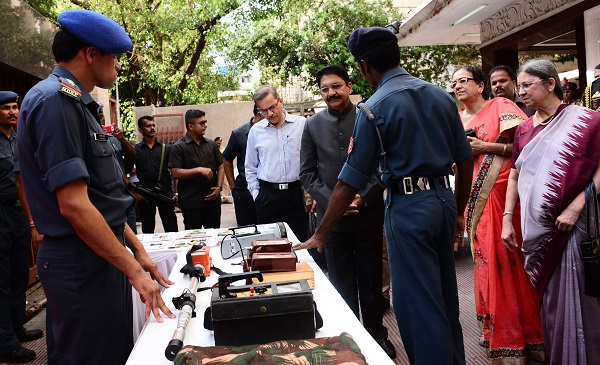
To address this concern, Diabetes Endocrine Nutrition Management and Research Centre (DENMARC) has organised a three-day day exhibition, titled ‘Help Defeat Diabetes through Education and Awareness’, at Nehru Centre which started from yesterday. The objective of the exhibition is to create more knowledge and information along with guidance to general public regarding different aspects of this disease.

Discussions on new therapies and techniques such as stem cell therapy, pancreatic and beta cell transplants clubbed with interactive sessions with experts on topics such as role of exercise, diet in diabetes, etc., are highlights of this exhibition. Morning sessions were in Hindi for yesterday, followed by Marathi on May 30 and Gujarati on May 31 while afternoon sessions are in English for the three days.

Diagnostic tests such as HbA1c, Retina Test, etc., are available at subsidised rates or free for the visitors. Located on the ground floor of Nehru Centre, ‘Hall of Knowledge’, has numerous charts displayed on diabetes complications, administration of insulin, self monitoring of blood glucose, diet and exercise that covers all relevant information for healthy living of diabetic patient. Don’t miss the food pyramid created by the organisers keeping real food stuffs to make it more appealing.

(Picture courtesy forevernews.in)

Categories
Eat

Review: Kaboom

Menus and cuisines that change daily, a quirky ambience and very tasty food are staple features of this Ballard Estate-based eatery.
by Ravi Shet

If you are tired of eating the same old restaurant food for years, you can try something different at Ballard Estate. For me, Kaboom has always been a place that helps me experience an explosion of taste, freshness, fun and innovation all under one roof.

The moment you step into this quirky space, you will see a canister at the right hand side beautifully converted into a trash bin, while on the left you can see the menu written on a blackboard. An old shipping container has been cleverly converted into an open kitchen. The red side table near the kitchen is made using a scrapped sewing machine with a sheet of glass over it. Also, scrapped milk canisters are converted to tables in a similar fashion. There is also a wall clock here with its hands stuck at 6 pm and the words ‘Today is Friday’ written below it.

Changing menus

If you visit on Monday, you will get South East Asian food, and European style cheese toasts on Tuesdays, Italian on Wednesday, Middle Eastern on Thursday and American on Friday. This daily rotation of the menu offers customers more options with different cuisines to try on a daily basis.

Lemon Cake_KaboomIt was Wednesday when I visited, so Italian cuisine (Pazzo Pomodoro) was on the menu along with Italian music playing in the background. I started off with the Caprese Salad (Rs 170) served in a biodegradable container along with a biodegradable fork. Fresh buffalo mozzarella, baby tomatoes and basil used in the salad were fresh and refreshing in the hot weather. Their Panini Grilled Sandwich (Rs 230) consisting of mozzarella, tomatoes, Italian basil along with portions of chicken was really tasty and grilled to perfection.

The Pasta Pesto (Rs 250) consisting of penne pasta served with chunky sauce made with Italian basil, roasted almonds along with chunks of chicken was awesome. Finally to end to meal, I ordered a dessert – Lemon Cake (Rs 80) which has a lemon and semolina base and is seriously delicious and fresh.

Organic ingredients

All the ingredients used in the preparations here are sourced through organic farming practices – this reflects in the quality of the food. I was enchanted by the quirkiness of the space, as also the idea of a different menu every day. The use of biodegradable containers is a great idea, too. All in all, a very good eating-out experience.

Head to Kaboom, 3A Spott Road, Near Grand Hotel, Ballard Estate. The Metrognome reviews restaurants anonymously and pays for its meals.

(Pictures courtesy Ravi Shet and Kaboom)

Categories
Trends

On your marks

There is more to life than marks, everybody says. Then why don’t we let our children rise above the marking system?
by Ritika Bhandari Parekh

It is that time of the year when Mumbai colleges get divided in the stream of SSC, ICSE and CBSE boards. Leading newspapers publish the toppers’ round-faced photographs, thanks to their cheeks being stuffed with laddoos. Coaching classes print cropped images of their students with a sidebar proclaiming their percentages.

It has been close to three decades when my parents passed their 10th standard exams. And yet the focus of our modern and so-called westernised education has not gone beyond marks and percentages. My sister and I had to slug it out on paper to prove our worthiness for a seat in a ‘good’ college.

In a system of invigilators, moderators and rank holders, the final year of school becomes a trying and testing ground for the average student. Marks, marks and more marks is the mantra on every teacher’s lips. And when the results are declared, no one exists except the top three rankers from the school.

Next in line is the rush to fill the junior college admission forms. The serpentine lines of Arts, Commerce and Science stream is proof enough of our fledgling young population. Amidst chaos and a mixture of happy and sad faces, lists are read and students walk in their desired or not desired college. This year the same brouhaha will take place, albeit online and in a flawed manner.

But there is solace for the Whatsapp generation in the video by Vir Das. In his unique way, the stand-up comedian rubbishes the focus on marks. He flashes the entire life an average human being leads, and intersperses the plethora of emotions one will feel in this journey called life. Nowhere, he mentions, nobody will ask you – how much did you score in your 10th standard?

His words resonated with me, as during my SSC exams – I felt the pressure of delivering marks. I was a good student, but my Principal wanted me to commit a number above 90, to work on. Never to work under pressure, the undue importance given to my marks made me angry and my parents noticed a change in my behaviour. Their support and understanding of ‘we shall love you, even if you get less marks’ helped me overcome the tide.

But it wasn’t until my friends who wished to get in the Science stream and couldn’t do so because of less percentage and higher cut-offs – did I realise what a foolish system we have created. I can vividly recall the maddening desire of my sister to get in a particular Commerce College. Only because the entire family had graduated from this Juhu college and she wished it too. Her dejected look as she missed by a mark in the cut-off list broke my heart.

Am sure there are many such tales in every family, where the elders celebrate this passing ritual with a bittersweet smile and a mithai. As the newly-formed Government is so keen on reforming the education sector, why not start with a better way to embark the important phase of college life? A common exam wherein, all the boards get equal opportunity to showcase the knowledge imparted. But then, it is a money-making scheme – so it will remain. The SSC, ICSE and CBSE boards will thrive amidst all the confusion and students will be slaughtered with the numbers.

It starts out in the levelled playing field where your toddler runs as the teacher says, ‘On your marks’. But it ends in the competitive ground where the neighbourhood aunty has an advice – On your marks, on your choices and your entire life.

Do you have a marks-related story to share? Tell us in the comments section below.

(Picture courtesy indianexpress.com. Image used for representational purpose only)

Categories
Wellness

Why have potted plants in the home

Apart from adding a soothing green look to our living premises, plants have many health benefits as well. Read on.
by the Editors | editor@themetrognome.in

Everybody loves to be surrounded by greenery, but for those living in the metros, greenery is a luxury few have the good fortune to possess. Concrete jungles in cities like Mumbai have systematically wiped out the earlier green tracts of land over the years. A few stray trees here and there can now be seen in most localities in Mumbai.

Besides, citizens themselves are unappreciative of the value of planting and maintaining trees, often thoughtlessly hacking off entire branches and stems because the tree blocks their view, or because the leaves fall on their parked cars below. But while we cannot always stop the rampant killing off of trees, we can do our bit to add to the greenery in our immediate surroundings to beautify them.

The health benefits of having plants in the home cannot be disputed, but several people feel that having potted plants in the home is only for those who like gardening and getting their hands dirty with soil. If you were unaware of the benefits of having plants in the home, let us give you four good points:
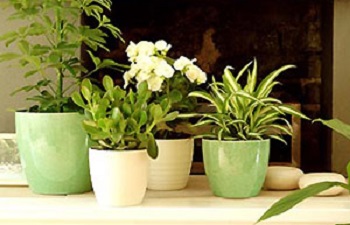
Clear the air with plantsThey clear the air. This is pure science. Every plant’s natural food-creating process ensures that large amounts of pure oxygen are released to the environment and harmful carbon dioxide is absorbed. This is why office workspaces should have large plants (preferably of the flowering variety) in close vicinity, because the freshness they bring to the air is more beneficial for people sitting in air-conditioned environments all day. Breathing fresh air is a luxury in a highly polluted city like Mumbai, so the more plants you will have at home or in the office, the fresher will be the air you breathe.

However, ensure that plants are not present in the bedroom or sleeping space, because they reverse the oxygen-carbon dioxide release process at night, so effectively, you will be breathing carbon dioxide as you sleep.

Their products are safe to consume. People who plant their own kitchen gardens swear by the nutrition value of the fruit and leaves their gardens yield. Since you take care of the garden yourself, you are careful in limiting the use of chemical fertilisers and pesticides, as also spraying your plants with harmful Kitchen garden producefungicidal. People who plant tomatoes, onions, chillies, lemons and even oranges and carrots at home eat fresh, healthy produce daily. Their food is as free from chemical intervention as possible.

Dr Ramakant Shetty, a dentist, has been cultivating his own organic kitchen garden for three years now. “I limit the buying of vegetables and fruit from the market,” he explains. “The produce from my garden is larger in size, tastier and very healthy for even young children to eat.”

They promote calmness and health. Much like looking at fish swimming in a fish tank promotes feelings of serenity among sick people, maintaining your plants is good for health. At a physical level, cultivating a variety of potted plants is hard work. “You have to periodically re-pot the plants, change the soil, add manure and bio-waste to enhance its quality, and conduct regular checks to see that grubs and ants are not eating your plants,” says Dr Shetty. “Working in the soil is good for the body and the mind, because the aroma of fresh earth enhances the mood. Those who have large gardens can keep fit with regular work in the garden.”

Most people who invest time and energy in growing plants in the home are thoroughly invested in the plant’s welfare. It is a healthy hobby to cultivate as well.

They uplift the mood on sight. Fresh, healthy and well-groomed plants are a delightful sight, and they uplift the mood instantly. It has to do with the green colour of the leaves and the sharply contrasting colours of fruit and flowers on the plants that pleases the eyes and cheers us up. “Plants in good health will have firm green leaves and stems, and they will grow faster,” opines Shraddha Kamat, a housewife. “I always enjoy observing my plants when it is windy – because the plants are healthy, the leaves dance in the breeze instead of wilting and falling out,” she smiles.

(Pictures courtesy www.bbc.co.uk, chemicalfreeagriculture.blogspot.com, blackfootnativeplants.wordpress.com. Images used for representational purpose only)

Categories
Event

Disaster preparedness training currently underway in Mumbai

Drastic climate change and changing weather patterns are attributed to rise in natural disasters, SNDT University is hosting the programme.
by The Editors | editor@themetrognome.in

Observing that drastic climate change and changing weather patterns have increased the frequency and intensity of disasters in recent years, State Governor Ch Vidyasagar Rao recently called for improving institutional and community preparedness to limit the damage caused by such disasters.

Recalling the instances of the earthquake in Nepal, floods in Jammu & Kashmir and Uttarakhand, the Malin tragedy near Pune and the unseasonal rains in Maharashtra, the Governor said every organisation and housing society should have a functioning disaster management system in place. He added that there should be a regulator to monitor and certify the readiness of an institution to tackle disaster.

The Governor was speaking after inaugurating a training programme on disaster preparedness ‘Avhan’ at Birla Matishree Sabhagriha in Mumbai on Monday,  25 May, 2015.

The SNDT Women’s University is hosting the programme this year. In all, 1,050 NSS volunteers and 70 programme officers from all parts of the State will undergo the 10-day training programme to be conducted by the National Disaster Response Force in Mumbai during May 25 and 3 June, 2015.

Stating that community is the first responder in any disaster situation, the Governor expressed the need for creating awareness among citizens through disaster management education and training. The Governor called for inculcating disaster responsive public behaviour among the people.

Vice Chancellor Vasudha Kamat delivered the welcome address while State Liaison officer of the National Service Scheme Dr Atul Salunke apprised the gathering about the training programme.

Categories
Do

4 ways to beautify your home

You don’t need professional help to make your home beautiful. Your intuition and personal taste can come into play instead.
by The Editors | editor@themetrognome.in

Anjali Doshi, a housewife and mother of two, moved into her parents’ old home last year. Her parents had never done a home furnishing job, so she decided to change things around. “Their furniture was old and creaky, the paint had been destroyed by several leakage patches on the walls, and even the plumbing lines were old. An architect evaluated the extent of the refurnishing work to be carried out, but when his quote came in, I realised that I would have to save up for several years to afford it!” she laughs.

Putting aside her grand plans to reinvent the entire home, she says she decided to do the basics first. “I got the leakages checked and repaired, then I got the painting and some civil work done. I also changed the drapes and upholstery. These small touches have made a big difference,” she explains.

The rest of us might not even need to undertake full-scale repairs and restoration work in our homes, where little corrections might do the trick. Try these tips:

Beautify with flowersDecorate with flowers and paintings. Most of us don’t realise the difference a big vase of cheerful flowers can make to a room. Apart from improving appearance, flowers also enhance the mood and add the necessary pop of colour to a space. If you are not interested in buying fresh flowers every couple of days, try hanging colourful or calming paintings on a couple of walls. Doing this negates the dullness of the room caused by plain walls painted in pastel shades, or a lack of interesting furniture. “A client of mine wanted white walls, white furniture, white flooring and white appliances,” remembers Anisha. “I gently suggested adding a large painting or photograph with vibrant colours to make the space more interesting.” Her clients were so agreeable to the idea, that they bought large and small picture frames for an entire wall. “The result was so stunning. The necessary colour now makes the rest of the house look really lovely,” Anisha says.

Let the walls speak. As such, a new trend in interior design is to paint one wall in the living room a different colour, to create a visual ‘highlight’ in the room. “But you have to be careful how you use this wall,” says interior designer Anisha Mehta. “You can put up picture frames on this wall, or a couple of beautiful shelves to add to its beauty. Keeping a tall vase with artificial flowers next to the wall will also automatically draw attention to it. Take care that this wall is plain; it should not have a window in it, nor should you put a large flat screen TV on it. Leave it uncluttered,” Anisha advises.

Other tips are to decorate this wall with simple patterns and colours, leaving the other walls bare. The trick is to let one wall reflect your personality.

Look for interesting knick-knacks. An afternoon spent in Chor Bazaar will give you enough opportunities to get some very interesting and unusual curios Interesting curiosfor your home. Or if you are creative enough, you can recycle some of the rubbish lying around the house to create your own knick knacks. A slowly growing trend in Mumbai is to opt for decoupage to liven up boring old furniture and give personality to a home.

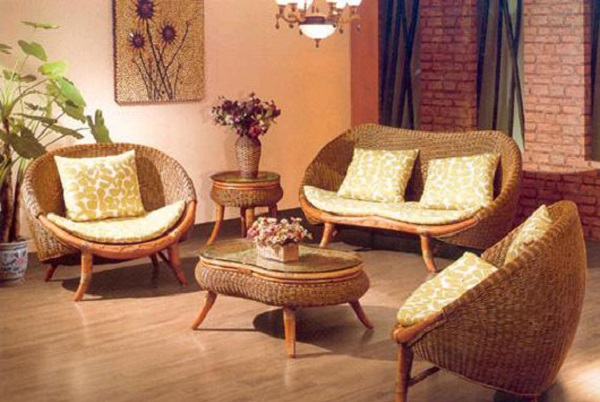
Buy light furniture. The problem with most homes in Mumbai is that the houses are very small, with tiny living rooms and bedrooms. If you buy heavy three-seat sofas and big centre tables, your living room will appear smaller than it already is. “A good idea is to do up the living room in cane. You can experiment with an entire cane setting – sofa sets, an extra chair, cane lamp shades and even cane pouffes,” says Shalini Abraham, a marketing professional. “My living room looks gorgeous because my furniture looks light. Plus it is easy to shift around for cleaning.”

For those investing in wooden furniture, ensure that the sofa set has extra storage space and that your centre table is a combination of glass and metal for a lighter look.

(Pictures courtesy bhousedesain.com, heiressflowers.com, www.mumbailocal.net. Images are used for representational purpose only)

Exit mobile version