Categories
Hum log

How the mobile phone ring tone was born

Ralph Simon, creator of the mobile phone ring tone, talks about how he discovered the idea of a tune for every call.
by Subhasis Chatterjee

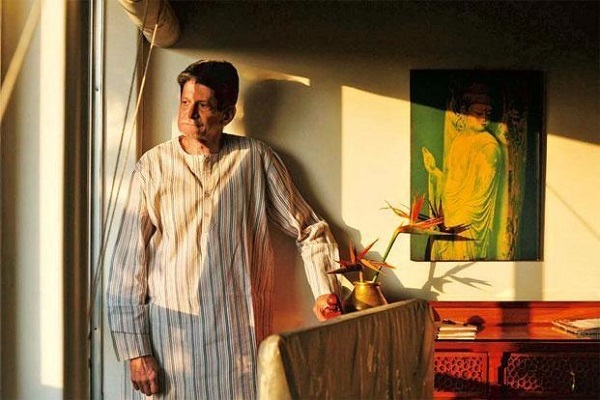
Ralph Simon joined the party at 9 pm on a winter evening in Kolkata and started tapping his feet to a live tune of ‘Dhum Pichak Dhum’, the hot number by Palash Sen’s band, Euphoria. Then he smiled and whispered in my ears, “Not a bad ring tone!’

Ralph SimonRalph, now 65, is known as the ‘father of the mobile phone ring tone’. The man himself is witty, intelligent and very humble. I met him as part of a recent tech enclave, where, fortunately, none of his speeches were interrupted by a ringing phone! To make his speeches interesting, the Englishman frequently used Bengali words. Naturally, the crowd was totally under his spell.

Discovering the ring tone

Ralph’s first professional association with music began in the 1970s, when he co-founded the Zomba Group of music companies (now a subsidiary of Sony Music Entertainment) with Clive Calder. “In the mid-90s, I became Executive Vice President of Blue Note Records and Capitol Records. After this, I started EMI Music’s global New Media division in Hollywood,” he remembers. He unveiled his first ring tone company Yourmobile (later renamed Moviso) simultaneously in Europe, America, Africa and Australia in 1997.

In 1998, Ralph had predicted that mobile phones would become the most indispensable social and voice networking and music companions for consumers. But it was a year before that he made an interesting discovery of his own.

“I was attending an important meeting at Nokia meeting and I was waiting for a car to take me to the venue. Just then, a Finnish youth passed by and there was an interesting melody coming from his phone. It wasn’t a standard Nokia tune. When I asked him what it was, he said that his phone’s alarm was very shrill, so he was trying to make the sound less shrill,” the CEO of London-based Mobilium Global says.

“That was during the late 90s,” he added. “Finland was then the world leader in mobile phone technology and I had been invited to make a presentation on digital audio postcards, an IT invention that allowed an attachment containing music, scrolling text and the jerky video of those days to be tagged together to an email. Back in those days, it was a big thing.”

But for the Englishman, that chance conversation with the Finnish youth gave him the best idea he’d ever had. “It was a turning point in mobile entertainment. Since we already had our technology, why couldn’t we take it further by having music ring when one’s phone rang? We could even enable our favourite songs as our ringtones,” he said. Ralph took the first available flight back to the US the very next day and started working on the idea.

Copyrights and legal tangles

But copyright issues were a problem. Music companies, for whom the sale of ringtone rights is a lucrative source of revenue today, would not give in.

The same week, Sean Parker and Shawn Fanning of Napster (a peer-to-peer file sharing service used mostly for sharing audio files) were on the cover of Time. “Music companies suspected that they were pirates and weren’t interested in giving us licenses either. Only Michael Jackson’s company, which owned rights to Bryan Adams, Norah Jones and the Beatles, agreed,” Ralph remembers.

The first two tunes he used on getting a license were the Pink Panther theme and the Bond theme from Dr No. While Mobilium Global had to wade through lawsuits and financial settlements to get the music rights, the flip side of the struggle was that its traffic grew from 15,000 to 200,000 a day within a week.

Before shifting to Silicon Valley, Ralph ran a music company that had signed metal band Iron Maiden just when they were starting out. Then there was Will Smith. “He may be a famous actor today but when we gave him a break he was a hip-hop rapper called The Fresh Prince. It was that identity which earned him his first acting assignment on the TV show The Fresh Prince of Bel-Air.

Mobile Entertainment magazine named Ralph as one of the world’s Top 50 executives in mobile entertainment in 2005, 2006, and 2008. In 2007, he received its special award for Outstanding Contribution to the Global Mobile Entertainment Industry. Ralph is also the founder and Chairman Emeritus of the Mobile Entertainment Forum- Americas and he still has his ear to the ground to try and catch the tune of the next digital revolution. “I’ll keep my eyes and ears open…I have got to see what’s coming next!” he exclaims.

(Pictures courtesy Ralph Simon)

Categories
Patrakar types

Swaminarayan Temple authorities always treat women this way

Yogi auditorium next to Dadar’s Swaminarayan Temple always asks women to sit a few rows behind men. A personal account.
by Vrushali Lad | editor@themetrognome.in

I learnt with dismay, but not with surprise, of a woman journalist being asked to vacate her front row seat at the auditorium adjoining the Swaminarayan Temple at Dadar. She was there as an invited mediaperson to cover a religious function to honour Maharashtra Chief Minister Devendra Fadnavis in the wake of the beef ban in the State.

I know the journalist for years now, and first learnt of the incident on her Twitter feed. She was understandably furious over being asked to sit ‘three rows behind’ – women are not allowed to sit in these rows and must take a seat in the rows behind. After arguing with the authorities and even speaking about it to a senior BJP leader, she finally left the auditorium.

The same thing happened a couple of years ago.

An awards function to honour Gujarati achievers

It was at the same venue a couple of years ago that I first learnt of this practice. My husband, a Gujarati by birth, was to be awarded for his services to journalism. He was part of a group of other Gujarati awardees from various fields – entertainment, education, law, civil rights. I had accompanied my husband and some of our family members to the event, and I remember looking through the invite which had pictures of the other awardees. Only one of them was a woman – a young pilot with a commercial airline, possibly the first from the community.

When we got there, the function had already started but the auditorium was not full. When we made our way to the front seats, I was promptly stopped by two young men, who told me to sit anywhere provided it was 10 rows away from the stage. Perplexed, I assumed that the front rows were reserved for families of the organisers, which normally happens. We sat behind and awaited the prize distribution.

At one point, all the awardees were asked to take their seats on the stage, and my husband joined the others. But there was no sign of the woman pilot. I wondered if she was going to show up at all, then decided she must be at work and somebody else would take her award for her.

Then the chief guests for the awards function, two sadhu brahmachari types, were brought on the stage and a lot of feet-touching and speech-making followed. Finally, the awardees’ names began to be called out. When the pilot’s name was announced, there was a flurry of activity at the far end of one of the middle rows of the auditorium – everyone kept craning their necks and looking at a smiling woman who had just stood up. With horror, I saw that it was the woman pilot.

A little questioning finally helped me understand – the woman had not been allowed to take her place on the stage with the other male awardees, had not been allowed to sit in any seat in the first 10 rows, and what was worse, she was given her award at her seat in the audience by two other men from the organising committee, not by the sadhu chief guests. All of this because ‘women cannot be in physical proximity of a brahmachari‘.

On the stage, I saw my husband looking mutinous. When his name was called, he took his award and left without acknowledging the chief guests. Later he kicked himself for accepting the award in the first place.

I just looked across at the woman pilot – the young achiever for whom the sky was literally not the limit, was completely okay with being treated this way by a bunch of religious nobodies who, in this day and age, hold on to some archaic views on women in the guise of religious sanctity. What would compel an independent, successful woman to accept an award at a venue that routinely makes women sit in the back rows because ‘that is the rule here’? Didn’t she feel the slightest humiliation at being the only one to not be seated on stage with her contemporaries, on account of her gender?

I still wonder at her. And I’m never going back to that auditorium again.

What do you think of yesterday’s incident with the woman journalist at the CM’s function? Tell us in the comments section below.

(Pictures courtesy www.mapsofindia.com. Image is a file picture)

Categories
Bombay, bas

Mumbai to become slum-free?

A few suitable amendments to the Slum Redevelopment Act 1971 are in the offing; but will Mumbai ever really lose its slums?
by The Editors | editor@themetrognome.in

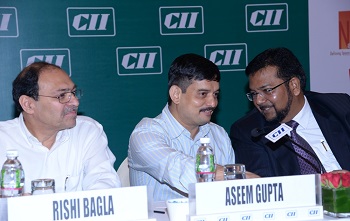
“The Maharashtra Slum Redevelopment Act 1971 will be suitably amended to achieve the Government’s vision of a slum-free Maharashtra and the ultimate aim of the Slum Redevelopment Authority (SRA) is to house slumdwellers” said Aseem Gupta, CEO, Slum Redevelopment Authority, while speaking at the4th Edition of the CII Regional Conference on Infrastructure Project Management in association with CBRE in Mumbai yesterday. The Conference aimed at focusing on the challenges and possible solutions pertaining to on-ground project management practices for India’s construction industry.

CII Photo 1Gupta said that the proliferation of slums happened as a result of the city not being able to provide affordable housing at the rate at which population increased. He said that amendments to the Act will act as a catalyst to providing affordable housing in a time-bound manner with lesser hassles. He added that while undertaking a slum redevelopment project the social and economic aspects of the community are taken into consideration. He also spoke of how a recent amendment that provides for the eviction of non-participants of a slum scheme after 50 per cent of the dwellers have moved out can actually accelerate the process of clearing slums. As per the ammendment, the dwellers can be evicted after issuing them a public notice as opposed to individual notices earlier.

Speaking about a unique situation seen in the last five years, Gupta said that although Government has been allocating huge budgets to local bodies to develop cities, the same was not utilised due to the lack of preparedness on the part of the latter. He said that in Mumbai there were around 1,400 ongoing slum redevelopment projects with some projects having up to 25,000 houses each. He admitted that on an average, a slum project take around five to 10 years to complete and delays are mainly on account of sudden and unexpected Government announcements.

Rishi Bagla, Convenor of CII Make in Maharashtra Panel and Chairman and Managing Director, OMR Bagla Automotive Systems, said “Although the construction industry has flourished in the last decade in terms of project procurement methods and the number of new players in the field, it lags behind with respect to on-ground project management practices.” Explaining the importance of Agile Project Management Approach, he said that large scale development projects suffer from cost and time overruns that are typically symptoms of productivity problems and directly affect overall industry profitability.

Aamer Azeemi, Managing Director, India, Cisco Consulting Services, spoke at length about the Western models of Smart Cities and their future in India. He said, “Infrastructure is essential to make cities smarter and technology is an enabler in this process.” He described Smart Cities as smart and connected communities and said that their successful implementation needs a strong leadership at the local authority level. He added that a city would truly become smart by implementing `Internet of Everything’, which essentially means connecting things, data, process and people to internet.

Rajesh Doshi, Executive Director, Acme Housing India Private Limited said that most of the reasons for the delay in a development project are beyond the control of the developers and this includes DC rules, which have changed many times. He added that in addition to being construction managers, developers also don the hat of risk managers.

Pointing out to the various delays caused in huge projects because of lack of effective project management systems, Gurjot Bhatia, Sr Executive Director – Project Management Group, CBRE South Asia Pvt Ltd said that 83 per cent of the Central Government projects in India suffer from cost overruns and worldwide about 70-90 per cent of projects exceed stipulated time and costs.

(Pictures courtesy www.theaustralian.com.au, CII. Featured image is a file picture)

Categories
Event

Attend: Kiran Nagarkar presents ‘Bedtime Story’

Noted author of ‘Ravan and Eddie’ will read his famous story, and screenplay ‘Black Tulip’ this evening at Kala Ghoda.
by The Editors | editor@themetrognome.in

If you like writer Kiran Nagarkar’s work, you will certainly want to be at Max Mueller Bhavan, Kala Ghoda, this evening.

Nagarkar will launch and read out excerpts from his controversial play Bedtime Story, which, playwrights say is “a very disturbing play – and that in an era of theatre when it is very hard to disturb audiences.” The play was written in 1982 and Nagarkar found it extremely hard to get it staged because of its controversial, experimental content. The story of the play is a retelling of the Mahabharata, in which the reader is presented with the Pandavas as flawed heroes with follies, and the Kauravas as only marginally worse. The choice, then, is between what is dark and what is darker. After the play’s content was censored and actors became afraid to be a part of the project, it was first performed in 1995 in Mumbai.

The writer will also launch the screenplay of Black Tulip, at the same event. He will be in conversation with senior journalist Srinivasan Jain about the many issues his two works raise.

Head to Gallerie, Max Mueller Bhavan, Kala Ghoda, this evening at 6 pm. Entry is free.

(Picture courtesy livemint.com. Image is a file picture)

Categories
Learn

BMC completely lax on addressing citizen complaints?

Report on working of Ward Committees, lack of questions asked by councillors paint a very sad picture for Mumbai city.
by The Praja Foundation

Every year, Praja Foundation releases a report on the working of Ward Committees and civic problems in Mumbai. What we can see is that the situation of civic governance in the city has deteriorated drastically when it comes to the redressal of citizens’ civic complaints. The civic administration, which is a service providing body, has revealed itself to be inefficient and lax when it comes to resolving civic issues. In 2014, on an average it took at least 87 days for closing ‘contaminated water supply’ complaints in ‘S’ ward and 59 days to ‘repair pipe sewers/main sewers’ in ‘H/E’ ward. Contaminated water supply complaints should be resolved in one day according to the Citizens’ Charter, and sewers should be repaired in 7 days.

To add to these woes, what is seen is complete apathy on the part of our Municipal Councillors, 27 of whom have not raised a single question in ward committee meetings all year! Not only that, there are three councillors who have not raised a single question in the last three years – Anita Yadav (representing Sassoon Dock, World Trade Centre, Geeta Nagar), Ujjwala Modak (representing Bandrekar Wadi – Ismail College – Natwar Nagar) and Jyotsna Parmar (representing Mahim Sonapur – Labour Camp)!

Nitai Mehta, Founder and Managing Trustee of Praja Foundation, says, “Maharashtra Chief Minister, Mr Devendra Fadnavis recently announced Project Mumbai to become an International Financial Centre to attract global investments, jobs and development. How can we achieve this status when basic civic needs of citizens are being neglected time and again? And to add to citizen woes, our elected representatives are clearly not interested in raising civic issues and taking the Executive to task for not resolving them and proving efficient services.”

Despite the many problems in the civic governance of the city, the councillors have not been as active as necessary in addressing all issues. Between 227 of them, the Municipal Councillors have only asked 970 questions in 298 ward committee meetings in 2014, which is a meager three questions per meeting!

Milind Mhaske, Project Director at Praja further added, “Only 35  per cent of the 66,747 civic complaints in 2014 have been closed by MCGM, whereas 63 pre cent have not been addressed.”

On an average it takes the MCGM 17 days to address civic complaints such as contamination of water, drainage chokes and blockages, and lifting garbage, when it should actually take only three days. High rate of complaints regarding these issues is hazardous to the life and health of Mumbaikars. How can we have a global city which is unable to address these basic issues on wards which have seen high rates of contaminated water complaints, such as P/N, K/W, R/S wards, have also seen a high rate of diarrhoea cases (196 cases) in the last three years, and wards where pest control complaints are not resolved, K/E, K/W, P/N wards have the number of malaria and dengue cases (75 cases) skyrocket.

The number of complaints on the state of roads in Mumbai has decreased by 48.3 per cent in 2014 as compared to 2013, whereas the number of complaints on in 2014 drainage has seen a decrease of 26.1 per cent. Complaints on water supply issues have risen by 25.8 per cent and solid waste management by 32.8 per cent.

Even though on paper, the system looks good, when it comes to implementation, there are serious flaws. The MCGM already has a decent complaint redressal mechanism, Central Complaint Registration System (CCRS), which should have been a one stop shop for registration of complaints, integrated with latest tools such as Mobile Apps. Despite the existence of 1916 and CCRS, people are not using these services enough. This is mainly because they are not being advertised and promoted sufficiently. A parallel system for pothole complaints has also been introduced, with a separate portal – http://www.voiceofcitizen.com/ in 2011.

According to Mhaske, “The Municipal Commissioner went on to announce that citizens will also be able to register complaints related to Storm Water Drainage and Solid Waste Management in the portal. Plans are being made for systems that are, eventually, never implemented. Ideally, the MCGM should have integrated all the tools into the CCRS and worked on existing gaps to strengthen the system.”

Despite the many problems in the civic governance of the city, the councillors have not been as active as necessary in addressing all issues. Between 227 of them, the Municipal Councillors have only asked 970 questions in 298 ward committee meetings in 2014, which is a meager three questions per meeting! 109 questions out of 970 (11%) were on the issue of renaming of roads and chowks. 27 councillors have not asked a single question in the year 2014, with K/East ward having the highest number of councillors (4) who have not asked a single question. Three councillors have not asked a single question over the past three years!

Mehta concludes, “The apathy shown by our elected representatives is appalling. By raising appropriate issues and questions in ward committees, our elected representatives can improve civic governance in the city and see to it that citizens’ lives are made easier. The civic administration should be more engaged with the reality of citizens’ lives and take proactive steps to improve implementation rather than announce lofty schemes.”

(Picture courtesy www.thehindu.com. Image is a file picture)

Categories
Read

Review: The Year I Met You

Set in Ireland, this Cecilia Ahern novel gently, slowly reels you in with its philosophy on love, life and friendship.
by Ritika Bhandari Parekh

I read this book around Valentine’s Day this year, and it was worth the time I invested in it. Cecilia Ahern’s latest book, The Year I Met You, is quite unlike her previous novels. This one, set in her home country of Ireland, keeps us guessing on the love quotient in the story.

The plot revolves around Jasmine and Matt, who are neighbours, but have no idea that the other exists. Both are workaholics, and their paths intersect due to some pretty interesting circumstances. Soon and steadily, the author introduces us to the world as Jasmine sees it. A high-flying job involving the selling of start-up businesses, an older sister with Down Syndrome, a father who remarries and a ‘gardening leave’ clause in her contract are the reason for her turmoil and happiness.

Matt, on the other hand, is a famous and controversial radio jockey. His drunken rants introduce us to his family. But it is his unlikely relationship with Jasmine that is the cause of more than a seasonal change in his life.

Ahern sketches the character of Jasmine in minute detail by taking us through the constant talk in her mind. With no job (she gets ‘fired’ subtly), Jasmine tries her hand at gardening. Though futile at first, she tries and eventually succeeds with some neighbourly help and guidance from YouTube videos. As the months go by and the new seasons come, Jasmine’s life picks up. While most of us would love to take a break and do some soul searching, Jasmine is handed an opportunity on a platter.

Her insecurities, manic moments, suspicious behaviour, peeking from windows…all of these habits make the reader eager to know more about her story. Her bond with Heather, the older sister, verges on motherly affection and a guilt-ridden sibling love. The writing charms the reader and prompts him to look beneath the exterior and scrape off the superficial to reveal the truth about Jasmine’s philosophy in life.

If the book was a movie, it would have two parts and the second part would be more interesting; this is where the novel actually reels you in. One has to reach that part patiently, where the intrigue sets in and the story flows naturally from that point on. Like a caterpillar, the story progresses and as the seasons change, its metamorphosis into a butterfly is revealed.

With secondary characters to support Jasmine, the book is a lengthy read. But if it is for the love of reading you have picked up the book, Ahern doesn’t disappoint. With sprinkles of love in the story and friendship amongst the most unlikely candidates, The Year I Met You is worth a dekko.

Order the book from here.

(Picture courtesy thebookwormery.wordpress.com)

Exit mobile version