Categories
Become

Writing from the heart and other great ideas

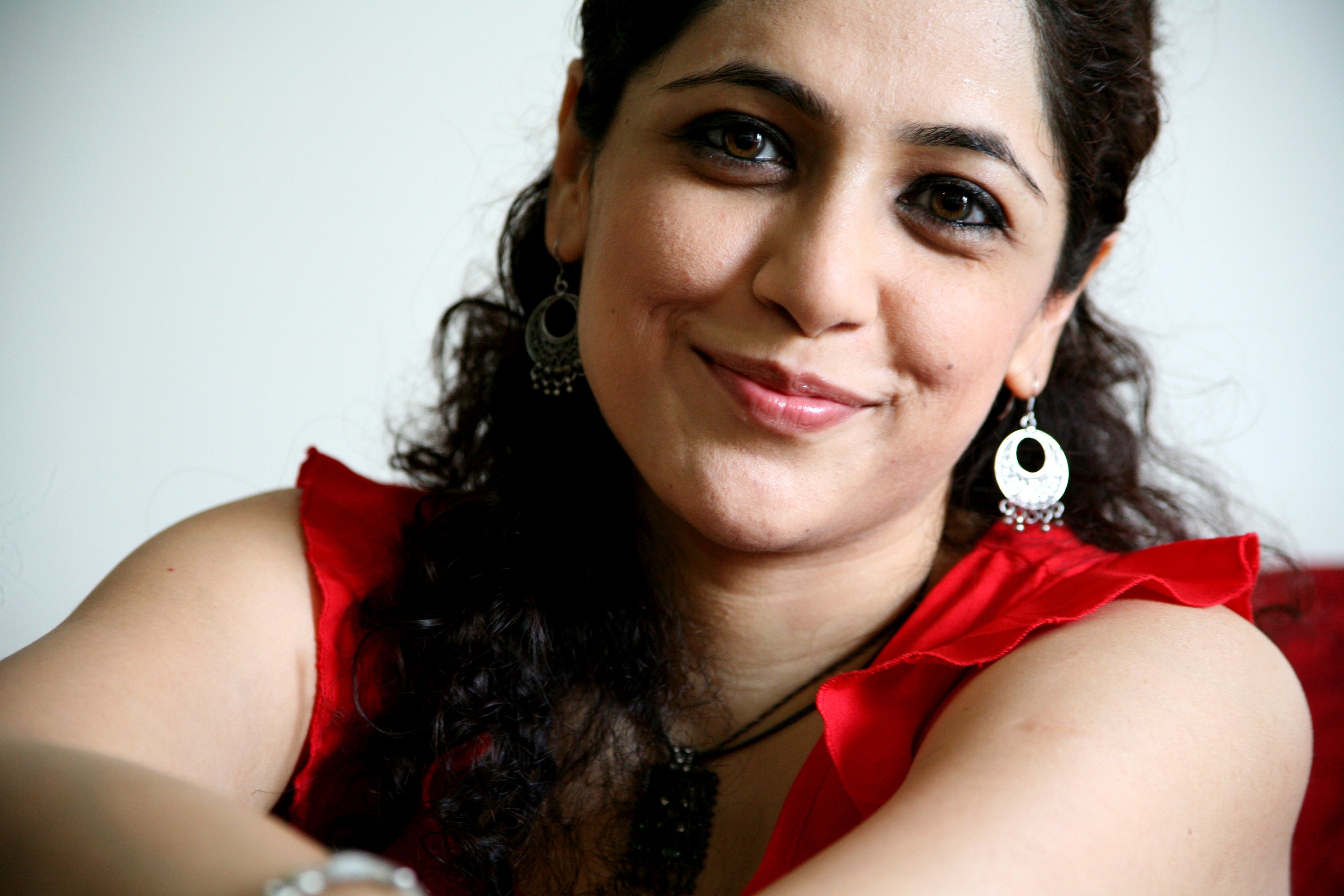
Her first book sold 50,000 copies and her second one’s just out. Madhuri Banerjee talks about putting herself out there.
by Vrushali Lad | vrushali@themetrognome.in

Madhuri Banerjee wrote her first novel, Losing My Virginity And Other Dumb Ideas, on a whim. “I had just had my baby and a 30-something friend was visiting me. While talking, she mentioned that she was still a virgin. That made me think a bit,” Madhuri says. Surprised at this information, and wondering if there were other such virgins around, she spoke to a few of her friends. “There were about three other women who said they were still virgins. “I wondered: what does a woman have to do to lose her virginity?”

And so Madhuri sat down in September 2008 and began to write. “I wrote one punchy chapter, then I showed it to my best friend, asking if she would like to read more. She said she was interested in reading further. I also showed it to my husband, who raised his eyebrows and said, ‘Chick lit?’” she laughs. “But when I said I was serious about writing this, he said, ‘Be the next Elizabeth Gilbert.’”

Since her baby was just three months old and her husband worked full-time, Madhuri could write only at night. “The story was already in my head, and I didn’t edit it as I wrote. I finally finished it in January 2009. Then I wondered how to send the book to publishers.”

Sending the manuscript: Her husband’s friend had been published by Penguin. “I sent my manuscript to that contact that the friend gave, and like an idiot, I sent the entire book at once, instead of just a synopsis and a sample chapter,” she grins. “I also enclosed a cover letter saying that I was a debut writer hoping to be a debut author. But I did not know that the woman I had sent out the book to was the Penguin CEO’s wife! And she got back to me in 48 hours!”

The publishers’ first feedback: “Heather, who I had sent the book to, said she loved it and that she would ask the relevant editor to contact me and that they would send me the contract. She ended by welcoming me to the Penguin family. I had goosebumps all over my body, and I stammered my thanks, hardly believing what I was hearing,” she says. The editor called a week later and things got underway. “I had also sent my book to Harper Collins, but I didn’t hear back from them and honestly, I didn’t care. My first book was about relationships and for me, relationships are far more important than business.”

The production process: “Penguin is extremely thorough with the editing process. My editor had skimmed through the book on her first read, then she read it thoroughly on her second read. The book then went through structural changes, grammatical errors were removed, there were some name changes as well. Yet another editor read sections of it, 30 pages at a time, and she was extremely thorough. She suggested several language changes, and she and I had several arguments about them. I accused her of having Jane Austen sensibilities, not letting me use words like ‘Ain’t,’, and she retorted that she was only trying to make it better!” Madhuri laughs. “But she really made me understand the editing process well.”

The jacket: Normally, Madhuri says, the publishers show you a jacket option “that they try to convince you is the best option.” Her book’s first cover had a picture of a balloon “with three things coming out of it. Given a choice, I would have loved a picture of water droplets and a rainbow and a girl standing at a window.” She adds, “It was very exciting. We sold 20,000 copies with that first cover. The second cover was very successful, everybody loved it. Usually, if the book falls in a particular category, like mine did (it was published by Penguin Metro Reads), the jacket design follows a set format.”

The launch: The book was launched at Penguin’s Spring Fest in March 2011, and had a Mumbai launch later, in which actor Gul Panag was the chief guest. “Gul said she’d be there only for a short while, then she spent three hours at the launch. It was great,” Madhuri says.

Sales: “The book has sold over 50,000 copies so far,” Madhuri says. “It is still selling, and I’m shocked that people are still reading it.” But what about the royalty factor, and is it true that first-time authors are paid a pittance as advance fees? “Yes, you make peanuts as a debut author. But you know, I spoke with Ashok Banker, and he said that he was paid very little by publishers for a long time before he was signed on with an eight-figure advance. It’s best to leave all that to the publishers, and write for yourself with all your heart.”

Authors can also make more money through translations of their work in other languages, like Madhuri is doing – her first book has now been translated in three Indian languages, and has been selected for an e-book version for Kindle.

Multiple book deals: Since the novel was a big success – in the Indian publishing scene, anything selling about 5,000 copies is considered a good break – Penguin handed Madhuri a two-book deal. This prompted a big rethink, because she hadn’t considered writing a sequel. “The publishers give you a deadline in which to finish each book, and mine was March 2012. The sequel was more difficult, because your characters had to have evolved, there had to be a whole new dimension to them and the plot. Plus, the scenes, the dialogues had to be more mature. I put more of myself in this book than the first,” she reveals.

Cruel feedback: How does she deal with criticism? “Very badly,” she giggles. “When I received the first emails really trashing my book, I cried for days. It still takes me an entire day to recover from nasty feedback. People really were cruel, some of them said the book was terrible, it should never have been printed, my writing was pathetic. I find it tough to deal with it, because I am passionate about every sentence I write. Every word I put down is me. And I don’t criticise another person’s creativity at all. Now I’ve taught myself not to imbibe the negativity. I rest peacefully, meditate and find a balance.”

Madhuri’s tips for aspiring authors:

– Know your work thoroughly. Go through it with a fine tooth comb, and be confident about your story. More importantly, live with it for some time.

– Be patient. Publishers have a huge workload and they may take time to evaluate your work. Be patient whether you receive an acceptance letter or a rejection email. If your work has been rejected, reevaluate it, rework it, give it a different title, send it out again.

– Be shameless about networking. Use your friends, their contacts, whoever you think will get you that foot in the door. Buy them a lavish dinner if you have to, just go out there and network.
Categories
Guest writer

Piquance is a taste

…and so are ‘umami’ and ‘metallic’. But, says our writer, we Indians are only now learning to tell the difference.
by Rakshit Doshi

I never take recommendations for restaurants from everyone. Simply because I am convinced that people (those who don’t care about what they are eating) don’t understand the difference between good food and great food; although, they do pick out bad food very easily and that is mostly accurate.

It is actually unfair to ‘judge’ food because it is subjective. It is like music or painting where the creator has his thought process laid out on a canvas, but it would be nice if the consumer understood what he is listening to, looking at and in this case, eating.

I asked a few friends about what was great food, according to them. The responses, mainly, were skewed towards their personal favourite tastes. So a sweet-tooth buddy went, “I love that Gujrati daal, man… it has got such a nice flavour”. Nope, it is not the flavour he likes, it’s the sweet taste of jaggery.

So here is my attempt at making this a short lesson on how to stop simply eating your food and savouring it, understanding it and enjoying it better. If I were to compare food to music, I would say that this piece may give you enough knowledge to at least decide whether you prefer rock or pop music, rather than just saying, “I like Madonna!”

Tastes of India

Good food has three basic factors that are in harmony: taste, flavour and texture. While it is easy to understand texture, people often confuse ‘taste’ with ‘flavour’. To put it very simply, taste is what your tongue conveys and flavour is what your nose tells you. Try this sometime: pinch your nose and have a mint. You will have no idea what you are eating, because you are not getting the ‘flavour’ of mint.

Now, there are seven different tastes that have been classified so far. Four of these are the more common ones which we can pick up very easily, two of the remaining three, are very difficult to explain, and one of them is an absolute revelation. Until recently, I too had no idea that this last one is a ‘taste’.

The four common ones are, sweet (like sugar), sour (like lemon), salty (well, like salt) and bitter (like coffee or cocoa). The uncommon two are ‘umami’ and ‘metallic’. ‘Umami’ is what you usually get from say, cheese or soy sauce. It’s that slight salty bitterness which is very evident in our ‘Indian Chinese’ food because we use MSG a lot here, which produces a strong umami taste. ‘Metallic’ is probably like biting a coin. It is difficult to explain or to pick these out, but my wife did point out a little truth about ‘metallic’ taste: water tastes different when you have it out of a metal container than a glass container. Do you think so, too?

And the final ‘taste’ is one, which until recently, was not even classified as taste! I am sure we have all experienced the ‘coolness’ when we pop a mint or the ‘hotness’ of jalapeño and pepper pods. Yes, this is a taste and it is called, ‘piquance’!

What’s in a flavour?

Moving on to ‘flavour’: this doesn’t really have any specific definition. Flavour is what actually makes food complex and builds on the taste via the nose. Indians love flavour in everything, and why not? After all, we are the spice capital of the world! Our regional and traditional food thrives on the balance of flavour. The Indian dish will comprise of one or two main ingredients, but there will be forty different spices to build the flavour. Maybe it is also true with western cooking, but their hero is that one ingredient whereas for us the proportion of ginger and cardamom, even in our afternoon tea, makes all the difference.

I thank all my office buddies who come from various parts of the country and bring their ghar ka khaana along. A simple bhindi ki sabzi from say, a Punjabi home, may have a strong mustardy robust taste and flavour, but when you taste that same bhindi from a south Indian home, you know it has changed completely, simply because of that extra pinch of asafoetida (heeng) as opposed to the mustard in it.

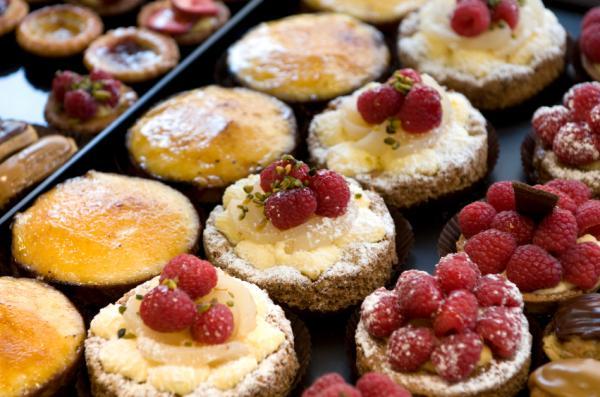
There’s also a little something called texture: this is where good food can become great and great food can become mind-blowing. It is something chefs should play with a lot more. Texture really helps in breaking monotony, like having toasted bread with your pasta or risotto; the fried noodles on top of the hot and sour soup; the biscuit with your evening chai and the papad with your sambar-rice are all instances of textural complexity in food. My favourite textural symphony is a great ramekin of Crème brûlée. Cracking that sugar and hitting a fluffy cloud of cream is musical.

So there you have it, a small insight on tasting food with a little more interest than just saying achcha hai. Looking for these elements can be fun and a little like a treasure hunt. It is for me. What about you?

Rakshit writes for broadcast media to earn his bread and butter but he is also a foodie, who loves to make a fat club sandwich of it.

(Picture courtesy images.sciencedaily.com)


Categories
Watch

5 lame TV shows

These lame shows are LAME! We watch them only because it feels so good when we switch off our TVs.
by The Diarist | thediarist@themetrognome.in

Good heavens, the idiot box will surely make idiots out of all of us. I’m not saying watching TV is bad, I’m saying watching bad television programmes will give our brains serious injuries. And trust me, there are a LOT of bad television programmes on air right now. So bad, our eyes are bubbling over and our heads are throbbing with the question: Why? Why do I do this to ourselves?

And because I believe that misery, like the food you don’t like, must be shared, I present to you five lame TV shows I’ve tortured myself with in recent times.

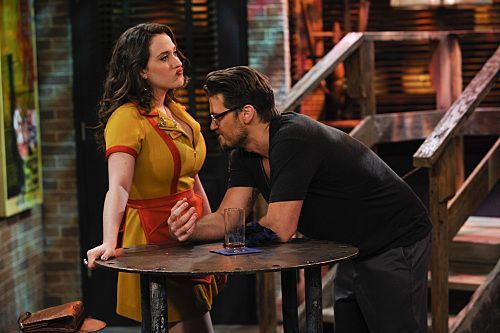
Two Broke Girls (Star World)

The creators of this show claim that it is ‘the evil twin of chick lit’. Sure it is. It is also the evil twin of everything that is smart and funny. An interesting premise – two girls working at a diner to raise money for their own cupcake shop – is let down by severely bad acting and terrible writing. In fact, the writing itself could have been salvaged if the two lead actors were any good – but they are not good. At all. The girl who plays Max, especially, is terrible – her face is heavily Botoxed, her mouth is a constant pucker that you want to attack with a blunt instrument, and her imagined poker face when she is being sarcastic, is only reflective of the fact that she cannot do a convincing poker face. Avoid this one at all costs.

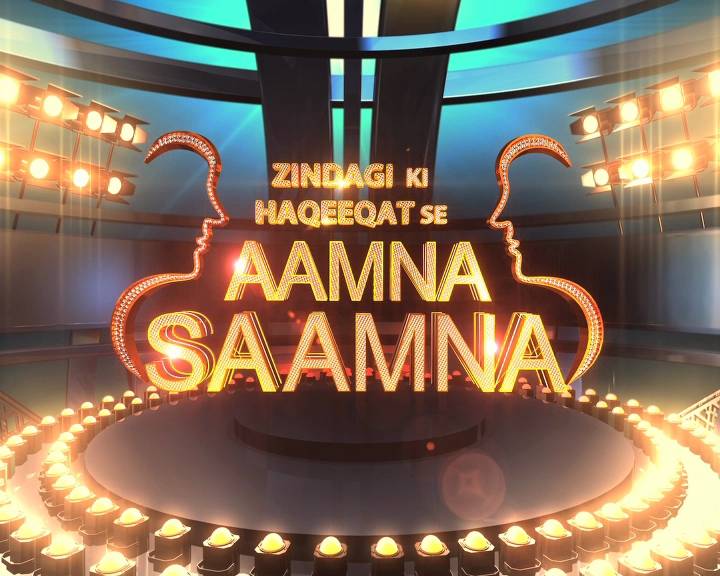
Zindagi Ki Haqeeqat Se Aamna Saamna (Colors)

I missed about 10 minutes of the start of a random episode of this show, because I was trying to memorise its name. Once I got the hang of the show, however, I was mesmerised. The channel has done well to periodically announce that the episode is a dramatic representation of real-life events. What Colors failed to say, however, was that the dramatisation was so extreme, you would begin to think about your life for a bit.

The show has two mediators, a panel of bad actors pretending to be the jury, a bickering family/couple, and an on-location ‘investigator’ called Vikram, whose job is to unearth the truth behind the participants’ claims. So, on the episode I watched, Vikram was entrusted with finding the bank details of a man who had encashed a cheque that belonged to his wife – she being unaware of the amount on the cheque (!) or that he had signed various contracts on her behalf (!!). So Vikram got actual bank records – surrendered by the bank without a single question – and got people to confess on camera that the man was a shady ‘un. What’s more, Vikram telephoned people from the studio and introduced himself as “Vikram bol raha hoon, Zindagi Ki Haqeeqat Se Aamna Saamna se,” and the people on the other end of the line fell over themselves to talk to him. He couldn’t have got a better response if he’d said he was Shahrukh Khan looking to cast newbies for his next film.

If you’ve had a bad day at work, this show, with its richly comical production values and casting, is the show for you.

The Vampire Diaries (Zee Cafe)

Let’s face it – vampires are stupid. And given that they are stupid, they should either remain firmly ensconced in their coffins, or when they do come out, they should keep their fangs to themselves. But no. This lot is unable to keep its trap shut. Plus, in the three episodes I watched, there was constant back-biting (and neck-biting) and everything was a bit of a muddle. There was one scene when one of the leads lies down in the middle of the road, thereby prompting a friendly motorist to stop and ask if he is hurt. After some puzzling dialogue, during which he admits that he must kill her but finally tells her that she is free to go, he leaps out at her from the air and bites her anyway. These vampires, I tell you.

Also, I don’t know if the creators wish to convey constant menace, but could they turn the lights up, please? The show is literally so dark, I have to turn up the brightness on my TV set. And when I do that, all these vampires look like crap. I’d much rather watch the really entertaining Supernatural, instead.

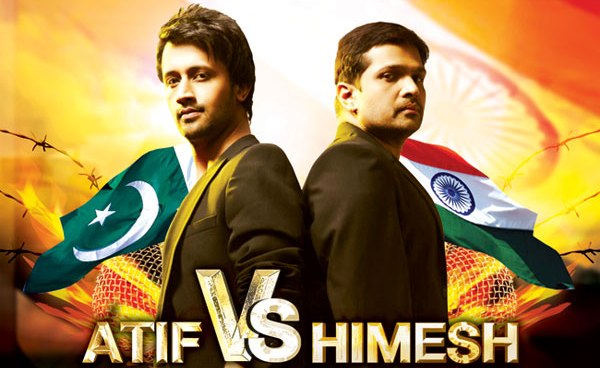
Sur Kshetra (Colors)

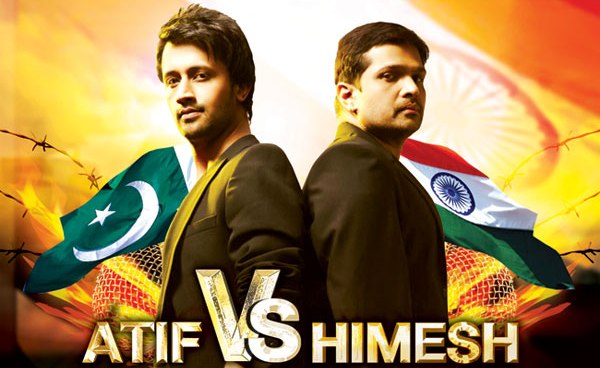
Answer me this: Who selected the two men on this show? What were they thinking when they put these two on the judges’ seat? When was the last time Atif Aslam did not sound like a goat? Or Himesh Reshammiya, like a soul in torment? And why is the singing on this show so mediocre? Also, who let Ayesha Takia out of her house?

After you’ve answered the above, can you also explain if you’ve been able to figure this show out? All everyone keeps doing is fighting with each other and going jingoistic on each other’s ass. The two men argue all the time, then they have individual slanging matches with the three women judges. From what I’ve seen so far, the show follows a loop – bicker, sing, bicker about the singing, sing, bicker…

Keeping Up With The Kardashians (Zee Cafe)

I have no words for this one? Like, it’s really terrible? And I really wish this entire family would be locked away someplace? Where they couldn’t do any more shows? Why am I talking like this? Because that’s how Kourtney and Kim talk?


(Pictures courtesy aapkacolors.com, picgifs.com, 2brokegirls.maxupdates.tv and shandsworld.blogspot.com)


Categories
Big story

‘Nothing happens in India unless legally enforced’

A follow-up on our story on the demand for a separate university for the physically impaired, and what it entails.
by The Editors | editor@themetrognome.in

Yesterday, we reported that a delegation from the National Association for the Blind (NAB) had visited the Maharashtra State Governor K Shankarnarayan last week, on the occasion of White Cane Day, and during the discussion, a demand for a separate university for the visually and physically disabled had been put up by the NAB state head, Rameshwar Kalantari.

Speaking to The Metrognome from Nashik, Kalantari said, “There was a reason for this demand. There are several colleges and universities in the state, but they all cater to normal people without any disabilities. Even the study material and courses are designed for normal people, which is why several disabled students drop out of the education system after class 10. This is especially true of visually-impaired students.”

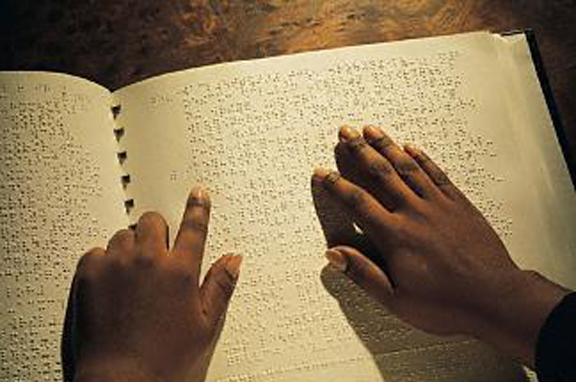
He explained that a lack of textbooks and study material in Braille beyond class 10 is a big deterrent for visually-challenged students. “We have to prepare CDs that recite the lessons for them, and they require computers or other recording equipment to replay the material. It is very expensive to produce higher studies’ textbooks in Braille, because of the volume of material to be reproduced. Also, the books are very heavy to carry,” he said.

He stressed the need for the inclusion of such courses in the curricula that would encourage disabled

students to pursue such courses as social work, music, physiotherapy and others, which are difficult at the current moment. “There is also the problem of disabled-friendly infrastructure to be put in place all over the country, especially in government buildings and educational institutions. In our country, unfortunately, nothing happens unless there is a legal compulsion to do something. These things will be implemented only if bureaucrats make it compulsory,” he said.

Kalantari further argued that if there could be separate universities for women (such as the SNDT University and colleges in Mumbai), the demand for a separate university for the disabled was a justified one. “Yes, there is an argument against it, that it will isolate this class of students from mainstream education. But it needs to be done for the purposes of their education. It is a pity that the country has only one such university at Chitrapur in Uttar Pradesh.”

He added that the Governor has asked him to send a formal letter to forward to the government soon, and he is currently in the process of drafting it.

(Picture courtesy www.bauk.org.uk)

Categories
Film

And…(long pause)…action!

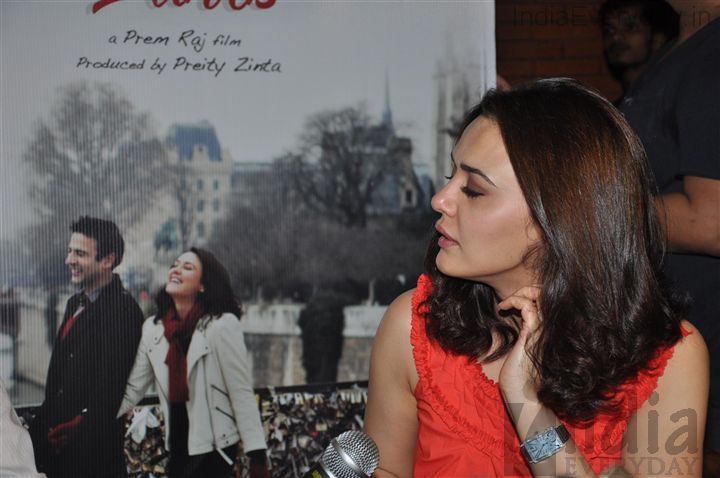
The feisty Preity Zinta is back after a long sabbatical. But will she and her new film captivate the audience?
by M | M@themetrognome.in

‘She came, she saw and she came back,’ could very well sum up the Preity Zinta story. With her ‘comeback’ release next week Ishkq in Paris, (the film’s release has been delayed yet again), I am obliged to review her career. And there are several points to ponder over.

I think Preity was the only actress who could pull off the bubbly girl-next-door image effortlessly. On most other actors, it just looked forced and stupid. This ‘chirpy girl’ image had it going for her since her debut in Dil Se, when most of us thought she was here to stay. And she did, for quite some time, amidst the hits and the flops, exceeding viewers’ expectations with each movie.

A series of not-so-good movies were always topped with an in-your-face performance from Preity. She had it going for her, until a certain Mr Wadia rained on her parade. Loads of actresses fall in and out of love… but very few put everything they’ve earned (including their reputations) at stake.

Her relationship initially seemed like a fairy tale come true – a beautiful girl finds a handsome, rich boy who will take her on cruises around the world. But soon, the Preity dream turned into a (Loch) Ness nightmare. There were nasty rumours of Preity doing recreational drugs, that those drugs had now turned into a habit. They said that when she broke up with Ness, the ugliness of it all haunted Preity so much that she reportedly checked into rehab, and some even said that she had got a nose job done.

I really like her. Apart from being a reasonably good actress, Preity Zinta is an intelligent woman. She is educated, comes from a respectable family and was even a guest columnist with BBC Online for a brief while. It is unfortunate when a woman is mistreated by a man, and then by the industry. It was quite the task for her to get a distribution partner on board for Ishkq in Paris. The constant push-back from reputed distributors resulted in multiple delays in releasing the film. Now, it turns out that her film’s director is ill, so this week’s release date has been changed to next week’s for now.

But even after the heartburn distribution and release issues, and the lack of support from most of her friends in the industry, Preity seems to have pledged to never give up. Like her show on TV (which also tanked), she seems determined to ensure that her comeback film will see the light of day. But as much as I want her to succeed, as much as I respect her for picking up the pieces and getting her act together, I have serious doubts about Ishkq in Paris.

But if you are still craving some Zinta before her new film hits the theatres, I would advise you to stay at home with a tub of popcorn and grab DVDs of her earlier movies that are actually worth a watch, such as:

Sangharsh (1999): India’s answer to Jodie Foster, Preity carries the complexities of a frail girl and tough cop brilliantly in this film.

Kya Kehna (2000): Post-Juno, the teenage pregnancy issue has revealed its lighter side, but back in 2000, especially in India, this was still a hard-hitting issue. Her performance in the film did create quite a stir.

Lakshya (2004): This is my favourite Preity Zinta movie of all time. The staunch modernist/feminist side of Zinta was the inspiration for Romila Dutta’s character.

Heaven On Earth (2008): See Zinta shine as Chand, a timid housewife trapped in an abusive marriage. Beware, the movie will go haywire with a bizarre turn, but remember you’d rather watch this than Ishkq in Paris.

Dil Chahta Hai (2001): Finally, the chirpy girl-next-door. Enjoy!

(Picture courtesy g.ahan.in)

Categories
Soft Coroner

The Partisan of India

Prashant Shankarnarayan muses on the North-South Div(why)de, and wonders why history books omit South India from the Indian freedom struggle.

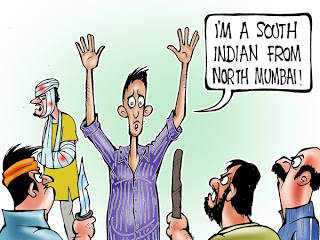
The situation – A friend’s casual comment, “Tum madrasiyon ne toh azaadi ke liye kuch kiya hi nahin!”

The observation: A good-hearted Punjabi and a funny radio host, he just blurted it out. However, his jovial comment reflected a deep sense of prejudice hosted by many compatriots. He is an innocent by-product of an indifferent education system that made us believe that South India did not contribute anything to the freedom struggle, and the North was where all the action occurred. So here is my response to that lame comment but before that:

Is this article about freedom fighters? No, because I have no moral credibility, right and intention to even comment on them just because I happen to sit on a chair with a backrest and know how to operate a laptop.

Then what’s the fuss about?  Because although North India saw more bloodshed because Punjab and Bengal were divided amid political machinations, and considering that Kolkata was the erstwhile capital before Delhi took over, it still doesn’t mean that the southerners were sitting around eating appams and drinking payasam all day while the feisty North battled long and hard.

This is just a humble rumination on a few known but not often-discussed facts which, I believe, need to be included in our history books and conversations, so that our institutions stop manufacturing Northies and Southies, but Indians.

India’s first Sepoy Mutiny

No, it wasn’t the 1857 one at Meerut. Actually, the first one occurred on July 10, 1806 at Vellore. The Hindu and Muslim sepoys of the Madras Army protested against army rules that hurt their religious sentiments, and were also fuelled by a desire to put an Indian prince on the throne. The mutiny broke out and the sepoys killed many British officers, raised the flag of Mysore Sultanate at the Vellore Fort and declared Fateh Hyder as the king before the rebellion was crushed by the rulers in a day.

The Queens

Who was the first Indian queen to take on the British? The mind conjures a brave and beautiful Rani Lakshmibai seated on a horse, with her infant boy tied around her waist, wreaking havoc on the battlefield and dying a heroic death in 1858. They called her the most dangerous of all Indian leaders, yet there were other queens who took on the might of the British long before the battle of Jhansi. Chennamma, the ruler of Kittur in present day Karnataka, fought with the British East India Company for the same reason as Rani Lakshmibai would later fight for – to ensure that her adopted son remained her heir. The courageous queen was captured and later died in prison in 1829. As for Velu Nachiyar, the queen of Sivagangai, she was amongst the first ones to use a human bomb way back around 1780. She even created a women’s army to face the British soldiers and named the unit ‘Udaiyal’ in honour of her adopted daughter, Udaiyal, who died detonating the British armoury.

One of the many revolutionaries

This patriot, affiliated to a nationalist outfit, assassinated an English officer and eventually committed suicide by shooting himself to evade arrest. Before you say Chandrashekhar Azad, let me tell you about Vanchinathan. Born in Shenkottai, he was a member of the Bharata Mata Association and shot dead the district collector of Tirunelvelli, Robert William d’Escourt Ashe – almost 20 years before Azad’s martyrdom.

The list can’t continue further as the article runs the risk of being branded as a history lesson by a rank amateur. But it is an earnest appeal by a layman to stop viewing Indian history from a partisan North Indian perspective. It is this sheer ignorance that makes a random North Indian guy rebuke a random South Indian guy just because the former doesn’t know even an iota about South India’s contribution to Indian independence. And it is the same ignorance projecting in different ways that very subtly sows the seeds of alienation fuelling the Aryan-Dravidian or Hindi-Madrasi undercurrents that we see in religion and politics.

No one knows why our educators decided to chuck quite a bit of South India from history books, but as a result, people like my friend have created their own incorrect opinions about the freedom struggle. More importantly, my Punjabi friend thought that he represented all the freedom fighters from the North just like I, for him, represented all the so-called docile South Indians. What matches his pathetic gleeful ignorance is the equally rigid Dravidian politics of certain parties from the South. As commoners, it is definitely better to erase each other’s ignorance rather than feed on it like Dravidian netas.

I believe that the honourable frogs who set history curricula should jump out of their North Indian wells and take a dip in the Indian Ocean to familiarise themselves with the adjacent Indian land mass. Lala Lajpat Rai and Tiruppur Kumaran both held on to flags, at different locations and a different time, even as the police assaulted them, and both eventually succumbed to injuries. I asked my fiancée, and as expected, she had studied about the former leader in school but knew nothing about the latter. Worse, she accused me of being a defensive South Indian after reading the first draft of this article. No surprises, considering she is a North Indian.

Prashant Shankarnarayan is a mediaperson who is constantly on the lookout for content and auto rickshaws in Mumbai. This column tries to dissect situations that look innocuous at the surface but reveal uncomfortable complexities after a thorough post mortem.

(Image courtesy Satish Acharya)

Exit mobile version