Categories
Enough said

Long live the King

Humra Quraishi is heartbroken over Yash Chopra’s death, and has given up looking for a man with Guru Dutt’s eyes.

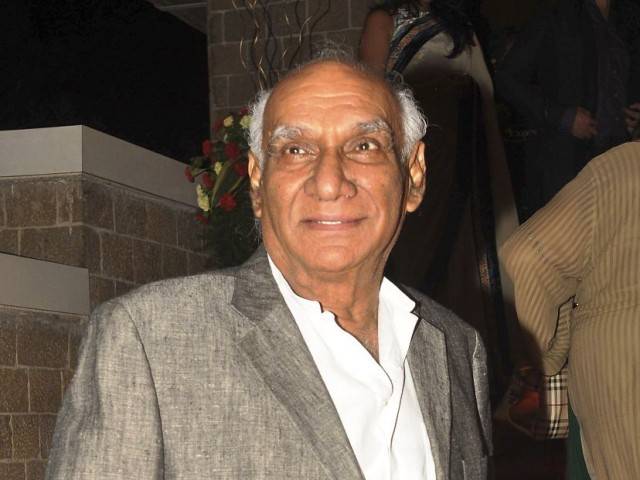
Ever since I heard the news of director Yash Chopra’s death due to dengue, all I kept muttering to myself was, “Yash Chopra’s dead…He’s dead…the king of romance is gone…”

I didn’t know Yash Chopra personally. But sometimes, you don’t need to know somebody on a personal level to feel the loss when they’re gone. Most of those who are mourning for him didn’t know him either, but we’re all shaken by his death. I think what bound me to Yash Chopra was that he personified all that was romantic in film, and I am a diehard romantic in real life. But I count myself lucky, because unlike the scores of people who could idolise him only through his films, I actually had the opportunity to see him up close.

I saw him in person just once, at the New Delhi airport. He was with his wife, and though they were together, his eyes darted about restlessly, like he was mentally somewhere else, looking for someone. Even at a distance, his personality did leave an impact…he wasn’t good-looking in the conventional sense of the word, but he had a definite personality. I thought he was tall and dark, but not really handsome, but there was something about him that would make you notice him in the crowd, turn around for a second look, even on a crowded airport.

The restlessness in his eyes probably stopped me, or rather, the journalist in me, to go right up to him and talk to him. I still could have spoken with him, and I’m sure he would have been cordial enough to answer my pleasantries and my questions, but I thought  it  would  be  wrong of  me  to  intrude on his thoughts and bother him.

And   as  I  saw  him  boarding  the  same flight  to  Srinagar as I was on, I  was  more  confident  of  going   up to  him, if nothing else, then for  one of those unplanned  interviews that journalists are sometimes lucky enough to get. But  by the  time  I  could  muster enough  confidence to approach him, he was almost  mobbed  by  his  co-passengers. After that, I settled back in my seat and resigned myself to glancing at him at regular intervals, and I could clearly see his smile and his set of fine, good teeth. And I could also hear his distinct voice, and snatches of the sentences he spoke rather quickly.

On the evening of his death, as I mused over losing Yash Chopra, I was actually surprised that I still remembered all these details of so long ago, after so many long years. The only explanation I  can  offer for my fond memories of Yash Chopra, are that the romantic streak in him and me brought about a strange connection of sorts. Yes, romantics  do connect in these rather bizarre ways.

And when I ponder on romance, I remember Guru Dutt and his lovely eyes. After him, no other man conveyed the kind of want, the yearning and a subdued passion of love. Guru Dutt was probably the only man in cinema whose eyes touched a chord with you across a cinema screen, that made love to you with a single glance. I am still looking for eyes like his, but I have almost given up hope. Where am I going to find such a pair of eyes, in these fast times and in an age where pelvic thrusts denote love in cinema, that will be emotional, in love and full of yearning?

Today’s filmmakers would do well to understand why Yash Chopra and Guru Dutt made romance so special. They understood that romance was about an abundance of emotions, exploding in a dazzling display of colours and tears and heartbreak and ecstasy. They understood the difference between love, romance and sex, and also that romance remained with the viewer long after the sex was done with. Their films underlined this wonderful line from Gabriel Garcia Marquez’s Memories of  My  Melancholy  Whores: ‘Sex is the consolation one has for not finding enough love.’

Humra Quraishi is a veteran journalist and author of Kashmir: The Untold Story and co-author of Absolute Khushwant

(Picture courtesy www.deccanchronicle.com)
 

Categories
Big story

Attack a cop, lose everything

Mumbai police will compile an offender’s report, make it tough to get employment, or leave the country without court permission.
by The Editors | editor@themetrognome.in

The next time you have an altercation with a cop in Mumbai, count backwards from 50 or chant this: ‘I. Will not. Hit. This man.’ Exercising restraint, whatever the provocation, might make you really angry at yourself for a while, but it will save you from more serious consequences.

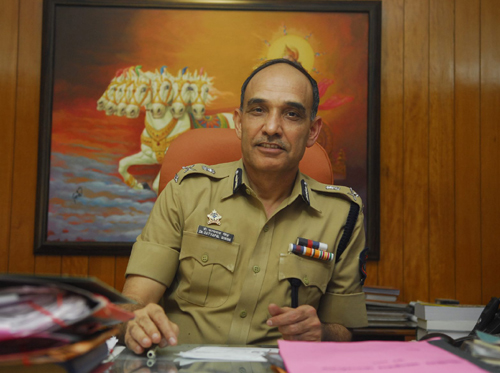
Last week, Mumbai Police Commissioner Dr Satyapal Singh issued a circular that effectively binds those assaulting cops in a series of ever-increasing troubles – miscreants might lose their passports and driving licenses, they may find it difficult to get work if they are registered with the Employment Exchange, they will need court clearance to leave the country, and will even suffer the ignominy of having lookout notices issued in their names at airports. If this wasn’t enough, the police can even request concerned authorities to not renew miscreants’ driving licenses, rental and other agreements and the accused will never get a police verification certificate when seeking employment.

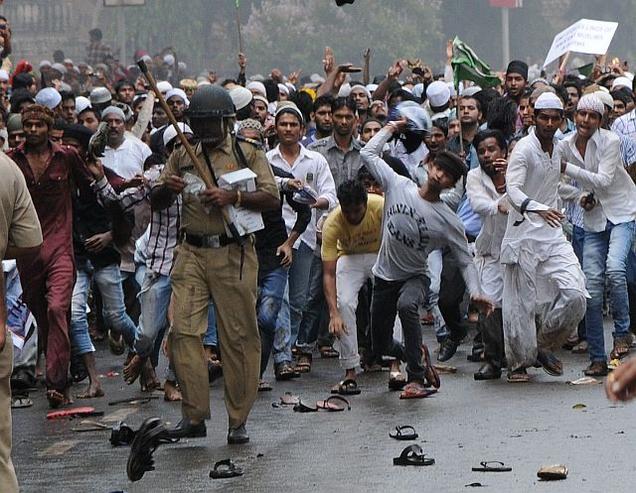
The circular was issued after deliberating on the recent Azad Maidan attacks, when rioters turned on police personnel on duty. However, incidents of citizens having altercations with cops and assaulting them are on the rise, feels Dr Singh. In the circular, he says, “There is a possibility that the morale of the police force will be lowered if such attacks are allowed to continue without punishment. Attacking the police, who are the custodians of law, is like waging an attack on the state government itself.”

He adds, “The general public will feel that if the police cannot protect themselves, how can they protect the citizens? Hence, it is important that apart from the usual legal procedures that the police follow in the event of an assault, other deterrents are meted out to these criminals.” Hence, he recommends that such miscreants be taught a lesson by making things difficult for him/her in daily life.

Once caught and taken to the police station, a comprehensive report of the accused will be prepared, says Dr Singh. The report will contain the person’s fingerprints, photograph, residential and professional details, and copies of his PAN card, Aadhar card, passport, driving license and fire arms license (if any). The DCP of that zone will then sign off on the report and empower it to be sent with details of his crime to the passport issuing office, the Employment Exchange, all domestic and international airports (in the form of a Lookout Notice), the RTO and the person’s current place of employment.

That’s not all. Dr Singh says, “The police can refuse to issue character certificates or no-objection certificates to such a person. Further, the relevant RTO will be instructed to immediately cancel the person’s driving license or renewal request, and the company where the person is currently employed will be directed to mention this crime in their confidential reports.”

What do you think of this move? Write to us at editor@themetrognome.in with your thoughts. 

 (Picture courtesy www.thehindu.com)

Categories
M

Will Bollywood ever get a Bond?

Or at least a super-successful series of spy movies? We’re not asking for much, if you really think about it.

by M | M@themetrognome.in

With James Bond’s 23rd instalment around the corner (releasing next week), I started to think – will Bollywood ever get its own series of good spy movies? We are the second largest film industry in the world, but we are still light years away from Hollywood in terms of owning a super-successful franchise that the world will watch.

I really don’t get why we haven’t been able to do it yet. We obviously have the talent – no, I am not counting Salman Khan or KJo – and we have reasonably good actors and directors. So why aren’t we there yet?

The last attempt at making a spy thriller was Agent Vinod. It was nowhere close to the savoir-faire and panache that even the less-thrilling Bond movies carry. Saif Ali Khan as an undercover agent was the worst casting choice made in the history of cinema. I know many who liked the young baddie more in the film.

A series of spy films might be too much to ask for at this point, but a few good ones that bring us to the edge of our seats would suffice. So, what does it take to make a spy thriller? Let’s break it down.

The James Bond series can be primarily credited to its creator, writer Ian Fleming. The compelling stories were adapted into gripping screenplays that captivated the audience. Fleming’s style of writing and a set of characters so well-defined and well-embedded  in the audiences’ minds, ensured that plotlines outside of the novels he wrote are still being explored – and Skyfall is a case in point. This simply means that James Bond is not about to holster the gun any time soon. Thank God for small mercies.

Lack of compelling stories keeps Bollywood from making good movies. Not. Recent whatever-you-call-it Student Of The Year proves this amply. We’ve already got great Indian spy stories that we have not tapped into – consider the magnificent detective series Feluda written by Satyajit Ray. The series of short novels and stories is a fascinating combination of Sherlock Holmes-style detection and Bond-like execution, and has all the ingredients for a Bollywood masala film – suspense, drama and action. There are a couple of films and telefilms based on detective Feluda, but these hardly translated into commercial success. These stories are denied of the distinction that they deserve and someone should re-visit them at the soonest.

Plus, the Bond films have the most admirable cast. All of the Bonds thus far –  Sean Connery, Pierce Brosnan, Roger Moore, Timothy Dalton and now Daniel Craig – have had one enduring quality each, and some were dreamier than others. M and Q, with Judi Dench playing the former and Desmond Llewelyn as the latter, have done a splendid job in each film. And what can be said about the Bond girls? With each film, they are just making temperatures soar higher. Even the bad guys are in a league of their own.

Okay, so Bollywood doesn’t have too many options for a James Bond-inspired character, but I would still think Akshay Kumar is worthy of a chance. And we have stacks of bombshells to play his lady, or we can always import them.

Is it the money that keeps us from replicating a successful formula? I don’t think so. Hindi film-makers are never shy of blatantly copying foreign films, even if it means bringing in the crew of The Matrix or The Terminator to reproduce the exact same scenes.  Ra One and Robot established that there is no scarcity of money in Bollywood. Bollywood films may seldom have a storyline, but exotic locations are exploited only for songs and dances and not on any pathbreaking scenes. Obviously, budget is not an issue for us.

I think the real problem is direction. I cannot remember the last Bollywood film that showcased the work of an outstanding director. The current crop of directors who film sequels largely comprises failed actors (Pooja Bhatt, who directed Jism 2) or directors who refuse to quit directing (Vikram Bhatt for everything he’s ever made). We can only come up with a Farhan Akhtar who would take up the challenge of directing a spy thriller and do a decent job of it.

Dear Bollywood, man up and get cracking. Give us meaty spies, let our adrenaline flow, entertain us, and in the bargain, get acclaimed for making good cinema. Of course you’ll make money, dummy!


Categories
Patrakar types

An open letter to Dr Satyapal Singh

We all agree that nobody should attack a public servant, whatever the provocation. But is anyone disciplining the police force?
by Vrushali Lad

I don’t advocate violence. I hate fights on the streets. It makes me sick when people beat each other up over trivial matters in the train. I feel frightened by how easily people are raising their fists, or even guns, on those who have irritated them in some way.

But all of that is nothing to the irritation I feel when I see the Men in Khaki make complete dirtbags of themselves, especially when they are supposed to assist the public. The Mumbai police commissioner has issued a circular that outlines the harshest punishments to those who attack cops in the city. Those who assault a cop may lose their jobs, the freedom to go out of the country, their driving licenses, their passports, and most importantly, their reputation. (Read about the circular here)

In the case of such incidents as the Azad Maidan violence, when rioters beat up policemen and molested policewomen, and even in such cases where cops get beaten up by gangs of thieves who the cops attempted to capture, I feel for the police force. They are overworked, underpaid, and generally not protected by the administration when they face such issues on the field.

But, Dr Satyapal Singh, please answer this: However underpaid, understaffed and unprotected your police force is, does it take your men too much effort to cultivate some basic manners? I cite a few incidents that I have personally witnessed, and which will help you see what I mean:

–  My house was burgled two years ago. It was a case of forced entry, and the thieves took advantage of the fact that my cupboard keys were lying in plain view. The constable’s (who came for the panchnama) first comment to me was: “You are educated people. How can you leave your cupboard keys lying around when nowadays there are so many burglaries taking place?”

– The fingerprint ‘expert’, while doing nothing useful, kept extolling the virtues of the thieves, who he said had not left a single fingerprint behind. “Very clever this thief is,” he chuckled to my face.

– At the police station, while getting my FIR written, a woman from a neighbouring slum came in crying and said that her husband had taken her child away from her and locked her out of the house, furious that she had gone to Tirupati without his permission. Do you know what your duty officer did, Dr Singh? He didn’t write a complaint. He didn’t call the husband to the police station. No, sir. He said to the woman, “Has he been fighting with you for long?” When she said ‘yes’, he said, “You had gone to Tirupati. Why didn’t you ask God to grant your husband some sense?” The woman left the police station shortly after this.

– When a call centre employee was rude to my father over a disputed phone company bill, the duty officer at the police station deigned to call the call centre, but hung up after a brief conversation, because the girl who was rude to my dad refused to give her last name. The duty officer exclaimed, “I cannot talk to people who do not give out their father’s names.”

– My best friend went to court with his aunt to claim a gold chain that had been snatched from her a few months ago. Your officers refused to return the chain without a bribe of Rs 500. And the chain they gave her wasn’t even hers, it was somebody else’s.

– Two years later, my burglary case has still not being solved. Why? Because your men tell me that “jewellery and laptop thefts are difficult to crack.” Oh, but they insist that I go to court and classify the case.

Dr Singh, you are within your rights to protect your men. And I do agree that your men require protection. But can you really blame a person for assaulting your men, when harried by the theft of his car, or his mobile phone, or a domestic dispute, and instead of receiving help and commiseration, only gets unasked-for advice on how he was wrong and how he deserved what happened to him? It took me all of my self-control to not pick up a heavy object and hurl it in your constable’s face, when he kept saying that it was my fault that my house had been burgled. Only the fear of consequences stops more people from assaulting your men.

We’re human, too, Dr Singh. We get really furious when your men tell us how we got what we deserved. Does anybody deserve to be thrown out of their houses? Or to lose everything to thieves, everything they’ve worked for all their lives, because they left their home for a few hours to visit relatives? Or to have their mobile phones flicked from their pockets? What gives your men the right, then, to tell us that we were in the wrong when something like this happens to us? Or to demand a bribe to do their jobs?

Yes, you are within your rights to make my life a living hell if I assault a member of your force. In the meantime, Dr Singh, why don’t you also ensure that your men mend their boorish, often uncooperative ways? If you feel that taking away my driving licence, my job, my passport and everything that is a close part of who I am, will ‘discipline’ me, are you also issuing a circular to your men, stating how you will discipline them if they refuse to do their jobs, and not add to a complainant’s grief and fury by being wiseguys?

Respectfully yours,

Vrushali Lad,

A Mumbai citizen.

(Picture courtesy mid-day.com)

Categories
Read

An astonishing children’s library at Churchgate

The Vohu Mano library has a lifetime membership of Rs 350 only, plus children can read rare titles as well.
by The Diarist | thediarist@themetrognome.in

Inside the Theosophy Hall just opposite the American Centre at New Marine Lines, there is a lovely little children’s library that houses every sort of book, comic and encyclopaedia that a child could possibly desire. Books such as the Trixie Belden series, now not available in most bookstores, back issues of The National Geographic, a towering collection of Amar Chitra Katha comics and a host of beloved children’s authors are neatly displayed on its shelves.

The fourth floor library has a lifetime membership fee of only Rs 350. “It is actually a refundable deposit, and there are no other charges,” says a ‘student’ who manages the centre (all Theosophy followers in the building prefer not to use their names and call themselves ‘students’.) She adds, “The deposit is refundable only after six months, however. The idea behind such a small deposit is that even those chidren who cannot afford to purchase books can have access to good reading material at our library.”

Vohu Mano is ancient Persian for ‘The superior mind’. The student says, “People who come here for the first time are surprised at our vast collection of books, apart from the low lifetime fees. After the library started in 1962, its fees were Rs 5 for the longest time. However, we have had to progressively increase the deposit amount to meet our operational costs.” The library does not purchase any books but relies solely on donations from the public or the United Lodge of Theosophists. “It is lovely to see children as young as 10 years of age come with several books and leave them with us,” the student says. “So many children come with even 15 books sometimes, and some of the books are in mint condition.” The library also accepts monetary contributions for the upkeep of the library.

Interestingly, though the library insists on membership up to 18 years of age, several parents and older collegians also drop by to borrow books. “Since there are several offices in the area, it is the parents that come to borrow books for their children. But they also find books interesting to them, such as our encyclopaedias. College students, especially borrow our educational material for their project work,” she says.

The library now boasts of a 1,000+ membership. “There are 15 to 20 visitors every day,” she says. “It helps that we have a nice reading room where children can select a book and read without interruption.”

About the library:

– There is a refundable Rs 500 deposit to be paid if you want to borrow reference material.

– Children can borrow one old book and one new book at a time. Alternatively, they can borrow two magazines, or one book and one magazine.

– The library began in 1962 with over 1,000 books in English and over 100 books in Gujarati, Urdu, Hindi and Marathi.

(Picture courtesy www.childrensbooksandmusic.com)

The Diarist is always on the lookout for interesting book-related nooks. If you know of a good reading room or unexplored library, do write in to thediarist@themetrognome.in and the diarist will feature the place. 


Categories
Big story

Mumbai is state’s murder capital

However, police records show marginal dip in overall murder cases in 2011, more men are murdered in State than women.
by The Editors | editor@themetrognome.in

With the murder of model-actor Bidushi Dash Barde in Andheri on Monday this week, the spotlight is again on the safety and security of women in their own homes. However, a look at police figures compiled for Maharashtra and Mumbai reveals that incidences of murders (overall) have marginally gone down in 2011 as compared to 2010.

Interestingly, more men than women have been murdered in Maharashtra in 2011; the National Crime Records Bureau (NCRB) state that in every age group except the 10 to 15 age group, there were more men murdered than women in every age group. The biggest difference was in the 30 to 50 years age group, where 826 men were murdered, as opposed to 292 women.

However, Mumbai is the murder capital of the state, with 203 murders recorded in 2011, out of a total of 2,818 murders for Maharashtra. Thane is a distant second at 127 murders in the same year, followed by Nagpur (114) and Pune (110).

Crimes against women

Crimes against women (comprising sexual crimes, trafficking and abduction) have gone up in Mumbai in the last year. This year, the city has been rocked by sensational murder cases, in which women were killed in their own homes. Some of these cases include the murder of 25-year-old lawyer Pallavi Puryakastha by her building’s watchman, Suzanne Rodrigues’ death by stabbing in her home in Marve Road, and senior citizen Sarla Vasudevan’s killing at her VP Road residence. Bidushi Dash-Barde’s killing at her Andheri home is the newest addition to this list.

(Picture courtesy bharatchugh.files.wordpress.com)


Exit mobile version