Categories
Trends

What senior citizens want…

Ever wonder why a person past the age of 60 wants to marry again? We get experts to tell us.
by The Editors | editor@themetrognome.in

Shantanu Banerjee* (71), a Bandra-based businessman, lost his wife to cancer four years ago. “Dealing with her illness was painful, especially the last months, when she was home and there was nothing more I could to help her,” he says. “Then she passed away, and our big house began to torture me by being so empty.”

Last year, Shantanu decided to address his loneliness. “I was living with my sister in Bangalore, and I joined a senior citizens club there. I met a woman who my own age, and like me, she loved watching movies and going for walks,” he remembers. Soon, the walks turned into day-long trips, the movie-watching turned into shopping excursions. “We realised we liked being with each other. She was a widow, had been for 10 years. But her outgoing nature made me come out of my grief. I decided to marry her.”

Shantanu and Gayathri Shetty* were married in a quiet ceremony last year. “We live in Mumbai and she has adjusted well. I love having her around the house,” he beams.

Shantanu and Gayathri are part of a growing tribe of seniors that are opting for a second shot at happiness in their twilight years. Given India’s current demographic – the UN says 32 crore of the country’s population will be over 60 years old in the year 2020, and India will soon be counted amongst the world’s ageing nations (where the geriatric population goes up every year) – we are looking at a situation where there will be several, single senior citizens. And most of them might need to find partners.

“People at that age are not necessarily looking for sex in the marriage. They are looking more for love and companionship. We’ve seen that while men want a companion, women want financial security,” says Sailesh Mishra, founder of the NGO Silver Innings, which works for senior citizens in the country.”And while there are several people whose families do not want them to marry ‘at that age’ because they fear what people will think, and also because they don’t realise that old people also need companions, we are happy to see that some children and relatives are totally supportive of them,” he adds.

A number of marriage bureaux catering to senior citizens have sprung up in recent times. Natubhai Patel (62), who started the first such bureau in Ahmedabad and who has to his credit 75 marriages and 25 live-in relationships among senior citizens across the country, says, “At that age, there is no confusion in the person’s mind about what he or she wants from the partner they seek.

For example, there was a 72-year-old who said that he wanted a wife who could also have sex with him. We found a woman, a widow, for him who was prepared to fulfil this condition. Another woman who came to me said that she got a good pension from her deceased husband’s company, and she didn’t want to give it up by marrying another man, but that she wanted a companion. Today, she lives with a man of her age at his home.”

Natubhai says he has a waiting list of 25,000 people looking for partners, and the numbers are just growing every year. “However, we want more women to come forward and ask for companions. It’s very difficult for women in our country, especially at that age, to even say that they want a man in our lives. However, more women are approaching us, which is a good sign.”

Some common expectations from senior citizens:

– A partner for marriage

– A partner for companionship; may or may not live-in with that person.

– A partner only for friendship; could be same-sex; requires the same for common shared interests.

– A partner for sex

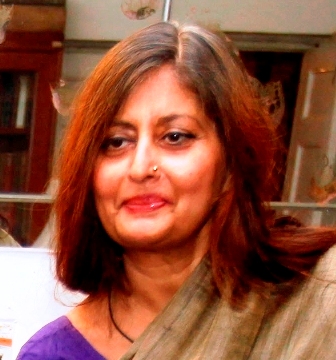
(Picture courtesy daydreamingwordsmith.blogspot.com)

Categories
Enough said

Beyond the high walls

Humra Quraishi wonders what goes on inside our jails, and why cannot believe that some prisoners may want to reform.

Delhi gangrape accused Ram Singh was found dead in Delhi’s Tihar Jail early this week. But his story does not end with his death. Whether Ram Singh was murdered or forced to kill himself is just one of several questions arising from the incident. You could have a hundred television discussions on whether woh maara gaya ya mar gaya, but that’s not the main issue.

His death highlights a larger question, and not just for those confined in this particular jail: are prisoners sexually abused by other inmates and jail staff? Are prisoners silenced to suit those ruling and overruling prime institutions in the country? Are jails reforming the accused or merely killing them slowly? Are undertrials, who form the  bulk of those  imprisoned, subjected to torture?

More importantly, do any of those apolitical watchdog groups hear the shrieks and cries of those languishing in jail?

In this same context, I want to ask why we got so excited by actor-activist Rahul Bose’s comment, that those accused who are remorseful and want to reform should be given a second chance? What was so offensive about this statement? Why do we, while getting really hyper about what somebody says, overlook the fact that we, as a collective lot, are responsible for what’s happening around us?

See, if jails and prisons in our country did actually reform and heal their inmates, then I would hold out some hope for those being confined there. But in the present day, only horror stories emerge of our jails, where hundreds and thousands of people languish as undertrials. I quote a widely-circulated report that highlights these statistics: “In Chhattisgarh, over two thousand Adivasi undertrials are currently in jail. For many, the trial has not been progressing, despite being held for over two years. In Jharkhand, the figure is even larger. Similar situations prevail in Odisha, Maharashtra and Andhra Pradesh…”

To this, let me add that probably the same, if not graver, conditions prevail in other jails, too, and not just in overcrowded jails. What makes the matter worse is that no news trickles out from behind those high walls. What we hear are stray reports of prisoner violence, and there’s no way of knowing what really happens inside.

In these circumstances, since we are confining prisoners for long spaces of time, why not give them the opportunity to truly reform? I’m sure a lot of them want to make amends and mend their ways. I feel that Rahul Bose’s statement is born of wisdom and compassion, both of which we are increasingly bypassing with other human beings, and especially with criminals.

I would go so far as to suggest that Rahul Bose write a book about his thoughts on the matter. Whatever one may so or feel about him, I have always thought that there was something very honest about him. I’ve met him just once – at a book launch in New  Delhi – but he left an impression. I’d asked him if I could interview him. To that, he’d  quipped, “We actors give interviews only when our films are being released!”

(Picture courtesy timeslive.co.za)

Categories
Event

A wedding fair for senior citizens

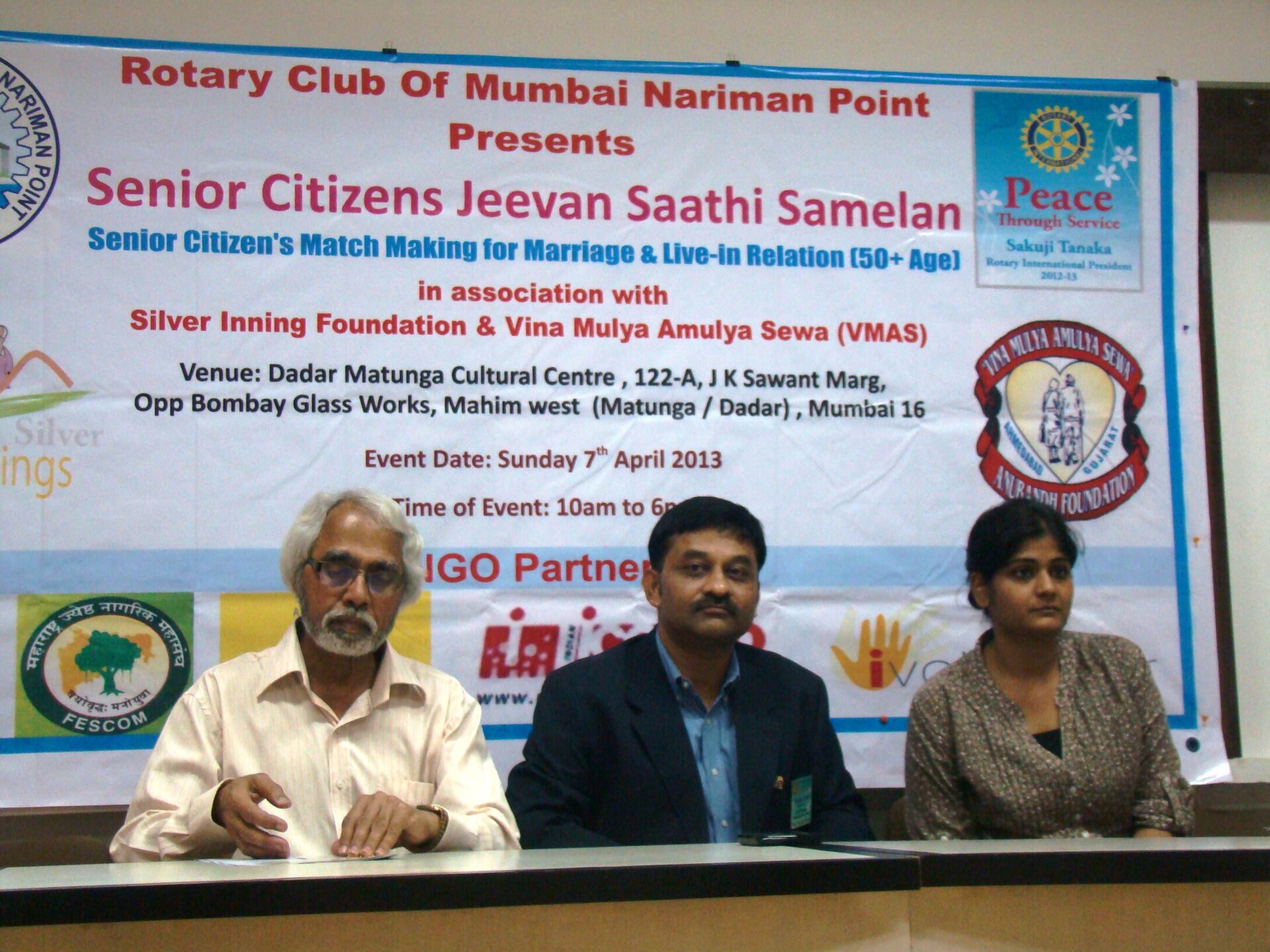
A wedding fair for senior citizens looking for partners and live-in companions will be held at Matunga on April 7.
by The Editors | editor@themetrognome.in

All over the world, senior citizens are expected to settle down into quiet oblivion once they retire from work and cross the magic age of 60, silently watching as their families continue with their lives. In our country, however, the problem of ‘old age’ is compounded for those who lose a spouse to death or divorce – and the worst part is, we don’t want to hear our senior citizens say, “I’m lonely. I want to get married again.”

“With the trend of nuclear families increasing in our country, senior citizens are often left to fend for themselves. The country’s senior citizen population is increasing. Today, 10 per cent of all Indians are senior citizens – 10 crore Indians are over 60 years of age, and 12,00,000 of them are in Mumbai alone,” said Sailesh Mishra, founder of the NGO Silver Innings, which works for senior citizens in the country. He was speaking at a press conference held to announce a ‘Senior Citizens Jeevan Saathi Sammelan’, that will take place at Dadar Matunga Cultural Centre on April 7.

“When a senior citizen loses his or her spouse, he/she becomes really lonely, but they are not allowed to express it because society does not expect ‘old’ people to want a companion at that age,” Sailesh explained. “Research shows that while the longevity of senior citizens in our country is going up each year, women have been found to outlive men. But again, it is very difficult for a woman of that age to say that she needs a companion, that she wants to spend the rest of her life with somebody. We feel that senior citizens should also get the chance to find a suitable mate,” he said. To incentivise women’s participation in the Sammelan, all women who attend the meeting will be given basic train fare, lunch and a saree.

The Sammelan is the brainchild of Natubhai Patel (62), the founder-chairman of Vina Mulya Amulya Seva (VMAS) in Ahmedabad, which has to its credit 75 senior citizen marriages and the setting up of 25 live-ins all over India. “We decided to do  such a big meeting in Mumbai because our research says that 39 per cent of senior citizens living alone in this city are senior citizens. With rising crime against seniors, and the fact that their twilight years can be better spent with somebody of their choice, the Sammelan aims to have willing senior citizens meet each other and make an informed choice about the partner they choose.”


Sailesh added that women’s participation in such meetings has been found to be very low. “We want more women to participate. Through our counselling sessions, we find that most men are looking for companionship, while women look for financial security. At that age, marriage is not required for sex, but more for love and security.” On being asked if the organisers would ensure that no fraudulent members participated in the meeting, Sailesh said that all participants would be advised to carry out background checks before going ahead with the person they chose. “We will only facilitate the meeting, apart from helping with legal advice and marriage counselling when required,” Sailesh said.

The Sammelan is not open to people below 50 years of age, or those whose partners are still alive. If divorced, the participant must produce documentary proof of the divorce, or if the spouse is deceased, the death certificate must be shown. An ID proof of age is mandatory. The Sammelan is open to widows, widowers, single people and divorcees, all over 50 years of age. The event is being organised by Rotary Club of Mumbai (Nariman Point), in association with Silver Innings and VMAS. Contact 099871 04233/ 09029000091 for details and registration.

Tomorrow: Who participates in these events? What are senior citizens in India expecting from their partners?

Categories
Do

How about an art attack?

Art Night Thursday, an ongoing art show initiative, makes art more accessible and time-friendly to the general public in Mumbai.
by Medha Kulkarni

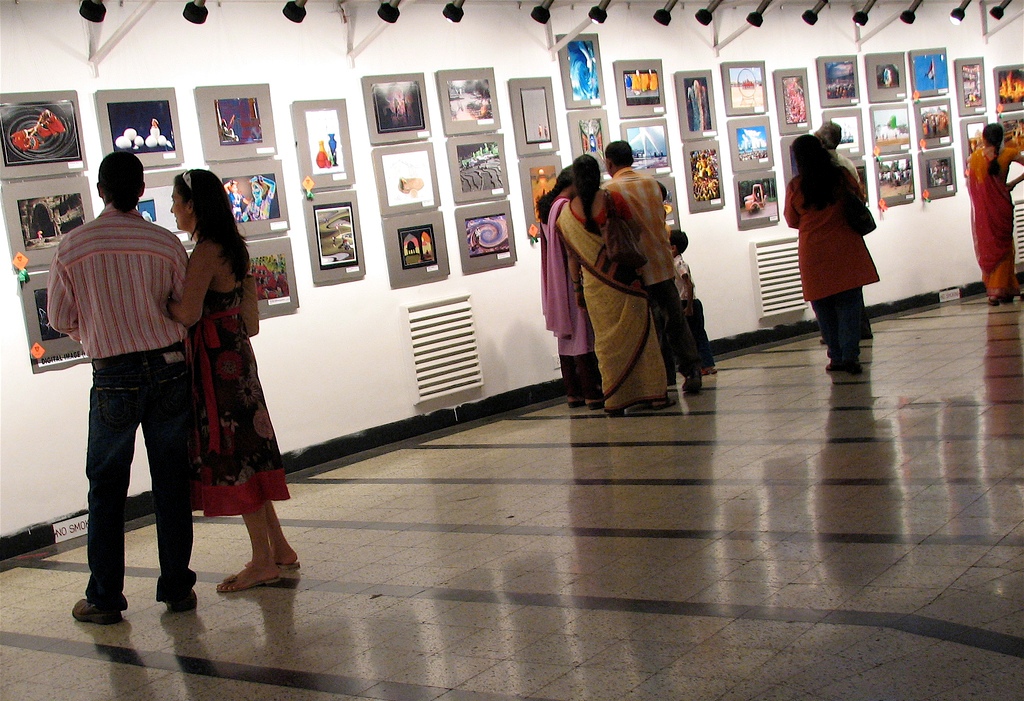
On every second Thursday of the month, a handful of some of the art galleries at Colaba and Fort stay open till 9:30 pm to hold Art Night Thursday. Chatterjee & Lal, Chemould Prescott Road, Gallery Maskara, Gallery Beyond, Volte Gallery, Sakshi Gallery, The Guild, Lakeeren and Galerie Mirchandani + Steinruecke are amongst the participating galleries.

It’s a fabulous initiative that started a little over a year ago and has been instrumental in making art more accessible to the general public. Most galleries tend to be closed on weekends and shut by around 7 pm on weekdays. This makes it difficult for the regular office-going crowd, students etc. to ever go catch a show. Thus, keeping the galleries open on a weeknight till late has provided such people with the wonderful opportunity to be able to catch their favourite art shows without missing work.

Art Thursday this month is tomorrow, March 14, and you can get more information on the Mumbai Art Map here.

This month, Art Night Thursday highlights those galleries that are a part of the FOCUS Festival Mumbai, the first festival in the city dedicated solely to the work of young and promising photographers from all over the world.

I suggest picking up an art map from one of the outlets mentioned in the link above, and hit the art trail in the following order:

– Chemould Prescott Road : “Parsis” by Sooni Taraporevala, March 06 – April 06, 2013

– Art Musings : “37 Still Lifes”, March 14 – April 13, 2013

– Goethe-Institut Mumbai : “A Fantastic Legacy: Early Bombay Photography from 1840 to 1900”, March 13-27, 2013

– The Guild: Group exhibition March 13-27, 2013

– The Hermes Mumbai Store: “The Inhabited Space” by Sean Rocha, March 13-27

– Project 88 : “A Village in Bengal” by Chirodeep Chaudhuri, March 14-26, 2013

– Sakshi Gallery: “Poseurs”, March 14-24, 2013

– Studio-X: “Lost Highway” by Chantal Stoman, March 12-18, 2013

Medha Kulkarni, 25, lives in Mumbai and is a curator at Volte Gallery. Her hobbies include reading, travelling and writing.

(Picture courtesy mumbailocal.net)

Categories
Deal with it

8-year-old donates Rs 5,000 to CM Relief Fund

Kanishk Dongre gave up the money earmarked for his birthday celebrations, plus some personal savings, to CM’s drought relief fund.
by The Editors | editor@themetrognome.in

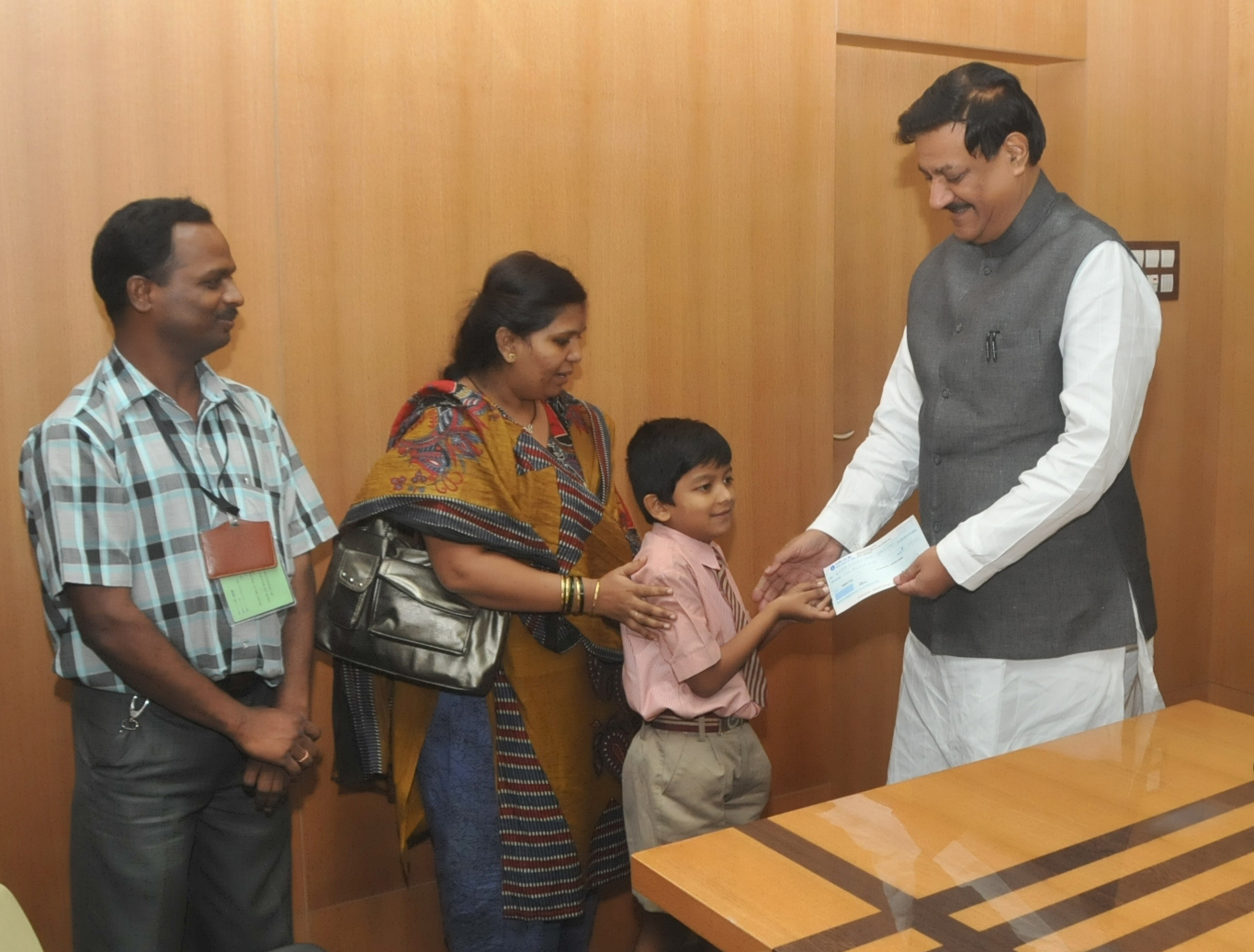
Who says the youth is totally self-centered? An eight-year-old boy, Kanishk Dongre, today did something so sweet, that even the Chief Minister of the State, Prithviraj Chavan, was all smiles.

Today, Kanishk handed over a cheque of Rs 5,000 to Chavan, towards the CM’s Relief Fund for drought-affected villages in the State.

Kanishk’s father, Raju, works with the State Government’s Director General of Information and Public Relations (DGIPR) department. Kanishk, a resident of Badlapur and a class two student of Carmel School, went with his parents to visit the CM at the Vidhan Bhavan this afternoon to hand over the money; the State Legislature is currently in Session and the CM was present there at the time. It turns out that the Rs 5,000 was actually earmarked for the boy’s birthday celebrations this year. However, the boy decided to donate the money, along with some prior personal savings, towards the drought relief fund.

Who says you need to make a grand gesture to make a difference?

Categories
Event

With a FOCUS on Mumbai

First-ever photography festival kicks off tomorrow in the city, and it will feature young photographers from all around the world.
by Medha Kulkarni

FOCUS, Mumbai’s first ever photography festival, kicks off tomorrow, March 13, 2013. Spread over two weeks, the festival is dedicated exclusively to the work of young, emerging photographers from all over the world. The best part about it? It’s open to everyone, totally free of cost!

The two pivotal exhibitions of the festival are:

A Fantastic Legacy: Early Bombay Photography, from 1840 to 1900
Curated by Mumbai Art Room owner Susan Hapgood, the USP of this exhibition is that all the works on display are original prints. Stunning portraits, panoramic views of the city and some of the earliest photographs by members of the Photographic Society of Bombay, the exhibition promises to enthrall all those who love this city and continue to be fascinated by it.

Head to Galerie Max Mueller, Max Mueller Bhavan, K. Dubash Marg, Kala Ghoda, on Thursday, March 14 to Wednesday, March 27. The exhibition is open from Monday to Saturday, from 10am to 7pm, and will be closed on Sunday.

A Photograph Is Not An Opinion – Contemporary Photography By Women
A group exhibition of works by emerging women artists from India and abroad, this exhibition highlights various important themes – the city and the environment, the family album, loss of some kind- while encourage discourse on gender and sexuality.
Head to Terrace Gallery, Jehangir Art Gallery, 161 MG Road, Kala Ghoda, on Thursday, March 14 to Wednesday, March 27. Daily, from 11am to 7pm.

In addition to these two, FOCUS has teamed up with Mumbai’s artistic community to launch a diverse range of several other exhibitions and events. The city’s dynamic art scene coupled with the festival’s outreach has ensured that most of the best galleries and important cultural centers are geared up for the event and this, in turn, ensures that it’s within easy reach of everyone in the city. Additionally, unconventional spaces such as design shops and studios, cafes and other lifestyle spaces will be multi-tasking as galleries throughout the duration of the festival.  A range of educational initiatives, workshops and talks (all free) have been planned as part of the festival.

Get more details here.

Exit mobile version