Categories
Big story

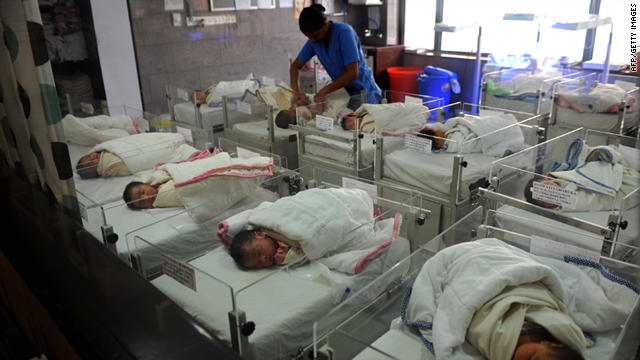
Mumbai’s suburbs have better sex ratio than island city

This, and other important Mumbai-specific snapshots, emerged from the Economic Survey 2012-2013, released in ongoing Maharashtra State Legislature Session today.
by The Editors | editor@themetrognome.in

At a time when crimes against women rise in Mumbai, and the question of how we treat our girls and women becomes increasingly significant – especially in the context of how many girls are allowed to be born – the Maharashtra State Economic Survey 2012-2013 throws light on the subject of sex ratios recorded for Mumbai.

As per the Survey, released today while the State Legislature continues to be in session, and prior to the presentation of the State’s Budget tomorrow, the sex ratio recorded for the Mumbai suburban region is a robust 910 (that is, 910 girls to every 1,000 boys born). However, the sex ratio for Mumbai city is 874; this means that the suburbs exhibit a healthier sex ratio as compared to the island city. The figures arise from Census 2011.

Meanwhile, the Survey points out other statistics for Mumbai:

– 67 per cent people in Mumbai city have latrines within their houses, while only 54.7 per cent of the suburbs have latrines inside their homes.

– Also, 90 per cent of city homes have bathrooms inside the house. The figure is 87.2 per cent for the suburbs.

– The Mumbai/Thane rationing area has the largest numbers for rationing cards issued in the State, at 40,76,000. A total of 7,31,413 are White Ration Card holders in Mumbai, also the highest number in the State

– Phase I of the Mumbai Metro Rail Project (Versova-Andheri-Ghatkopar), a total of 14 km, will be completed this year. 95 per cent of this phase is already complete.

– 85 per cent of Phase I of the Mumbai Monorail Project (Wadala-Chembur) is complete.

– A multimodal corridor from Virar to Alibaug will be completed in 2016. This corridor consists of freeways having eight lanes for vehicles besides dedicated lanes (spanning 140 km) for buses.

– Of all the vehicles in the State, about 21.60 lakh vehicles (10.4 per cent) are in the Brihanmumbai region.

– 210.44 lakh domestic passengers travelled by the Mumbai domestic airport in 2012, while the figures for the international airport are 94.93 lakh passengers.

– There are 61.2 per cent houses in Mumbai city with mobile-only phone connectivity, while for the suburbs, this number is 63.6 per cent.

– The most pollution in Maharashtra was seen in Mumbai, at Sion. The measured levels of Respirable Soluble Particulate Matter (RSPM) at Sion recorded from December 2011 to January 2012 were 124.49 µg/m3; the permitted level is 100 µg/m3.

(Picture courtesy indianmuslimobserver.com)

Categories
Event

Like a thousand words on Mumbai

A review of the FOCUS Festival that has its eyes on Mumbai without being confined to one theme or genre.
by Medha Kulkarni

Last Sunday, I decided to spend my day checking out the FOCUS Festival that’s currently on in the city. Armed with a basic understanding of what the festival was about, I checked the schedule for Sunday and headed off to town, not really knowing what to expect. However, from the minute I stepped into the Gallerie Max Mueller (my first stop) I knew that this was going to be one amazing fest!

A Fantastic Legacy: Early Bombay Photography, from 1840 to 1900 is an exhibition curated by Susan Hapgood. It’s a visual treat for anyone who loves this city. The grainy black and white images hark back to a time when Mumbai was Bombay, and provide a stunning juxtaposition to the city as it is now. Each and every single photograph is an original.

My next stop was the other pivotal focus for the festival titled A Photograph is Not an Opinion – Contemporary Photography by Women, which is on display at the Jehangir Art Gallery. I think it is truly commendable that the organisers of the festival recognised the need for a separate discourse on gender and art, and thus organised such an exhibition. With works ranging across diverse themes by women photographers from around the world, this exhibition lived up to its name. Instead of pronouncing judgement, it offers people a point from where they can build on.

I decided to take a break from viewing the exhibitions and took a sneak peek at Children’s Digital Photography Workshop with Himanshu Seth. I arrived when it was nearing its end and reached in time to see excited children, who were armed with their digicams, busy planning their next photography exhibition. I spoke to some of the parents present there and asked them what they thought about the workshop. “It’s a wonderful idea. Kids these days are surrounded by technology and know much more than their parents. Such events help us channel this interest and knowledge of theirs in a healthy manner” said Anubha Chati, whose son and daughter attended the workshop.

With no other events lined up for that afternoon, I headed to the next exhibition and stopped by at The Guild, which has mounted a group exhibition featuring the works of Baiju Parthan, Gigi Scaria, Mithu Sen and Pooja Iranna. What I loved about this exhibition was that they brought four established and very different artists working in the same medium, but each having their own style, together. Gigi Scaria’s photographs of buildings arranged in a Tetris-reminiscent manner were perhaps the most engaging works on display.

I headed out towards Art Musings in Colaba next, where I viewed another group exhibition. Titled ‘37 Indian still lifes’, which is a collaboration between the gallery and Tasveer, the exhibition is a fabulous photographic documentation of Indian still life and an exploration of the narrative within it. “Sheer variety!” was the reaction of Shraddha Kulkarni, a viewer I met at this exhibition, when I asked her what she liked best about the exhibition. I had the opportunity to speak with a lot of exhibition goers and they all more or less reiterated what Shraddha said. The best thing about FOCUS, as far the masses of the city go, was the ease of accessibility to works and also the wide variety of works exhibited. No single theme or genre dominates the exhibition.

The FOCUS Festival is will be on for over two weeks from now. Look for event details here

                                       (Picture courtesy Goethe Institut, Mumbai)

Categories
Deal with it

State bats for responsible Holi this year

Government wants the State to celebrate an environment-friendly Holi this year. You can buy natural colours at the Mantralaya, too.
by The Editors | editor@themetrognome.in

There’s a severe drought on in the State, the likes of which has not been seen for several years. The situation is set to spiral totally out of control, with farmers letting livestock go, and people looking for water to drink far and wide.

Meanwhile, the rest of the State is gearing up for Holi.

It is indeed a worrying dichotomy that while one of Maharashtra grapples with even small quantities of drinking water, cities like ours have water in plenty, and which we will use to the maximum limits when Holi arrives. Anticipating the unprecedented wastage of water that is soon to take place as the Holi celebrations get underway, State Chief Minister Prithviraj Chavan wants us all to celebrate responsibly.

What Chavan wants

“Please avoid the use of water to celebrate Holi this year,” Chavan said via a statement released earlier this evening. “Opt for natural colours and celebrate a water-less Holi if possible. The cities tend to celebrate also with plastic balloons and synthetic colours, which damage the environment and which are dangerous for health as well.”

So committed is the State to a responsible and environmentally-conscious Holi this year, that a stall selling natural colours will be set up for the public at the Mantralaya on March 21 and 22. Apart from this, public service announcements will be made through all radio and TV channels (private and government-controlled), as well as in 205 cinema theatres across the city and State. The Government will also flash these announcements on local trains and BEST buses.

Plans are also afoot to have Chavan and Deputy Chief Minister Ajit Pawar will communicate, via voice calls, with about one crore mobile subscribers and talk about using non-chemical based colours during Holi, apart from considering a water-less celebration. A letter bearing the public service message will also reach Government offices, editors of newspapers and channels, schools, colleges, courts, etc.

(Picture courtesy handmaidliset.blogspot.com)

Categories
Do

Two students, the environment and Germany

Bayer Young Environmental Envoy Programme combines study with green sense; chance for Indian students to be ecological representatives in Germany.

Know a student who is environmentally-conscious who likes to travel to far-off places? This upcoming programme is just what he or she needs.

Bayer is providing young environmentalists with an opportunity to win an all-expenses paid week-long field trip to Germany. This is part of the company’s forthcoming Youth Environmental Envoy 2013 programme scheduled to take place in Germany this year, and it invites entries from students with active participation in an ongoing or completed environment project. The entries will be shortlisted based on various criteria such as sustainability, inventiveness and project management.

From the shortlisted entries, two students will be chosen to represent India as Bayer Youth Environmental Envoys 2013 to Germany. The week long study trip will give students the opportunity to gain a firsthand experience of best environmental protection practices by the company, people and government in industrialised countries.

Last year, Gaurav Maheshwari and Swapnil Kokate represented India from November 4 to 9, 2012 in the programme, where they got a first-hand experience of how sustainable environmental practices are pursued jointly by the people, government and industry. The excursion entailed visits to various waste management and recycling sites as well as workshops on nature monitoring and conservation.

The Programme is a global environment education programme organised by Bayer and the United Nations Environment Programme (UNEP) to help young people learn about trends and perspectives in the field of environmental protection and sustainability. It is open to all Indian students in the age group 18 to 24 years, holding a valid passport and actively involved in a current or completed environmental project. Further details on the criteria, joining procedures and application forms are available on the India section of www.byee.bayer.com. The last date for submission of entries is July 31, 2013. The application form for the Programme is available online.

(Picture courtesy bikinginaskirt.blogspot.com)

Categories
Do

France says ‘Hello!’

Bonjour India, currently underway, will travel to 16 Indian cities all this month to strengthen ties between the two countries.
by Medha Kulkarni

Have you always loved French culture, and wanted to experience it firsthand? Well, lucky you. As part of the efforts to strengthen diplomatic ties between the France and India, Bonjour India,the Festival of France, is here and will travel to 16 different cities this year.

1985 saw the first Year of India in France, and it was replete with elephants ambling across the Trocadero in Paris to the Eiffel Tower. This year’s Indo-French cultural relationships celebrations comprise of a wide variety of wonderful cultural events. The beauty of this programme is that it has been designed such that it encompasses the entire realm of person-to-person exchange between India and France, whether in art, literature, cinema, fashion, performing arts or sports.

The first edition of Bonjour India was in 2009-2010, and it was so successful that it encouraged the Institut Français en Inde and the French Embassy in India, in association with the Alliance Française India network and the Indian Council for Cultural Relations (ICCR) to engineer this one, the second edition which started in January and will go on till April 2013.

Here’s a quick round up of what’s on offer in Mumbai:

March 12-18, Photography, Lost Highway – Part of the FOCUS festival, an exhibition of photographs by Chantal Stoman, at Studio X

March 18, Cinema, An Evening With Short Films, at Prithvi Theatre

March 20, Gastronomy, The Floating Buffet, at Novotel

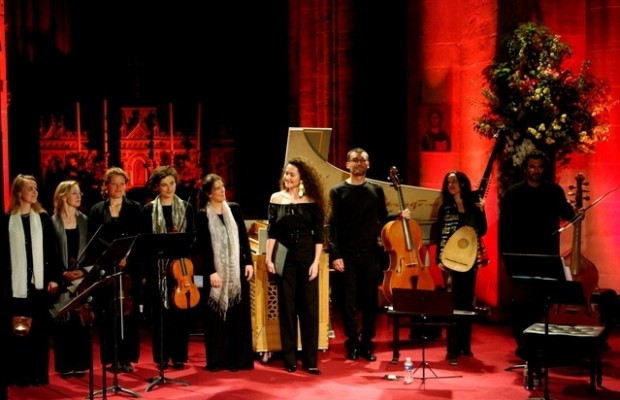
March 26, Music, Amarallis Ensemble – Pain and Pleasure at the Court of Versailles, at the Experimental Theatre, NCPA.

Look for more details and schedules for other cities here.

(Picture courtesy bonjour-india.in. In the picture is the Amarallis Ensemble)

Categories
Overdose

Ignore that begging hand

Jatin Sharma is annoyed by beggars who play on his emotions to make money, instead of looking for honest work.

Begging was once a destiny. Now it’s a profession – it’s a chosen way of life, for all the shameful (and shameless) ones who are lazy in life.

A long time ago, Mumbai was fortunate to have real beggars, who gave you blessings, who were grateful for your help, who were really laachar and bebas. But not any more. Nowadays, when I look at beggars, I don’t see people I want to help. I see people I want to avoid, run away from because they are so utterly irritating. They desensitise every emotion in me; or maybe it is because I cannot, or don’t want to, feel another man’s pain any more.

I strictly feel that all the beggars from the city should be banned and at least in Mumbai we should act on those who beg, because begging really is illegal. For those who think I am being both brutal and politically incorrect, I would only like to say: pick a beggar and observe him/her for a week. Then you will understand  how organised the entire process of begging is. 

This has nothing to do with me being born in a better family and having more opportunity than other, less fortunate ones. Yes, I agree that these beggars didn’t get a good life like me, but that doesn’t mean that the rest of their lives should continue to be devoid of opportunity. If we continue to feel bad for them, they will continue to be beggars. Our pity is their salary.

Secondly, I have met several beggars in Mumbai and I have come to a conclusion: they are beggars not because God wants them to be, but because they want to be.

In Mumbai, no man who is willing to work will beg. And even if he has to beg – some people are victims of circumstance, being swindled out of all their money, or being abandoned by family in their old age, to state just two reasons – at least he should not irritate my city and her visitors from outside. The so-called beggars of my city are a disgrace to the financial capital of my country. And no, I don’t think that there are any individual beggars in the city, they work as a part of a larger mafia now.

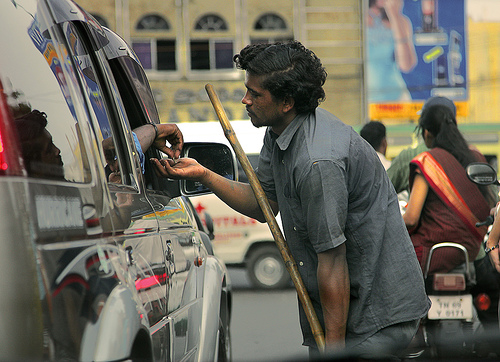
They have taken over every traffic signal, every religious place and every transport station, and have slowly taken over the city. They approach people with bandaged hands that are soaked in red-coloured water, they rub their saliva on their faces to pass it off as tears, and touch people’s feet not to arouse pity in them, but a feeling of revulsion and annoyance, so that they get some money.

Take the example of the Gateway of India beggars. Most of them, exposed as they are to the constant barrage of foreign tourists thronging the site, can speak English, a smattering of French, and several other languages. They can almost correctly guess the nationalities of the visitors and have designed their begging strategies accordingly – one of which is to allot areas to people fluent in a language spoken by the foreigners most likely to frequent that area. Tell me, for a person clever enough to pick up a formal language without formal training, is it so difficult to use that cleverness in an honest trade and make honest money? Why is such a person still begging?

Begging has now evolved into a fine art. In fact, beggars are so organised and their work so scientifically carried out, I wouldn’t be surprised if a contingent of beggars was not some day invited to lecture B-students about efficiency and marketing themselves.

It’s not begging any more. Little children, unwashed and sometimes physically deformed, come up to you and ask for food. The moment you give them food, they go and sell it! Some of them are emphatic that they want money, not food, so that they can go buy some chemical to sniff at and get high, or else do cheap drugs with other children their age. Most children have to surrender the money they make from begging to a common pool each evening, from which he/she gets an equal share as allotted by the dada that controls them.

Nobody says much against them, because in India, we are an emotional lot. And we have let this menace of begging get out of hand; we have allowed it to become an organised, well-paying activity that is both demeaning and exploitative. While we have been quick to protest against the evils of drinking or prostitution, we have not been as strict with begging. As a developing country, we should be ashamed that so many of our countrymen are beggars, that so many of our young children are street urchins with no present and not much hope at a future. We hear cases of parents pushing their children out of their homes to beg – what do we do after hearing these stories?

And why would we? At the risk of sounding really harsh, let me say that at some point in all our lives, we have all begged – begged with police officers to forgive our mistakes, begged with teachers to give us grace marks and pass us, begged to be promoted, begged for another chance…begged and begged again. We excel at playing the victim card repeatedly, just to get what we want, and if we have to beg to do it, we will. Heck, we even use the term ‘beg, borrow, steal’ really easily in our normal conversation, sometimes in front of our impressionable children.

What really stops us, a country that supplies a lot of labour and technology to the rest of the world, from taking a stand? Do we lack the spine for it? Do we not have the power to set things right? Is it because we accord emotions the first priority in everything?

Is this what makes us let the beggars be, the politicians continue to scam unabated, let the country run the way it is being run? Or is it because we are too afraid to let new thoughts, however radical or tough, come to life and breathe?

Let your new thoughts take seed and grow. Don’t give out largesse to someone just because he/she makes a sad face and asks for it. Don’t pay these actors on the roads. Avoid. Ignore. And ban! 

Jatin Sharma is a media professional who doesn’t want to grow up, because if he grows up, he will be like everybody else.

(Picture courtesy rottenview.blogspot.com)

Exit mobile version