Categories
Cinema@100

Gemini Ganesan and eternal romance

Most of us identify Gemini Ganesan as film star Rekha’s father. However, there was more to the superstar than cinema.
by Humra Quraishi

I chanced upon a book, Eternal Romantic: My Father, Gemini Ganesan, by journalist and writer Narayani Ganesh, a few years ago. The book is about the halo around the Tamil superstar, the lesser-known things about him, and most importantly, it captures him in the context of the times he lived in, the Tamil Nadu of his birth and work, and everything else in between.
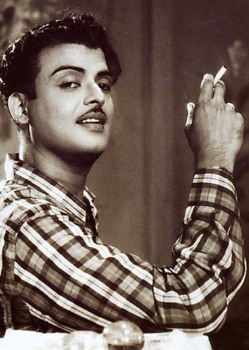
Gemini GanesanAs per the book, Gemini Ganesan spent his formative years in the royal principality of Padukottai in Tamil Nadu, followed by a year in the Ramakrishna Mission Home in Chennai, where he learnt yoga and attended Vedanta classes. This was followed by his years at the Madras Christian College, and much later, with a glorious career in cinema.

Written with a great deal of transparency, the book dispels the mystique around Gemini Ganesan, making him out to be normal family-oriented man who was not at all filmi. From the several pictures of him and his family in the book, he appears to be a traditional family man, surrounded by his large family in an old-world setting.

Frank and devoted

He was known for being far ahead of his times, both in his work and personal life. He was candid about his relationships with his co-stars, and did not ever deny the existence of film stars Pushpavalli and Savithri in his life. He married them, fathered their children. Amazingly, his first wife, TR Alamelu, popularly called Bobjima, appeared to be utterly comfortable with the Gemini-Pushpavalli-Savithri situation, and also their children. Even more surprisingly, all of his children, with all three women, got along well with their half-brothers and sisters. One of these children was Rekha, who would later become a superstar in Hindi films.

The more I read, the more I pondered on Bobjima and the courage with which she faced her husband’s relationships. She seems to have been a woman completely in love with her husband, and she was with him right till the end. If a film was to be made on the life of Gemini Ganesan, Bobjima would definitely play the heroine in an extraordinary relationship that endured till the end.

Narayani was born to Bobjima. She writes, “When I think of appa, the words that spring to mind are charming, handsome, affectionate, witty, responsible and compassionate. He was gemini ganesan and sarojadevian interesting person…because his interests went far beyond cinema. As a dashing romantic actor, appa did have relationships outside his marriage, but his relationship with us remained the same. He was the same caring father, son and nephew, but of course, I would not be able to say what went through my mother’s mind. Because children were not part of their private discussions (if they had any) and my grandmothers were so benign and full of love – for appa and for all of us, so there was no question of ugly fights or hurling of accusations and that sort of thing.
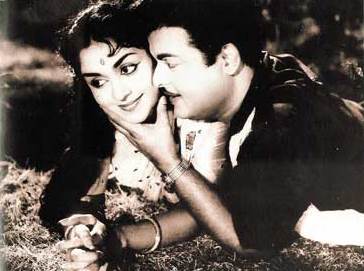
“I would say that we all had a great deal of respect for him and for each other. As an actor, appa’s USP was that he had a way with women; he oozed charm and with his candy-box good looks, wide-eyed innocence and gentle ways, he won over the hearts of more than a generation of fans. For them, he was the eternal romantic hero…”

About Rekha

Narayani writes about Gemini Ganesan with touching honesty, leaving out nothing.  “At Presentation Convent, Madras, where I studied, a girl struck up a conversation with me after school one day. I must have been nine or ten years old.
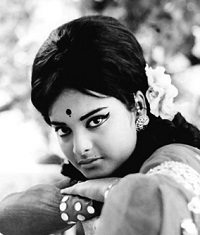
Rekha‘Why do you and your sister go home in different cars?’ she asked. I was puzzled. My two older sisters had finished school. My younger sister was still a baby. ‘Come, I will take you to her,’ the girl said, taking me by the hand. I met Rekha for the first time. She was pretty and her eyes were lined with mascara. She said her name was Bhanurekha. ‘What is your father’s name?’ I asked.

‘Gemini Ganesan,’ came the reply. My eyes filled with tears. How can that be? He was my father. When Chinamma came to take me home, I blurted out the story. ‘Never mind,’ she said.

“Another day, I pointed out Rekha to Chinamma and she said, ‘She is like your sister. And she’s pretty.’ Then there was Rekha’s younger sister, Radha, who was even prettier, I thought. Her resemblance to appa was startling. When I was a little older, I learnt that they were born to Pushpavalli and appa, and that they lived with their mother and other siblings, too…”

Other interesting details about Gemini Ganesan the father were that he was very particular about his children’s teeth and their upkeep. “One of the earliest memories I have of my father is of him asking me to show him my teeth. He would inspect them regularly, and horrified that my two upper front teeth were parting ways, leading to an A-shaped passage behind, he whisked me off to the dentist!”

Actor Kamal  Haasan, who’d worked with him as a child actor in his movies, mentions in the books’s foreword, “Gemini mama (uncle) was larger than Rekha and her five sisters life; there was so much  more to him than his screen persona. That was what was so exciting – cinema was not his entire life, it was a vocation, a profession he chose over others. ‘To me, life is oxygen, not cinema!’ he would say. If he hadn’t been an actor, he might have retired as an academic, with teaching stints in, who knows, Pudukkottai, Chennai, Delhi, UK, USA. He let his laurels rest lightly on his shoulders – to him, success was neither a crowning glory nor a heavy cross. And at a time when celebrities made it a point to publicise their acts of charity, he did it quietly, without fuss…
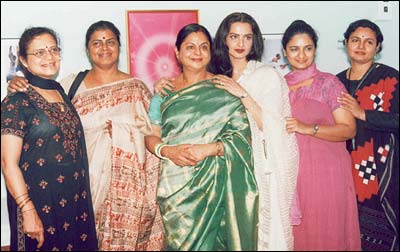
‘I touched and felt film ‘stars’ for the first time in my life when I was three-and-a-half years old. The stars were Gemini Ganesan and Savithri, and I was to play their son in the film Kalathur Kannamma. Till then, I had no idea that actors were flesh and blood humans – I cannot forget the experience as they held me close in their arms, their ‘child’. I began addressing them as amma and appa on and off the sets. I’m told I had to be ‘weaned’ away from my screen parents!’

(Pictures courtesy www.veethi.com, ibnlive.in.com, thehindu.com, www.mid-day.com, rediff.com, www.masala.com) 

Categories
Beauty

Preserve your sensitive side

Sensitive skin needs special care at all times, but especially in the monsoon. Read on for some simple DIY tips.
by Beverley Lewis

Sensitive skin needs more TLC than any other skin type. Use one wrong product and you can kiss your flawless complexion goodbye. This is because sensitive skin is generally allergic to most products, especially those that contain harsh ingredients.

But it’s not an impossible task to take care of sensitive skin either, provided you play your cards right. We spoke to holistic practitioner Dorothy Fortner from the Flower Essence, New York, for easy-to-follow tips on sensitive skin maintenance.

Keep it simple: It sounds obvious, but the more products you use, the more likely you are to come across an ingredient that may trigger a reaction. It only takes one ingredient in a new product to cause a flare up.

Patch up: Always conduct a patch test before you buy a new product, by applying a drop of the new product on the inside of your elbow, before buying the product. If there’s no adverse reaction 24 hours later, you can use the product.

Take your make-up off before you go to bed: This is really a no-brainer, and yet, a surprisingly large number of women are guilty of not taking off their make-up when they get home from work or a night out. No matter how late it is, or how tired you are, you should always cleanse your face before falling asleep. Sensitive skin is extremely vulnerable to irritation. So the longer you leave make-up or dirt on your skin, the more likely you are to have a reaction.

Hands off!: Don’t keep touching your face all the time, as you run the risk of transferring dirt and other bacteria onto your skin. If you feel the need to touch your face often, try using a clean tissue or an anti-bacterial cleansing wipe.

Stay hydrated: It is important to drink at least eight to ten glasses of water a day as this hydrates the skin and helps detoxify the stay hydratedbody, which in turn prevents break outs.

Take a chill pill: If you have sensitive skin, try to avoid stress as this can cause flare-ups. If you do find yourself under stress, take up yoga or meditation, as this will benefit your skin and give you a healthy glow.

Dry and sensitive? If you’re wondering why you have dry as well as sensitive skin, this is because your skin barrier is not doing its job properly. For such skin, keeping in moisture is hard, and keeping allergens and other harmful skin chemicals out is even harder. So as your skin becomes drier, the barrier weakens further; it gets more sensitive and more prone to dry skin conditions. The only way to prevent this is to liberally apply an organic natural moisturiser like lavender, which works well for sensitive skin. Again, test the product before buying it.

(Pictures courtesy uk.carita-spa.com, www.missclinic.com, uptenlist.com)

Categories
Event

A very real treat for Mumbai

Do you dig non-fiction? Then you simply must head over to the Nehru Centre tomorrow for Asia’s first Non-Fiction Festival.
by Medha Kulkarni

nehru centreLovers of non-fiction have a reason to celebrate. From June 21 to 23, the Nehru Centre in Worli, Mumbai will host Asia’s first ever festival dedicated entirely to non-fiction work.

The festival describes itself as “India’s first and foremost event platform for everything non-fiction” and centers around the theme “Be Bold. Be real”.

Non-fiction is a genre that acts as a mirror through which one can critically engage with the world around us. It deals with pure fact whether they’re about people, places, events or even ideas. The festival boasts of an impressive lineup of speakers with names such as Devdutt Pattanaik, Bhawana Somaaya, Gregory David Roberts, and Malini Agarwal among several others. The speakers come from diverse backgrounds and careers right from business and management to leadership, health, fitness, media, cinema, cookery, lifestyle, politics, economics, globalisation etc. The festival’s format is relatively simple, with two conference halls that will have parallel sessions consisting of panel discussions, interesting keynotes and even informal conversations with celebrated writers. A separate hall will house a book sale where eminent writers will be present for book signings.

The three days promise to be extremely stimulating and are packed with interesting sessions with some of India’s leading thinkers and writers. And the best part? Registration is absolutely free.

Get more details on the festival on their website or their Facebook page or you can follow them on Twitter

(Pictures courtesy inseansopinion.com, www.indianholiday.com)

Categories
Guest writer

The struggle to realise a dream

The city of dreams is often cruel to those hoping to realise their own – by making them struggle alone.
by Mohammad Saad Khan

Mohammad Saad KhanThe dream of being heard as a musician and the responsibility of being the elder son of the family landed me in the city where a million dreams live and breathe.

This was the first time ever that I left my little home in Visakhapatnam where I lived with my family.

Playing gigs at small venues and often singing at almost empty ones, such as restaurants, for a little amount of money, I was living in hopes of being heard by the right crowd, at the right time, at the right place. The failure of that dream and the ache of watching my almost 50-year-old father working hard to put our lives together, made me take the decision of moving to Mumbai.

Mumbai, for me, is a totally new world compared to where I’ve been living before. Here, waking up to my mother’s voice has been replaced by the noise of the 27 others that I live with, in a dormitory near Mohammed Ali Road.

Yes, I live in a dormitory. A home to 27 other people who have come to this city for various reasons.

I managed to find myself a job at a call centre in order to take care of my expenses in this city. It has been a tough task to settle myself here, but that is obvious. The tough part was more emotional than physical. I was living in the most crowded city in the country but had no one to talk to.

One night, while walking through the streets in Colaba, I saw an old woman begging for food outside a church. It was Easter’s night, I remember. She was looking for someone who’d lend senior_citizen alone in mumbai her a meal, and I was looking for someone who’d lend me an ear. I gave her a little something and she was more than happy.

In return, I asked her to talk to me for a while. I heard her story and told her mine. That little conversation was a lesson – a lesson that taught me that the grass is never greener on the other side. It also gave me an idea of how different the lives in this city with its tall buildings and bright lights are.

It’s been almost six months in Mumbai for me and I’m still trying to figure out the way to deal with the psychological stress of being alone in the most crowded city in the country. And I’m still trying to figure out the path that leads to my dreams, in order to put my life together.

This is my story in Mumbai so far…

Mohammad Saad Khan is 21 and loves writing songs on how he feels about things in life, apart from singing, making sketches of things and people he likes, and meeting new people and listening to their stories.

(Pictures courtesy www.trekearth.com, myopiclenses.blogspot.com, www.indiashots.com)

Categories
Cinema@100

The Oscar-winning lady

She won the first Academy Award for India. She’s currently working on her second book and is far from retirement.
by Humra Quraishi

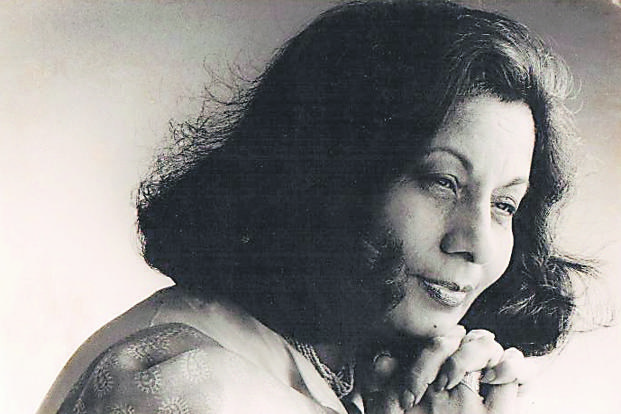
Bhanu Athaiya with her Academy Award for GandhiI interviewed Bhanu Rajopadhye Athaiya around the Spring of 2010, soon after her book The Art of Costume Design (Harper Collins) was launched in New Delhi. This Mumbai resident needs no introduction, as she is India’s first Academy Award winner for the film Gandhi. But few know that she is originally from Maharashtra, that she has worked with all the legendary names in Indian cinema, and that at over 80 years of age, she works like a 16-year-old.

Excerpts from an interview with her:

You have designed costumes for almost all leading Bollywood men and women. Please recount some of the tough times when some of those filmi personalities acted difficult and fussy. How did you handle some of those hyper actors and directors?

At the outset, I do not acknowledge the term ‘Bollywood’. The film industry has given me a platform to express my ideas. I joined the films because of my love for creativity, which I expressed through my costumes. All my directors and actors whom I have worked with through the years appreciated my ideas, put their trust in me and gave me full scope to express myself freely… at no point was I ever a part of this industry for anything other than work. I would wake up with work on my mind, go to my workshop where my hands were full with multiple projects and after that I would have to go to a set. There was no time for taking notice of anything else.

I am a directors’ designer and I follow their dictates when coming up with the right contribution to suit the characters. I have had the most fulfilling and fruitful journey in the movies. And I continue to do so.

Who all from the new crop of actors are you ‘dressing’ up currently?

As you would know, some projects can be spoken about and some cannot. While there are projects with me, they have not yet begun for whatever reason and I cannot divulge information about them. Meanwhile, I am doing a Marathi film (Marathi is my mother tongue) called Swadesh. It stars Dr Sriram Lagoo, Sulabha Deshpande, Milind Soman, among others. It is directed by Jayprad Desai. I have worked for two well-known Marathi films, one of which won me the Maharashtra state award for Katha Don Ganapatravanchi for Best Costume. As and when the other films start and move nearer towards production, their details will be disclosed.

You designed costumes for the film Gandhi. Were you given absolute freedom or were there inputs /directions from Lord Richard Attenborough?

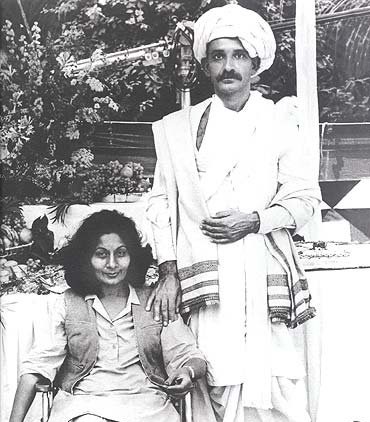
Bhanu Athaiya and Ben KingsleyWhen Lord Attenborough chose me to work as a costume designer for his film Gandhi, he handed me the script to study and then went back to England to carry out other responsibilities pertaining to this film. He returned in time to report for the first schedule of shooting.

Meanwhile, I was given total control of designing the entire wardrobe, right from Gandhiji’s character to other principal characters and the huge number of people who comprised the crowds. It required a deep study of Indian culture, which is my forte. It was my job to do whatever was required.

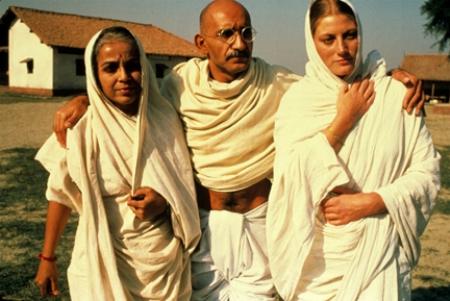
The film covered 50 years of Gandhiji’s life span. It demanded the changing looks from several regions of India over a period of 50 years. Right from Gandhiji’s South Africa days, where one saw him in an Anglicised look, to the changes that took place post his return to India (see pic on left) to the stage where he dressed himself in a loin cloth and shawl – I was solely responsible for creating all these looks as well as the other characters and background, the entire canvas. Lord Attenborough left all research, planning and execution in my hands. There was no question of any interference because in the Hollywood model of filmmaking, each Head of Department is given absolute freedom and charge.

Looking back, do you think the earlier era was better for creative people connected with the film industry — better for genuine creativity to come to the forefront in the actual sense of the term?

I have worked with great directors like Guru Dutt, Raj Kapoor, Yash Chopra, Ramanand Sagar, Conrad Rooks, BR Chopra, among others. In recent times also, I have been fortunate to work for Ashutosh Gowarikar for his films — Lagaan and Swades. They trusted my ability and allowed my creativity to design costumes for their diverse characters, each with appropriate looks, which is more important for a film.

There is no right or wrong time for ‘genuine creativity’. It depends on how you choose to express it. I wanted to handle each film entirely. My forte is to take control of each and every character in the film so that I can have the full cake, rather than just a slice. Good projects came my way earlier and continue to do so. These projects, both of the past and present, have great substance and scope to show creativity.

Do you agree with the oft-repeated comment that professionally successful women suffer on the personal front? Gandhi

I have handled both my professional and personal fronts without any difficulty. I am focused on whatever I do and believe in time management.

Your book starts with your (ancestral) family’s journey from the heart of Uttar Pradesh to Maharashtra via Central India. In this context, can you comment on the rather controversial-cum-provocative ‘Mumbai only for Mumbaikars’ slogan?

There is a misconception among people that I am from North India, when the fact is I am a Maharashtrian, born in Kolhapur. My ancestors came from a Maharashtrian Pandit family. Their vocation of mastering scriptures took them from Central India to Benaras, which was the seat of learning. Then, the Maharaja of Chittor invited them to be part of the court of the royal family. Chhatrapati Shivaji Maharaj’s ancestors were part of that royal lineage, who later on moved to Raigad in Maharashtra, taking along my ancestors. Eventually, Maharani Tarabai, daughter-in-law of Shivaji, founded Kolhapur and my ancestors came along with her to work in this princely state. It is a misconception that I am from UP. Let me clarify that I am a Maharashtrian all the way. So, it would be unfair, unjustified and uncalled for when you compare my family’s association with Maharashtra over hundreds of years with the migrant issue of today, which you are hinting at.

Tell us how you could achieve tremendous success as a designer. Also, how did you deal with the hurdles that must have cropped up?

I have studied art and also culture. I keenly observe life around me and absorb from it. I am willing to go that extra mile to acquire information required, to achieve the best for the job I undertake. The traits that make me a success are hard work, dedication, obsession, passion and positivity.

How did I deal with hurdles? I never took notice of any of the hurdles. I kept my focus on the goal I had to achieve and did exactly that. The rest faded into the background. I am like a soldier who has to always be on the toes. Like I said earlier, I never had time for negativity. I never let anything interfere with my work.

With which stars and directors did you establish a bond and with whom did you enjoy working?

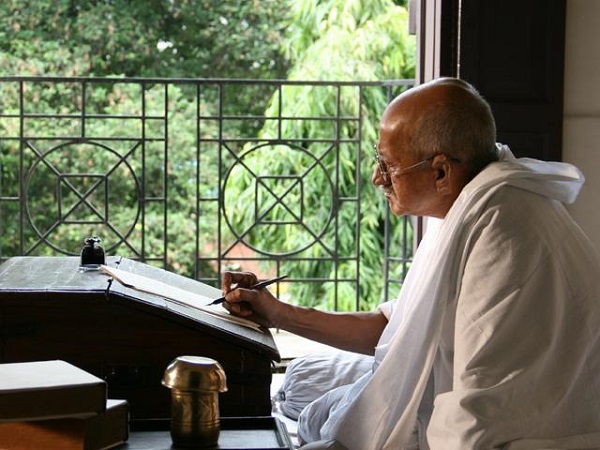
GandhiLike I said earlier, directors and actors gave me an opportunity to showcase my talent and I managed to live up to their expectations. My work spoke for itself and it was this that led us to have many associations down the years. So, I ended working repeatedly for many directors over a span of four decades. Some of these directors include Guru Dutt, with whom I did five landmark films. I also did some memorable films with Raj Kapoor. Others names include Yash Chopra and BR Chopra on whose path-breaking films I worked. Additionally, other people with whom I have shared great rapport include Ramanand Sagar, FC Mehra, Lekh Tandon and Dev Anand. The list goes on! They were all happy with my work and I was thrilled to be working with each of them.

Among the stars, I worked with Waheeda Rahman on many films, one of the memorable ones being Guide. Hema Malini, Kamini Kaushal, Zeenat Aman, Simi Garewal, Sunil Dutt, the Kapoor family are among many other names I worked with. With all of them I share happy memories and good friendship.

It is said the film industry is ruthless. Comment.

I have never encountered this in my work as you can see by the way I have written about my association with the film world in my book. Had it been ruthless, I would not have been able to do all the work I did and finally talk about it in my book.

The latest projects you are working on?

For the last two years, I have been busy with my book which needed total attention. Now that the book has been published, I have started accepting new assignments. I have also been approached for some exciting projects. There is one Marathi film in progress. I am also studying some scripts for a couple of Hindi films. I have also started work on putting together my second book.

You are in your eighties, yet there’s been no stopping you…

I am full of enthusiasm when I wake up in the morning. I am bubbling with ideas and I am anxious to get busy with creative activities. There is never a dull moment for me. I get along with young directors, I am open to new ideas. I travel a great deal and I’m ready to absorb new ideas and enjoy being on the job…in the creative world and with creative people, there are no age limits. Creativity knows no age. I have the frame of mind of a 16-year-old and I am always in love with life.

Some other films Bhanu Athaiya designed for:

 (Pictures courtesy www.livemint.com, www.india-forums.com, nehrujackets.tumblr.com, www.apnicommunity.com, www.indiancinemafans.com, www.jaibheem.com, indiatoday.intoday.in, tracker.desibbrg.com, www.the-south-asian.com, www.ahashare.com, that-movie.com, www.openpr.com)

Categories
Do

Music and love for the soul

Catch this lovely 2009 French film this evening, on love, music, fidelity and work-life balance at the Prithvi Theatre, Juhu.
by Medha Kulkarni

While the incessant rain makes most normal activities quite difficult, they also magnify the pleasure in others. Watching good cinema is one of them and if you agree, then head to Prithvi Theatre on Wednesday evening to catch the screening of French film Mademoiselle Chambon.

Mademoiselle ChambonThe film is being sceened at the theatre in partnership with Insitut Francais. Mademoiselle Chambon is a 2009 romance-drama film directed by Stephane Briz. The 101-minute long film revolves around the life of Jean, his loving wife and son who live a simple, happy life. Things begin to change when his son’s homeroom teacher Madamoiselle Chambon requests Jean to volunteer as substitute teacher and gradually starts to fall for her delicate and elegant charm. His ordinary life between family and work starts to falter.

The film is carefully constructed and depicts this moving tale of unexpected romance with elegance and subtlety. Stéphane Brizé’s directorial style is marked with patience and delicacy, sensitive to the rhythms of this special relationship full of misconstrued signals and ambiguous feelings. It’s a soft, elegant film and is a perfect way to spend a rainy evening.

Watch the film’s trailer here:

Like all screenings at Prithvi Theatre, entry is free but seating is limited. And since Prithvi Theatre is extremely strict about timings, please make sure you reach at least five minutes before the screening as you might be denied entry if you are late. The screening starts at 7 pm.


(Pictures courtesy cachecine.blogspot.com, filmsdefrance.com)


Exit mobile version