Categories
Places

Chandore lights up Konkan’s hoary past

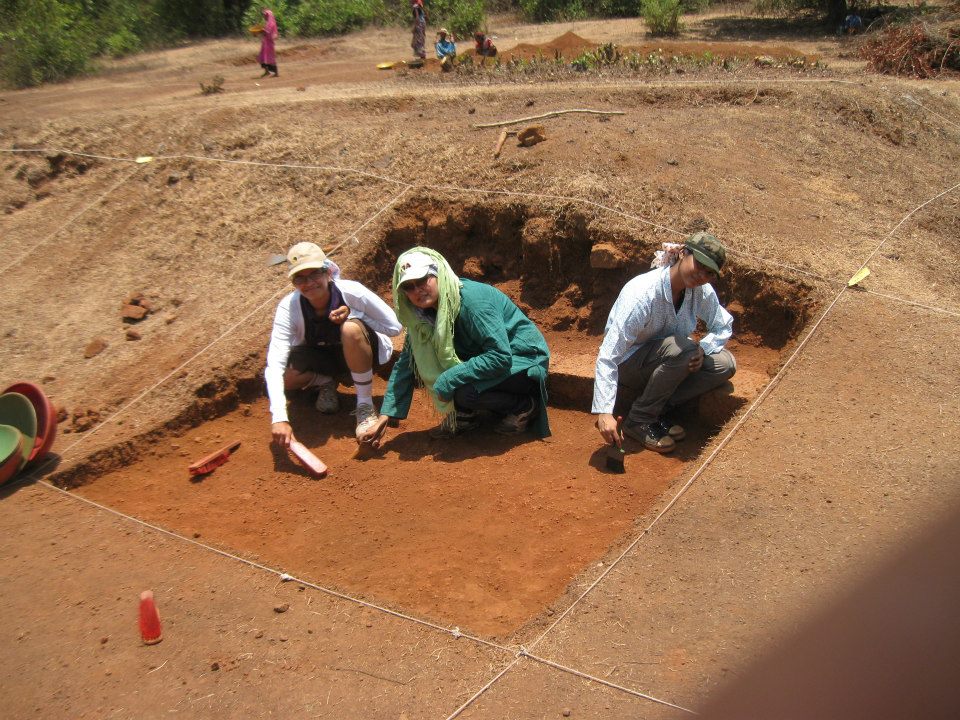
Season one of excavation at Chandore, which is in Konkan, revealed some intriguing artefacts, ceramics and sculptural elements early this month.
by Shubha Khandekar

As the second (annual) season of archaeological excavations at Chandore, near Mangaon in the Raigad district of coastal Maharashtra draws to a close, this tiny, idyllic village has increasingly begun to look like a key hub where international trade flourished under the Shilahara kings about a 1,000 years ago, and continued up to the Maratha period in the early 19th century, through the pre-Shivaji Bahamani regime and the rule of the once pan-India Peshwas, before they suffered a decisive defeat at the hands of the British in 1818.

Facets of the history of the Shilahara dynasty that ruled the entire seacoast from Sopara in the North to Savantwadi in the South, through the 11th to the 14th century, are unfolding slowly but surely with the excavation, undertaken jointly by the Centre for Extra Mural Studies (CEMS), University of Mumbai and the India Study Centre (INSTUCEN), under Dr Kurush F Dalal, the Field Director, who teaches Archaeology at the CEMS.

This makes Chandore a crucial site, demanding extensive and long term historical, ethnographic and archaeological investigation to ascertain the antiquity, the cultural sequence and nature of the settlement at Chandore and its environs, that would shed light on hitherto unknown aspects of the history of the region for the past 1000 years and more.

This was acknowledged, endorsed and emphasised by the presence of all the bigwigs present on site on a Sunday drenched in welcome rain early June: Dr Rajan Velukar, Vice Chancellor, Dr Naresh Chandra, Pro-Vice Chancellor, and Mugdha Karnik, Director, Centre for Extra Mural Studies, Mumbai University, Dr A P Jamkhedkar, former Director, Department of Archaeology and Museums, Government of Maharashtra, Dhananjay Karnik, Drs Samuel Nazareth and Suraj Pandit, all Directors, India Study Centre (INSTUCEN), Dr Kurush F Dalal, Field Director of excavations at Chandore and Suresh Bhosale, President, Mahad Manufacturers’ Association, which came forward to finance the initial phases of this year’s excavation. In addition, Pallavee Gokhale from Pune, NR Swamy from Bangalore (Genesys International) and Vaidyanathan from Mumbai joined hands to do a GIS based study of the vast expanse over which the ruins are strewn.

While Dr Velukar committed the University’s support to the excavation, Dr Jamkhedkar interacted with the villagers of Chandore at a public meeting and explained to them the historical importance of the site, the need for conservation of the remains of the past, if possible through the establishment of a small local museum and the prevention of their pilferage, and the critical role that the villagers must play in the process.

Where is it?
Chandore is located on a ridge running north-south along the Arabian Sea coast, about 30 km to its west, a location that had carved out a unique role for the village in the political, economic and religious life of the Konkan region.
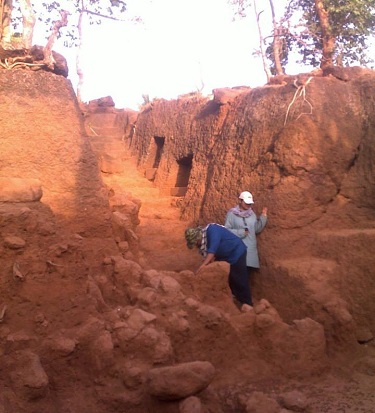
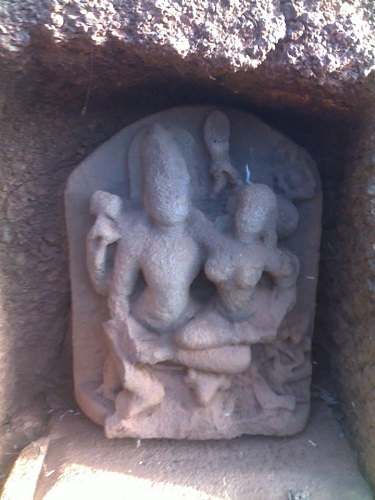
Chandore excavationThe first season of excavation revealed a rock-cut stepped reservoir, with images of Hara-Gauri (a form of Shiva and Parvati), embedded in a niche in one of its walls. Stylistically the image has been dated to the Shilahara period by Drs Arvind Jamkhedkar and Suraj A Pandit. This reservoir was adjacent to a Shiva temple, whose only extant remains consist of a sunken sanctum and a Nandi placed in the temple’s courtyard, a hopelessly crumbling image of the divine bull that one is afraid to touch for fear that it will completely disintegrate.

Excavations at the site have so far revealed plans of at least three temples, built as per the local traditions during the Bahamani period, which preceded Shivaji by about two centuries.

This kingdom had later split into five, including the Adilshahi out of which Shivaji carved out his swaraj.

Other finds from the excavation consist of a silver gadhiya coin from the 11th century, glass beads and bangles, and monochrome glazed ware potsherds typical of the 14th century.

Historically important
Chandore was incredibly active between the 8th century and 1818 when the Marathas lost the final battle against the British (Third Anglo-Maratha War). The local towns of Mangaon and Goregaon have historically been very important places on the internal highway and have both been feeders to the port of Mhasala, especially during the Maratha, Bahamani and Adilshahi phases. Both the traditional routes passed Chandore and it is only now that the route from Goregaon has bypassed Chandore, the Mangaon-Mhasala route still goes past Chandore.

The Chandore-Mhasala stretch is also a part of the Mangaon-Goregaon-Mhasala-Borli-Diveagar-Shrivardhan route. Thus Chandore lies on a critical route between the hinterland and the ports of Mhasala and Diveagar.

The surroundings of Chandore too are replete with hero stones, locally called veergals (see pic on right) , and sati stones, which together Chandore veergalsnarrate a story of valour and sacrifice, and reveal aspects of ancestor worship and the custom of Sati. Indravan, Nivachivadi, Govele, Kakal, Nalephodi, Mhasala, Borli Panchatan, Diveagar and Deokhol in the proximity of Chandore constitute a sprawling complex with thriving international trade and vibrant religious activity on a large scale.
There is, however, no inscription in this entire repertoire to give us any definitive names or dates for any of these locations, with the exception of Diveagar.

The earliest occupation of Chandore, surprisingly, seems be of the Stone Age when small, microlithic tools were made in a pre-metal era. This could push the antiquity of the site back by several millennia, and Stone Age experts who have visited the site have recommended a detailed study of the raw materials used for the tools, the structural and functional aspects of the tools and the geological context of the habitation.

The bulk of the original research published on the Shilahara dynasty consists of a volume of the inscriptions of the Shilaharas by VV Mirashi (Corpus Inscriptionum Indicarum, Vol IV brought out by the ASI in 1977). Scholars have subsequently found sporadic copper plate and stone inscriptions of the Shilahara dynasty in the Thane, Raigad, Ratnagiri and Sindhudurg districts of Maharashtra as well as the coastal area of Goa and Karnataka, and have attempted a reconstruction of the history of the region.

A particular location at Chandore is referred to as ‘kalavantiniche gharate’– the dwelling of the nautch girl(s) – in local tradition, which comprised an essential service at a trade route hub, for merchants and traders on long journeys away from home. This yet again confirms the status of Chandore as a thriving semi-urban centre.

Also, an annual religious festival is part of a tradition from the hoary past and draws in large numbers of people surrounding areas. This calls for ethnographic enquiry and its integration with historical evidence in a holistic approach to unfold the secrets buried and forgotten since yore.

This seasons excavations have just drawn to a close and the excavation team is busy cataloguing and analysing the artefacts, ceramics and sculptural elements revealed in the course of this season’s work.

(Pictures courtesy Dr Suraj Pandit, Pallavee Gokhale and Rhea Mitra-Dalal)
Categories
Big story

Over 800 from Maharashtra still stranded in Uttarakhand

Maharashtra CM camps out at Dehradun to monitor relief efforts; about 475 tourists from State are still stuck at Badrinath.
by The Editors | editor@themetrognome.in

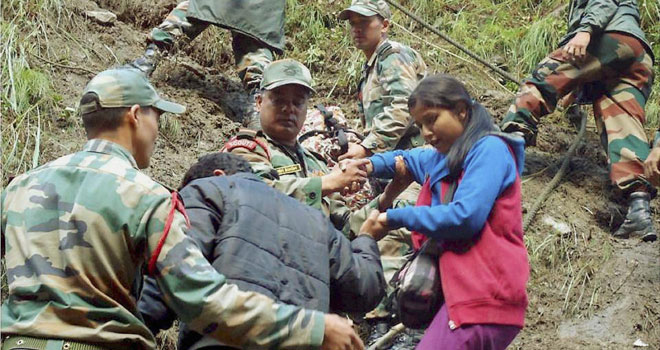
Even as intermittent rains lash the area and the Indian Army fights the elements to rescue as many people as they can find, important politicos are making way to Uttarakhand to take stock of the numbers of their citizens still missing or not found.

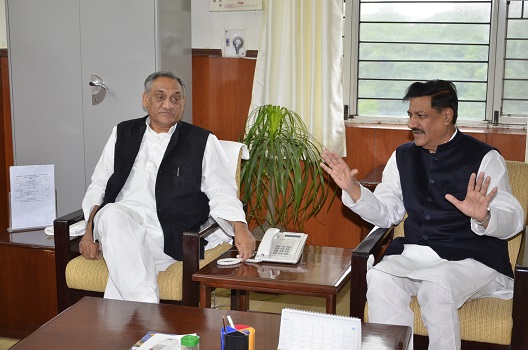
Prithviraj Chavan meets Vijay Bahuguna at DehradunMaharashtra Chief Minister Prithviraj Chavan has been camping out at Dehradun since last night. This morning, his office gave out current information for Maharashtra, after Chavan had had discussions with Uttarakhand Chief Minister Vijay Bahuguna.

As per official records, of the 2,949 Maharashtra tourists and pilgrims stuck in Uttarakhand following extremely heavy rains that caused unprecedented flooding, 2,100 have been rescued. Over 200 people from the State area are also reported to be missing. A total of over 10,000 tourists and pilgrims are still stranded, of which about 475 tourists and pilgrims from Maharashtra are said to be still stranded at Badrinath, where the current phase of rescue ops is underway. Bahuguna is said to have conveyed to Chavan that Maharashtra has provided ample help for the rescue operations. Last week, the Maharashtra Government announced a corpus of Rs 10 crore for relief and rescue at Uttarakhand.

Meanwhile, heavy rains and fresh landslides hampered rescue operations today. “Only the army helicopters can access Badrinath in these conditions, since most roads have been washed away,” Bahuguna said. “The Badrinath valley is also quite narrow, so access is very limited. We are waiting for weather conditions to slightly improve before more reinforcements can be sent in.” Reports have also just come in that Uttarakhand will now allow rescue ops to be carried out by other State Governments.

(Pictures courtesy CMO, Maharashtra and www.indianexpress.com)

Categories
Watch

Rape of the flock

Film to be screened today discusses how American soldiers are raped by fellow personnel, and how the establishment plays cover-up.
by Medha Kulkarni

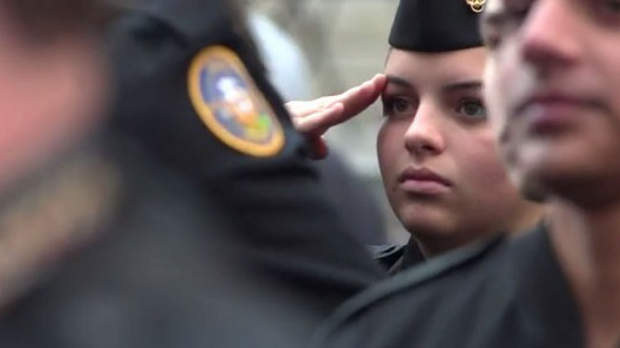
invisible-war-These news items come to the fore on and off and are discussed widely for a while before being buried under other, more urgent news. It is a worrying statistic that a female soldier in Iraq and Afghanistan is more likely to be brutally raped than killed or injured by enemy fire.

A documentary, The Invisible War, will be screened by Vikalp tonight at Prithvi House, Juhu, today (see below for details). Directed by Oscar and Emmy-nominated filmmaker Kirby Dick, the film is “a searing expose of the epidemic of rape of soldiers within the US military, the institutions that perpetuate and cover up its existence, and its profound personal and social consequences.”

The Invisible War was the recipient of the 2012 US Documentary Audience Award at the prestigious Sundance Film Festival.

American defence personnel, both men and women, who have dedicated their lives to the service of their nation are being raped and sexually assaulted by their own fellow soldiers, commander and officers – the very people whose job is to protect and guide them, rather than by the enemy force.

The film centers on the stories and experiences of Military Sexual Trauma survivors with the courage to come forward, tell their stories, and let us into their lives. Kirby Dick’s strong belief and main motivation behind making this film was that it would “shed light on these heinous acts and the larger systemic issue. The film intends not only to bring much-needed attention to this disturbing issue but also to stimulate the public to demand for legislation to protect the next generation from the horrors of sexual assault and the lifelong trauma that follows.”

The film screening will be followed by a talk by Sana Contractor (Research Officer at Centre for Enquiry into Health and Allied Themes (CEHAT). CEHAT, an NGO, is involved in research, training, service and advocacy on the issue of rape and allied themes. Joining her will be Robin Chaurasiya (of Kranti, an NGO that empowers girls from Mumbai’s red-light areas to become agents of social change.)

Get more details on the film here. The film will be screened today, June 24, at 7 pm at Prithvi House, opposite Prithvi Theatre, Janki Kutir, Juhu Church Road, Juhu, Mumbai. Entry is free but on a first-come-first-seated basis.

Categories
Overdose

Whose media is this anyway?

At what point will Indian news channels stop doing ‘news’ stories on ghosts and cease playing catch-catch with each other? When will they start reporting on real issues?
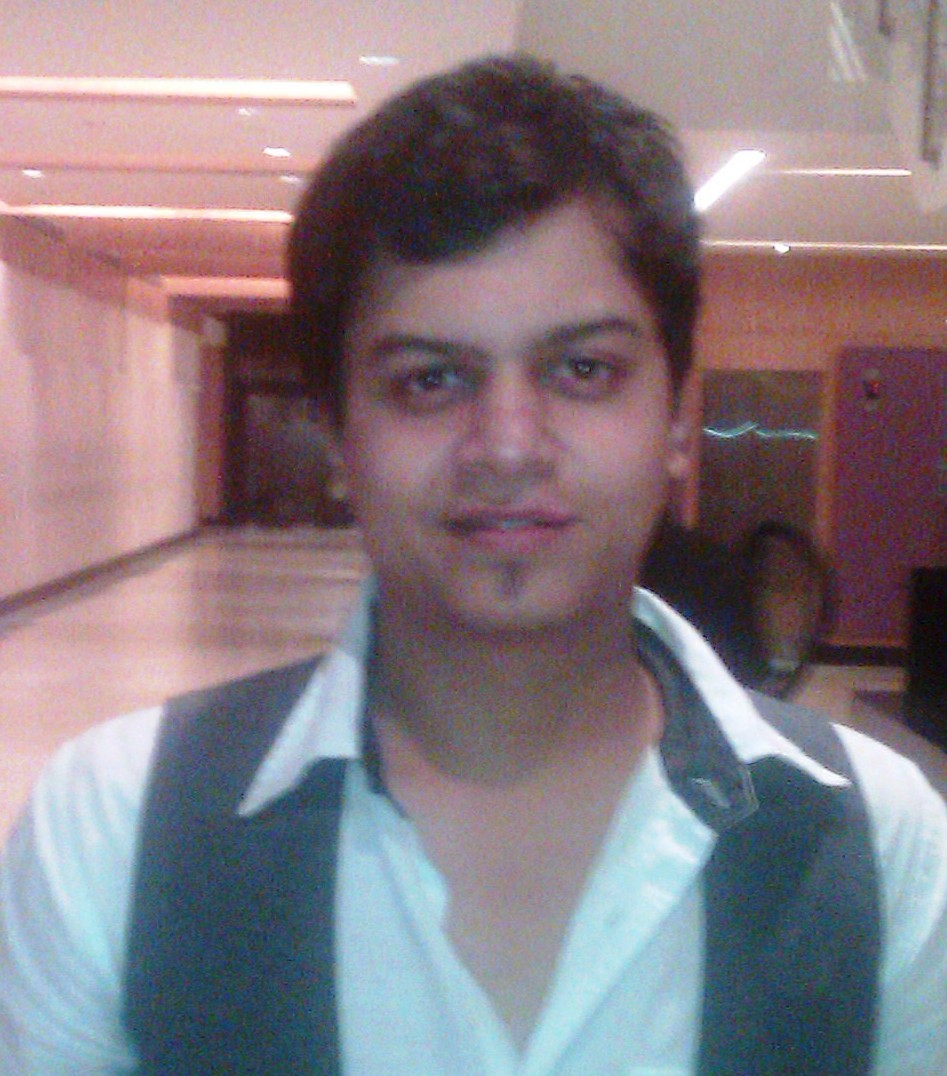
Jatin Sharmaby Jatin Sharma

Words evoke emotions. And emotions provoke words. And one such prevalent emotion in my life is evoked by our news channels.

I always wonder about the men and women who come up with such interesting headlines to all the news. I believe that news channels nowadays are the biggest competitors to entertainment channels. And there is a lot of pressure on the news people to come up with interesting stories. The stories with news channels have slowly and steadily shifted from facts to mere fun.

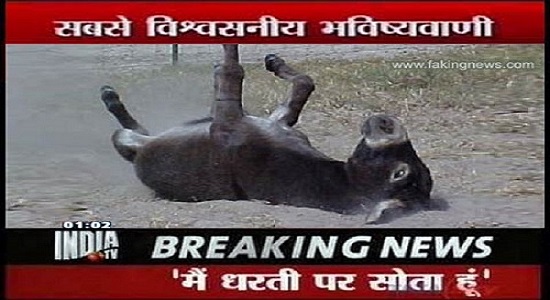
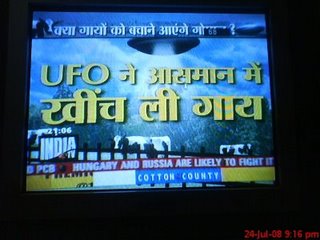
I don’t understand why I (or anyone, for that matter) would be interested in knowing about a ‘swarg ka darwaza‘, a story that is run and re-India TV news of a UFO beaming up a cowrun a million times on a news channel. It’s not like I really have the option or the inclination to check out heaven, like when I’m bored or when I run out of good eating out options, so that I would think, “Hmm, let me see if I have take-away menus for any restaurants in heaven.” To top this heavenly news story, another news channel comes up with a shrill headline: ‘Yeh gaai thi sarpanch ki beti‘ – a story on reincarnation. It’s enough to put one permanently off television altogether.

I understand that this kind of ‘reporting’ is entertaining to a lot of people and it gives news channels a lot of TRPs. But I also think that the media is an essential part of our democracy, not a joker for the country to laugh at. The media is a strong pillar of a nation, a reflection of its strength. But today, the news channels of India are in such a hopeless condition that it sometimes just annoys me.

The media has a big responsibility to play today, especially in a country like ours which has the most brilliant minds of the world, educated and refined like no other. But at the same time, we have a vast number of underpriveleged people who are still miles away from formal education and who have to learn a lot of things before they can fruitfully contribute towards creating a strong nation. In a country like ours, the role of the media, and especially the news channels, has assumed a bigger role and importance today because they are the primary tools to educate the masses.

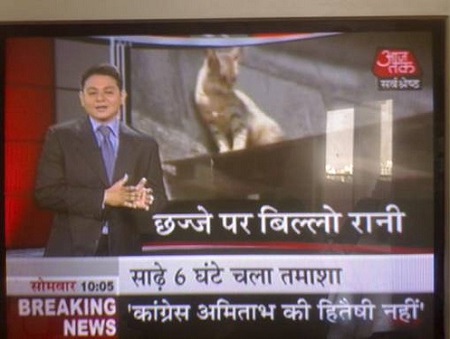
news channelsBut all that the news channels are interested in today is TRPs. It was shocking to see most news coverage during the ongoing crisis at Uttarakhand – news channels actively competed for the coveted ‘We got here first’ spot, while giving out news about the rescue operations was more of an afterthought. It was questionable, to say the least, to see what kind of news sense (and journalism ethics) were at play with one news channel just focussing on ‘Paani mein hain Shiv ki murti’; at the side, there were a million people crying for help.

News channels are the biggest pressure group on the Government, anywhere in the world where a free media exists. Their role is to bring out news that have some utility for the nation. But all that is happening is one big tamasha where they all seem to just sit in their newsrooms and come out with flippant stories that are entertaining but little else. All that is coming out of most news channels today is a joke, while the real issues are pushed aside.

Earlier, journalists were a part of a respectable and well-educated bunch of people who knew everything about a particular subject and who could make political parties shudder with their presence. They were articulate while presenting the facts. But today, most journalists are participating in a running race, vying to come first. Yes, competition is becoming fiercer by the day and and a delay of a few seconds results in a loss of crores, but who is responsible for fake news that are reported as a part of this race?

Most times, I have no use for the news that reaches my doorstep. It does not add to my knowledge, it only breakin newsgives me something to chuckle at. It is not making me exert my brain to think and ponder. News channels don’t want me to be part of the development of the nation any more – because they are not a part of it any more.

The nation needs the media today. A media that goes beyond making a mockery of itself, and which is mature enough to see the role it plays in the larger scheme of things. The media cannot be a clown and hope to be taken seriously unless it becomes a ring master. I want the media to not talk about ‘Bhoot ki beti ki shaadi’ and ‘aapke doodh se khush honge Shiv’. I demand media that talks about me and us and our nation. A media that talks about and contributes to the to build a powerful country.

Jatin Sharma is a media professional who doesn’t want to grow up, because if he grows up, he will be like everyone else.

(Pictures courtesy strictanddeadly.blogspot.com, www.fakingnews.firstpost.com, kashmir-timemachine.blogspot.com, www.mouthshut.com)

Categories
Enough said

Citizens fight back against injustice

The days of people quietly accepting atrocities by the State are long gone – now they’re combating injustice with information.
Humra Quraishiby Humra Quraishi

Last week, Russian President Vladimir Putin and his wife, Lyudmila, made a rather dignified announcement, which put a formal end to their marriage. It was known before the announcement, that the two were rarely together, and that they had been dragging the marriage along for years.

What impressed me was the manner in which the announcement was made. The couple is middle-aged, yet they didn’t let their age come in the way of their decision. To part at 60 cannot be easy.

Just pause and think of how we, in India, rarely take this step at age 60 and beyond, preferring to keep up the sham. We pretend everything’s fine, we are comfortable portraying a reality that doesn’t exist. We can keep up the pretence for years. That’s just who we are.

And because we are so happy propagating a private lie, we are happy lying in the public sphere as well. Even as parts of North India are being wrecked by the monsoon, with hundreds being killed in flash floods and landslides, our politicians are doing what they do best – nothing. Political leaders from across the board should currently be a part of the relief operations in affected regions, putting to good use the sarkari and non-sarkari brigades they nurture. But what are they really doing? Conducting aerial tours, sitting far away and giving boring speeches.

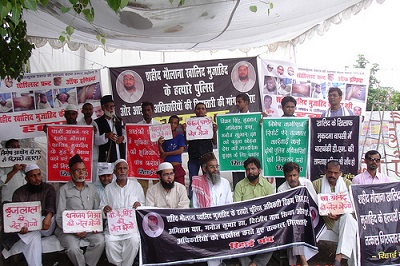
Some politicians are otherwise engaged in justifying fake encounter killings or arresting innocents. In Lucknow, activists are protesting outside the UP State Assembly, against the khalid mujahidillegal arrest and killing of Khalid Mujahid by the UP cops (see pic on right). But Mulayam and Akhilesh Yadav are choosing to divert attention by distributing computers and laptops!

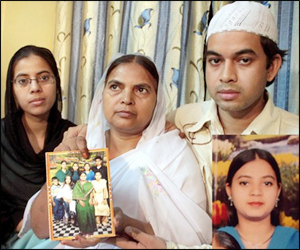
In Gujarat, where Mumbai-based student Ishrat Jehan who was killed in a fake encounter on the pretext of her part in a terror plot, the case has been reopened and the focus is now on the blatant killings conducted by the State. A few months ago, I had spoken to well-known human rights lawyer Vrinda Grover, who is the counsel for Ishrat’s mother. She said, “It was soon after the Sohrabuddin case was taken up by the Supreme Court and the nexus between the cops and politicians was exposed that I was contacted by Ishrat’s family to take up their case.

“It was the conviction of the mother and family in the innocence of Ishrat and their determination to have her name cleared of the tag of terrorism that persuaded me. They wanted their respect and dignity restored. As a human rights lawyer, I often represent victims of police atrocities and violence. But, after meeting Shamima Kauser (Ishrat’s mother) and her children, seeing the case file and the reading the truth about Sohrabuddin’s murder, it was clear that this ‘encounter’ was not just a crime committed by some trigger-happy cops, but rather part of the State-sanctioned and planned violence against Muslims, which was unleashed in the genocidal pogrom of 2002.

Ishrat_Jahan“The FIR recorded by the Police of these encounters refers to the riots and killings of Muslims in 2002 and claims that the alleged ‘terrorists’ wanted to kill Modi and take revenge for the 2002 attack on Muslims. These encounters, about 22 of them in Gujarat, are part of the politics of hate to polarise and build mistrust and fear between the communities. It is very important to recognise a clear pattern of targeting Muslims and demonising them as the enemy that must be eliminated, by use of State power, whether through engineered riots or staged fake encounters i.e cold blooded murders by those in State power.”

She went on, “It is very important to bring out the truth behind these fake encounters because in Gujarat there is a criminal nexus between the political executive, the police and even persons in critical positions in the IB, both in the Centre and State. This is a very dangerous and lethal combination and before our eyes a fascist State is in the making. To fight for Ishrat’s truth is part of the battle against fascism. The mechanics of electoral democracy may not deliver justice and the legal battle is important so that the killers and their masterminds are unmasked and punished.”

Humra Quraishi is a senior political journalist based in Gurgaon. She is the author of Kashmir: The Untold Story and co-author of Simply Khushwant.

(Pictures courtesy news.in.msn.com, www.rina.in, rihaaimanch.blogspot.com)

Categories
Swaad 'Anu'saar

Eating out, Mumbai ishtyle – Part III

The last of the three-part series on Mumbai’s most preferred food joints, their specialties and the real swaad of Mumbai.
anuritaby Anurita Gupta

In Part I and Part II, I spoke about the city’s heavenly eating out experiences and food joints. Today, I conclude my thoughts on the awesomeness that is eating out in Mumbai.

Bombay Sandwich joints: The hard-working Mumbaikar literally lives ‘between breads’. Mumbai’s favourite quick fix snack is most definitely a sandwich. The Bombay sandwich is usually loaded with fresh beetroot, cucumber and tomato slices with grated cheese and served with green and red chutney. Its many variations are ‘chutney sandwich’, the ‘grilled cheese sandwich’ and ‘chutney cheese toast’. In a fancier avatar, many international and local chains serve the sandwich in the form of oven baked breads packed with cold cuts and Swiss cheese.

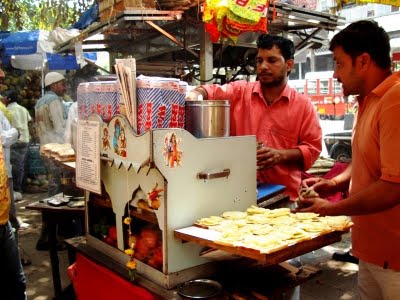
Hot tip: For the true blue Mumbai-sandwich experience, try Swastik Sandwizza, Santacruz Market. Their veggie bombay sandwichsandwich has crowds swarming outside this tiny shop to get a bite. Right Place at Warden Road is another hot spot for grilled cheese sandwich with a ‘secret’ recipe sauce. The humble chutney sandwich at Candies, Bandra is quite a hit too.

For an international experience, try the cheesy, corned beef sandwich called ‘Ruben’s’ at Between Breads, opposite Hawaiin Shack, Bandra (West). The ‘Sloppy joe’ at Indigo Deli, Phoenix Mills is a hot number, too. Sante at Pali Mala Road, Bandra serves the yummiest ‘Ham and Brie’ sandwich.sorpotel

Goan food restaurants: Goan cuisine is primarily made with the three tropical ingredients of seafood, coconut milk, and local Goan spices. The flavours are super intense with extensive amount of kokum used to counter the spiciness. Interestingly, this cuisine has many influences of not just the Portuguese era but also has undercurrents of Hindu and international cuisines by virtue of its flourishing tourism.

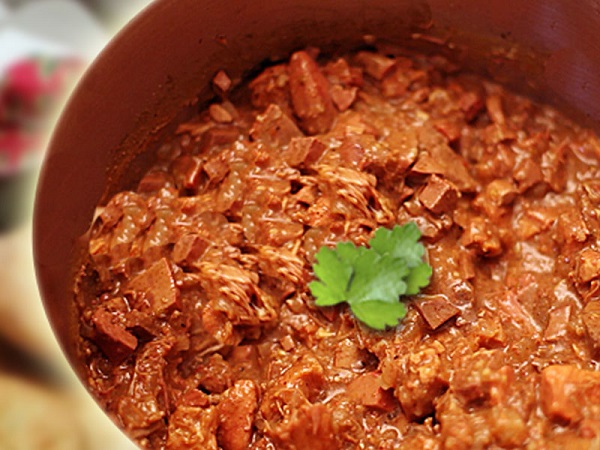
Goan food that is really popular in Mumbai is Goan fish and prawn curry, Pork Vindaloo, Goan pork sausages, Pork Sorpotel, Prawns balchao and Xacuti (non-veg and veg). Interestingly, the Sorpotel (see pic on left) comprises pig blood as well. Its unique flavour is enhanced when you have it with par-boiled white rice or bread. The most famous is Pork Vindaloo, a combination of spices, red chillies and a huge amount of vinegar.  Non vegetarian aside, the vegetarian Goan food comprises of beans, cashew nuts, potatoes and jaggery.

Hot tip: Enjoy the vegetarian rajma tondak, rich in cashew, Goan pork sausages and Goan Fish curry (mackerel recommended) at Goa Portuguesa at Mahim, near Hinduja Hospital. Jaihind Lunch Home at Bandra and Lower Parel serves a mean Goan Prawns curry. You can also visit the Goa Bhawan canteen, JVPD, Juhu for very reasonably-priced, authentic Goan food.

Mangalorean restaurants: Almost always confused with Malvani cuisine, the one big difference between Mangalorean gassi and a Malvani curry is the ingredient that is responsible crab curry for the khataas factor.  There is tamarind in the gassi and kokum makes the Malvani or Gomantak curry nice and sour. Typically known as the cuisine of ‘Tulu Nadu’ (parts of Kerala and Karnataka that speak Tulu), Mangalorean cuisine is massively influenced by the South Indian cooking style as well. Made with coconut, dried red chillis, ginger and curry leaves, Mangalorean delicacies are usually spicy with fresh seafood being a major component in them.

The most popular dishes in Mumbai are gassi (prawn, fish and vegetable), appam (rice pancakes), Malabari parotta, Mangalorean fish curry, neer dosa (lacy rice crepes), ghee roast chicken, cashew upkari, sannas (Mangalorean version of idlis) and the famous Mangalorean crab curry. Another very popular dish that doesn’t belong to South India or even India, is the ‘butter garlic crab’ (see pic on right) which is on offer at most Mangalorean and Malvani food hubs. It is a such delight to enjoy the soft, sweet crab meat doused in butter garlic sauce!

Hot tip: Enjoy a mean crab curry with hot neer dosa at Mahesh Lunch home, Fort; butter garlic crab and squid gassi can be devoured at Trishna, Kala Ghoda; Jai Prakash, Goregaon (East) has the most amazing prawn and chicken gassi and prawns tawa fry. 

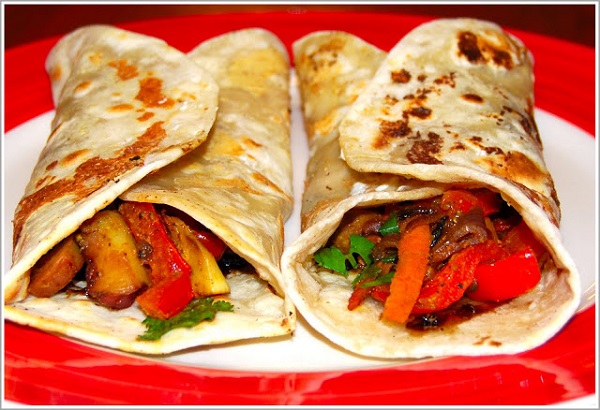
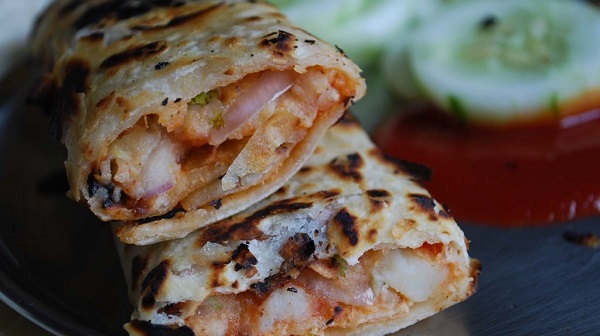
Frankie31-1024x687Mayo rolls and frankie joints: Let’s rock and roll with what can be proudly associated with only Mumbai and no other state – the famous ‘chicken mayonnaise roll’. Diced chicken is sautéed and then mixed with mayonnaise, spiked with a bit of mustard and black pepper and stacked generously between a hotdog roll, minus the sausage. In the same gastronomic scheme is the ‘Bombay frankie’, originally introduced by Tibbs, and which is especially popular with the college crowd. Catering to masala sensibilities are the chicken and egg frankie, chicken curry frankie and the ‘Veg frankie’.  All in all, rolls are indeed a quick pickup food for unstoppable Mumbai.

Hot tip: Try Tibbs chicken frankie at their various outlets. I personally prefer the Shivaji Park one. Hangla’s, Goregoan (East) has the most amazing Calcutta rolls. Try their double chicken double egg roll. The most splendid chicken mayo roll is available at Excelsior, Fort and at Sherry’s in Matunga next to Ruia College. Try the lamb and chicken Shawarma rolls at Maroosh, Phoenix Mills, Lower parel and Inorbit Mall, Malad.

With that I conclude the ‘Eating out – Mumbai Ishtyle’ diaries. If you do take my tips seriously, we are sure to bump into each other some day at one of the food joints where we may happily get our hands dirty enjoying heavenly butter garlic crabs with a shot of toddy!

Anurita Gupta is a media professional who is passionate about two things – food and radio. Her love for all things food makes her a foodie with a cause.

(Pictures courtesy mumbai-magic.blogspot.com, www.pelauts.com, www.paulscooking.com, bengalicuisine.net, ibnlive.in.com)

Exit mobile version