Categories
Watch

The best documentary in the world…

…is coming to your city, every weekend, starting tomorrow, as part of the Dharamshala International Film Festival’s ‘best documentaries package’.
by Medha Kulkarni

The Dharamshala International Film Festival (DIFF), in association with The Root Reel and Blue Frog, is presenting ‘The Best Documentaries Package’, in which some of the best documentaries will be screened for Mumbai audiences, every weekend. The initiative starts tomorrow.

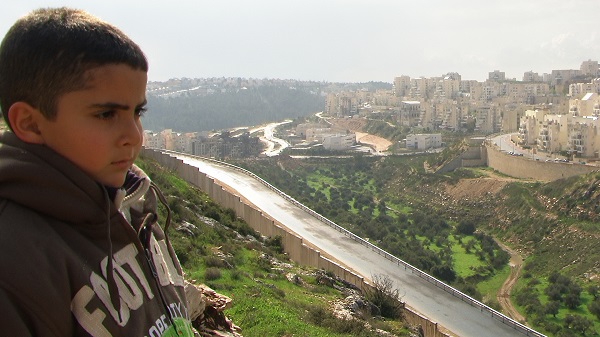
5_Broken_Cameras_ posterThe first film to be showcased tomorrow, August 4, is the highly acclaimed film 5 Broken Cameras. It is a deeply personal, first-hand account of life and non-violent resistance in Bil’in, a West Bank village surrounded by Israeli settlements. Shot by Palestinian farmer Emad Burnat, who bought his first camera in 2005 to record the birth of his youngest son, Gibreel, the film was co-directed by Burnat and Guy Davidi, an Israeli filmmaker. Structured in chapters around the destruction of each one of Burnat’s cameras, the filmmakers’ collaboration follows one family’s evolution over five years of village upheaval.

As the years pass in front of the camera, we witness Gibreel grow from a newborn baby into a young boy who observes the world unfolding around him with the astute powers of perception that only children possess. Burnat watches from behind the lens as olive trees are bulldozed, protests intensify and lives are lost in this cinematic diary and unparalleled record of life in the West Bank. In the current climate, with constant upheavals in the Middle East, this film is a telling reminder of how life changes in a seeming instant.

5 Broken Cameras is the first-ever Palestinian film to be nominated for Best Documentary Feature at the Academy Awards. Watch the trailer here:


About the initiative:

As filmmakers based in Dharamshala, Ritu Sarin and Tenzing Sonam of White Crane Films, have long believed that the town’s unusual profile would make it a perfect destination for an international film festival. The inaugural edition of DIFF was held in November 2012, showcasing 26 contemporary features, documentaries and shorts, curated from the best of international independent cinema.

The second DIFF will take place over four days in 2013, from October 24 to 27, 2013. The aim is to build and expand on the blueprint of the first edition and establish DIFF as a world-class film festival, where filmmakers and film lovers can interact in an intimate, creative and informal way.

The Root Reel is a Mumbai based organisation whose main objective is to be a mirror, reflecting upon stories around us and try bringing them closer to the urban audience.

Entry is free and on a first-come-first-seated basis. Head to Blue Frog, Zeba Centre, Mathuradas Mill Compound, Lower Parel, tomorrow at 7.30 pm. Call 098200 95432 for details. 

(Pictures courtesy rabble.ca, www.newwavefilms.co.uk)

Categories
Chapter One

The moulding of a fisherman

Mayank Tandel had all the smarts to become successful. What made the young fisherman change his occupation, lifestyle and name?
krishnaraj raoby Krishnaraj Rao

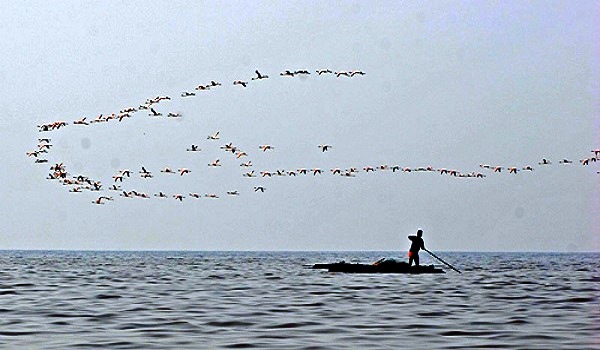
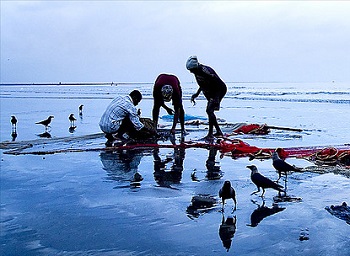
Tony was born Mayank Tandel. He grew up in Gorai village.He was richer than any child has any business to be. A two-mile expanse of beach was his playground. He loved the colourful shells and pebbles as if they were pearls and diamonds. He loved to run about with his friends on the hot sand at mid-day as if it was an endless expanse of cool grass. He loved the sea that his father and uncles pushed their little boat into with the outgoing tide, and he loved the load of fish that tumbled out of the boat by the bucket-loads when they returned.

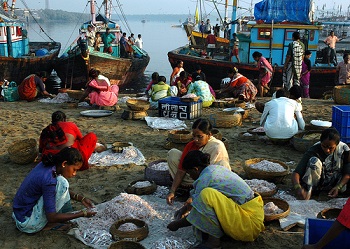
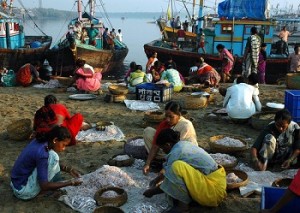
Mayank would keep a lookout for the boat, and run home when he saw it coming, a long way off. His mother would drop whatever she was doing, and run with him to help unload the fish, and carry the buckets and baskets home to their front porch. She and his aunts would take complete charge of the fish from that point onwards — setting up a sort of display table for the large ones immediately, where half a dozen merchants would flock and haggle. The smaller ones would be sorted, to be sold by the basketload. The smallest would be spread out and dried in the sun, to be cooked and eaten later.

And some of the larger ones — pomfret usually — would be kept on festival days. The merchants would offer twice the normal price for them on these days, but she would just stash it away in her kitchen and refuse to discuss it, even with her own husband. The aroma ofpaplet cooking at home would drive Mayank into a euphoria of expectation.

His father was the king of the sea. Or so Mayank believed until he was 10. Then one day, he saw something that filled him with moulding of a fishermanwonderment. A boat that was five times as large as his father’s boat. The thundering roar when the diesel engine was started up was something Mayank fell in love with the first time he heard it.
The boat belonged to a man called Deepya. “Hey Mayank! What are you gaping at?”, he yelled in coarse Marathi. “Come take a ride in the boat! All of you kids, get in!”

This boat, unlike theirs, stood bobbing up and down far from the shore. The kids unhesitatingly jumped in and swam to the boat, where Deepya leaned out and hauled them aboard.

And then, the next fifteen minutes were the most heavenly experience of his short life. It was the ride of a lifetime — the fastest that he had ever imagined possible. Gaping at the water rushing away behind the throbbing boat, leaving a spreading wake, he and his friends screamed in joy for so long they nearly forgot to inhale!

And so Mayank couldn’t understand why his father was so angry. He was livid with fury. He beat up Mayank and his mother, and disappeared into the night, shouting curses. When he returned, it was three in the morning, and the little hamlet was woken up by his drunken, filthy curses.

He fell on the ground, dribbling spit from the corners of his mouth. Mayank and his youngest uncle went out in the starlit night and half-carried, half-dragged him into their little hut, where his mother cried inconsolably, and called upon the gods to witness their misery.

From that day onwards, things went rapidly downhill. Three or four motorised boats appeared in their sea every year, and Mayank’s father often came home with an almost empty boat. The village was sharply divided in two — those who had motorised boats, and those that hadn’t. The ones who had these grew fatter every year. Their women and children wore better clothes than their neighbours. The aroma of paplet frying in their houses drove Mayank crazy every day, and he would now wait eagerly for the festive days, so that he could boast of having eaten it in his house. Imagine his disappointment on his 16th birthday, when his mother didn’t cook paplet, because she would have had to buy it from their wealthy neighbours! That was the last bloody straw!

By the time he was eighteen, Mayank’s shack was among the humblest, most ragged place there was in the village. Many of the neighbours had built bungalows, with electric wiring, bright lights, TV sets…the works! Many of those who had played with him in his childhood were going to college now, and looked the other way when they saw him coming. Mayank was among those who had dropped out of school in the ninth standard to join his father and uncles in hauling fish out of the sea. But he was moody. On some days, he wandered about the village, shouting filthy curses, throwing stones and getting drunk if he managed to steal money from somebody’s shop.

The family had one little thing going, though. Every year, in mid-June, when the seas turned treacherous, the motorboats were hauled up the beach with ropes, and left there till the end of the monsoons. Some of those with traditional boats took this chance to make good. They would wander out to sea with nothing but sails, oars and nets, careful to stay out of sight of the Coast Guard. If caught by a patrol boat, they bribed their way out. And at the first sign of a change in the wind, the boats would head for shore.

Several times, Mayank was the one to spot a low black cloud on the horizon. They managed to return ashore minutes before the storm broke out. On one occasion, they were still some way from the shore when the storm broke. The rain beat down on the little boat, and the waves raised it so high, and plunged it so deep that they had all but given up hope. It was only by rowing for all they were worth against the rising waves and swirling currents that they made it ashore.
moulding of a fishermanBut it was well worth the risk, because fish caught in this season would sell for several times its normal price. Every year, the monsoon months of June, July and August made it seem like the good times were back again.

It got so that Mayank was sought after as a fine boatsman. Deepya offered him a good salary, and took him aboard his boat. Mayank’s father grumbled, but made his peace when he saw his first salary. How could he not? He had never seen a sum of five hundred rupees in his life!

And then, one sunny day in August ‘98, when Mayank was helping Deepya and his crew scrape the mussels off his beached boat before the annual repainting, he heard the storm warning on the radio. He said a silent prayer for his father and uncles, lit a beedi, and wordlessly continued scraping. Then, as the heavy black clouds, blacker than he had ever seen them before, blanketed the sky, he scraped harder and harder, his beedi hanging from his lips.

Deepya and the others had stopped work, and were standing at the stern, which was the highest part of the boat, looking out for the returning rowboats. One by one, all the boats of the village returned to shore. There was a little breeze, and it was shorewards, making their return easy and swift. Within the hour, all but Mayank Tandel’s people were safely back in the village.

“Let’s take your boat out and look for them, Deepya”, said Mayank quietly in Marathi, from under the boat, where he was still scraping.

“You know that isn’t possible, Mayank”, replied Deepya, gently. “Besides, there is still time for them.”

“There is no time, Deepya”, Mayank countered softly. “There is no time now. We must push this boat to sea now! Right now! Your boat will survive the waves…”

Deepya heard the note of desperation creeping into the young man’s voice. “I’m like your father, Mayank. I’ve been going out to sea from the time you weren’t even born. It can’t be done.” And to remove any shadow of doubt about his intentions, he added, “Cover the boat and go home, boys, all of you. Our work is over today.”

The crew stood uncertainly around, looking at Mayank with anxiety, and then looking at the still calm sea. They had never seen the sky so black before. dark skies

And then, suddenly, they spotted the small boat in the distance. “Look, there!”, they pointed. “They are coming”.

With relief, they watched the little boat grow larger and larger, until it was a mere half-kilometre away. Mayank saw his father stand up and wave to him, and waved back. “Baba!” he shouted, his voice cracking. “Baba!” Throughout their matter-of-fact lives, he had never embraced his father, and he knew that when he came ashore, he would surely embrace him. Tears of joy welled up in his eyes.

And then the rain started. Big drops ran down his face, washing away his tears as they streamed from his eyes. The wind rose, the waves grew taller within the space of a few minutes. The boat was bobbing up and down alarmingly, ane every time it emerged from behind some wave, and was lifted high into the air by another, he screamed “Baba!”, and the others raised their voices with him. “Jump!” cried one. “Swim!” cried another. “Row harder!” cried Mayank.

“Deepya, we have got to take this boat there and rescue them!” he cried suddenly. “No!”, responded Deepya. “We must!”, cried Mayank. “We must! We must! WE MUST!”

“NO!”, roared Deepya above the gale and the crashing waves, the thunder and lightning. “NO! NO!”

Amidst the rising and falling waves, the little boat came up upturned, its black underside gleaming. Someone seemed to be hanging onto it, but it was difficult to be sure. Mayank sank to his knees and wept like a child, rubbing fistfuls of sand into his hair. Mayank’s mother and aunts appeared, running over a higher sandbar, from where they had been watching. They were screaming, wailing, tearing at their hair. They were embracing each other, they were shouting their husbands’ names into the sea, they were praying. The villagers gathered to comfort them and to shout vainly into the sea.

Deepya watched with desolate eyes. This is how he had lost two younger brothers, and his tears flowed freely. He wailed anew for his own brothers even as he wailed for Mayank’s people.

Amidst all this wailing and commotion, Mayank had fallen silent. He was gazing wordlessly at his mother and aunts, and then at this weeping middle-aged man. Wordlessly, he climbed into his boat, and emerged with an oar.

And nobody saw it happen when he brought the oar blade crashing down on Deepya’s head, splitting his skull wide open, and leaving him to bleed onto the wet sand.

*******

Several months later, Mayank was loitering near the waterfront at Apollo Bunder. He had sprouted a moustache, and become adept at keeping himself alive by picking pockets, cheating tourists, stealing from shops and running from the police. From his interaction with tourists, he had picked up a flamboyant style of talking that made it impossible for anyone to imagine that this was the boy from Gorai. In fact, you could quite factually say that this wasn’t Mayank Tandel at all!

He spotted Henderson the moment he emerged from the Taj Mahal Hotel, looking lost. He was carrying a big, unwieldy camera, and appeared to be looking for an impossible vantage point from where he could capture the entire magnificent view — The Gateway, The Taj, the boats, everything.

To him, Henderson looked like a particularly soft and succulent white fish that was a staple part of every fisherman’s catch — the Bombla or, as the British quirkishly named it, the Bombay Duck.

“Hello, Sir! Please to meet you, Sir!” said he jauntily, walking upto the British man, full of confidence. “My name is Tony, Sir! Tony D’Souza! How I can help you, Sir?”

Krishnaraj Rao is a journalist and activist.

(Pictures courtesy redroomboulevardblog.com, Akshathkumar Shetty, www.trekearth.com, Deepak Amembal, trivialmatters.blogspot.com)

Categories
Enough said

When divisions benefit the rulers

The carving out of Telangana from Andhra Pradesh could have very real implications for others looking for separate State status.
Humra Quraishiby Humra  Quraishi

Divisions spell doom. A division is like a divorce. There is a break-up, with long lasting implications and offshoots. Divisions aren’t good for anybody.

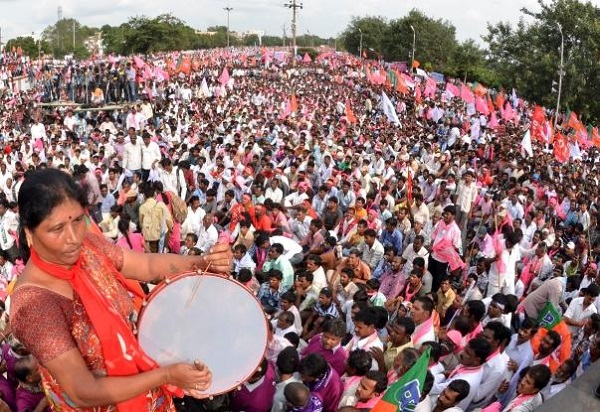
This week came the news of the new State of Telangana being carved out in the Andhra belt. There is a very real danger of several other States in this country demanding divisions of territory. The list could get longer and be no longer contained to just Maharashtra – who is to stop J&K, Uttar Pradesh, West Bengal or Bihar taking the same route?

Divisions suit the politician and the bureaucracy. Not just for purposes of the clichéd ‘the  more, the merrier…’ but more along the lines of governance. A freshly-carved State brings with it the need for more political and bureaucratic heads, justifies the need for planning commissions and departments and ministries. The field becomes wider for several mafias to extract an extra pound of flesh even from the malnourished and the diseased, as the new State grapples with working within new systems. And do not for a minute think that these divisions and bifurcations benefit those in the backward sections of society.

A good example I can cite is that of the State of Uttarakhand. Several years ago, it was carved out from the erstwhile undivided Uttar Pradesh. See for yourself – apart from being blessed with its own natural bounty, on which the State subsists, where is the development? Could it combat nature’s fury, is it able to deal with the ongoing destruction and havoc in the wake of the ghastly floods?

Divisions also brings along distractions of the worst sort. Not to drag you backwards, but I must write of the prominent happenings of this week – we, the hapless masses, could not telangana even adequately react to the teenaged biker being shot dead by the cops in the heart of the capital city, nor could we mourn the sight of a dead human form being pulled by a bull dozer, nor could we find the miracle meal costing just a couple of rupees!

As much as it depresses me, I am beginning to be convinced of the Right Wing parties’s theory that the Congress and the Samjawadi Party are adopting the age-old political strategy of relaying a set of opinions – one to suit the majority, and the other for those ‘others’ in the minority. Soon after the Batla House encounter verdict, those residing in the Jamia Nagar/Okhla/Batla House localities seem convinced that this particular encounter was State-managed; this suspicion is fuelled by the dramatic U-turn that the Congressmen, who were earlier with these people, have not taken in their stand.

Humra Quraishi is a senior political journalist based in Gurgaon. She is the author of Kashmir: The Untold Story and co-author of Simply Khushwant.

(Pictures courtesy www.thehindu.com, theviewspaper.net)

Categories
Listen

A concert for Indo-European chamber music

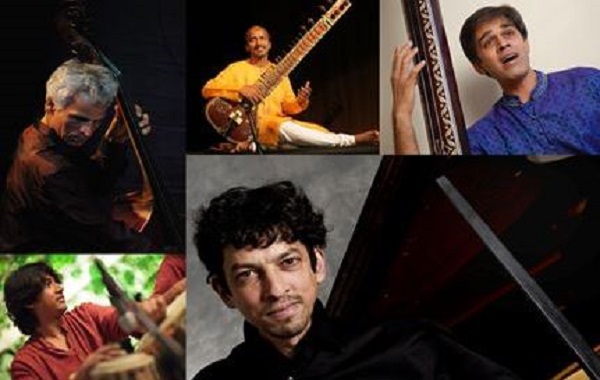
Musicians Jarry Singla, Sanjeev Chimmalgi, Vinayak Netke and Hindol Deb come together for a concert today at Ravindra Natya Mandir.
by Max Mueller Bhavan, Mumbai

This is a concert lovers of classical Indian and European music cannot miss. It features four excellent musicians, and a fusion of Indian and European melodies for an unforgettable evening of chamber music.

“Inspired by the encounter of Indian and European culture, the artists go beyond hitherto existing musical boundaries. Elaborately ornamented melodies of Indian vocal art reverberate with the piano´s melodic outlines, whilst the sitar and the double-bass create new forms of “stringed dialogues”. Indian and western improvisational concepts stimulate each other, and original compositions based on the tradition of European polyphony are enriched by the melodic qualities of the tabla. Harmonic progressions act as an inspiring challenge for the voice and the sitar. The cooperation of the five artists leads to a creation of fresh, subtle and exciting sounds, which I would like to call “Contemporary Indo-European Chamber Music”.

– Jarry Singla

In cooperation with the Goethe-Institut/Max Mueller Bhavan Mumbai, the Arts Foundation of the German state of North-Rhine Westphalia initiated an ‘Artist-in-residence’ programme that promotes an exchange of artists. Currently, the Indo- German pianist and composer Jarry Singla is residing in Mumbai. In his original music, the Indo-German pianist and composer combines European musical traditions not only with a variety of jazz-styles, but also with classical and folk music drawn from non-European musical cultures.

Only shortly after his arrival in Mumbai, Jarry had the chance to start working with three of the finest Indian musicians based in the city: vocalist Sanjeev Chimmalgi, tabla-player/composer Vinayak Netke and sitar-virtuoso Hindol Deb.The four musicians will be joined by Jarry Singla’s longtime musical companion Christian Ramond, a highly acclaimed double-bass player from Cologne who is highly in demand all over Europe.

Apart from Mumbai, the quintet will perform in Pune and Chennai.

The concert is free and open to all. Head to Ravindra Natya Mandir, Prabhadevi, at 7 pm today.

(Picture courtesy Max Mueller Bhavan)

Categories
Cinema@100

“I stick out like a sore thumb”

Where is Meenakshi Seshadri today? This old interview with the dancer-actress makes us want to see her on screen again.
by Humra Quraishi

I had met Meenakshi Seshadri in 1990 in New Delhi, when she was here for an Odissi dance performance hosted by the Indian Cultural Society. What I still remember about her was her demeanour – she was poised, a bit self-conscious, and at times, a little nervous.

meenakshi-sheshadriShe was an accomplished dancer, a competent actress, and – not many know of this – a former Miss India (crowned in 1980). Her last Hindi film was the Sunny Deol starrer Ghatak in 1996, but to this day, she is remembered the most for her portrayal of the character Damini in the film by the same name. A couple of years later, she married a banker and settled in Texas, USA.

When I met her in 1990, she had sat flanked by two women. She referred to both of them as her gurus. “One is my mother, who taught me Bharatnatyam, and the other is my Kathak guru,” she had said, introducing them to me.

Throughout that interview, whatever the nature of the query, she would try and bring the conversation back to dance. She said things like, “For me, Odissi is synonymous with the Indian woman,” and spoken of her ambitious dance project, “It might sound too ambitious, but I would love to combine all four dance forms – Bharatnatyam, Kathak, Kuchipudi and Odissi. I have been told that it’s not possible for an individual to perform all the four styles together, but I want to prove that it’s possible.” She continued, “Also, I want to be the master of dance and choreography and acting and music. I am sharing all this openly because I believe that if you put down your goals and share them, they become concrete plans.”

Excerpts from the interview:

If you plan to do all this with various dance forms, then wouldn’t you have quit films and acting?
I can’t leave acting at this stage. I have done a lot of running around trees and now I have started getting serious roles. Also, films have never really come in the way of my dance.

How can a dedicated artiste, who talks of pure classical dance forms, concentrate in the commercial filmi setup?

I know the film industry is very, very commercial. I also know that pure classical dance forms cannot survive in the film world, because films are a khichdi of various things reaching out to a big audience. But my dance is not affected by films. For me, my dance and my films are two totally separate spheres.


A mother’s role, in connection with an upcoming actress daughter, is in the news for being controversial. Your mother is also constantly with you?

I feel a mother plays a very constructive and an important role. My mother is my friend, my guru and she handles everything for me.

Doesn’t her constant presence hamper your privacy? Meenakshi Sheshadri

If you have a weakness, only then you crib (about privacy)!

So it means you have no weakness?
I don’t know my weakness.

Surely you have one or not more weaknesses?

Actually, some friends do tell me my weaknesses.

What are they?

If I’m smart, I wouldn’t tell them to you. And I am smart, so I wouldn’t talk about them but try and improve on them.

When we watch films of the past and compare them to today’s films, don’t you feel that our present-day actresses cut a sorry figure?

Not really. Today we have good talent, but we lack good writers and good directors.

What is your opinion on the rising levels of rivalries, jealousies, cut-throat completion amongst film stars?

In showbiz, you can’t be very normal.

What about you?

In all this, I stick out like a sore thumb because I am different.

Meenakshi Sheshadri opened her dream dance school in 2008, in Dallas, where she lives with her husband Harish Mysore and her two children. 

(Pictures courtesy www.merepix.com, www.pinkvilla.com, www.listal.com)

Categories
Beauty

Nailed it!

Planning a Sunday brunch or headed to the club with your girls? This weekend flaunt five DIY nail art designs.
by Deepa Mistry

Women love to dress up and there’s no way we like to leave our nails looking bare and unstylish. Nail art manicures are amazing, especially if you get them done from a professional nail art studio, but they cost a bomb, which is why I prefer to do my own nail art at home.

If you haven’t found the time to rush to the parlour for a manicure or pedicure, don’t panic yet because we’ve got the 5 best DIY at home nail art ideas. Express your personality with some fancy nail art which will add flair to your elegant outfit. While there is no need for total accuracy, some things to remember are:

– Don’t colour outside the lines. You can touch up any excess nail polish with a Q-tip or a cotton bud.

– Your nail art tools include some nail polish – a base coat to prevent discolouration of nails, a colour coat, and a top coat for lasting purposes – and a handful of other items such as stationery tape, bobby pins and cotton buds.

Try these five nail art techniques:

dotted nailsDotted nails: Wipe out all the old nail polish before you start. Shape your nails well. Start with a base coat. After applying a base coat, apply a coat of white nail polish. Make sure the shade you have purchased is opaque and not transparent. This will allow the bright colours to stand out even more. After these two coats are dry, start painting dots at the base of the nail in a straight line with the help of a toothpick or a bobby pin to get perfect round dots. You can use colour combinations like pink and blue, red and yellow or green, pink and purple. Once dry, apply a final coat of transparent nail polish for long lasting colour.

Tip: Base coat nail polish is specially formulated to smooth out the surface of your nails, thereby giving the polish an even surface to stick to. It also helps prolong the life of your manicure while protecting your nails from getting stained.

Glitterati: Start with the same base, then apply two coats of black nail polish. Once it dries off completely, place a strip of stationery tape at the base of your nail with a curved tip leaving only the top half exposed. Start with a glitter nail polish- gold, silver or mix and you will have a half moon with black and glitter.

Tip: Always apply two coats of any shade instead of one as the nail polish will last longer

Ombre: Ombre nails are a type of manicure in which a gradient effect is created (see pic below). A light colour on the bottom of the nail gradually blends into a darker colour toward the tip. You will Ombre nailsneed three different neon shades of nail polish, sponge and scotch tape. Start with a base coat, then using the small end of a makeup sponge, paint three colours side by side. You could opt for pink, orange and yellow or try two colours, green and blue. Opt for vibrant colours as they stand out. Stamp the sponge onto your nail and press it over and over, slightly moving it up and down your nail to blend the colours. Stamp all your nails and wait for them to dry. Don’t worry about the nail polish on your skin. Once it dries, dip a cotton bud in acetone and wipe your skin to remove excess nail polish.

Tip: Soak the make-up sponge in water and drain it, leaving it damp but not wet. This will prevent nail polish from drying off faster on the sponge.

Bling it on: Start with the base coat, apply a pastel shade of nail polish on each of your nails, two coats each. Once it dries of completely apply a bright shade or a glitter one only on your ring finger. Add some accessories and carry it off with a chunky ring or a cuff and you’re set for the day! Try the new Sally Hansen range of crackle nail polish; do not apply to bare nails, apply two coats of your favourite nail colour. Once dried, add a thin or thick coat (depending on desired effect) of any Crackle Overcoat shade.

Tip: Do not leave the bottle open, close tightly when not in use.

nail art stickersOn the go: Nail art stickers are easily available in the market too these days, L’Oreal Paris has a wide range to choose from with some outstanding bold prints which are a must-have for this season. Faces Canada also offers you artificial nails with ready nail art on it – just apply glue, stick them and voila! These days, stamping tools and stickers are available at any store, but always make sure you buy a well-known brand of nail polish as cheaper ones damage your nails.

(Pictures courtesy www.stylecraze.com, nailitblog.tumblr.com, www.glamour.com, www.oh-elle.com)

Exit mobile version