Categories
Enough said

Lessons on love

Kolkata’s Presidency College is starting a course on love. What could be a better idea in this day and age?

Humra Quraishiby Humra Quraishi

In the midst of the almost daily barrage of bad news and gloom, comes this good news of an ‘academic’ nature, which has come as a breath of fresh air. Kolkata’s Presidency College is starting a new course…on love.

Yes, I said ‘love’. The subject is to be introduced as a full-fledged one by the College’s Sociology Department, and like English Literature, would be open for all students from different departments, faculties and streams.

Perhaps, for the very first time in this country, love will be discussed in a formal way, just like it used to be centuries ago, when there would be heady discussions on love, romance and emotions, before a frenzied development mode took over and bypassed lay ‘subjects’ like love and everything connected to it.

So we are finally moving backwards, towards the very basics of our existence, for with love, there are bound to be emotions. I’m not sure whether these classes on love will be held under sprawling banyans or neems. And why not? Why not impart all this gyaan out there in the open, amidst the natural environment?

Wherever these classes are conducted – indoors or outdoors – those discussions on love will have a direct impact on the very thought processes of students, and might have long-lasting effects. I have no idea of the teaching format or how the syllabus is going to be shaped for this newly-introduced subject, but in all probability, these classes will help simplify the tangle of confusing notions blamed on love. These discussions would bring about a de-link between love and lust, between want and desire, between fulfillment and release, between innocent spontaneity and stalking, between fall-outs and falling in love!

Today’s youth need these lessons, at least to be able to tell negative emotions apart from positive ones, when several confused boys and girls associated both with real love. Even some loveof our current films reinforce these wrong stereotypes, and which can be dangerous on a vulnerable mind.

And what about the other departments of our other universities and colleges moving ahead with the times and introducing ‘love’ as a subject? When will they discuss it and all that is connected to it, right from the theoretical to the practical to the mystic and even beyond, taking the learner towards the Divine?

Love is important in today’s times. Love is powerful. There’s something so magical about love; it has the power to heal, to protect, to smoothen out troubles, to reach out, to keep illnesses at bay, to help you understand life with all its complexities. When one accepts love in its totality, with the immense pain and turmoil it brings along, it takes one to another level of existence. After all, love brings along a powerful ingredient – emotion.

You can buy sex, but you cannot buy emotions. I’m tempted to quote this line from Gabriel Garcia Marquez’s Memory of My Melancholy Whores, ‘Sex is the consolation one has for not finding enough love.’

Humra Quraishi is a senior journalist based in Gurgaon. She is author of Kashmir: The Untold Story and co-author of Simply Khushwant. 

 (Pictures courtesy www.fanpop.com, funlava.com)
Categories
Wellness

Stay fighting fit this season

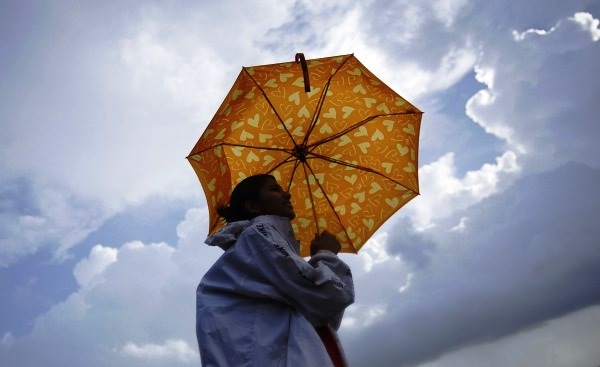
Keep yourself and your family fit this rainy season with some expert tips for eating healthy food and staying disease-free.
by Deepa Mistry

The monsoon season is always greeted with a hearty welcome by soaking in the rains after the scorching summer heat, sipping your favourite cuppa from the road side chai tapri. Like many others, I love this romantic season, especially with some hot road-side vada pavs and kanda bhajjis to gorge. But the street food that we crave in this season is actually a gateway for viruses and illnesses; therefore we must avoid eating out at all costs.

The monsoons come with both pros and cons; they reduce our overall immunity and make us susceptible to many diseases. We have to help our body resist these diseases, by boosting our immunity and taking precautions. Some of the diseases associated with the monsoon are malaria, jaundice, and gastro-intestinal infections like typhoid and cholera. Apart from these, viral infections like cold and cough are common and spread fast.

Dr Vidya Yevale, nutritionist says, “During monsoons, it’s highly recommended that you avoid outside food, as high humidity makes your digestive system weak. It is important to get the right nutrition and keep your body resistant against diseases by boosting immunity through a healthy diet.”

Confused about what to eat and what to avoid? Wondering how to guard against diseases? Try these tips:
– Have a glass of warm water, one teaspoon honey and a drop of ginger oil every morning. It will cure your sore throat and keep your skin hydrated.

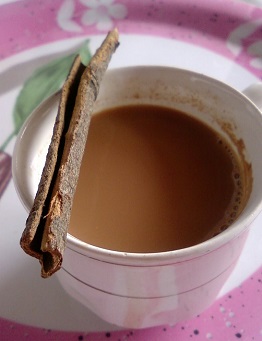
cinnamon tea– Skip your usual black and opt for tulsi or cinnamon green tea. These will also help you lose weight.

– Only drink boiled and purified water from home. If you are travelling, carry your own bottle of purified water.

– Eat raw vegetables and fruit only if you have washed them properly. While washing fruit, add a teaspoon of vinegar to a bowl of water and soak all your fruits for 5 minutes. Wash with plain water before you eat. This method helps wash away all dirt and chemicals.

– Avoid buying pre-cut vegetables and eating salads or cut fruits at restaurants and roadside stalls.

– Try to avoid direct intake of dairy products like raita and cottage cheese (paneer) while eating outside. Curd or buttermilk is a preferable option over milk.

– Eat fresh home-cooked food and add a little ginger-garlic to all your meals. Ginger is known to have properties that increase immunity.

– Hot soups are the best to fight cold and cough during this season. Add some pepper as it is loaded with vitamins and disease-fighting properties.

– Try and avoid too much of fish or meat. Stock your fridge with green vegetables, cereals and fruit. Also avoid fried or overcooked food since it decreases your body’s digestive efficiency.

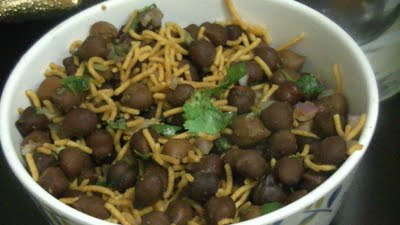
Homemaker Prerana Singh shares her healthy cooking tips. “During monsoons, my kids love to munch on street food like samosas, corn-on-the-cob, chaats but avoid home cooked chana chaatfood so I have started making all these dishes at home. I secretly add vegetables they don’t like in my home-made burger patties and samosas and they love it.”

Children can nag you for street food during the monsoons, so make sure you eat from a good restaurant and the food served is piping hot. Also, drink plenty of water as it helps wash out all the toxins and helps you detox. As you eat healthy this monsoon, stay fit by trying some easy exercises at home – try yoga, pranayama and Surya Namaskar – which will boost your immunity against cold and flu.

(Pictures courtesy healthmeup.com, foodsapor.com, easiestrecipes.blogspot.com)

Categories
Kharcha paani

MTDC boosts Bollywood tourism plans

Bollywood tourism plan, which includes theme parks and a film school, among other film industry related ideas, gets MTDC fillip.
by The Editors | editor@themetrognome.in

Who doesn’t love Bollywood, right? Everybody does, even if some people won’t readily admit it. The biggest film industry in the world attracts one and all – while most of us choose to bask in the reflected glory of our favourite film star, there are others who try their level best to be a part of the industry itself.

Recognising that Bollywood tourism is actually a ‘thing’ – and megastars like Amitabh Bachchan and Shahrukh Khan coming to their balconies to give their fans a ‘darshan’ are just the start of this filmi love affair – Mahindra & Mahindra and the UK-based Pinewood Studios floated the idea (and a proposal for space) to the Maharashtra State Government, for a consolidated Bollywood experience in Mumbai. As per the plan, the two entities will set up a space for all things Bollywood at Kandivali, so that film buffs can have access to film memorabilia, technical knowledge on filmmaking, and if they’re really lucky, the chance to catch an actual film shoot. The plan includes the setting up of a Bollywood theme park as well, and an acting school will also come up in the area.

Now, the State Government has given this idea the required shot in the arm – PWD chief who also runs Maharashtra’s Tourism Department (MTDC), Chhagan Bhujbal, has promised that all assistance will be extended to the project. “We feel, given Bollywood’s rising success even in foreign countries, that this project will boost tourism in Mumbai and give people the chance to experience Bollywood,” Bhujbal says.

The project is to come up on a private plot at Kandivali.

(Picture courtesy travel.cnn.com)

Categories
Tech

The best phablets to buy

As smartphones get bigger and bigger, we compile a list of the five best, value-for-money phablet choices you can make.
by Manik Kakra

For the last two years or so, phone manufacturers have gone from big to bigger smartphones. We have seen smartphone screen sizes go from 3 to 4 inches, and now beyond the 5-inch size. Bigger smartphones, or phablets (phone + tablet), are here to stay, and here are some of the best available today.

Remember, having at least a 5-inch screen (but less than 7-inch) is a must to be considered in this list.

Samsung Galaxy Note II

Samsung Galaxy Note II, Rs 30,000: Samsung’s Note series has been successful — whether it was the Note or the Note II (see pic on left) — consumers have liked Samsung’s Note devices, and the Note II is selling really well. Sporting a 5.5-inch 720p screen, Android 4.1 with TouchWiz U, that has got a lot of extra features from Samsung, this phone has got every base covered for what most smartphone users would like on the move.

LG Optimus G Pro, Rs 36,000: The last 18 months have seen LG’s race back to the top spots of the smartphone race, and why not? They have produced some great devices to get back their mojo, and the Optimus G Pro is one of them. Sporting a 5.5-inch full HD screen and 13 MP rear camera, this LG phone also has Optimus UI, which has a few features just like the Note II with its TouchWiz UI. Some of these are: QuickMemo to take notes quickly with your hand, and QSlide, where you can multitask with two apps open side by side on the screen, among others.

Sony Xperia Ultra Z, Rs 43,000: With its 6.44-inch HD screen, this is the biggest device in the list (see featured image above). Under the hood, this Sony phablet has got the Snapdragon 800 processor, Adreno 330 GPU, along with 2 GB of RAM. On the back, there is an 8 MP EXMOR RS sensor. This is an aggressive device that marks Sony’s entry into the phablet arena.

Huawei Ascend Mate, Rs 23,000: You didn’t see this one coming, right? Well, Huawei has done pretty good in several markets and the Ascend Mate deserves a mention here. With it 6.1-inch 720p screen, this Huawei phablet has got a big 4,050 mAh battery, it could be a solution for your battery woes. Running on Android 4.1 with Huawei’s own quad-core processor under the hood, it is not the best performer in this list, but certainly not a slouch.

HTC Butterfly, Rs 38,000: Released five months ago, this device is the smallest one in our list. Upgradable to Android 4.2, this HTC (see pic on right) boasts a 5-inch full HD screen, and is powered htc butterflyby the Snapdragon S4 Pro processor. Looks-wise, it is a really good HTC device that feels good to hold and is solid to use. With a decent 8 MP camera and Beats Audio, this is a good if you are looking for a not-so-huge phablet experience.

There are a few more available in the market like the Xperia Z, Galaxy Mega 5.8 and 6.3 but we find the above-mentioned devices more. Do let us know your favourite ones, and if you really like this large form factor or not.

(Pictures courtesy www.gospelherald.com, www.htc.com, www.extremetech.com)

Categories
Cinema@100

Much more than just a streaker

Brash, bold and beautiful Protima Bedi was passionate about dance and never cared what the world thought of her lifestyle.
by Humra  Quraishi

A talented dancer and a woman bold enough to run naked across Juhu beach, Protima Bedi always remained a bit of a mystery to all, despite her open and frank nature. Known more her various link-ups and her torrid marriage to actor Kabir Bedi, the subsequent divorce and the tragic suicide of her son, Siddharth, Protima was a livewire. Her tragic death in 1998, when she was one of 108 people killed in a landslide in UP, sent shock waves across the country. She was 50 when she died.

Much before I could have the chance to actually interview Protima Bedi, I had been seeing her at various events in the capital city.

protima_bedi_There were things about her that never changed with each subsequent sighting: she was never alone, but she would always be accompanied by a male friend, who invariably happened to be from the Who’s Who of the city.  She always wore simple cotton clothes, very often the white cotton two-piece saris with coloured borders, from Kerala. The sari would be draped rather low, exposing her midriff.

There would be a direct emphasis on her breasts through the cholis she wore, which were invariably low-necked, her ample bosom more than making its presence felt. She wouldn’t wear much makeup, preferring to stick to her big bindi and maybe some lipstick on her thick lips. Her pout was her best feature and she used it often – oh yes, she knew people were always ogling her. Her gait was confident, and even in a sari, she would ooze sensuality. There was something very different about her.

I met Protima and spoke to her at length when she was here in Delhi to dance before the newly-constituted Association of British Scholars (ABS). She was collecting funds for her dance school, Nrityagram, that she had set up in Karnataka.

She was ill at ease fielding questions on the then reigning political figure of Karnataka, Ramakrishna Hegde, whose name was linked with hers in those days. On being asked about romantic or sexual links with him, she retorted, “It that was true (that she was having an affair with Hegde), I wouldn’t be begging for money for my dance school. Right now I feel like a beggar, asking for donations of Rs 100 or Rs 10,000. But there’s no giving up. No way.”

Her dance school had reportedly got a lot of funds from the Department of Culture. When I asked about this, she said, “Of course we got funds from them but we need more. I’m taking our traditional dance to the rural areas, where it belongs. Why should dance be limited to the urban elite in air-conditioned halls? Today we have more than 200 village children coming to learn different forms of our traditional dance and we have 18 residential students, too. It’s a dance village that I’m trying to run.”

I wondered why, with all her high-profile ‘contacts’, she was finding it so difficult to get funding. “Which men? Which contacts? I’m so involved in my dance village that I have no time protimabedito think of anything else. Right from early morning I am so busy with my daily chores. We do all the work ourselves, cleaning, cooking, washing, teaching. I am determined to continue doing what I’m doing. I mean, this struggle. I have to keep this dance school alive. I am a very strong-willed woman and even if I have to starve, I will not give up.”

Starve? For what?

“Obviously for food! What were you implying?” she shot back.

Then she started explaining that traditional dance forms must be taught to women, and that it’s time women of this country were given their due freedom in every sense of the term. “How can I rest in peace when so many injustices are going on? Look at the way our women are being suppressed. Look at the crap going on in the name of culture!”

I pointed out to her the contradiction in her own behavior – talking of culture and rural India and yet willingly dancing for an urban elite forum like the ABS. She hit back, “I’m doing it for funds! For my dancers, my dance village, my passion! I am one of those women who never gives up.”

 (Pictures courtesy bollywood.bhaskar.com, www.triveni.org, forum.santabanta.com)

Categories
Wellness

Plum stories

Plums provide a host of health benefits to both fortify and beautify. Good news is, it’s plum season in Mumbai!
by The Editors | editor@themetrognome.in

Nature has the most wonderful way of making certain fruit and vegetables available to us as the seasons change. With the rains lashing the country presently, we’re suffering from monsoon-related illnesses, and certain fruit available this season can help you fight back.

Of these, plums should be your first choice. This beautiful fruit, whose dark red variety is available in our country, packs a punch when it comes to providing nutrients to not just beautify the human body, but also fortify it. Good news is, the freshest plums are currently being sold in Mumbai (about Rs 50 per half kilo), so you can go ahead and indulge.

What plums contain: Plums contain liberal doses of potassium, Vitamin A, iron, riboflavin, thiamine and magnesium. This fruit is a good source of fibre, which in turn helps digestion. A standard cup of pitted plums comprises 26 per cent Vitamin C, 13 per cent Vitamin K and 11 per cent Vitamin A, as per the US Department of Agriculture.

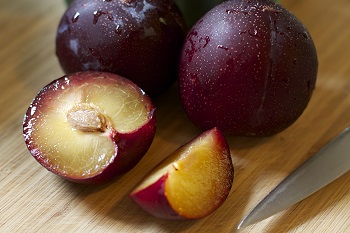
plums Purifying blood: Research shows that the fibre-providing nature of plums helps to prevent platelet clotting, which may in turn lead to blood disorders like arteriosclerosis and high blood pressure. Plums help purify the blood by liberally oxygenating it, and are recommended for those prone to strokes and coronary heart disease. It improves gastrointestinal and liver function and thus prevents constipation.

On the workout menu: Confused about what to eat before you work out at the gym or go for a run? Grab a couple of plums before you start exercise. Plums contain citric acid that can prevent tiredness and muscle cramp. Besides, its high water content helps in hydration. Their sugar content will keep you in good stead during a rigorous workout, and you won’t pile on the pounds because plums are fat-free!

Healthy hearts: We’ve already said that plums are a great source of gut-cleaning fibre, but did you know that the fibre from plums also helps bring down cholesterol? The fibre in plums is ‘soluble’, which means that it binds to cholesterol and promotes its excretion from the body. It has the same effect with blood glucose and helps normalise blood sugar levels by slowing the absorption of glucose. A good way to ensure your heart gets the maximum benefit is to chop a couple of plums and add them to your bowl of oats for breakfast.

The eyes have it: Plums put the shine in your eyes – their Vitamin A content helps prevent macular degeneration and fights local infections. Regular consumption of plums has been known to improve eye health.

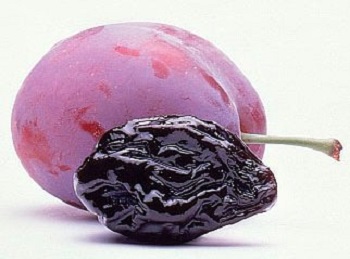
Antioxidant punch: Recent studies in the West show that plums may help in the battle against such life-threatening diseases as cancer. Plums are loaded with antioxidants, and are plums and prunesparticularly effective for patients suffering from cancer and heart disease, because the content of free radicals is high in these patients and antioxidants are required to fight them.

Healthy skin and hair: This season is all about taking care of your dull skin and limp hair, and with all their goodness, plums can help spruce up both. Eat two soft, ripe plums a day for optimum effect.

 (Pictures courtesy www.klesickfamilyfarm.com, www.grantustheluxury.com, www.happyhealthylonglife.com)

Exit mobile version