Categories
Swaad 'Anu'saar

Detox recipes for the festive season

Now may be a good time to sneak in a bit of detox and heal our bodies the natural way.

anurita guptaby Anurita Gupta

Most Hindus are currently still in an enforced vegetarian state, starting from Shravan. The purpose of Shravan is to help people stay away from pungent foods like onion and garlic and all meats, fish and poultry so that they can concentrate on everything ‘satvik’ (all foods that bring us back to our ‘satva,’ our unique essence). A satvik diet comprises water, cereal, grains, legumes, vegetables, fruit, nuts, unpasteurised fresh milk and dairy products like curd, paneer, ghee and honey.

Here’s a list of detox satvik recipes that you can try:

Drink up:

ginger-tea– Ginger honey basil tea: Ginger being a natural astringent is at the top of the list of satvik food. Basil (tulsi) doesn’t just have a holy significance, but it is also known to rid the body of chronic ailments. Combine these two with some organic honey and tea leaves. Make a nice brew and enjoy.  All you need is an inch of ginger, 2-3 leaves of basil, a teaspoon of honey, half a teaspoon of tea leaves and a cup of water.

Boil water in a pot. To this, add the tulsi and tea leaves and turn off the flame. Cover the pot with a lid and let the ingredients infuse for 5 minutes. Thereafter, add honey. Strain and serve. This brew is especially good for sore throats and tummy bugs. It is also said that if you have a fresh leaf of tulsi every morning on an empty stomach, it builds your immunity manifold, especially against the common flu.

– Amla and tangerine smoothie: Amla or the Indian gooseberry is known to be the most effective in cleansing our breathing machinery and the heart, and it is very useful in curing hyperacidity, eye and skin-related diseases. It is also knownamla smoothie to delay ageing. Tangerine or the mandarin orange is a very high source of vitamin C, and it helps absorb iron better. Plus, it’s a great antioxidant. The other ingredient in this recipe is curd, which is naturally high in the good bacteria – lacto bacillus – that is great for the stomach, too.

To prepare this smoothie, you will need two big spoons of natural yoghurt (dahi), one big Indian gooseberry de-seeded, and one tangerine, peeled and de-seeded. In a blender, whizz all these ingredients to form a smooth puree. You can also add a bit of honey and flax seeds powder in order to improve the taste and up its nutritive value. Drink up within a minute of making it. This one is a super effective formula for a bug- free tummy and a healthy skin.

Snacks:

– Apple pear and paneer salad: Shravan aside, this salad can be a sure shot hit at the parties. Apple and pear are both rich sources of iron and potassium along with being very high sources of fibre, thereby making them very good aids for digestion and better heart function. Paneer is a fantastic source of unadulterated protein. The dressing of this salad is specifically made in apple cider vinegar that zaps bad cholesterol.

Take one juicy apple and pear, peeled and de-seeded, and 2-3 chunks of paneer. Use some slivers of ginger, honey and mint leaves. In a bowl, cut thin slices of apple and pear, toss them with some hand-mashed paneer and mint leaves. In another bowl, pour 10-15 ml of apple cider vinegar, a little bit of honey, ginger and an optional ingredient of mustard sauce (homemade). Add salt and pepper to taste, and mix. Now drizzle this on the cut fruit and enjoy!
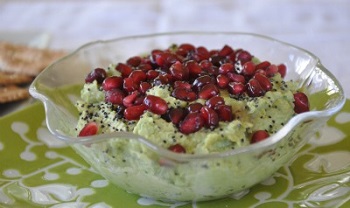
hummus with pomegranate seeds– Hummus with pomegranate topping: Chickpeas are considered satvik and are an incredibly rich source of protein and other minerals. Mixed with tahini made of another satvik ingredient, the ‘white til’, it makes for an amazing detox snack.

Take 250 grams of boiled chickpeas (drained). Keep aside ¼ of the chickpea water. You will also need 3-5 tablespoons lemon juice (depending on taste), 1 1/2 tablespoons tahini (til paste), 2 cloves crushed garlic, 1/2 teaspoon salt and 2 tablespoons olive oil. In a blender, put together all the ingredients except the water from the chickpeas. Whizz for 3 to 5 minutes and check for consistency. Keep adding the liquid bit by bit until the mixture is smooth but not watery. Take the hummus out in a bowl, drizzle some extra virgin olive oil over it. Sprinkle pomegranate seeds, sunflower seeds and a good helping of coriander. Enjoy it with a roti made of whole wheat or barley instead of the usual pita bread.

Try one of these recipes along with a liberal helping of raw fruit, lentils, sprouts and vegetables (excluding their root) for a week and see the change not only on the weighing scale but in your skin and mood as well!

Anurita Gupta is a media professional who is passionate about two things – food and radio. Her love for all things food makes her a foodie with a cause.

(Pictures courtesy b4tea.blogspot.com, www.vanilla-and-spice.com, www.ordinaryvegan.net, superfoodprofiles.com)
Categories
Campaign

Mumbai’s observing World Alzheimer’s Month

A few Mumbai-based NGOs and colleges have partnered to organise a series of events and talks on Alzheimer’s this month.
by The Editors | editor@themetrognome.in

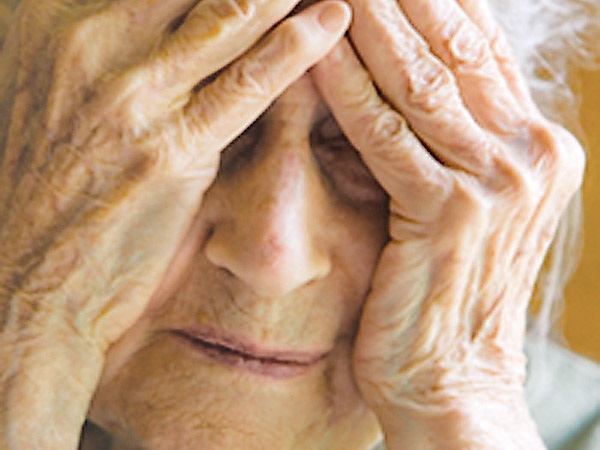
It is a disease that has ravaged millions of people over the years, and it continues its onward march every day, unchecked. Alzheimer’s is the most common form of dementia, and is known to affect a person’s memory, behaviour, learning and thinking patterns. According to alz.org, Alzheimer’s is the sixth leading cause of death in the United States alone.

In India, too, the numbers of those affected by this disease is worryingly high. Even more grim are recent findings that the disease, though traditionally known to strike those in advanced years, is beginning to show signs and symptoms even in those who are 40 or 50 years old.

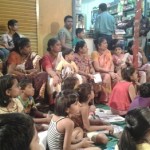
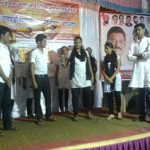
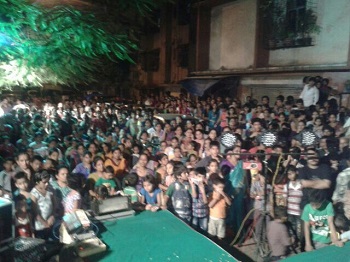
September 21 is celebrated as World Alzheimer’s Day every year. In our city, the NGO ARDSI (Alzheimer’s & Related Disorders Society of India) Greater Mumbai chapter and Silver Innings have set aside all of September 2013 for Alzheimer’s awareness, and the two entities are jointly observing Alzheimer’s Month. “The partners for the initiative also include SVT College, YWCA Andheri, Pushpa MA Foundation, St. Thomas Orthodox Church, Helpage India , Nirmala Niketan College of Social Work and A1 Snehanjali Assisted Living Elder Care Home,” says Sailesh Mishra of Silver Innings. “Currently, the street plays are in progress, which are conducted in a very attractive manner. The plays address real-life case studies and have an instant connect with the audience. Also, Ganpati mandals have been very supportive as they want to address social causes. This way, we are helping to spread the message with religious and cultural programmes and events,” Sailesh adds.

Some pictures from the street plays:

The month-long initiative aims to spread awareness about dementia and Alzheimer’s, their effects on both the patient and families, caring for the sufferer, how to know if it’s Alzheimer’s, and various other topics. “This will be done through a series of street plays, interactive talks, memory walks and interaction between experts, students, senior citizens, medical professionals and whoever is interested in attending,” Sailesh explains. The events are free and open to all, but with prior registration.

Programme schedule:

September 12 to 28: Street plays for sensitisation and awareness at various locations and Ganpati mandals in Mumbai , Navi Mumbai and Thane District by Nirmala Niketan Students of Social work, in association with Helpage India and Silver Innings Foundation.

September 20, Friday : Interactive talk and street play at Asha Kiran Senior Citizens Facility, YWCA, near Navrang Cinema, Andheri (west), 11 am onwards.

September 21, Saturday : Memory walk and street play at Pushpa Ma Foundation, Dada Dadi Park, Veer Savarkar Udyan, LT Road, Borivali (west), 5 pm to 6.30 pm.

September 22, Sunday : Interactive talk and awareness campaign at St Thomas Orthodox Church, SV Road, Chincholi, Malad (west), 11 am to 12.30 noon. Contact Tony Varghese on 9820486605 for details.

September 27, Friday : Interactive talk and street play at A1 Snehanjali, Silver Innings Assisted Living Elder Care Home, D’silva Nagar, Nala village, Nalasopara (west), 4 pm to 5.30 pm. Contact  9323919145 for details.

September 28, Saturday : Sensitisation seminar ‘Understanding and respecting individuals with Alzheimer’s’, a lecture supported with skits, videos and a poster exhibition, by students of Family & Child Enrichment Center, Department of Human Development, Mini Auditorium, SVT College, SNDT University, Juhu, 2 pm to 4 pm. Contact 9820498738, 9821488790 for details.

Email ardsigreatermumbai@gmail.com; silverinnings@gmail.com or a1snehanjali@gmail.com for programme registration, or contact ARDSI Greater Mumbai Chapter/Silver Inning Foundation : 9987104233/ 9029000091 (Monday to Saturday, 10 am to 6 pm).

The Metrognome is proud to partner the Alzheimer’s Awareness Month. If you have a story or an insight about dementia and Alzheimer’s to share, do write to us as editor@themetrognome.in or tweet to us @MetrognomeIndia and we will feature your thoughts. 

(Pictures courtesy Silver Innings Foundation and www.ekantipur.com)

Categories
Wellness

How a 12-year-old’s renal cyst was removed in 30 minutes

From treating only minor ailments, doctors in the city are increasingly turning to laparoscopy to excise cancerous tumours and cysts.

Dhaval Desai (name changed) was playing in his Govandi home with his younger brother a few days ago, when the younger boy jumped on his abdomen. For the next few minutes, the 12-year-old experienced excruciating pain in his flanks, and told his parents about it. “He complained of severe pain so we took him to our family doctor,” said his father, Vinod.

Their family physician prescribed medicines for stomach ache, but the pain persisted. Alarmingly, Dhaval was seen to pass blood in his urine. “Our doctor told us to get a sonography and CT scan done. We were told that he had a kind of tumour above his kidney. I was stunned to hear it, because Dhaval had never complained of any pain or discomfort before,” Vinod explained.

Dhaval had a seven-centimetre cyst in the upper regions of his right kidney. The fall brought to light this cyst, and had to be immediately removed.

Dr Roy PatankarDr Roy Patankar (in pic on left), noted gastrointestinal and laparoscopic surgeon, treated the case. He said, “The conventional procedure in this case would have been to cut open the abdomen and remove the renal cyst. But we find that cutting patients open does several debilitating things – you have to cut all muscles open, there is the possibility of high blood loss, and there is a long recovery time. It is best to avoid invasive procedures especially in young children, whose recovery and short-term mobility may be compromised.”

He added that with conventional surgeries, the patient would also be exposed to a higher risk of hernias later on, since a lot of flank muscles would have to be cut into to expose the kidney before excising the cyst.

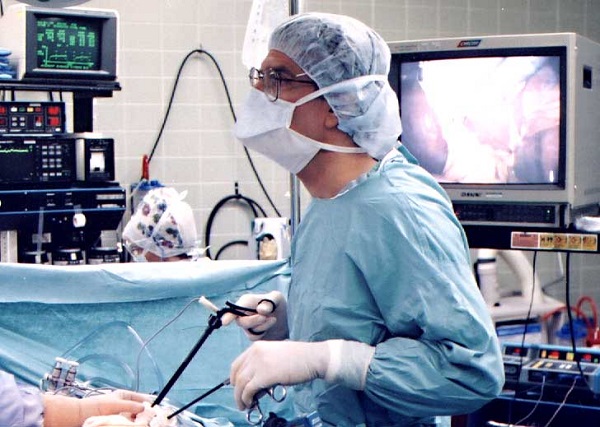
In Dhaval’s case, Dr Patankar tried a less invasive approach – laparoscopy. “We got the cyst with just a tiny incision on his abdomen. Where the boy would normally have spent at least a week in hospital, followed by post-op care, Dhaval was able to go home in two days and he resumed school in just five days.” On his part, Dhaval says, “I do not feel any pain at all after the operation. I am now waiting to go to school.”

Laparoscopy in cancer surgeries

Though surgeons in India have largely confined laparoscopy as a surgical tool to such treatments as gall bladder removal and uterine procedures, Dr Patankar says that in the last two years, doctors are using laparoscopy in cancer-related surgeries, too. “There is too much tissue injury and blood loss in conventional surgeries, and after the operation, about 80 per cent of the patient’s pain is caused by the surgical procedure used, than the actual surgery or ailment itself. With laparoscopy, the component of pain attached to surgery is removed.”

Apart from being minimally invasive, which leaves no scarring post-operation, laparoscopy also helps the surgeon get to the root of the issue faster and in a way that is safe for the patient. “While operating, since a camera attached to the probe magnifies the area significantly, it helps the doctor navigate the area better and faster. We have been able to operate on several cancer patients successfully with the use of laparoscopy when removing tumours and cysts,” Dr Patankar says.

He says that doctors in India are increasingly finding takers for cancer-related laparoscopic surgeries from such countries as Sri Lanka, Tanzania and Nigeria. “However, most patients from the West flying to India for laparoscopic surgeries are still opting for bariatric surgeries. Their insurance doesn’t cover the costs of the operation back home, and we do it at a fraction of the cost.”

(Pictures courtesy www.lapsurgeon.in, www.evergreensurgical.com. Feature image is used for representational purpose only) 

Categories
Overdose

India whining

From inflation to the crashing economy to rising crime, everything is making us weep. But are things really so dire?
Jatin Sharmaby Jatin Sharma

What is India doing at the moment?

Today everybody is on panic mode as the economy is crashing. As the nation that was once shining is now whining; whining at its bad governance, whining at its law and order (or lack of it) and whining about everything else. Today, India doesn’t look good either on paper or in form. Once a country that was supposed to fight with the fabled Dragon to its North, is now set afire by its own mistakes.

Let’s face it, things are looking rather dire at the moment, so there really is lots to whine about. For many of us, going from one day to the next has become an unending hurdle race, as the sliding rupee makes life hell for most and difficult for everyone else. Add to that the rising crime across the country, the rampant corruption across all sectors, and the state of the economy, and you are sitting on a cesspool of a situation.

And in the midst of this gloom, if a foreign economist says that the Indian economy is not in an extremely bad shape and it will bounce back, rising crimewe will readily believe him and cling on to his words, quoting him to our friends and families. But when an Indian economist says the same (and some already have), we dismiss his or her words as drivel.

Like everyone else, I too ponder on several things that matter to all of us. And I have been seeing a disturbing trend, one that is innate to our psyche as Indians: we want validation of our existence from the outside world. We don’t believe in India and her potential because we don’t believe in anything that is India or Indian. No matter how cool Yoga was and continues to be be, we started practicing it only after the West thought it was cool and adopted it. It was such a sad thing that yoga was patented to the USA because we in India had forgotten it. Once its efficacy was proved in the USA, we all wanted to lose weight by doing Yoga. Now it is a Sec A form of exercise, and hence, very upper class.

Priyanka Chopra in ExoticOur peculiar mindset makes us decide on the value of things based on how ‘non-Indian’ it is. We may jump up and dance to Lady Gaga songs and not doubt her talent or the song’s merit, but the moment Priyanka Chopra makes a successful international debut as a singer, we become experts on how much of a non-singer she is. When Tata takes over Jaguar, we do not celebrate it for the big feat it is. When Infosys adds another feather to its cap, we are quick to point out that Infosys is an ‘exception’.

This same peculiarity makes us speak of Indians in the third person when we’re speaking to foreigners, or make a blog post go viral when it details how a white girl had several bad experiences in our country. But when another foreigner writes about how India treated her well, we just dismiss it with a, “Yeah, whatever!”

In our minds, we’ve never truly appreciated our Indianness. When the British wanted to rule India, or indeed any place that they eventually colonised, their strategy suggested that Indians could only be ruled if their spirit was broken, only if they despised their culture and everything it connected with. And here we are, still firmly in that trap, making the same mistakes.

We’ve all grown up hearing our elders say that if we believe in ourselves, the world will believe in us. But yet, our mindset prompts us to believe in ourselves only when somebody else shows belief in us. Isn’t that strange? We’re still so colonised, we have no faith in Indian products, however amazing they may be. And there are very few people in India who genuinely believe that our country is one of the best in the world. We are willing slaves and we produce our best work when we work for others, such as Microsoft, BMW, NASA, INTEL, Hotmail and Google. Imagine the results if we just turn that talent homewards and believe in ourselves a bit more.

But let me not keep you from your whining.

Jatin Sharma is a media professional who does not want to grow up, because if he grows up, he will be like everybody else.

(Pictures courtesy liveindia.tv, news.in.msn.com, www.indianexpress.com)

Categories
Enough said

In memory of Muzaffarnagar

A peaceful town in its earlier years is currently the battleground for communal hatred. What caused this change and why?
Humra Quraishiby Humra Quraishi

I was born in Uttar Pradesh and I spent my childhood and my carefree teenage years in that State. I travelled to several remote villages and locales there because my father was particular about his family – my amma and his children – tagging along in our open jeep or in our Baby Hindustan car.

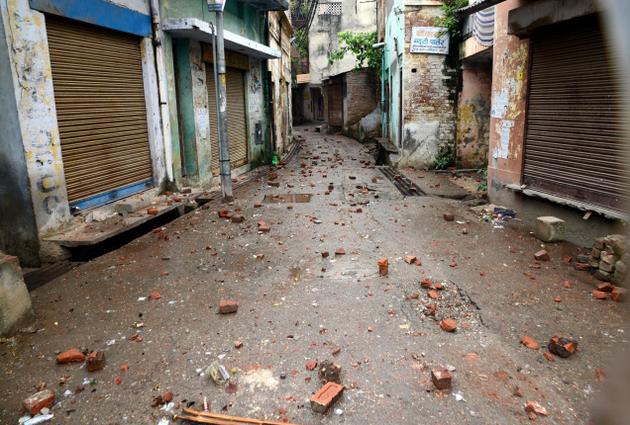
We had travelled through Western UP’s Muzaffarnagar and the adjoining belt on several occasions. I can still recall the sights: sprawling sugarcane fields, dozens of workers on the fields, several zamindars and farmers walking about. There was never a bit of tension among communities and never any question raised about caste or creed, and certainly no communal hatred. We’d spent hours initially roaming about, even travelled late at night and it seemed so perfect. Not once did we hear any mention of so-and-so being a Yadav or a Jat or a Musalmaan or a Brahmin.

All of those idyllic images from my childhood were rudely shattered from the early 90s onwards, with worsening communal tensions over the years. The hatred spread all over, furious and uncontrolled. In 2007 or 2008, at a SAARC writers meet in Agra, I’d asked the New Delhi-based historian Rifaqat Ali details about the ground situation in and around that belt. His observations were particularly relevant because he hails from rural Aligarh.

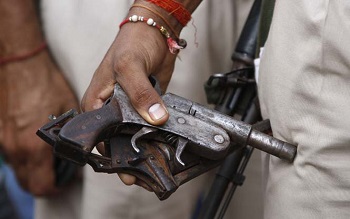
He said, “The fact is this: only a Jat or a Yadav can have the confidence to write his name atop his vehicle. For a Musalmaan it will spell death or doom. He dare not flaunt his name, Muzaffarnagar picks up gunsespecially in an unknown area.” On another occasion, an academic who belongs to Western Uttar Pradesh told me that though his wife wears a burqa or a hijab, he finds the practice unsafe when they travel homewards. “It is prudent not to ‘look’ like a Musalmaan, for your vehicle could be stopped and damaged, and you could be attacked…anything could happen.”

If you ask about the cops and what they do to save or salvage the mounting tensions, the answers you receive reveal a complexity beyond the expected corruption in the ranks. Apparently, at the constable level, they are recruited as per their caste and creed, so when a situation arises, they act or attack based on whether their community is involved. A Yadav minister or Chief Minister would be more than tempted to enroll as many Yadavs in the force as possible. A Jat minister would do likewise, and this pattern continues across several castes. It would be interesting to know the exact percentage of cops vis-a-vis the community ruling at that moment.

And this communal hatred has spread to the nearby villages and qasbas and towns of Western Uttar Pradesh. Right-wing goons have turned the area into a cesspool. Till date, the BJP MLA from that particular area, Sangeet Som, has not been arrested and thrown into prison, despite uploading the fake video that started the recent mess and which will affect generations of people forever. Nor have other politicians involved in the issue.

Ironical, isn’t it, that the same belt of Western Uttar Pradesh, which had seen the start of the ouster of the British from our land with the Mutiny of 1857 is today embroiled in anarchy? But what happens next? Obviously, a thick-skinned politician or an absolute fool might appear on TV and say, “All is coming back to normal! Only 37 are dead and another 100 are injured, and several others have fled. But the situation is under control!”

What about the four BJP men accused on inciting violence and who have gone underground? What was the police doing? Where were the inputs from IB? What about the role of the Akhilesh Yadav Government? Even if the father-son duo of Mulayam and Akhilesh cry themselves hoarse with the “It’s a Right-wing conspiracy!” refrain, the question they are still not answering is: Why didn’t their police force act?

Humra Quraishi is a senior journalist based in Gurgaon. She is the author of Kashmir: The Untold Story and co-author of Simply Khushwant.

(Pictures courtesy www.thehindu.com, www.hindustantimes.com)

Categories
Cinema@100

An encounter with Dev sahab

Salil Jayakar recounts a meeting with the legendary filmmaker and actor, and remembers coming away humbled by the late star.

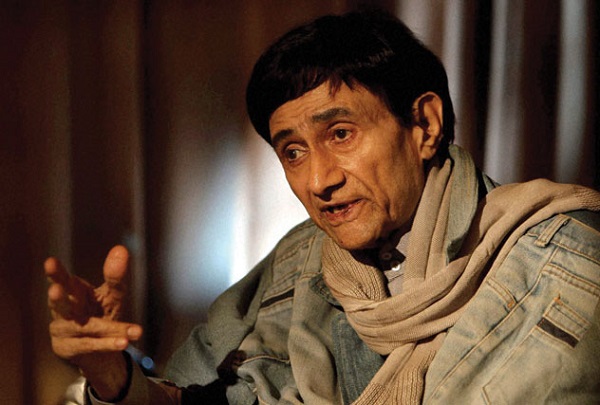
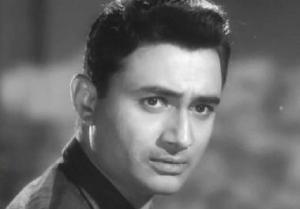
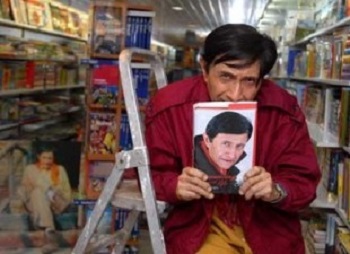
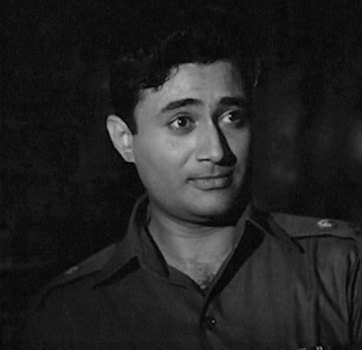
dev anandIn a career that spanned well over six decades – from 1946 till 2011 – Dharam Dev Pishorimal Anand wore many hats as actor, producer and director. Known by his screen name Dev Anand to millions of fans worldwide, the evergreen original chocolate-boy hero of the Hindi film industry lived a long and active life. While he continued to act and direct right up to his death, fans would best like to remember his earlier films well into the 1980s. Barring the Aamir Khan starrer Awwal Number in 1990, the rest were easily forgettable, to say the least.

In those early years as a journalist, I had met Dev Anand a couple of times at press conferences. Already into his 80s by then, he was still a bundle of enthusiasm and energy, always smiling and always happy to talk. I can’t honestly say I was a Dev Anand fan boy but there was something endearing about him…I have a vague memory of Dev Anand at the Gateway of India, celebrating his birthday and his new film surrounded by visibly enthusiastic fans (some middle-aged aunties too) and I sensed his love for them. And theirs for him.

But this is not a much delayed review of his life and films. As always, I digress.

In the second half of 2007, I was still a journalist, working with a leading English news channel. It was then that I had my most personal encounter with the legendary Dev Anand. His autobiography Romancing With Life was due to be released shortly and I was fortunate enough to get a one-on-one with him at his studio-office in Bandra, Mumbai.

Quite frankly, I didn’t know what to expect from this interview. His tell-all tome promised to ruffle feathers and was meant to shock and be scandalous. He wouldn’t have it any other Dev Anand - Romancing with lifeway. “I’ve lived my life in the public eye, I have nothing to hide!” he declared. And indeed, he had nothing to hide. Everyone knew of his romances but it was an another thing to read about them in detail. I had done my cursory research on his romances but I wasn’t quite sure I wanted to ask him about them…

As I made my way to the room in which I was to interview Dev sahab, I was immediately struck by the disrepair all around. Almost every corner and every inch of the room was piled with files, papers and knick knacks well past their due date. Here was a man who refused to let go. He lived as much in the past as he did in the present. No wonder then, that he was ‘evergreen’.

Dev Anand, still very much the star, walked in a few minutes later while my colleague and I were setting up the lights and camera in one corner of the room. “I’m sorry,” he said, “the calls don’t stop and I have to speak to all of them.” No, I did not think he looked youthful. His dyed jet-black hair and wrinkles told another story.

“Wahan pe karoge?”

Dev Anand“Yes,” I said and explained, “I like the shadow and light effect of that lamp and it’d be a great backdrop if you sit in front of it.” And then I kicked myself in my head. Here I was explaining lights and camera angles to one of India’s biggest stars and filmmakers. My colleague looked at me as he set the camera and rolled his eyes.

I expected him to say something; make us change our setup but he didn’t. “You people get younger by the day. The rest are too busy these days to meet me,” he said in obvious reference to senior journalists who perhaps had little or no time for an ageing star. But it didn’t seem like a grouse or complaint. “I like your hair, maybe I should try that look in my film.” I had a mini mo; he was making Chargesheet. I didn’t know what to say.

Over the next 30 minutes or so, he spoke excitedly about his autobiography; even had plans to write another one! The PM was going to launch it in Delhi and then there was a star-studded affair in Mumbai. “I’ve called everyone. Hema said she’ll come, so will Zeenat,” he proclaimed. Dev sahab was at his camera friendly, witty best as he indulged a young journalist. No starry tantrums, no nothing. I remember doing about two or three takes to get just my opening piece right. He sat patiently through it all. Hell, I was nervous!

Dev Anand taught me a life lesson that day. I’m still learning, though. Romancing with life, gaata raha tera dil…


(Pictures courtesy www.madaboutmoviez.com, www.siliconeer.com, www.metromasti.com)

Exit mobile version