Categories
Campaign

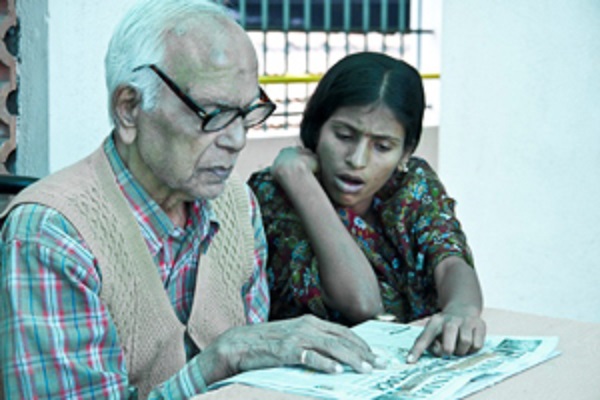
India will need several more Alzheimer’s caregivers: Report

The just-released World Alzheimer Report 2013 reveals that the global Alzheimer’s epidemic has created shortage of caregivers around the world.
by Alzheimer’s Disease International (ADI) and Bupa

The World Alzheimer Report 2013 Journey of Caring: An analysis of long-term care for dementia,  released yesterday, calls for Governments around the world to make dementia a priority by implementing national plans, and by initiating urgent national debates on future arrangements for long-term care.

Alzheimer’s Disease International (ADI) and Bupa commissioned a team of researchers, led by Professor Martin Prince from King’s College London, to produce the report.

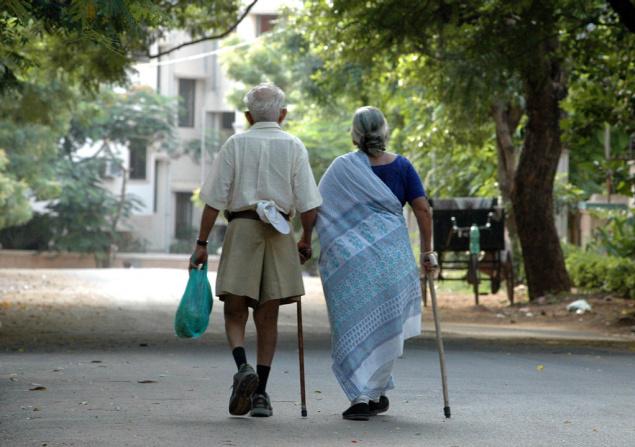
dementiaThe report reveals that, as the world population ages, the traditional system of “informal” care by family, friends, and community will require much greater support. Globally, 13 per cent of people aged 60 or over require long-term care. Between 2010 and 2050, the total number of older people with care needs will nearly treble from 101 to 277 million. Long-term care is mainly about care for people with dementia; around half of all older people who need personal care have dementia, and 80 per cent of older people in nursing homes are living with dementia. The worldwide cost of dementia care is currently over US$600 billion (£395 billion), or around 1 per cent of global GDP.

The report states that more attention needs to be paid to maintaining and enhancing quality of life; helping those affected, and their families to ‘live well with dementia’.

Ten-fold increases in research funding are needed to re-energise the work on dementia prevention, treatment and care. This investment is essential to mitigate the impact of the global dementia epidemic on future long-term care needs, and improve quality of care. A key finding is that the number of dependent older adults will increase to 277 million by 2050, and half of all older people who need personal care have dementia.

India is likely to have a 100 per cent increase in dependent older adults.

The Report recommends that:

– Systems should to be in place to monitor the quality of dementia care in all settings – whether in care homes or in the community. Autonomy and choice should be promoted at all caring for alzheimer's patientsstages of the dementia journey, prioritising the voices of people with dementia and their caregivers.

– Health and social care systems should be better integrated and coordinated to meet people’s needs.

– Front-line caregivers must be adequately trained and systems will need to be in place to ensure paid and unpaid carers receive appropriate financial reward in order to sustain the informal care system and improve recruitment and retention of paid carers.

– Care in care homes is a preferred option for a significant minority – quality of life at home can be as good, and costs are comparable if the unpaid work of family caregivers is properly valued

– The quality of care in care homes should be monitored through the quality of life and satisfaction of their residents, in addition to routine inspections, as care homes will remain an important component of long-term care.

Professor Martin Prince, from King’s College London’s Institute of Psychiatry and author of the report, said: “People with dementia have special needs. Compared with other long-term care users they need more personal care, more hours of care, and more supervision, all of which is associated with greater strain on caregivers, and higher costs. Their needs for care start early in the disease course, and evolve constantly over time, requiring advanced planning, monitoring, and coordination.

“We need to value the unpaid contribution of family caregivers more, and reward paid caregivers better. We can build quality into our care systems, but to do so while containing costs and achieving equity of access for all will be a challenge.”

Marc Wortmann, Executive Director, Alzheimer’s Disease International said: “We need to value those that provide frontline care for people with dementia. This includes paid, as well as unpaid family caregivers, who share much in common. Governments need to acknowledge the role of caregivers and ensure that there are policies in place to support them.”

Dr Paul Zollinger-Read, Chief Medical Officer, Bupa, said: “An ageing population around the world means that improving dementia care and support is one of our generation’s greatest healthcare challenges – a challenge we must tackle. We’re calling on Governments around the world to make dementia a national health priority by developing national dementia plans.”

Read the full text of the report here: www.alz.co.uk/worldreport2013

The Metrognome is committed to the cause of dementia and Alzheimer’s awareness. This month, we’re covering the stories and statistics on dementia and Alzheimer’s that really matter. Do write to us at editor@themetrognome.in if you have information and anecdotes to share. 

(Pictures courtesy nightingaleseldercare.com, www.indianexpress.com. Pictures have been used for representational purpose only)

Categories
Deal with it

The scrap house

An artist put a lot of scrap and unused material to creative use and created a themed home in Sion. Read on to know how.
by Vrushali Lad | vrushali@themetrognome.in

I was invited to view the Jamkhedkar residence in Sion last week, amidst the Ganpati fervour. The Jamkhedkars celebrate the festival with a 10-day themed Ganpati decoration, and at first sight, I was slightly bewildered by the living room in which I was invited to sit. I could hear a waterfall close by and the ceiling, with angel motifs and a beautiful woman on it had an eerie 3D effect.

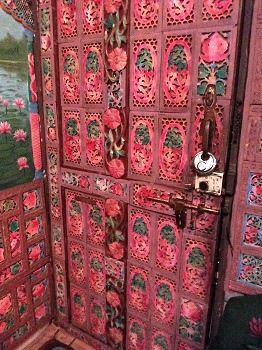
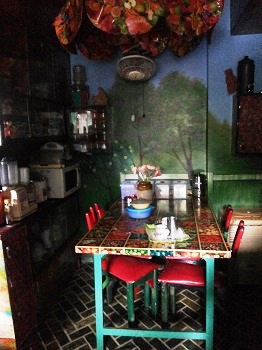
Dr Neela JamkhedkarActually, everything about the house is themed – the bedroom’s theme is ‘Khajuraho’, the living room is a ‘Kashmiri shikara’ (see pic above), the kitchen is a ‘garden’ and the music studio they own on a lower floor is ‘cave’ themed. Says Dr Neela Pimparkhede Jamkhedkar, (61, in pic on left), whose idea the house’s design is, “When we purchased the house and studio about 10 years ago, we had little money left over to get the interiors of the house done with furniture and all the fixings. Besides, I had always wanted to decorate the house my own way.”

Neela’s idea of decorating the house was simple – decide on a theme per room, then look for items she already possessed and which could be put to use, and lastly, go sourcing for items she would need. “You will be amazed at the amount of things every house has, things which are no longer usable but which we can manipulate and use as something else. I got a lot of such items together – an old painting of a woman I had done, urns and murtis I had brought from my maternal home, and even sheets of cardboard that were just lying about.”

Getting down to work

Chor Bazaar became Neela’s favourite go-to refuge for things she could buy. “My husband and I would do the rounds of the place, and I picked up so many beautiful, ornate things there,” she says, pointing to the sliding door that closes off the living room from the passage, and the front door of the house. “See how beautiful these doors are. I got them at not over Rs 2,000 per door at the time. Then I got them home and made my carpenter work on them to create the designs I wanted.”

She also sourced several wooden partitions and strips from a local scrap shop, which she would buy at Rs 30 a bag (till the shop owner wised up and demanded an exorbitant amount). Door done up with wooden strips“I had hired a local carpenter, Rampreet, a most patient man who would do exactly as I said. I got him to carve each strip to the design I wanted, and then these were pasted in a pattern (in pic on right).” She even hired a local painter, Nandu, to implement her designs and assist her wherever required – Neela is an accomplished artist on both fabric and canvas.

Chor Bazaar also came to the rescue when Neela wanted knick-knacks and smaller items. “For example, I got a lovely little beer keg for the bar that I created for my husband and son,” she says, showing off the little corner which is adorned with a mural and which holds bottles and a running waterfall. “I also bought a measure of cloth and stitched it myself for the lamp over the dining table. Besides this, I got a small mandir from Satguru’s and created a little puja corner in the bedroom. It is everyone’s favourite space in the house,” Neela says.

Lessons learnt

Neela says that though putting the house together this way took a long while, it gave her the kind of creative satisfaction nothing else could give. “Our house is not expensive, but it has taken a lot of effort and ideation to get it to this stage,” the former Ayurvedic practitioner says.

“The setting up of the house had taken over my mind completely. There were days when we would have no money left over for the cab home after making our purchases. My husband and I once carried giant murtis home in a BEST bus!”

She contends that it is easy to decorate your home yourself, provided you have a clear idea of what you want and the resourcefulness to procure the items you need. “I am always looking for interesting objects that can be put to use. And I make a lot of things at home myself – I have painted entire carpets and put together canvasses too,” says the artist, who has also held exhibitions of her work previously.

“In a city like ours, using every square inch of space is essential. Besides this, one must keep learning all the time,” the senior citizen says. “I learnt to use the Internet so that I could browse different designs and interpret them my way. I look up a lot of Street Art as well. When I’m not painting, I’m designing sarees or strolling through interiors exhibitions. Eight years ago, I got a diploma at JJ School of Art, which honed my skills further. I also plan a different theme for Ganpati each year. Planning and designing my house taught me several things.”

She adds, “I have learnt one thing – the world is a beautiful place and we have to participate in its beauty. If we invest ourselves in beautifying our homes, we will find the kind of happiness that nothing else can give us.”

Dr Neela Jamkhedkar is open to conducting a paid tour of her home and explaining the various ideas she has used in designing it. If you want to see her house and get design inputs for your own home, write to editor@themetrognome.in and we will facilitate the interaction.

Categories
Campaign

‘My father could act normal when he wanted to…’

Writer Jacqueline Marcell writes a piece on caring for her Alzheimer’s-afflicted father and what caregivers of Alzheimer’s patients should know.

JacquelineFor eleven years I pleaded with my ‘challenging’ elderly father to allow a caregiver to help him with my ailing mother, but he always insisted on taking care of her himself. Every caregiver I hired soon sighed in exasperation, “Jacqueline, I just can’t work with your father. His temper is impossible to handle and he’s not going to accept help until he’s on his knees himself.”

When my father’s inability to continue to care for my mother nearly resulted in her death, I stepped in despite his loud protests. It was heart-breaking, as one minute he’d be my loving dad and then some trivial little thing would set him off and he’d call me nasty names and throw me out of the house the next. I took him to several doctors, only to be flabbergasted when he could act completely normal when he needed to.

Finally I stumbled upon a thorough neurologist, specialized in dementia, who put my parents through a battery of blood, neurological, memory tests and P.E.T. scans. After ruling out numerous reversible forms of dementia, such as a B-12 and thyroid deficiency, and evaluating their medications, I was stunned by the diagnosis of Stage One Alzheimer’s in both of my parents – something all their other doctors missed entirely.

What I’d been coping with was the beginning of Alzheimer’s, which starts very intermittently and appears to come and go. I didn’t understand that my father was addicted and trapped in his own engrained bad behavior of a lifetime of screaming and yelling to get his way, but that it was coming out intermittently in inconsistent spurts of irrationality. I also didn’t understand that demented does not mean dumb (a concept not widely appreciated), and that he was still socially adjusted never to show his ‘Hyde’ side to anyone outside the family. Conversely, my mother was as sweet and lovely as she’d always been.

Alzheimer’s makes up 60-80 per cent of all dementias and there’s no stopping the progression, nor is there yet a cure. However, if identified early there are four FDA medications (Aricept, Exelon, Razadyne and Namenda–and many more in clinical trials) that in most people can mask dementia symptoms and keep the patient in the early independent stage longer.

Once my parents were properly treated for the Alzheimer’s, as well as the often-present depression in dementia patients, and then my father’s aggression, I was able to optimize fluid and nutrition with much less resistance. I was also able to manage the rollercoaster of challenging behaviors. Instead of logic and reason, I learned to use distraction and redirection. I capitalized on their long-term memories and instead of arguing the facts, I lived in their realities of the moment. I also learned to just go-with-the-flow and let hurtful comments roll off. And most importantly, I was able to get my father to accept two wonderful live-in caregivers. Then with the tremendous benefit of adult day health care five days a week for my parents and a support group for me, everything finally started to fall into place.

Alzheimer’s disease afflicts more than 5.4 million Americans, but millions go undiagnosed for many years because early warning signs are chalked up to stress and a ‘normal’ part of ageing. Since one out of eight is afflicted with Alzheimer’s by age 65, and nearly half by age 85, healthcare professionals of every specialty should know the 10 Warning Signs of Alzheimer’s and help educate patients and families so everyone can save time, money–and a fortune in Kleenex!

Jacqueline Marcell is the author of Elder Rage, a Book-of-the-Month Club selection receiving 400+ 5-Star Amazon reviews, 50+ endorsements (www.ElderRage.com/review.asp), required reading at numerous universities and considered for a film. Read an excerpt from the book here www.ElderRage.com/samplechapter.asp. She is also an international speaker on Alzheimer’s as well as breast cancer, which she survived after caring for her parents. She also speaks on caregiver stress and illness, and Alzheimer’s being termed ‘Type 3 Diabetes’, the Obesity Epidemic and Sugar Addiction.

(Pictures courtesy Jacqueline Marcell, mashomecare.com. Featured image used for representational purpose only)

Categories
Tech

Sony launches Xperia Z, QX100, QX10 and SmartWatch 2

Here’s a lowdown on the new Sony launches for the Indian market and what their different features mean for users.
by Manik Kakra

Sony today launched its new phone – Xperia Z1, smartphone-attachable lenses – QX100 and QX10, and SmartWatch2.

Sony Xperia Z1_ GroupLet’s first talk about the Xperia Z1. This is Sony’s new flagship model, successor to the Xperia Z. The phone runs on Android 4.2 Jelly Bean, and has a full HD 5-inch screen. Under the hood, there is a quad-core Snapdragon 800 SoC (MSM8974), clocked at 2.2 GHz, along with 2 GB of RAM. One of the USPs of the phone is its 20.7 MP rear camera (f/2.0). It packs in Sony’s G Lens, and has got a BIONZ image processing chip just for the imaging function. There are no keys on the front, as all are onscreen keys, and there’s a 2 MP camera. This water-resistant and dust-proof phone packs 3,000 mAh battery and 16 GB of on-board storage (expandable via microSD).

Other features include Bluetooth 4.0, WiFi, A-GPS, NFC, microUSB port (with MHL), LTE connectivity and DLNA. Available in black, white and purple colours, the Xperia Z1 goes on sale today and is priced at Rs 44,900. Sony has partnered with Vodafone to provide a 3G data bundle. The Xperia Z1 also comes loaded with Sony Jive app, which allows you to have unlimited song downloads and streaming for free, for first six months. Similarly, the Sony LIV app allows you to stream Sony QX10_1movies right on your Xperia device for no cost.

The QX100 and QX10 (in pic on right) are two unique kinds of lenses that could be attached with most smartphones. You can choose to shoot videos and photos on your phone through these lenses, without doing much else. You can also connect these lenses with your smartphone using WiFi or NFC. The QX100 sports a 20.2 MP CMOS sensor, with keys for dedicated controls like zoom and shutter release. The lens can do 3.6x optical zoom, too. The QX10 has got an 18.2 MP sensor, which can do 10x optical zoom. While the QX100 costs Rs 24,990, the QX10 is priced at Rs 12,990, and both hit the market today.

sw2-one-touch-smartwatch2Last but not the least, the Sony SmartWatch2. This is a water-resistant NFC-enabled watch that can be paired with your smartphone or tablet to give you notifications and allow you to message from your watch instantly. Sony claimed that there are already a few dedicated apps for this smartwatch, and they expect to see the number rising soon. It sort of works as a second screen to your main device, at least for a few functions. The watch is equipped with a 1.6-inch (220 x 176) screen and USB port. It goes on sale starting next month, and will be available for Rs 14,990.

What do you think of Sony’s newest offerings? Tell us in the comments section below.

Categories
Campaign

Why dementia awareness matters

It strikes elders and its progress is often silent. But one can live a quality life even with the disease.
by Echoing Healthy Ageing, Mumbai

September 21 is World Alzheimer’s day. Alzheimer’s is a type of dementia. There are about 3.7 million people in India living with Alzheimer’s or other type of dementias. While there are over 100 different types of dementia. Alzheimer’s disease is the most common type of dementia.

‘Dementia’ is a term that the doctor uses when someone has a number of problems with thinking and remembering. A sufferer of dementia typically faces problems that interfere with his or her ability to do things that they used to be able to manage in the past. Dementia mainly affects people over the age of 65 and the likelihood of the disease occurring increases with age.

Dealing with dementiaThe disease is incurable and progressive. A person with dementia slowly loses the ability to do things. The life expectancy of a person with dementia is unpredictable, and the disease can progress for up to around 10 years. The person who has it cannot control it.

Dementia can have a devastating effect on the person who has it, and on their family. Because it attacks the brain, it slowly leaves people lacking the ability to understand the world around them in the way they used to be able to. This is very difficult for people to properly understand and so the person with dementia is continuously asked to do things that they either struggle with, or that their brain can no longer do. This obviously leads to frustration, anger and often depression. A person with dementia will often retreat into themselves, or become enraged and inconsolable, until just a shell of the original person can be seen. Like a person drowning in deep water, the person with dementia will get tired and either sink under or scream and shout. These responses are usually thought to just be symptoms of Dementia, but actually it is people’s response to being interacted with in a way that does not take their brain damage properly into account.

How does one deal with it?

While there is no medicine, dementia-sensitive care can make an enormous difference. Dementia doesn’t have to be distressing – the person with dementia can have a fantastic life, and their family can have great relationships with them. It is crucial to help the person experiencing dementia to maintain control over as many areas of their life as possible, and encourage them to maximise their remaining abiilities. It is important to remember that the person with dementia has not lost their reason, instead they have lost the ability to process information, which is what we keep asking them to do.

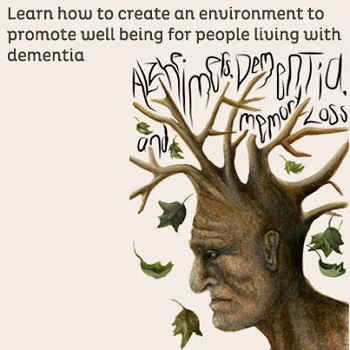
All is not lost for a person struck by dementia – it is possible to lead a good quality life provided sufficient and appropriate care is provided to the person, and his or her condition and behaviour is seen in the context of the disorder. We at EHA have organised a seminar, ‘Dementia Sense’, which will provide insights on persons living with dementia and provide guidelines to create an environment that promotes well being for people living with dementia. (See details below). The approach to the disease cannot be a neutral, common sense one – when we use common sense around dementia, our strategies fail because we are not understanding the world from the person with dementia.

About the seminar:

The ‘Dementia Sense’ seminar will take place from September 19 to 21, 2013 and will give practical solutions to how to interact with one of the fastest growing epidemics in the world. Call Echoing Healthy Aging on 91586 56665 for venue details. Registration cost is Rs 499. Log on to www.echoinghealthyageing.com for more information. The speaker for the seminar is Shanta Gyanchand, a specialist dementia care wellbeing consultant and a UK-trained psychotherapist.

The Metrognome supports Alzheimer’s Awareness Month all through September 2013. Tell us about your organisation’s/individual efforts to fight this deadly disease and we will feature your story.

(Pictures courtesy EHA, www.thehindu.com)

Categories
Tech

Just in: Samsung Galaxy Note 3 and Galaxy Gear smartwatch

Today, Samsung launched the Galaxy Note 3 and Galaxy Gear smartwatch devices in India. Read on for a quick review.
by Manik Kakra

Samsung launched two new devices in India today – Galaxy Note 3 and Galaxy Gear smartwatch.

First, let’s talk a bit about the Android 4.3-powered Note 3. Unveiled at the recently-concluded IFA 2013, the Note 3 boasts a 5.7-inch Super AMOLED screen, with size almost identical to the Note II, but slimmer. The phablet is powered by an octa-core  Exynos (quad-core 1.9 GHz A15 + quad-core 1.3 GHz A7) chipset, along with 3 GB of RAM.

Accompanied by a stylus (S Pen), the Note 3, just like its predecessor, comes with a host of S-features, some of which are based on the use of stylus. Connectivity-wise, there is Bluetooth 4.0, NFC, WiFi a/b/g/n/ac, DLNA, microUSB +(MHL). Its back sports a 13 MP camera that can shoot full HD videos as well as 4K videos at 30 FPS. The front side has got a 2 MP camera that can also do HD videos. A part of Samsung’s S-features, the cameras can do duals-shoot, meaning you can shoot from both the camera in a single video simultaneously. The Note 3 is equipped with 3,200 mAh battery, and 32 GB and 64 GB of on-baord storage options (expandable via microSD card).

Samsung had previously made the phablet to be pre-ordered for Rs 2,000. The device comes in black, white, and pink colour options. Samsung has priced the Note 3 at Rs 49,900 (32 GB) at the launch, along with a data bundle for Vodafone users.

Galaxy Gear smartwatchComing to the Galaxy Gear smartwatch, this is a connected watch that sports a 1.6-inch Super AMOLED for showing all the notifications and some other bits while it’s connected to your Galaxy device. As of now, you can only pair one to a select few Galaxy devices, and get all the supported data right from your wrist. It is also equipped with a 1.9 MP camera on its strap, and a built-in speaker. What else, this watch has got voice control and a Twitter app, too (sixty pre-loaed apps). Weighing about 2.6 ounces, the watch has is powered by a single core 800 MHz SoC, and has got 315 mAh battery and 4 GB of internal storage space.

A few functions it is capable of includes showing missed calls, messages, email alerts, and instant messaging. Once connected with your supported device, you can check your contacts, messages, emails, etc. right from the watch. The smartwatch has been priced at Rs 22,990.

Which of these devices would you buy? Tell us in the comments section below.

Exit mobile version