Categories
Learn

Marathi B.Ed syllabus for visually challenged in Maharashtra

The announcement was made on the All India Flag Day for the Blind; State Governor pledged support for all initiatives.
by The Editors | editor@themetrognome.in

The National Association for the Blind (NAB), today organised the All India Flag Day for the Blind in Mumbai, and during the launch, Rameshwar Kalantari, President, NAB, announced that soon, B.Ed syllabus would be available for study in the Marathi language as well.

Kalantari said, “Every year, students who are visually challenged and who speak Marathi are forced to study for their B.Ed degree in English or Hindi, because textbooks and course material is not available in Marathi. This also deters a lot of visually challenged candidates from opting for B.Ed studies. A lot of students have been taking their degrees from other universities in outside States. Many of them are not able to afford the costs of studying outside Maharashtra.

Keeping this in mind, and the fact that the syllabus has recently changed, we will be offering B.Ed in the Marathi language for the first time in the State, through the Yashwantrao Chavan University and funds for the visually-challenged allotted by the Central Government.” The degree will be available to visually challenged students from the new academic year 2014-2015.

On the sidelines of this announcement, Maharashtra Governor K Sankaranarayanan pledged his support to the cause of increasing awareness of eye donations. “India has the most numbers of visually challenged people in the world. At the same time, the numbers of people pledging their eyes must increase,” he said.

Categories
Big story

State to award Rs 3,00,000 to rape survivors

Government decides to award a minimum of Rs 2,00,000 to survivors of rape and acid attacks, apart from medical expenses.
by The Editors | editor@themetrognome.in

The recent gangrape of a young photojournalist inside Shakti Mills in Mumbai has spurred the Maharashtra State Government to take measures to both fast-track the dispensing of justice and compensation for those affected by sex crimes. In a cabinet meeting yesterday, the State Government decided to award a minimum sum of Rs 2,00,000 as compensation to victims of rape (women and children), sexual assault and acid attacks.

Apart from this, a sum of Rs 50,000 will also be awarded for medical expenses and a separate corpus will take care of the victim’s rehabilitation and counselling both during and after the course of treatment.

The initiative, titled ‘Manodhairya Yojana’ will come into force from October 2, 3013. The funds will be provided by the State Government as of now, and if need be, funds will be solicited from the Central Government’s schemes for women and children.

What do you think of this initiative? Is it enough or not sufficient to help those affected by sex crimes and other violence? Tell us in the comments section below.

Categories
Tech

The dope on the new iPhones

Apple’s long-awaited iPhone event is done, and here’s what you need to know about the two new iPhones they launched.
by Manik Kakra

The iPhone event was expected to give two new iPhones – iPhone 5S and iPhone 5C. Apple’s new phones will obviously run on its new OS, iOS 7. The OS will be available for iPhone 4, iPhone 4S, and iPhone 5 from September 18, and a little later for iPad and iPod Touch (5th Generation) users. We will cover the OS when it’s out for consumers, but right now, let’s talk what these two new phones have in store for us.

Both the phones have a 4-inch (1136 x 640) screen, and are equipped with Bluetooth 4.0, WiFi a/b/g/n, 3G, and 4G LTE.

iPhone5C-iPhone 5C: Many people were expecting Apple to come out with a cheap model, which was basically due to the ‘C’ in the name. Turns out, this phone is Apple’s first attempt where colours are given some attention. We have seen iPods in loads of colours, and now we have an iPhone that comes in blue, green, pink, white and yellow.

The phone has a polycarbonate (a type of plastic material) body, and has the same internal metallic structure like the iPhone 5, which is no longer available. The hardware inside is pretty much the same as the iPhone 5 – A6 processor, 8 MP camera, and 1.2 MP front camera. The company’s main focus here is on the colour options. Maybe that ‘C’ stands for ‘colour’, and Apple now wants to expand its iPhone portfolio in a different direction.

While the phone will be available on contract, starting September 20, $99 for 16 GB, $199 for 32 GB, there is no official word on its launch in India, but it is expected to cost somewhere around Rs. 37,000 for 16 GB.

iPhone 5S: This is Apple’s new flagship phone. This new iPhone is the first smartphone that comes with 64-bit architecture. What this means is, there’s more raw power, and apps can iPhone5s_now be built on 64-bit platform to run even more smoothly. Powered by A7 SoC, the new iPhone is expected to be more powerful on the graphical side and visual effects.

Also, the iPhone 5S comes with M7 motion co-processor. What it does is, it takes all the load from gyroscope, proximity sensor and accelerometer. So, the co-processor will hopefully make battery last longer without having to put a lot of load on the main SoC.

Another thing the iphone5S brings to the table is the TouchID fingerprint sensor. There is a fingerprint sensor right on the Home button, so you have to press the button with your finger (which has previously registered in the phone), and it will get unlocked. You can change the Touch ID from Settings – a very interesting move from Apple.

Apple has also done quite a few things with the camera. The phone comes with a 1.2 MP front-facing camera, and a better 8 MP (ƒ/2.2) camera, and there’s a lot more in the interface part. You can now shoot 1080p videos at 30FPS, and 720p videos in 120 FPS. Thanks to the dual LED flash on the back, the phone automatically processes the colour temperature, and takes a shot according to light conditions. There are also Burst mode, Panorama mode, and addition of five element lenses in the camera app.

The iPhone 5S comes in Champagne Gold, Space Grey, and white and silver colour options. On contract, it starts from $199 for 16 GB, and goes to $399 for 64 GB. Again, there is no official word on its Indian availability or price.

Apple has also made the iPhone 4S (8 GB) free on contract, along with discontinuing the production of the iPhone 5. Apart from these, Apple also announced shell cases for the iPhone 5C, which cost $29, and the iPhone 5S, which cost $39. These shells are available in black, blue, brown, yellow, and white.

What are your thoughts on the new iPhones? Tell us in the comments section below.

(Feature image courtesy arstechnica.com)

Categories
Deal with it

A second home for our seniors

Mumbai gets first assisted living facility for senior citizens at Nala Sopara, under the aegis of the Silver Innings Foundation.
by the Editors | editor@themetrognome.in

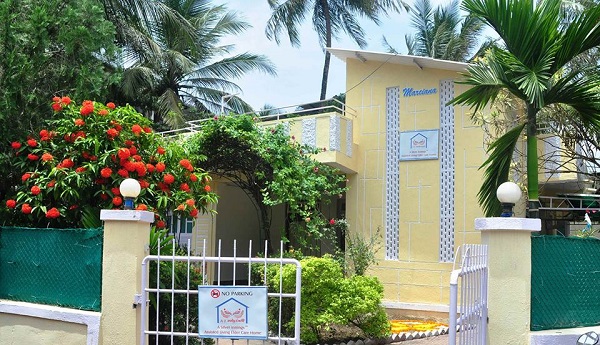
Walkway leading to the houseLast weekend, we made the trip to A1 Snehanjali, an assisted living facility for senior citizens at Nala Sopara. At that point, it seemed difficult to believe that anybody would send their aged parents so far away from the city; the facility itself is about four kilometres away from the railway station.

But once we got there, we saw why not just their families, but the senior citizens themselves would like to give Snehanjali a try. Located inside a villa on a chowk that is in close proximity to a school, a market and a hospital, the place is not cut off from the rest of the area and is well-equipped to both house and handle residents.

“We were very clear that we are not opening an old age home. This is a space for assisted living,” says Sailesh Mishra of Silver Innings Foundation, which has started A1 Snehanjali. “People don’t need old age homes, which are essentially dumping grounds for our elders. They need services which may be both short term and long term. For instance, some people need to travel for a few weeks and need their parents to be taken care of. Or they may be based abroad but would want their parents to have medical attention and to be monitored. Many times we blame families for sending their elders away, but at times, they have no choice.”

Why assisted living matters

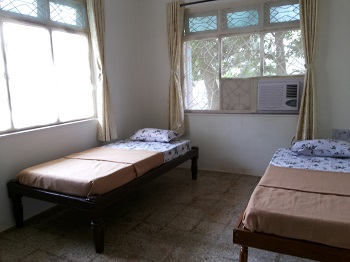
For a city that has hardly any facilities for senior citizens, an experiment like A1 Snehanjali is a worthwhile one. “There are five bedrooms, and we areBedrooms at Snehanjali able to take in only 13 people at the moment. There are several applications, but we select the residents carefully,” explains Sailesh. “We are trying to ensure that the space is interactive, and that it feels like home.” He adds that the selection process includes rejecting applications where it is clear that the family is banishing the elder from the home, or if the person needs daily nursing.

Silver Innings has tried very hard to make the space a welcoming one. Walking surfaces are provided in the compound, with specially-paved areas and lawns for residents to walk on barefoot. Flowers, herbs and vegetables have also been planted; the produce is to be used in the kitchens. “We provide vegetarian food, low on salt and spices, but once a month, a resident may eat non-vegetarian food brought from home,” Sailesh says. On-site medical facilities are available round the clock.

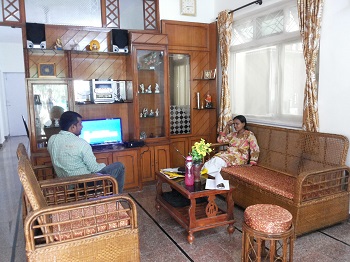
About seven CCTV cameras monitor the premises constantly, and the gates are always locked. “Those suffering from dementia or Alzheimer’s have the tendency to wander,” Sailesh explains. “We have to keep them occupied, so we have TV and recreation roomplanned daily activities that they can be a part of if they wish to. Otherwise, they can watch television or listen to music or simply stay in their rooms.” Sundays is a day of eating whatever the residents wish, and they are permitted visitors on any day of the week. “We don’t have a lights-off rule and in fact, there are no rules for residents,” says Sailesh.

Who can make the cut

The NGO is very clear on who can be admitted. “We meet the person only through a referral, to gauge the need to send the person to us in the first place. We take in people who are suffering from Parkinson’s, Alzheimer’s, those bed-ridden by paralysis but not needing constant nursing, and people over 80 with mobility issues,” he says. But people suffering from TB and AIDS are not admitted as of now.

“There is a Rights of Residents charter that must be signed. We insist on families visiting them once a month, or if they can’t, we’ve provided Skype too. Besides this, we allow the residents to network outside with the local community. The idea is to let the resident have a good life here.”

If you want to know more about A1 Snehanjali and if you think you should send an older family member there, contact Sailesh Mishra on silverinnings@gmail.com or a1snehanjali@gmail.com.

Categories
Do

The sound of music…in Mumbai

Lower Parel’s got a world-class contemporary music school at Sun Mill Compound recently. Mumbai musicians, get your groove on now!
by The Editors | editor@themetrognome.in

It’s a bright red building with a purple signage, in the heart of the bustling market area on Lower Parel (west). The cacophony of the various chaiwallahs and various sandwich stalls and paanwallahs sets the mood for the area, a space where offices jostle for space with Hanuman temples, and where everybody moves quickly through tiny lanes, since there’s not much place to dawdle.

So the True School of Music (TSM) comes as a bit of a shock in these dreary surroundings, and not just because of its violently red exterior. On the inside, the 15,000 square feet of space is sunny (the central courtyard being lit by natural light through skylights), plush and completely world class. TSM was formally inaugurated last week on September 5, Teachers Day, by its founders, renowned music composer Ashutosh Phatak and sound engineer Nitin Chandy.

Ashutosh Phatak, Founder, TSMThe duo decided to start the first-of-its-kind music facility “to educate everybody in music.” Ashutosh (in pic on left) explains, “We want to provide music education of the highest calibre, and at a fraction of the cost that one would incur if one took admission to a music school abroad. We’ve already got over 30 students enrolled and we’re raring to go. We want to discover, educate and empower people in music with the skills necessary in their music careers.”

What’s so special?

For starters, TSM is set up in association with the Manhattan School of Music, the Academy of Contemporary Music (UK) and the Trinity College of Music, London. Besides, the school has “employed some of the world’s best professional tutors and claims that all graduates will be given professional placements.

“We got the facility done in three months, and there are two schools within it – the Foundation School and the Professional School,” Ashutosh explains. “The Professional School will feature five Western instruments (keyboards, bass, guitar, drums and vocals) as well as music production, composition, DJ and live sound engineering. Whereas, the Foundation School will have the same five Western instruments plus the five Indian instruments of tabla, sitar, flute, harmonium and vocals,” he adds.

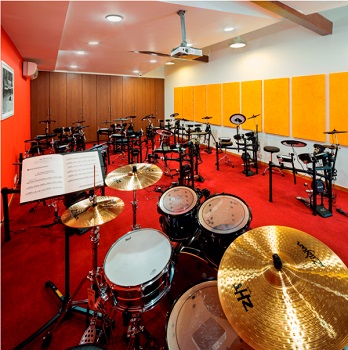
There are classrooms, practice rooms, jam rooms, a recording studio and a world-class auditorium on the premises, for a well-rounded musical experience. “TSM will give employers like clubs, filmmakers, ad agencies and production houses the luxury to choose from a wider range of talent in music,” Ashutosh says.

If you want to know more about the courses TSM offers, log on to www.trueschool.in. You can also take a tour of the facilities till September 12, 2013. TSM is located at Sun Mill Compound, near Lower Parel station (West), close to the Hanuman temple. Classes begin from September 23, 2013.

(Pictures courtesy TSM)

Categories
Wellness

Be kind to your tummy this season

It’s the time to make merry, even as your digestive system cries for help. Read on for some natural remedies.
by Sharad Panjwani

painful tummyMinutes after you finish your meal, you experience mild aches or heaviness in your stomach. You may even experience flatulence, and though it is not a condition that seriously affects your life, it is irritating and sometimes embarrassing.

Too often we rely on OTC drugs and quick fixes when dealing with random stomach pains or even long-term digestive issues. But with natural remedies, you can say goodbye to your digestive maladies and you won’t suffer any side effects either. Says general practitioner Dr Vaibhav Shetty, “People tend to ignore conditions like flatulence or stomach pains and bloating after meals. They feel that it isn’t something serious – but even if it is not serious, it should not happen at all. Many times, wrong eating habits, or eating the wrong foods, or even a sedentary lifestyle may cause digestive problems.”

Pay attention to any changes in your body’s responses to food, drink and lifestyle, Dr Shetty says. “Our digestive system normally rings the first alarm bell in response to deeper issues. Ignoring a problem only makes it worse,” he says.

But natural remedy practitioners believe that treatments begin at home. “Our ancestors knew what they were doing when they used herbs, flowers, leaves and roots in medicine,” says holistic practitioner Deepali Udhas. “There are many herbs that can treat our digestive ailments simply and without causing harmful side-effects.”

Herbal infusions: These are extremely useful for those suffering from gas and bloating. They absorb the extra gases arising in the intestines during digestion, calm the stomach and lemon teaalso remove toxins from the blood. Those suffering from irritable bowel syndrome and intestinal infections can benefit from infusions of lemon, basil, ginger, peppermint and chamomile. Simply steep for 10 minutes in hot water, strain and drink at least twice a day, generally an hour after meals.

If your problem is a chronic one, you might have to take a supplement comprising the herbs triphala and guggul twice a day, apart from taking a herbal infusion.

Candida in the digestive tract: Candidiasis, if left unchecked, can cause havoc with your digestion. Though it is not very serious, it can be difficult to control, especially with a poor diet.

Instantly eliminate sugar from your diet, even sugars from fruit such as chikoos and mangoes. Yes, this can be tough in this season, when everybody’s making and offering you sweets, but in the long run, your system will only thank you for resisting sugar. Stay away even from honey and sweeteners.

Cleanse your system with a cup of green tea first thing in the morning. After every meal, chew on fennel seeds and drink a glass of warm water. If you have been suffering painful stools, it is a good idea to stay away from processed foods altogether, as also red meat and egg yolk. Try a stomach cleanse treatment from a recommended Ayurvedic or panchkarma practitioner.

yoghurt for gut healthSuperfoods that help: Following a practice of eating a cup of yoghurt with every meal will go a long way in alleviating your digestive problems. Avoid mixing sugar or salt in your yoghurt when you eat it. For those with loose motions connected to drinking milk or eating processed foods, a bowl of yoghurt on an empty stomach will calm the system to a great extent and help digestion.

Also add a dash of lemon juice to your sabzi or even your morning omelette – the enzymes in lemon break down toxins in the system and aid digestion. Other foods to help digestion are onions, garlic, flax seeds, papaya, pineapple, pumpkin seeds, cabbage, oily fish, leafy vegetables and steamed broccoli.

Keep your kidneys happy: Doctors recommend that a glass of warm water first thing in the morning revs up the kidneys to start working efficiently. If you can, try and eliminate sugar from your first cup of tea or coffee of the day – sugar makes the kidneys work harder. Also try cutting down your intake of salt for the same reason. The best way to keep your kidneys working well is to drink lots of water throughout the day and not hold the urine in for more than a few minutes after you feel the urge to use the restroom.

Exercise: Even a brisk walk will eliminate toxins from the body through sweat. Every morning, before the sun rays become too harsh, go for a brisk walk after drinking a glass of warm water to which is added the juice of one lemon and a teaspoon of honey. Not only will this drink attack the fat cells in the abdomen area, combined with physical activity, it will get your brisk walkingsystem up and running for the meals that are to come later in the day. After every meal, take a short leisurely walk so that your digestive system doesn’t become sluggish.

Do not sleep on a full or empty stomach: The number of hours that we sleep, our timings, and whether we sleep right after a meal, all determine how our food will get digested.

Ideally, you should sleep two hours or later than the time you have your dinner. After you wake up, you should consume breakfast within an hour. Putting too much food into your stomach or eating too little or too late can all disturb your digestive rhythms. Not paying attention to these details will cause gases to develop in the stomach.

Stay happy: Research has shown a direct link between a person’s mood and his or her appetite and digestion. Try to remain calm even under stressful situations, and never take work home. Your meal times should not see you stressed or anxious, because it causes the system to slow down. Switch off your phone when you’re eating, hang out with positive people that make you laugh, or if you are alone during meal times, read a good book or listen to peppy music.

Have a question? Want a diet plan for the season? Write to us at editor@themetrognome.in or in the comments section below, and we’ll get your query answered by a doctor.

 (Pictures courtesy www.divavillage.com, www.ectopic.org.uk, juliequilts.blogspot.com, www.thehindu.com)

Exit mobile version