Categories
Tech

What’s happening at IFA?

The ongoing Internationale Funkausstellung Berlin trade fair has seen a lot of launches. Here’s a lowdown on all that mattered.
by Manik Kakra

The ongoing IFA trade fair, which is being held from September 6 to 11 this year at Berlin, has revealed a few good things. Here’s presenting a few:

SAMSUNG   

Note 3Note 3: We already knew Samsung’s new Note (see pic on left) is going to be unveiled at IFA, and so it was. Running Android 4.3 Jelly Bean, the Note 3 features a 5.7-inch SAMOLED full HD screen, but its size is almost same to the Note II (5.5-inch screen) thanks to that slim bezel. This Samsung device is powered by 2.3 GHz quad-core Snapdragon 800 chipset (having Adreno 330 GPU) or Samsung’s own 1.9 GHz Exynos octa-core chipset –depending on your market – along with, not 2 GB, but 3 GB of RAM. That’s beefy, right?

On the back, there is a 13 MP camera with dual LED flash, capable of recording full HD videos (60 FPS), while the front boasts a 2 MP camera. Other features include WiFi a/b/g/n/ac, Bluetooth 4.0, A-GPS, and microUSB 3.0, yes, it has 3.0, not 2.0. The phone comes in 32 GB and 64 GB storage options (expandable via microSD), and 3,200 mAh battery. The phone is expected to be launched in a number of markets, including India, within the next two months.

Galaxy Gear smartwatch: Wearable tech is suddenly becoming mainstream news. We have seen quite a few smartwatches (Sony Smartwatch and Pebble) and leaks from various companies. Samsung, too, has come up with one (see pic on right). The Galaxy gear smartwatch is a watch that can wirelessly connect with your tablet or smartphone to give you instant information. This watch Galaxy Gear smartwatchfeatures a 1.63-inch SAMOLED screen, and can be paired with Samsung’s Note 3, Note II, SIII and S4. It gives you notifications right on your palm, so you don’t have to whip out your phone every time. Other functionalities could be detailed once the product is on sale and gets some apps as well.

Note 10.1  2014 Edition: This was probably the least exciting launch from Samsung. The tablet looks a lot like the previous 10.1 tablet, and there isn’t too much to talk about Android on tablets right now. It is powered by the same 1.9 GHz Exynos SoC with 3 GB of RAM. The screen is SAMOLED with a resolution of 2560×1600. Coming in 16 GB, 32 GB and 64 GB variants, this tablet features an 8 MP rear camera, and 2 MP front-facing camera.

SONY

Xperia Z1: This was yet another smartphone, information about which leaked before the event, and was eagerly awaited by many. The Sony Xperia Z1 runs on Android 4.2, and is powered by the last Snapdragon 800 quad-core chipset, along with 2 GB of RAM. This water-resistant and dust-proof smartphone features a 5-inch full HD TFT screen, and a 207 MP camera (Exmor RS), which is really the USP of this device. It would be interesting to see how it performs as compared to other flagship smartphones from this year.

QX100 and QX10: These are two detachable lenses that can be attached with your iPhone and Android phone. While the QX100 has a 1-inch 20.2 MP Exmor RS sensor, the QX10 has got .2-inch 18.2 MP. Both have Bluetooth and NF connectivity options. Sony has also released their Sdk for better support and uses. We have seen a few such attempts, but not much from a phone company. Would you like a separate lens to get much more out of your smartphone, for those crisp images?

4_SmartWatch_2_Xperia_Z_1Smartwatch 2: Sony’s original Smartwatch didn’t get too many good reviews, but the Smartwatch 2 might just change that. With a 1.6-inch LCD, fully water-proof, the company promises 3 to 4 days of battery life. Connectivity-wise, there is Bluetooth, NFC, and microUSB.

Lenovo Vibe X: This phone sports a 5-inch HD screen, and with its polycarbonate material looks quite different from what we have seen from the Chinese giant so far. Powered by MediaTek’s quad-core chipset and 2 GB of RAM, this Lenovo phone runs on Android 4.2 Jelly Bean. We are still not sure if this phone would make it to other markets.

Toshiba Encore 8.1 Tablet: In a bid to compete against the iPad mini, Toshiba is launching its new Windows 8.1 tablet – Encore. Featuring an 8-inch (1200 x 800) screen, the tablet has got the usual Windows 8 plus new functionalities. Under the hood, there is Intel’s new Bay Trail Atom chip, this tablet does seem competitive as we have not seen many Windows tablets in this form factor.

What are your thoughts so far on what’s being unveiled at IFA? Is it a hit or miss? Anything more you were expecting? Tell us in the comments section below.

(Featured image courtesy Reuters)
Categories
Overdose

In God we trust

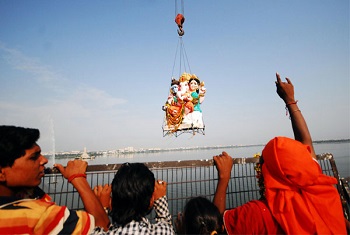
Do you know what Ganeshotsav really means? Or what the immersion ritual means? When were you going to find out?
Jatin Sharmaby Jatin Sharma

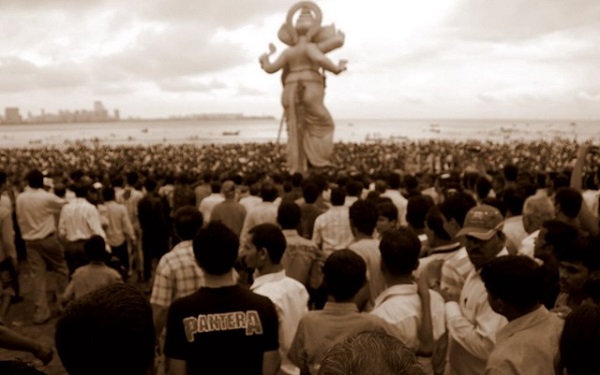
The day when Mumbai turns into a fanatic for its favourite God is here. Ganeshotsav kicks off today.

The 10-day Ganeshotsav is Mumbai’s biggest festival, or as I like to call it, Mumbai’s biggest event where the whole city is immersed in the celebrations. From pandals on every corner of the street to houses in different societies setting up Ganesha statues, Ganeshotsav is one big celebration that can’t be missed. To put it succinctly, Mumbai waits for this festival to come all year long, and turns into a very different creature during this festival.

But with each passing year, there is one question that crosses my mind: Are we still only about the festivals that we celebrate?

I am afraid to answer this question because I don’t find any celebrations nowadays that only pertain to God. I see commercialisation, politicisation and vandalisation associated with every festival. I see people who, rather than playing Ganesha songs and propagating His teachings, play songs about Sheilas and Munnis.

The younger generations have always asked their elders – Why do we celebrate so many festivals? The answer to that is, we were a farmer society and a society that believed in values, and that our festivals were the right way to instill those cultural values in us. But with every passing year, whether it is Ganeshotsav, Holi, Navratri or any other festival, it has become more about our convenience rather than our culture. We want to celebrate, but on our terms.

For example, during Ganeshotsav, it is believed that Ganesha visits Earth and stays with us for 10 days. In those 10 days, we are supposed to make him feel welcome. Do our Bollywood item songs make for good welcome songs? Again, the immersion is a symbolic send-off to the God, where it is believed that He takes our misfortunes with Him. How many of us even know about this? Instead of seeing Him off with respect and sombre devotion, we send Him on his way with songs blaring out of loudspeakers. And that’s not all, because we seeing off Ganeshadon’t know the prayers and the mantras we need to chant when we worship Him or see Him off, we play recorded CDs that do the job for us. Even when someone else chants the prayers for us, we still don’t bother to find out what the words mean or learn them.

I am not going all Right-wing here and demanding that you must believe in God. I just feel that you should do things only because you believe in doing them, not because you want to show off or prove a point to someone.

Not many know what the word ‘Ganapati’ means. ‘Gana’ means ‘community’ and ‘pati’ means ‘the head’. The legends of Ganesha always talk about being prosperous in the real sense of the word, and spreading happiness no matter what. But all these years, I have been seeing that the festival has just turned into an event where people get drunk and are least interested in maintaining the sanctity of the elephant God. They play loudspeakers that blast out music and hurt birds and animals, that ruin any chances that students may have of studying in a quiet environment. Then there are the pandals themselves, which take up half the road and harm people’s commutes. Why can’t a celebration be complete nowadays without disrupting normal life and societal norms?

Let’s celebrate the festival the way it is supposed to be celebrated – with love and respect for human beings and the environment, with the involvement of the community and while focussing on what’s most important, Lord Ganesha. Since He is also known as the God of Wisdom, my only prayer for him this year is that he showers us with wisdom, since we’ve all forgotten what His festival is all about.

Jatin Sharma is a media professional who does not want to grow up, because if he grows up, he will be like everybody else.

(Pictures courtesy full2faltu.wordpress.com, postnoon.com)

Categories
Beauty

Banish those dark circles

Don’t let ugly dark circles ruin your good looks. Try these tricks to let your eyes really do the talking.
by Deepa Mistry

With stress and bad lifestyle choices taking a toll on our skin, it is but natural that dark circles appear under our eyes and refuse to go away. Add to that the fact that most of us don’t get as much sleep or good nutrition as we need, and dark circles become a permanent bane.

remove dark circlesBut don’t let those ugly dark circles tarnish your beautiful looks. We all go that extra mile to get rid of them with tons of makeup, but there are simple ways to get rid of them.

The bony structure of the skull into which eyes are deeply set can develop shadows, typically called ‘dark circles’. They are caused due to a variety of reasons; heredity is a big reason, or they can happen to people who are born with thinner skins under their eyes. Fatigue, shortage of sleep, shortage of essential nutrients, sinus problems, hormonal imbalances as a result of menstruation, pregnancy or menopause are some other reasons. Age is also a factor.

If you suffer from dark circles, try these remedies:

– Grate some raw potato and soak a cotton ball in the potato juice. Close your eyes and place these cotton balls on your eyes. Make sure they cover the dark circles under your eyes as well as the eyelids. Leave them on for 10 minutes and wash off with cold water. Similarly, cucumber is a very good astringent and skin toner. Follow the same procedure with cucumber.

– Excessive smoking and drinking cause dark circles, so cut down on these habits.

– Cotton balls dipped in rose water and placed on the eyes and left for some time may cure or remove dark circles.

– Almond oil has been a time-tested remedy for dark circles. Apply a paste of almonds mixed with milk on the dark area on the affected area before going to bed, and wash it off with cold water the next morning. Alternatively, apply almond oil before you sleep for a few days till you see visible results. This will lighten up your skin.

– Application of cold tea bags on the affected eyes and leaving them on for a few minutes is an effective way of removing dark circles.tea bags over eyes

– Vitamin C and iron are known to be essential food supplements for removing dark circles. Try applying a cream rich in Vitamin E and C for reducing under-eye circles.

– Apply a paste of crushed mint leaves under your eyes and leave on for 10 to 15 minutes. Wash off gently. This will relax your eyes.

– Wash your eyes with cold water at regular intervals, this will help soothe them. It also cleanses the eyes.

– Lemon juice, orange lentil flour, puree of tomato and turmeric paste when blended and applied on the eyes and left for 15 minutes is a very good remedy for dark circles.

If beautiful eyes top your wish list, we hope these home remedies will work wonders for you.

(Pictures courtesy www.eternesseclinic.com, www.beautyhows.com, darkcirclesguide.com)

Categories
Enough said

Saluting a young girl’s courage

It isn’t easy to stand up to a politically well-connected Indian godman, but Asaram Bapu’s victim has shown tremendous grit.
Humra Quraishiby Humra Quraishi

What a lot of news has been capturing our attention in the last few days! Narendra Modi being nailed by his own men. Zubin Mehta’s concert in Kashmir in jeopardy. The Indian Rupee bouncing back a bit after the appointment of a new RBI Governor. And of course, other items of interest, such as daily rising inflation, scams and yet more rapes…

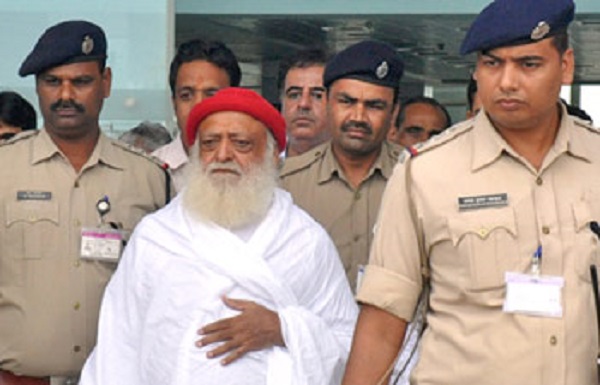
But what has gripped the nation the most is the recent arrest of self-styled godman Asaram Bapu, who is facing charges of sexual assault of a 15-year-old girl. And though he evaded arrest for a while and was later caught, what remained constant throughout was how tenaciously the victim stuck to her story.

Initial details of the case have revealed strong traces of perversion and an almost sickening level of lust in Asaram’s several alleged sexual encounters. As well-connected as he is, it took sustained media pressure and queries from the general public about the delay in his arrest to finally get the Government machinery to act against him. And this is why it is important to applaud his teenaged victim, the girl who had the grit to not just give details of his misdeeds with her.

It is not easy to go to a police station and give a written complaint of this nature. Such a complaint is accompanied by the most intrusive and insensitive of questions – ‘Who raped/molested? How? When? How much? Where are the injuries? Who are you? What does your family do? What is your private life like?’

And so on.

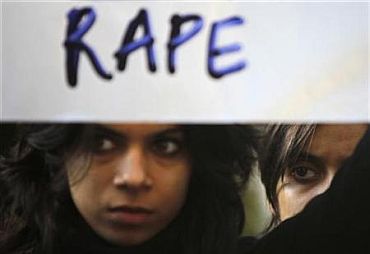
It must be utterly traumatic, after already having undergone a severe trauma, to then be asked to narrate details about one’s own rape, then undergo medical tests and face severe media speak out against sex offencesfocus. But this girl and her family have gone through all this bravely, without the slightest trace of fear. I hope that the Government deems it fit to provide her and her family with protection, because who knows what might happen next?

After Asaram’s arrest, it seems worthwhile to once again believe in the adage, ‘Truth does prevail’. There will be several obstacles till the girl finally gets justice, but the truth does hold out.

Humra Quraishi is a senior political journalist based in Gurgaon. She is the author of Kashmir: The Untold Story and co-author of Simply Khushwant.

(Pictures courtesy indiatoday.intoday.in, www.rediff.com) 

Categories
Cinema@100

“Storytelling can’t only be about men”

Scriptwriter Shibani Bathija speaks about women being under-represented in the film industry, and why they should be taken note of.
by Salil Jayakar

As an ex-journalist who largely covered the Entertainment (films, fashion, Bollywood, society/ Page 3) beat for several years, I’ve had my share of so-called stars throwing tantrums and the Page 3 regulars doing their best to be featured. So, it came as a surprise when a well known Page 3 regular (who once politely reminded me that he was a businessman first) called and asked if I’d be interested in meeting, and featuring Shibani Bathija.

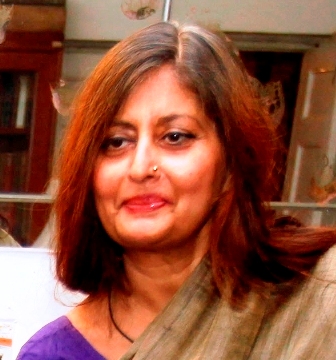
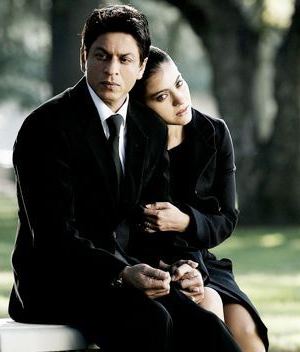
shibani bathija Of course, I said yes. Shibani was then, in a sense, the hottest new kid on the block who had two back-to-back releases with two of India’s biggest production houses – Yash Raj Films and Dharma – no mean feat for a scriptwriter, and a woman at that. Shibani’s debut film Fanaa – the Aamir Khan-Kajol starrer – released in May 2006 was already a success. Karan Johar’s Kabhi Alvida Na Kehna (KANK) released in July and was a critical and commercial success as well. But her biggest hit was the Shah Rukh Khan-Kajol starrer My Name Is Khan (MNIK) in 2010 that broke several box-office records both in India and abroad.

I first met Shibani right after Fanaa released, at Worli, Mumbai (she was writing/working from a friend’s flat, if I remember correctly) and spoke to her at length about her “beginner’s luck.” Said Shibani, “I grew up in South Mumbai and I guess I was sort of running away from Hindi cinema but life has come full circle for me. When you write for cinema, you have to have lived life a bit and learnt a few lessons as well. I’ve come to it when I was ready.” When I met her next in 2010, a few months after MNIK released, she was “elated” yet “reflective.”

Fast forward to the present day and Shibani admits that while “Dharma is like home”, scripting a story for Bollywood is no easy task. She prefers to write complex stories as compared to the easy breezy ones. “Frankly, in most films, if ‘prettiness’ was not required as a relief most would do without aMy-Name-is-Khan heroine!” she states. Yet, she has been fortunate to mostly work with producers and directors that are quite gender-neutral when it comes to writers. She admits that there certainly is a great under-representation of women technicians in general.

While strong roles for women are occasional, their portrayal has remained much the same. And not enough stories are being told from a woman’s point of view. “The portrayal of women as characters of importance and substance has decreased in proportion to the increase of violence and violent interpretations of angst in our cinema. Everything else is a domino effect from that. Even the change of sexualisation from sensual to lusty follows that same trajectory,” contends Shibani.

Why focus on women?

But there is hope, yet. In recent years, Hindi cinema has witnessed the rise of several women – from script and dialogue writers to editors and directors – who are constantly raising the bar and holding their own in a largely male bastion. Shibani picks some of her favourites: “There are several and I am sure I am missing a few here but Juhi Chaturvedi’s sparkling dialogue in Vicky Donor, Zoya Akhtar and Farah Khan for being clear sighted and true to their beliefs in their films, Deepa Bhatia (documentaries and editing) and PS Bharati (all of Rakeysh Mehra’s films) come to mind. My favourite off late has hands down been Gauri Shinde’s English Vinglish, both from the writing and directing point of view!”

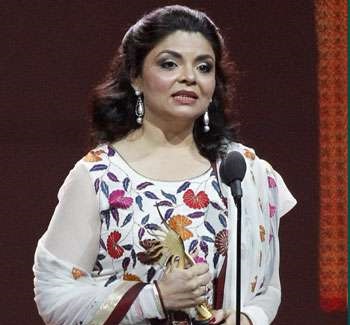
Accepting an IIFA award in 2011Shibani stresses that it is important for women in films to have a body of work instead of just one-offs that will be remembered. “I have particularly enjoyed Sai Paranjape’s work and Aparna Sen’s as well. Mira Nair and Deepa Mehta in the English language. Mostly because they have managed bodies of work. We might like some films more than others, but how many women have managed to consistently make their voices heard?” she asks.

As Indian cinema celebrates its centenary year, Shibani hopes that women are seen and heard more, not only as actors but also as producers and directors, scriptwriters and technicians who continue to tell stories that have not been told before. “I hope that we, as an industry, don’t forget that our forte is story telling and telling a good story can’t only be about a man. No man is an island and women aren’t set dressing. There will be greater success for all if more well-rounded and innovative stories can be told,” she sums up.

(Pictures courtesy www.firstpost.com, www.hindustantimes.com, www.sfsu.edu)

Categories
Guest writer

Why should I keep a constant vigil?

The conclusion to yesterday’s ‘rape calculator’ story comes with a question to ponder on: is constant vigilance a viable option?
by Adithi Muralidhar

Part II  (Read Part I)

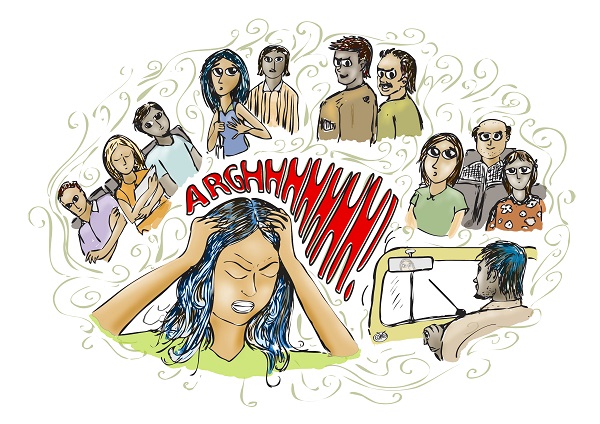
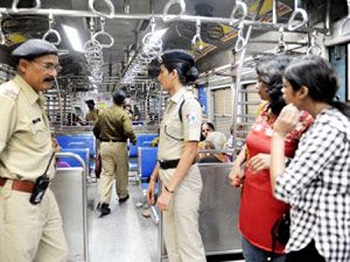
There are a few things that run in my mind, on a daily basis 24/7. It is something that I tend to keep myself aware of, at all times. And then I think, there might be so many like me…we sex pests in Mumbaihave these thoughts constantly guiding our every move while we take on our daily duties, be it at work, college, home or anywhere. We make important decisions at work, we are creative, we calculate and do other math, we manage households, we are caregivers, we love, we run businesses, we teach kids, we treat patients, we sing and dance, we manage accounts and finances, we travel and study, write and act…and then we deal with male chauvinism and family matters, and all this we do when something apart from our body functions (like breathing) is continuously working inside of us.

All the points listed in my previous post – these are things that most girls come to learn either on their own or are taught. It, of course, very subjective and depends on the individual girl and how violated she feels if something happens to her. Some women are the kind who would probably do everything opposite to what is listed, either because they are much more brave, or just to prove a point to society that it is not her problem to tackle such issues, which is as valid a stance that can be! While others can be the non-confrontational kind; and they will go to any lengths to avoid or prevent such incidences from happening. In fact, they may do so to such an extent that it would lead to putting themselves in a permanent state of discomfort. Similar efforts are also made by women who are maybe under peer pressure and worry constantly about society and “log kya sochenge”, and tend to just go with what is considered ‘good Indian girl’ behaviour.

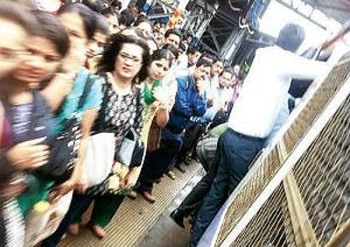
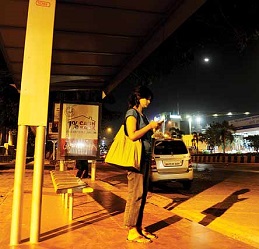
unsafe mumbaiAnd then I think of those unfortunate incidences where the terrible act of rape occurs and I cannot help but think – ‘Oh, was it because she let down her guard for one moment? Was it because for five minutes, she was carefree and forgot to do her calculations correctly, or worse, was she so preoccupied with some other ‘really important’ work, that she let the calculator’s battery run low for a while…and what a terrible consequence she had to face! Imagine, carrying that weight around your head the whole time.’ What does a mother go through? She not only has that calculator set for herself, but she also has it set for her daughter(s). Every time she says – “Yes, you can go to the party, but be careful. Yes, but please be back home by midnight. Yes, but please get dropped home by a guy. Call me when you reach there…” she is doing all those calculations in her mind.

Why does a woman even have to be worried about these things in the first place? Isn’t it enough that they already have to deal with other kinds of inequalities and oppression in society? The worse thing is that most people think, ‘What can you do, this is how it is. This is normal.’

Well, it is not. No one deserves to live a life like this. Constant vigilance can drive a person insane. Previously, the scientific community viewed vigilance as something that is mentally undemanding. But recent studies in psychology tell us otherwise.

“… physiological and subjective reports confirm that vigilance tasks reduce task engagement and increase distress and that these changes rise with increased task difficulty”.

(Warm, Parasuraman & Matthews, 2008, p. 433)

The authors of the above paper of course extend their conclusion to occupations that involved being constantly vigilant, like being involved in military surveillance, air traffic mumbai by nightcontrol, cockpit monitoring, seaboard navigation, quality control, long-distance driving, and agricultural inspection tasks, etc. But having to constantly worry about what you do requires a high amount of energy, even though it seems that women have been and are doing this effortlessly (and unfortunately, innately) for ages.

Also, many psychologists are of the opinion that the impact of chronic stressors are usually ignored and are in reality much more insidious than even the extreme (non-chronic) stress symptoms. There have been studies on gender differences in stress and many studies report that women have been found to have more chronic stress than men. In fact, there are studies that even explore gender specific stressors for women – like violence, sexist discrimination, etc. – all of which can be detrimental to their physical and mental health.

Coming back to the real question – why should we even be doing this? I have to admit that it would be idealistic to think that I can keep my guard down in today’s society (be it in Mumbai, or be it any town in India or even in the world). Personally, I am not willing to take the risk. So what would I prefer? Keeping all those antennae alive and ticking seems like the only option right now. Is it okay? No. It is not OKAY. I just have my hopes set on the fact that education and more awareness among people will help to change the society for better and such crimes against women would eventually stop one day.

Till then, my calculator beeps on.

Adithi Muralidhar currently works in the field of science education research, in Mumbai. Apart from that, she works in areas related to environment and sustainability and also has a keen interest in social issues. 

(Pictures courtesy www.mumbaimirror.com, www.indiatvnews.com. Sketch courtesy Manoj Nair. Adithi has referenced ‘Matud, M.P. (2004). Gender differences in stress and coping styles. Personality and Individual Differences Vol 37(7), pp 1401–1415’ and ‘Warm, J.S., Parasuraman, R., and Matthews, G. (2008). Vigilance Requires Hard Mental Work and Is Stressful. Human Factors, Vol. 50, No. 3, June 2008, pp. 433–441’ for the writing of this story)

Exit mobile version