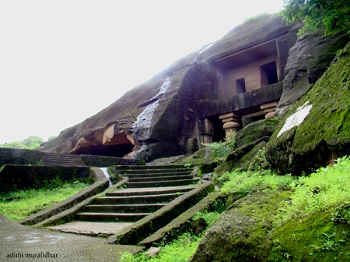
Categories
Diaries

An office in the middle of a forest: CEC

This might be one of the coolest office spaces in Mumbai – CEC in Goregaon is located in the wilderness!
by Adithi Muralidhar

Part 4 of the ‘Green Hangouts’ diaries

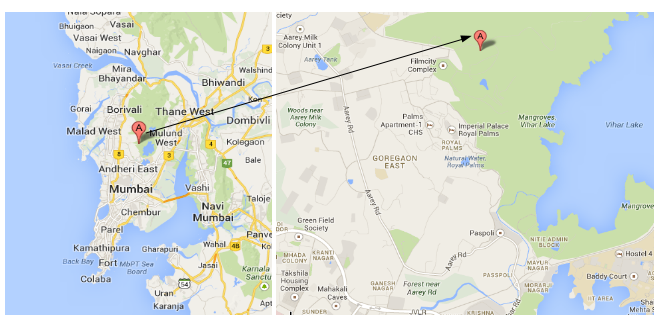
The education wing of the Bombay Natural History Society (BNHS) is located in the wilderness that lies between Sanjay Gandhi National Park and Film city, Goregaon. The Conservation Education Center (CEC) is situated in a 33-acre spread of forest which also includes some nature trails. If you live in the western suburbs, particularly close to Goregaon, CEC could become your regular weekend retreat.
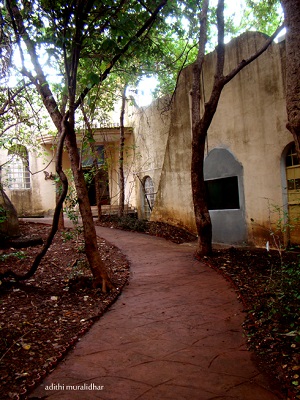
CEC-2-AdithiWhat’s so special? When one makes their way into Film City, you will come across the sets of various saas-bahu serials, and you might think, where the hell is this CEC? Thanks to the film crew, a fair amount of rubbish can be seen strewn on the roads. But once you go past the last cluster of film sets that appear after the signboard that says ‘BNHS 450 m’, you see some beautiful forests and hear some amazing bird calls. And right there, in the midst of the forest lies this somewhat old building hidden well in the thickets of the canopy. A gate that says BNHS-CECBeware of Leopards, welcomes you.

Staffed with just a handful of people, CEC might be one of the coolest offices (in terms of the location) in Mumbai. During one of my recent visits to CEC, a friend of mine who works there showed me a carcass of dog on a tree that was right outside the CEC office building. The neighbourhood friendly leopard had made her way this side of the forest with a happy meal (of the dog) but then left it halfway for reasons unknown. And yes, leopards are common to this area, with sightings restricted usually to dawn, dusk and night times. They tend to steer clear of human beings and are not sighted very often.

Lots to see and hear. But the summer season apparently yields wonderful sightings of spotted deer, barking deer and wild boars who visit the water bodies near CEC to quench their thirst.  And it is during this season that the ever-elusive thirsty leopards let down their guard and come to the water hole.

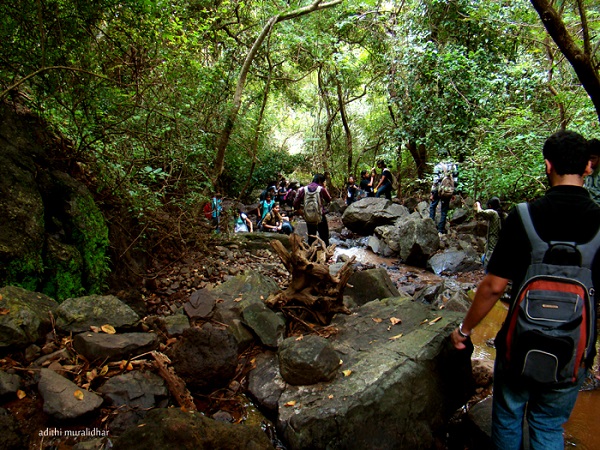
It is a wonderful place to learn about butterflies and birds. Apart from this, the forests that surround CEC are a treasure trove of insects!  During the monsoons, there is a crisscross of streams that run through the forests which is an absolute delight!

Since the Centre’s main aim is to spread awareness among the masses, they have a wide range of programmes that cater to children, youngsters and families. If you also are very cecparticular about going green in your respective offices, CEC has customised programmes and workshops for corporates, too. On some occasions, CEC also organize night camps at their base, and the opportunities to witness “nightlife” in the jungle, whilst in the city is a rare thing! I would definitely recommend that everybody visits this beautiful forest.
CEC celebrated its 20th birthday this year and hopes are set on it becoming a permanent attraction at Film City. Over the years, CEC has made sure that the area surrounding it has remained green and vibrant with wildlife. It is our duty as Mumbaikars to help CEC maintain this thriving habitat.

Getting there: The nearest railway station to CEC is Goregaon (Western line) and the nearest bus stop is Film City. The CEC office is open from 9.30 am to 5.30 pm, Monday through Friday. But depending on the season, there are sometimes weekend programmes at CEC. You can keep yourself updated by checking here: http://www.bnhs.org/education-mainmenu/upcoming-programs-cec.html

Adithi Muralidhar currently works in the field of science education research, in Mumbai. She is associated with Hypnale Research Station where she assists with various environment, wildlife conservation, education and community-related projects. She is a strong advocate of nature education.

Green hangouts is a series of stories celebrating Mumbai’s place in the green scheme of things, to coincide with Wildlife Week, which is celebrated from October 1 to 7 every year. 

(Pictures by Adithi Muralidhar. The author would like to thank Amandeep Kaur, education officer at CEC, for her inputs in writing this piece.)
Categories
Cinema@100

‘My son will never be the same again…’

An old interview with Sunil Dutt sheds light on his agony over his son’s arrest and the ‘desh drohi’ tag.
by Humra Quraishi

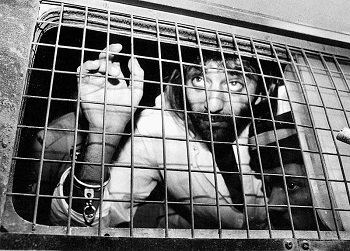
Sanjay Dutt is home on furlough from his two-year stint in jail in the 1993 Bombay blasts case. As I read the news, I reflected on an interview I had done with his father, the late actor and MP Sunil Dutt, who had spoken in heartbroken detail about his son’s arrest and how his entire family was branded as ‘anti-national’.

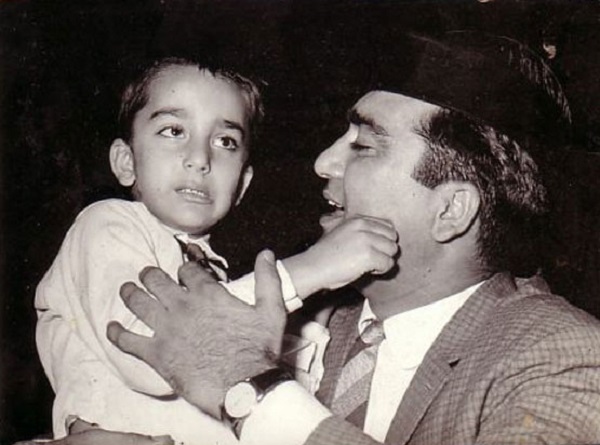
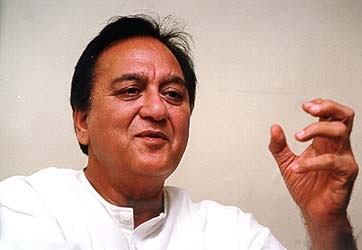
Sunil DuttIt wasn’t easy getting him for an interview. I caught up with him in Delhi after he had joined the Congress party. I took an appointment and reached his official bungalow at Safdarjung Lane; the interview time was set after several weeks of calling his office. He would be busy on the weekdays and travel to Bombay on the weekends.

I sat in a bare drawing room whose only adornment was a series of framed photographs on the wall, 33 of them, to be exact. There were pictures of Sunil Dutt with Nargis, with his children and grandchildren, with the three generations of the Gandhis, with Mother Teresa, with President Ronald Reagan, with Jimmy Carter, with jawans at the border, and of Nargis receiving awards at various functions.

Dutt sahib turned up after an hour, and so did Raj Babbar, who tried to muscle in on the interview by quipping about this and that periodically. Finally, after several hints had been dropped, he took his leave and I could speak to Sunil Dutt at length.

Excerpts from the interview:

Have you recovered from the trauma of your son Sanjay being imprisoned for 19 days under TADA?

It’s been extremely shocking for us and I don’t think we’ll ever recover from it. At times I keep thinking that this is what we have got in return for all that we did for the country. You go punishing a person who is yet to be proved guilty and whose family did everything for the Motherland.

Why do you think that TADA charges were slapped on Sanjay, though your lawyers said it was an arms offence case?Sanjay Dutt

I shouldn’t say anything about this, at this stage for the case is going on at the Bombay High Court. Also, anything I say can be played up by some vested interests.

God forbid, if rioting happens in Mumbai again, would you play an active role in relief efforts? (He had earlier been accused of minority appeasement)

Of course, I would.

And your son?

My son has changed after all this…I think he will never be the same ever again. During these riots, he’d really worked hard trying to provide every possible assistance to the riot victims, but now he says to me, “Papa, I will never do any social work.” See how sad it is…

It has been proved that he had an unlicensed gun with him. Why did he keep it? Why did he try to dump it so mysteriously?

Again I will not comment on this as the matter is subjudice. I am of the belief that if he has committted a mistake, then the law should take its own course. But don’t come up with filthy allegations against us. Don’t call us ‘Pakistani agents’ or ‘desh drohis’.

How did it feel to be labelled like this?

(eyes moistening) You can imagine how I felt. Wherever I would go, even the peons at the lawyers’ chambers said to my face, “Desh drohi aa raha hai (The traitor is coming).” Once my daughters went out shopping and told me that the moment they stepped into a shop, there was a minute’s silence and then the rest of the shoppers starting filing out of the shop.

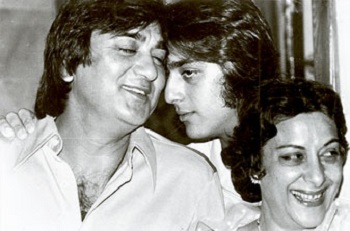
Sunil, Sanjay, NargisEven my dead wife was dragged into all this. I heard people say that Sanjay’s mother was a Muslim. I replied that you could slam Sanjay and me as much as you wanted, but at least spare the dead. Or at least remember Nargis for the work she did for spastic people, for the blind. She never worked on religious grounds. At least look at what we’ve done for the country. During the two Wars, we went to the border areas to meet the jawans and in those days, in 1962, even when we were financially hard up, I donated one lakh rupees for the PM’s relief fund. I am ready to do anything for the country.

Whom did you approach for help when your son was arrested?

Everybody possible.

Yet it took him 19 days to be released.

Yes.

Which friends stood by you in that crisis?

Foremost, the people of my country. And certain individuals from the Congress, the BJP and from the film industry. From the Congress, it was VC Shukla, Rajesh Pilot, Pranab Mukherjee, Arjun Singh and Jagdish Tytler. From the BJP, it was Shatrughan Sinha and Jaswant Singh. From the Janata Party it was Sharad  Yadav. From the film industry, it was Dilip Kumar, Rajendra Kumar, Pran saab.

What about the rest of the film industry?

The rest labelled Sanju guilty even before the courts could do so.

Suppose you were not an MP and not so well-connected. Do you think it would be tougher for you and Sanju? 

Not really, for we were not spared the trauma of Sanju’s mother’s religion being brought up. But there are still some strong secular forces in the country which alone can stop this decay. In Bombay these secular forces saved the city from what could have been a huge disaster.

Your destiny has been rather tough on you…

I suppose one has to fight on, to go on with life. Right from my childhood it has been a struggle, but what happened to my son I couldn’t ever dream of. But these are tests of life.

What have you done to halt these allegations against you and your family?

I have told myself that time alone will show and tell people the truth. Where did I have the time to prove our innocence? During all these crises, I had been sleeping for barely two hours a night. I would get up by 4 am and be out by 5 am, to meet lawyers. When my home was being searched by the police for a full two days, I wasn’t even at home. All the searches were conducted in my absence.

(Pictures courtesy bollywoodfamily.blogspot.com, www.hindustantimes.com, www.outlookindia.com)

Categories
Diaries

Seeing colours at the jetty

Sewri Jetty may not be picturesque, but the ‘flying visitors’ to the area make it a hell of a spot.
by Adithi Muralidhar

Part 3 of the ‘Green Hangouts’ diaries

Sewri-This isn’t exactly a “green” place…but the colours of nature offered here pretty much compensate for the lack of green in the area. The Sewri jetty might come across as a dirty, icky place to visit, but this area harbours a unique type of habitat called the ‘mudflats’. Mudflats are basically coastal wetlands that are formed when mud, silt, animal detritus and clay are deposited by tides or rivers. Since most of the mudflats lie within the inter-tidal zone, they are exposed twice a day based on the tide timings.

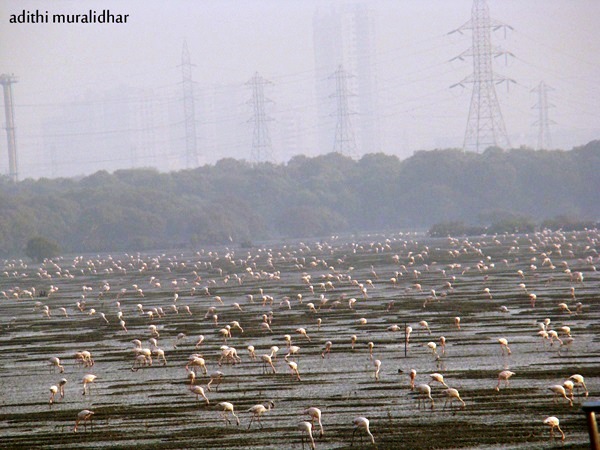
Flamingo city: The Sewri bay has become a hangout for thousands of flamingos that arrive here in the month of October and stay till the March of the next year. Commonly known as the ‘Flamingo fest’, these migrants attract thousands of nature lovers to Sewri each year. Every year, around 15,000 flamingos come to Sewri. I have personally experienced how the sky turns pink because of the flying flamingos.

Apart from these majestic pink-feathered beauties, one can even find a large number of waders in the area – close to 30 species! Around 40 per cent of all bird species recorded in Mumbai have been sighted at the Sewri Bay. The regular winter visitors include Herons, Egrets, Plovers, Curlew, Whimbrel, Godwits, Sandpipers, Gulls, Terns, Ibis, etc.

It is particularly important that this place gets ‘noticed’, since it faces several immediate threats. Apart from the fact that the area is heavily polluted with discharge from the nearby industries, imminent infrastructure projects can lead to habitat destruction. So, if not for a retreat, I would urge Mumbaikars to just go and experience the sheer joy of watching 15,000 pink birds docking at the mudflats, a few months of every year, feasting away to glory !

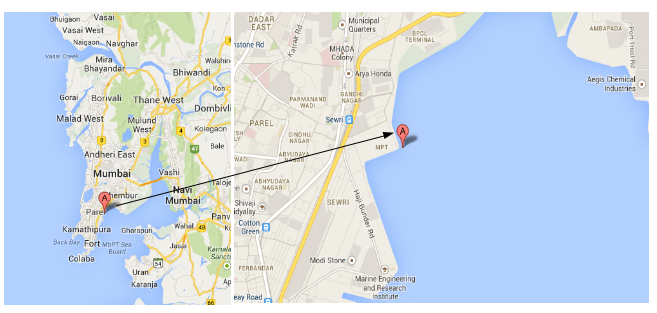
Getting there: The place is fairly easy to reach. It is a walking distance from Sewri station. TheNearest railway station to Sewri Jetty is Sewri Station (Harbour line)sewri

But a heads-up to all you girls – go in groups. It is not the safest of places to be going alone or in pairs. A lot of trucks are parked on the road and at times, you may come across some shady characters on that stretch of road. But I would say it is relatively safe as many people are aware that the flamingos attract thousands of visitors, so you might even find the locals there helping you find your way to the jetty. Also, make sure you have a good pair of binoculars on you when you go here. During the low tide, the flamingos can be as close as 20 feet from you…but it is better to keep a decent pair of binoculars handy in case you want to get a better look.

Adithi Muralidhar currently works in the field of science education research, in Mumbai. She is associated with Hypnale Research Station where she assists with various environment, wildlife conservation, education and community-related projects. She is a strong advocate of nature education.

Green hangouts is a series of stories celebrating Mumbai’s place in the green scheme of things, to coincide with Wildlife Week, which is celebrated from October 1 to 7 every year. 

(Pictures by Adithi Muralidhar. Reference: http://www.kolkatabirds.com/sewriclist.htm)

Categories
Guest writer

How deep is Mumbai’s depression?

A psychologist explains how a city’s vibrancy and aura of success can be the very basis for depression among citizens.
by Devashri Prabhu

Mumbai is life personified…it is active, zingy, kicking and full of energy. Even when the world sleeps at night, Mumbai is awake and alive. It crawls, runs, jumps, does a jig or two but never stops. It instills hope in you, it hugs you when you feel alone, it smiles with you and it helps you fall in love with life all over again.

You just cannot not ‘live’ when you are here – at least that was what I felt when I came to Mumbai. Then my journey with psychology took me to such corners of the city that showed me a complete different side of the life in this city. I saw people who had given up all the hope to live, all thanks to the wounds that this city inflicted on them, some physical and some emotional.

How can a city so alive be depressed?

emotional disconnectNo, this just can’t be – I revolted. Nobody can give up on living just like that and too in my city, Mumbai! But the truth spoke in numbers – Mumbai does fare badly when it comes to depression. There is a palpable feeling of helplessness in the city which leads us to what we know as ‘depression’.

The city has even prompted many people to end their lives drastically. The most recent example of this was the suicide of young actress Jiah Khan. Whatever her reasons may be, the frantic beat of the city poured a strange loneliness into her, which probably could not be cured even by love. Be it a housewife in a suburb trying to balance the needs of her husband, children on one hand and her personal dreams on the other, or a share broker who had just promised his son a new toy car that he saw in a upmarket toy shop or a struggling starlet, or the model who is trying hard to gain a foothold in the city of dreams, all of them have one thing in common – they all have felt the frustration while fulfilling their everyday goals and functions. This frustration, when it becomes too hard to handle, put a person into depression.

How depressed is Mumbai?

It turns out that depression is striking the city in several deadly ways. During my internship trial at the same clinic, a young girl of 14 to 15 years of age, who had just come to Mumbai – new and fresh and with lot of dreams – was depressed, and the reason was this very city. The city spoke to her in a very different language, a language she could not understand. She soon felt out of place – even among her friends. She felt all alone even when surrounded by her very own family.

Soon she started seeing only faults in herself, while the fault was not totally hers. Thus started the long dark journey towards depression, with an attitude that said, “This is the end of it, depressionI cannot take it any more because I cannot do anything about it.” The ‘I’ loses faith and finally the ‘I’ is crushed and becomes non-existent. The life that we were gifted becomes a burden, a burden so heavy that some people prefer death over it.

The question is: Does anything have so much power over the choices we make, that we choose death rather than facing life? A web definition of depression goes: ‘Clinical depression (also known as a major depressive disorder) is a complex condition marked by sustained instances of a depressed mood and loss of interest in life. It differs from having a depressed mood in that a major depressive disorder lasts for more than two weeks, evolving into a mental illness.’

Besides getting a medical help here are certain simple things that you must do when you feel depressed:

– TALK or SHARE:  Talk to someone who has a positivity around him or her. Just talk it out. Your friends will understand you. Go to a friend, hang out with him/her, chill for some time, let yourself loose.

– LOVE YOURSELF: Be Geet from the movie Jab We Met. It’s okay to indulge in yourself completely once a while. You have to stand in front of mirror and say that you love yourself dearly, thank the whole of your being  for just ‘existing’. Stay away from self-pity.

– ACTION: Bring some action in your life. Dance, jog, run, do yoga or whatever activity that suits you. A little spring in your step makes a difference to your mood.

– AFFIRMATIONS: Fight negative thoughts. Fight against them, and give them a hell of a fight. In reality, they are nothing but little packets of irrational fears, that are created to destroy your developing self. Just start every thought with ‘I can…’ and fill the blanks with your wishes and dreams and believe in them. ‘Faith’, one of the most important tools, will help you in this battle.

– NOVELTY: Try things that you have never tried before. The excitement of trying something new gives you a rush, it helps break the monotony of your daily routine. Besides, it might just give you a fresh perspective to life, the one that may move you to a better you.

There is no be-all-end-all way in our life. The city we that we call ours has the power to heal the wounds that we carry with ourselves, just like, our life. The questions that are still unanswered may be because we were searching the wrong cabinet or maybe we are in a situation where our ladder is  at the wrong wall. But so what, it’s never too late for anything in life. Time, after all, has the answers to everything and all we have to do is give time some time!

Devashri Prabhu has a Masters in Psychology and her interests lie in areas like Mental Health, Social Issues and Spirituality.

(Pictures courtesy theviewspaper.net, she.sulekha.com, healthposts.easemyhealth.com)

Categories
Event

World Cerebral Palsy Day observed in Mumbai

Actor Ayushmann Khurana flags off event that sees participation from about 150 CP-afflicted children and 500 adults at Bandra today.
by The Editors | editor@themetrognome.in

A lifelong disability that affects movement and intellectual capability, cerebral palsy (CP) is a complex motor disorder that affects 17 million people across the world. There are 17 million people across the world living with CP. Another 350 million people are closely connected to a child or adult with CP, which is the most common physical disability in childhood. Its impact can range from a weakness in one hand, to almost a complete lack of voluntary movement.

Ayushmann Khurana at the eventWhile there is no permanent cure for the disorder, some efforts can be made to improve the quality of life of people suffering from it. For example, in people with debilitating upper limb spasticity, incessant muscle contractions can be controlled by injecting onabotulinumtoxin, popularly known as ‘Botox’ into the affected muscles, in addition to physical therapy and other rehabilitation measures.

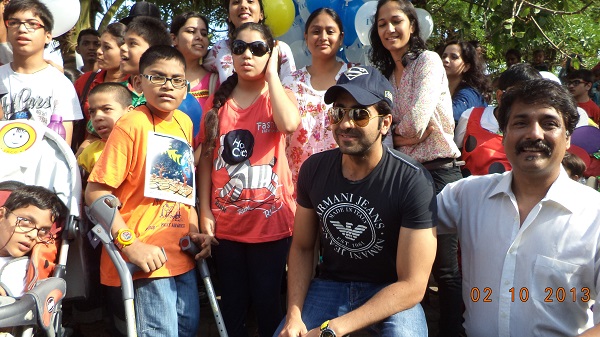
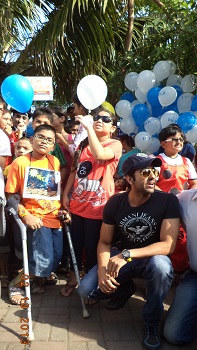
Hundreds of people came together in Mumbai today as part of an initiative to offer support and ideas to differently-abled people and make this world a better place for them. Lending a voice to the initiative was Bollywood actor Ayushmann Khurana, who participated in the programmes organised by the Indian Academy of Cerebral Palsy to mark the World Cerebral Palsy Day today.

As part of the day-long initiative, over 500 adults and 150 children came together to participate and lend support to the DSC02691differently-abled people through words and ideas. The day began with a carnival walk by children, starting from Bandstand and culminating at St Joseph School, Bandra, where the rest of the activities for the day included a trade fair and fun fair. To celebrate academic and vocational success of differently-abled people, awards were also given out in different categories.

“Cerebral Palsy is a very common motor disorder that makes life extremely difficult for those living with it. We need to make the world more sensitive to their needs and conditions and encourage them. Sensitivity comes with awareness and the latter is something which needs to be generated. World Cerebral Palsy day is an initiative to make people living with the disorder feel normal yet special as also it is an effort to make other people aware of their conditions,” said Dr Taral Nagda, Director of Cerebral Palsy clinic at Jupiter and Hinduja Hospital, Mumbai.

(For information on how cord blood can help in the prevention and treatment of cerebral palsy, click on http://www.viacord.com/why-bank)

Categories
Diaries

Borivli’s green retreat: Sanjay Gandhi National Park

Most of us have already been to the SGNP, but the beauty of the Park prompts one to visit again.
by Adithi Muralidhar

Part 2 of the ‘Green Hangouts’ Diaries

If you live in the western suburbs, you’ve probably visited SGNP (Sanjay Gandhi National Park) by now. One of a kind, this national park is unique, in that, it is situated within city limits. Supporting a healthy population of leopards, this national park is also home to over 50 other species of mammals, 155 species of butterflies, 65 species of reptiles and amphibians, 800 species of plants and over 250 species of birds!

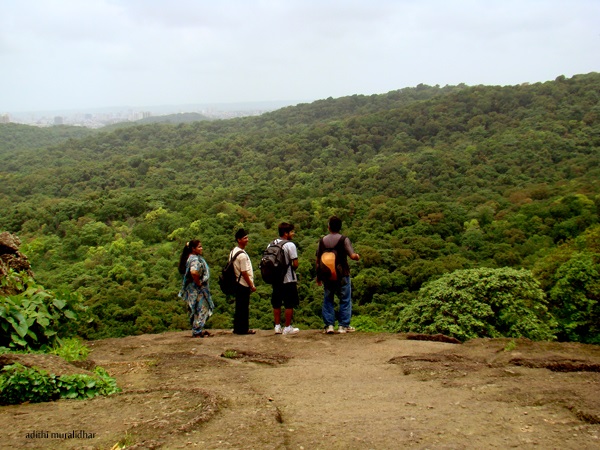
The National Park sprawls over an area of approximately 103 square kilometers but more than half of it constitutes as core area where the general public are not allowed (which is a good thing). The park’s buffer zone has several nature trails like the Kanheri Cave trail, Shilonda trail that are open to the public who want to go hiking, rock-climbing or on a nature trip.

What’s so special? During the monsoons, the entire park sports a bright green shade and one can come across numerous insects and birds even while not attempting to actually look for them! SGNP is frequented by daily joggers and walkers from the nearby residential areas and also by schools who bring their students here for their ‘one-day-picnic’. One can even see the huge settlements of huts that have encroached the park from the borders. For people who are looking for a more ‘touristy’ experience, there are lion and tiger safaris at the Park, but one must realise that these large mammals are not found naturally in this park. Leopards on the other hand are natural inhabitants of this place.

Given the delicate situation with the park especially in terms living in close proximity of the elusive leopards, a project called “MumbaikarsforSGNP” was initiated which is a collaborative effort between the State Forest Department, Centre for Wildlife Studies (CWS) of Bangalore, some members from the scientific community and a few conservationists which include some Mumbaikars. The main idea behind this initiative was to develop an alliance between the citizens of Mumbai and management authorities of the National Park.  They also have tie-ups with the Police Department and Fire brigade departments in order to tackle ‘leopard-emergencies’ more effectively.

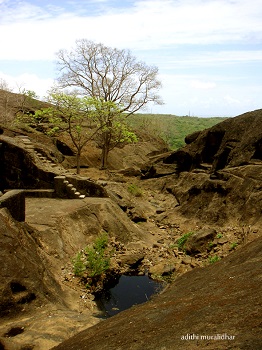
Apart from being close to nature, SGNP also offers the visitor a rich knowledge of history. The Kanheri caves date back to the 3rd Century BC and they offer wonderful insights into theSGNP rich Buddhist culture of those times. The excavations at Kanheri are either chaityagrahas (place of worship of the Buddhist community), viharas (one or double enclosures where the Buddhist monks lived) or the podhis (water cisterns which were build to harvest rain water and use them during summer periods). You are also likely to find some rock-cut benches and /or seats.

SGNP is place for nature lovers, adventure lovers, as well as history lovers, and not to exclude the rest of the general public who just want to get away from the city life for a while!

Entry fees: You can also go to the Nature information Centre at the Park if you are looking for more information on the place. The entry fee for SGNP is as low as Rs 30 for adults and Rs 15 for children below 12 years of age. Additional fees are taken in case you want to take your vehicle till the Kanheri-cave parking area, or if you wish to do commercial photography or videography. The Park is open on all days, from 7.30 am to 6 pm. For more information, see http://www.mumbaikarsforsgnp.com/about_sgnp_information_for_tourists.htm

Getting there: The nearest railway station is Borivli station- East (Western line). The nearest bus stop is the Inter State bus stop (Kulupwadi), Sukarwadi bus stop, Omkar mandir bus stop, Borivli ST bus stand.

Adithi Muralidhar currently works in the field of science education research, in Mumbai. She is associated with Hypnale Research Station where she assists with various environment, wildlife conservation, education and community-related projects. She is a strong advocate of nature education.

Green hangouts is a series of stories celebrating Mumbai’s place in the green scheme of things, to coincide with Wildlife Week, which is celebrated from October 1 to 7 every year. 

(Pictures by Adithi Muralidhar. References: BNHS City Forest Report (2006), Avibase-The World Bird Database, The Archaeological Survey of India (http://asi.nic.in) and http://www.mumbaikarsforsgnp.com/about_sgnp_reports_articles.htm )

Exit mobile version