Categories
Tech

Check your systems for ZeroAccess

A new botnet is getting alarmingly bigger; India reportedly has the third highest numbers of affected users in the world.
by Manik Kakra

New and increasingly more dangerous spywares and viruses making their way to our computer systems is a fairly routine occurrence these days. But these are usually covered by most users either themselves or through a security suite. But, recently, there’s a new botnet in town, called ZeroAccess, which has spread quite rapidly – to about 1.9 million systems counted about a month ago – but not many are aware of this, or know how to tackle it.

Infograph - ZeroAccess BotnetSymantec, in its security blogpost, has issued a statement that it has partnered with several ISPs and even CERT teams to bring down the level of this botnet affecting systems worldwide.

Simply put, if your machine is running this botnet, it could be used to send out spam and active bots to affect more systems. Owing to this threat, it is also believed that many are abusing this botnet for click fraud and Bitcoin mining, meaning that any affected system could be used to generate artificial clicks on a website to improve its page rank, and allow people to earn Bitcoins (a virtual currency) in a similar fashion, respectively. So, yes, a lot of monetary benefit, apart from users’ data access, is at stake.

In fact, this botnet isn’t very new. Believed to be active since 2011, it was during the month of March 2013, that security firm Symantec got some proof of this peer-to-peer botnet. ZeroAccess is primarily maintained by a few individuals with some expertise and who also have some malwares for a better success rate with this botnet.

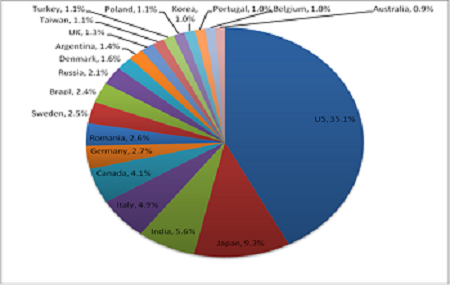
India ranks third among the countries with most users affected by ZeroAccess. India ranks behind Japan and the US, with 5.6 per cent of total affected users. This base of users is image001definitely relevant and needs to be addressed fast.
It’s not at all easy to do away with such command-and-control programmes, resilient botnet, which communicates continuously with its peers, but you can take a few precautions to ensure your system doesn’t get infected by this botnet: Fire up your security software, update it and run to scan the whole system.

Other than that, I would also suggest that you scan your Windows PC, just once, with this small removal tool.

(Picture courtesy betanews.com)
Categories
Diaries

A spot of green at Colaba: Sagar Upvan aka BPT Garden

Most people in the city don’t even know that a green patch of serenity exists next to Colaba bus depot.
by Adithi Muralidhar

Part 1 of the ‘Green Hangouts’ diaries

With a population over 12 million, it can get a little suffocating when a Mumbaikar wants some space for himself. Invariably, the jaded Mumbaikar then seeks to retreat to a nearby hill-station or farm house in the outskirts, where he or she can relax, retreat and get rejuvenated.

If you notice, being close to nature is (very subtly) the basic requirement in such retreats! Well, there is some good news for all Mumbaikars. Khandala, Karjat or Lonavla are not the only destinations for weekend get-aways! You would be happy to know that the city itself harbours several green spaces amidst the urban concrete jungle. This piece explores one such green place in Mumbai, which would surely make you love the city a little bit more (at least, more than you already do!)

Sagar Upvan or Mumbai/Bombay Port Trust Garden aka BPT Garden

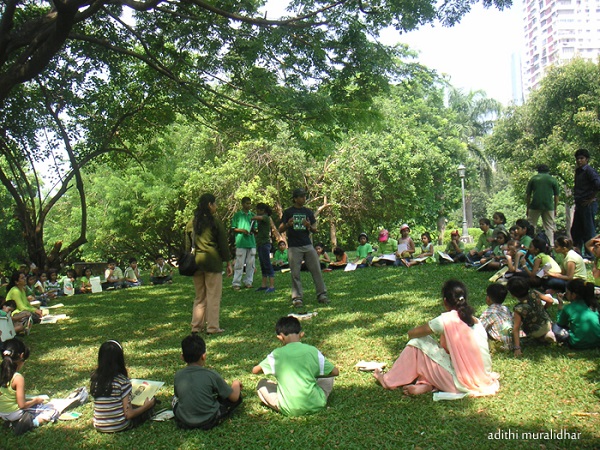
View of the Arabian Sea from BPT GardenA green hangout situated at the tip of South Mumbai, Colaba, the Sagar Upvan is owned by the Mumbai Port Trust and maintained with the help of World Wildlife Fund (WWF), and is truly a nature enthusiast’s delight! Spread over a meagre 12 acres, this garden offers some beautiful sights of the Arabian Sea from one side of the garden.

Beautiful green lawns and mounds, with sea facing benches, under the canopy of samudraphal trees; this tranquil piece of land commendably blocks out all the traffic noises from the outside. The sea breeze that cruises through one edge of the garden fills the air with a salty fresh fragrance. There are neatly paved walking tracks all through the garden and one can lie down in the green lawns if you need to catch up on your sleep!

There are hundreds of plants in the garden with special sections on palm trees, medicinal plants, rock garden and cacti section. The bright green flouresentish leaves and purple flowers of duranta plant attract loads of butterflies. The coppersmith barbets, purple-rumped sunbirds and tailor-birds dominate the avian group, while striped squirrels fumble up and down the trees. Bustling garden lizards and skinks come in your way if you wander into the bushes, but if you sit down in one place and just observe, you will be treated to an array of life that lives within these garden limits.

What else? There is also a sewage recycling plant near the garden that was developed by the MPT management so that there would be no shortage of water supply in the area. Apart from recycling the sewage, the plant also ensures a regular supply of water to the garden.

If you reach early enough, or during the late afternoons, you are likely to find young couples cuddling on the bench that face the sea. Senior citizens take strongly to this garden as their morning walking place. Very often, one even sees school and college students visiting this garden as part of their ‘local-educational-visit’.

While interacting with people, I found that many Mumbaikars did not even know about the existence of such a green patch in the middle of South Mumbai. I myself was introduced to sagar-upvanthis place just a couple of years ago and since then, I have strongly recommended that others visit this park at least once. Those of you who work in South Mumbai can steal away some moments in the day in this garden, as it is well connected by road.

The nominal fee for entering the park is Rs 2 and a camera fee of only Rs10 is charged. The park has free entry for senior citizens.

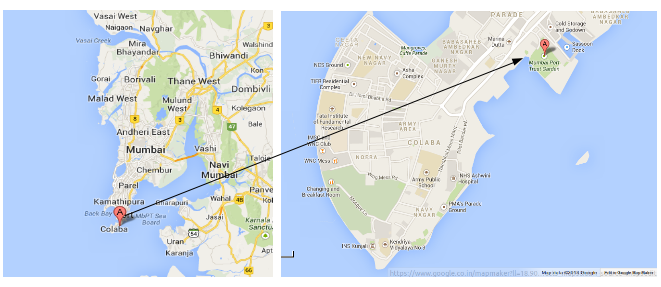
Getting there: The park is located on WG Union Road, beside Colaba Bus Depot. It is open on all days, from 6 am to 11 am; 4.30 pm to 8.30 pm. The nearest railway station is Churchgate (on the Western Line) and CST Station (on the Central Line). The nearest bus stop is Colaba Bus Depot.

Adithi Muralidhar currently works in the field of science education research, in Mumbai. She is associated with Hypnale Research Station where she assists with various environment, wildlife conservation, education and community-related projects. She is a strong advocate of nature education.

Green hangouts is a series of stories celebrating Mumbai’s place in the green scheme of things, to coincide with Wildlife Week, which is celebrated from October 1 to 7 every year. 

(Pictures by Adithi Muralidhar)

Categories
Tech

Preview: LG’s ‘G2’ smartphone

Our tech writer explores LG’s newest offering – the G2 smartphone, which has Power and Volume buttons at the back.
by Manik Kakra

LG has been coming up with a lot of good stuff when it comes to smartphones in the last 18 months or so, and this year they seem to be doing even better. Officially announced about a month back, LG has just launched the new G2 in India. The phone has got a lot to look forward to including its unique button positions. The G2 is more or less the successor to the popular Optimus G without carrying the moniker ‘Optimus’.

G2_Global_Onshot _(B)(1)What’s new? LG’s G2 features a 5.2-inch full HD LCD touchscreen with Corning Gorilla Glass on top, and very thin bezel on the sides. The phone is powered by Qualcomm’s 2.26 GHz Snapdragon 800 SoC, along with 2 GB of RAM. Sporting a 13 MP rear camera (OIS) with some features which LG calls ‘advance’; with Power and Volume buttons on the back, just below the camera. Yes, that’s quite unique. The rear camera can shoot 1080p videos at 60 FPS, while the 2.1 MP front-facing camera can do HD videos. Similar to the Note 3 and S 4, the G2 has also got dual recording to record from both the cameras at the same time. Running on Android 4.2.2 with LG’s own Optimus UI on top, this smartphone boasts 192 KHz 24-bit playback for FLAC and WAV audio files, which isn’t common, but certainly a good news, in phones.

What else? The device is equipped with 3,000 mAh battery and 16 GB or 32 GB of internal storage. Coming as a competitor to Samsung’s Note 3, the phone has got quite a few things different from a usual Android device. LG seems to be banking a lot on this device, and rightly so, looking at the phone, it sure does have a lot going for it. The G2 also features double tap to unlock the screen (seen on quite a lot of older Nokia phones), and guest mode, for when you give your phone to somebody and don’t want them to browse through personal stuff on the phone. Other features include Bluetooth 4.0, 3G, 4G LTE, microUSB 2.0 and NFC.

Colour and cost: Available in black and white colour options, the phone has been launched at an MRP of Rs 41,500 for the 16 GB model and Rs 44,000 for the 32 GB model, where you also get a free Quick View flip cover with your purchase.

Categories
Achieve

Love by candle light

This visually-challenged man won over a sighted woman and together, they run a candle-making business that employs other blind people.
by Vrushali Lad

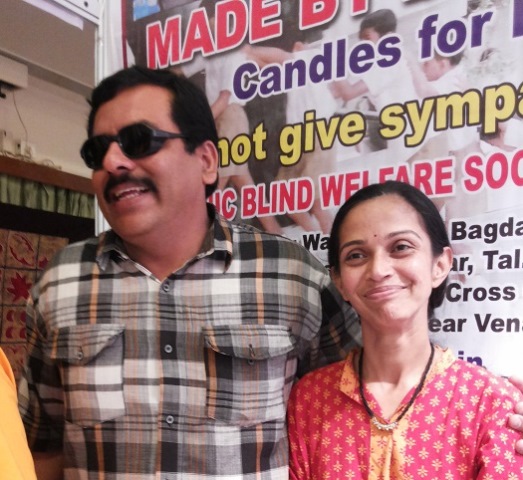
They met over 10 years ago, when he was peddling scented candles that he made himself, in a corner of the market at Mahabaleshwar. A Mumbaikar on holiday to the tourist spot, she promised that she would come to help him sell candles while she was still there. Eight days later, she asked him to marry her.

“I was stunned,” says Bhavesh Bhatia (43), founder and proprietor of Sunrise Candles, an enterprise that began in a small room in Mahabaleshwar and is today headquartered in the same town in a professional manufacturing setup. “Several sighted people would come and help me out of sympathy, but this brave girl wanted to spend her life with me because she believed in me.”

The girl in question – Neeta (40), a Bhayander resident who had to work on convincing her family to let her marry Bhavesh – is today the backbone of a flourishing candle business and wax museum that employs 85 visually-challenged persons from the State and outside. “It was hard work at first, but I never lost sight of the fact that this was a man who was making a living despite his disability. He wanted to reach out to others like him, and I wanted to share that dream,” she smiles.

Small beginnings

Bhavesh BhatiaBhavesh was not born blind, but lost his eyesight gradually after a childhood illness. Not one to sit and lament his fate, he worked odd jobs to make money, but it was his stint at the National Association for the Blind’s (NAB) candle-making course in 1999 that changed his life.

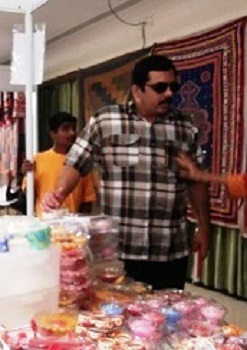
“I learnt how to make plain white candles at NAB. Dyes and scents were extremely expensive,” Bhavesh remembers, revealing that in those days, he didn’t even have the money to buy himself a pair of slippers. “I saved Rs 25 every day from selling candles. I had a small board on which I set up candles and sold them at the market every day.”

This was how he met Neeta, and after their wedding, the couple lived in his small home in the hill station town. “We took a Rs 15,000 loan from Satara Bank, where NAB had a special scheme for blind people,” Neeta says. “From this, we purchased 15 kilos of wax, two dyes and a hand cart for Rs 50.”

Bhavesh would make candles all day, and there weren’t enough utensils to even melt the wax in. “I began to worry that the same vessels I cooked food in were used for candle-making,” Neeta laughs. Ever the optimist, she procured a two-wheeler to ferry her husband and his wares across town. Bhavesh first set up a table, then a larger stall. She later learnt to drive a van, which made things much easier.

World of light

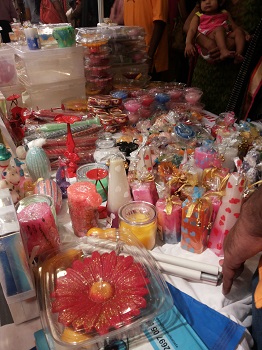
Today, Sunrise Candles purchases wax from the UK, and has developed over 9,000 designs of plain, scented and aromatherapy candles. “We train blind people so that they can understand the work and not just help us at our unit, but some day go back home to set up their own business,” Bhavesh explains. “Neeta trains a lot of blind girls, and does all the work for the enterprise such as banking, handling the paperwork and managing our workshops and demonstrations.” With his team of helpers and volunteers, Bhavesh travels across India for exhibitions, delivering motivational talks, taking candle-making workshops and even imparting free training in places such as colleges and cancer associations. The couple has also set up a wax museum and a gymnasium for blind people at Mahabaleshwar.

From the days when Bhavesh didn’t have the money to purchase wax and dyes, to today, when “even 25 tonnes of wax is consumed in a day,” Sunrise Candles has indeed come a long Sunrise Candlesway. “It has been a wonderful journey with Neeta at my side,” Bhavesh says. “I wanted to prove that being blind is not the end of the world. It is not just about being employed – it is about having a sense of achievement through one’s work.”

Bhavesh is now working on creating the world’s tallest, unbreakable candle – to stand at 45 feet – for a world record. “The current record is for a 22-feet high candle made by a sighted person in the West. Our candle will be made entirely by my visually-challenged brothers and sisters. There is no question of whether we can do it – the question is, how are we going to do it the best possible way?” he grins.

If you want to order candles, or learn candle making, or wish to invite Bhavesh Bhatia for a motivation talk, contact Sunrise Candles at +91-98506 00634/94220 34729. You can also look up the company at www.sunrisecandles.in or write to them at info@sunrisecandles.in.

Categories
Campaign

Losing a grandmother to ‘that’ disease

Rachel Tseng describes the agony and helplessness of watching a beloved relative succumb to the ravages of Alzheimer’s Disorder (AD).

For most people Kolkata is a place synonymous to rasagollas and puchkas but for me it is a place reminiscent of my childhood vacations spent with my grandparents, aunts, uncles, cousins, their grandparents and the whole jing-bang of distant relatives and family friends.

Once during a head count, I was included as a grandchild by my cousin brother’s paternal grandmother. Since I was staying over at my cousin’s home, his grandmother very generously christened me as one of her grandchildren. Predictable as it sounds, I grew very fond of her and was completely drawn to her very generous and loving personality.

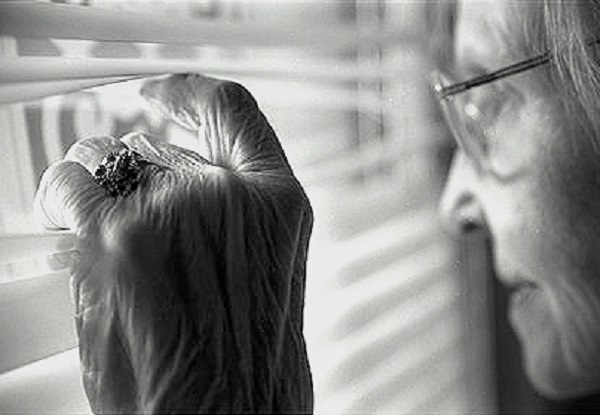
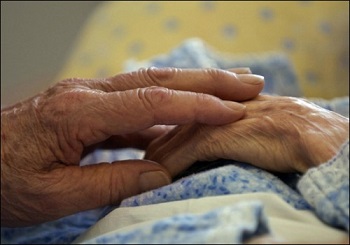
alzheimer's careOver the years during every visit to Kolkata I would actually look forward to meeting her. But on one particular visit, she failed to recognise me and it was then that my cousins told me that she was suffering from Alzheimer’s. I knew about Alzheimer’s, the symptoms and what it does to you but it was the first time in my life that the Alzheimer disease struck someone I knew and admired. It was a heart wrenching experience watching her lose herself to the disease. There was nothing that we could do except be patient and be there for her.

The pain that she went through is something that nobody can comprehend. She rarely had memory of her present. Sometimes she had a perfect memory of her childhood and would wonder what she is doing amongst strangers who were actually her children and grandchildren. She would cry out like a child in distress and demand to be taken back to her childhood home, recounting her maiden address and the identity of her parents. In response, we pacified her like a child, promising to take her to her parents in the hope that she would snap out of it soon.

On another occasion, she refused to recognise her grandchildren and even called them untouchables and thieves. She would hide anything and everything, including food, in cupboards and draws in the fear that ‘the thieves’ who had invaded her home would steal her belongings.

Once she even ran away from home, hopped into a cycle-rickshaw and asked the driver to take her to her son’s home in America. The rickshaw driver was initially shocked and thought that he probably hadn’t understood the address and requested her to give directions. As soon as he started off, my uncle who was in his car spotted her sitting in the open cycle rickshaw like a queen on her throne. My uncle immediately intervened, explained about her condition to the rickshaw driver and drove her home, much to her annoyance.

During the last few days of my stay in Kolkata, one afternoon she came up to me, called me by my name and commented on how I had grown to be a replica of my mother. We spoke alzheimer's memory gapsabout my cousins and she even expressed her love for her daughter-in-law (who is my aunt) and appreciated everything that the family had done for her. She spoke in the most normal way, just like the way she spoke to me during my earlier visits and before Alzheimer’s.

At that moment, although she was in the present and everything she said made perfect sense, I could see it in her eyes that she had no idea of what she had been suffering from and how it had worn her out.

This went on for about 12 years before she faced her end.

The degree of pain and suffering an Alzheimer’s patient goes through is something I am unable to understand or express. But one thing for sure, the family of an Alzheimer’s patient suffers in silence with immense grief and anguish. It takes a lot of patience and endless love to live with and care for a family member with Alzheimer’s.

This is the last of the series of articles that we featured on Alzheimer’s awareness as part of our campaign to focus the spotlight on dementia and Alzheimer’s. However, we are committed to the cause and welcome news of new developments in the field of elder care and positive ageing. If you have something to share, do write to us at editor@themetrognome.in or tweet to us @MetrognomeIndia.

(Pictures courtesy trialx.com, io9.com, www.smallfootprintfamily.com. Images are used for representational purpose only)

Categories
Campaign

Snapshots: Posters on Alzheimer’s

Students of SVT College of Home Science displayed interesting posters explaining how Alzheimer’s happens and what to do about it.
by The Editors | editor@themetrognome.in

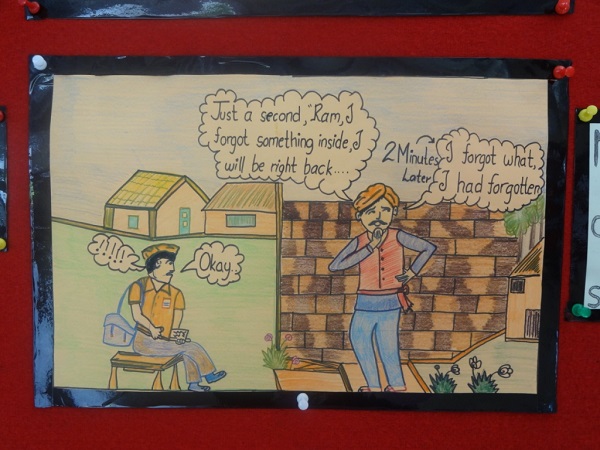
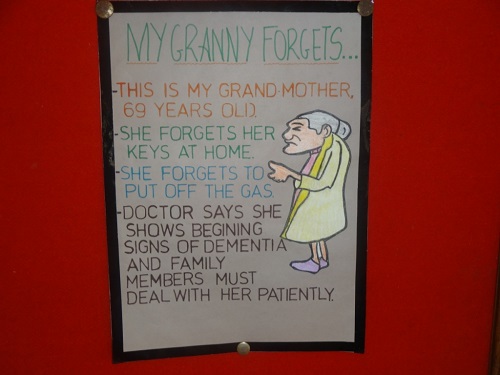
Students of SVT College of Home Science, SNDT University put up an array of informative posters about the symptoms of Alzheimer’s, how it affects the sufferer and how to deal with it at an event on Saturday. The event, a sensitisation seminar, was titled ‘Understanding and respective individuals with Alzheimer’s’ and was held in association with Lions Club of JB Nagar, Andheri, our campaign partners Silver Innings Foundation and ARDSI Greater Mumbai Chapter. It was held yesterday at SNDT University, Juhu campus.

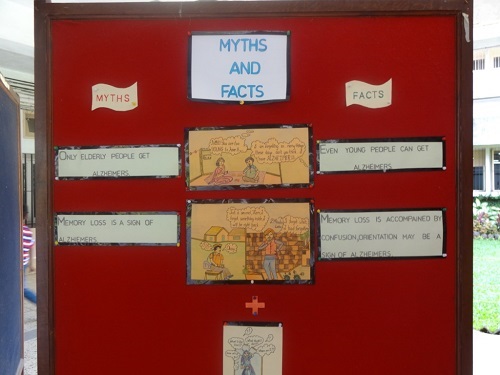
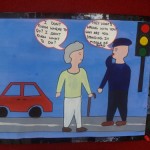
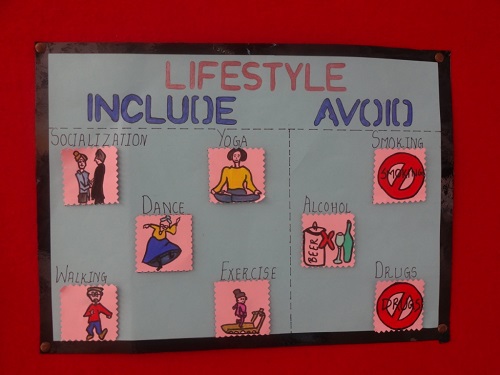
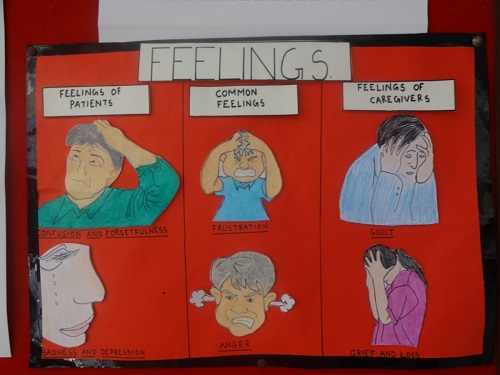
A total of 150 people participated. These included students, senior citizens and family caregivers. Hearteningly, 90 per cent were youth. As part of the event, five skits were performed and there was a poster exhibition, which explained the various stages of Alzheimer’s and dementia, and the Dos and don’ts to be followed by caregivers as part of their daily interactions with those afflicted. See a few of the posters below:

What causes Alzheimers’:

Age (those at risk are people over 65 years old. More than 50 per cent of those afflicted are over 85 years old), family history, vascular diseases (high BP, high cholesterol), stroke, faulty lifestyle, obesity, habits like smoking, drinking alcohol, chewing tobacco, drinking excess coffee, those suffering a head injury, toxins such as aluminium, infections and viruses, deficiency of Vitamin A, C, E, B6, B12, carotenoids, zinc, selenium and being socially inactive.

Symptoms:

Repeating statements over and over again; misplacing items; having trouble recalling familiar names or familiar objects; getting lost on familiar routes; personality changes; losing interest in things previously enjoyed; difficulty performing tasks that take some thought but which used to come easily (like balancing a checkbook, playing complex games such as bridge and learning new information or routines).

Understanding Alzheimer’s:

– Alzheimer’s can cause a person to show behaviour that they normally wouldn’t. This means that you, as a caregiver, will be faced with many challenges as you try to give your the best care that you can.

– Some of the challenges that you may face include physical aggression, verbal aggression, mood swings, wandering, repetition of words, and combativeness.

– All of these changes in behaviour can lead to a great deal of tension and frustrations for both you and your patient. The most important thing that you need to remember is that your Alzheimer’s parent isn’t behaving this way on purpose. Their behaviour is simply the result of their disease so you need to avoid analysing the situation and looking for solutions when there are none.

What you can do:

– Make them as independent as possible.

– Give them medicines on time.

– Develop proper timetable for daily chores.

– Keep the house clean and maintain hygiene.

– Educate your neighbours and relatives.

– Don’t be rigid, be flexible with rules and behavioural changes.

– Share responsibility of care taking or appoint a professional caretaker.

– See that the professional caretakers are not given other household work.

– Avoid sharp edges in the house.

– Install a good security system for the house.

– Give the sufferer an ID card or a monitoring device.

– Don’t change their living environment

– Respect them.

(Pictures courtesy Sailesh Mishra, Silver Innings)
Exit mobile version