Categories
Become

Building a business on Mumbai’s traffic

Co-founder of Traffline, a traffic info service started in Mumbai, explains how he and his team made the startup successful.
by The Editors | editor@themetrognome.in

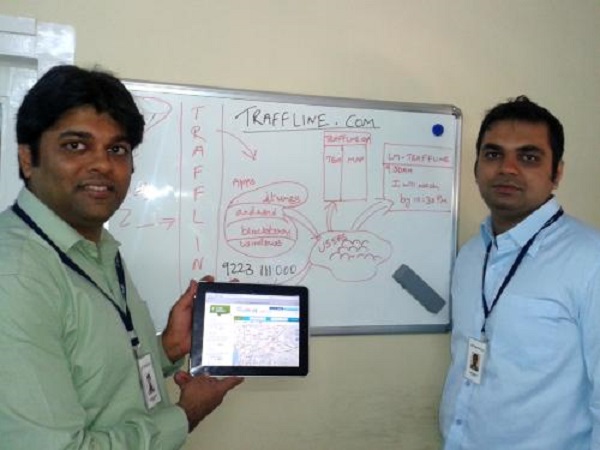
It was a revolutionary idea for the country – log on to a website or app and find your nearest road route, with directions on how to get there and how much time you would need. When Brijraj Vaghani and Ravi Khemani (left and right in pic above) returned from the US at the end of 2008, however, they realised that the germ of a great idea they had could develop into something big and beneficial for India.

trafflineThe duo started Traffline in 2012, and till date, the traffic info service has been one of the fastest growing ones in the country. It is of especial use in busy cities like Mumbai and Delhi, where there is a heavy reliance on road transport. “However, India does not have a culture where one looks up information on the web or on one’s mobile phone when it comes to travel,” says Brijraj, speaking to The Metrognome from his Vile Parle office.

“Indians don’t check out traffic conditions till they are actually stuck in traffic. And even then, they avoid travelling instead of looking for alternate routes. Inculcating the culture of looking up traffic info before leaving the house, then making it a habit, was the biggest challenge for us,” he explains.

Small beginnings

Brijraj and Ravi set up Birds Eye Technology in 2011, and Traffline started operations in 2012. India is a very rich market for traffic apps, Brijraj says, because of the “multiple modes of transport, the multiple routes you have, especially in Delhi.” He adds, “We got together with two more guys – Sushant Bansode and Rizwan Ansari, and got working on Traffline.”

“You must build a good team, and you must be willing to go out there and sell your idea. Going out on the field is crucial. You cannot build your business sitting in office,” Brijraj says.

The start was frustrating – where were they to source data from? “The infrastructure to map and source data did not exist, not just in Mumbai, but even in Delhi and Bengaluru,” Brijraj says. “We had to actually go out on the field and collect data. Our initial data came from GPS installed in cabs and private vehicles. We also approached the Mumbai traffic police, but they were not helpful at first. It was tough.”

The team started work with field operations, renting out servers from Amazon, and procuring office space. “We procured angel funding in the first year. This took care of our inter-country travel, staff salaries, business development. Building the software itself took up to Rs 15 lakh,” Brijraj says.

Traffline has just received its third series of funding. “With every phase of funding, we expand our staff and business a bit more,” Brijraj explains, adding that Traffline aims at a presence in 10 Indian cities by the end of year 2014.

How does one start a business like this?

There is no substitute for ground work and market research. “What is the need for such a service? Who will benefit? What are the ways to make the business more user-friendly? Entrepreneurs must ask themselves these questions,” Brijraj advises. “There must be a plan at the very start – how much money will be needed, what are the business development plans, what kind of promotion are you looking at?” he adds.

Money is a crucial element in a business like this, more so, because the returns come in much later. “You have to build your database first, generate awareness, get users hooked. Once the business becomes stable, you can scout for funding,” he says.

The big ‘F’

Procuring funding is a step that most start-ups falter on. But it’s simple, actually. “A good idea is to take money from friends and family at the start – they are least likely to bother you about returning the money and will be patient with you more,” he advises.

Clarity of vision is important, Brijraj says. “You have to be clear in your head about what your business is, where you want it to go. Merely attending an investors meeting with a PPT will not help. Be honest, do your groundwork, and be clear about your expectations. You will find that people will invest in your business.”

Other key elements

Apart from funding, he says, other challenges are running the business from day to day. “At the start, it can be daunting and very frustrating,” he says. “Perseverance is key. And trafline-team-300x160always start a business with a good co-founder that you can trust.”
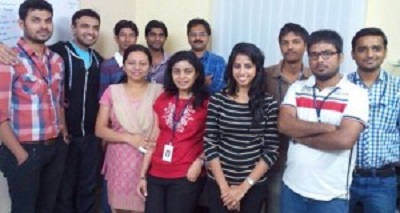
In the case of Traffline, Brijraj handles the business development side while Ravi looks after daily administration, finance and project management. “You must build a good team, and you must be willing to go out there and sell your idea. Going out on the field is crucial. You cannot build your business sitting in office,” Brijraj says.

In Mumbai, Traffline has now developed an excellent working relationship with the traffic police. “We worked together a lot during the recent Syedna funeral, and the Ganpati festival last year. We sit in their control rooms and issue alerts. This has happened after continuous follow up, and the traffic police see value in our services. Now they call and inform us about closed roads or traffic restrictions,” Brijraj reveals.

Key tips

Brijraj confesses that he took his time coming around to the idea of working on Traffline full time. “If you are sceptical or have the least doubt, work on the project part time. But keep researching the model constantly. Take the plunge to join it full time only when you have the confidence to do so.”

Be patient till the money comes in, he says. “Now that we are known and that we have funding to back us, naturally the expectations from us have increased. This means that we have to scale up our operations faster, grow our consumer base exponentially, come up with better products. Venture capital is like rocket fuel – it can take you from one spot to another very quickly, and people will also be willing to work with you more if you have funding,” he says.

(Pictures courtesy Brijraj Vaghani)
Categories
Event

80 sprinters vie for ‘Speedstar’ title

Leading schools in the country today competed against each other at Mumbai’s KJ Somaiya Ground in four different age categories.
by The Editors | editor@themetrognome.in

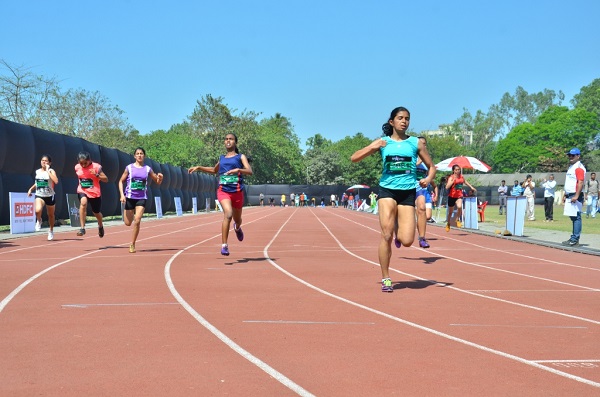
Today, Mumbai witnessed intense action as 80 of the country’s fastest sprinters from leading schools competed against each other for the coveted title of ‘Speedstar’. The initiative, now in its second year, is conceptualised by KOOH Sports, and is a nationwide athletics talents hunt. The grand finale of Speedstar Season 2 was held today, February 9, 2014 at the KJ Somaiya Sports Ground.

This year, more than 1,700 schools and 25,300 children across all sections of the society participated in the event. KOOH Sports also partnered with Special Olympics Bharat, thereby making this India’s first unified athletics event.  In a span of 8 weeks, the Speedstar team travelled to 10 cities – Mumbai, Goa, Pune, Ahmedabad, Delhi, Chandigarh, Jalandhar, Jaipur, Lucknow and Hyderabad – with the overarching objective of promoting athletics at the grass root level in India.

The hunt was conducted for four age categories competing under two race formats – Under 10 (60-meter sprint) and Under 12, 14, and 16 (100-meter sprint) for both boys and girls. The event was organised under the aegis of Athletics Federation of India. The winners were felicitated by former athlete PT Usha, who also mentored the city winners before the finale.

Except for the U-10 winners, the remaining six winners will now head to Australia for a week-long training under the guidance of noted athletics coach Sharon Hannan.

(Picture courtesy KOOH Sports)

Categories
Deal with it

Commuter groups demand better travel for Mumbaikars

Two organisations based in Mumbai observed Commuters Protest Day against the Railways’ apathy towards Mumbai commuters’ woes and long-standing demands.
by Nidhi Qazi

Yesterday, a young boy in his 20s fell on the space between up and down tracks at Chembur station, from a CST-bound train on Harbour Line after hitting an electricity pole. He was then rushed to Sion Hospital.

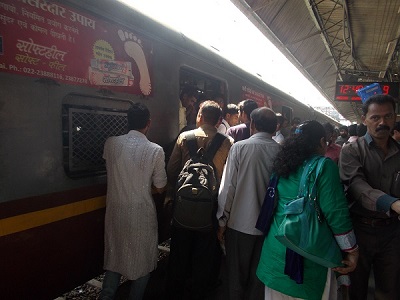
crowdsWhy did he fall? “Because he was standing on the footboard, teasing passengers on the platforms and did not see the pole and thus got hit by it,” said a constable at Chembur station. He further added, “In the 10 months that I have been stationed here, I have constantly been hearing about such incidents. On an average, two to four people die like this every week. Most of these people are young, between 16 to 25 years of age. And they hail from three main areas – Mankhurd, Govandi and Kurla. The young boys from these areas are famous for their antics.”

The fact that a lot of young people can be spotted doing antics on the moving train or atop it may be worrisome, but it is equally important to see beyond the issue and question why they do it. Is it something they do just for fun or really, is it because they have no space inside the compartments, and are forced to stand (or rather hang) by the footboard?

Yesterday’s incident may not be a new occurrence by any means, but it was still significant as it happened on a day that was being observed as Commuters’ Protest Day – an initiative of the Democratic Youth Federation of India (DYFI) and Pravaas Adhikar Andolan Samiti (PAAS) covering 111 suburban stations in Mumbai’s Western, Central and Harbour lines.

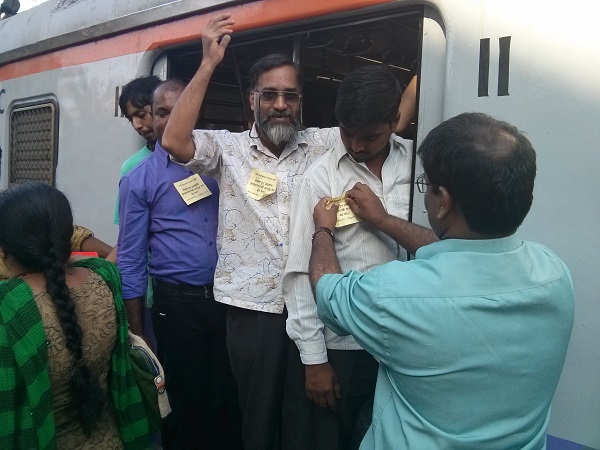
As Preethy Sekhar, Maharashtra Secretary of DYFI put it, “We stationed our volunteers at various stations on all the three lines who distributed badges to the commuters. These badges are a symbol of protest against the ill conditions commuters face daily. Peak-hour trains are overcrowded three or four times the carrying capacity. Passengers fall off from running trains and fall on the tracks while trying to board. Death and loss of limbs have become daily occurrences.”

The two organisations laid out a list of demands: 

– Increase the number of services on war-footing in all the suburban routes. Procure new rakes for giving relief to commuters.

– All local trains on Western, Central, Harbour and Thane-Vashi routes must have 15 coaches.

– All platforms at all stations must be extended to suit 15 coach trains.

– Start suburban train services (EMU) in Dahanu Road-Vasai-Diva-Panvel route.

– Stop the practice of late-running of trains. Resolve problems in signalling system and deploy sufficient number of running staff.

– Bring about comprehensive commuter safety measures.

– Conduct survey of platform heights urgently at all stations and make adjustments wherever necessary.

– Avoid the danger of stampedes; build adequate number of foot over bridges and subways.

– Provide 24 hours ambulance service at all railway stations.

– Conduct safety audits of all railway stations and adopt accident prevention measures.

– Provide necessary passenger amenities at all railways stations.

– Ensure women’s safety in local trains. All ladies coaches must remain reserved for all 24 hours.

– Police personnel must be deployed in ladies coaches without fail.

– Railway board must conduct an immediate assessment of all projects for Mumbai suburban sector and implement all proposals on war-footing.

The organisations will follow up with the Railways on these demands.

(Pictures courtesy Nidhi Qazi and Sadiq Basha)

Categories
Enough said

When LK Advani turned up for a birthday party

Writer, journalist Khushwant Singh recently turned 99, and all his friends, family and surprising acquaintances turned up to wish him.
Humra Quraishiby Humra Quraishi

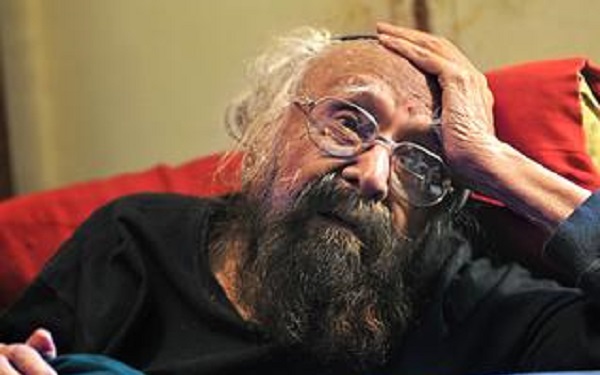
Our grand old man of Indian literature, Khushwant Singh, turned 99 on February 2. It truly was a day to celebrate. Interestingly, the do lasted only one hour.

As several of Khushwant’s friends reached his apartment at 7 pm sharp, they were more than surprised to see someone from the most unexpected quarters land up at the do as well – BJP’s LK Advani turned up with his Black Cats. That somebody of his stature was arriving at the venue should have been obvious, actually – even before one turned towards Sujan Singh Park, there were ample signs of a VVIP presence. The place seemed overtaken by cops.

Though Advani’s presence that evening caused quite a stir, the other guests in attendance were no less important. Others present that evening were several of Khushwant’s close friends, including publisher Chiki Sarkar, Bubbles Charanjeet Singh, Bhaichand Patel, Dalip and Nandini Mehta, Kaamna Pradad, Harinder Singh, Narayani Ganesh and, oh yes, painter Vrindavan Solanki, who sat sketching Khushwant that evening.

Most of the guests seated themselves in the drawing room, and the guests also included such luminaries as the former Attorney General of India, jurist Soli Sorabjee. Khushwant’s children – Mala and Rahul – and his granddaughter Naina were present all through the evening. In fact, Rahul had come down from Mumbai to be with his dad on his special day.

At 8 pm it was ‘bottoms up’ time – time for us to leave. We all wished Khushwant again and expressed the hope that he continued writing and reciting. It’s remarkable that even at his age, Khushwant can recite all the couplets of Ghalib and Meer and Faiz. His favourite is Ghalib, and keeps several volumes at hand.

As I was leaving, I asked him what he was planning to do for the remainder of the evening. He quipped, “Like all evening, I will sit reading Ghalib. I have kept Ghalib volumes next to my bed and I’ll read his verse for hours…”

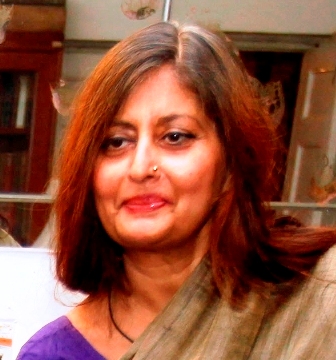
Humra Quraishi is a senior political journalist based in Gurgaon. She is the author of Kashmir: The Untold Story and co-author of Simply Khushwant.

Categories
Guest writer

Mumbai’s children – in want of playing spaces

A space-starved city’s biggest casualty is the lack of playing spaces for children – but where should our children play?
by Dr Pooja Birwatkar

As a young girl, the dreams of my future were like most other people’s – a happy life, a good husband, a good job, of course money, a nice house and lovely kids playing in my garden. But wait. Did I say “A garden of my own?”

This was the only part of my dream which was not fulfilled. Why? Because I got married and moved to Mumbai.

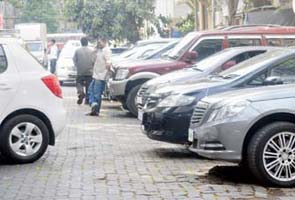
In a city of dreams where many dreams succeed and many crash, my hopes of a garden came crashing down after I moved to Mumbai. I never knew the worth of a garden till I became the mother of an energetic, always-running-and-jumping child. My building, like most other buildings, is starved of open space. The builder has minted money by making flats on the ground floor, too. The leftover space serves as a parking lot for a few privileged flat owners who have bought the parking space (though it is not meant to be sold). Anyway, a garden is non-existent in the premises and the only ‘play area’left is the space between parked cars.

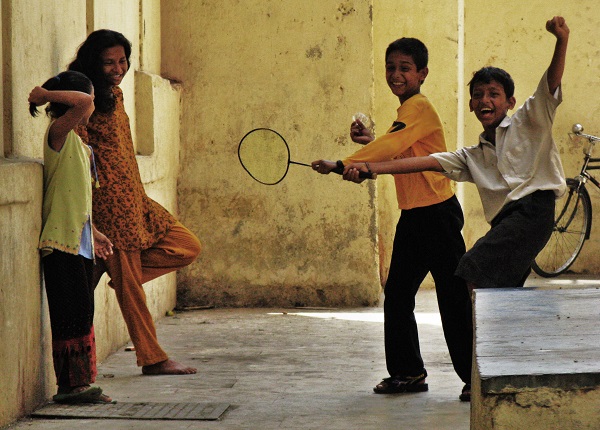
Thanks to Mumbai traffic and busy office hours, most people return home late and that means their empty parking lots are utilised for cricket, badminton, running, etc. My five-year-old son and other children of all sizes and ages compete with each other every evening to catch the best available space. The mothers of the little ones huddle in one corner, chatting and gossiping. But amidst all these chatting sessions, our eyes are forever trained on the entrance gate to spot a car entering the building. As soon as a car shows up, there are shouts of “Car aa rahi hai, bacchon, side pe ho jao!”. Chaos follows, with children running in all possible directions, some even towards the car, followed by their anxious mothers.

The poor driver of the car is, by now, conscious of all eyes on him/her. The kids are happy if the car is not about to park in their playing space. If it does, then the car owner is parking spacemade to feel guilty as the children drag their feet, pick up their bottles and playthings with a “Why you came early today?” look on their faces. The car gets parked and the playing resumes, only to be interrupted again by another car entering the building.

Meanwhile, a daily feature of play time in the building is the falling down and hurting themselves of at least two children every day. This is no joking matter – the children fall on hard floor and sometimes seriously injure themselves. Every day, I carry a silent prayer in my heart for my child as he plays. Come rainy season, the children are robbed even of the parking space ‘play area’. After the rains subside, the moss-covered floors make even walking impossible.

The solution to all this is go to a nearby garden. But alas! When I go there, I realise many people know of this solution already. The gardens are crowded and unkempt. Most of the swings, slides are rusted and broken with sharp edges. Besides, going and coming back from the gardens means getting stuck in traffic and for parents who come home from long hours at work, this can be very frustrating. Some buildings do boast of a play area, garden and other such amenities, but the cost of living and maintenance issues make them unaffordable for the middle class.

But despite all these limitations, the children still enjoy their limited play space and make the most of their play time, and for that, I really salute them. Parents are often heard lamenting about the space crunch problem and give the usual excuse that their children watch TV as there is nothing else for them to do. We have to understand that limitations would be there, but they can also be suitably overcome if one wants to. Since nothing can be much done in terms of infrastructural changes to overcome this space problem, what best can be done is to employ some smart strategies for play time:

– Parents can make groups and organise play activities for younger children.

– Groups can take turns to supervise the children while other parents can use the time to run errands.

– Parents can take turns to ferry the children to the nearest park or ground. This can be done on Saturday and Sunday mornings and other school holidays.

– Plan for play time so that it does not coincide with people returning from office and using the parking lot.

– Invest in creative indoor games for rainy days. Puppet shows, activities, story sessions, dramatics can all be planned for children for summer vacations and the rainy season.

It is important for children to play with each other as apart from recreation and fun, it also trains them for social interactions and is an essential part of the growing years. And though I gave up the ‘Ghar, ghar ke aage garden, garden mein grass aur usme khelte bachche,’ dream for my own children, I dream it now for my grandchildren. And now you must excuse me as I see a car approaching and I must warn the children who are playing kho kho.

Dr Pooja Birwatkar is currently pursuing post doctoral research and working in the area of science education. She has been associated with the field of education in the past as a teacher educator, and her area of interest is research in education. 

(Pictures courtesy www.ndtv.com, letsjapan.wordpress.com)

Categories
Tech

LG launches G Flex, its first curved smartphone

The new smartphone will retail at Rs 69,999 in India, and also comes with a ‘self healing’coating at the back.
by Manik Kakra

After launching the phone in several international markets, LG today launched the G Flex in India. Its USP, as the name suggests, is its 6-inch 720p OLED screen that is curved at the centre, thus making a curvature when you hold it in your hand. The device also bends a bit if you apply pressure using your hand against the curved design.

Under the hood, similar to the popular LG G2, it has the Snapdragon 800 SoC (with Adreno 330 GPU), along with 2 GB of RAM. The G Flex follows the same ‘Power/Lock and Volume buttons on the back’ approach, and has the same 13 MP rear camera; and a 2 MP front-facing camera.

Another unique thing about LG’s G Flex is that its back carries what LG calls as ‘self-healing’ coating, which means any scratches and marks on its surface are ‘healed’ automatically. Running Android 4.3 with the Optimus UI on top, this LG phone boasts of a 3,500 battery.

While it is yet to be seen what all real life advantages this curved screen brings you, the launch price seems steep. Priced at Rs 69,999, the G Flex comes with a flip case and will be available for sale within a week.

Exit mobile version