Categories
Tech

Moto G launches in India, starting at Rs 12,499

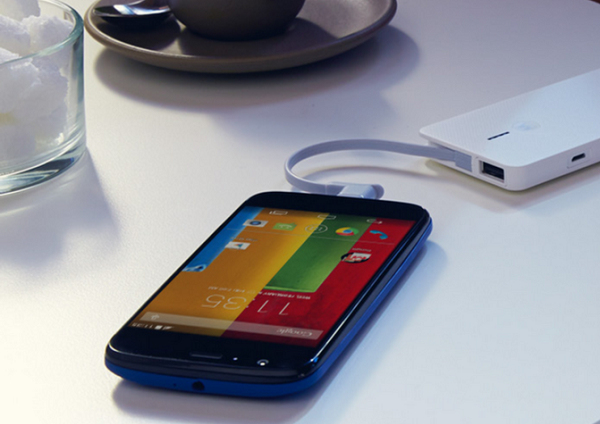
Motorola is back in India, with a new smartphone – Moto G, a dual SIM phone available in two models.
by Manik Kakra

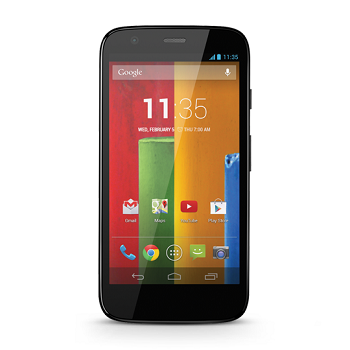
Motorola has returned to India, and has launched its Moto G smartphone in the country. This Android 4.3 device comes with a 4.5-inch 720p screen, with Gorilla Glass on top. It is powered by Qualcomm’s 1.2 GHz quad-core Snapdragon 400 chipset (with Adreno 305 GPU), along with 1 GB of RAM.

Moto GMotorola has launched the phone in dual-SIM avatar (GSM + GSM), and says it will roll out an Android 4.4 upgrade for the phone within two weeks. Also, the company has set up, thanks to some tie ups, about a hundred service centres in the country.

Under the hood, there is a 2,070 mAh battery cell. Other features include 3G connectivity, A-GPS, WiFi, Bluetooth 4.0, and FM Radio.  On the back, there is a 5 MP camera (with an LED flash) that can shoot 720p videos at 30 FPS; while the front side has got a 1.3 MP camera.

The phone has been priced at Rs 12,499 for the 8 GB model, and Rs 13,999 for the 16 GB model, but will only be available online starting tomorrow. Flipkart has a few deals for early buyers, which include Rs 500 off on books, to 70 per cent off on various coloured back shells for the Moto G.

Categories
Tech

Saving time and lives of harried Mumbaikars

Traffline app upgrades to allow two wonderful new features – one helps report accidents, the other gets help in time.
by The Editors | editor@themetrognome.in

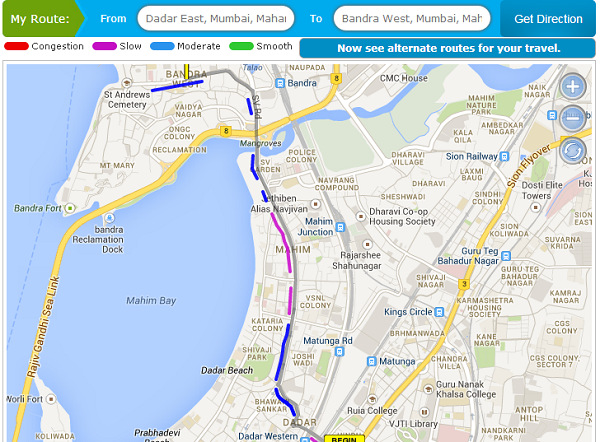
A lot of Mumbaikars are already using the Traffline app – and why wouldn’t they? In a city increasingly facing traffic snarls and spending more than half of its travel time on the road, the app comes in handy when wishing to know which routes to avoid and which ones to take to reach their destination faster.

The app has now added two new features – and both will help Mumbaikars in crucial ways.

traffline logoSpeaking to The Metrognome, Brijraj Vaghani, Director of Birds Eye Systems that runs Traffline, says “We introduced two new upgrades to the app recently. These will introduce a ‘humanitarian touch’ to the app. One deals with road accident alerts and the other helps people in distress.”

As far as the ‘accident alert’ feature goes, it works like this: if a user witnesses an accident or is in the vicinity of an accident, he or she can immediately tag their location. “This information immediately forwarded to the concerned local police station and shared with fellow Traffline users who might be on the same route. Thus, others will be alerted on taking an alternative route, while it will become possible for rescue units to reach the spot faster,” Brijraj explains.

The other feature has been designed keeping in mind women’s safety in Mumbai. “While there are many apps that help women in distress alert their near and dear ones about their location, we go a step further. We have added a feature which will give the recipient an estimated travel time to the location, taking into account possible traffic delays. We also give a choice of alternate routes and estimated travel times to reach the location as fast as possible,” he says.

Additionally, Traffline is offering traffic information through SMS and email, such that users gets live traffic updates every day for a certain route. Users can also get a unique number ot call and learn about surrounding traffic condition. There is also a feature that indicates available parking space in the area where you wish to park your vehicle. The app is available on iOS and Android. 

If you’ve used the app, tell us what you think of it in the comments section below.

(Pictures courtesy www.socialsamosa.com)

Categories
Deal with it

Apni Shala: Where children see life

A city-based start-up works with children of BMC schools to impart important, essential life skills through games, stories and drama.
by Nidhi Qazi

That life skills are important, we all know. We can proudly look back at our schooling and say, yes, we did have a platform to show our potential. But wait – do all of us get a chance to see our life skills at work in school? Did all of us get a chance to really know ourselves? If these questions disturb you, read on.

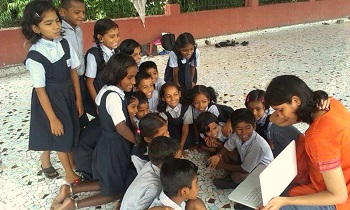
Eleven-year-old Nilesh studies in a BMC school. His classmates stay away from him. There was a time when he didn’t talk in class, was withdrawn and showed physical aggression towards his classmates. His father is an alcoholic, while his mother passed away. Being the eldest child, he has to take care of the rest of his siblings. Then ‘Apni Shala’ happened to him.
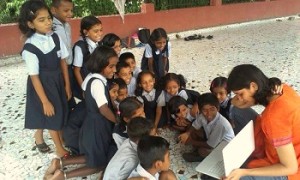
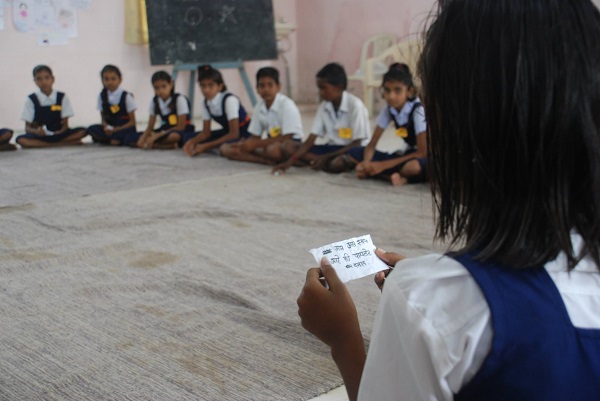
A start-up, ‘Apni Shala’ started working with Nilesh’s school since January 2013. Since then, Nilesh is a changed boy. He participates in class, his self-esteem has improved and his classmates are much closer to him.

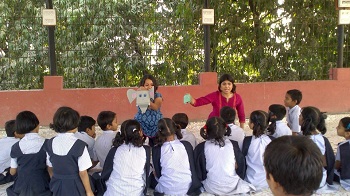
More such stories of children and their problems, is what Apni Shala aims to address. A team of three – Amrita Nair, Anukriti Goyal and Swetha Ranganathan, all passionate about education and all three being alumni of TISS, Mumbai – came together and formed Apni Shala in 2011. Initially, the team started with the idea of setting up a library and building skills through stories, when they realised the potential of other potent media such as games and drama. “Our project was to set up libraries and we did that. But once we did the need assessment, schools expressed a need for Life Skills Education (LSE). And thus, we have now started providing the same to the schools we work with,” says Anukriti, who looks after finances and fund-raising for the start-up.

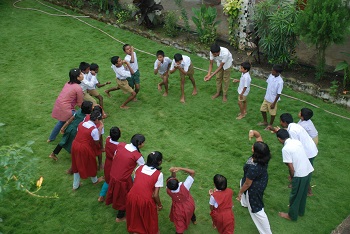
Apni Shala’s LSE programme has modules based on various life-skills prescribed by the WHO, such as making responsible decisions, teamwork and co-operation, solving problems, understanding emotions etc. These modules are facilitated by all three team members; even while each of them looks at separate aspects of the programme like design, content, fund-raising, strategy, communications etc.With the LSE programme running in three BMC schools and three community centres, Apni Shala works in Sion, Chembur, Oshiwara, Colaba, Worli and Reay Road. Their team also consists of an advisory board of curriculum consultants, psychologists and experts. They get funded through various grants.

Why Apni Shala?

Why do we need life-skills building in the first place? “In theory, life skills help build positive attitude. And thus, when we take it to practice, the skills learnt can be used in behaviour. So, we are aiming to provide an environment where a child can get better skills to face situations. Thus, LSE becomes important as more skills in a child’s environment can have a better and positive impact on his or her life,” says Swetha, who looks after communications, monitoring and evaluation of the programme.The need for LSE also stems from the fact that mainstream education overlooks the need for children to express and enjoy learning. Take the story of Sunita, who studies in a BMC school and who lives in a hostel, away from her parents. “Sunita was always disinterested in our programme, she was also shy and would not participate. But now she has become so expressive and enjoys drama,” says Swetha.
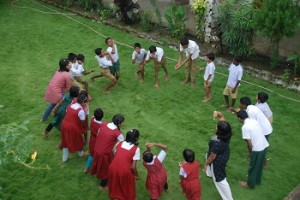
She adds, “Yes, some of the schools do give a platform, but kids from many schools do not gain enough experience and exposure. These schools do not teach much about these life-skills. And thus, we want LSE to be incorporated well in pedagogy. Even though there are separate books now on life-skills, how much of it being used in schools really?” 

The challenges

As a start-up, they are looking for more manpower, on all three fronts – administration, front-end and organisation.

Also, one session in a week for one school is a frequency that worries the team. “Although something is better than nothing, we still have to make our programme spread over a week rather than just a weekly one,” says Swetha. This becomes a challenge as “many of the schools do not consider the programme as ‘academic’ and thus it becomes a challenge to convince them.”
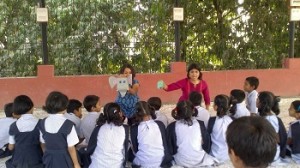
The team also feels that it becomes challenging to quantify the impact made by the programme, in front of funders. “To what extent can we quantify? Moreover, our assessment is based on observations. We try being as objective in our observations as we can, “ says Swetha.

In the pipeline…

Though the LSE programme is their core offering, Apni Shala plans to get into training teachers for facilitating life-skills and delivering the same through the existing modules.

They have also launched merchandise comprising bags, mugs and diaries which have quotes on life skills printed on them, and Do-It-Yourself (DIY) kits for children. “Besides fund-raising, these products are aimed at creating awareness among the general public about life skills and their relevance in the lives of children,” says Anukriti.

While they are based in Mumbai, Apni Shala is also looking for collaboration in remote areas. It recently conducted a life skills workshop in Anandwan School, Chandrapur district in Maharashtra.

To understand the impact of their work better, Apni Shala is also thinking of ways to engage with the parents of the kids, to get a better sense of their work.

Apni Shala will conduct a workshop on ‘Interactive theatre’ for children at the Kala Ghoda Festival on February 7 from 5.30 to 7 pm at The Museum Gardens. To volunteer, share ideas or give expertise on building the start-up, visithttp://www.apnishala.org or call them at +91 8454822690.

(Pictures courtesy Apni Shala)

Categories
Wellness

Surprising causes of stress

Did you know that the things that make you happy can also give you stress? Read on to know more.
by Sharad Panjwani

‘Stress’ is, in the simplest terms, a short-term elevation or depression in our mood caused by a change in our environment. These changes can be good or bad. However, prolonged stress gives rise to depression or behavioural changes.

Normally, we associate stress with negative situations and people. A bad appraisal, an unfriendly group of co-workers, an argumentative spouse, your child’s continued bad grades – all of these are causes of stress, and we associate the term ‘stress’ only with negative or unpleasant events in our lives. However, even seemingly ‘good’ factors in our lives can cause stress! We’re just not aware of them.

Says psychologist Dr Charul Shahani, “Anything that causes a change in our environment can give us stress. Even something as innocuous as a close relative visiting us can cause enormous amounts of stress – however, in this case, our feelings of happiness override any panic or fear we may experience. The stress in seemingly ‘happy’ situations spurs us on to work better or faster. However, in some cases, people might experience a breakdown – like when they are organising a party for friends, or going on a blind date.”

These are some hidden sources of stress:

Families: Though this is largely dependent on a particular situation, our families do cause us stress without us realising it. A simple argument over who gets to watch which TV programme, or if the family should take an outing to a certain restaurant, can cause varying amounts of stress. Apart from these, some irritating habits of our family members cause stress on a daily level.

Pets: Our pets largely give us huge amounts of joy, but dealing with them can also be stressful. Says vet Varun Chugh, “We learn to identify our pets’ behaviours, their personalities and what they prefer to eat, how they like to play, what annoys them, and so on. Keeping a track of all of these can be stressful, especially if the pet suddenly changes some behaviours. Your dog barking at night or your cat mewing as if in pain – these can cause stress. People who have young children in their homes as well as pets experience double the amounts of stress because they are handling different personalities at the same time. This stress can translate into fatigue, irritation and lack of sleep.”

Food: Science has established that different foods can have varying effects on our moods. Apart from taste, the temperature, smell and fragrance of food and drink that we consume have a huge bearing on our mood. People who skip their breakfasts are obvious contenders for stress in this category, but so are people who are non-finicky in their food choices! While we assume that people who ‘eat whatever is put on their plates’ are easy-going , no-fuss individuals, these same people can feel stress if their habitual eating discipline prompts them to consume stuff they don’t like. An example of this would be finishing off food at a party despite bad cooking, so that the hostess is not upset.

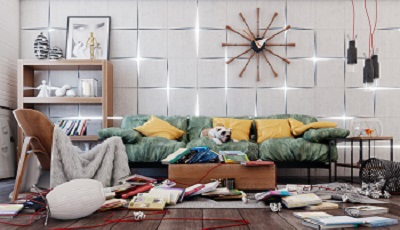
Messy room or workspace: Some of us are naturally messy – we dump our stuff all over the place but we know where to find it. However, studies show that the bigger the mess, messy roomthe bigger the stress in remembering and finding our things later. This happens even if we know exactly where we’ve put them. So when our elders ask us to tidy up, it is for this reason alone – to minimise our own stress.

Gossipy neighbours or co-workers: Though all of us enjoy listening to or sharing gossip with our neighbours and colleagues at work, there is an unspoken fear all of us face – are people talking about me, too? Besides this, we also experience stress when we hear really bad news about somebody else, or some shocking fact about an acquaintance.

Working after office hours: It’s true that the ‘9 to 5’ concept of a working day doesn’t hold true for most of us, with many offices working well past 10 hours on most days. However, we are conditioned to treat our time out of the office (after work hours or on weekends) as ‘me-time’, and admit or not, all of us do have some tasks that we put off for ‘when we are free after work’. Naturally, the idea of having to work when we should be stocking up the fridge or going on a movie date as planned or even catching up on sleep causes stress.

The colours of our walls: Studies have shown that the colours we surround ourselves with have a direct bearing on our emotional well-being. People who work in spotless white workplaces or offices that have zero tolerance for eating at the desktop, report experiencing slight panic or pressure to be on their best behaviour, without having been told to do so. Similarly, homes or offices with walls painted in warm colours cause negative feelings. On the other end of the scale, dull colours such as grey or navy blue cause lethargy. It is a good idea to have a pop of colour in the surroundings with the walls painted in pastel shades. Offices with windows overlooking trees and activity are best.

Routine health checkups: Says Dr Shahani, “We go for checkups to rule out any abnormality, but a visit to the doctor, however routine, is always a cause for stress. Every human being has the fear of a hidden illness being detected. The friendliest doctor can, unintentionally, cause a lot of stress. However, this stress is released the moment we get a clean bill of health.”

(Pictures courtesy nicholasferguson.org, www.thismamacooks.com, www.deviantart.com) 

Categories
Event

Colaba, Mulund schools make a mark at rugby c’ship

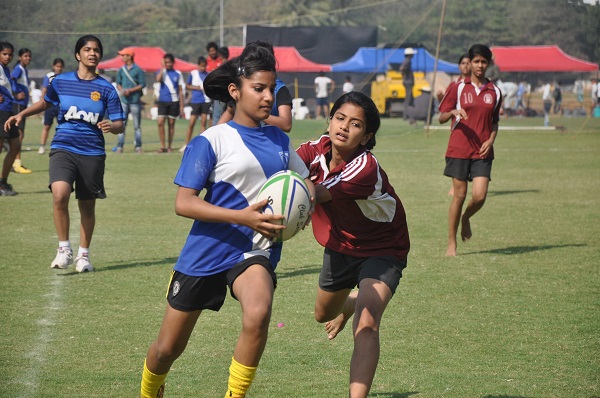
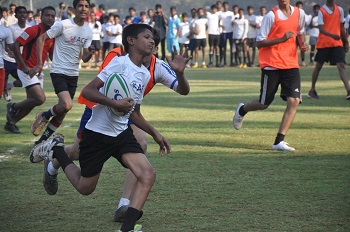
The recently concluded 8th Mumbai Schools Touch Rugby Tournament 2014 saw a great turnout and huge participation from city schools.
by The Editors | editor@themetrognome.in

Like every year, the Mumbai Schools Touch Rugby Tournament was held in Mumbai, at Bombay Gymkhana grounds. And like every year, interest and participation in the event continued to swell.

The 8th edition of the tournament was held on January 29, 2014 with over 65 teams and over 500 students (both boys and girls) from across Mumbai (city and suburbs) participated. Participants compete in three categories – Under 12, Under 14 and Under 17.

Touch Rugby, the non-contact format of the sport, is a fast paced game that promotes fitness, teamwork, discipline and skills and is used universally to foster camaraderie. On the occasion, Nasser Hussain, Secretary, Rugby Association of Maharashtra (RAM) said, “We are thrilled to see the enthusiasm, participation and eagerness from schools across Mumbai (from international schools to Government schools) to participate in the tournament and are once again, grateful to the Bombay Gymkhana for hosting the tournament and being a forerunner in supporting the sport.”

He added, “Having the sport back in the 2016 Olympics and with Rugby’s recent inclusion in the SGFI (School Games Federation of India) there is immense potential for growth and development of the sport across the country. And with grassroots tournaments like this, we aim to provide a platform to identify young budding sports men and women who will potentially be the next breed of athletes that go on to excel at the elite level.”

Results:

St. Mary’s Girls (Mulund) – 1st and 3rd place in U-17, 1st, 2nd, 3rd in U-14, 3rd in U-12.

Colaba Municipal defended their titles at the U-17 Boys categories and secured 2nd Place in U-12 Girls and U-14 Boys.

NM Joshi defended their titles at the U-12 Boys age categories.

Podar International won the U-14 Boys and secured 3rd Place at U-17 Boys.

Yashodham School won U-12 Girls, 3rd in U-14 Boys abd 2nd in U-12 Boys and U-17 Girls.

Categories
Tech

Oppo arrives In India; launches the N1 at Rs 39,999

Chinese phone manufacturer Oppo, after making waves globally with its great hardware, is now an official phone seller in India.
by Manik Kakra

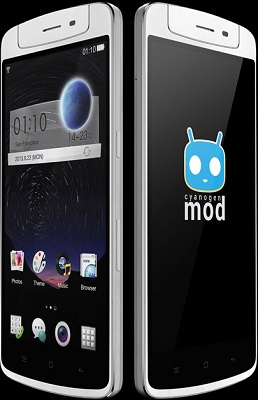
Oppo, the popular Chinese phone manufacturer, is now officially a phone seller in India. The company previously launched its phone in China and a few other countries, while shipping orders (made through its website) worldwide. Known for being the first handset manufacturer to officially support the popular custom ROM CyanogenMod, it has made some waves when it comes to hardware.

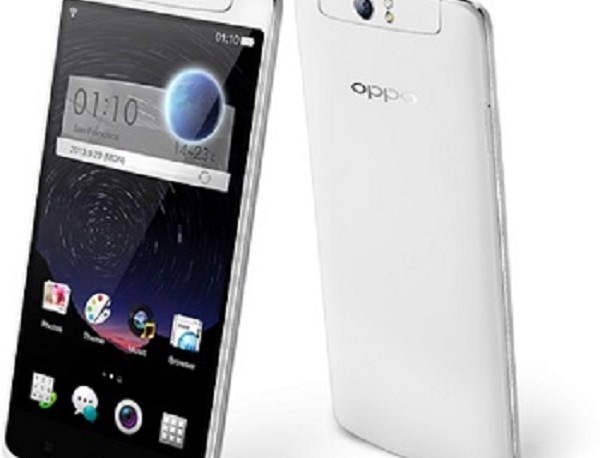
N1Oppo has launched its N1 smartphone in the Indian market. This Anrdroid 4.2 phone with Oppo’s own ColorOS sports a 5.9-inch full HD screen, which is coated with Gorilla Glass 3 on top. The N1 is powered by Qualcomm’s 1.7 GHz quad-core Snapdragon 600 SoC (Adreno 320 GPU), along with 2 GB of RAM. One of the USPs of this device is its 13 MP camera (with LED flash) which has a swivelling base, allowing the sensor to rotate 206 degrees, meaning it can also be used as the front-facing camera. For the camera purpose, including HD videos at 30 FPS), there’s also a dedicated Fujitsu chip under the hood.

Connectivity-wise, there is Bluetooth 4.0, microUSB (supports USB on-the-go), WiFi, GPS, and NFC. Another unique feature of this smartphone is its O Click accessory. You can use this gizmo to keep a check on your phone’s location. Apart from allowing you to control the phone’s camera remotely if it is not within 17 feet distance from O Click, the device will make an alarm sound. The N1 also has a O panel on its rear that can be used with your finger for scrolling on the device’s screen.

Available in 16 GB and 32 GB storage options, Oppo’s N1 comes in white, and has been priced at Rs 39,999 for the 16 GB model.

We have seen quite a few new Chinese entrants into the Indian phone market, and it will be interesting to see how Oppo is received initially in the Indian market.

Exit mobile version