Categories
Learn

Asses on stones

Markers of a distinctive, historical past, stones showing donkeys in sexual congress with a woman abound in Mumbai and Maharashtra. Sadly, they are victims of neglect.

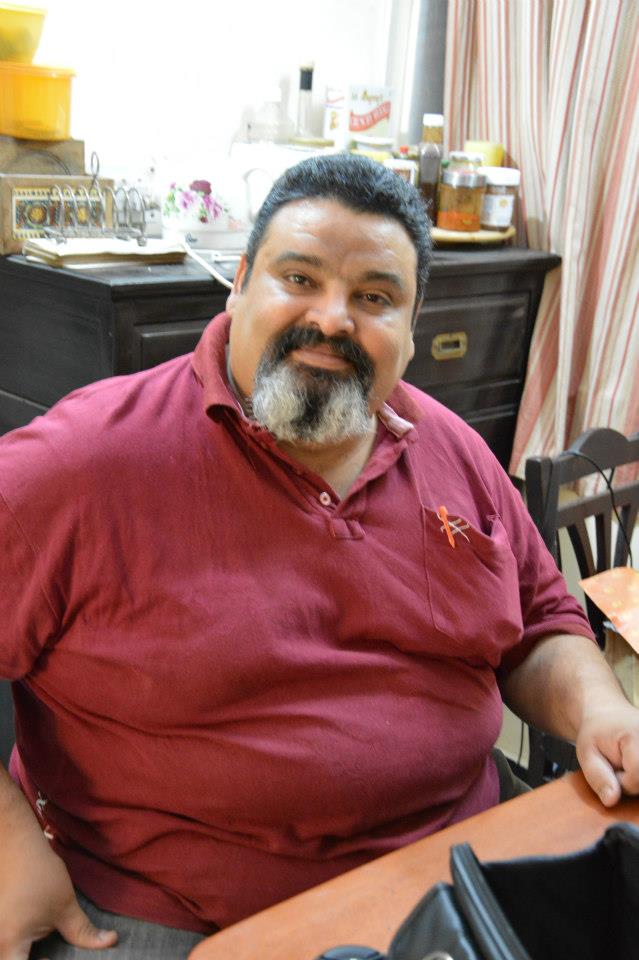
Shubha Khandekar spoke to Dr Kurush Dalal (in pic below), who teaches archaeology at the Centre for Extra Mural Studies (CEMS), Mumbai University and who has done extensive archaeological fieldwork in Chandore (Maharashtra), Sanjan (Gujarat) and Balathal (Rajasthan), about gadhegals, which have a quaint and fascinating history.

Shubha: What is a gadhegal?
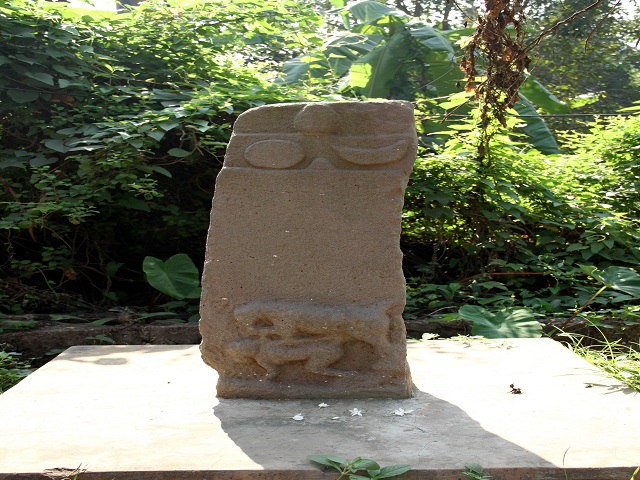
Dr Dalal: A gadhegal is essentially a three-part stone slab in which the top part shows the sun and the moon, with or without a kalasha. The middle part consists of an edict, the shilalekha, which is usually the grant of a plot of land and sometimes of a house to a benefactor. The lowest part of this stone justifies its name gadhegal: it explicitly shows a donkey in sexual congress with a woman.

S: Why such a strange depiction?

Dr Dalal: A gadhegal needs to be seen in its totality, as therein lies its importance as historical source material.

The sun and moon symbolise perpetuity, the kalasha indicates prosperity. The graphic has evoked different interpretations: some feel that anyone who dares to violate the royal decree is being threatened with the most disgusting of punishments: that his mother would be violated by an ass. Others feel that it symbolically represents Mother Earth, and the ass (the vehicle of the goddess of pestilence and plague – Sheetaladevi) represents drought, famine, desolation that would come visiting anyone who defies the royal edict. A gadhegal is thus an Ass-Curse-Stone.

S: What is its significance for the study of history of Maharashtra?

Dr Dalal: These gadhegals are the markers of the Shilahara period as, being essentially land grants, they indicate the extent of the empire of the dynasty and sub-dynasties. The Shilaharas who reigned from the mid 10th to 13th centuries, were the first purely Maharashtrian dynasty that ruled the coastal areas of Konkan. They were initially the feudatories of the Rashtrakutas, who were responsible for the creation of such monumental beauties as the Ellora and Elephanta caves.

The earliest inscriptions in Marathi (in Maharashtra) are seen on gadhegals. A large number of early medieval land records and place names are also found on these gadhegals. The locations indicate the distribution of the cadet branches of the Shilahara dynasty, namely the Northern, the Southern and the Kolhapur Shilaharas. The language is either heavily Sanskritised Marathi or Sanskrit.

The word ‘gal’ means a stone in Kannada and is a common term associated with hero-stones (Veergal) and Sati-stones (Satigal) which saw their probable origins in Karnataka but they abound in Maharashtra too, and have evolved in a distinctive form. The gadhegals though are unique to the west coast of Maharashtra and Goa with a single exception from Gujarat.

Related to gadhegals are the sati stones and the hero stones. These often bear inscriptions in Karnataka but sadly not in Maharashtra. That is how the gadhegals in Maharashtra have evolved from their earlier avatars.

S: Where and how many gadhegals are there in Maharashtra and how are they different from those in Karnataka?

Dr Dalal: In Mumbai itself there are/were at least 12. There are about six or seven gadhegals with the Chhatrapati Shivaji Maharaj Vastu Sangrhalaya in Mumbai. There is one at the Ram Mandir, near Charni Road, there is one from Nalasopara, one from Powai and one from Vasai. There is one recorded from Jogeshwari which is now in Portugal, and there are probably others in the environs of Greater Mumbai which haven’t been identified.

There are many more on the Western coast. One has been reported from Porbander, Gujarat, perhaps relocated from Maharashtra. Gadhegals are strewn in the belt from Thana to Goa. A few are inland: there are two at Tuljapur, one at Satara and a couple in Kalyan.

However, this being a poorly-researched subject, who knows how many would be lurking in the fields, homes and shrines of the Konkan?

S: Which are the most famous gadhegals in Maharashtara?

Dr Dalal: Eminent Marathi scholar SG Tulpule has identified a gadhegal at Akshi (there are two here) close to Alibaug in the Raigad district as the first ever inscription in chaste, though archaic, Marathi. It is a land grant by King Keshideva. Fortunately, it has a date on it: Shaka 934, which works out to 1012 CE, which means, as of today, this gadhegal is exactly 1,000 years old! This should have been the occasion for great celebration. But instead, we see only neglect, apathy and ignorance from all quarters! Wind, rain and sun have almost completely erased the inscription today due to our apathy.

Another at Diveagar issued by King Anantadeva records the donation of land and a house. It is datable to 1137 CE. This gadhegal, whose original provenance is not known, was rediscovered and reinstated by the efforts of the Centre for Extra Mural Studies (CEMS), Mumbai and India Studies Centre (INSTUCEN) Trust.  Two more in a damaged state have also been found in the vicinity.

Interestingly, a gadhegal issued by King Aparaditya I, originally at the Jogeshwari caves, was taken to Cintra in Portugal and was published from there. It has 22 lines in Nagari script which record a donation of houses to important people in the royal court.

What are your suggestions for the conservation of gadhegals?

The inscriptions are in low relief and hence they get weathered and worn out fast. Intensive conservation efforts are needed to protect this heritage. A simple initial step could be the erection of a small shed over the stones and a careful photographic recording along with their impressions.

CEMS is currently working on three gadhegals at Diveagar and another one close by at Deokhol.

For conservation it is necessary to harness popular support by making the people aware of what these gadhegals are.

Possibly with the best of intentions, the villagers often wash and scrub them, and coat them with vermilion. This has to stop. They must be told not to move them and instead erect a shed around them for protection against the sun and rain. The historic gadhegal at Akshi has weathered so much that but for a faint trace of some letters, all of it is blank!

Private agencies and the local Government must come forward to create resources for the conservation and the government must provide generous support. They are today lying in isolated places, scattered all over the countryside. We must create local museums where these artefacts are displayed. We should create fibre glass replicas for sale to generate revenue.

The tradition of gadhegals continues right up to the Bahamani period. At Dabhol has been found a gadhegal that has inscription in Arabic and Marathi, but no graphic representation.

If the local people, local panchayats and the State Government join hands and also get private agencies involved, conservation can bring knowledge, pleasure as well as revenues.

(Featured image courtesy Dr Kurush Dalal. Image shows an Akshi Gadhegal dated 1012 AD by SG Tulpule and which according to him contain(ed)s the oldest Marathi inscription in Maharashtra.)

Categories
Event

Walk of art

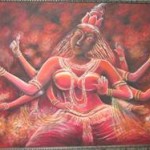
Artist Renu Mital is showing her work at The Trident, Nariman Point, starting from today. Do check out her interpretation of ‘Survival’.

Too often, we complain of the city not hosting enough art events every week. For a city teeming with talent, and teeming even more with people wanting to see the work of young artists.

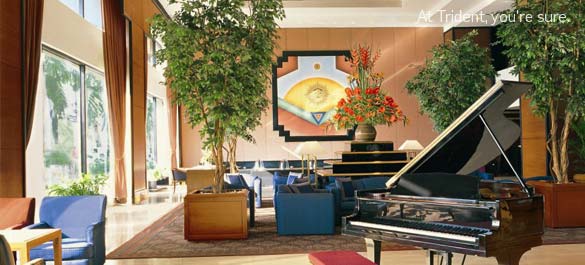
Since 1996, The Trident, Nariman Point, claims to have recognised these needs, and put up the Trident Art Walk for lovers of art in the city. The Art Walk claims to showcase “talents evolved by the magical triplet of brush, paint and canvas,” and takes place every fortnight in The Oberoi Shopping Arcade.

Starting today, artist Renu Mital is showing her work at The Art Walk, till April 14. Titled ‘Art Treasures’, Renu’s work deals with the theme of survival, through oil on canvas. Check out her work below.


Categories
Tech

Book your next holiday at a kiosk

MTDC to install touch screen kiosks to help users book holidays at MTDC resorts; first one installed at Marine Drive.

It is summer time and everyone’s heading for a holiday. To make the process of booking accomodation for your holiday easier, the Maharashtra Tourism Development Corporation (MTDC) has hit upon the idea of installing touch screen kiosks at various spots in Mumbai and the State.

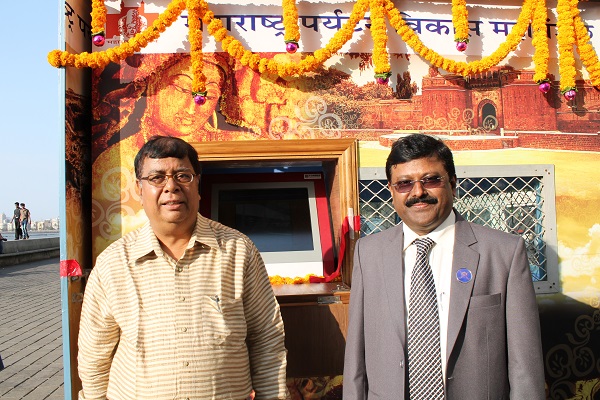
To this end, the first such kiosk was installed a couple of days ago at Mumbai’s Marine Drive. The kiosk and others like it will enable users to get information about tourist destinations in Maharashtra, in both Marathi and English. Plus, once you browse the information and make a destination choice, you can book your stay at an MTDC resort in that destination, as well as book train tickets to get there.

As per a release from MTDC, the plan is to “set up 300 such kiosks at various tourist destinations in Maharashtra, at Government offices, railway stations and airports. Within Mumbai, the kiosks will be put at CST, Dadar, domestic and international airports, Sanjay Gandhi National Park etc.”

(Picture courtesy MTDC. Image shows Jayant Kumar Banthia. Chief Secretary, Government of Maharashtra and Dr Jagdish Patil, Managing Director, MTDC, inaugurating the kiosk at Marine Drive)

Categories
Big story

At last, State to reward police who investigated 26/11 attacks

Five years after the 26/11 Mumbai terror attacks, State Government clears proposal to reward investigating police team for their efforts.
by the Editors | editor@themetrognome.in

It’s almost like a belated Christmas spirit has taken over the highest offices in Mantralaya. While the Government made the news yesterday for awarding Rs 1 crore each to three women kabaddi players who clinched the World Cup for the country last year, the State has also passed a Government Resolution (GR) to reward a contingent of 46 police officers, mid-level officials and constables, who investigated the horrific 26/11 terror attacks in Mumbai.

In a GR issued on March 25, 2013 by the Home Department, it is learnt that the Government is setting aside Rs 6,58,000 to be awarded in lieu of cash rewards to 43 of the 46 police personnel investigating the 26/11 attacks. Three officers – Rakesh Maria, Deven Bharati and Ashok Durafe – are to received commendatory letters, the GR said.

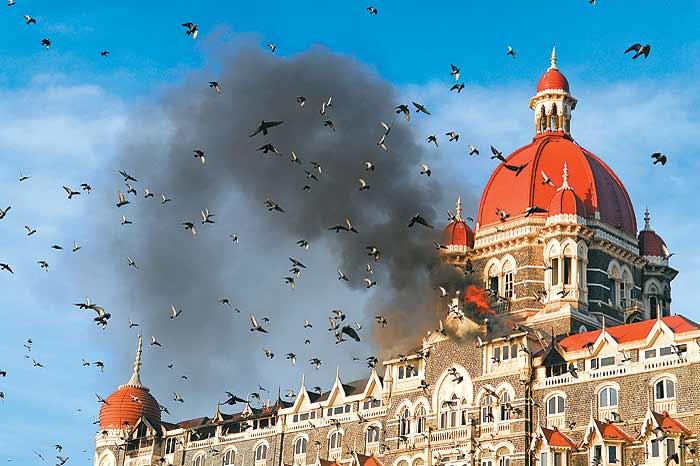
It may be remembered that after the terror attacks on November 26, 2008, in which timely and courageous police action helped nab a terrorist alive – probably a first in a terror operation of this kind anywhere in the world – and helped conclusively prove Pakistan’s hand in the strikes, a police crack team got to work to investigate the case. Headed by Joint Commissioner of Police (Crime) Rakesh Maria, and supported by Additional CP (Crime) Deven Bharati and ACP Ashok Durafe, the team probed the attacks and prepared a mammoth 11, 750-page chargesheet in three months after the attacks. Thereafter, a 1,500-page supplementary chargesheet was filed.

A few months after the attacks, the State Government had announced that it was mulling a cash prize for the police personnel investigating the case. However, the final amount and how much each of the 43 officials will receive, has been decided only now.

Of the awardees, the highest cash prize goes to Ramesh Mahale, the chief investigating officer who was in the Crime Branch (and who has resigned from his post a few months ago) – he gets Rs 1,00,000. Five others get Rs 25,000 each, while constables get Rs 5,000 to Rs 7,000.

About the case:

– The reward comes in recognition of successful investigation into the attacks, and the capture of a live terrorist, Ajmal Amir Kasab.

– The attacks took place over a period of 62 hours, and resulted in the death of 170 people.

– The trial in the case started on May 8, 2009. The State examined 649 witnesses during the trial.

– Kasab was held guilty on 31 counts, and awarded the death penalty on five counts.

– Kasab filed an appeal against the lower court’s verdict in the Bombay HC, which upheld his death sentence on February 21, 2011.

– Kasab was hanged to death at Pune’s Yerawada Jail on November 21, 2012.

 (Picture courtesy outlook.com)

Categories
Wellness

Holi hai!

Heading out to play Holi? Presenting some before and after-the-revelry tips for you to remain safe from Holi’s ill effects.
by Dr Ajaya Kashyap and Dr Abha Kashyap

Part III of III

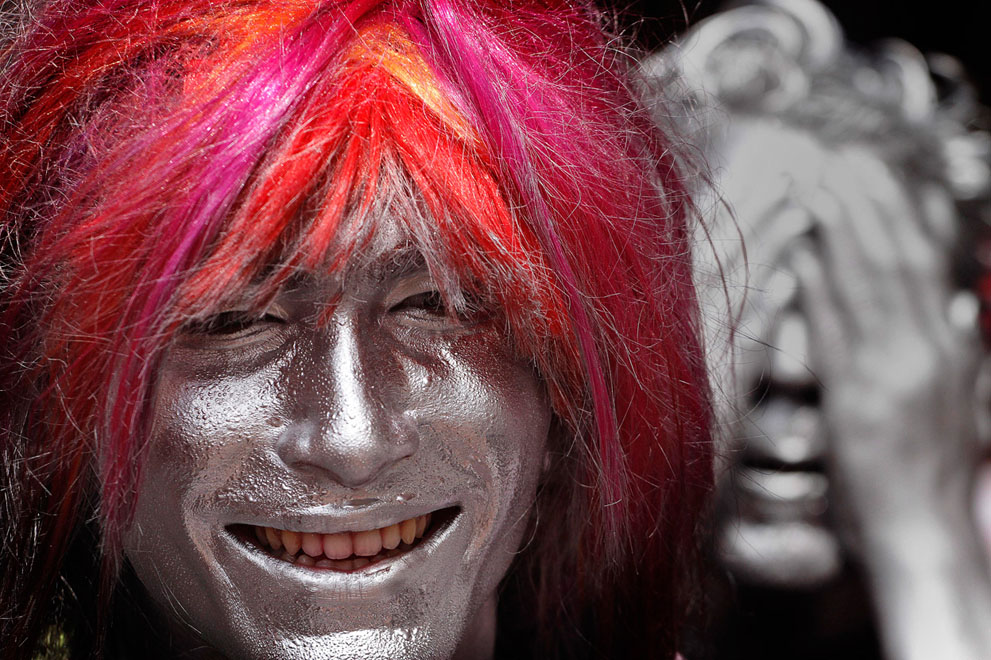
It is Holi today, and if you’re reading this, chances are you’re looking for safe ways to play Holi. Or it’s possible that you’ve got colour all over yourself and nobody, including yourself, recognises you.

Either way, we’ve got some tips that will help.

Try to dissuade people from applying colour all over your face with their hands. If you fail to do so, be especially careful in keeping your eyes and lips tightly shut. Always request the person not to smear the colours near the eyes.

Apply cold cream around your eyes and make a thick coating of it over there. This would ensure that the colours can be easily removed when you wash your eyes. When trying to remove the colours around your eyes, keep your eyes tightly shut and use warm water.

You can cover your hair with a dupatta/bandanna and a polypeptide-based gel can be applied to partially repel colour.

Caring for your eyes is equally important while playing Holi. People wearing contact lens should take them off before they begin to play with the colours. When somebody is spraying water colours on your face, keep your eyes shut to prevent damage to the pupil, cornea and iris.

After you’re done playing Holi:

– Don’t sit in sunlight after playing Holi. It makes colours difficult to remove and harms the skin as well. Sit in the shade even when playing outdoors.

– Don’t remove colours by scratching your skin with your nails. Use a granular scrub on the body and face to get rid of the colour.

– Wash off colour from your hair two to three times with shampoo and remove the colour completely. Apply a lot of moisturiser on the body and face after taking a shower.

– Wash the colour off your body at the earliest. Use a basic body wash and if the colour doesn’t go off after the wash, try the aforementioned remedy.

– Make a paste of gram flour (besan), juice of lemon and heavy cream or some milk and apply it on the stained area, let it sit for few minutes and then remove it by taking it off with olive oil.

– Hair should be deep conditioned after the wash. Make sure your hair is clean. Apply a hair mask after two-three days to cure the damage.

– Remove the colour from your face by using a light oil like jojoba or grapeseed. Wash off with face wash and lukewarm water. Follow up with lots of moisturiser.

– Do not bleach, shave, wax, go for facials or clean-ups the following week. Give your skin and body some time to recover from the damage.

Have a happy and safe Holi 🙂

Dr Ajaya Kashyap is Chief Surgeon in Cosmetic and Plastics from Fortis Hospital; Dr Abha Kashyap is an aesthetic image consultant, MedSpa.

(Picture courtesy theatlantic.com)

Categories
Big story

Paani cut!

The BMC cuts 745 water connections in 22 municipal wards during a special drive conducted to assess non-payment of dues.
by The Editors | editor@themetrognome.in

The State of Maharashtra is grappling with the worst water crisis in years, and in Mumbai, 22 wards have a different water crisis of their own. The Brihanmumbai Municipal Corporation’s (BMC) Hydraulic Engineer’s department, during a special drive in Mumbai starting March 15, 2013, found that several wards in the city had not paid its dues.

As a result, the department has cut as many as 745 water connections in 22 wards in Mumbai for non-payment of outstanding dues. So if your house taps have been running drier than usual, this could be the reason.

The ward-wise cut connections are:

Ward A: 10

Ward B: 1

Ward C: 14

Ward E: 7

Ward F/North: 15

Ward F/South: 12

Ward G/North: 20

Ward H/East: 49

Ward H/West: 28

Ward K/East: 33

Ward K/West: 43

Ward L: 50

Ward M/East: 124

Ward M/West: 145

Ward P/North: 10

Ward P/South: 27

Ward R/Centre: 10

Ward R/North: 21

Ward R/South: 24

Ward N: 31

Ward S: 23

Ward T: 48

(Source: Hydraulic Engineer’s department, the BMC)

(Picture courtesy thesquaredfactor.wordpress.com)

Exit mobile version