Categories
Achieve

How we made a movie

A student writes about the experience of being part of a filmmaking team. The film premieres today at Mumbai University.
by Bhagirathi N

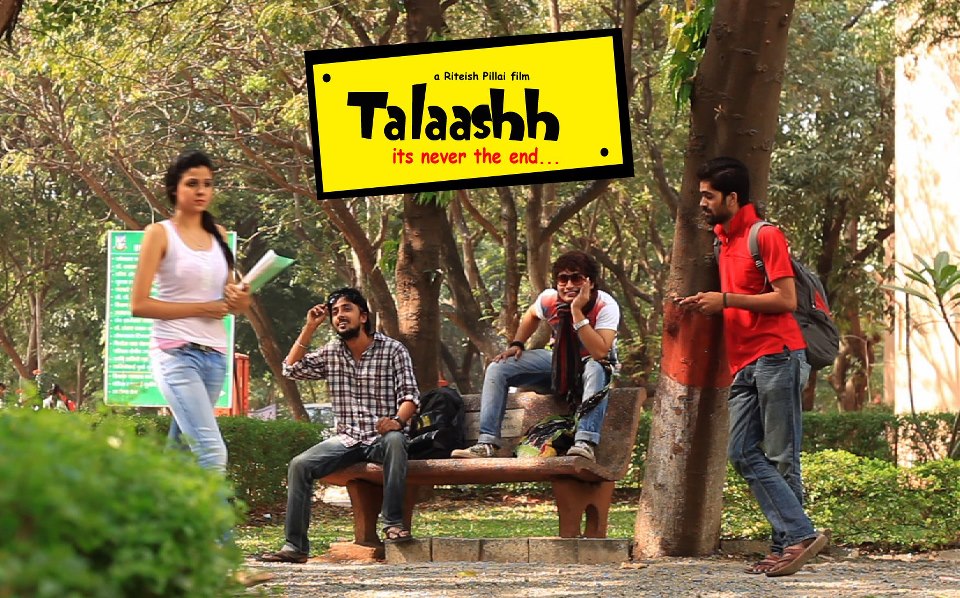
The students of Mumbai University’s Department of Communication and Journalism made an in-house film recently. Our team comprised 15 people altogether, including the actors. The film is a romcom and we named it Talaashh: It’s Never The End – and no, our film bears no resemblance to the recent Aamir Khan starrer, apart from sharing a name.

This is the promo of our film:


Before I ever thought about being part of a filmmaking team or making a film of my own, in the days when my film experience was devoted solely to watching, criticising or critiquing a film, I had never realised the effort that goes into making a movie. I often confused ‘criticising’ with ‘critiquing’, and realised only later that the first one is about passing judgement on a work while the other one is about a careful judgement considering all the merits and faults of a work.

I learnt all this while and more while working on our film. The credit goes to Riteish Pillai, the film’s editor and director, who thought I could make it, and who I assisted for the film’s sound.

Talaashh: It’s Never The End was written by Prateek Singh. The film’s director and editor, Riteish, was the winner of the Best Documentary prize in 2012 for his entry in the Mumbai Academy of Moving Image (MAMI) festival. Sumit S Angne, director in-charge of the making of the film, won the Best Documentary prize in the ‘Young Film Makers Competition, Chennai’ in the same year.

The film Talaashh is about Nasir’s (Nasir Imam), Abhay’s (Abhay Mishra) and Prateek’s (Prateek Singh) talaash in life, with a whole lot of twists and turns by other characters – Riddhima (Riddhima Sishupal), Singham (Brajesh Mer) and Subhu (Subbaiah Moopanar). Romance and comedy rule the storyline.

Other members of the crew are prizewinners, too – Nasir and Prateek had recently secured second place in the Helen O’Grady International ‘Lets Act’ drama competition held at Sophia’s College on January 5, 2012 for their play The Darkest Desire.

Our film’s Director of Photography was Lavesh Dali, who shot the film on a Canon EOS 550D. Believe it or not, the entire film was shot in a week; the post-production, however, took much longer. Our team devoted a month and two weeks to the film’s overall production.

During the course of post production, we decided to record a theme song since we had a composer, Karthik Rao, in our midst. Karthik composed and voiced the song with Sanchita Kale, while Ashay Sahasrabuddhe contributed the lyrics and Noel D’Souza played the guitar.
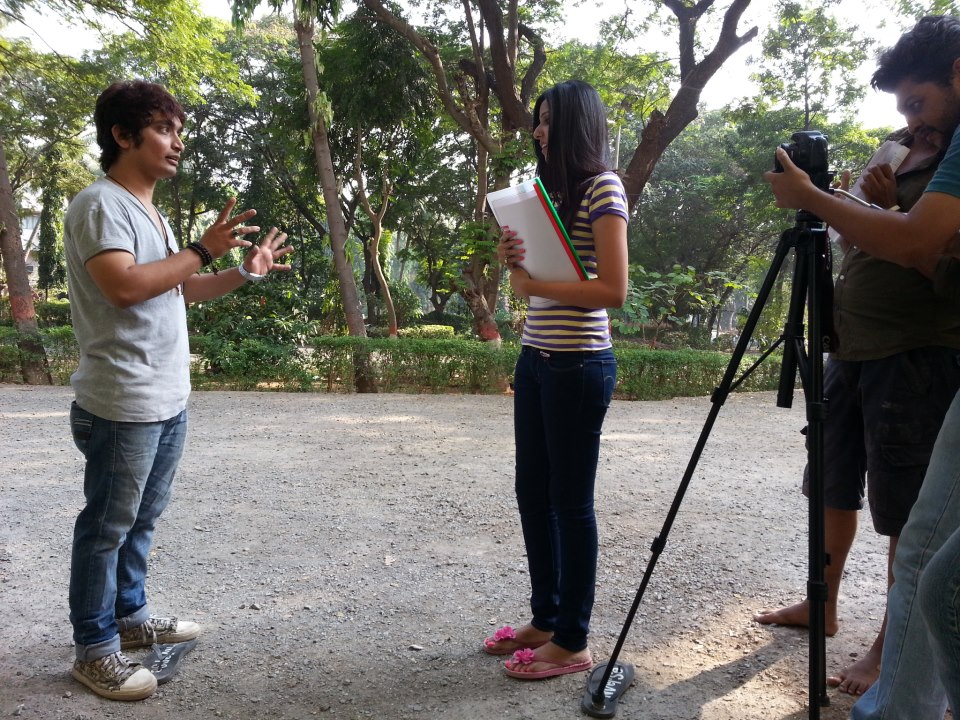
 

All in all, it was a really fun experience working on this film. Though I have restricted the roles played by crew members by assigning them posts (which we had to do for the film’s credits), the fact is that each of us put in our best in all aspects of pre-production, production and post-production. We are proud and excited that the film screens today at Garware Auditorium, University of Mumbai (Kalina) at 2 pm, with film director Vishal Inamdar and assistant director Suchitra Varma officiating as chief guests.


Categories
Deal with it

A clean juloos this year

A group of volunteers ensured that the recent Arba’een procession was a clean, almost zero-trash one, and were largely successful.
by Shezanali Hemani

Arba’een, meaning forty in Arabic, is a significant day marking the 40th day of Martyrdom of Imam Hussain, the Grandson of The Holy Prophet Muhammad. This day, 20 million mourners gather in Karbala, 110 km from Baghdad, Iraq on the Holy Shrine of Imam Hussain. Commemorated by Muslims all over the globe, this tradition of remembering Hussain on the 40th Day has its significance in historical events which occurred 1,400 years ago, as well as a part of the 40-day mourning period practiced by most cultures in the world.

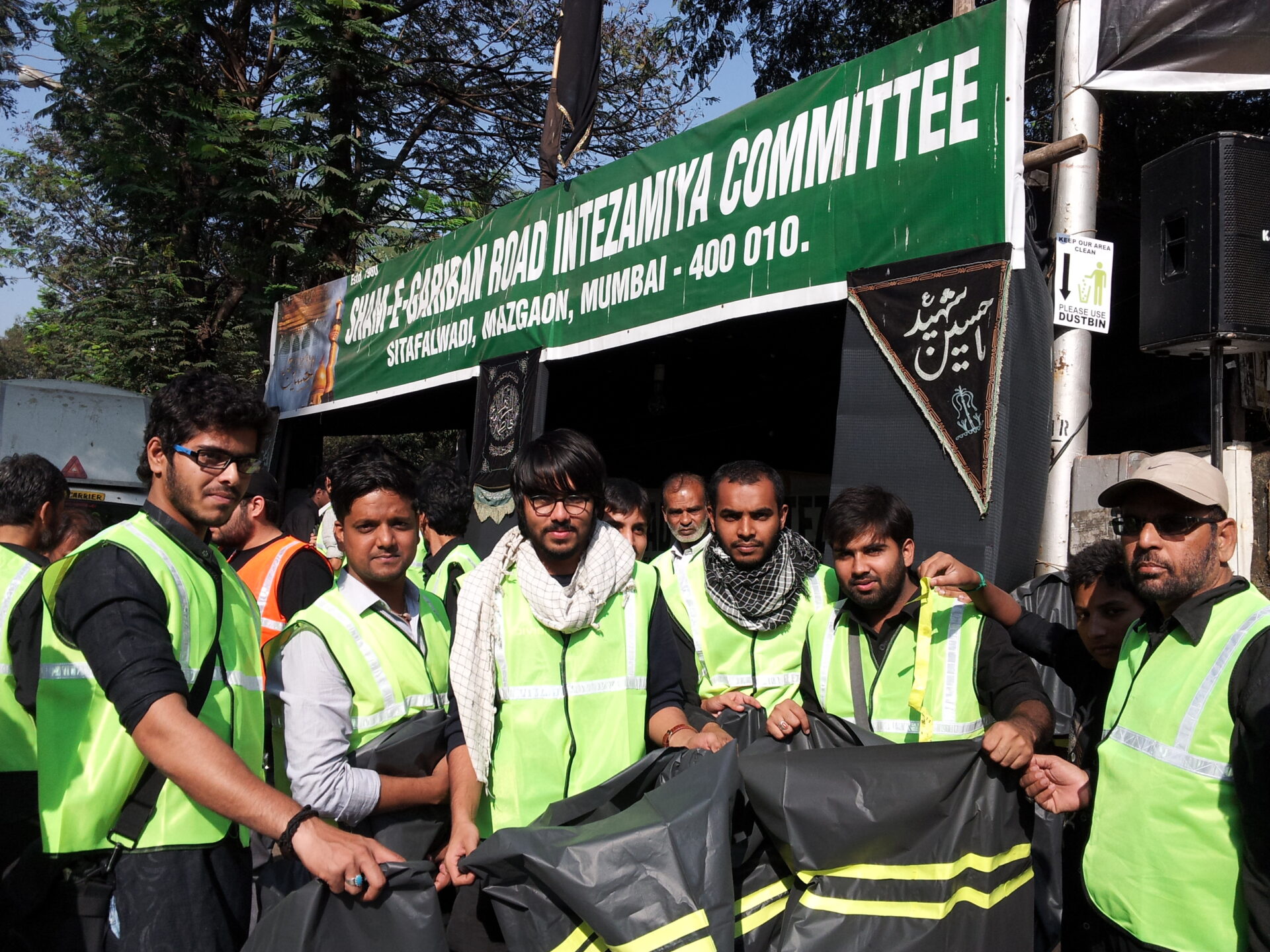
However, a group of youths including Shias, sunnis and even a few Hindus, numbering to over 100 people, revolutionised the face of Arbaeen juloos in Mumbai this year. The idea to keep the juloos (procession) clean had actually taken root two years ago, but this year, it could finally be implemented.

Today, when we mourn the Prophet’s grandson’s death, for him who stood up in order to support the preaching of his grandfather, it seems very wrong for his followers to create a mess on the street and leave it for the BMC and others to clean. Also, ethically speaking, if we take so much care and effort to keep our own homes clean, why should we treat the city any differently? The city we live in we should retain its dignity, no matter what the occasion.

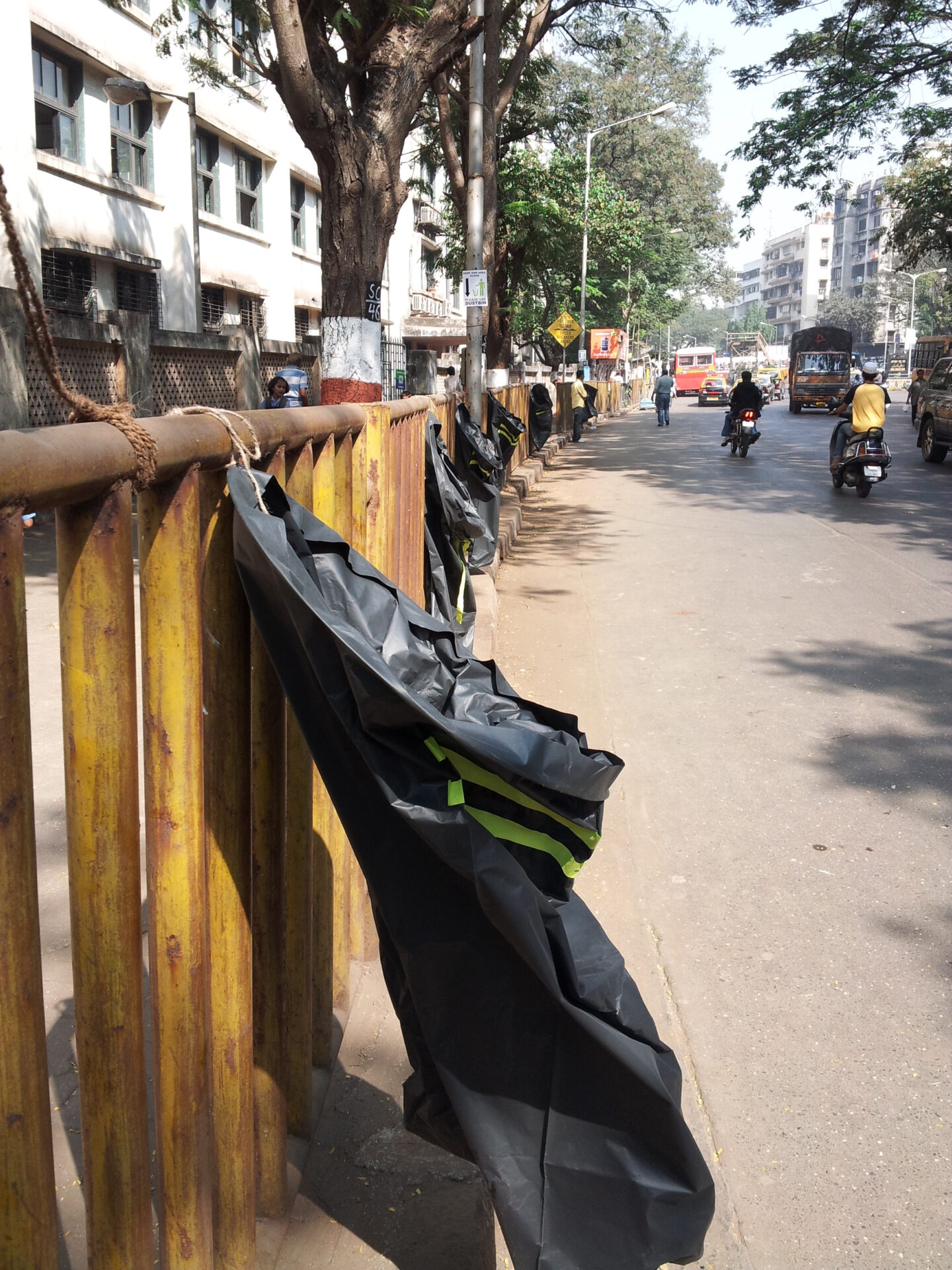
On January 3, the rest of the volunteers and I tied big trash bags at several spots along the juloos route, so that visiting pilgrims could throw such waste as glass, paper etc. The trash bags were laid all along from JJ to Mazgaon. More than one lakh people are believed to be present in this juloos from all over Maharashtra every year, most of them dressed in black clothes. The procession starts at 4 pm from Mogul Masjid near Bhindi Bazaar and ends at Rehmatabad Cemetery at Mazgaon.

Every year, a lot of waste is left behind on the road after the juloos ends. But this year, people noticed the difference. The owner of Greenfield restaurant (which falls on the route) said, “The waste this year have gone down by 80 per cent, compared to the previous juloos. This is a very good thing and it should continue. People think well about this kind of work.”

Aliraza Namdar, well known TV and theater actor also appreciated the hard work done by the volunteers and wished them luck for future projects. Owais Rizvi, Tabish Mehdi, Mohsin Fallah, Akeel Abbas Naqvi, Sohel Ajani, Ahmed Rizvi, Ali Miya, Asad Mirza, Rohan Gopalan and others were part of volunteer group.

Arba’een  is marked on the 40th day of the martyrdom of Imam Hussain.  Prominent religious scholars and leaders from the community participate in the juloos.

(Pictures courtesy Shezanali Hemani)


Categories
Achieve

It’s a Mirakle!

This courier company employs hearing and speech impaired persons, thus giving them a good shot at building a stable future.
by Nidhi Qazi

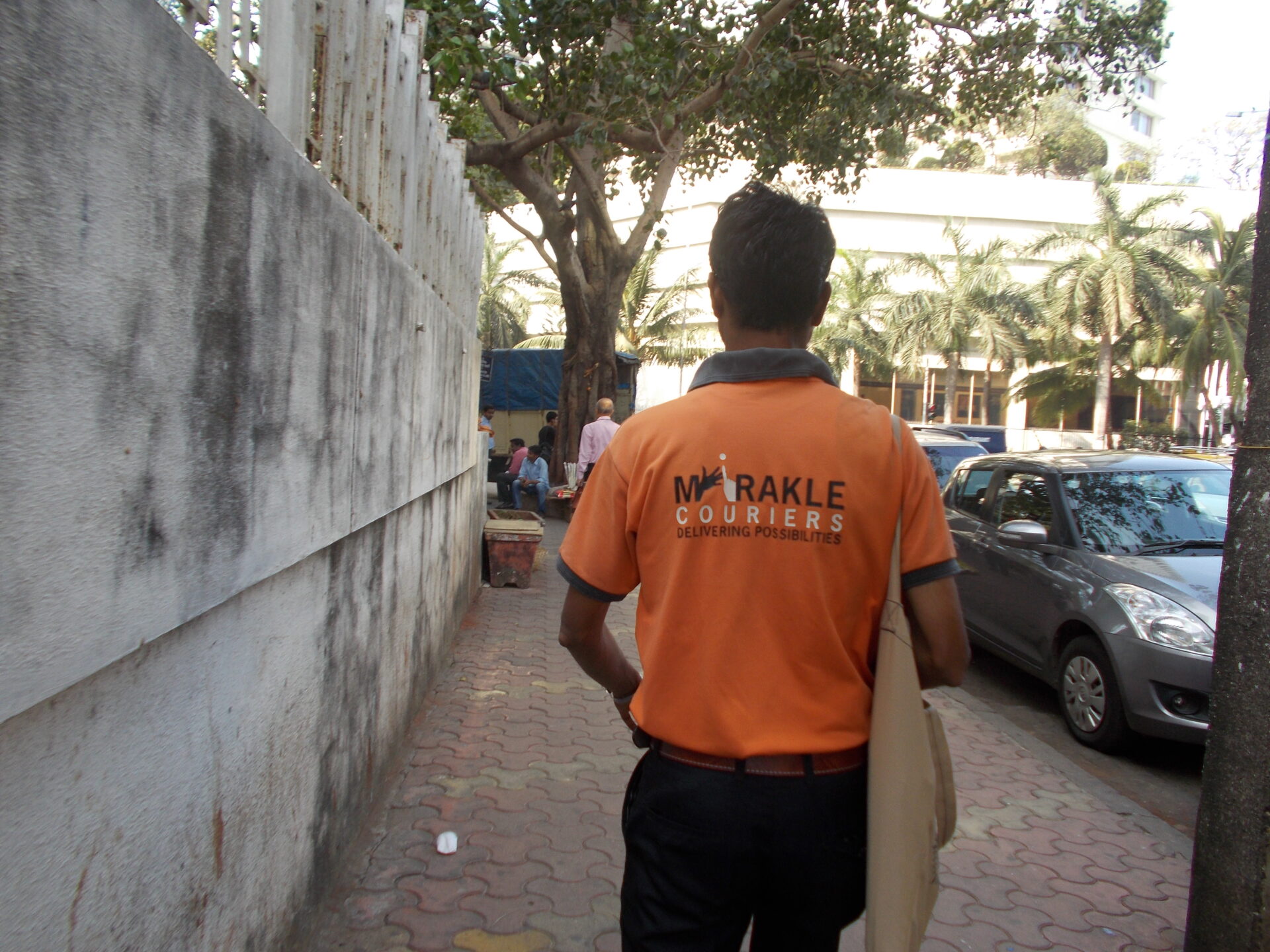
It’s a pleasant morning. Mumbai is in its usual busy mode – office-goers rushing to their respective workplaces, food vendors  serving breakfast, taxiwallahs ferrying people to work, youngsters chirping at kiosks. A lot of early morning energy that the city bustles with is at display. Amidst all this, there is another place that’s as busy – the office of Mirakle Couriers.

Cut to its Churchgate branch office and one finds all the employees busy sorting couriers, Googling destinations for delivery. These are employees busy making their lives meaningful and busy building their lives by overcoming their physical weakness: hearing impairment.

Started in 2010 with just one employee, Mirakle Couriers today employs around 44 hearing and speech-impaired adults in its centres at Andheri and Churchgate. While men are allocated areas for delivering in Mumbai, women look after the sorting, data entry and record-keeping. Although there is no qualification needed, the company looks for those with a basic understanding of English.

I meet Rinku, a young chap who hails from Gorakhpur, Uttar Pradesh, who is in his late 20s. Rinku’s designated area of delivery is Nariman Point. So I set off with him on his rounds.

The moment we step out of the office, he uses sign language to explain the surrounding areas. After his explanation, I now know the LIC building, the Air India office, Nariman Point, Fort city, the various public parks, prominent office buildings, and other landmarks. In between, I offer him a pen and paper when I’m unable to understand certain things, but he makes it a point to not use the proffered materials. Instead, he tries and succeeds in expressing his point using sign language.

We reach our first destination. The receptionist and Rinku exchange smiles. The former accepts the package from Rinku, and we move to the next destination. Rinku walks swiftly, and it becomes difficult to keep pace with him. I take a deep breath and follow him. “You like Mumbai?” I ask, and Rinku nods an excited ‘yes’, explaining, “I can’t go back to my village. There is nothing to look forward to there.”

The company follows Indian sign language for all its daily transactions, ranging from pick-up, sorting according to pin codes, and delivery. The management and operations are also sign language-based.

An arts graduate, Rinku works with Mirakle six days a week. How has Mirakle changed his life? He smilingly replies, “I am confident now. I feel good about what I am doing.”

From there, we walk to some more places in the Nariman Point area, amid the hustle bustle, amid the sound of silence between Rinku and me. “When do you plan to get married?” I ask, and he chuckles. Using the signs which spell out ‘love’, he expresses, “When I find love.”

We reach some more destinations with ease. At one point, Rinku gets stuck, but only to find help in the Google Maps. He takes out his mobile phone and finds the directions to an office where he has to deliver the last courier.

Done with all the deliveries, we now head back to the office. And it’s time to say goodbye to Rinku and his colleagues.

What about the competition in the market when big players like Blue Dart, DHL exist? “We do have a very strong competition,” says Nimesh Pawar, Operations Manager, Churchgate branch. In fact not all is hunky dory when it comes to dispelling clients’ cynicism towards deaf and mute. “People do doubt if deaf people can deliver on time; whether they can deliver at all,” he adds.

But all this cynicism is countered and myths are broken as Mirakle does what it really stands for – Delivering Possibilities.

(Picture courtesy Nidhi Qazi)


Categories
Deal with it

Animals rescued from captivity

The Thane SPCA rescued several animals kept captive by a family in Bhayander. Mongoose, turtles and black kites were rescued.
by The Thane SPCA

The Thane SPCA (Society for Prevention of Cruelty to Animals) receives tip offs about animal cruelties and illegal keeping of wildlife many times a week. Last week quite a few people from Bhayander reported a family keeping several mongoose, turtles and black kites inside their garden and home. All these animals are classifieds as wildlife and no citizen is allowed to be in possession of such animals in our country.The neighbours were scouting for an organisation to complain to since many months, as they were fed up of seeing the animals in captivity.

The action had to be well-planned. First, we had to confirm that the complaint was true. To do this, our support staff  pretended to catch an injured dog in the area and went up and down the bungalow a few times. The mongoose could clearly be seen. A couple of black kites also could be seen inside the room. The turtles, however, were out of sight.

Since the Forest Department would not be available till after Christmas, we decided to tell them after December 25 to ensure that the news did not leak out. To ensure that they accompany us, we offered our ambulance to carry the animals back.

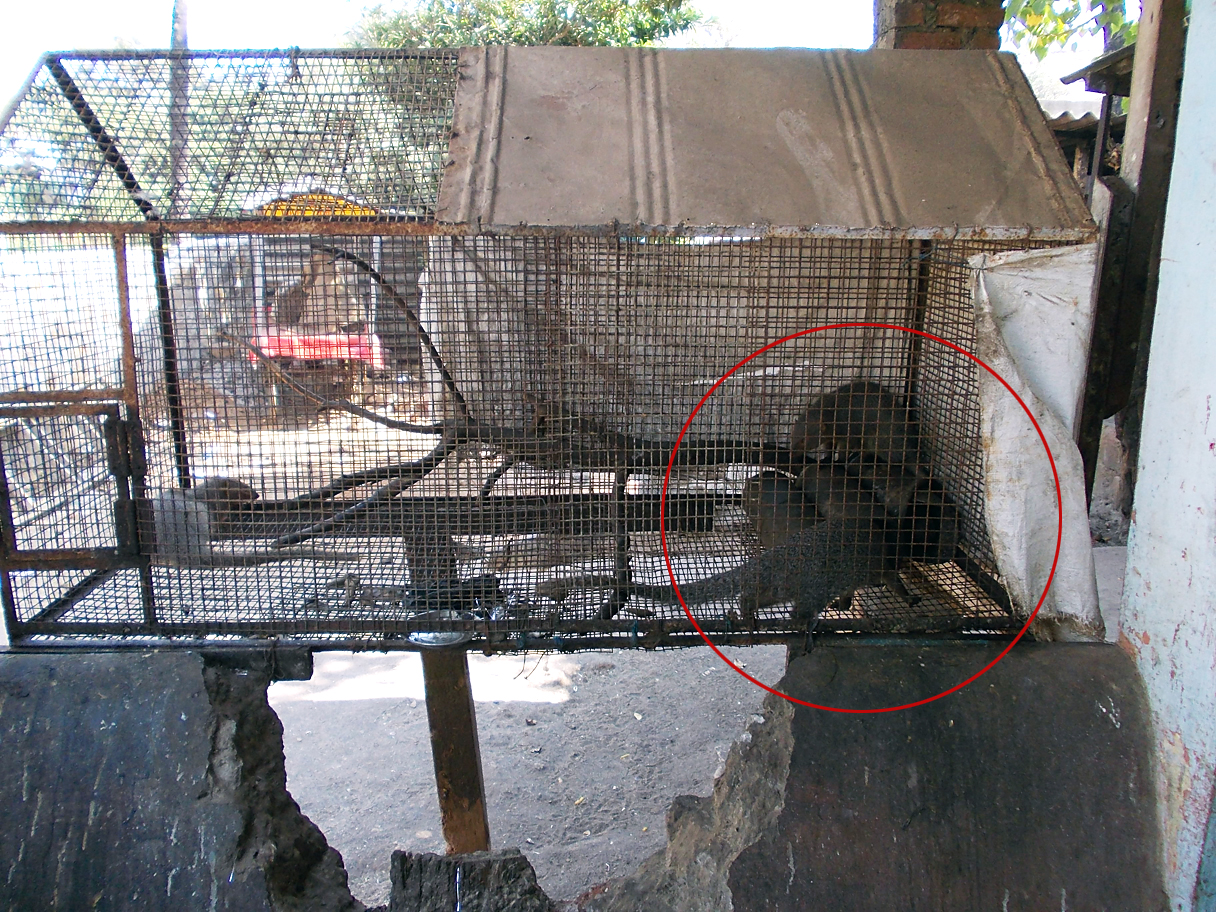
It was a risky raid, even with the Forest Officers present, because this is an extremely closed community on the outskirts where every family gets solid backup from the rest of the community. So we planned to do this between 12 and 2 pm when most people would be away at work. Luckily, we were able to sweep up the animals and leave just when crowds had started gathering. The mongoose were in the worst condition, in a dilapidated rusted cage where they were provided with iron pipe pieces to nest in and hide. The turtles were all in individual buckets with squalid water. Obviously, with no space to move around. All animals were handed over to the Forest Department.

Thane SPCA regularly provides the Thane Forest department with personnel and vehicle backup. This time, we will appeal to the Forest Department to provide their Officers with a backup team in case of emergencies, and definitely with some basic arms like batons for self defense. Till then, Thane SPCA has offered the Mumbai Forest Office the services of our staff and ambulance, albeit with a few days prior notice to schedule their daily rescue work.


Categories
Deal with it

Where in the world is JB Talleu?

This Frenchman came to Mumbai in 2007 and vanished without a trace. His family and friends still look for him.
by Vrushali Lad | vrushali@themetrognome.in

It is a story that continues to baffle me, five years after it happened. I used to be a correspondent with a Pune-based paper in 2007, when the news of French national Jean Baptiste (JB) Talleu’s disappearance first broke out. Apparently, the 27-year-old was to embark on a bicycle tour of India, starting from Pondicherry, and he arrived at Mumbai on December 7 that year. The only evidence of him being in Mumbai at all was that he withdrew money from an ATM near Film City, Goregaon.

Nobody’s seen or heard of him since.

Somehow, I still write about JB every year.

The Talleus, especially his mother Marie-Claire, continue to fly to India and follow up every possible lead, of which there have been many. The Talleus and their friends here have made trips to several places in the South and North of India, while always passing through Mumbai to appeal to the authorities to help find their son. And yet, his mother, despite not knowing the fate that met her son five years ago in Mumbai, feels better the moment she gets here, because “this is where he was.”

I met a friend of the family, Dominique Hoeltgen last week in Mumbai. Dominique is a journalist who has lived in Mumbai before relocating to France two years ago; she met JB’s mother when the story first broke out, and quickly became friends with her. She has even helped in the search for the missing cyclist. “People have been writing to Marie-Claire on her email, telling her that they have seen a man who looks like JB. Whenever possible, I’ve followed up those leads myself, but all of them were dead ends.”

I ask her what she thinks happened when JB arrived at Mumbai. “I’ve thought about it and thought about it, and I think he was harmed by somebody here, may be for money. I find it strange that there is no trace even of his bicycle, so maybe he was mugged and his money and belongings were stolen. But I keep thinking that he is alive, he is just lost somewhere and that we have to find him.”

But why would JB, normally in the habit of contacting his mother whenever out on one of his trips, not contact her in five years? “I think he must have lost his mind,” Dominique suggests. “The people who have told us that they saw him, all of them insisted that the man they saw didn’t have any belongings. One person in Gujarat, a doctor, said that he spoke to the man who he thought was JB, and that the man told him that his belongings were all taken away from him when he came to India. The man had been sitting alone near a temple, and had a French accent,” she explains. Nothing came of that lead, either.

Even more puzzling is the police and French Embassy’s inaction in cracking the murder. “We made several trips to the cops, we pleaded with them to follow up the lead in Gujarat, but they didn’t do anything,” Dominique alleges. “We were even more surprised that the French Embassy did nothing, continues to do nothing, to trace its own national.”

Christmas approaches, and JB, a deeply spiritual person who is very close to his family, is still out there somewhere, lost. It’s another Christmas for the Talleus with no answers. Let’s hope they hear something before the next festive season.

If you have any information on the disappearance of Jean Baptiste Talleu, write to mctalleu@gmail.com

(Picture courtesy indiamike.com)

Categories
Guest writer

Sex and the city

Shifa Maitra recounts a recent late night ordeal in Mumbai, and says that Mumbai is only slightly safer than Delhi.

So Delhi is an awful place and women shouldn’t even visit. Well, Mumbai is just a tad better. Having lived in both cities and having returned here after a five-year stint in Delhi, I can tell you that living on your own as a single woman here isn’t as great
as it used to be. I am not comparing it to Delhi, but let’s put it this way, women can’t be as bindass as they used to be here. With women being molested outside a five star hotel on New Year’s eve, to a security guard sexually assaulting and killing a bright young lawyer, to acid attacks, stones being pelted at the ladies compartments in trains…all of it is a nightmare.

I recently had a shocker of an experience when I was returning home from a late night shoot. Thank God my driver was driving. It was around 3 am and at the Juhu beach turning, an SUV came very close to my car, with some guys inside it waving and screaming. My first reaction was to see if it was someone I knew, but my driver sensed trouble and stepped on the accelerator. I could see them screaming and making lewd gestures. I panicked and my driver warned me that he would be speeding – this car tried to block our way and stop in front of us. The entire ordeal lasted a few minutes but it was nightmarish. When I looked up, my driver had taken another route till we lost them.

I was telling a friend the next day about this incident, and she said that something similar had happened to her and a friend when they left from Wtf in Versova and were going home. We don’t have a Chief Minister, yet, who tells us that women should stay at home to avoid such incidents, but we are getting there.

Pepper sprays and learning taekwando are all very well. Drunk driving is something the city has been able to get under control, but all the same, driving alone past midnight is best avoided. A friend had a flat tyre late at night at the Garage Road in Santacruz, and she was pretty shaken up by the time she got home.

Another thing to avoid is going for a walk or a run at night. From Versova’s back road to the Carter Road promenade, women have had to deal with unwelcome attention for no fault of theirs.

Allowing electricians, plumbers and watchmen inside your home when you are alone is again a no-no. However inconvenient, call a friend or neighbour to hang around till the work is being done. Someone I know runs an agency for guards, and he was candid about the fact that background checks on those employed are not always done.

Taking an autorickshaw at night is asking for trouble. God help you if you light up a cigarette, you really may not get home. People who seem perfectly ‘normal’ when alone, when in a group become a mob that can’t be trusted. Colaba Causeway, Gateway of India, Linking Road and Juhu are areas that are hellholes, given that streetwalkers operate there and any woman out at night alone is instantly branded as one.

Crowded places are again a bane, whether it is Ganpati visarjan or Holi. New Year’s eve or the Bandra Fair, the minute a woman is in the crowd, it is assumed that the woman will ‘enjoy’ being groped and molested. Sad but true, that women are better off staying off the roads when these hooligans reign.

Well, the silver lining is that if a woman asks for help in a public place in Mumbai, people will step forward and help her. Walking into a cop station is also not as daunting as it would be in Delhi.

Keeping your mobile phone charged at all times helps, and calling up a friend when there is a hint of trouble makes sense. A friend who lived alone had a drunk neighbor banging on her door at one in the morning. Thankfully, she called us instantly and had only frayed nerves to deal with.

So, trust in God but lock your car, as the Dalai Lama said. Of course Mumbai is a rocking, fun city, but don’t push your luck.

Shifa Maitra is a media professional based in Mumbai.

(Picture courtesy Joshi Daniel)

Exit mobile version