Categories
Deal with it

Free up your Sunday – don’t do those chores

Instead, use this handy site to delegate shopping tasks, daily chores and home maintenance that you would normally need to do yourself.
by The Diarist | thediarist@themetrognome.in

You live in a city that sucks the life out of you. After working all week, your day of rest is actually taken up by tasks that you couldn’t attend to before – you have to pay the bills, you have to stock up your refrigerator for the coming week, you have to clean up the house – and before you know it, your body’s screaming for a pause but you still have a hundred more things to do.

And yet another weekend goes by. Before you know it.

That was what prompted Debadutta Upadhyaya (38) to start www.timesaverz.com, a one-stop chore-delegating service that helps harried homemakers and working professionals assign tasks to certified service providers, and thus free up their own schedules. Debadutta, co-founder and CEO of the company, comes with a formidable background in conceptualising and executing ideas from scratch, as also a long and successful association with sales. The company’s services are now being offered in Mumbai, a city that she feels, “experiences a bigger paucity of time than other cities.”

We chatted with Debadutta to know more about how her business can benefit Mumbai.

What prompted you to start Timesaverz.com?

As a homemaker and a professional, I always used to find myself pressed for time, juggling the two roles. I found it difficult to outsource some of the repetitive chores that could be handled by someone else, due to a lack of certified service providers. When we looked around, we found out that there are many like us who are in the same boat and would love to have certified help coming their way. That gave birth to the concept of timesaverz.com.

Starting with services that are the usual time-consuming suspects, the vision behind the company is to offer a helping hand for every job that an average homemaker can outsource to enjoy multiple benefits. We are hoping to enhance people’s multi-tasking ability without compromising on quality or service.

Please describe your professional background prior to starting Timesaverz?

I have behind me 16 years of experience at senior level positions in the media and communications space, shaping up many winning teams and businesses. A gold medalist in English literature and Mass Communication, my forte lies in building things from scratch and evolving them into category leaders.

Before setting off on an entrepreneurial journey, I was leading Vdopia, a leading video ad network’s APAC business. During my stint, Vdopia emerged to be a market leader in the video advertising space in India and also expanded operations into SEA and ME. Prior to that, I was heading sales and sales strategy function for Yahoo! India during which my team displaced the incumbent to secure the No 1 Internet Display Player position in 2007. I have been a proud recipient of the Yahoo! Ratna Award in 2006 and was honoured with the Indira Super Achievers’ Award in 2011.

What kind of market research did you have to undertake before going ahead with this project? 

We interviewed quite a number of working professionals with nuclear families, young working couples, working couples with old parents at home, and realised that the average time spent by them over weekends trying to attend to mundane household chores is, on an average, four to six hours. This leaves them very little time to relax and rejuvenate before the new week sets in. Each of them loved the idea of a certified help that they can rely on to free up their time from regular household chores.

How do you think your site would stand out amongst others, like chachii.com, which are already operational in the city? What is your USP?

Our USP is that we are a one-stop destination for most of your needs, be it daily chores, shopping or household maintenance. We act as a single service provider, so customers don’t have to go over six maintenance contracts with six different vendors for multiple requirements at home.

Which are the key areas that Mumbaikars require the most help with?

Our research shows that Mumbaikars need the most help with household essentials purchase, followed by household maintenance tasks.

How can a person use your site?

Users can choose between long term Timesaverz maintenance contracts, to one-time ‘Get Help’ options to get services on the household maintenance front. We have a well-stocked store for household essentials purchase, wherein users can buy things at the click of a button and decide the delivery time as per their convenience.

What is the size of your workforce? 

We have a small team of seven, but we have an extended network of service providers and partners across the city.

Can people reach you by telephone?

We have a helpline number +919022711888 which people can call on in case they want to request service over the phone.

(Featured image courtesy pastalavista.blogspot.com) 
Categories
Wellness

Mallkhamb is great for you

Cheap, multi-effective and with amazing curative properties for the blind, mallkhamb is an all-body workout that heals the mind, too.
by The Editors | editor@themetrognome.in

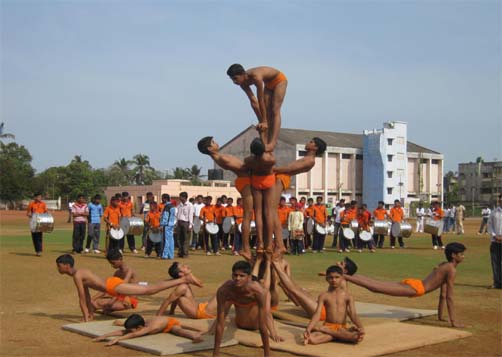
The evening is drawing to dusk, and Shivaji Park is beginning to slow down. Evening walkers are resting, talking, taking in the sight of other walkers stop as well. But in one corner of the park, a run-down building is buzzing with life. There are two wooden poles on which boys shimmy up and down. A few feet away, young girls snake up a stout rope suspended from the ceiling, holding the strangest of contortions for a few breathtaking seconds.

Away from the activity, Uday Deshpande, the chief mallkhamb coach at the Samarth Vyayam Mandir and the honorary general secretary of the Mallkhamb Federation of India, is at work in his tiny office. The Mandir was set up in 1929, and has trained scores of Indian and international sportspersons and yoga practitioners on its simple floors – teaching them mallkhamb, rope mallkhamb, kho kho and kabaddi as well.

But isn’t mallkhamb as difficult as it looks? “Of course it is,” Uday laughs (he’s been a practitioner since he was four!). “It’s simplicity lies in its degree of difficulty – it’s not just about climbing a pole and balancing on it. It takes every ounce of strength and concentration to perform the simplest of poses,” he explains.

The thing that ups the sport’s difficulty level is the fact that mallkhamb is an aerial sport. “A person’s fear complex increases the higher up he goes from the ground, and this is excellent for increasing focus,” Uday explains. “It takes a special ability to climb the pole against gravity or hold one’s body in a rope.”

Interestingly, the sport has several curative properties for the visually-challenged. “I teach at three blind schools in the city, and the results of mallkhamb on these children are fantastic. Since they are visually-impaired, they are conditioned to be careful, to not do anything without assistance. This makes them inactive and leads to a host of health issues.” He says that after practicing mallkhamb, which they can do without assistance, their concentration goes up, and their appetites improve.

“Several of my blind students later told me that they had started doing better in their studies after taking up mallkhamb,” Uday says. “Everybody should take it up – it costs next to nothing to set up (you just need to invest in a pole with a stand), and it offers a full-body workout like no other sport can. We prefer that people start learning it when they’re very young, but at our Mandir, we have even an 81-year-old man coming to learn!”

A heartening development is that slum children from Dadar and nearby areas are enthusiastic learners of the sport.

What’s so special, really?

Mallkhamb originated in Maharashtra in the 19th century, during the reign of the Peshwas. Interestingly, a mallkhamb contingent represented India in the 1936 Berlin Olympics, wowing Herr Hitler himself. Currently, 29 Indian states participate in mallkhamb competitions at the national level.

(Picture courtesy Samarth Vyayam Mandir)

Categories
Guest writer

Piquance is a taste

…and so are ‘umami’ and ‘metallic’. But, says our writer, we Indians are only now learning to tell the difference.
by Rakshit Doshi

I never take recommendations for restaurants from everyone. Simply because I am convinced that people (those who don’t care about what they are eating) don’t understand the difference between good food and great food; although, they do pick out bad food very easily and that is mostly accurate.

It is actually unfair to ‘judge’ food because it is subjective. It is like music or painting where the creator has his thought process laid out on a canvas, but it would be nice if the consumer understood what he is listening to, looking at and in this case, eating.

I asked a few friends about what was great food, according to them. The responses, mainly, were skewed towards their personal favourite tastes. So a sweet-tooth buddy went, “I love that Gujrati daal, man… it has got such a nice flavour”. Nope, it is not the flavour he likes, it’s the sweet taste of jaggery.

So here is my attempt at making this a short lesson on how to stop simply eating your food and savouring it, understanding it and enjoying it better. If I were to compare food to music, I would say that this piece may give you enough knowledge to at least decide whether you prefer rock or pop music, rather than just saying, “I like Madonna!”

Tastes of India

Good food has three basic factors that are in harmony: taste, flavour and texture. While it is easy to understand texture, people often confuse ‘taste’ with ‘flavour’. To put it very simply, taste is what your tongue conveys and flavour is what your nose tells you. Try this sometime: pinch your nose and have a mint. You will have no idea what you are eating, because you are not getting the ‘flavour’ of mint.

Now, there are seven different tastes that have been classified so far. Four of these are the more common ones which we can pick up very easily, two of the remaining three, are very difficult to explain, and one of them is an absolute revelation. Until recently, I too had no idea that this last one is a ‘taste’.

The four common ones are, sweet (like sugar), sour (like lemon), salty (well, like salt) and bitter (like coffee or cocoa). The uncommon two are ‘umami’ and ‘metallic’. ‘Umami’ is what you usually get from say, cheese or soy sauce. It’s that slight salty bitterness which is very evident in our ‘Indian Chinese’ food because we use MSG a lot here, which produces a strong umami taste. ‘Metallic’ is probably like biting a coin. It is difficult to explain or to pick these out, but my wife did point out a little truth about ‘metallic’ taste: water tastes different when you have it out of a metal container than a glass container. Do you think so, too?

And the final ‘taste’ is one, which until recently, was not even classified as taste! I am sure we have all experienced the ‘coolness’ when we pop a mint or the ‘hotness’ of jalapeño and pepper pods. Yes, this is a taste and it is called, ‘piquance’!

What’s in a flavour?

Moving on to ‘flavour’: this doesn’t really have any specific definition. Flavour is what actually makes food complex and builds on the taste via the nose. Indians love flavour in everything, and why not? After all, we are the spice capital of the world! Our regional and traditional food thrives on the balance of flavour. The Indian dish will comprise of one or two main ingredients, but there will be forty different spices to build the flavour. Maybe it is also true with western cooking, but their hero is that one ingredient whereas for us the proportion of ginger and cardamom, even in our afternoon tea, makes all the difference.

I thank all my office buddies who come from various parts of the country and bring their ghar ka khaana along. A simple bhindi ki sabzi from say, a Punjabi home, may have a strong mustardy robust taste and flavour, but when you taste that same bhindi from a south Indian home, you know it has changed completely, simply because of that extra pinch of asafoetida (heeng) as opposed to the mustard in it.

There’s also a little something called texture: this is where good food can become great and great food can become mind-blowing. It is something chefs should play with a lot more. Texture really helps in breaking monotony, like having toasted bread with your pasta or risotto; the fried noodles on top of the hot and sour soup; the biscuit with your evening chai and the papad with your sambar-rice are all instances of textural complexity in food. My favourite textural symphony is a great ramekin of Crème brûlée. Cracking that sugar and hitting a fluffy cloud of cream is musical.

So there you have it, a small insight on tasting food with a little more interest than just saying achcha hai. Looking for these elements can be fun and a little like a treasure hunt. It is for me. What about you?

Rakshit writes for broadcast media to earn his bread and butter but he is also a foodie, who loves to make a fat club sandwich of it.

(Picture courtesy images.sciencedaily.com)


Categories
Guest writer

Hate. Tweet. Rinse. Repeat.

A Mumbaikar writes about the malaise that grips us all – of having a contrary, angry opinion, whatever the situation.
by Jatin Sharma

India is rising but the people in India are lying still. All of us are intoxicated by social networking sites. Any event or incident that becomes news, pressurises each one of us to update our Facebook statuses or tweets. And this pressure has given an impetus to a generation that is like a headless chicken walking on the roads.

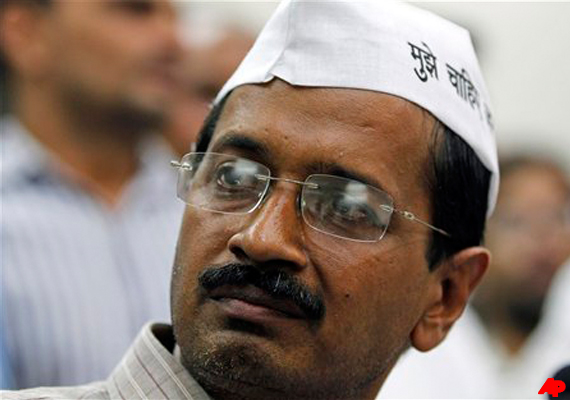
Take the case of Arvind Kejriwal. In the entire fracas after he declared his political intentions, what became evident was that we all have started to hate common logic. There is no doubt that Arvind Kejriwal single-handedly took charge to expose different politicians; but there is also ample proof to suggest that people have completely developed a puzzling mindset – that of hating everything that is happening around them.

The moment Kejriwal entered politics by forming a political party, people started talking about how all the dharnas and all the fasts he undertook were under the pretext of gaining political mileage.

But I have a few questions for these ‘thinkers’:

Aren’t the politicians of the country supposed to do the same?

Aren’t the leaders of this country supposed to question and expose the ill-doing of other leaders?

And wouldn’t we like a leader who could make others fear their wrongdoings?

So what did he do wrong by attempting to expose corruption with evidence? Whether he has a political ambition or not is irrelevant. For once, corrupt politicians are feeling the heat. For once, they are being questioned. When was the last time in your memory that you saw this happen in the political sphere?

And another thing: what did we do when he stood as a common man with Anna Hazare? Supported him with a few tweets and a few status updates, and counted how many retweets and likes we got!

I suppose Arvind Kejriwal also understands that to bring about any change, he will need to change his strategy. Without political power, he will just end up as one of those several voices that are muted by the powerful. Whatever his intention may be, or whatever the name of the poster boy is, Kejriwal or something else, for once India should stand up for the greater good.

We can find good leaders only when we can become good followers.  We can become good followers only when we act as per a situation and not according to what people want us to think.

 Jatin Sharma 26, works in the media and doesn’t want to grow up, because he thinks that growing up means becoming like everyone else.

 (Picture courtesy www.indiatvnews.com)

Categories
Wellness

Fat. So?

Obesity causes serious disorders, and goes beyond weight issues alone. Here’s how you can get out of the fat trap.
by Dr Jayashree Todkar

Part II

In the previous part, I mentioned my patient Priyanka Gupta (name changed), a 28-year-old suffering from severe emotional and physical troubles due to her obese condition, which had further wrecked havoc with her menstrual cycle and caused acute hirsuitness. She hadn’t had a regular period in a decade, and she had had to wax her facial hair every alternate day. Besides, she had to keep her face covered once she stepped out of her house.

I recommended that she undergo bariatric surgery to correct her condition. She decided to do it after a couple of visits, and she recuperated from the operation for two days. After this, she got back to her routine. But about two months after the surgery, she called me excitedly and said, “Dr Todkar, today for the first time in 10 years, I got my period without taking any medicines!” Elated that her body was indeed coming back to normal, she went on to say that her facial hair growth had also reduced, and that she needed to wax just once a week. She is doing very well now; her earlier problems have all but disappeared.

A surprising disease

Several people who come to me for treatment are surprised to discover that they have diabetes, or pre-diabetic symptoms. Also, apart from the embarrassment of having excess weight, young obese people, especially, struggle with sexual disorders – there is little to no desire for sex, their sexual performance is low, and on the other end of the scale, there may be infertility, a few cancers, the development of opposite-sex characteristics, and so on. The disease can cause severe inferiority complexes, cause trouble in personal relationships, and it is a major cause of depression among the youth.

While men’s testosterone levels may dip, women may struggle to conceive naturally, and even an IVF-assisted pregnancy may not carry for the full term. Several pregnant obese women develop gestational diabetes, high blood pressure and other factors that lead to miscarriages.

The cure

– Accept that obesity is a disease, and should be treated like one. Being in denial will only delay the treatment process.

– Understand that the disorders you are suffering from – PCOS, PCOD, respiratory problems, diabetes, obstructive sleep apnea – may not be isolated incidents, but may be linked to obesity.

– Consult a good surgeon to explore options to improve metabolism, and this includes bariatric surgery. Do this before you make exercise and diet plans. Some obese people’s metabolism is better than others, so they lose weight in the gym while others don’t. Once your metabolism is corrected, all exercise and diet efforts will yield better results.

– Discipline and diet are key to good recovery and maintaining good health after treatment. Once your health begins to improve, other things fall into place one by one – your looks will improve, your self-confidence will rise, you will want to rebuild your social life, and your performance in all spheres will improve.

– Above all, don’t lose hope. Seek a scientific solution to the problem, and don’t feel victimised by your condition. There are fantastic solutions available to treat obesity, you just have to seek help before it is too late.

Dr Jayashree Todkar is visiting bariatric and laparoscopic surgeon, and Director of Obesity and Diabetes Care Center, Dr L H Hiranandani Hospital, Powai. She holds the distinction of being the first female bariatric surgeon in India.  

Categories
Wellness

Fat. So?

A two-part series that looks at what obesity is doing to young Mumbai, and how to get help in time.
by Dr Jayashree Todkar

Part I

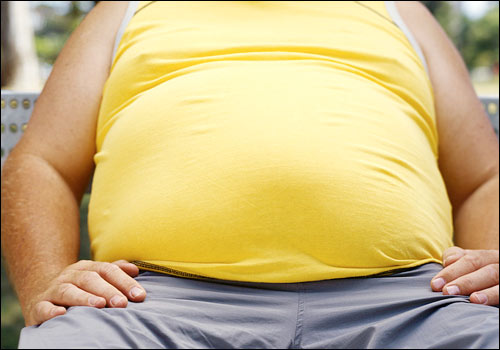
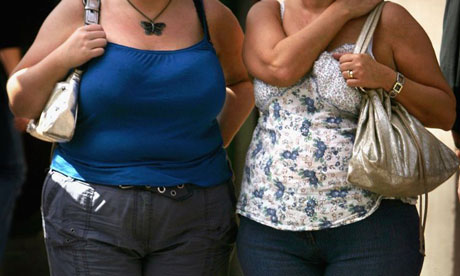
Obesity is striking the young much more than it used to. Today, I am constantly counselling and treating men and women in the 20 to 30 age group, and they are wishing to be treated for a variety of disorders and diseases stemming from obesity or increased weight gain. This age group is the most ‘active’ age group – socially and sexually – but it also the age group that is increasingly sedentary in its lifestyle. Eating the wrong kind of food, little to no exercise, rising amounts of stress, not seeing a doctor for niggling ailments on time – all of these are contributing to the problem.

Obese people also do not link their condition with other things like infertility and diabetes, but there is enough evidence to show that obesity does cause hormonal imbalances, thereby leading to infertility and some cancers, both in men and women.

In women, especially, the incidence of Polycistic Ovary Syndrome (PCOS) is steadily going up, and several times, the reason is linked to obesity. We feel that obesity only manifests itself in weight gain, but the other physical and psychological impacts it has on the sufferer are complex and immense. For instance, several of my patients who suffer from PCOS take medications to get their menstrual periods on track. Once the medication is taken and the period arrives, they feel they have been cured. But stop the medication, and the problem resurfaces. A woman suffering like this has a harrowing time trying to conceive or take the pregnancy to term. Several times, pregnancy becomes impossible without IVF intervention.

The ovaries are amongst the first to show signs of hormonal distress. Irregular periods are a sign of a lack of healthy egg production; eggs are not fertilised naturally and hence, medications help to fertilise them artificially. I have seen young women show symptoms like highly irregular periods, scanty periods (where the period ends in a day), pre-diabetic conditions and worse, developing sexual characteristics of the opposite sex, such as hirsuitism. In young men, these characteristics could be a large enlargement of breasts (commonly referred to as ‘man boobs’) and deposition of fat around the penis. Men also experience decreased levels of testosterone.

Priyanka Gupta (name changed) called my clinic a few months ago, wanting to meet me but hesitating to come to my clinic. I agreed to meet her at a hotel. When she arrived, her face was entirely draped by a scarf. When she took the scarf off, I had tears in my eyes – her face was very hairy and she needed to wax it every alternate day. She was 28 years old, and her condition had primarily beaten her self-confidence, she couldn’t control her weight, and she hadn’t had a period in 10 years without popping pills. A month after undergoing treatment with me, she called to say that she had had her first period in 10 years without taking medication. Also, her facial hair growth had reduced quite a lot.

Next: How was Priyanka cured? Do you think your health problems could be linked to obesity? Find out in the concluding part of this series, tomorrow.

Dr Jayashree Todkar is visiting bariatric and laparoscopic surgeon, and Director of Obesity and Diabetes Care Centre, Dr L H Hiranandani Hospital, Powai. She holds the distinction of being the first female bariatric surgeon in India.   

Exit mobile version