Categories
Beauty

Heal minor skin ailments at home

The current weather is causing an occasional rash, the onset of itchy dandruff, even a sudden eruption of boils. Treat them naturally.

The weather is changing in Mumbai, and with the change comes a host of skin problems that are minor in nature but irritating just the same. With the sudden rise in day-time temperature, people are already complaining of heat boils and sun burn, not to mention oilier scalp and skin. Here’s looking at some seasonal skin ailments and how you can naturally treat them.

Eucalyptus oilDandruff: When the scalp becomes oily, it might cause some people to develop dandruff, or might exacerbate the already existing condition. However, before opting for harsh shampoos that only temporarily solve the problem, try this: warm about two tablespoons of eucalyptus oil and apply gently on the scalp using a clean ball of cotton. Leave on for at least an hour before washing with mild shampoo. Eucalyptus oil is known to treat dandruff and surface bacterial infections on the scalp.

If you are not too fond of the eucalyptus oil’s aroma, use coconut oil mixed with a teaspoon of lemon juice. Apply this mixture on the scalp and leave on overnight.

Sun tan: Bright sunlight can cause tanning. When you’re home, work on the tan with a mix of sandalwood paste and a pinch of turmeric. For an added benefit, make the sandalwood paste in rose water. Apply this paste to your face and neck every night and wash off once it dries and tightens. This is also an excellent remedy for enlarged pores.

Rashes: Coconut oil is a soothing remedy for almost all skin rashes. Rub it gently over the affected area. It contains anti-bacterial properties and is useful even for mild skin allergies.

Sun burn: Sun burns are common in this weather. This is a good treatment for the affected area: prepare the affected area by rubbing an ice cube over it. Once the area is dry but still slightly numb, apply fresh lemon juice on it. It might sting if the skin is broken or red, but the sensation will soon taper off. Apply thrice a day.

Itchy skin: Aloe vera gel works best for itchy skin, especially if it is prone to acne or excess sebum excretion. Fresh aloe vera gel, obtained from slitting the leaf, is best for this condition. Apply Oats pastethe gel on the face and leave on till it dries. Wash off with cold water. Do this twice a day.

Boils: Boils are often painful and leave behind a scar if treated harshly or punctured. Try this remedy that lances the boil naturally: mix one teaspoon baking soda with a pinch of salt and just enough water to make a thick paste. Apply on the boil thrice a day. The boil will subside in no time.

Dead skin deposits: Some people experience dead skin deposits on areas such as the nose, forehead and chin, apart from the elbows, knees and back. Instead of a harsh scrub, try this gentle one: mix coarse oats in a teaspoon of turmeric paste and apply on the skin in firm, circular motions. Wash off with cold water at once.

(Pictures courtesy www.naturalhealthhealingstream.com, alareejperfumers.com, www.goodhousekeeping.com)

Categories
Deal with it

Ravan in the fast lane

Our traditions are fading in the face of our own hazy recollection of them. What do we teach our children?
Pooja Birwatkarby Dr Pooja Birwatkar

The festive season is well and truly upon us, and while basking in it, I decided it was high time I helped my son brush up on his cultural knowledge.

Thanks to Shahrukh Khan, my child knows about Ravan, though he hasn’t heard of Ravan from the Ramayana. Realising that he had learnt a different version of Ravan prompted me, like many other moms, to attempt to undo the damage by telling him about the characters of our great ancient epics.

But I slowly realised that the road to enlightenment was full of hurdles. For one, I myself remembered only a very sketchy outline of the Ramayana. It really shook me up, and all my claims of being connected to my culture now lay about me in tatters. After a few days of heavy thinking, I managed to put my jumbled version into the right pieces, but I was still far from the real picture.

After this fiasco, I did not have the courage to attempt the retelling of the Mahabharata, which is even more complex than the Ramayana with its vastness and unending series of characters.

How did this happen? Have our lifestyles really started to take a toll on our traditions and cultures, which are slowly fading away without us even realising it? Even when we understand that we are doing very less to preserve our culture, we shrug off responsibility and excuse ourselves in the pretext of modernisation, liberated thoughts, paucity of time and daily stresses.

After becoming a parent I realised that I would impart the same ethics and sow seeds of all the beliefs and traditions which, once upon a time, I had resented as a child. Don’t we all try to mirror theTeaching our children our traditions parenting styles of our parents, and try to inculcate the same values in our children? Sure, all our parents’ values never become a part of our personalities, but we remember all of them and try to pass them on to the next generations. We may never have actively participated in trying to keep our culture alive, but when it comes to our children, we want our children to adopt our culture in its entirety.

Dussera reminds me of my sweet childhood, when listening to our epics during story sessions with parents and grandparents were one of our biggest pastimes. Children today are smart enough to tell you that they know that Santa Claus doesn’t actually come to their house on Christmas eve and their parents buy the gifts. As children, even we knew this about Santa Claus, but we were so rapt in our fairytale worlds that we willingly ignored what our minds cautioned us. We have grown up calling a sleepyhead ‘Kumbhakaran’ or a witty person ‘Birbal’. But our children have never heard of these hallowed personalities, which is the biggest tragedy of their lives.

Whatever age you are, the sight of the burning Ravan effigy with firecrackers exploding in the background never fails to enchant us and remind us that good always wins over evil. We try to teach our children about the many evils they will encounter, while also quietly reminding ourselves that we too, will slay the Ravans in our lives.

It is definitely not an easy task in Mumbai to go see the burning Ravan. The Mumbai gardi discourages us. So we content ourselves by going to malls and eating out. And while all that is good, does this mean that the future generations will never get a taste of what we experienced in our childhood?

A popular management saying goes, ‘Don’t tell us the problem, tell us the solution’. For starters, we could organise our own Ravan burning in our building societies. Involve the children to make Ravan and his brothers’ cutouts and collectively burn them. Plan to make it a community function. Have some sessions where an elder recounts our traditions and the stories behind them. Plan it the way you want, just don’t let the festival pass you by as just another holiday.

I think we owe this to our future generations. Do you?

(Pictures courtesy www.postmygreetings.com, www.princessliya.com. Images are used for representational purpose only)

Categories
Deal with it

Combating ‘people stress’ at the workplace

More than our work, our workplace colleagues add to most of the stress in office. Here’s how you combat the pressure.
Pooja Birwatkarby Dr Pooja Birwatkar

The other day I was teaching Mc Gregor’s theory X and Y, which states two completely alternative explanations of how people work. One school of thought says people don’t want to work and only work when under coercion, threatened with punishments or shown incentives. It also states that usually, people shun responsibility and only seek security in a job. The other theory states that people not only look forward to but also assume responsibility towards tasks they feel intrinsically motivated to do. So people are not lazy but they need to feel happy about doing something and if that happens, then they do wonders.

Don’t we all follow both these theories at our workplace? Likewise, we also see people of both kinds in our offices. Sometimes we start off by completely following Theory Y, but somewhere down the line, systems at work bug us and slowly we start responding to the system by underperforming or minimally performing. Come to think of it, what is the biggest issue we have at work place that bothers us the most? The job profile, the nature of job as well as other conditions associated with our work, remuneration, duration and travelling time to offices (the biggest problem of Mumbaikars) are all potent factors for both satisfaction, and largely, dissatisfaction. But if we have to name the most threatening factor that really robs us our peace of mind is the PEOPLE at our work place.

The toughest challenge is in the form of human beings – these could be colleagues, supervisors, managers and higher apex authorities. How difficult it gets at times to manage working with people! Ego hassles, dominance, personality differences, moods, feelings, ambitions, self esteem, power displays – all characterise in varying forms the people we work with. We meet all types of people in our work environments and HR principles tell us that we need to have harmonious relations with all of them.

That, of course, is easier said than done.

So what kinds of people do we see at the work place?

The giants. These are people who mostly know everything and are overpowering. They are the ones who maximally use insults, threats to get work done and are basically the ‘terrors’ in our lives.

Bullies. They use all the aggression at their disposal to make you slog.

The pessimistic ones. Whatever you do, they always fail to see the silver lining. Full of negativity and cynicism, they complain about anything and everything.Stressful colleagues

The keeping-tabs-on-you types. These people account for your every move and their eyes follow you everywhere.

The ‘goody two shoes’ types. These are silent, nice and always around to help, but sometimes their sheer lack of ambition and being too good rubs us the wrong way.

The victims. These people always feel the grass is greener on your side.

The super workers. They have an OCD which makes them work all the time. Their meticulous nature makes the others feel inferior.

The gossipers. These people keep changing sides and let you down when you trust them with your secrets.

The quiet but shrewd types. These willmanipulate people without anyone knowing.

The dependent ones. Thesepeople are extra friendly but always indecisive about everything, and load you with all their work, too.

These are just a few as we meet many more types at work.  At times people become so difficult that no matter how hard you try, they somehow manage to draw out the worst in you. At times we confront them openly, and at other times we wage silent mind wars against them. Most of these conflicts leave us feeling sick.

In places like Mumbai, where daily life itself is a constant source of stress, workplace pressures definitely take a big toll on us. All our meditation and yoga goes out the window in the face of dealing with ‘people pressure’. So what do we do? Definitely to change people and situations is not always in our hand and experts tell us that change yourself and you will be happy. Tune to let nothing bother you and take everything in a positive stride. Phew but only if we could do it.

So what does one do?

Workplace stressFight it out. But ensure that you can handle the repercussions. Also, your fighting response is a reflection of discomfort and mental anxiety, so you might want to address these first.

Talk it out with people. You will find that sometimes, gossip eases mental tensions.

Hope that the person(s) bothering you disappears. If they don’t, take a break from your desk and vanish for a while with a cup of tea or coffee.

In times of stress, try and summon happy memories. If you have trouble with this, browse pictures of friends and family for a few calming moments.

Be firm when dealing with the source of your stress. It is not worth it if the pressure makes you sick or anxious all the time.

Keep reminding yourself that this too, shall pass.

Dr Pooja Birwatkar is currently pursuing post doctoral research and working in the area of science education. She has been associated with the field of education in the past as a teacher educator, and her area of interest is research in education. 

(Pictures courtesy worksmartlivesmart.com, www.rediff.com, work.chron.com) 

Categories
Achieve

Mumbai artist to be part of international art jury

Organised by World Citizens Artists, the art and music competition features Prakash Bal Joshi as one of its jury members.
by The Editors | editor@themetrognome.in

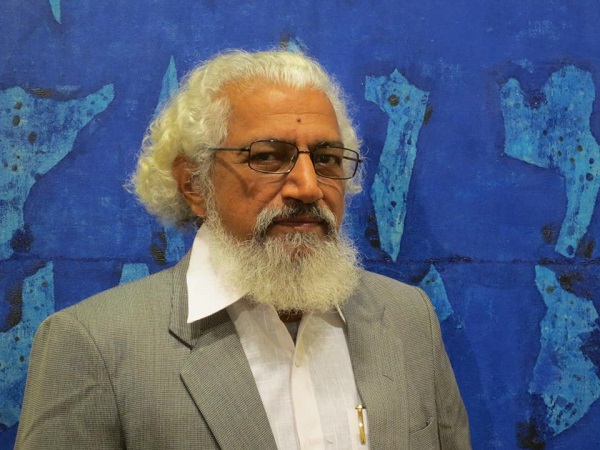
prakash bal joshiPrakash Bal Joshi goes from strength to strength every year. The Mulund-based artist of international repute is set to be a jury member on an international art and music competition ‘World Citizen Artists Competition’ in London later this year. Prior to this, in June this year, he was assigned responsibility as an Ethics Advisor and Ambassador by the World Citizen Artists – an artists’ initiative by a Paris-based artist community to raise awareness about global issues through art.

“It is a worldwide art movement in partnership with London-based Belgravia Gallery and the Playing for Change Foundation,” he said. The competition will see entries from around the world on the theme ‘Peace’, and it is an excellent opportunity for both upcoming and feted artists from South East Asia to showcase their works at the noted Gallery. Belgravia Gallery has a rich history, and houses the works of Picasso, Prince of Wales, Andy Warhol, Matisse and Nelson Mandela.

“For the visual art section, there are three jurists on the panel – Valerie Van Lee from Paris, another from the UK, who is the Gallery’s curator, and I,” Joshi said. “I am happy to be associated with the contest  as a jury member as it would be a unique experience to work at the international level and interact with curators from other countries and understand conceptualisation of ideas in visual forms by artists from all over the world. The theme ‘Peace’ is very relevant today as the world is facing the worst kinds of violence in many parts of the world.”

He added that while judging the art works, the jury members would apply “very strict and scientific methods”, with marks awarded for theme, visualisation, method, innovation, and style. “Marks from three different juries will be taken together to shortlist submissions for awards,” he explained. 

Artists and musicians must send their entries to http://wwww.wcacompetition.com latest by November 16, 2014. Winners’ names will be declared by December 5, 2014.

Categories
Beauty

5 quick tips for gorgeous hair

Most days, there’s no time for elaborate hair care routines or even using the right products. Presenting five quick tips.
Dr. Geetika Mittal Guptaby Dr Geetika Mittal Gupta

There are so many hair care products available in the market today, it’s tough to know what to pick and use. Besides, most women are skeptical of trying out too many products, especially if they have weak, brittle hair.

Add to this the humongous amounts of information on hair care and advice by experts, and one ends up feeling confused with conflicting, often contrary opinions.

So, to make things easy, here are my five quick tips for gorgeous hair.

– Opt for a hot oil treatment twice a week, preferably using olive and almond oil alternatively.

– Cleaning of hair should be done regularly. Use shampoos containing a mild cleansing base and which are gentle on the hair.

– Your hair needs proper conditioning, especially if you are a soon-to-be bride, or are attending a social event. Conditioner helps to smoothen the hair and gives a shining effect, so you MUST use conditioner after using you shampoo. Well-conditioned hair looks shinier, it is smoother to comb and does not attract and trap excessive dirt. Again, use a mild conditioner that suits your hair type.

– Mix vinegar with water and rinse your hair with this solution for shiny and bouncy hair.

– Once you incorporate the above in your regular hair care routine, make a trip to the salon. This is especially essential for brides who are looking to sparkle on D-Day.

Dr Geetika Mittal Gupta is the youngest aesthetic dermatologist and one of the few anti aging experts in India. Board certified diplomat by American academy of aesthetics. After completing her post graduation in practical dermatology from Cardiff University she is Pursuing fellowship in anti aging medicine with American Academy of Anti aging and regenerative medicine.

Categories
Deal with it

The not-so-Aha! moments in the lives of working mothers

Many mothers in Mumbai go to work. But is it better to have a job than be a stay-at-home mom?
Pooja Birwatkarby Dr Pooja Birwatkar

I never thought Murphy’s Law would invade my life so frequently. For the uninitiated, the Law states that ‘Anything that can go wrong will go wrong’.

Hold that thought.

So the other day, as I went home after a tiring week, looking forward to two days of blissful break from office work, Murphy’s Law came back to haunt me even before I got home. My son was down with fever, and the atmosphere at home was somber and silent. Just as I was playing nurse to my ill child, my little baby asked me the question I had been dreading for very long:

“Why do you go to office? Amit’s mom doesn’t go to office, she takes care of him.”

Aghast at having to finally face the ‘Why do you go to work when other mommies don’t?” question, I tried to give him some plausible reasons, like ‘we need the money’, etc. He wasn’t satisfied, and said he wanted to see me at home when he returned from school. I told him that if I was there, I would make him study and he wouldn’t get too watch TV.

To which my little man said, “It’s okay if I don’t get to watch TV, I just want you around.”

It broke my heart to hear him say this. And it made me think a lot, too.

The reality of being a working mother in this busy metropolis hits hard when there are family emergencies and you are stuck between your home and your workplace. At that point, most working motherworking women would wish they were at home with their kids and family. There are times when working mothers like me get envious of the mothers who are home.

Suddenly, the lives of these stay-at-home moms seem picture perfect, while ours seem to be chaotic. Their houses sparkle, everything follows a system, their houses smell of aromatic cooking and they look relaxed all the time. These moms do the things we don’t have the time for; they do yoga and go for walks. They have the time to bargain at the local vegetable shop. They know what their children are up to all the time, and the children always finish their homework.

In comparison, our lives are an eternal cycle of chaos and mess. I try hard, but something is always amiss. I could forget to send the decorative material my boy’s school wanted, or not be able to keep up with his studies. On other days, I make some bland food and rush out the door, and at times my house is a mess. I often come home with my tired body crying out for bed.

But this happens to all mothers, working or not. The ‘working woman’ tag implies women who go to work outside their homes. But does that mean that women who stay at home are idle? I wouldn’t be too thrilled if my workplace was confined to the walls of my home. I have been a stay-at-home mother and then I went back to work, and I find both roles equally challenging. In fact, the housewives have it harder – I have seen many men introduce their wives as, “She stays at home.” What a crude way to describe the woman’s contribution to the home and its peaceful existence!

working woman 1If we analyse the psychology of stay-at-home mothers, we realise that they feel lost and find life less challenging when they are not given the credit due to them for all the hard work they put in for others – often, without any thanks. Their self esteem diminishes. We see such women socialising frequently, and we unthinkingly criticise them, saying, “Oh, but these women have nothing else to do!” What makes us working women feel that our stay-at-home counterparts are not entitled to their share of socialization?

In the end, the grass always appears greener on the other side. So many housewives wish they went out to work, so many working women want to give it all up and be at home. But would either of these women trade lives? Whichever side we pick, it’s not easy to live with it, but it’s not that tough, either. Not if we realise that life is beautiful at home or outside.

(Pictures courtesy news.nationalpost.com, www.naaree.com. Pictures are used for representational purpose only)

Exit mobile version