Categories
Deal with it

Training parents of children with autism

Most therapies centre around treating autistic children. This centre, the only one in Mumbai, trains parents to deal with autism.
by The Editors | editor@themetrognome.in

It’s a cosy space located very close to Khar railway station, and at first glance, the hustle and bustle doesn’t reveal much of what goes on behind its doors. Frankly, SAI Connections initially seems like any other place that would counsel and house autistic children for a few hours every day, much like other therapy centres located all over Mumbai.

Then you get the chance to meet the centre’s director, Kamini Lakhani, and once she starts talking about what the Centre does and how it imparts training to parents of children suffering from autism, you begin to realise how simple and powerful the idea behind the Centre really is. Kamini says, “If you train a parent [of an autistic child to deal with autism], you’re training them for life. That training stays with the family forever.”

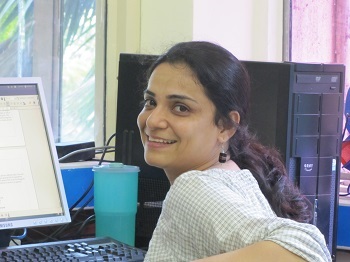
She should know. She and her husband, Anil, started SAI (which stands for ‘Support for Autistic Individuals) in 2004 for deeply personal reasons. “My older child, Mohit (in pic on left, with Kamini), was diagnosed with autism when he was three years old,” Kamini remembers. “I was completely devastated. I looked for information online and everywhere else. Then I gathered all the material I had collected and I remember flinging it in the doctor’s face, asking him how it was possible that such a bright, beautiful three-year-old boy could have autism…” she says.

After the initial phase of denial came slow acceptance. The couple was living in South Korea at the time, and made several trips to the US to get better services for Mohit. During this time, they truly began to receive an education about autism. “In the course of 15 years, I studied and trained to be the best teacher I could be for my own son,” Kamini says. She went on to become a board-certified Associate Behaviour Analyst, certified by the BACB (Behavior Analyst Certification Board), USA in June 2005. Four years later, she completed her RDI (Relationship Development Intervention) and is the only BCABA and RDI Program certified consultant in India.

She started SAI Connections in 2004 after moving to India in 2002. “I realised there was an urgent need for a Centre that would help not just autistic children, but also impart training to parents on dealing with the disorder,” she says. “Unfortunately, I still find that most intervention for autism in India happens at the level of special education and speech therapy – treatment for mental retardation. “Most people, even educators, have not heard of RDI for autism. We need to spread awareness about it to help the millions of children and their parents in the country,” she says.

What is RDI?

Relationship Development Intervention (RDI) is the process that ‘corrects’ the ‘feedback’ between an autistic child and the parent. “In a developing relationship, there is a ‘feedback system’ between the child and his parents. But with an autistic child, there is a breakdown somewhere. The child does not give feedback, so the relationship is skewed. As RDI consultants, we are trained to assess where this breakdown is, see how the parent is behaving,” explains Kamini. “This goes to the core of the issue and helps in normalising the relationship. We change what the parent is doing. This changes what the child is doing. Hence, we actually bring about a co-regulation in behaviour.”
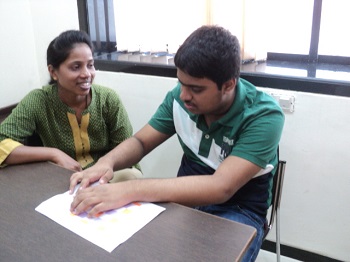
“The disorder is hardest on those who are closest to the child – the parents,” Kamini explains. “Unfortunately in India, there is not much awareness about the symptoms of autism. Even teachers in schools are unable to spot the symptoms. A child suffering from autism is normally branded as a hyperactive, troublesome child by both parents and teachers.” She adds that their inability to socialise appropriately, their non-understanding or inability to interpret social cues and the fact that most of them can’t fit in with peers, sets them up for bullying in social settings. “We need to train schools and parents everywhere. Fortunately, we are slowly seeing that schools in Mumbai are getting more open to the idea of training teachers and hosting sensitisation programmes to deal with autistic children,” she says. The training, she says, needs to focus on dealing with aggression, or a change in behaviour.

What SAI Connections does
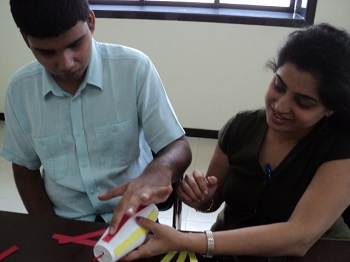
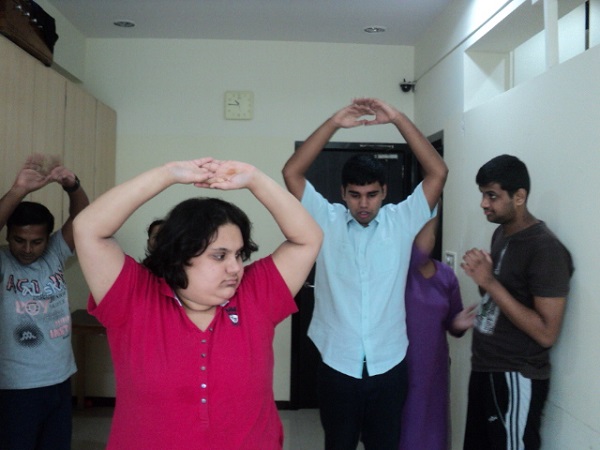
The Centre is an activity space for autistic children with active participation from their parents, and stresses on RDI. “We train them in art, cooking, vocational skills. There is also physical activity, a time set aside for music,” Kamini explains. “We have 25 special educators, one cccupational therapist, one speech therapist, five teachers’ assistants and a group of dedicated volunteers.” Parents must mandatorily be a part of the activities – they are invited to attend, be a part of the sessions or simply sit and watch. The Centre ensures transparency in functioning by involving parents in every step of the process, and every room has CCTV cameras that keep watch on all parts of the Centre.

SAI Connections has also, since last year, started a training programme for potential educators in RDI; this is a certification programme lasting over a year. “We have already trained four individuals, and many more have enrolled,” she says, adding that the programme involves training, working with families and providing consultations under supervision from programme directors, at a cost of about 9,000 USD per year. Kamini also receives many queries for online sessions and has already imparted training to individuals in Bangalore and Delhi.

“Ultimately, only proper training will help in a deeper understanding of autism. The numbers of autistic children are staggering, and so many more are not diagnosed yet. The biggest mistake people make is to think that children in the autism spectrum lack something. They are hugely capable individuals and we must never give up on them,” she says.

Connect with Kamini Lakhani at SAI Connections & SAI Child Development Center, 201, 2nd Floor, Bhagya Ratan Niwas, above Prabhu Jewellers, 3rd road, Khar (W), Mumbai. Call 022 2605 0992/ 26050991/ +91 98203 14925. Email sai.connections@ymail.com/ saiconnections01@gmail.com.

(Pictures courtesy SAI Connections)
Categories
Wellness

Mumbai youth organise four-day free medical camp

From cardiac to dental checkups, every testing is offered free for poor, BPL families, in partnership with Seven Hills Hospital.
by The Editors | editor@themetrognome.in

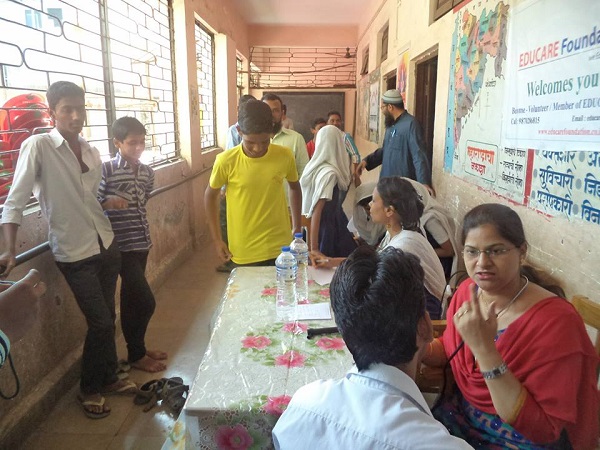
Mumbai is teeming with Good Samaritans. One of these is Dr Shezanali Hemani, a south Mumbai-based young doctor, who, with a group of other youth, is organising and hosting a free four-day medical camp for Mumbaikars starting today, October 27, 2014. The camp is open to holders of orange or yellow ration cards only.

Shezanali HemaniSpeaking to The Metrognome, Dr Hemani (in pic on left) said, “I and a group of youth recently came up with the idea of revolutionising the health of the common people. Good health usually starts from early diagnosis, which most people don’t undergo. This means we miss the opportunity to nip a lot of diseases in the bud, and this neglect can sometimes even result in long illness or death. By diagnosing a disease early, we can go a long way in preventing and treating it.” He adds that people coming for consultation only need to get their current health reports along. “Plus, patients who are suffering a blockage or require a surgery or therapies like chemotherapy, radiotherapy, kidney transplant, hernia, prostrate or kidney stone will be treated for free,” Dr Hemani says.

Organised by the Khidmat-e-Azadar and Educare Foundation in association with Seven Hills Hospital, Andheri, the camp will  be a four-day affair at four different locations in Mumbai. The camp will provide a host of testing for blood pressure, blood sugar, ECG, 2D ECO, angiography, bypass, angioplasty, blood grouping, dental check-up and consultation for dental and cardiac problems. See chart below for schedule of camps:

Day/Date                    Venue                                                                                        Timing

27 October                      Malwani. Az Zehra Charitable Clinic, Chawl
No:14, Near Shankar Mandir, M.H.B. Colony,
(Monday)                    Gate no: 7, Gaikwad Nagar, Malad (W), Mumbai         10 am – 4 pm.

28 October                      Kurla. Shia Jama Masjid,
(Tuesday)                    Hallo pull, Kurla (W), Mumbai                                          10 am – 4 pm

29 October                      Mumbra. Roshni Apartment, Thakur Para,
(Wednesday)               Near Mumbra Police Station, Mumbai                            10 am – 4 pm

30 October                      Govandi Bada Imambada, Lotus Colony,
(Thursday)                   Shivaji Nagar Junction, Govandi, Mumbai                   10 am – 4 pm

Know someone who can avail of these camps? Call Dr Shezanali Hemani on +91-8956708222 or Sohel Ajani on +91-9029751888 for details.

(Pictures courtesy Dr Shezanali Hemani)

Categories
Deal with it

Juhu to Girgaon in 10 minutes soon?

Intra-city seaplane flight between Juhu and Girgaon chowpatty was successfully tested very recently, while crucial clearances were obtained for operations.
by The Editors | editor@themetrognome.in

If this flight becomes operational soon, Mumbaikars are in for a really pleasant ride.

The city’s wait for intra-city seaplane flights between Juhu and Girgaum Chowpatty is soon coming to an end. The city witnessed a successful trial of the Juhu to Girgaum-Chowpatty flight on October 22, 2014. MEHAIR, along with Maharashtra Tourism Development Corporation (MTDC), has been working on the project for nearly two years and has already obtained crucial clearances from several authorities, including a nod from the Ministry of Defence, Coast Guard, Indian Navy, Mumbai Police, Urban Development Department, BMC, Mumbai Port Trust, Environment Department and the Airports Authority of India.

MEHAIR is already operating daily seaplane flights between Mumbai and Pawna Dam and has successfully conducted trial landings of its seaplane in Mula Dam (Meherabad/Shirdi) for which the commercial operations are being launched from early next month. The seaplane to be operational within Mumbai is the company’s Cessna 208A amphibian aircraft, which will take off from Juhu Aerodrome in Mumbai and touch down in Girgaum chowpatty about 10 minutes later. By road, the estimated travel time between the two points is approximately 1 hour and 30 minutes.

Speaking on the occasion, Siddharth Verma, co-founder and director, MEHAIR, said, “With the commercial launch of the service, Mumbai will become one of the few cities in the world that have a seaplane service originating in the heart of the business district. We are confident that the public at large will see the value of the service and take full advantage of it.”

He added that a seaplane offers the public the “last mile connectivity”. He said, “Essentially a seaplane service begins where normal airliners end, and therefore, offers connectivity from the last airport to areas even beyond which are remote but have suitable water bodies that can accomodate seaplane operations.”

Categories
Achieve

How a few youngsters are looking to heal Kashmir

A group of youths initiated ‘Project Pheran’, to help those devastated by Kashmir floods deal with the impending harsh winter.
by Mamta D | @silverlightgal on Twitter

The natural beauty of Jammu and Kashmir is known all over the world. Movies, books, songs, poetry – all of these have celebrated its charms and scenic landscapes.

But the Kashmir of today is vastly different. Following the floods that wrecked havoc in the region September 4, 2014 onwards, the valley has been a site of devastation. Villages have been washed away, homes submerged, lakhs of people rendered homeless and property worth hundreds of millions has been destroyed.

In the last month, rescue and relief efforts by various local and non-local groups have managed to save many a life in the flood-ravaged state. It will be a long time before the former glory of Kashmir is fully restored. What is of immediate concern now is the impending winter.

Hence, to combat the challenge of providing warmth to the flood-affected people, a group of enterprising youngsters have come forward and set up an initiative ‘Project Pheran/Project Warmth’. Through this project, they are collating funds from all over the country and abroad and providing needy persons with warm clothes, pherans (long cloak-like Kashmiri garments), blankets, coal and so on.

The group is quite small, comprising six persons who are not even based in the same city but who scattered across India. All of them are students of higher education in India and abroad, but their hearts and willpower are enormous and their conviction that they will make this project succeed is commendable. The group, which calls itself ‘Heal Kashmir’ connected through social media after the floods, is now a close-knit group and collaborates excellently.

The motley crew comprises Anup Achuthan, a senior finance professional based in Mumbai, Zayd Qureshi who takes care of on-ground distribution in Srinagar, Ruhan Naqash (from Chennai, Burhan Mir (Punjab & Haryana), Armish Riyaz (Punjab), Yasir Khan (Delhi, NCR) and Saqib Nazir (Bangalore) – they are the coordinators in various States across India, garnering funds and necessary materials.

The estimated initial expenses of the massive project is around Rs. 8 lakh using which they will  purchase the fabrics and get it stitched by local tailors who know the requirements of the region well. A textile factory in Sonipat has been identified which offers fabrics at concessional rates.

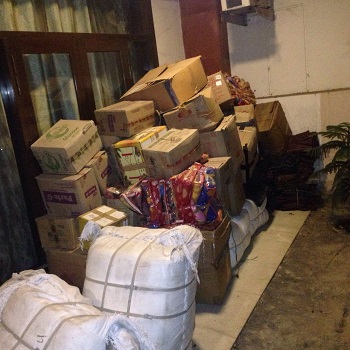
Says Anup, “We must do all we can to make sure people who survived the devastating floods do not succumb to the harsh winter due to lack of warm clothing and bedding.” He hopes that people of Mumbai will come forward with generous contributions to this project in monetary donations and kind. With lack of godowns and storage spaces, these student volunteers are storing the collections in their own apartments at the moment.

For Yasir, who is also the founder of J&K Disaster Helpline and Relief Organisation, it was a call for rescue that changed his fate. He and two other Kashmiri youths were working in their air-conditioned offices in Delhi when one of the team members, Iqbal Buchh, received a call from his friend who was stranded in his house due to rising flood waters. Yasir overheard the conversation and decided to call one Mr Singh to rescue the youth. After arranging for the youth’s rescue, Yasir had a brainwave – if he and his friends could manage to save one life, they could also try to save many more.

By then, phone lines on ground zero in Srinagar were almost dead, and network connections had fizzled out. Rescue operations had faced stumbling blocks at many areas. That’s when Yasir Khan, Iqbal and a third boy, Rouf Bhat, took two months unpaid leave from their jobs to start a helpline. The idea was to pave the way for smoother rescue operations.

“We started with a makeshift helpline in our apartments by posting our numbers on Facebook so that people could get in touch with us to rescue their families and friends. Within 10 days, we attended to over 45,000 calls, Whatsapp messages, and text messages. We were so engrossed in receiving and attending to rescue calls that we even forgot that our own families needed to be rescued. Fortunately, we soon learnt that our families were safe and sound,” recalls Yasir.

From rescue ops, the group has now progressed on their next mission – to provide warm clothes to the needy for the looming cold months.  As of today, J&K Disaster Helpline and Relief Organization is working in collaboration with Heal Kashmir for Project Pheran.

Armish says, “Mainly, we are collecting woollens, but if people donate other stuff, we accept that too. We have hired transport through a company in Delhi. They will deliver the materials to Srinagar by road. We are planning to put up collection centres in major colleges and universities across Punjab.” The team is hopeful of starting distribution by early November.

The team coordinator from Bangalore, Saqib, has been in touch with the Kashmiri diaspora in the city. Long before ‘Project Pheran’ started, he coordinated with various others to arrange for relief collection and dispatch to Srinagar.  With time, he became part of the Heal Kashmir team.

If you wish to support Project Pheran/Project Warmth, write to healkashmir14@gmail.com, or on Twitter @healkashmir, or Facebook: healkashmir.

Categories
Deal with it

The charm of Sunday

As Monday ushers in a new week, we think fondly of Sunday and wonder how the day passed by so quickly.
Pooja Birwatkarby Dr Pooja Birwatkar

Every Saturday, everyone at my workplace is tremendously excited, because the magical Sunday is to follow. Since it allows one to rest and eat whatever they want and generally have a good time, Sunday is everybody’s favorite day of the week.

Sure, there are other holidays. Many corporate offices have now adopted a five-day week. But Sunday is still pretty special.

There are no alarm clocks on a Sunday. Most of us wake up late after lounging in bed for as long as possible. There are no rules on a Sunday, for both adults and children. Most of us watch a lot of TV, order our meals from the local restaurant, and some of us go spend the day out shopping and watching movies with our families.

Sunday is also a day of cleaning for most Mumbaikars, whose homes resemble godowns and dumping grounds on other days of the week. With Diwali coming up this week, I am sure many people spent their Sundays cleaning up their homes. Sunday cleaning involves sprucing up the house, arranging everything in its right place and making sure the house looks inviting. And though I often complain that cleaning up the house eats by most of my Sunday, I find that it is a great stress buster, too. I normally follow this up with shopping for groceries at the market.

It seems to me that we actually put in more work on Sunday. So how is this a holiday? I believe it helps us relieve our anxieties building up over the week, because we tie up a lot of loose ends on a Sunday. Completing pending tasks gives a sense of satisfaction.

Sunday is also a day to catch up with people we tend to neglect during the week – our parents, relatives who live far away, friends we no longer have regular time for. Of course, with Whatsapp we are constantly in touch with everyone, so you could say Sunday is a good day to take a break from our phones.

Since most women are home on a Sunday, their domestic help must feel resentful under their mistresses’ watchful eyes. No wonder my maid usually turns up late to work on Sundays and Sunday mealsdisappears quickly. She sometimes get back at me by not turning up at all, which is nothing short of a disaster.

I also invest Sundays in catching up with myself. I finally get the time to take a long look at myself in the mirror. I get the time to visit the beauty parlour, get my nails done, get a hot oil head massage. Then I traipse home and have a long and luxurious bath. Besides, and I am sure I speak for most working women in Mumbai, the best thing about Sunday is the break from cooking.

For many children, Sunday ends on a horrible note as they may have forgotten to do their homework or put their school uniforms in the wash, or something equally disastrous. I think Monday blues hit school children before they hit the rest of us. For grownups, I think the blues set in as they set their alarm clocks for Monday morning.

And as the new week begins, we sigh to ourselves – oh, I can’t wait for Sunday…

(Pictures courtesy lilpleasuresoflife.files.wordpress.com, indianexpress.com)

Categories
Achieve

Mumbai boys give mallkhamb an Agra spin

Two Mumbai boys recently gave an enthralling mallkhamb demonstration in Agra, with the stunning Taj Mahal serving as the backdrop.
by The Editors | editor@themetrognome.in

It is a sport that traces its origins to ancient Maratha history, but today, there are very few active practitioners for it. Mallkhamb is not just difficult to practice, it takes an optimum level of fitness to practice it. But it is also the father of all workouts – just practicing mallkhamb can give a full body workout like nothing else can, since it combines a variety of exercises.

In Mumbai, Uday Deshpande’s Shree Samarth Vyayam Mandir at Shivaji Park, Dadar, is doing much to not just keep mallkhamb alive, but also to gain acceptance among the younger generations. Every year, students of the academy participate in mallkhamb competitions around the country and the world, and come out tops.

The academy has now added another feather in its cap – two of its star performers put up a mallkhamb demonstration in Agra, with the Taj Mahal as a backdrop. Said Deshpande, “Shantanu Lohar and Manik Paul performed exceptionally well. Shantanu is a three-time National mallkhamb champion, and Manik is an aerial acrobat.” The boys performed their act as part of Jashn-e-Taj, a programme organised by the Rotary Club of Agra, Tourism Guild of Agra and Agra Vikas Manch.

The programme was choreographed by noted choreographer Sudarshan Chakravorty of Kolkata. The programme theme was ‘Atithi Devo Bhava’.

(Pictures courtesy Shree Samarth Vyayam Mandir)

Exit mobile version