Categories
Achieve

When children take up the cleanliness challenge

Two Mumbai based research organisations are taking the Swachh Bharat Abhiyaan to the city’s schools, one initiative at a time.
by The Editors | editor@themetrognome.in

The Narendra Modi-led Swachh Bharat campaign continues to find resonance among the country’s populace, and Mumbai is already witness to several individuals and organisations taking up the challenge. What’s interesting, however, is that organisations are rightly seeing that such initiatives need children’s involvement to really become successful.

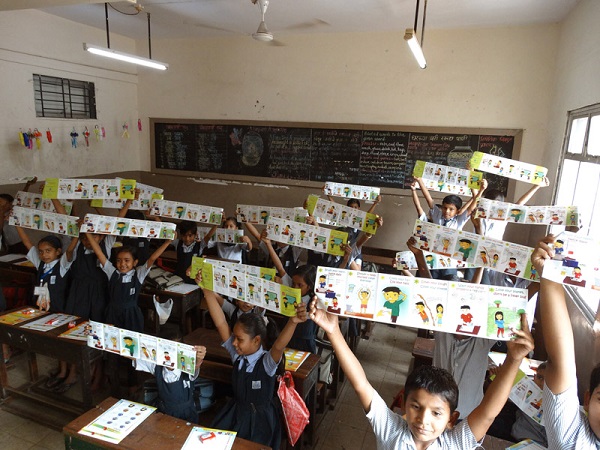
Two Mumbai-based organisations – Observer Research Foundation and Mahatma Gandhi Centre of Cleanliness, Sanitation and Community Health – have jointly decided to keep children in the city’s schools at front and centre of the Abhiyaan in the city. They recently observed the ‘Bal Swachhta Week’, a sub-celebration of the Swachh Bharat Abhiyaan, with the release of the ‘10 commandments for Swachh Bharat’ pamphlet at Nityanand Municipal Primary School, Andheri, with the support of Ms Mansi Apte, the local Education Officer.
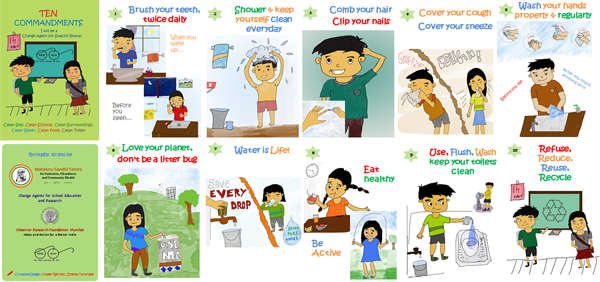
Snapshot-of-pamphletThe pamphlet focusses on the key themes of Clean Self, Clean School, Clean Surroundings, Clean Water, Clean Food, Clean Toilets.

The pamphlet has been conceptualised by the ORF-CASER (Change Agents for School Education and Research) team of Aparna Sivakumar, Adithi Muralidhar, Ameya Pimpalkhare and Hamsa Iyer, and is presented like a comic book that opens out as an accordion, making it a simple and exciting novelty for kids to safely keep and make swachhta exciting. The artwork was done by artists Nilofer Rehman and Chetna Morkhade.

Says Adithi, “The focus of the comic-based commandments is on personal hygiene (brush, bathe, grooming, trim your nails and hand wash), healthy food and active lifestyle, conserving and drinking safe water, not littering, good toilet etiquette and the principle of Refuse-Reduce-Reuse-Recycle.”

She added that the Week witnessed a flurry of activity, from children’s round tables to self-fulfilling shramadans and from the ambitious launch of making Councilor ward 92 a ‘Zero Garbage Ward’, inaugurating the place-making of a park with provision for walk, play, talk for people of all ages, women and sanitation issues, and concluding with a vital discussion on upliftment of safai karmacharis’ lives.

“At CASER, we believe that children are the change agents for the Swachh Bharat. During the  November 13 Children’s Roundtable, what was absolutely thrilling was how children spoke about the current scenario, narrated their personal tales of them fulfilling their responsibility and shared perceptions about many issues. They even went on to share how they dealt with problems and discussed do-able solutions.

“Some of them stated that they should be responsible for cleaning their schools and even toilets, critiqued the civic education that does not prepare them to be ‘better, active citizens’ imparted in schools and acknowledged their responsibility towards the environment. With such an approach from our children, our future is in good hands.”

The pamphlet will soon be available in high resolution and multiple languages, and will be registered under Creative commons for all to reuse and share across the country.

(Pictures courtesy CASER)
Categories
Deal with it

Watch out for this ‘cancer van’ in Mumbai

Recently inaugurated by CM Devendra Fadnavis, the mobile van will offer free diagnostic services and will tour the State, too.
by The Editors | editor@themetrognome.in

Cancer is a huge threat to India today. It is killing increasing numbers of Indians every year, and many more are found to have the disease. Several succumb to it owing to lack of proper diagnosis in the early stages of the disease.

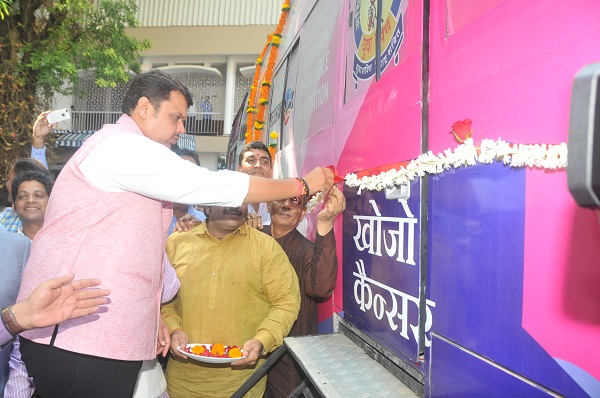
It is this latter element that is a big worry for health professionals – the lack of proper diagnosis, which enables the disease to spread unabated and become difficult to control at an advanced stage. Keeping this in mind, the Maharashtra Chief Minister Devendra Fadnavis recently inaugurated the State’s first mobile cancer van that will tour all over Maharashtra and travel to other parts of the country as well.

Conceptualised and operationalised by the Mumbai-based Shri Subhaschandra Runwal Education Foundation and the All India Marwari Yuva Manch, the van is said to be fitted out with the latest equipment and know-how required in cancer diagnostics. Patients will be screened and tested for free, and additional inputs on their condition will also be sought with a research laboratory based in Canada. Said an official connected with the initiative, “The van will travel all over Maharashtra, and also Assam, Rajasthan, Meghalaya, Chhattisgarh and Madhya Pradesh. We are hoping that our initiative will help in the fight against achieving a cancer-free India.”

Categories
Deal with it

Take note of Indian folk artistes, Bollywood: Santosh Sawant

Noted folk music artist and now film director, Santosh Sawant wants Bollywood to feature more folk music to popularise it.
by The Editors | editor@themetrognome.in

Maharashtra has a rich tradition of folk music but many popular forms of folk music entertainment such as Bharuds, Gondhals, Lavanis, Povadas, Bhaleris, Palanes and Artya have slowly gone off the radar, and are now on their way to extinction. It is a sad state of affairs indeed, that people have forgotten the folk forms peculiar to their home States, as Hindi film music pervades our collective music consciousness.

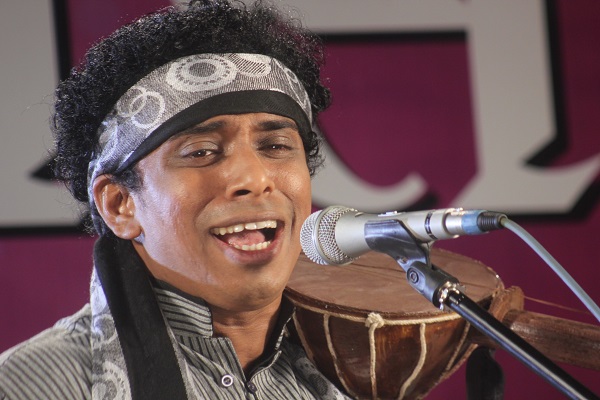
Actor, filmmaker and music composer Santosh Sawant, aka ‘Pawa’ (meaning ‘flute’ in Marathi), wants the new BJP Government in Maharashtra to save folk singers in the State who are struggling for survival. ‘Pawa’ is a gifted folk singer himself, who tried, unsuccessfully, to gain acceptance in Bollywood – owing to his non-mainstream voice. He is known as a foremost exponent of ‘jhamela’, a form of folk song that throws light on the complexities and tragedies of life. “But I persevered and cut an album with the help of T-series in 2010,” he says. “It was called Voice of The Heart. I am now ready to launch my debut Hindi feature film project titled Jhamela which will showcase the life of a folk singer.” The film is inspired by Sawant’s own life and details jhamela as an art form, among other things. “I hope to make folk music more popular through this film. I shall first show it at 45 renowned international film festivals before showcasing it in India,” says Santosh.

Why the spotlight on folk music?

‘Pawa’ is an engineer by qualification who was born in Ratnagiri but who came to Mumbai for higher studies and stayed on. He had a successful career in the machinery exports business, but his love for music often made him restless. “I was born in the idyllic Kolisare in Ratnagiri, which has lush green hills on one side and pristine virgin beaches on the other side. People here were totally disconnected from the modern world, and I grew up in a culture of folk music, folk dances and folk plays which were displayed during the Jalsa, a local fair prevalant in Konkan,” he remembers, adding that his performances at these fairs earned him the ‘Pawa’ nickname.

'Pawa' performs on stage (1)He claims he has an acting degree from London, and speaks with bitterness of how Bollywood shunned him because “they didn’t want to take a chance with an actor who dabbled in folk music.” Today, he says he works to further the cause of folk music in India and abroad.

Incidentally, during the recent State Elections, the BJP was said to employ around 200 folk singers to campaign for it. Says ‘Pawa’, “I want the BJP to continue its association with folk singers through scholarships, donations and other forms of support.

“Maharashtra’s zestful folk music has the power to hold the audience spellbound. Folk songs have often formed an important part of Indian movies and some of them are memorable to the day. They are melodious, tug at your heart and often end up having repeat value. While folks songs from different regions have gained mass popularity, it is the original folk singer who somewhere down the line faded into oblivion. Rarely has Bollywood rallied around any folk artiste to give them mass coverage and publicity. I think Bollywood should stop neglecting folk singers.”

At present, folk music is being practiced in the approximately 50 Kala Kendras across Maharashtra, most of them in the Marathwada region. There are around 130 travelling Tamasha troupes that perform seasonally and approximately 15 full-time troupes that perform all through the year. Nearly all of them are fighting for survival.

“The modern film viewer has a warped and skewed notion of folk music as most of it is fed by what various regional and national movie industries are churning out. For example, for the viewer, a Lavani is just another item number adding masala to a movie. To add insult to injury, these dances are performed by mainstream actresses, as no one wants to cast the women who have lived and breathed this dance for centuries,” ‘Pawa’ fumes.

Any takers?

Ask him if anybody’s really interested in folk music these days, and he says, “Of course people are interested, they just need to be exposed to folk music. I have my own band, and we have taken Jhamela all across India and even abroad. We use traditional instruments like harmonium and dholki while staging our folk songs and plays. People love the simplicity associated with our songs which we use to denote the great complexities that human life deals with regularly.”

‘Pawa’ says he hopes his film will find resonance even among the urban viewers. “We need to make our folk music, and our folk artistes, more mainstream,” he says. “It is unfortunate that so many are living in oblivion and poverty.”

Categories
Achieve

Mumbai boy wins State Taekwondo championship

Atharva Samant won two gold medals in the Under 14 category at the recent championship; to represent State in Daman.
by The Editors | editor@themetrognome.in

Taekwondo has several takers in Mumbai, especially amongst youngsters in school. Several prestigious championships always receive a good turnout among students, and the recent Maharashtra State Taekwondo Championships were no different.

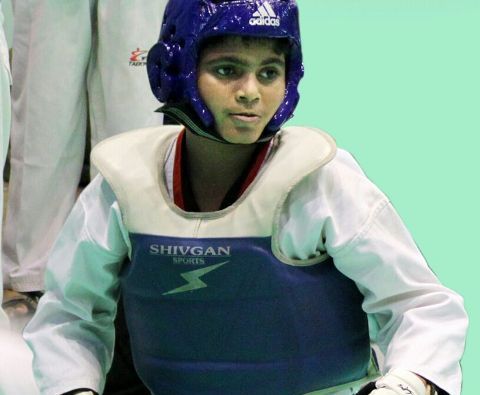
Chembur resident Atharva Samant won two golds in the championship, in Taekwondo Poomsae and Taekwondo Sparring in the Under-14 category. Atharva is a student of Swami Vivekananda School in Chembur, and trains with the suburb-based coach Shrikant Mishra. Prior to these wins, Atharva has also won top honours at championships in the same category, at national meets held in Nerul, Surat and Amritsar.

Atharva will now go on to represent Maharashtra at a national meet in December 2014 to be held at Daman.

Categories
Deal with it

‘Swachh Bharat’ is not just a campaign

It has become a trendy new phrase, but maybe we need to take the ‘Swachh Bharat’ campaign beyond mere tokenism. Maybe we should try seriously adopting it.
Pooja Birwatkarby Dr Pooja Birwatkar

‘Swachh Bharat’ is the new ‘in’ thing for the country. When the campaign was launched in October this year, I, like so many others, instantly dismissed it as another campaign which would quickly gather dust as fast as it initially gained momentum. But though it is still in its infancy, the campaign has thus far proved us wrong about its estimated short-lived sustenance.

What is most remarkable about this programme is that it has captured the hearts of the nation’s young the most – in itself, a major achievement. What a way to go, if the future of this country is most enamored by this campaign! The other day, my little son and his six-year-old cousin reprimanded an adult who was about to throw an empty chips packet on the street with the words, “Don’t litter, Modiji ne mana kiya hai.”

So why did this particular campaign strike a chord? Is it merely the charisma of Narendra Modi who launched the campaign? Is it something else? One cannot deny that Modi has been the single most powerful force that has made the campaign what it is. But if you think about it, he merely stated what he have now adopted as a way of life in India. His sentiment that gandagi has crept so deep into our system that we have learnt to live with it to the extent that we condition ourselves to overlook it. Yet, subconsciously, gandagi has always bothered us. Which could explain why the first thing anybody on a first-time trip abroad will say on his or her return is, “People don’t throw garbage on the streets there. Everything was so clean! Yahan aisa nahin hai.”

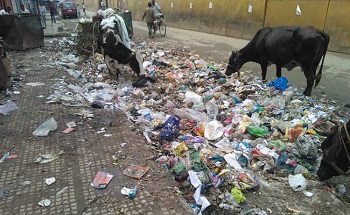
Let’s talk about our own city – Mumbai, the heart of India, a city famous across the world for both its famous and infamous attributes. But just look at the city and what we have turned it into. Filth in IndiaVehicular traffic, a population bulging at the seams, dearth of greenery, plenty of noise and dirt, garbage strewn all over, filthy beaches, polluted air, numerous diseases, poverty, slums…this is the overall picture of this metropolis.

As we marvel over the huge towers and amenity-laden buildings in Mumbai, just peep at the fringes. The magnificent houses with French windows open to a whole world of garbage, but we are able to miraculously able to look beyond it and focus only on the clouds above. We are all collectively living in a big garbage bin, and then we have the gall to call this indifferent attitude ‘the spirit of Mumbai’. And why are we so proud of this ‘spirit’ anyway, if it makes us immune to these evils of our own doing? We even go a step further and expect the BMC and the Government to clean up after us – after all, we pay taxes, do we not? So cleanliness and hygiene is not our problem.

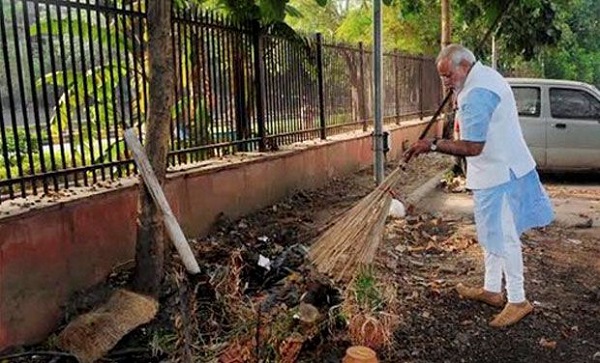
A campaign like ‘Swachh Bharat’ has shaken us. Even more so, because the country’s PM was the first one to pick up a broom. Suddenly, dusting doesn’t look like such a lowly job.

But simply realising the problem is not enough. We have to fuel this campaign at all times. It doesn’t matter if everybody doesn’t participate in it – let’s pledge to first clean our city and not focus simply on our own homes. Mumbai is home to all of us, and it is everybody’s responsibility to ensure its good health.

Dr Pooja Birwatkar is currently pursuing post doctoral research and working in the area of science education. She has been associated with the field of education in the past as a teacher educator, and her area of interest is research in education. 

(Pictures courtesy deccanchronicle.com, www.ndtv.com)

Categories
Achieve

An app to help find missing children

Mumbai techies have developed the app ‘Helping Faceless’ that uses face recognition and data analytics to help trace and return missing children.
by Vrushali Lad | editor@themetrognome.in

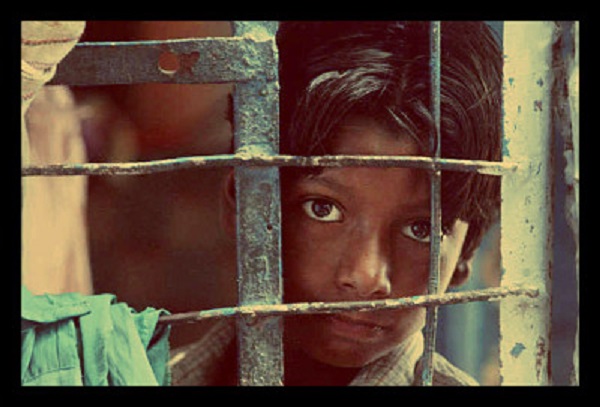
It is a burning problem that grows in strength every year. And yet, apart from police detection, there is not much to fall back on when it comes to finding missing children in India.

Except, these Mumbaikars know what can be done – albeit in a long-drawn out process. The app they’ve developed, ‘Helping Faceless’, uses face recognition and data analytics to help trace, and hopefully return, missing children in India.

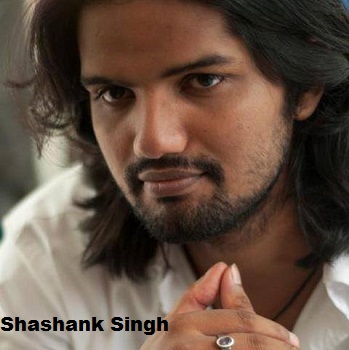
shashank singhSpeaking to The Metrognome, Shashank Singh (29), founder of Helping Faceless, says, “India has a big problem on its hands. Over 1,00,000 children go missing every year all over the country. Of these, most are kidnapped while some run away voluntarily. Many of them land up in begging rings,or are forced into the flesh trade, or end up as labourers in eateries or factories, or as domestic help. What’s more, many instances of missing children are under-reported. Something needs to be done to find these children before they are lost forever.”

What gave him the idea to start the app over a year ago? He pauses for a while, then says, “As a child, I spent some years in UP, in the 90s. When I was about six years old, I was kidnapped for five hours. I have no recollection of the incident, I only know what my parents have told me. It turns out that I was helped by a stranger and returned to my parents.”

That incident, though he has no memory of it, always stayed with him for one fact alone – that a stranger had helped him out from a potentially disastrous situation. “When I came to Mumbai in 2012 and later when I started working on this app, I realised that strangers helping each other was an extremely powerful idea, especially if it was scaled to a level where millions could help each other. My team and I hence developed ‘Helping Faceless’ to help these millions of missing children find their way back home.”

Though he started work on the app alone, today there is a small team in place, with Amol Gupta as co-founder.

How does it work?

The app is simple to use – if you spot a child in distress (either being abused, or working in hostile conditions, etc.), all you have to do is take a picture of the child, and the app auto-relays the picture back to the team’s server. “From here, the photos are referenced with the pictures in our database. When we find a match, we see the details for that missing child and contact partner NGOs and organisations in that place to seek their help in returning the child,” Shashank explains.

However, users are encouraged to talk to the child and build confidence to get details. They are also instructed to give begging children food instead of money. “Even a simple gesture such as giving a child chocolates will help the child speak with you. We encourage users to help the child in any way they can,” he says.

The team works with SOCH (Society Of Children), a TISS organisation which does the back-end work and helps guide the team through the legal steps to follow after a child’s pictures match. “SOCH also helps us figure out potential partner organisations in other cities to coordinate the process. However, each case is different and we have to work as per the requirements,” he says.

Currently, the team has over 60,000 photographs of missing Indian children in its database. “These were sourced from available police records. We are constantly building the database and uploading more pictures and information, while also reaching out to more partners. It’s a long process to begin the journey from tracing a child’s current location and returning the child home, but in a year, we have had success with three children – two from Ludhiana and one in Mumbai. That is a modest number, but the process moves at a glacial speed,” Shashank says.

Also, users must be a little careful about taking pictures of children. “Though there are no laws in India about taking a picture of a child in a public place, provided the child is clothed, we still discourage users from forcefully taking pictures. Also, sometimes it may happen that another person may stop you from taking a picture. Many users have been frightened off,” he says.

What ‘Helping Faceless’ hopes to achieve

“Essentially, we are a business that goes against another business – in this case, we are up against a $36 billion ‘illegal’ business,” Shashank says. “The best way to dismantle a business is to make it unprofitable. Using an app like this, though it seems like a small step, will help us hit back.” He adds that the crux of the app’s ethos lies in the public and police working together to solve these terrible crimes. “The bigger goal is, in four to five years, to have enough data to be able to predict a crime, and data analytics allows us that. The difference between trafficking and crimes of passion is that there is a time lag involved – the trafficked child is taken from spot to spot by public transport normally, there are specific train routes that traffickers use. We can empower the RPF to use the data and intercept the crime in real time,” Shashank explains.

He has shown the app to police officials in some Indian cities, and says that cops are interested in it because the same technology is also useful to catch criminals. “I would say that the same technology can be used to find all missing persons, criminals or not. However, we realise that currently there is a high churn rate among the app’s users. So we are working to make it more community-based and engaging to the user. We have about 3,000 people installing the app per month and signing up, but many of them drop out later on.” The improved app will roll out in two weeks’ time, he says, and so will its iOS version.

Currently, the team has about 30 dedicated volunteers, most of them from Mumbai. “We have found the highest response from Mumbai and Bangalore, while Delhi has the poorest response to the problem,” Shashank says. “Unfortunately, public support is lacking for initiatives like this. People are happy to give money to a child that begs, instead of talking to the child and taking a small step towards helping him or her out.”

‘Helping Faceless’ is available on Google Play Store and on Facebook: /helpingfaceless. 

(Featured image courtesy borgenproject.org. Image is used for representational purpose only)

Exit mobile version